
Summary of the Accession of Emperor Vespasian
How Do You Learn Best?
Learn by Reading
Immerse yourself in the 10-minute visual lesson for a comprehensive understanding of the topic.
Learn by Reviewing
Jump directly to the key facts, timeline, and vocabulary lists to build a solid foundation of details.
Learn by Doing
Challenge yourself! Jump straight into the interactive games to learn by trial, error, and discovery.
the Accession of Emperor Vespasian in 10 Minutes
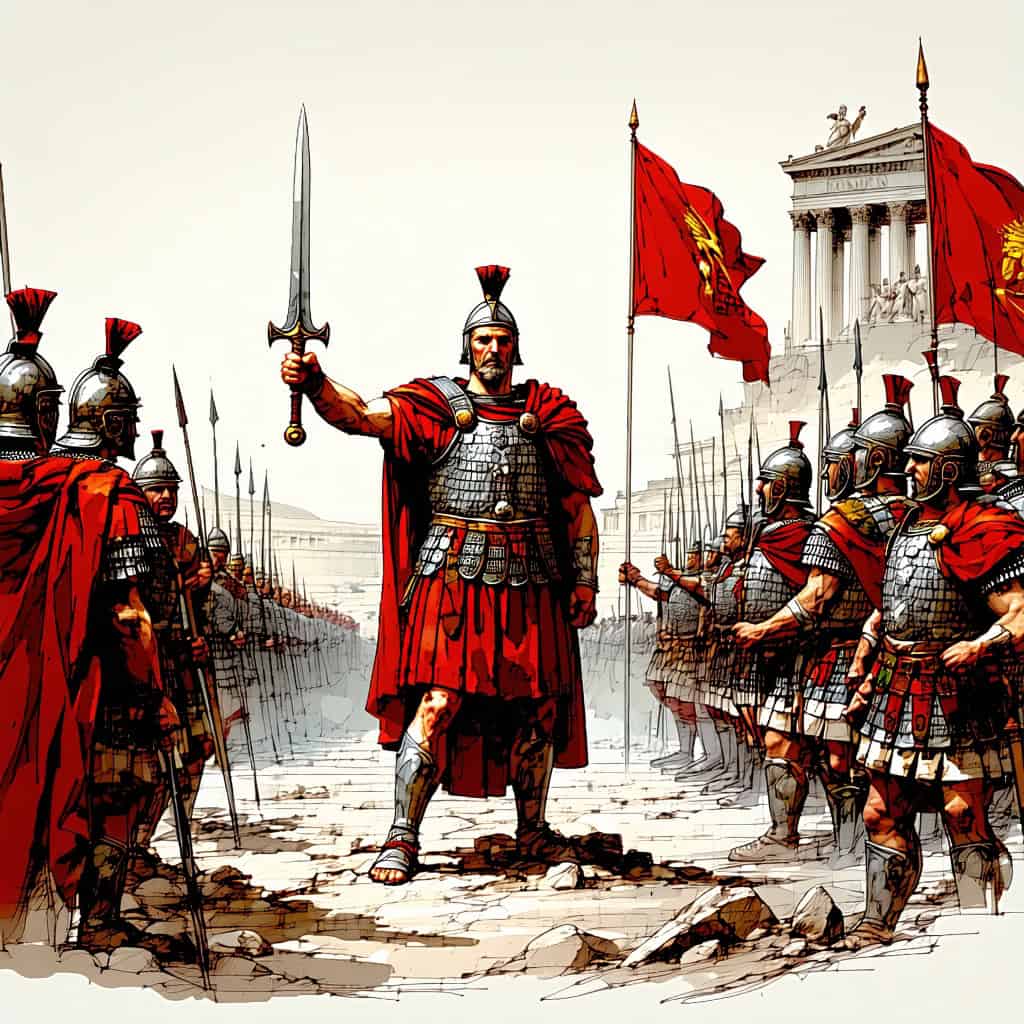
Introduction

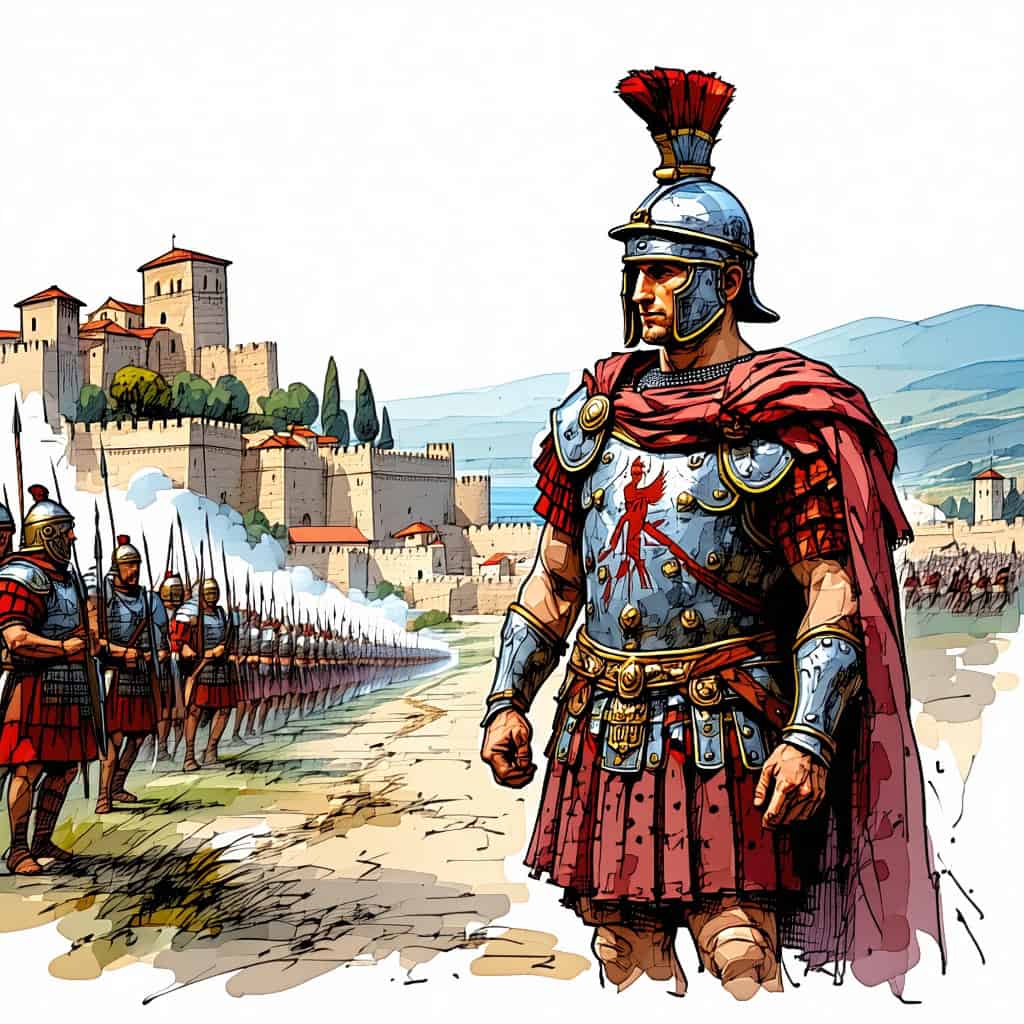

Vespasian

Otho

Vitellius

Titus

1. The Death of Emperor Nero

2. Vespasians Military Campaigns

3. The Year of the Four Emperors

4. Vespasians Supporters

5. The Siege of Rome

6. Vespasians Coronation

7. Rebuilding Rome

8. Military Campaigns and Conquests

9. Economic Reforms

10. Legacy of Vespasian
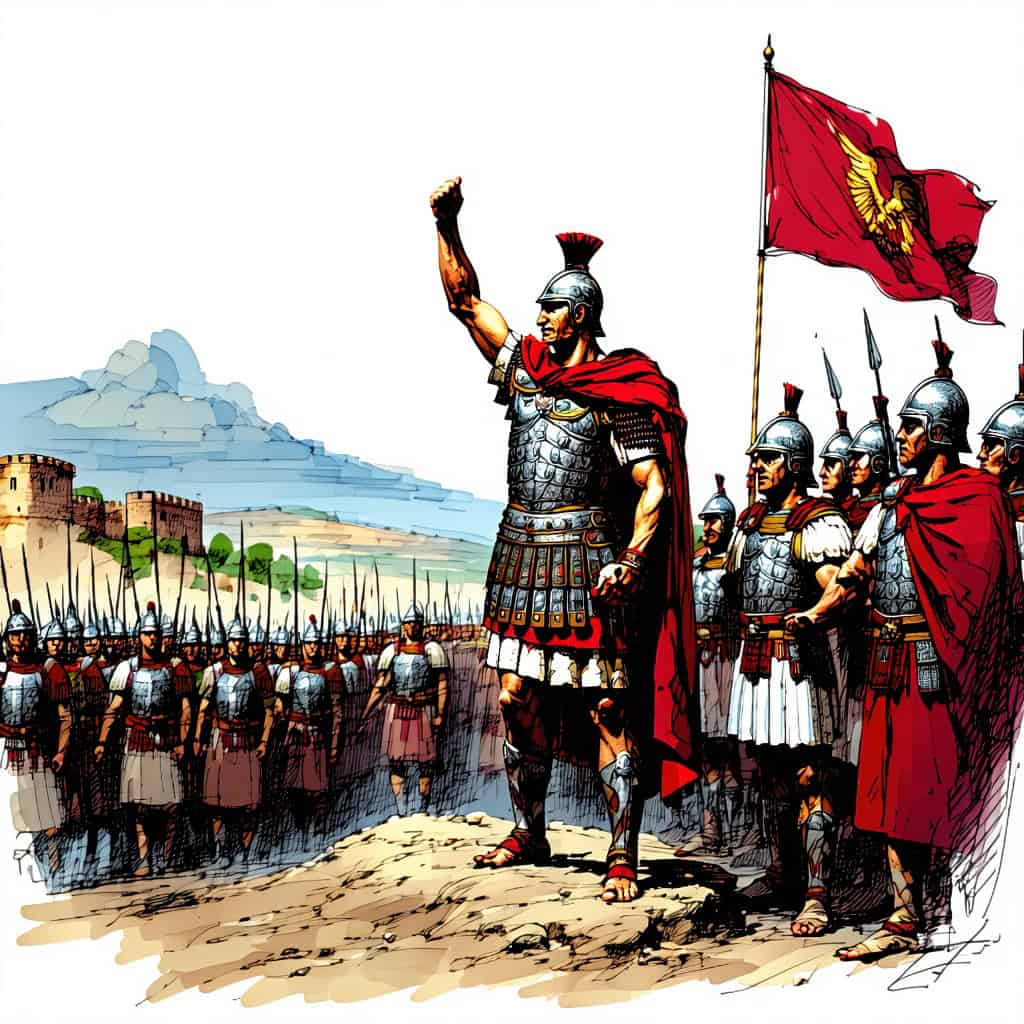
Lesson Details & Resources
In a Nutshell
- What: The accession of Vespasian (69 AD)
- When: 69 AD
- Who: Vespasian
- Outcome: Vespasian becomes the Emperor of Rome, marking the beginning of the Flavian dynasty.
Famous Figures in the the Accession of Emperor Vespasian
-
Vespasian
Vespasian was a Roman emperor who reigned from 69 AD until his death in 79 AD.
-
Titus Flavius Petro
Titus Flavius Petro was a Roman senator and father of Vespasian.
-
Mucianus
Mucianus was a Roman general and politician who played a key role in Vespasian's rise to power.
-
Gaius Licinius Mucianus
Gaius Licinius Mucianus was a Roman general and governor who supported Vespasian during the civil war.
-
Titus
Titus was the eldest son of Vespasian and succeeded him as Roman emperor.
-
Domitian
Domitian was the younger son of Vespasian and later became Roman emperor.
-
Julia Berenice
Julia Berenice was a Jewish princess and lover of Titus.
-
Sextus Lucilius Bassus
Sextus Lucilius Bassus was a Roman general who supported Vespasian during the civil war.
-
Flavius Sabinus
Flavius Sabinus was Vespasian's brother who served as prefect of Rome.
-
Vitellius
Vitellius was a Roman emperor who was deposed by Vespasian during the Year of the Four Emperors.
Timeline of the Accession of Emperor Vespasian
Death of Emperor Nero
Galba declared Emperor
Otho declares himself Emperor
Vitellius proclaimed Emperor
Vespasian, governor of Judaea, declares himself Emperor
Vespasian's forces defeat Vitellius' forces in the Battle of Bedriacum
Vitellius executed
Vespasian recognized as Emperor by the Senate
Vespasian begins his reign as Emperor
Construction of the Colosseum begins in Rome
Vespasian establishes the Flavian Dynasty
Vespasian reforms taxation and strengthens the Roman economy
Titus, Vespasian's son, appointed as co-emperor
Titus leads the Roman forces in the Siege of Jerusalem
Jerusalem captured and the Second Temple destroyed
Titus returns to Rome and celebrates a triumph
Titus becomes Emperor upon Vespasian's death
Titus completes the construction of the Colosseum
Titus dies and is succeeded by his brother Domitian
Domitian carries out various building projects and reforms
Vocabulary List
- Vespasian
- Roman emperor who ruled from 69 AD to 79 AD
- Accession
- The act of coming to a position of power or authority
- Dynasty
- A series of rulers from the same family or group
- Legitimacy
- The quality or state of being lawful or rightful
- Civil war
- A war between groups or regions within the same country
- Succession
- The process of inheriting a title, position, or property
- Revolt
- A violent uprising against authority or government
- Unrest
- A state of dissatisfaction, disturbance, or agitation
- Siege
- A military operation in which a fortified place is surrounded and isolated to force surrender
- Proclamation
- A public or official announcement
- Defeat
- To overcome or beat in a battle or competition
- Crisis
- A time of intense difficulty, trouble, or danger
- Stability
- The state of being steady, secure, or unchanging
- Rebellion
- An act of defiance or resistance against authority or control
- Coinage
- The process of making or issuing coins
- Assassination
- The act of killing a prominent figure, often for political reasons
- Ruler
- A person who governs or exercises control over a country or region
- Patrician
- A member of a noble or aristocratic family in ancient Rome
- Provincial
- Relating to a province or the people living in a province
- Consolidation
- The action or process of making something stronger or more solid.
Key Facts
This is the information used in the fact matching game
- Vespasian was the ninth Roman emperor, ruling from 69 AD until his death in 79 AD
- He was born in 9 AD in the town of Falacrine, Italy
- Vespasian came from a humble background, being the son of a tax collector
- Before becoming emperor, Vespasian served as a military general under the emperors Caligula, Claudius, and Nero
- Vespasian was proclaimed emperor by his troops in Egypt after the suicide of Nero
- His accession marked the beginning of the Flavian dynasty, which would rule Rome for the next quarter-century
- Vespasian's reign brought political stability to Rome after the chaos of the Year of the Four Emperors in 69 AD
- During his rule, Vespasian focused on restoring Rome's financial stability by implementing various economic reforms
- He introduced a tax on public urinals, which became known as the "Vectigal urinae"
- Vespasian initiated the construction of the Flavian Amphitheatre, also known as the Colosseum, which was completed under his son Titus' reign
- He led successful military campaigns in Judea, quelling the Jewish rebellion and sacking Jerusalem in 70 AD
- Vespasian was known for his frugality and modesty, in contrast to the extravagant lifestyles of previous emperors
- He was often depicted with a stern and serious expression in statues and coins
- Vespasian implemented a series of public works projects, including the restoration of temples and buildings throughout Rome
- He instituted new taxes and levies to fund these projects, which helped stimulate the Roman economy
- Vespasian introduced the "aerarium militare," a fund dedicated to supporting retired veterans
- During his reign, Vespasian expanded the Roman Empire's borders by annexing territories in Britain and Dacia
- He was deified after his death, with his son Titus succeeding him as emperor
- Vespasian's reign is often seen as a turning point in Roman history, marking the transition from the Julio-Claudian dynasty to the Flavian dynasty
- His accession and subsequent rule laid the foundation for a period of stability and prosperity in Rome.
Analysis & Significance
Immediate Consequences
Following the accession of Vespasian in 69 AD, a period of civil unrest and instability known as the Year of the Four Emperors ensued. Vespasian’s rise to power marked the end of the tumultuous Year of the Four Emperors, bringing stability and order back to the Roman Empire.
Long-Term Impact
Vespasian’s reign as Emperor brought about significant changes to the Roman Empire, including the establishment of the Flavian dynasty. He implemented various economic reforms, such as the construction of the Colosseum and the introduction of new taxes, which had lasting effects on the empire’s infrastructure and financial system.
Cultural Significance Today
The accession of Vespasian remains a pivotal moment in Roman history, showcasing the transition from the chaos of the Year of the Four Emperors to a period of stability and prosperity under the Flavian dynasty. Vespasian’s legacy can still be seen today in the architectural marvels he commissioned, as well as in the lasting impact of his economic policies on the Roman Empire.
the Accession of Emperor Vespasian Games


Take Your Learning Offline
Want a convenient, print-ready study guide for this lesson? Become a Memory Wizards Pro member to unlock the downloadable " Memory Scrolls" for this topic and our entire library!
- ✓ Complete Vocabulary Lists
- ✓ Key Facts & Timelines
- ✓ Beautifully Formatted for Print & Mobile