
How Do You Learn Best?
Learn by Listening
Start with the 3-minute audio summary to get the key facts and narrative highlights quickly.
Learn by Reading
Immerse yourself in the 10-minute visual lesson for a comprehensive understanding of the topic.
Learn by Reviewing
Jump directly to the key facts, timeline, and vocabulary lists to build a solid foundation of details.
Learn by Doing
Challenge yourself! Jump straight into the interactive games to learn by trial, error, and discovery.
The Masterpiece: Three Graces Raphael
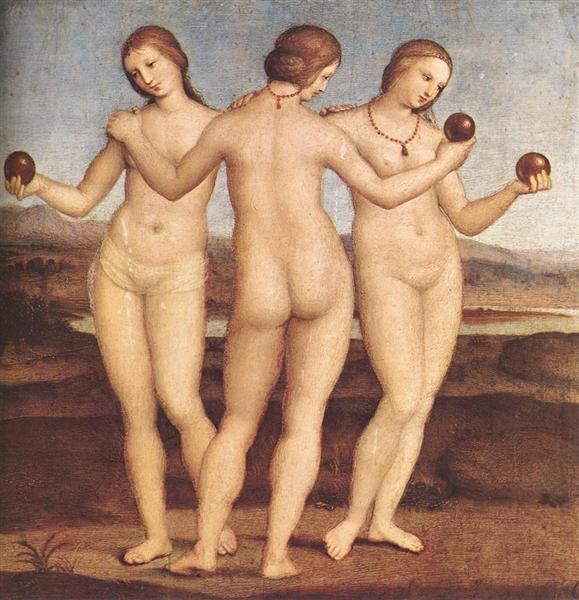
Deconstructing the Masterpiece
Unity
The three figures are closely intertwined, symbolizing harmony, balance, and unity among the Graces.
Graceful Poses
The elegant and fluid poses of the figures convey a sense of beauty, grace, and classical idealism.
Classical Inspiration
The composition is inspired by ancient Greek and Roman art, reflecting Raphael's admiration for classical beauty and aesthetics.
Audio Library
As one of our featured lessons, this topic includes premium audio guides.
The Rebirth of Classicism: An Analysis in 10 Minutes
Introduction
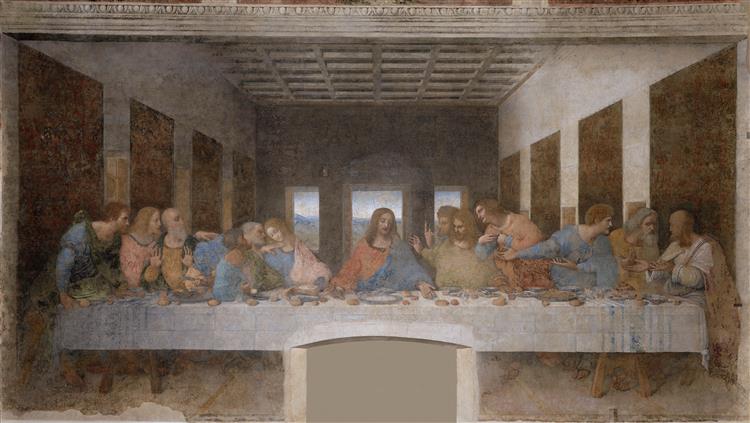
Leonardo da Vinci
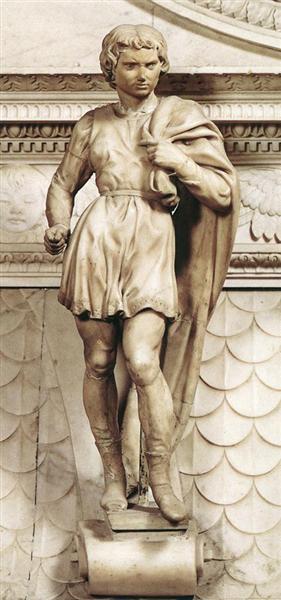
Michelangelo Buonarroti
Raphael Sanzio
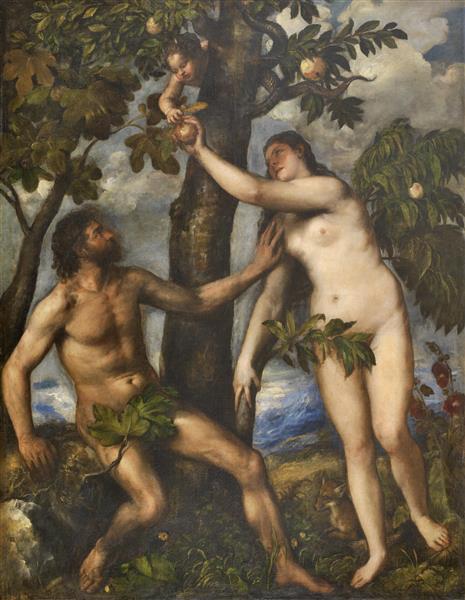
Titian
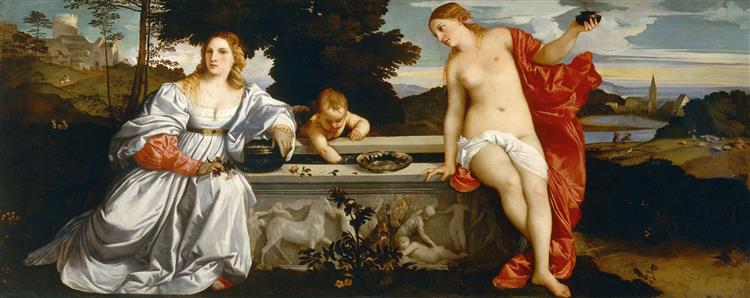
The Resurgence of Classicism in Renaissance Art: A Recap
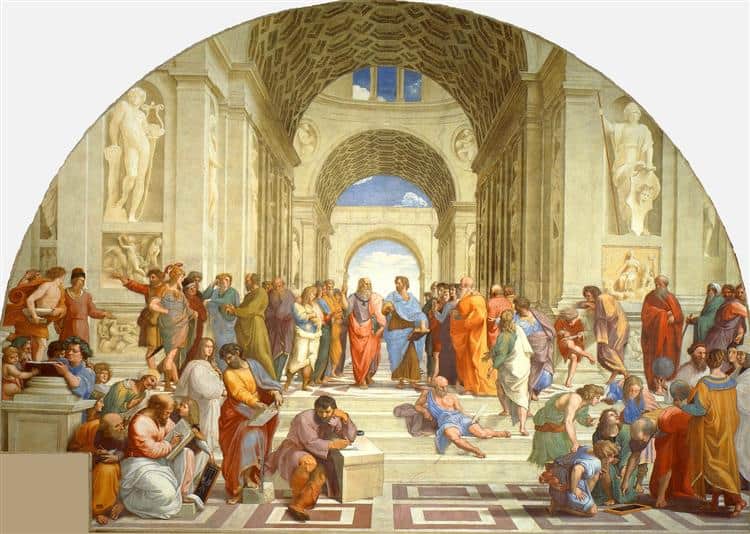
1. Influence of Ancient Greek and Roman Art
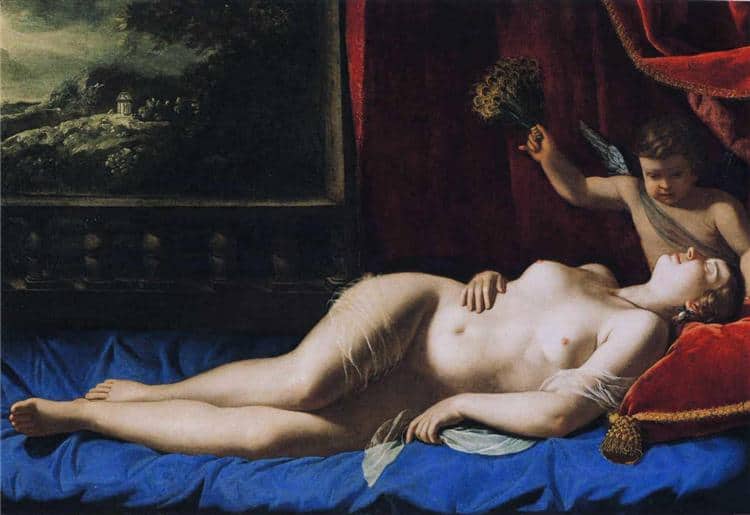
2. Humanism in Art

3. Rediscovery of Classical Texts
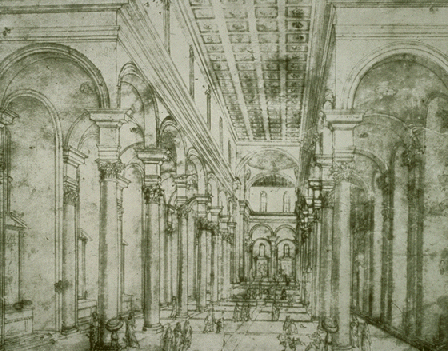
4. Architectural Revival
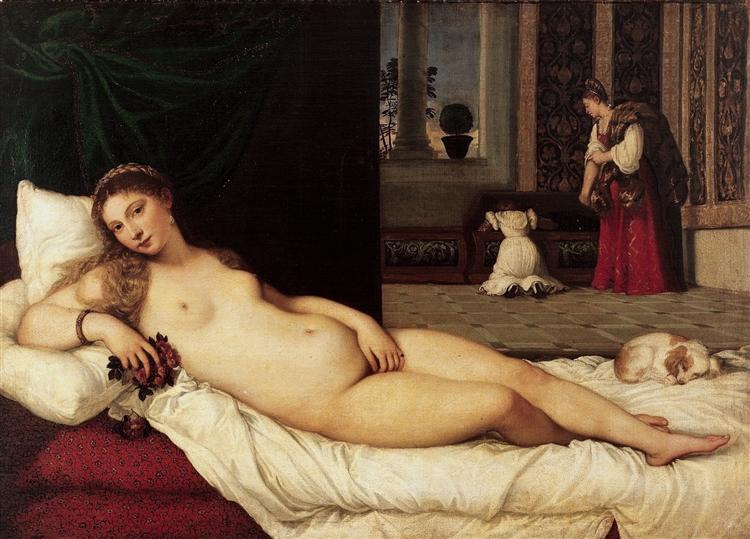
5. Idealized Forms and Proportions
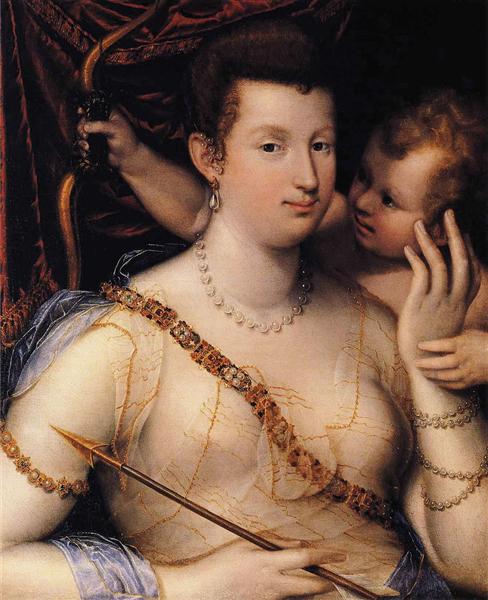
6. Depiction of Mythological Themes

7. Influence of Roman Architecture

8. Emphasis on Symmetry and Perspective
9. Legacy of Classicism in Art
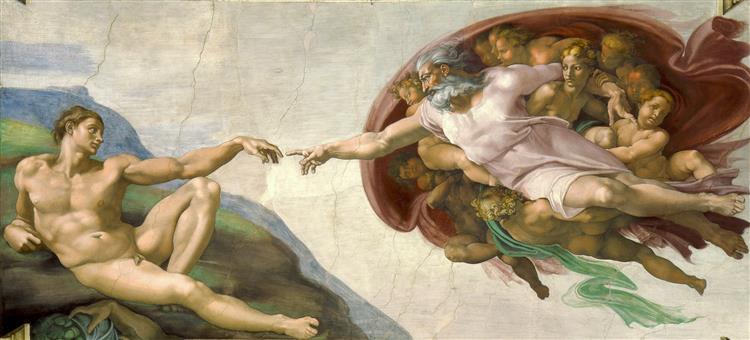
10. Continued Exploration of Classical Themes
Lesson Details & Resources
In a Nutshell
- Artist: Unknown
- Year: 18th century
- Medium: Oil on canvas
- Location: Louvre Museum, Paris
Vocabulary List
- Classicism
- The rebirth of Classicism in Renaissance art brought back the focus on ancient Greek and Roman art styles and principles.
- Humanism
- Humanism played a significant role in Renaissance art, emphasizing the importance of human potential and achievements.
- Proportion
- Renaissance artists focused on achieving perfect proportions in their artwork, drawing inspiration from classical ideals.
- Perspective
- The use of perspective in Renaissance art allowed artists to create more realistic and spatially accurate representations of the world.
- Symmetry
- Symmetry was a key element in Renaissance art, with artists carefully balancing the composition of their works.
- Harmony
- Renaissance artists sought to create works that were harmonious and balanced in terms of color, form, and composition.
- Detail
- Renaissance artists paid close attention to detail, creating intricate and realistic depictions of their subjects.
- Chiaroscuro
- Chiaroscuro, the use of light and shadow to create three-dimensional forms, was a technique widely used in Renaissance art.
- Sfumato
- Sfumato, a technique of blending colors and tones to create a smoky effect, was popularized by Leonardo da Vinci in Renaissance art.
- Idealization
- Renaissance artists often idealized their subjects, portraying them as perfect and flawless beings.
- Allegory
- Allegory, the use of symbolic imagery to convey deeper meanings, was a common feature in Renaissance art.
- Mythology
- Renaissance artists often drew inspiration from classical mythology, incorporating mythological themes and figures into their artwork.
- Tempera
- Tempera, a type of paint made from pigments mixed with egg yolk, was a popular medium used by Renaissance artists.
- Canvas
- Canvas, a durable fabric used as a painting surface, became more widely used in Renaissance art.
- Gilding
- Gilding, the application of gold leaf or paint to decorate and enhance artworks, was a common practice in Renaissance art.
- Fresco
- Fresco, a technique of painting on wet plaster, was often used to create large-scale murals in Renaissance art.
- Altarpiece
- Altarpieces, large religious paintings displayed on church altars, were a common form of art in Renaissance Italy.
- Portrait
- Portraiture became increasingly popular in Renaissance art, with artists capturing the likeness and personality of their subjects.
- Renaissance Man
- The concept of the 'Renaissance Man' emerged during this period, referring to individuals who excelled in various fields such as art, science, and literature.
- Patronage
- Renaissance artists relied on wealthy patrons to fund their work, leading to the creation of many masterpieces in this era.
Timeline of The Rebirth of Classicism: An Analysis
Introduction of linear perspective by Filippo Brunelleschi
Masaccio's frescoes in the Brancacci Chapel
Leon Battista Alberti's treatise on painting, 'De pictura'
Donatello's bronze statue of David
Leonardo da Vinci's 'The Last Supper'
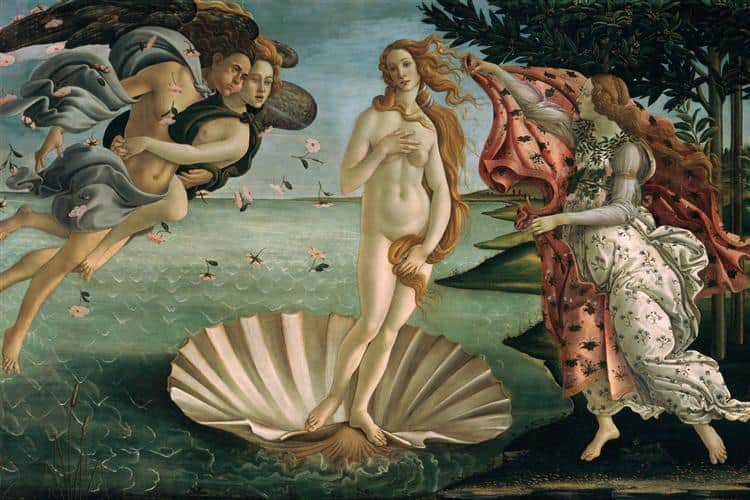
Sandro Botticelli's 'The Birth of Venus'
Raphael's 'The School of Athens'
Michelangelo's ceiling frescoes in the Sistine Chapel
Leonardo da Vinci's 'Mona Lisa'
Andrea Palladio's treatise on architecture, 'The Four Books of Architecture'
Caravaggio's use of chiaroscuro in his paintings
The publication of Giorgio Vasari's 'Lives of the Artists'
Titian's use of vibrant colors and emotional intensity
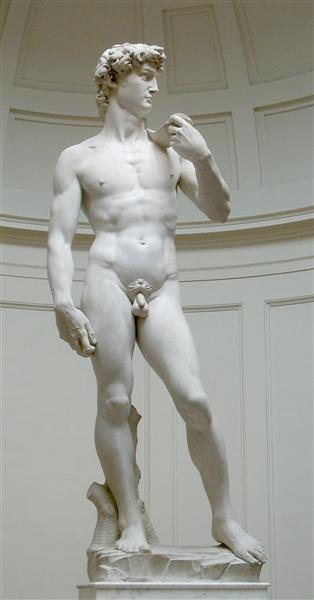
The completion of Michelangelo's 'David'
Albrecht Durer's engravings and woodcuts
The establishment of the Accademia del Disegno in Florence
The spread of classicism to other European countries
The decline of classicism and the rise of Mannerism
The influence of classicism on later art movements, such as Neoclassicism
The continued study and admiration of Renaissance art in the present day
Key Facts
This is the information used in the fact matching game
- The Rebirth of Classicism in Renaissance Art was a revival of the artistic principles of ancient Greece and Rome.
- Artists during the Renaissance sought to emulate the beauty, harmony, and proportion found in classical art.
- Classical themes and subjects, such as mythology and historical events, became popular in Renaissance art.
- The use of perspective and realistic human figures were key characteristics of the Rebirth of Classicism in Renaissance Art.
- Leonardo da Vinci's 'Vitruvian Man' is a famous example of the Renaissance focus on proportion and anatomy.
- Michelangelo's 'David' is a renowned sculpture that reflects the ideals of classical beauty and perfection.
- Renaissance artists often studied and replicated ancient Greek and Roman sculptures to improve their own skills.
- The Sistine Chapel ceiling painted by Michelangelo is a prime example of the incorporation of classical themes in Renaissance art.
- The invention of the printing press allowed for the dissemination of classical texts and artworks, influencing Renaissance artists.
- The rediscovery of ancient texts and manuscripts during the Renaissance contributed to the revival of classical ideals in art.
- Raphael's 'School of Athens' painting is a masterpiece that showcases classical philosophers and mathematicians.
- The architectural designs of the Renaissance were heavily influenced by classical Roman and Greek structures.
- The use of symmetry, balance, and harmony in artworks became prominent during the Rebirth of Classicism in Renaissance Art.
- Renaissance artists often depicted idealized human forms, reflecting the beauty and perfection of classical sculpture.
- The works of ancient Greek and Roman artists, such as Polykleitos and Praxiteles, were studied and admired by Renaissance artists.
- Classical motifs, such as columns, arches, and pediments, were commonly used in Renaissance architecture and art.
- The Medici family of Florence played a significant role in patronizing and promoting Renaissance art, including the Rebirth of Classicism.
- The use of chiaroscuro, a technique that emphasizes light and shadow to create depth and volume, was a hallmark of Renaissance art.
- Titian, a prominent Renaissance artist, was known for his use of color and composition influenced by classical ideals.
- The Rebirth of Classicism in Renaissance Art marked a shift towards humanism and a celebration of the individual and human potential.
Analysis & Significance
Artistic Innovation
‘The Rebirth of Classicism’ introduced a return to the aesthetic principles of ancient Greece and Rome, emphasizing symmetry, proportion, and idealized beauty. This marked a departure from the ornate and emotional style of the Baroque period, focusing instead on clarity, simplicity, and order. The artwork’s clean lines, balanced compositions, and harmonious figures reflected a renewed interest in the classical ideals of balance and harmony.
Influence on Art History
This work laid the foundation for the Neoclassical movement, inspiring artists such as Jacques-Louis David and Jean-Auguste-Dominique Ingres. It also sparked a renewed interest in classical mythology, history, and literature, shaping the visual language of art for decades to come. ‘The Rebirth of Classicism’ set the stage for a revival of classical themes and aesthetics in the 18th and 19th centuries, influencing a wide range of artistic disciplines.
Cultural Significance Today
Today, ‘The Rebirth of Classicism’ continues to be celebrated for its timeless beauty and enduring influence on Western art. Its emphasis on classical ideals of beauty and harmony resonates with contemporary audiences, reflecting a desire for order and balance in an increasingly chaotic world. The artwork’s status as a masterpiece of Neoclassical art cements its place in art history, captivating viewers with its timeless elegance and classical grace.
The Rebirth of Classicism: An Analysis Games


Take Your Learning Offline
Want a convenient, print-ready study guide for this lesson? Become a Memory Wizards Pro member to unlock the downloadable " Memory Scrolls" for this topic and our entire library!
- ✓ Complete Vocabulary Lists
- ✓ Key Facts & Timelines
- ✓ Beautifully Formatted for Print & Mobile