
How Do You Learn Best?
Learn by Listening
Start with the 3-minute audio summary to get the key facts and narrative highlights quickly.
Learn by Reading
Immerse yourself in the 10-minute visual lesson for a comprehensive understanding of the topic.
Learn by Reviewing
Jump directly to the key facts, timeline, and vocabulary lists to build a solid foundation of details.
Learn by Doing
Challenge yourself! Jump straight into the interactive games to learn by trial, error, and discovery.
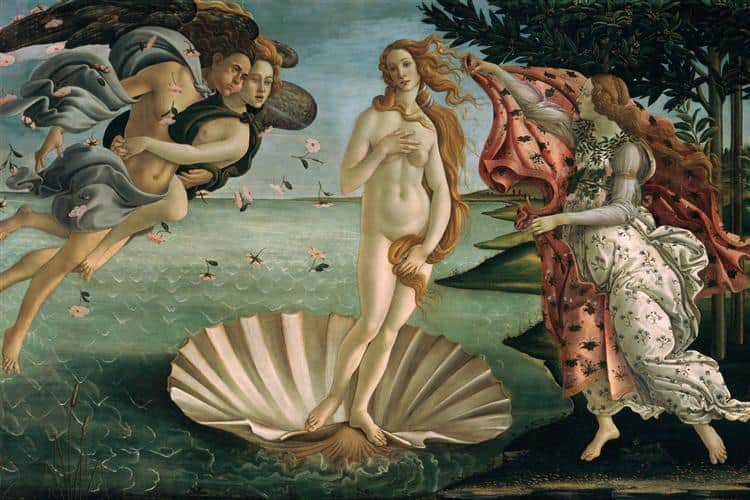
The Masterpiece: The Birth of Venus - Sandro Botticelli
Deconstructing the Masterpiece
Circular Composition
The figures are arranged in a circular pattern, drawing the viewer's eye towards the central figure of Venus.
Contrasting Colors
The use of vibrant colors creates a sense of harmony and beauty, enhancing the ethereal quality of the scene.
Linear Perspective
The use of linear perspective creates depth and spatial relationships, placing the figures in a believable setting.
Audio Library
As one of our featured lessons, this topic includes premium audio guides.
Unlock the Wizard's Cram Session
This powerful audio study guide is a Pro-exclusive feature. Upgrade to Memory Wizards Pro to access this and all of our premium learning tools.
Upgrade to ProSandro Botticelli: An Analysis in 10 Minutes
Introduction

Leonardo da Vinci

Michelangelo

Raphael

Early Life and Training
Rise to Prominence
Works for the Medici Family

Religious Paintings

Influence of Neoplatonism
Decline in Popularity

Rediscovery and Legacy
Personal Life and Death

Impact on Art History
Lesson Details & Resources
In a Nutshell
- Artist: Sandro Botticelli
- Year: 1486
- Medium: Tempera on panel
- Location: Uffizi Gallery, Florence
Vocabulary List
- Renaissance
- Sandro Botticelli was a prominent artist during the Renaissance period in Italy.
- Primavera
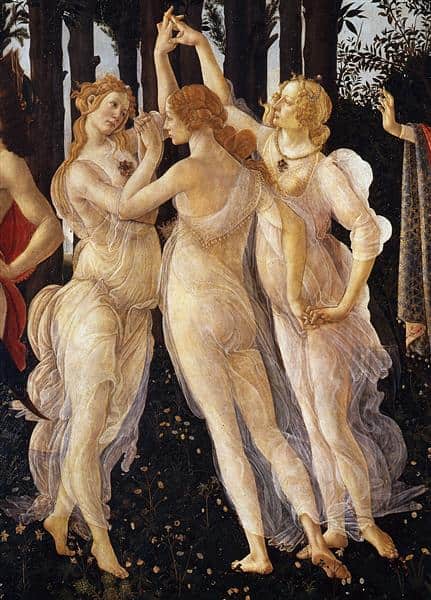
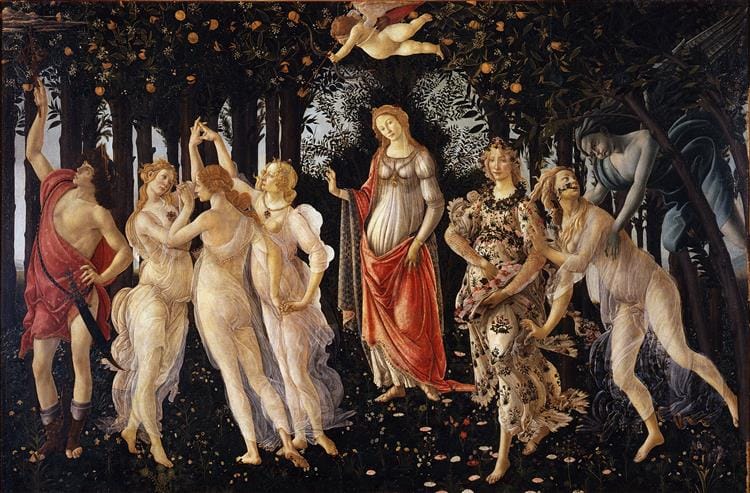
- One of Botticelli's most famous works is the painting 'Primavera', which depicts a group of mythological figures in a garden setting.
- Allegory
- Many of Botticelli's works contain allegorical elements, representing abstract ideas through symbolic imagery.
- Madonna
- Botticelli often painted religious subjects, including numerous depictions of the Madonna and Child.
- Linear perspective
- Botticelli was known for his use of linear perspective to create a sense of depth and dimension in his paintings.
- Platonic love
- Some art historians believe that Botticelli's works, such as 'The Birth of Venus', reflect the concept of Platonic love.
- Neoplatonism
- Botticelli was influenced by the Neoplatonic philosophy of Marsilio Ficino, which emphasized the spiritual and divine nature of beauty.
- Mythology
- Botticelli often depicted scenes from classical mythology in his paintings, such as 'The Birth of Venus' and 'The Allegory of Spring'.
- Fresco
- Botticelli created several frescoes, including 'The Trials of Moses' in the Sistine Chapel.
- Humanism
- Botticelli's art was influenced by the humanist movement, which emphasized the importance of classical learning and the individual.
- Sfumato
- Botticelli used the technique of sfumato, or soft blending of colors, to create a sense of atmosphere and ethereal beauty in his paintings.
- Mythological creatures
- Botticelli's paintings often feature mythological creatures, such as centaurs, nymphs, and satyrs.
- Venus
- Botticelli's painting 'The Birth of Venus' depicts the goddess of love emerging from the sea on a giant scallop shell.
- Florence
- Botticelli was a native of Florence, where he lived and worked for most of his life.
- Classical art
- Botticelli's art was influenced by the classical art of ancient Greece and Rome, with a focus on idealized figures and harmonious compositions.
- Allegorical figure
- In 'The Allegory of Spring', Botticelli depicts an allegorical figure representing Spring surrounded by flowers and mythological figures.
- Mythological themes
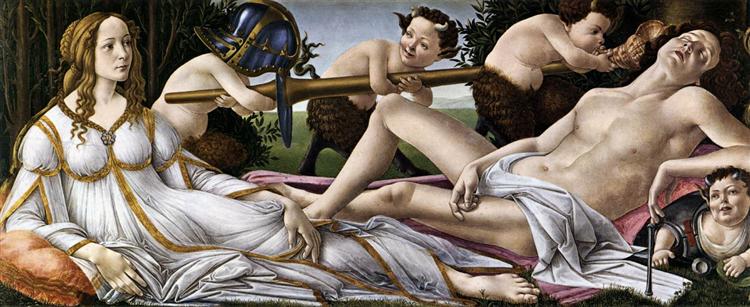
- Botticelli's paintings often explore mythological themes and stories, such as the birth of Venus and the story of Venus and Mars.
- Symbolism
- Botticelli's paintings are filled with symbolic imagery and allegorical figures that convey deeper meanings and messages.
- Golden ratio
- Some art historians believe that Botticelli used the golden ratio, a mathematical proportion believed to be aesthetically pleasing, in his compositions.
- Divine beauty
- Botticelli's art often reflects the Neoplatonic idea of divine beauty, emphasizing spiritual and idealized forms.
- Classical mythology
- Botticelli's paintings often draw on classical mythology and literature, such as Ovid's 'Metamorphoses'.
Timeline of Sandro Botticelli: An Analysis
Sandro Botticelli is born in Florence, Italy
Botticelli becomes a student of Fra Filippo Lippi
Botticelli establishes his own workshop in Florence
Botticelli paints 'Adoration of the Magi'
Botticelli paints 'La Primavera'
Botticelli paints 'The Birth of Venus'
Botticelli becomes a member of the Sistine Chapel
Botticelli paints 'The Annunciation'
Botticelli becomes involved in the Bonfire of the Vanities
Botticelli's art falls out of favor due to the rise of Mannerism
Botticelli dies in Florence
Botticelli's work experiences a revival in the 19th century
Botticelli's 'Portrait of a Young Man' is discovered in the 20th century
Botticelli's 'The Birth of Venus' is displayed at the Uffizi Gallery in Florence
Botticelli's 'La Primavera' is restored at the Uffizi Gallery
Botticelli's works continue to be celebrated and studied by art historians
Key Facts
Analysis & Significance
Artistic Innovation
Sandro Botticelli’s works, such as “The Birth of Venus” and “Primavera,” introduced a new level of beauty and grace in Renaissance art. His use of delicate lines, ethereal figures, and idealized forms brought a sense of elegance and spirituality to his paintings, setting a standard for beauty in art that was unparalleled in his time.
Influence on Art History
Botticelli’s art had a lasting impact on the development of Western art. His emphasis on beauty, mythology, and symbolism inspired later artists, including the Pre-Raphaelites and Symbolists. His innovative compositions and spiritual themes also paved the way for the Mannerist and Baroque movements, influencing generations of artists to come.
Cultural Significance Today
Today, Botticelli’s works are considered masterpieces of art history, admired for their timeless beauty and spiritual depth. “The Birth of Venus” and “Primavera” continue to captivate audiences around the world, with their iconic imagery and allegorical meanings resonating with contemporary viewers. Botticelli’s art remains a symbol of the enduring power of beauty and creativity in the human experience.
Sandro Botticelli: An Analysis Games


Take Your Learning Offline
Want a convenient, print-ready study guide for this lesson? Become a Memory Wizards Pro member to unlock the downloadable " Memory Scrolls" for this topic and our entire library!
- ✓ Complete Vocabulary Lists
- ✓ Key Facts & Timelines
- ✓ Beautifully Formatted for Print & Mobile