
How Do You Learn Best?
Learn by Listening
Start with the 3-minute audio summary to get the key facts and narrative highlights quickly.
Learn by Reading
Immerse yourself in the 10-minute visual lesson for a comprehensive understanding of the topic.
Learn by Reviewing
Jump directly to the key facts, timeline, and vocabulary lists to build a solid foundation of details.
Learn by Doing
Challenge yourself! Jump straight into the interactive games to learn by trial, error, and discovery.
The Masterpiece: The Flagellation of Christ by Piero della Francesca
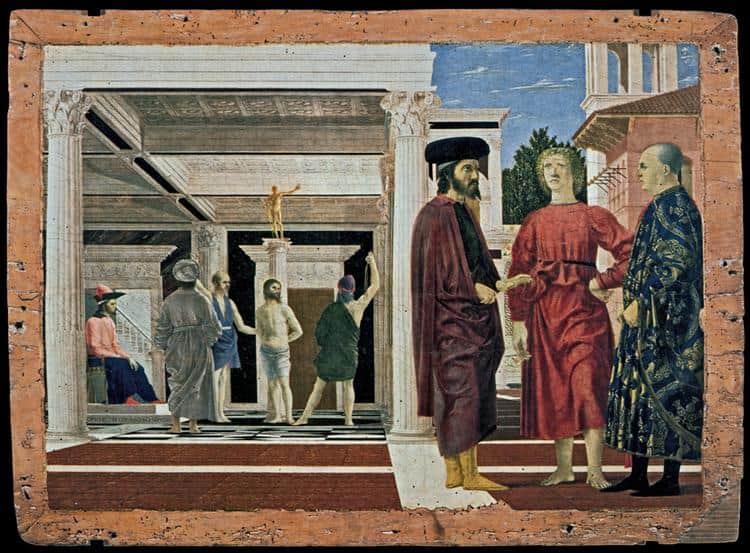
Deconstructing the Masterpiece
Central Focus
The figure of Christ being flagellated is positioned at the center, drawing the viewer's attention and emphasizing the theme of suffering.
Geometric Shapes
The composition is structured around geometric forms, with squares and rectangles creating a sense of order and balance.
Cool Color Palette
The use of blues and greens creates a serene and contemplative mood, contrasting with the violence of the subject matter.
Audio Library
As one of our featured lessons, this topic includes premium audio guides.
Unlock the Wizard's Cram Session
This powerful audio study guide is a Pro-exclusive feature. Upgrade to Memory Wizards Pro to access this and all of our premium learning tools.
Upgrade to ProLinear Perspective in Renaissance Art: An Analysis in 10 Minutes
Introduction
Leonardo da Vinci
Raphael

Michelangelo

Albrecht Dürer
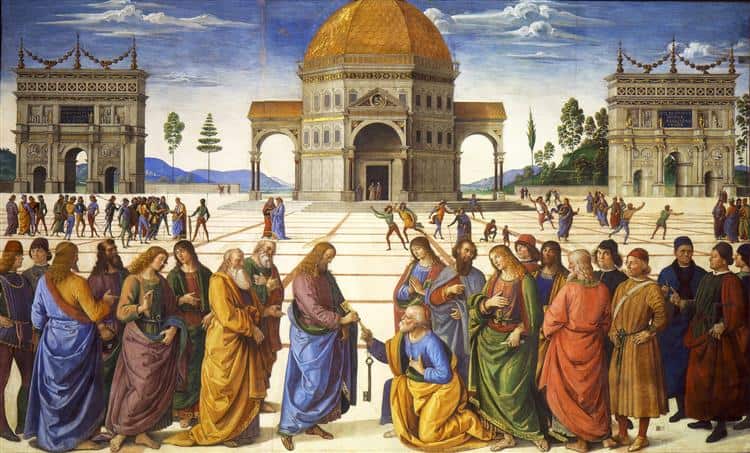
1. The Importance of Linear Perspective

2. Brunelleschis Experiment

3. The Work of Alberti
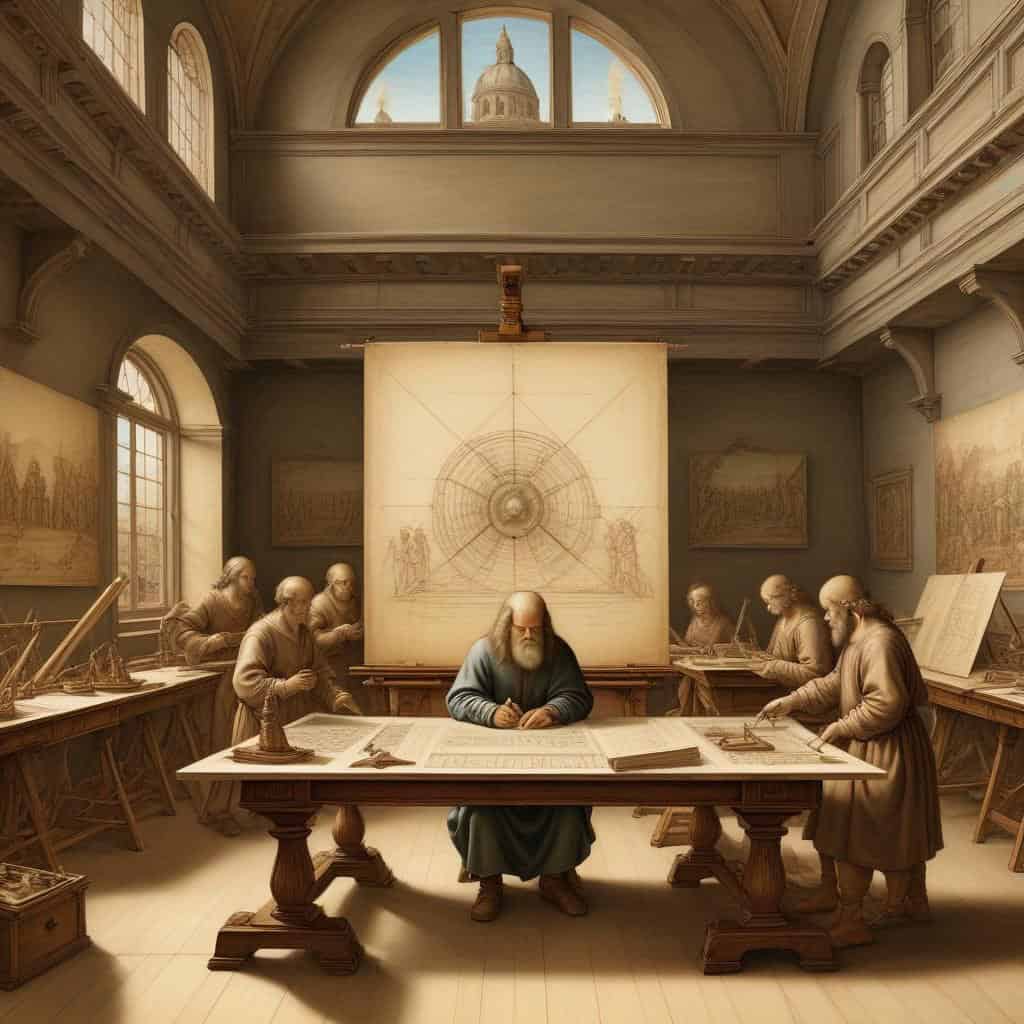
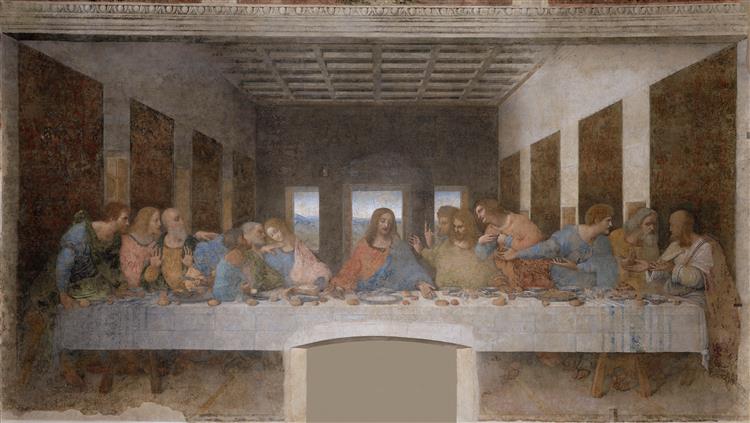
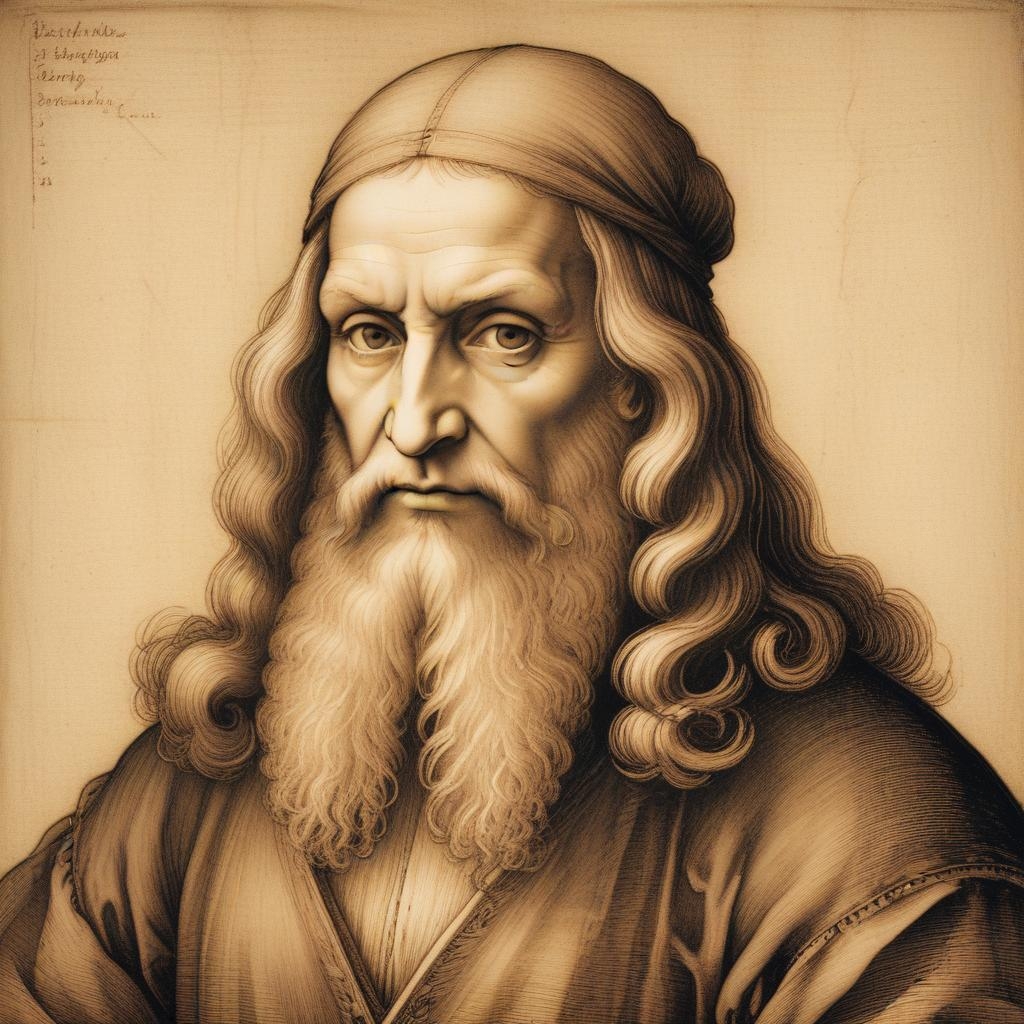
4. The Role of Leonardo da Vinci
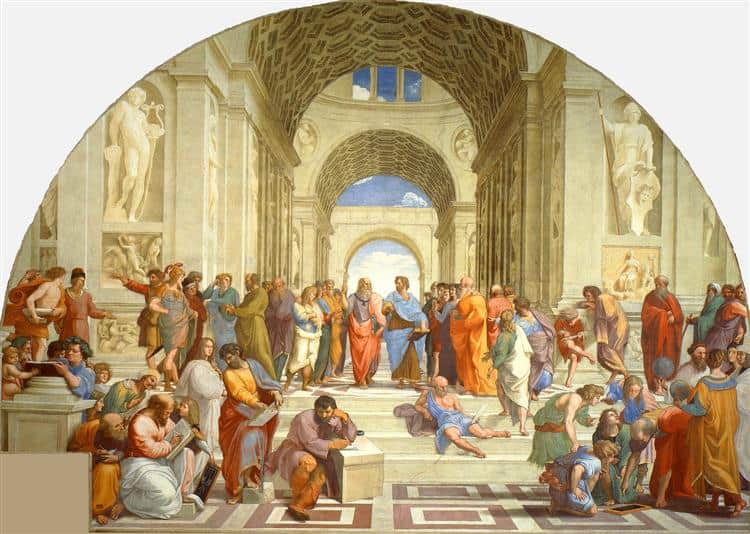
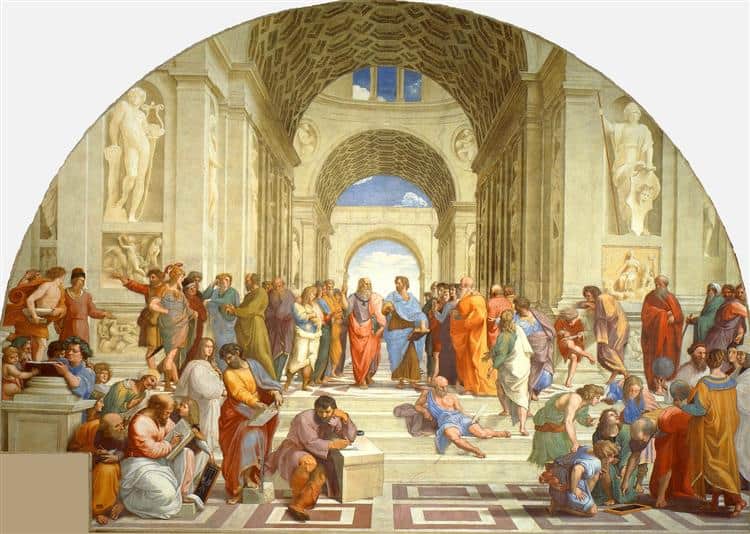
5. The Influence of Raphael
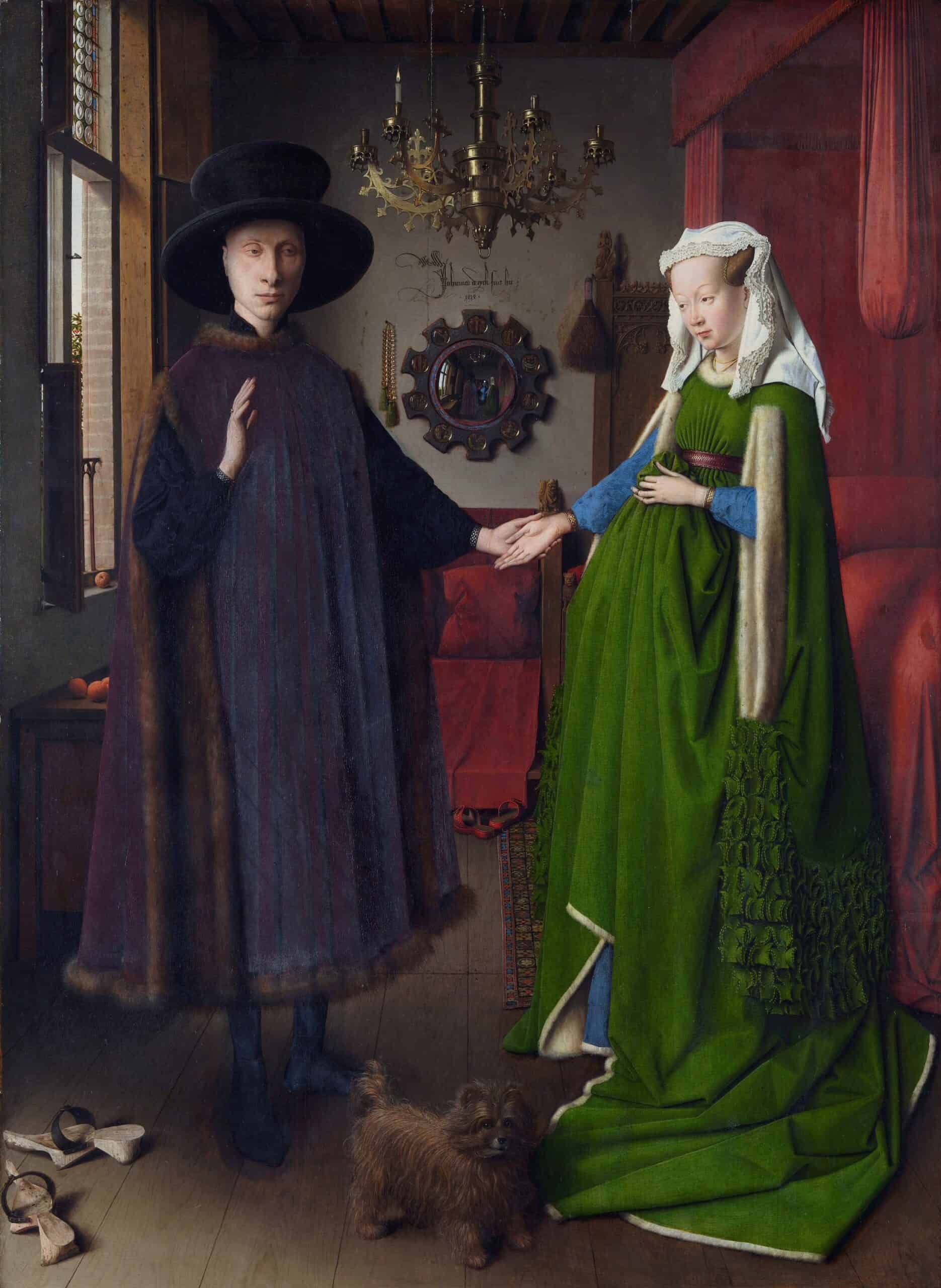
6. Linear Perspective in Architecture
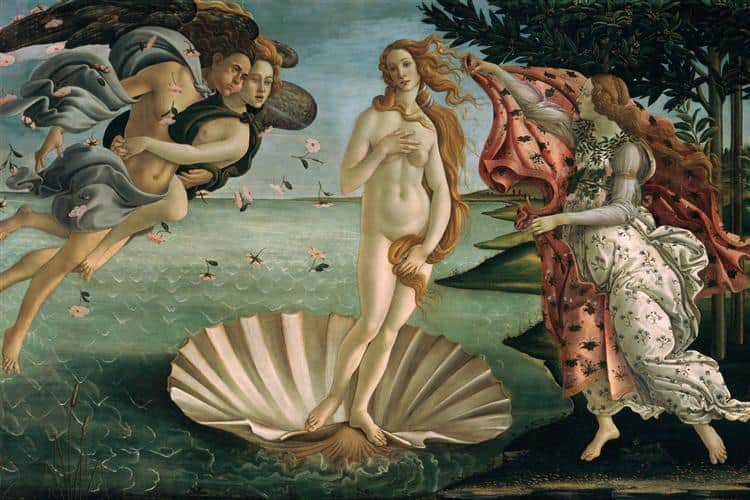
7. Impact on Artistic Development
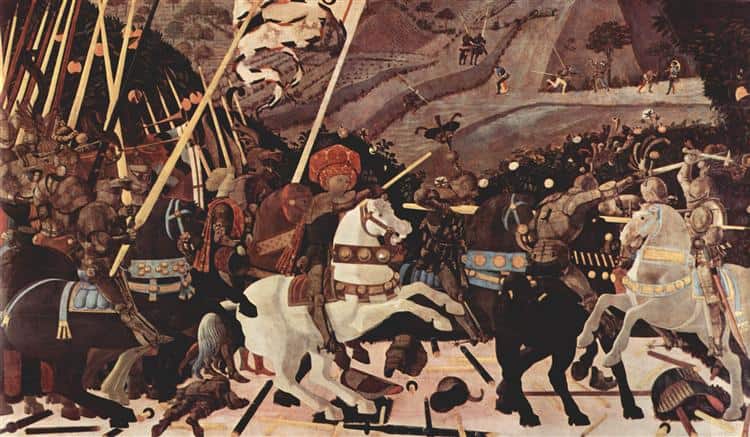
8. Legacy of Linear Perspective
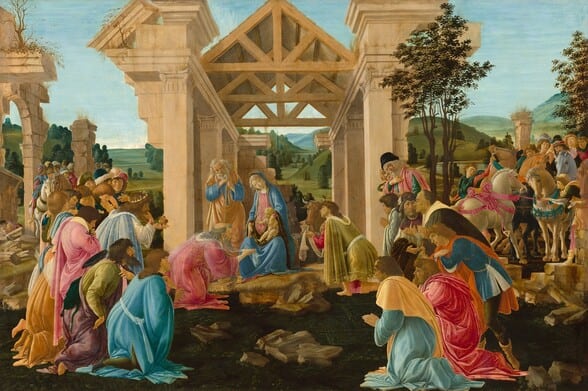
9. Continuing Exploration
10. Unlocking the Secrets
Lesson Details & Resources
In a Nutshell
- Artist: Linear Perspective in Renaissance Art
- Year: N/A
- Medium: N/A
- Location: N/A
Vocabulary List
- Vanishing point
- The vanishing point is the point on the horizon line where parallel lines appear to converge in a painting.
- Horizon line
- The horizon line is a horizontal line that represents the viewer's eye level in a painting.
- Orthogonal lines
- Orthogonal lines are diagonal lines that converge at the vanishing point in linear perspective.
- Foreshortening
- Foreshortening is a technique used to create the illusion of depth by shortening objects in the distance.
- Atmospheric perspective
- Atmospheric perspective is a technique that uses changes in color and clarity to create the illusion of depth in a painting.
- Linear perspective
- Linear perspective is a mathematical system used to create the illusion of depth and distance in a two-dimensional artwork.
- One-point perspective
- One-point perspective is a type of linear perspective where all parallel lines converge at a single vanishing point.
- Two-point perspective
- Two-point perspective is a type of linear perspective where parallel lines converge at two different vanishing points.
- Three-point perspective
- Three-point perspective is a type of linear perspective where parallel lines converge at three different vanishing points, typically used for extreme foreshortening.
- Depth perception
- Depth perception is the ability to perceive the distance of objects in a two-dimensional artwork.
- Picture plane
- The picture plane is the flat surface on which a painting is created, typically representing the viewer's field of vision.
- Illusion of space
- The illusion of space is the perception of depth and distance created through the use of linear perspective in a painting.
- Convergence
- Convergence is the coming together of parallel lines at a vanishing point in linear perspective.
- Scale
- Scale is the size of objects in relation to each other and the surroundings in a painting, influenced by linear perspective.
- Depth cues
- Depth cues are visual cues used to create the illusion of depth in a two-dimensional artwork, such as overlap, size, and placement.
- Distance
- Distance is the perceived space between objects in a painting, created through the use of linear perspective.
- Depth of field
- Depth of field is the range of distances in a painting that appear acceptably sharp and in focus, influenced by linear perspective.
- Vanishing lines
- Vanishing lines are imaginary lines that extend from the edges of objects to the vanishing point in linear perspective.
- Geometric forms
- Geometric forms are shapes and structures represented in a painting using linear perspective to create the illusion of three-dimensional space.
- Optical illusion
- An optical illusion is a visual trick created through the use of linear perspective to deceive the viewer's perception of depth and distance in a painting.
Timeline of Linear Perspective in Renaissance Art: An Analysis
Filippo Brunelleschi demonstrates linear perspective in painting at the Ospedale degli Innocenti in Florence
Leon Battista Alberti writes 'De pictura', outlining the principles of linear perspective
Masaccio uses linear perspective in his painting 'The Trinity'
Piero della Francesca writes 'On Perspective for Painting'
Leonardo da Vinci studies linear perspective and uses it in his paintings such as 'The Last Supper'
Sandro Botticelli uses linear perspective in his painting 'The Birth of Venus'
Raphael uses linear perspective in his painting 'The School of Athens'
Michelangelo incorporates linear perspective in the Sistine Chapel ceiling frescoes
Albrecht Dürer publishes 'Instruction in Measurement with Compass and Straightedge'
Giorgio Vasari writes 'Lives of the Artists' which discusses the use of linear perspective in Renaissance art
Italian architect Andrea Palladio uses linear perspective in his architectural designs
Linear perspective becomes a standard technique in Western art
Baroque artists such as Caravaggio continue to use linear perspective in their works
Linear perspective remains a fundamental principle in art education and practice
Modern artists such as Salvador Dalí and MC Escher experiment with and reinterpret linear perspective
Key Facts
This is the information used in the fact matching game
- Linear perspective was developed during the Renaissance in Italy, notably by the artist Filippo Brunelleschi.
- Linear perspective is a system for representing three-dimensional space on a two-dimensional surface.
- Linear perspective involves the use of vanishing points and orthogonal lines to create the illusion of depth.
- Linear perspective allows artists to create more realistic and lifelike representations of space and objects.
- Linear perspective was a major advancement in the history of art, allowing for greater accuracy in representation.
- Linear perspective became widely adopted by artists during the Renaissance, including Leonardo da Vinci and Raphael.
- Linear perspective was used in a variety of artistic genres, including painting, architecture, and sculpture.
- Linear perspective helped to create a sense of order and harmony in Renaissance art, reflecting the ideals of the time.
- Linear perspective allowed artists to create more dynamic compositions by manipulating the viewer's perception of space.
- Linear perspective influenced the development of other artistic techniques, such as foreshortening and atmospheric perspective.
- Linear perspective was based on the mathematical principles of geometry and optics, demonstrating the fusion of art and science in the Renaissance.
- Linear perspective allowed artists to create more convincing illusions of space and depth in their works.
- Linear perspective was seen as a mark of sophistication and skill in Renaissance art, separating the masters from the amateurs.
- Linear perspective revolutionized the way artists approached composition and spatial representation in their works.
- Linear perspective allowed artists to create more immersive and engaging visual experiences for viewers.
- Linear perspective continues to influence artists and designers today, serving as a foundational principle in the creation of realistic imagery.
- Linear perspective was a key element in the development of the Renaissance art style, characterized by its emphasis on naturalism and humanism.
- Linear perspective allowed artists to depict complex scenes and narratives with greater clarity and precision.
- Linear perspective encouraged artists to experiment with different viewpoints and compositions, leading to new innovations in visual representation.
- Linear perspective helped to elevate the status of artists in society, as their skills and knowledge of perspective were highly valued and respected.
Analysis & Significance
Artistic Innovation
The use of linear perspective in Renaissance art revolutionized the way artists represented space on a two-dimensional surface. By creating the illusion of depth and distance through converging lines, artists like Brunelleschi and Alberti introduced a new level of realism and spatial coherence to their paintings, sculptures, and architecture.
Influence on Art History
The mastery of linear perspective in Renaissance art laid the foundation for the development of Western art in the following centuries. It influenced artists such as Leonardo da Vinci, Raphael, and Michelangelo, who further refined the technique and incorporated it into their own works. This innovative approach to depicting space became a hallmark of the Renaissance style and set the stage for the evolution of art in the coming centuries.
Cultural Significance Today
Linear perspective continues to be a fundamental aspect of art education and practice today, serving as a key tool for artists to create realistic and immersive compositions. The impact of this technique can be seen in various art forms, from painting and sculpture to photography and digital art, showcasing its enduring relevance and influence in the world of art and design.
Linear Perspective in Renaissance Art: An Analysis Games


Take Your Learning Offline
Want a convenient, print-ready study guide for this lesson? Become a Memory Wizards Pro member to unlock the downloadable " Memory Scrolls" for this topic and our entire library!
- ✓ Complete Vocabulary Lists
- ✓ Key Facts & Timelines
- ✓ Beautifully Formatted for Print & Mobile