
How Do You Learn Best?
Learn by Listening
Start with the 3-minute audio summary to get the key facts and narrative highlights quickly.
Learn by Reading
Immerse yourself in the 10-minute visual lesson for a comprehensive understanding of the topic.
Learn by Reviewing
Jump directly to the key facts, timeline, and vocabulary lists to build a solid foundation of details.
Learn by Doing
Challenge yourself! Jump straight into the interactive games to learn by trial, error, and discovery.
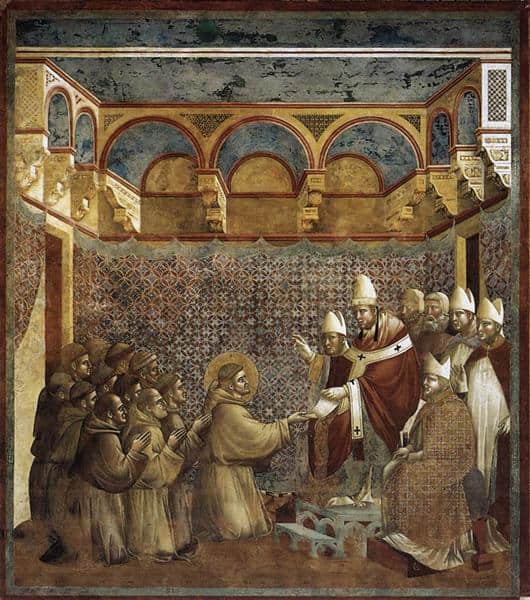
The Masterpiece: St. Francis Renounces all Worldly Goods -Giotto
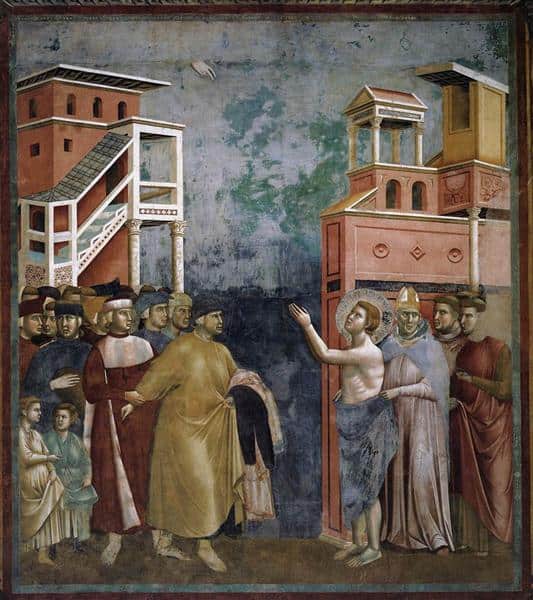
Deconstructing the Masterpiece
Central Figure
St. Francis is positioned in the center, drawing focus and emphasizing his importance as the main subject of the painting.
Gesture of Renunciation
St. Francis is shown with outstretched arms, symbolizing his rejection of material wealth and his embrace of a life of poverty and humility.
Simple Background
The lack of elaborate background details directs attention to St. Francis and his symbolic gesture, emphasizing the theme of renunciation.
Naturalistic Depiction
Giotto's use of naturalistic forms and expressions adds a sense of realism and emotional depth to the narrative of St. Francis renouncing worldly goods.
Audio Library
As one of our featured lessons, this topic includes premium audio guides.
Giotto di Bondone: An Analysis in 10 Minutes
Introduction

Cimabue

Dante Alighieri

Simone Martini

Fra Angelico

The Early Life of Giotto di Bondone
Giottos Breakthrough in Art
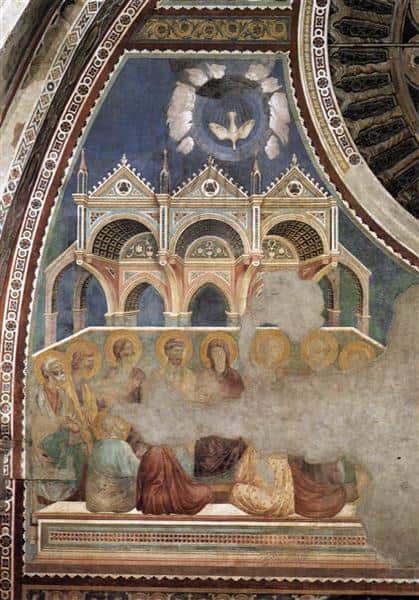
Giottos Influence on the High Renaissance
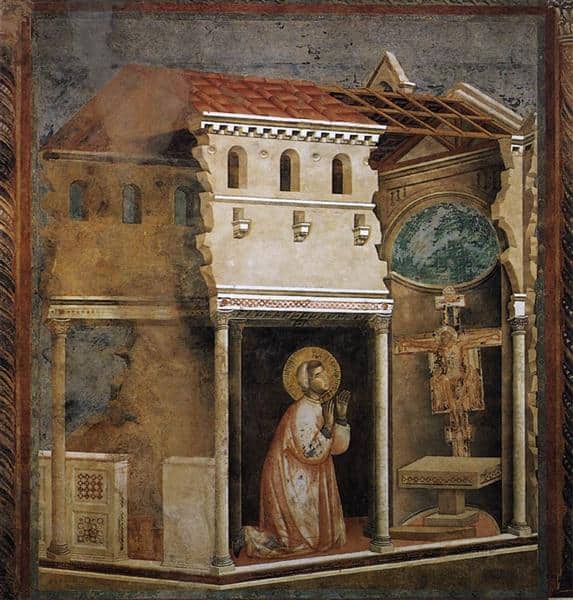
Giottos Reputation and Success
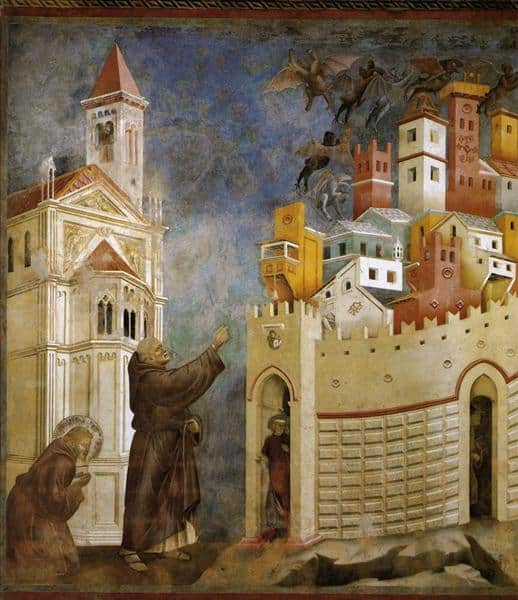
Giottos Legacy in Florence
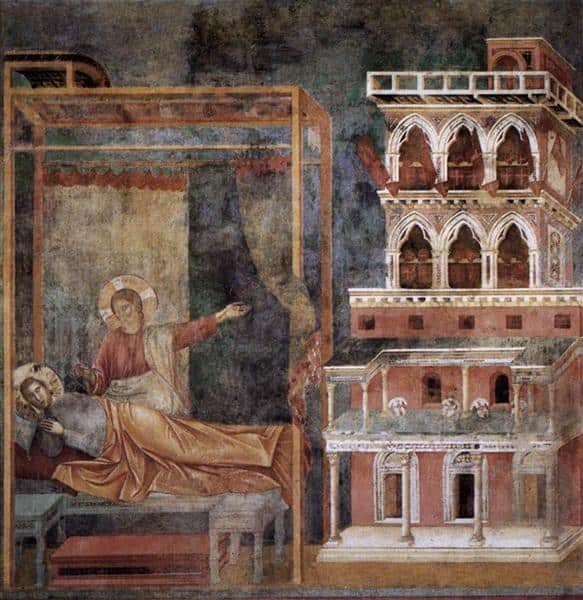
Giottos Impact on Artistic Techniques
Giottos Contribution to Religious Art
Giottos Influence on Future Artists
Giottos Recognition as a Master Artist
Lesson Details & Resources
In a Nutshell
- Artist: Giotto di Bondone
- Year: 1303-1306
- Medium: Fresco
- Location: Scrovegni Chapel, Padua
Vocabulary List
- Fresco
- Giotto is known for his fresco paintings in various churches and chapels.
- Giornata
- Giotto's technique involves painting each 'giornata' or section of a fresco in a single day.
- Chiaroscuro
- Giotto's use of chiaroscuro creates a sense of depth and volume in his paintings.
- Tempera
- Giotto often used tempera paint in his artworks, known for its vivid colors and durability.
- Sacra conversazione
- Giotto's sacra conversazione paintings depict the Virgin Mary and saints in conversation.
- Composition
- Giotto's compositions are carefully balanced and dynamic, drawing the viewer's eye across the artwork.
- Narrative
- Giotto's paintings often tell a story or depict a specific event from religious texts.
- Perspective
- Giotto was one of the first artists to use perspective in his artworks, creating a sense of three-dimensionality.
- Gothic
- Giotto's style is often considered a transition from the Gothic to the Renaissance art movements.
- Humanism
- Giotto's focus on naturalism and emotion in his figures reflects the humanism of the Renaissance.
- Dome
- Giotto's designs for the dome of Florence Cathedral influenced later architects and artists.
- Stigmata
- Giotto's depiction of St. Francis receiving the stigmata is a famous example of his religious imagery.
- Annunciation
- Giotto's annunciation paintings often show the moment when the angel Gabriel announces the birth of Christ to Mary.
- Cimasa
- Giotto's use of a cimasa or decorative top section in his altarpieces adds to the overall grandeur of the artwork.
- Madonna and Child
- Giotto's many paintings of the Madonna and Child are iconic examples of his religious art.
- Trompe l'oeil
- Giotto's skillful use of trompe l'oeil creates the illusion of three-dimensional space in his paintings.
- Giotto's Campanile
- Giotto designed the bell tower of Florence Cathedral, known as Giotto's Campanile.
- Frieze
- Giotto's decorative friezes often feature intricate patterns and figures.
- Altar
- Giotto's altarpieces are often the focal point of churches and chapels, emphasizing the importance of the religious scenes depicted.
- Saint
- Giotto's paintings of saints often show them in moments of contemplation or martyrdom.
Timeline of Giotto di Bondone: An Analysis
Giotto di Bondone is born in Florence, Italy
Giotto begins working as an apprentice to the painter Cimabue
Giotto paints his first independent works in Florence
Giotto is commissioned to paint frescoes in the Basilica of San Francesco in Assisi
Giotto is commissioned to paint the Scrovegni Chapel in Padua
Giotto is appointed chief architect of Florence Cathedral
Giotto completes the design of the campanile of Florence Cathedral
Giotto is commissioned to paint the Bardi Chapel in Santa Croce, Florence
Giotto is appointed chief architect of the Duomo in Milan
Giotto paints frescoes in the Arena Chapel in Padua
Giotto is appointed chief architect of the Basilica of St. John Lateran in Rome
Giotto completes the design of the bell tower of the Basilica of St. John Lateran
Giotto dies in Florence
Key Facts
This is the information used in the fact matching game
- Giotto di Bondone was an Italian painter and architect from the late Middle Ages.
- He is considered one of the most important artists in the transition from medieval to Renaissance art.
- Giotto's realistic and emotional style revolutionized art in the 14th century.
- He is known for his frescoes, particularly those in the Scrovegni Chapel in Padua.
- Giotto's use of light, shadow, and perspective was groundbreaking for his time.
- He was one of the first artists to depict human emotions in a naturalistic way.
- Giotto's work had a significant influence on later Renaissance artists, such as Michelangelo and Raphael.
- He was commissioned to paint frescoes in several important churches and cathedrals in Italy.
- Giotto's most famous work is the fresco cycle in the Arena Chapel, depicting scenes from the life of Christ.
- He also painted a series of frescoes in the Basilica of St. Francis of Assisi, one of which shows St. Francis receiving the stigmata.
- Giotto's use of vibrant colors and naturalistic details set him apart from other artists of his time.
- He was also known for his skill in depicting architecture and landscape in his paintings.
- Giotto's innovative approach to composition and storytelling influenced the development of Western art.
- His work is characterized by a sense of depth and three-dimensionality, creating a more lifelike representation of the world.
- Giotto was also a successful architect, responsible for the design of the Campanile of Florence Cathedral.
- He was praised by his contemporaries for his talent and skill as an artist.
- Giotto's work marked a turning point in the history of art, paving the way for the Renaissance.
- His legacy continues to influence artists and art historians to this day.
- Giotto's contributions to art have been studied and celebrated for centuries.
- He is considered a master of the early Renaissance period, setting the stage for the great artists that followed.
Analysis & Significance
Artistic Innovation
Giotto di Bondone’s frescoes in the Scrovegni Chapel revolutionized the depiction of space and naturalism in art. By incorporating techniques such as foreshortening and chiaroscuro, Giotto created a sense of depth and realism previously unseen in medieval art. His use of emotion and narrative in his figures also set a new standard for storytelling through visual art.
Influence on Art History
Giotto’s innovative approach to composition and emotional expression had a profound impact on the development of Renaissance art. His work is often seen as a precursor to the naturalism and perspective techniques that would come to define the era. Artists such as Michelangelo and Raphael looked to Giotto as a source of inspiration for their own masterpieces.
Cultural Significance Today
Giotto’s frescoes continue to be celebrated as masterpieces of Western art and are revered for their technical skill and emotional resonance. The Scrovegni Chapel remains a popular tourist destination, attracting visitors from around the world who come to marvel at Giotto’s storytelling abilities and groundbreaking artistic techniques. His work serves as a testament to the enduring power of art to transcend time and captivate audiences across centuries.
Giotto di Bondone: An Analysis Games


Take Your Learning Offline
Want a convenient, print-ready study guide for this lesson? Become a Memory Wizards Pro member to unlock the downloadable " Memory Scrolls" for this topic and our entire library!
- ✓ Complete Vocabulary Lists
- ✓ Key Facts & Timelines
- ✓ Beautifully Formatted for Print & Mobile