
How Do You Learn Best?
Learn by Listening
Start with the 3-minute audio summary to get the key facts and narrative highlights quickly.
Learn by Reading
Immerse yourself in the 10-minute visual lesson for a comprehensive understanding of the topic.
Learn by Reviewing
Jump directly to the key facts, timeline, and vocabulary lists to build a solid foundation of details.
Learn by Doing
Challenge yourself! Jump straight into the interactive games to learn by trial, error, and discovery.
The Masterpiece: Nave of the basilica of San Lorenzo
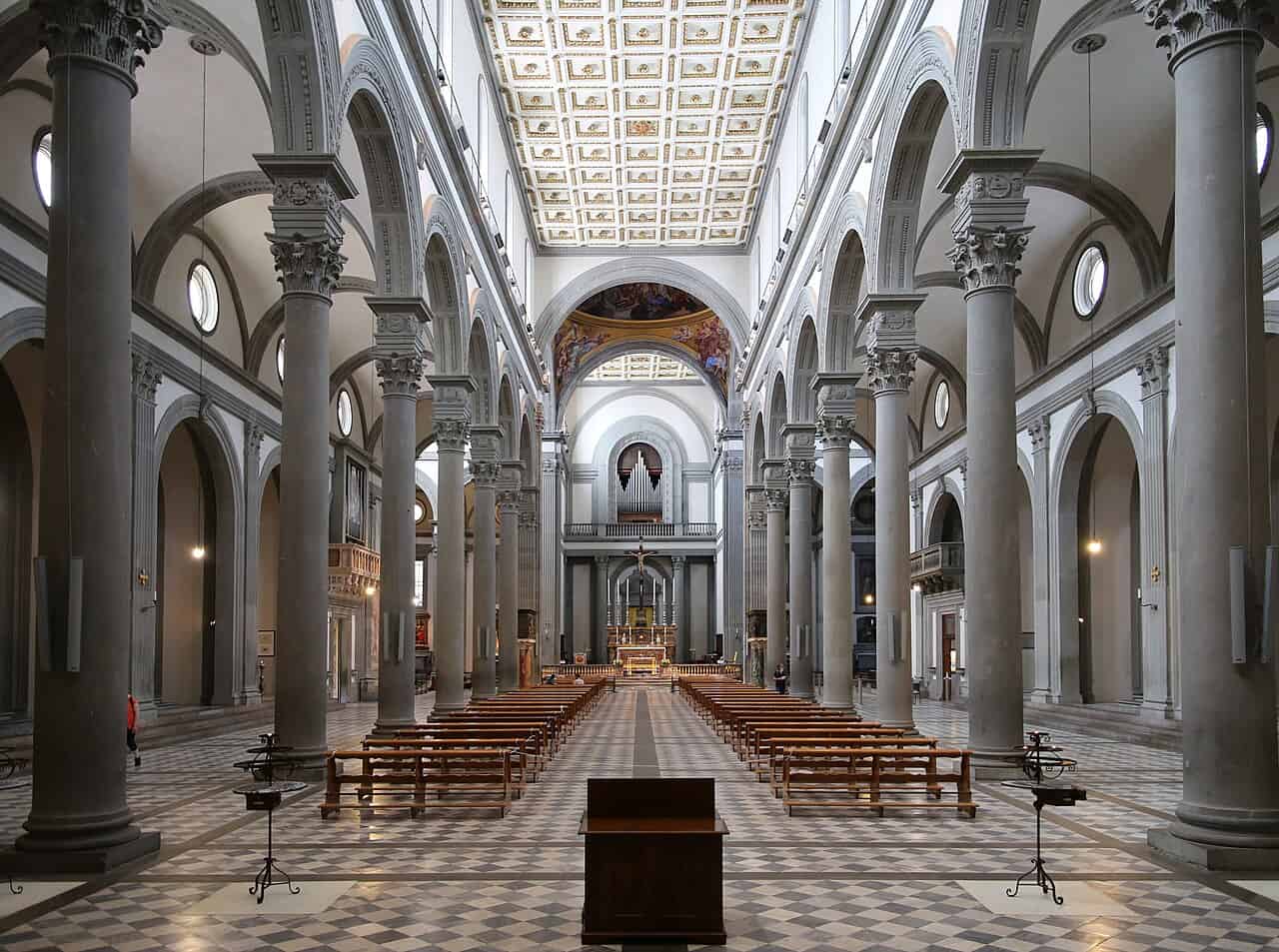
Deconstructing the Masterpiece
Symmetry
The perfectly balanced and symmetrical design creates a sense of harmony and order in the nave of the basilica.
Linear Perspective
Brunelleschi's innovative use of linear perspective creates a sense of depth and spatial illusion in the architectural space.
Classical Elements
Incorporation of classical elements such as Doric columns and coffered ceilings reflects Brunelleschi's revival of ancient Roman architecture.
Geometric Proportions
The use of geometric proportions and ratios based on mathematical principles creates a sense of mathematical harmony and balance in the design.
Audio Library
As one of our featured lessons, this topic includes premium audio guides.
Unlock the Wizard's Cram Session
This powerful audio study guide is a Pro-exclusive feature. Upgrade to Memory Wizards Pro to access this and all of our premium learning tools.
Upgrade to ProFilippo Brunelleschi: An Analysis in 10 Minutes
Introduction


Leon Battista Alberti

Donatello

Lorenzo Ghiberti

The Early Life of Filippo Brunelleschi

The Duomo Competition
The Creation of Linear Perspective

The Founding of the Ospedale degli Innocenti

The Pazzi Chapel

The Sacrifice of the Lantern

The Dome of Santa Maria del Fiore
The Legacy of Filippo Brunelleschi
Lesson Details & Resources
In a Nutshell
- Artist: Filippo Brunelleschi
- Year: 1436
- Medium: Architecture (Dome)
- Location: Cathedral of Santa Maria del Fiore, Florence
Vocabulary List
- Perspective
- Brunelleschi's innovative use of linear perspective in his architectural designs revolutionized the way buildings were perceived and understood.
- Dome
- Brunelleschi's design and construction of the dome of the Florence Cathedral is considered a masterpiece of engineering and architecture.
- Architecture
- Brunelleschi is known for his contributions to the field of architecture, particularly in the Italian Renaissance period.
- Engineering
- Brunelleschi's skills as an engineer were instrumental in the successful completion of the dome of the Florence Cathedral.
- Innovation
- Brunelleschi's innovative techniques and designs set him apart as a visionary in the field of architecture.
- Construction
- Brunelleschi's expertise in construction techniques allowed him to build complex and monumental structures.
- Design
- Brunelleschi's meticulous design process resulted in some of the most iconic buildings in Florence.
- Renaissance
- Brunelleschi was a key figure in the Italian Renaissance, a period known for its advancements in art, architecture, and culture.
- Geometry
- Brunelleschi's use of geometric principles in his architectural designs demonstrates his mathematical prowess.
- Symmetry
- Brunelleschi's buildings are often characterized by their symmetrical designs and balanced proportions.
- Sculpture
- Brunelleschi's background in sculpture influenced his approach to architectural design and composition.
- Florence
- Brunelleschi's work is closely associated with the city of Florence, where many of his most famous buildings are located.
- Architect
- Brunelleschi was not only an accomplished architect but also a skilled craftsman and builder.
- Renaissance man
- Brunelleschi is often referred to as a 'Renaissance man' due to his diverse talents and expertise in multiple fields.
- Inspiration
- Brunelleschi's work continues to inspire architects and artists to this day.
- Structure
- Brunelleschi's innovative structural designs paved the way for future advancements in architecture.
- Visionary
- Brunelleschi's vision and creativity pushed the boundaries of what was possible in architecture.
- Artist
- Brunelleschi's artistic sensibilities were evident in his architectural creations, which were both functional and aesthetically pleasing.
- Influence
- Brunelleschi's influence can be seen in the work of later architects who were inspired by his innovative designs.
- Legacy
- Brunelleschi left behind a lasting legacy of architectural masterpieces that continue to be admired and studied centuries later.
Timeline of Filippo Brunelleschi: An Analysis
Born in Florence, Italy
Apprenticed as a goldsmith
Traveled to Rome to study ancient architecture
Began working on the Florence Cathedral dome project
Invented a hoist system for transporting materials
Completed the dome of the Florence Cathedral
Appointed as chief architect of the Florence Cathedral
Designed the Pazzi Chapel in Florence
Visited Rome to study Roman architecture
Designed the Ospedale degli Innocenti in Florence
Worked on the Basilica di San Lorenzo in Florence
Died in Florence, Italy
Key Facts
This is the information used in the fact matching game
- Filippo Brunelleschi was an Italian architect, engineer, and designer of the Renaissance.
- Brunelleschi is best known for his work on the dome of the Florence Cathedral, Santa Maria del Fiore.
- He is considered one of the founding fathers of Renaissance architecture.
- Brunelleschi's innovative use of perspective in his designs greatly influenced the art and architecture of the Renaissance period.
- He was the first architect to use linear perspective in his paintings and architectural designs.
- Brunelleschi's study of ancient Roman architecture greatly influenced his work.
- He was also a skilled sculptor and goldsmith.
- Brunelleschi's work on the Pazzi Chapel in Florence is considered a masterpiece of early Renaissance architecture.
- He was known for his meticulous attention to detail and precision in his architectural designs.
- Brunelleschi's experiments with perspective led to a greater sense of realism in art and architecture.
- He was a key figure in the development of the Renaissance style of architecture.
- Brunelleschi's design for the dome of the Florence Cathedral is considered a marvel of engineering and architectural ingenuity.
- He was a pioneer in the use of mathematical principles in architecture.
- Brunelleschi's use of classical forms and proportions in his designs helped to revive interest in ancient Roman architecture.
- He was a master of perspective, symmetry, and proportion in his architectural designs.
- Brunelleschi's work on the Ospedale degli Innocenti in Florence is considered a landmark in early Renaissance architecture.
- He was known for his use of light and shadow to create a sense of depth and dimension in his designs.
- Brunelleschi's design for the dome of the Florence Cathedral inspired generations of architects and engineers.
- He was a leading figure in the cultural and artistic revival known as the Renaissance.
- Brunelleschi's work had a lasting impact on the development of Western art and architecture.
Analysis & Significance
Artistic Innovation
Filippo Brunelleschi’s use of linear perspective in architecture, as demonstrated in his design for the dome of the Florence Cathedral, revolutionized the way space and depth were represented in art. By creating a mathematical system to accurately depict spatial relationships, he achieved a sense of realism and harmony previously unseen in architectural design.
Influence on Art History
Brunelleschi’s innovative approach to perspective not only transformed Renaissance architecture but also had a profound impact on the development of painting and sculpture. Artists such as Masaccio and Donatello adopted his principles of perspective, leading to a new era of realistic representation in the arts. His work laid the foundation for the classical principles of proportion and balance that would define Western art for centuries to come.
Cultural Significance Today
The dome of the Florence Cathedral, one of Brunelleschi’s most iconic works, continues to be celebrated as a masterpiece of Renaissance architecture. Its engineering brilliance and aesthetic beauty draw visitors from around the world, showcasing Brunelleschi’s enduring legacy and influence on modern architectural practice. The dome remains a symbol of innovation and artistic achievement, captivating audiences with its timeless design.
Filippo Brunelleschi: An Analysis Games


Take Your Learning Offline
Want a convenient, print-ready study guide for this lesson? Become a Memory Wizards Pro member to unlock the downloadable " Memory Scrolls" for this topic and our entire library!
- ✓ Complete Vocabulary Lists
- ✓ Key Facts & Timelines
- ✓ Beautifully Formatted for Print & Mobile