
Questioning Authority
Who decides the rules we follow?
How Do You Learn Best?
Learn by Reading
Immerse yourself in the 10-minute visual lesson for a comprehensive understanding of the topic.
Learn by Reviewing
Jump directly to the key facts, timeline, and vocabulary lists to build a solid foundation of details.
Learn by Doing
Challenge yourself! Jump straight into the interactive games to learn by trial, error, and discovery.
Questioning Authority in 10 Minutes
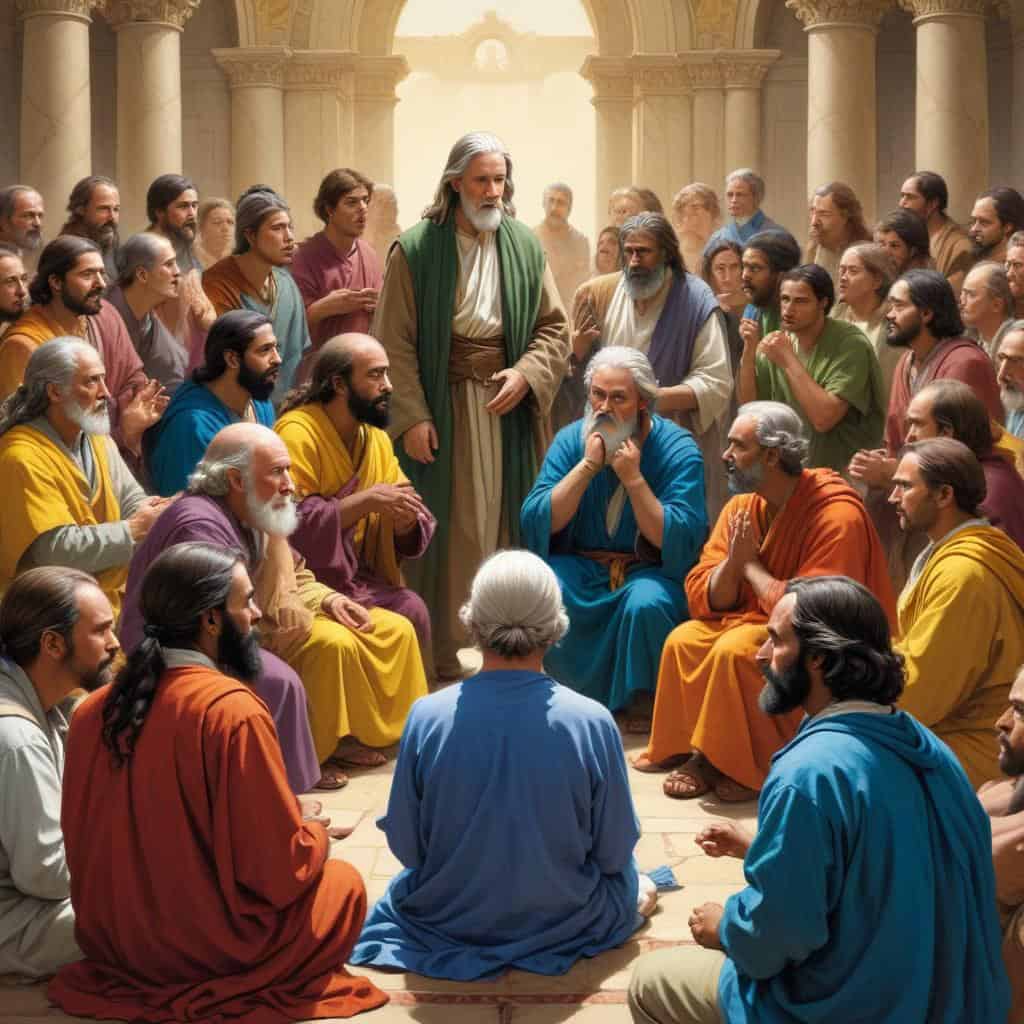
Introduction


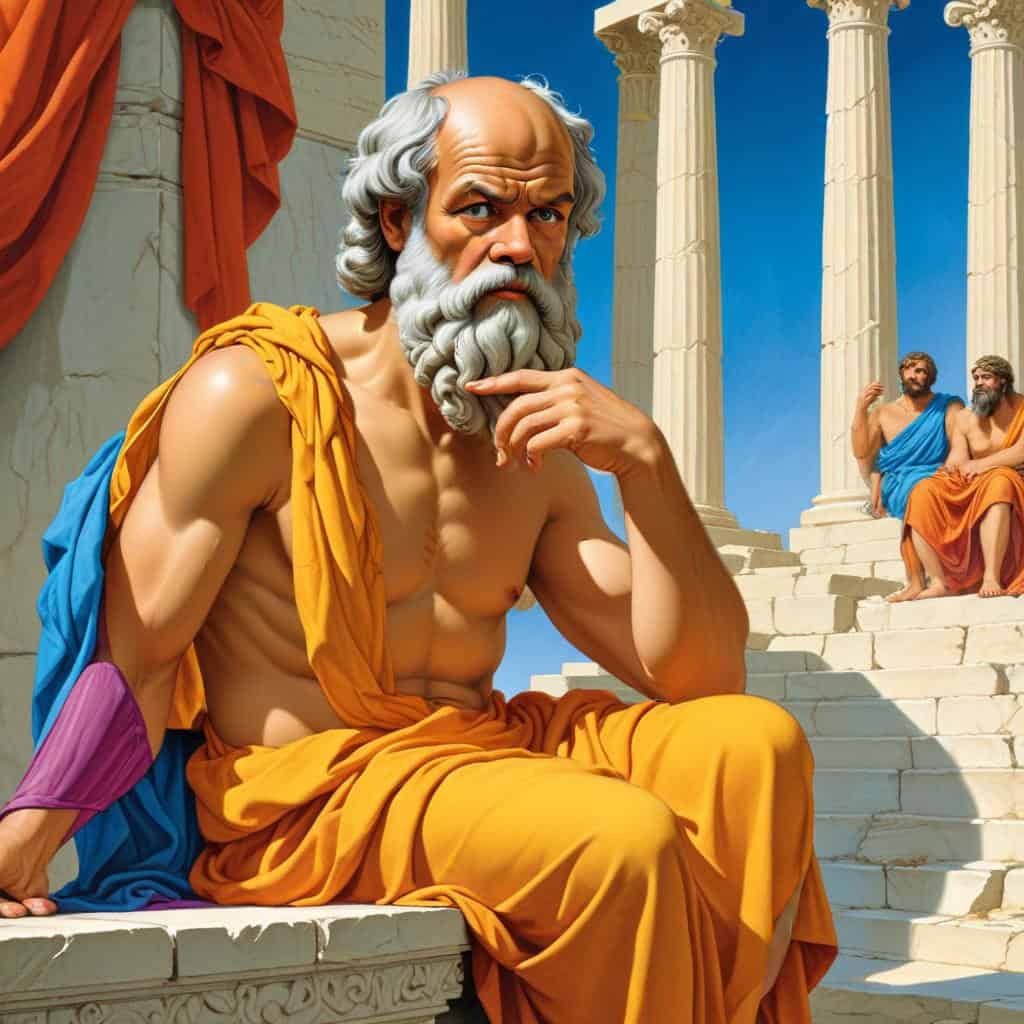
Socrates

Simone de Beauvoir

Friedrich Nietzsche

Michel Foucault
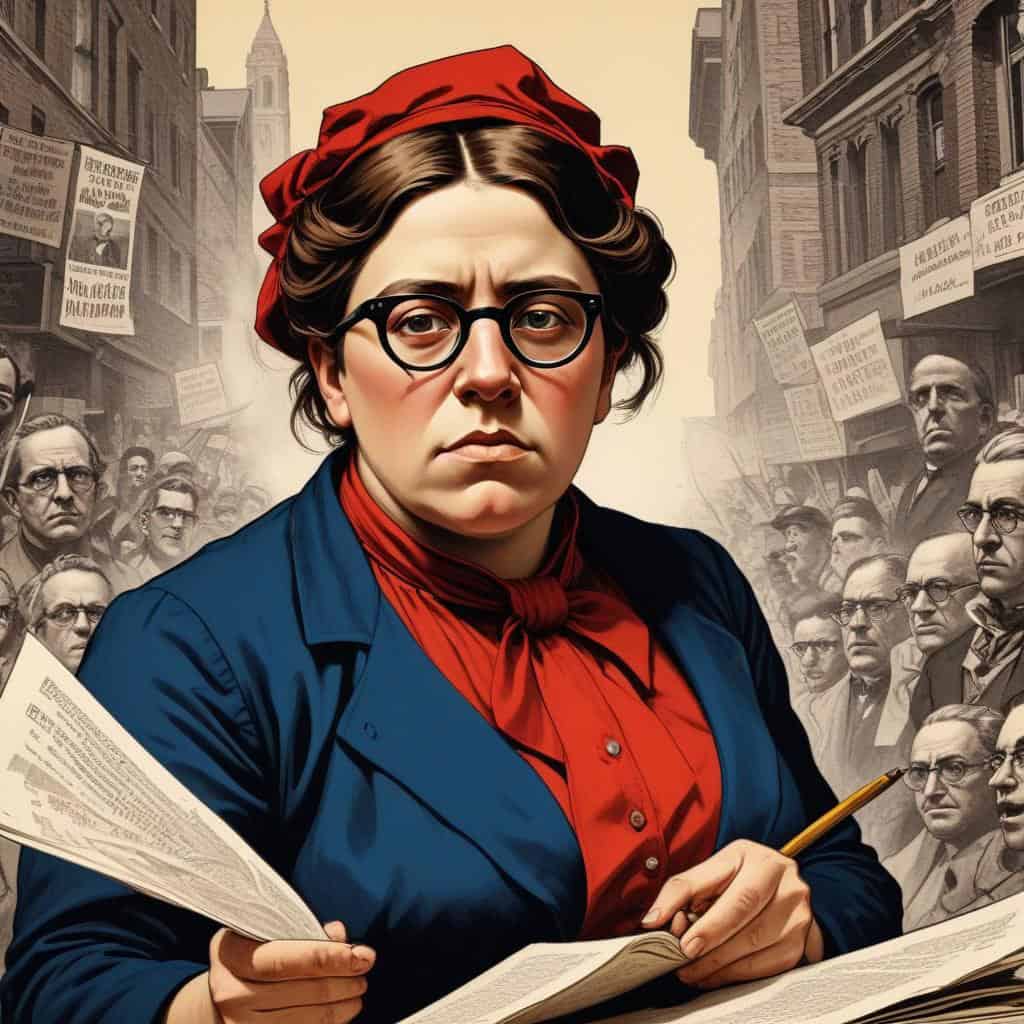
Emma Goldman

1. The Origins of Questioning Authority

2. The Role of Skepticism

3. The Importance of Critical Thinking

4. Embracing Intellectual Curiosity

5. The Ethics of Questioning Authority
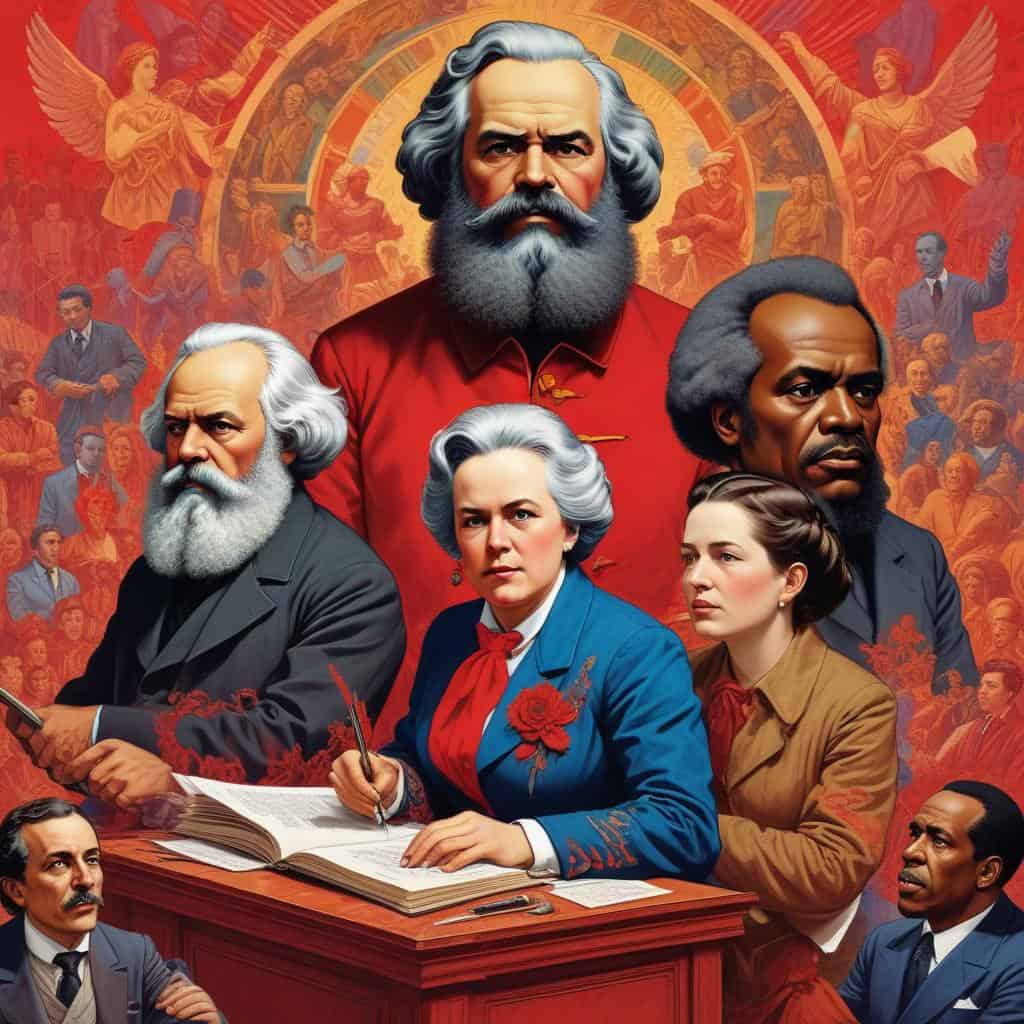
6. The Legacy of Revolutionary Thinkers

7. The Intersection of Power and Knowledge

8. The Impact of Questioning Authority

9. The Quest for Truth and Justice

10. The Call to Action


Lesson Details & Resources
In a Nutshell
- Concept: Challenging and questioning established authority and norms.
- Thinkers: Various philosophers throughout history, including Socrates, Michel Foucault, and Hannah Arendt.
- Central Question: How should individuals approach authority and tradition in society?
- Core Implication: It is important to critically examine and challenge authority in order to promote progress and societal improvement.
Timeline of Questioning Authority
Socrates' trial and execution for corrupting the youth and impiety
Plato's dialogues, including 'The Apology' and 'The Republic', challenge traditional beliefs and authority
Aristotle's works on logic, ethics, and metaphysics question traditional views on knowledge and ethics
The Renaissance period sees a resurgence in questioning authority, with figures like Machiavelli and Galileo challenging established norms
Descartes' 'Meditations on First Philosophy' introduces radical doubt as a method of questioning authority
The Enlightenment era promotes reason and skepticism, leading to further questioning of authority in various fields
Kant's 'Critique of Pure Reason' challenges the limits of human knowledge and authority
Hegel's dialectical method questions traditional views on history and society
Nietzsche's critique of morality and religion challenges established authority in ethics and metaphysics
Freud's psychoanalysis questions traditional views on the self and authority in psychology
Existentialist philosophers like Sartre and Camus question traditional values and authority in the face of absurdity
Feminist philosophers challenge patriarchal authority and traditional gender roles
Postmodernism questions the authority of meta-narratives and truth claims
Critical theory and postcolonial philosophy challenge Western authority and colonial legacies
Contemporary philosophers continue to question authority in various fields, including politics, ethics, and epistemology
Vocabulary List
- Skepticism
- Skeptics in philosophy often question authority by challenging traditional beliefs and demanding evidence to support claims.
- Dissent
- Philosophers who engage in dissent often challenge the authority of established beliefs and systems of thought.
- Rebellion
- In philosophy, rebellion against authority can be seen as a way to challenge unjust power structures and promote critical thinking.
- Autonomy
- Questioning authority in philosophy can lead to a greater sense of autonomy as individuals strive to think for themselves and make informed choices.
- Dialectic
- Engaging in dialectic discussions can help philosophers question authority by challenging assumptions and uncovering hidden biases.
Key Facts
This is the information used in the fact matching game
- Questioning authority is a key concept in the philosophy of existentialism, as individuals are encouraged to challenge societal norms and institutions.
- The philosopher Michel Foucault believed that questioning authority is essential for uncovering the power dynamics at play in society.
- Socrates famously questioned the authority of the Athenian government and was sentenced to death for his beliefs.
- The philosopher Friedrich Nietzsche argued that individuals should question traditional moral values and create their own meaning in life.
- Karl Marx believed that questioning authority is necessary for understanding and challenging the oppressive structures of capitalism.
- The feminist philosopher Simone de Beauvoir advocated for questioning traditional gender roles and societal expectations placed on women.
- John Stuart Mill argued that questioning authority is crucial for protecting individual liberties and preventing tyranny.
- The philosopher Hannah Arendt emphasized the importance of critical thinking and independent judgment in questioning authority.
- The philosopher Thomas Hobbes believed that questioning authority could lead to social disorder and chaos.
- The philosopher Immanuel Kant argued that individuals have a moral duty to question authority in order to uphold principles of autonomy and rationality.
- Plato's dialogues often feature Socrates questioning the authority of experts and challenging their claims to knowledge.
- The philosopher Jean-Paul Sartre believed that questioning authority is a form of individual freedom and responsibility.
- The philosopher Mary Wollstonecraft advocated for questioning the authority of patriarchal systems and promoting gender equality.
- The philosopher Friedrich Engels argued that questioning authority is necessary for advancing social progress and equality.
- The philosopher John Locke believed that questioning authority is essential for protecting natural rights and promoting the common good.
- The philosopher Michel de Montaigne emphasized the importance of skepticism and critical inquiry in questioning authority.
- The philosopher Ayn Rand argued that questioning authority is a rational and moral imperative for individuals seeking to pursue their own self-interest.
- The philosopher Martin Heidegger believed that questioning authority is essential for individuals to confront the meaninglessness and finitude of existence.
- The philosopher Judith Butler challenged conventional notions of gender identity and sexuality by questioning authority and advocating for social change.
- The philosopher David Hume argued that questioning authority is necessary for cultivating a healthy skepticism and avoiding dogmatism in belief systems.
Analysis & Significance
The Core Argument
Questioning authority is a fundamental philosophical concept that challenges individuals to critically examine the legitimacy and justification of those in power. By encouraging skepticism and independent thinking, this idea promotes intellectual autonomy and prevents blind obedience.
Criticisms and Counterarguments
Critics argue that questioning authority can lead to chaos and undermine social order. They contend that blind obedience is necessary for maintaining stability and that challenging authority can be seen as disrespectful or subversive. Some also suggest that questioning authority may be futile if the power structure is deeply entrenched.
Modern Relevance
In today’s world, the concept of questioning authority is more relevant than ever. With the rise of misinformation and the abuse of power, individuals must be vigilant in questioning the motives and actions of those in authority. This idea is crucial for holding leaders accountable, promoting social justice, and fostering a society based on transparency and accountability.
Questioning Authority Games


Take Your Learning Offline
Want a convenient, print-ready study guide for this lesson? Become a Memory Wizards Pro member to unlock the downloadable " Memory Scrolls" for this topic and our entire library!
- ✓ Complete Vocabulary Lists
- ✓ Key Facts & Timelines
- ✓ Beautifully Formatted for Print & Mobile