
How Do You Learn Best?
Learn by Reading
Immerse yourself in the 10-minute visual lesson for a comprehensive understanding of the topic.
Learn by Reviewing
Jump directly to the key facts, timeline, and vocabulary lists to build a solid foundation of details.
Learn by Doing
Challenge yourself! Jump straight into the interactive games to learn by trial, error, and discovery.
De Finibus Bonorum et Malorum in 10 Minutes

Introduction
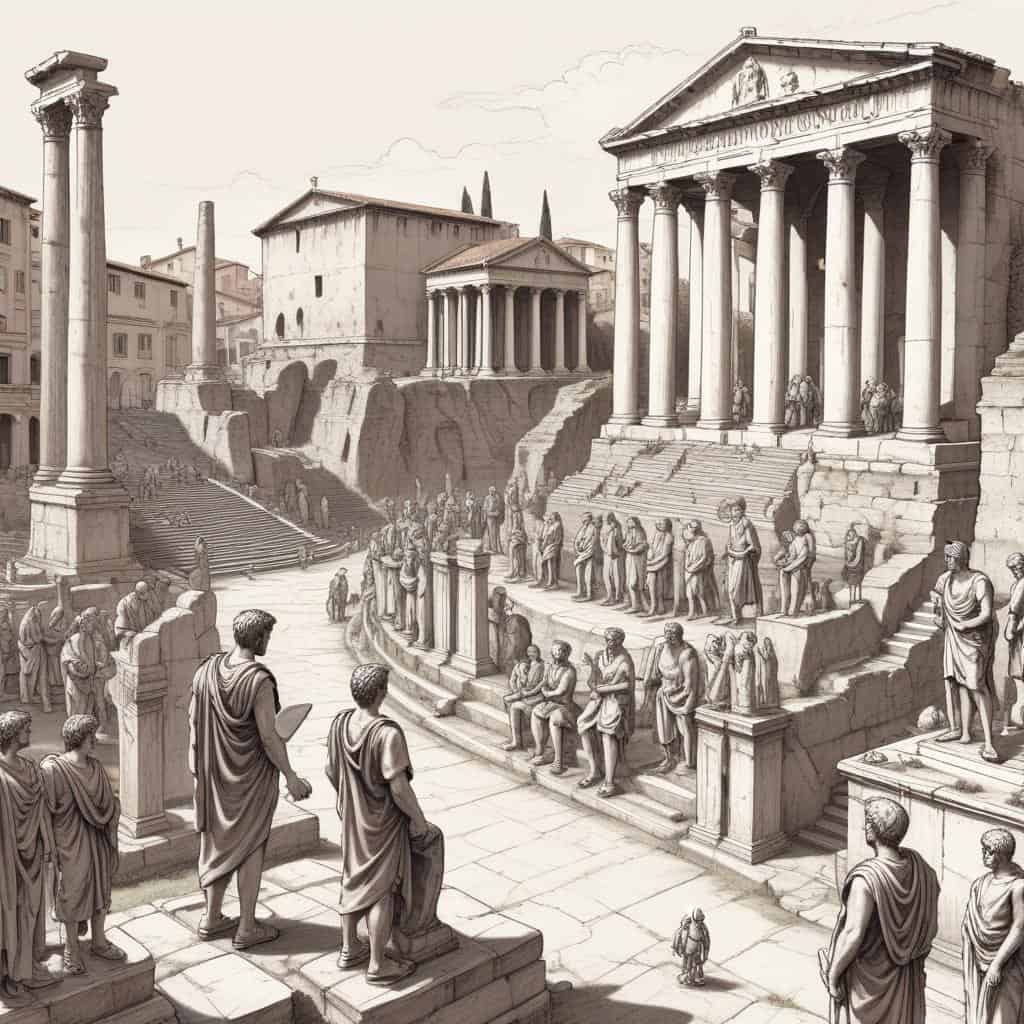

Lucius Cicero

Torquatus

Cato the Younger

Antiochus of Ascalon

Piso
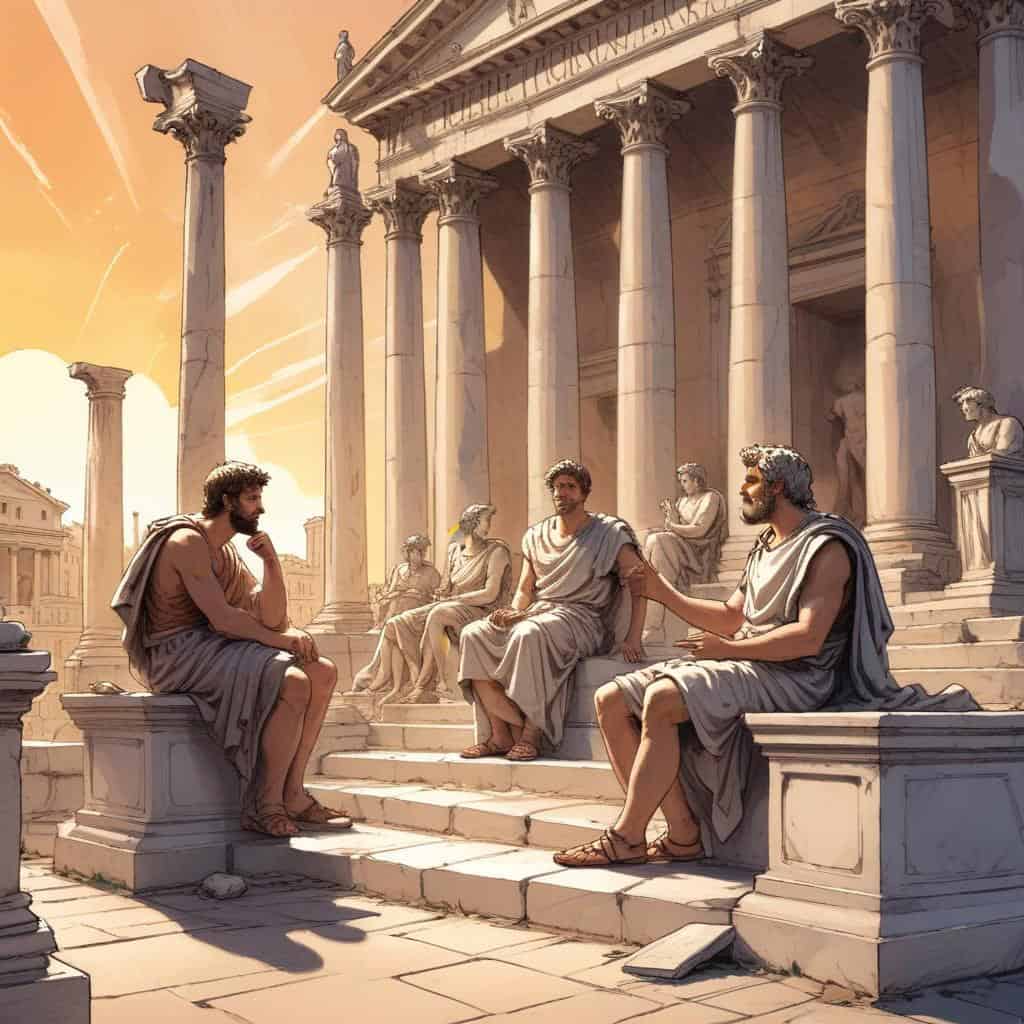
The Setting of De Finibus Bonorum et Malorum
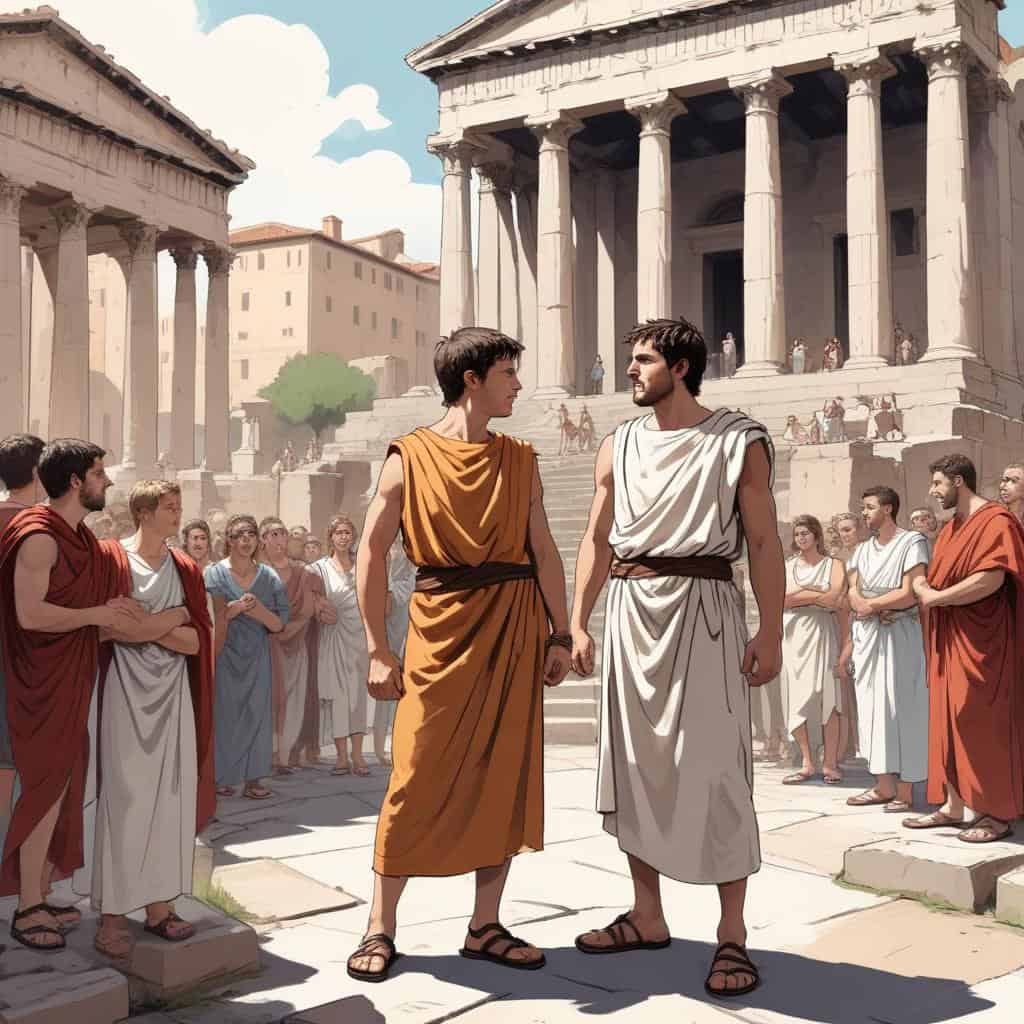
The Characters of De Finibus Bonorum et Malorum
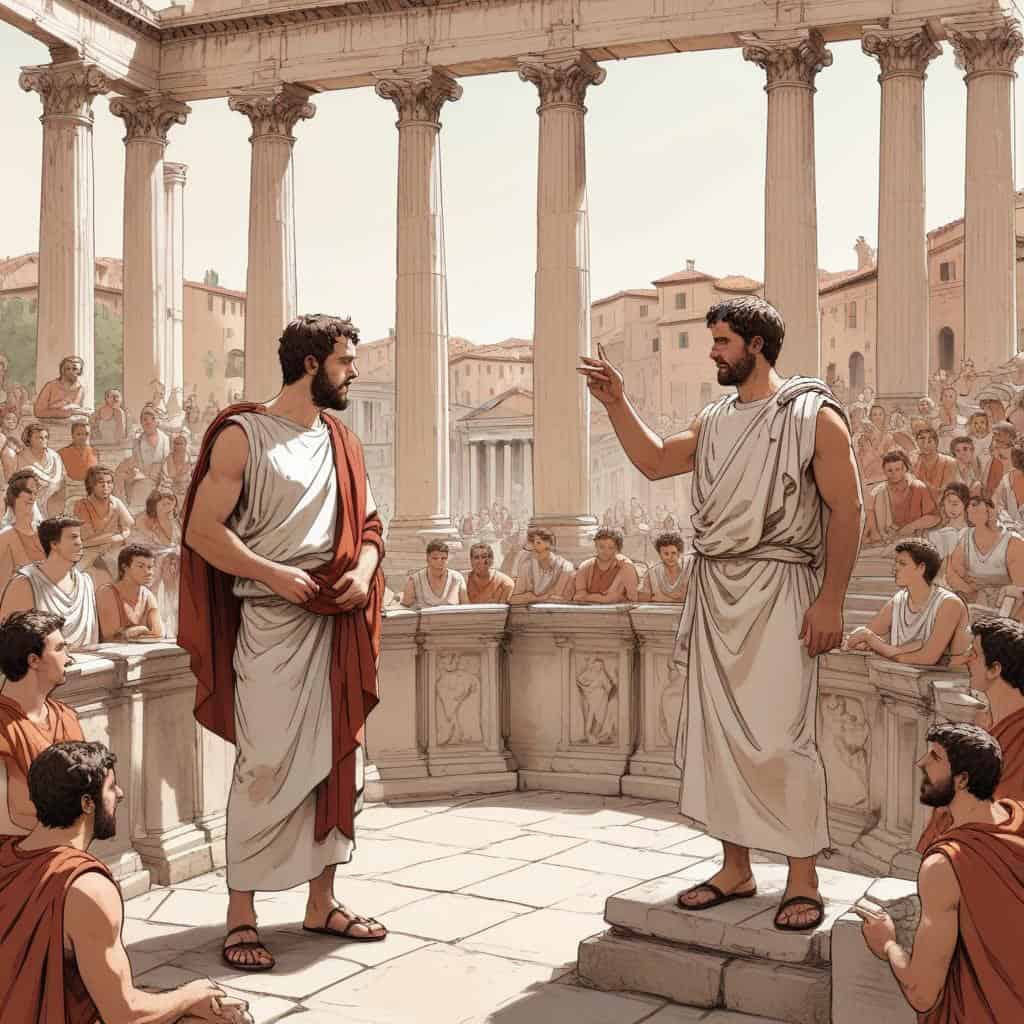
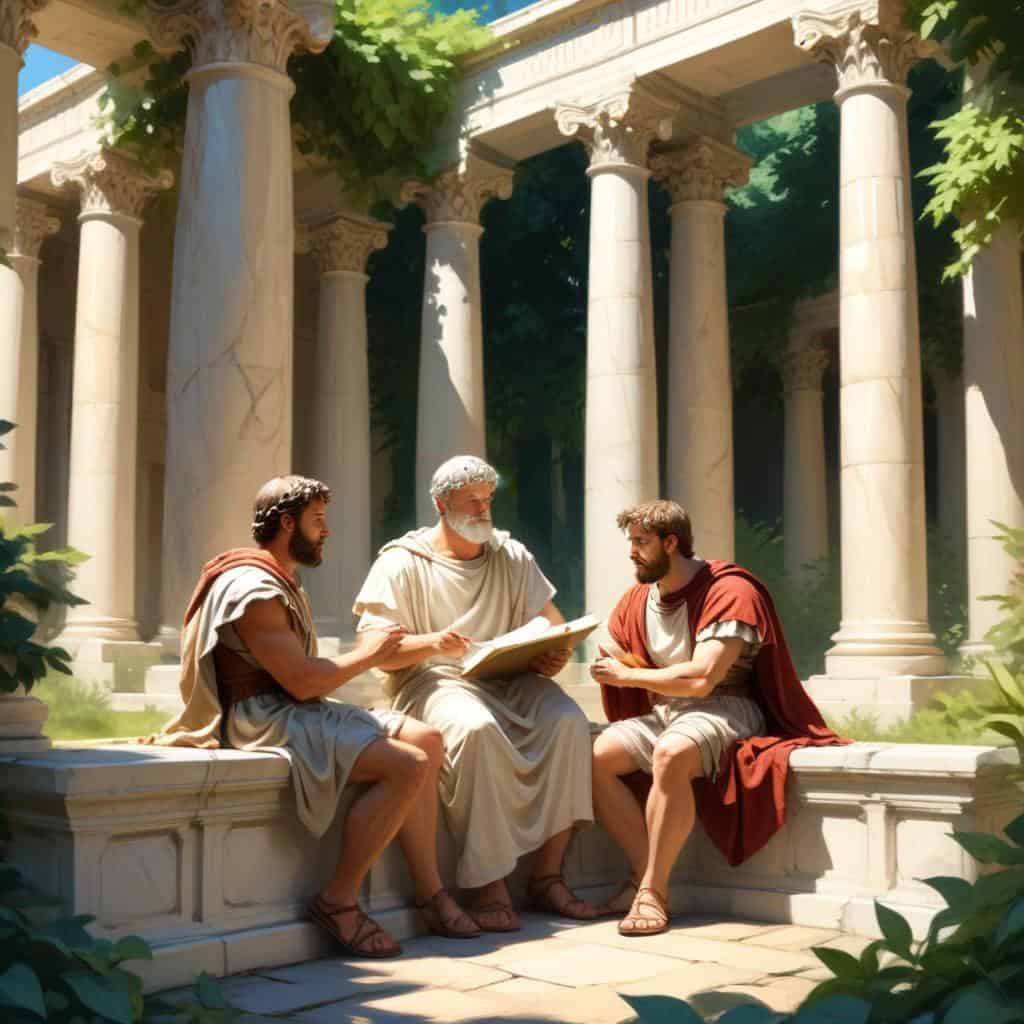
The Debate Begins
The Stoic Argument

The Epicurean Response
The Clash of Philosophies
The Search for Truth
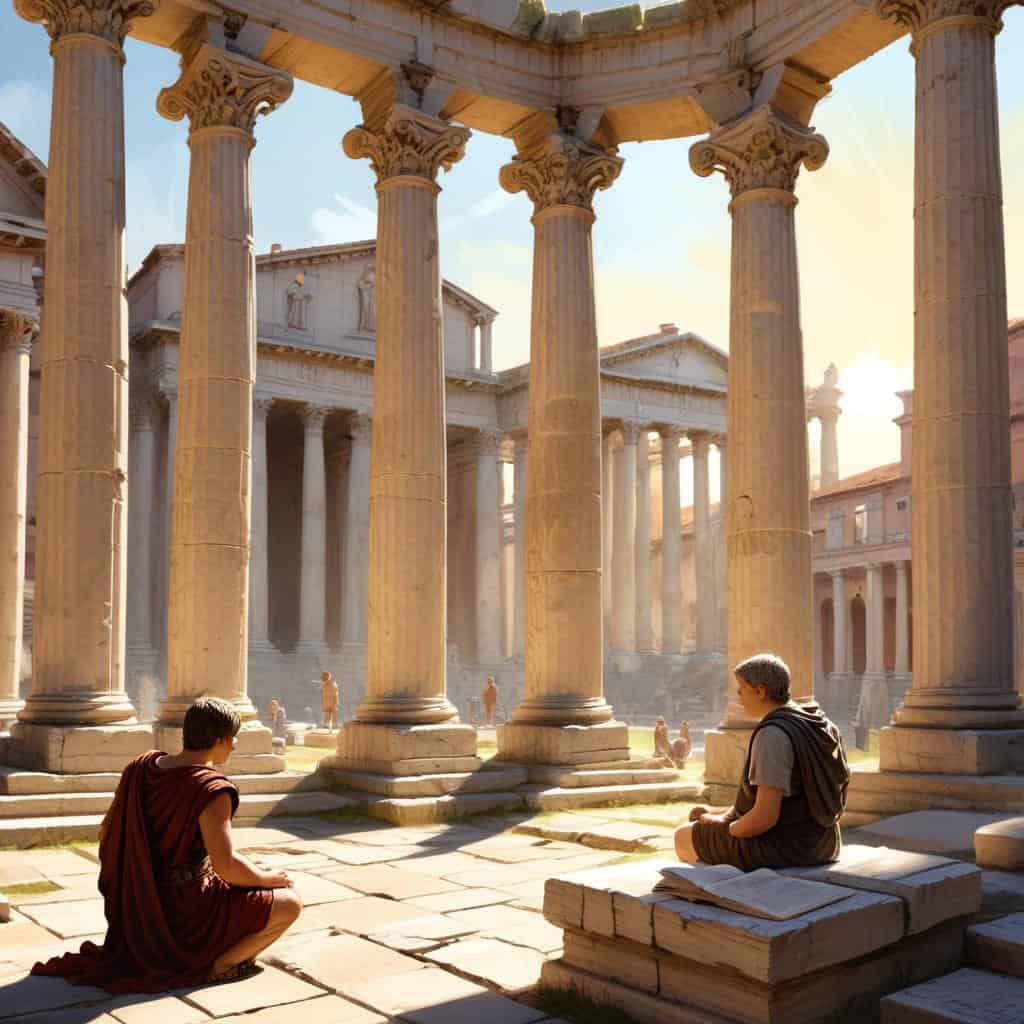
The Resolution
The Legacy of De Finibus Bonorum et Malorum
Lesson Details & Resources
In a Nutshell
- What: Philosophical work by Cicero
- When: Written in the 1st century BC
- Who: No main characters
- Theme: Discussion on the nature of good and evil
List of Characters in De Finibus Bonorum et Malorum
Timeline of De Finibus Bonorum et Malorum
Cicero writes De Finibus Bonorum et Malorum in 45 BC, a philosophical treatise on ethics.
The dialogue is set in a villa in Cumae, where Cicero and his friends meet to discuss the nature of good and evil.
The first book of De Finibus focuses on the teachings of the Epicurean school, which argues that pleasure is the highest good.
In the second book, Cicero explores the Stoic philosophy, which emphasizes virtue and living in accordance with nature.
The third book discusses the Peripatetic school, which follows the teachings of Aristotle and emphasizes the importance of moral and intellectual virtues.
The dialogue concludes with a discussion on the nature of the highest good and the ultimate goal of human life.
De Finibus Bonorum et Malorum is considered one of Cicero's most important works and a key text in the history of Western philosophy.
Vocabulary List
- Bonorum
- The Latin word for 'goods' or 'benefits', often used in the context of discussing what is considered good or beneficial.
- Malorum
- The Latin word for 'evils' or 'harm', often used in the context of discussing what is considered bad or harmful.
- Finibus
- The Latin word for 'limits' or 'boundaries', often used in the context of discussing the boundaries of good and evil.
- Summum
- The Latin word for 'the highest' or 'the ultimate', often used in the context of discussing the highest or ultimate good.
- Honestum
- The Latin word for 'honorable' or 'noble', often used in the context of discussing what is morally right or virtuous.
- Turpe
- The Latin word for 'disgraceful' or 'shameful', often used in the context of discussing what is morally wrong or dishonorable.
- Virtus
- The Latin word for 'virtue' or 'excellence', often used in the context of discussing moral excellence or goodness.
- Vituperatoribus
- The Latin word for 'those who revile' or 'those who insult', often used in the context of discussing critics or detractors.
- Laudantium
- The Latin word for 'those who praise' or 'those who commend', often used in the context of discussing those who give praise or approval.
- Confutatis
- The Latin word for 'refuted' or 'disproved', often used in the context of discussing arguments that have been successfully countered or proven wrong.
Key Facts
This is the information used in the fact matching game
- De Finibus Bonorum et Malorum is a philosophical work written by the Roman statesman and orator Cicero.
- The title of the work translates to 'On the Ends of Good and Evil'.
- The text explores the nature of ethics and the pursuit of the highest good.
- Cicero presents arguments from various philosophical schools, including Stoicism, Epicureanism, and Academic Skepticism.
- The work is structured as a dialogue between Cicero's friend Torquatus and the Stoic philosopher Cato the Younger.
- De Finibus Bonorum et Malorum is considered one of Cicero's most important philosophical works.
- The text is divided into five books, each discussing different aspects of the nature of good and evil.
- Cicero argues that the ultimate good is found in virtue and the pursuit of moral excellence.
- The work influenced later Christian thinkers, such as Saint Augustine and Thomas Aquinas.
- De Finibus Bonorum et Malorum addresses the question of whether pleasure or virtue is the highest good.
- Cicero criticizes the Epicurean view that pleasure is the ultimate goal of life, arguing instead for a more balanced approach to ethics.
- The work reflects Cicero's belief in the importance of moral integrity and ethical behavior.
- De Finibus Bonorum et Malorum is written in Latin and has been translated into many languages.
- The text is often studied in philosophy courses for its insights into ethical theory and moral philosophy.
- Cicero's writing style in De Finibus Bonorum et Malorum is characterized by clarity, precision, and rhetorical skill.
- The work is part of Cicero's larger body of philosophical writings, which also includes works on politics, rhetoric, and natural law.
- De Finibus Bonorum et Malorum is an important text for understanding the development of Roman philosophy and its influence on later Western thought.
- Cicero's exploration of the nature of good and evil in the work continues to be a topic of debate and discussion among scholars and philosophers.
- The text offers valuable insights into the moral dilemmas faced by individuals and societies, and the importance of ethical decision-making.
- De Finibus Bonorum et Malorum is considered a classic work of Western philosophy and a foundational text in the study of ethics.
Analysis & Significance
Impact on Literature
De Finibus Bonorum et Malorum, written by Cicero, has had a lasting impact on literature by providing a philosophical framework for exploring the concepts of good and evil. Its discussion of ethics and morality has influenced countless works of fiction and non-fiction, shaping the way writers approach complex moral dilemmas in their storytelling.
Enduring Themes
The timeless themes of De Finibus Bonorum et Malorum continue to resonate with modern audiences, touching on universal ideas such as the pursuit of happiness, the nature of good and evil, and the importance of ethical decision-making. These themes remain relevant in today’s society, prompting readers to reflect on their own values and beliefs.
Cultural Significance Today
Despite being written over two thousand years ago, De Finibus Bonorum et Malorum remains culturally significant today, with its legacy evident in adaptations across various art forms. Its influence can be seen in contemporary literature, philosophy, and even popular culture, demonstrating the enduring relevance of Cicero’s philosophical work.
De Finibus Bonorum et Malorum Games


Take Your Learning Offline
Want a convenient, print-ready study guide for this lesson? Become a Memory Wizards Pro member to unlock the downloadable " Memory Scrolls" for this topic and our entire library!
- ✓ Complete Vocabulary Lists
- ✓ Key Facts & Timelines
- ✓ Beautifully Formatted for Print & Mobile