
How Do You Learn Best?
Learn by Reading
Immerse yourself in the 10-minute visual lesson for a comprehensive understanding of the topic.
Learn by Reviewing
Jump directly to the key facts, timeline, and vocabulary lists to build a solid foundation of details.
Learn by Doing
Challenge yourself! Jump straight into the interactive games to learn by trial, error, and discovery.
De Natura Deorum in 10 Minutes
Introduction

Cicero

Velleius

Balbus

Cotta
The Background of De Natura Deorum
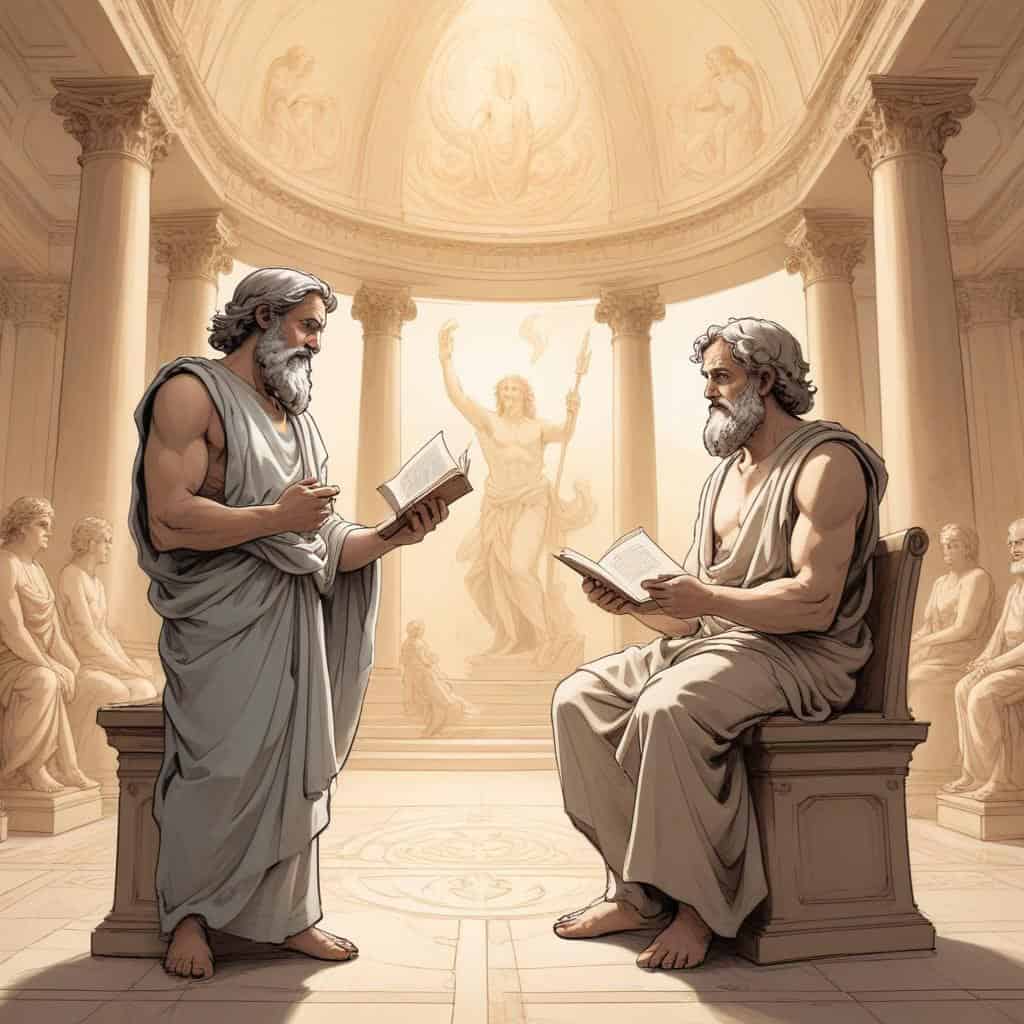
An Overview of Book I
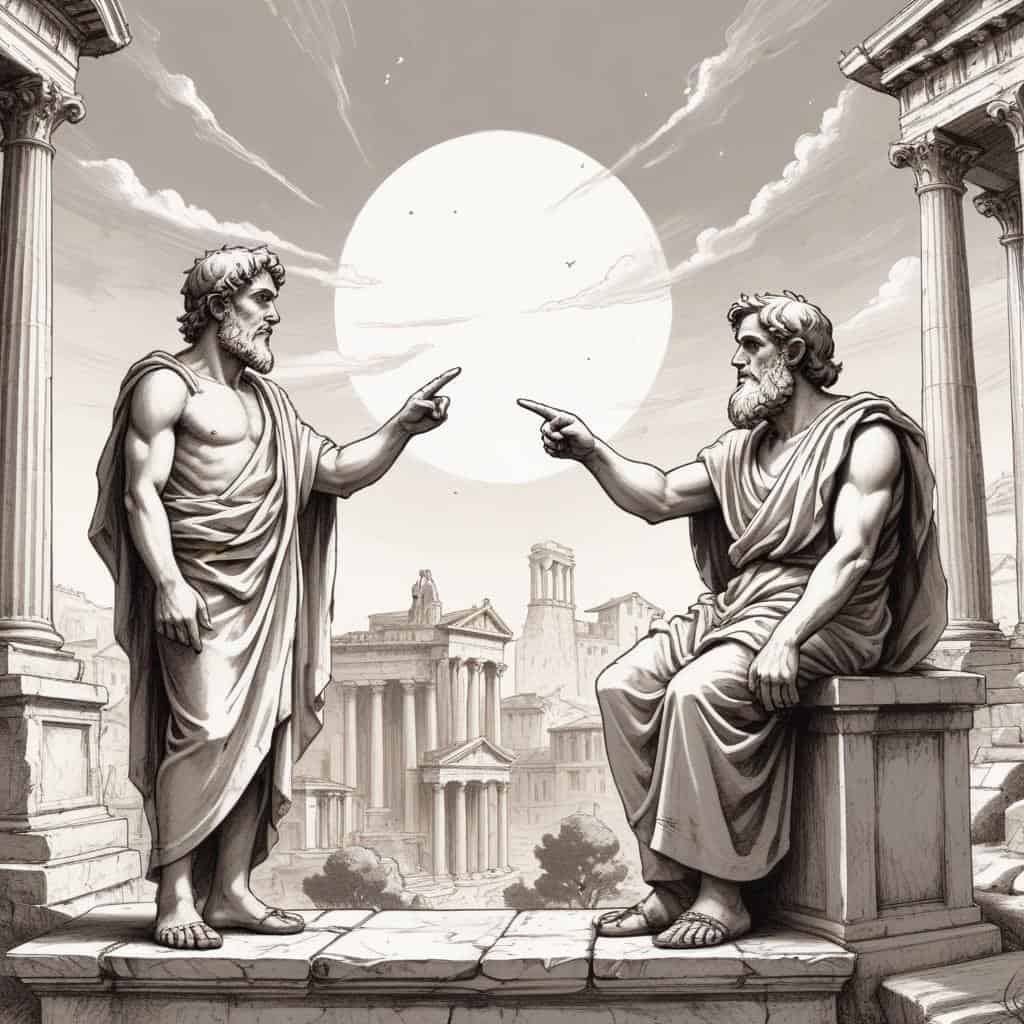
An Overview of Book II
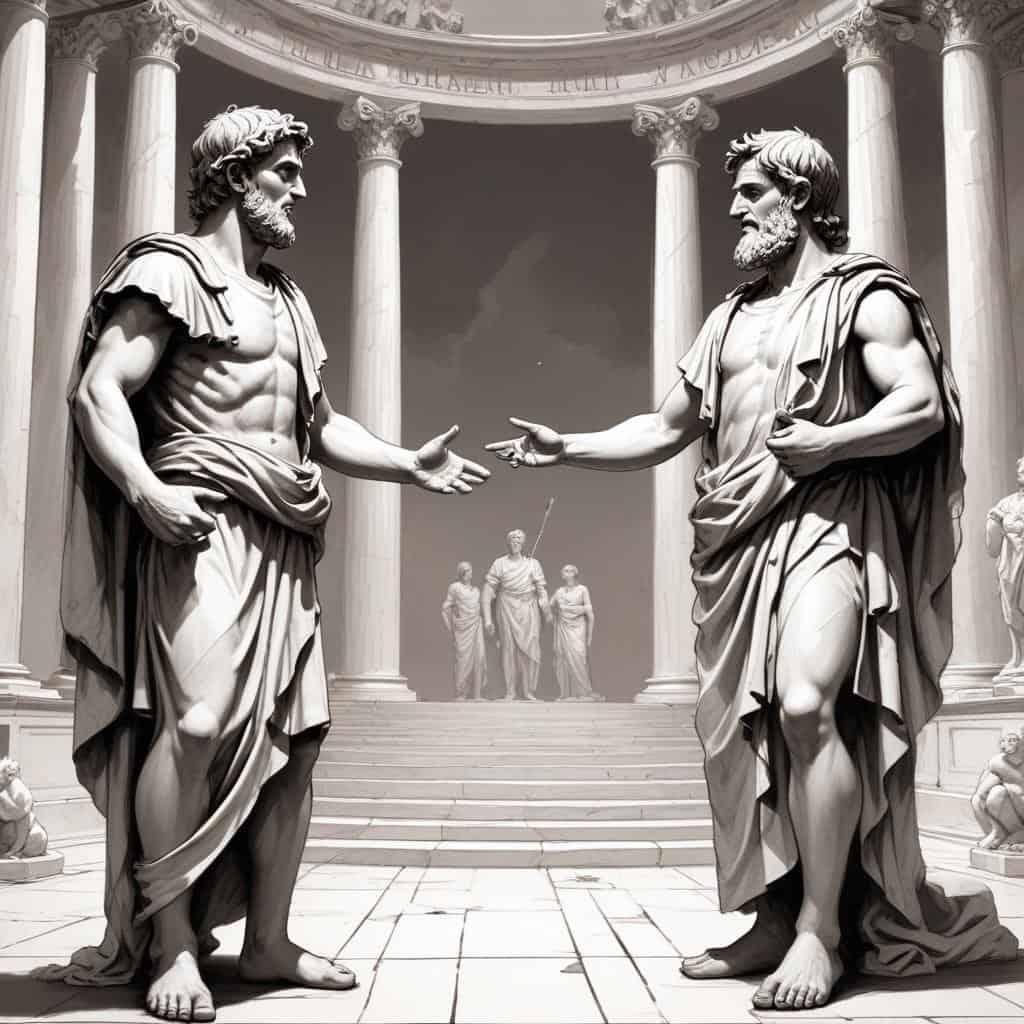
An Overview of Book III
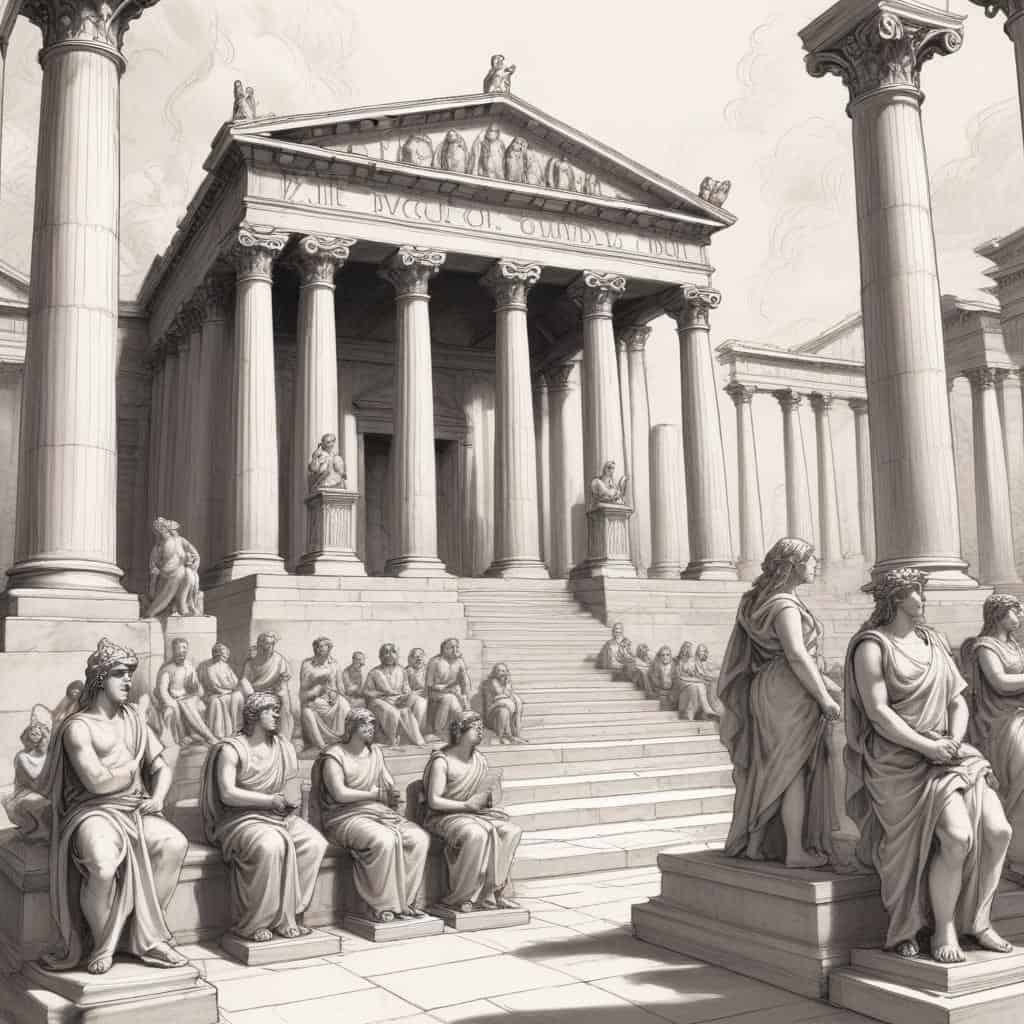
The Themes Explored in De Natura Deorum
The Legacy of De Natura Deorum
Lesson Details & Resources
In a Nutshell
- What: Philosophical treatise ‘De Natura Deorum’ by Cicero
- When: Written in the 1st century BC
- Who: Cicero
- Theme: Exploration of different philosophical perspectives on the nature of the gods
List of Characters in De Natura Deorum
-
Velleius
Velleius is a Epicurean philosopher who argues for the existence of gods in the natural world.
-
Cotta
Cotta is a skeptic who challenges Velleius' arguments and presents his own views on the nature of the gods.
-
Balbus
Balbus is a Stoic philosopher who offers a third perspective on the nature of the gods, blending elements of Epicureanism and Stoicism.
-
Cicero
Cicero is the narrator of the dialogue and presents the arguments of Velleius, Cotta, and Balbus in a balanced and impartial manner.
Timeline of De Natura Deorum
Cicero's De Natura Deorum is written between 45-44 BCE
The dialogue is set in 77 BCE, featuring three main characters: Velleius, Balbus, and Cotta
The dialogue begins with Velleius presenting the Epicurean perspective on the nature of the gods
Balbus then presents the Stoic perspective on the same topic
Finally, Cotta argues for the Academic skeptical view, questioning the existence of the gods
The dialogue concludes with each character presenting their final arguments and Cicero offering his own thoughts on the matter
De Natura Deorum is considered one of Cicero's most important philosophical works
Vocabulary List
- De Natura Deorum
- Title of the philosophical work by Cicero discussing the nature of the gods.
- Cicero
- Roman statesman, orator, and author who wrote De Natura Deorum.
- Philosophical
- Related to the study of fundamental nature of knowledge, reality, and existence.
- Gods
- Supernatural beings believed to have control over the universe and human destiny.
- Nature
- The inherent characteristics or essential qualities of something.
- Theology
- The study of the nature of the divine and religious belief.
- Religion
- A set of beliefs and practices concerning the existence and worship of a divine being.
- Debate
- A formal discussion on a particular topic, often involving opposing viewpoints.
- Roman
- Related to the civilization, culture, and history of ancient Rome.
- Existence
- The state or fact of living or being present in the world.
Key Facts
This is the information used in the fact matching game
- De Natura Deorum is a philosophical dialogue written by Cicero in 45 BC.
- The work discusses the theological views of three Roman philosophers: Velleius the Epicurean, Balbus the Stoic, and Cotta the Academic.
- The dialogue is divided into three books, each representing the perspective of one of the philosophers.
- Cicero uses the dialogue format to present different arguments about the nature of the gods and their existence.
- De Natura Deorum is considered one of Cicero's most important philosophical works.
- The work explores the nature of divinity, the existence of the gods, and the relationship between gods and humans.
- Cicero's dialogue draws on the ideas of Greek philosophers such as Epicurus, Zeno, and Plato.
- De Natura Deorum addresses questions about the origin of the universe, the nature of the soul, and the role of divinity in human life.
- The dialogue reflects Cicero's eclecticism in philosophy, combining elements of Epicureanism, Stoicism, and Academic skepticism.
- Cicero uses the character of Velleius to present the Epicurean perspective, advocating for a naturalistic explanation of the universe and the gods.
- Balbus represents the Stoic viewpoint, arguing for the existence of a divine and rational order in the cosmos.
- Cotta, the Academic skeptic, challenges both Epicurean and Stoic beliefs, advocating for agnosticism and suspending judgment about the nature of the gods.
- De Natura Deorum influenced later Christian theologians such as Augustine and Aquinas in their discussions of natural theology and the existence of God.
- The dialogue raises questions about the limits of human knowledge and the role of reason in understanding the divine.
- Cicero's work reflects the broader intellectual debates of the late Roman Republic, where philosophical schools competed for influence and patronage.
- De Natura Deorum is written in the form of a conversation among friends at Cicero's villa in Tusculum, creating a lively and engaging dialogue.
- The work showcases Cicero's rhetorical skills and ability to present complex philosophical ideas in an accessible and engaging manner.
- De Natura Deorum was highly influential in the Renaissance, shaping debates about the relationship between reason and faith in Christian theology.
- The dialogue continues to be studied by scholars interested in ancient philosophy, Roman intellectual history, and the reception of Greek thought in Rome.
- De Natura Deorum exemplifies Cicero's commitment to philosophical inquiry, intellectual debate, and the pursuit of truth through reason and dialogue.
Analysis & Significance
Impact on Literature
De Natura Deorum, written by Roman philosopher Cicero, is a foundational text in the history of Western philosophy and literature. Its exploration of different philosophical schools and their beliefs laid the groundwork for future philosophical discourse and debates. The work’s influence can be seen in the writings of later philosophers and theologians, shaping the way we think about religion and the natural world.
Enduring Themes
The themes of belief, skepticism, and the nature of the divine in De Natura Deorum are still relevant today. The work delves into questions about the existence of gods, the origins of the universe, and the role of religion in society, sparking ongoing discussions about faith, reason, and the search for meaning in the modern world.
Cultural Significance Today
De Natura Deorum continues to be studied and referenced in modern philosophy, literature, and theology. Its impact can be seen in the works of contemporary thinkers who grapple with questions of faith, morality, and the relationship between humanity and the divine. The text’s enduring legacy serves as a reminder of the ongoing relevance of ancient philosophical debates in our modern world.
De Natura Deorum Games


Take Your Learning Offline
Want a convenient, print-ready study guide for this lesson? Become a Memory Wizards Pro member to unlock the downloadable " Memory Scrolls" for this topic and our entire library!
- ✓ Complete Vocabulary Lists
- ✓ Key Facts & Timelines
- ✓ Beautifully Formatted for Print & Mobile