
How Do You Learn Best?
Learn by Reading
Immerse yourself in the 10-minute visual lesson for a comprehensive understanding of the topic.
Learn by Reviewing
Jump directly to the key facts, timeline, and vocabulary lists to build a solid foundation of details.
Learn by Doing
Challenge yourself! Jump straight into the interactive games to learn by trial, error, and discovery.
De Legibus in 10 Minutes

Introduction


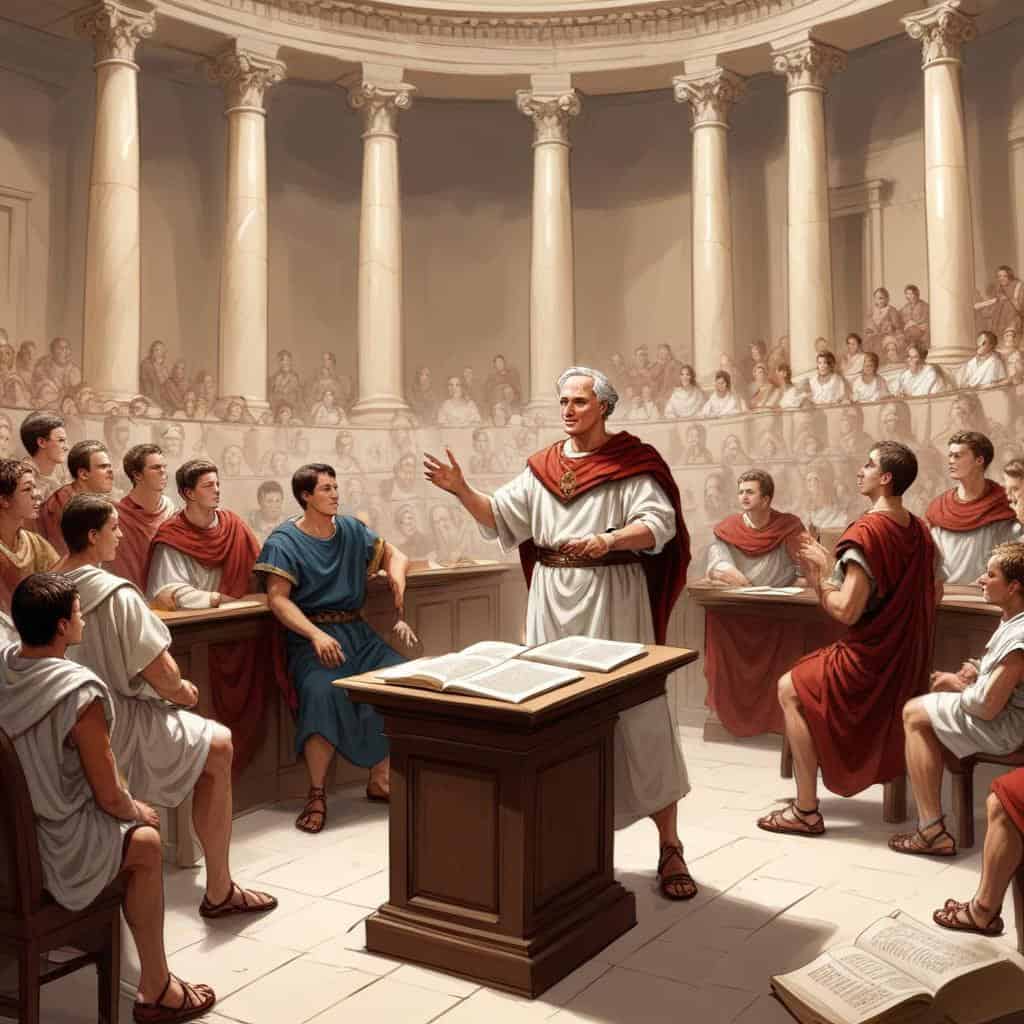
Marcus Tullius Cicero

Quintus

Scipio Africanus
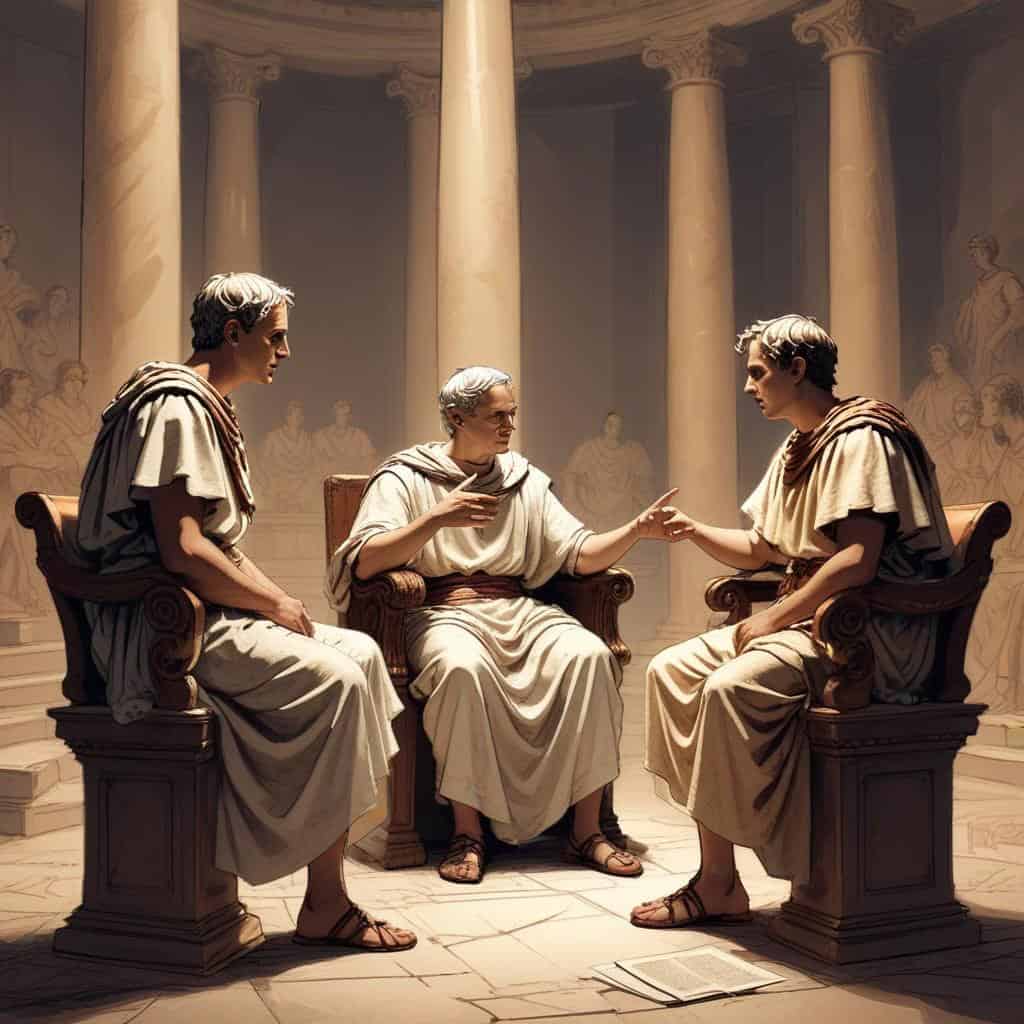
The Background of De Legibus
The Importance of Natural Law

The Role of Virtue in Law

The Relationship Between Law and Justice

The Importance of Civic Duty
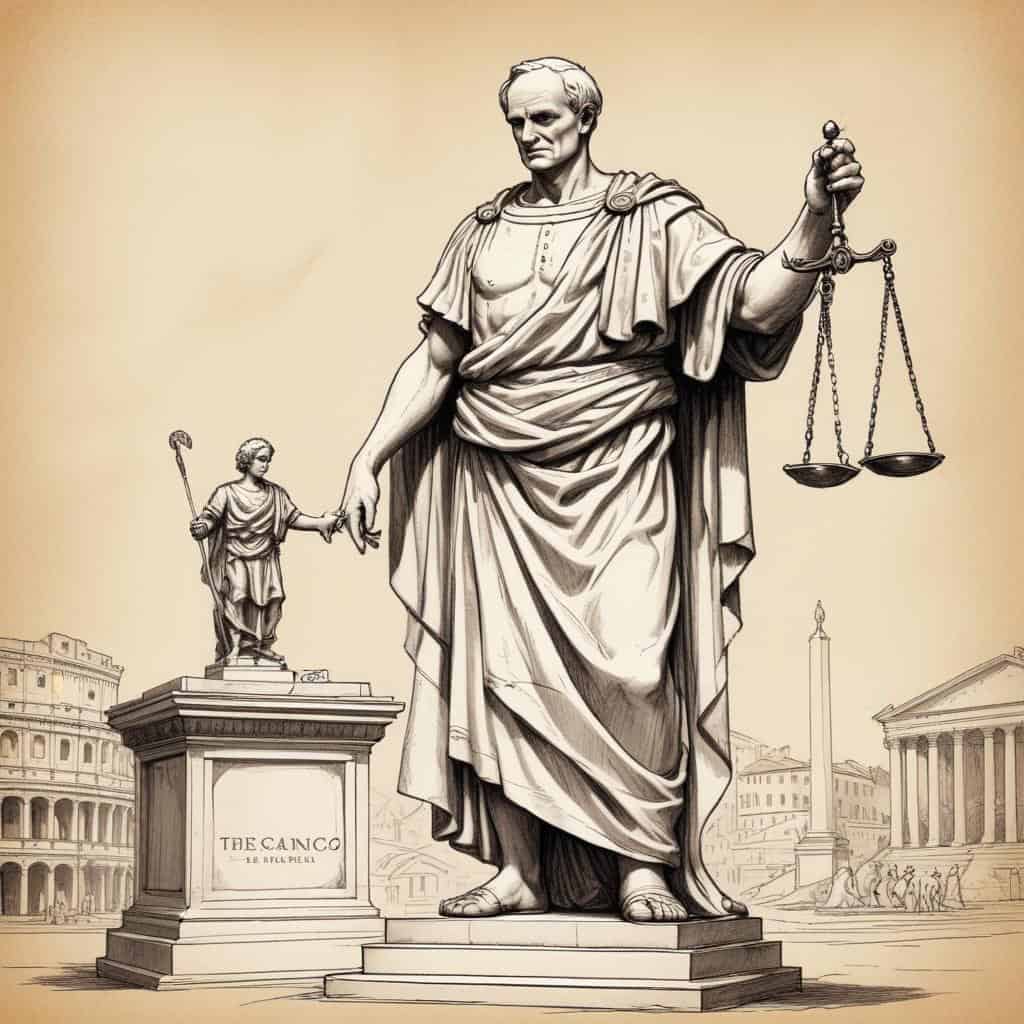
The Limitations of Human Law

The Role of the State in Enforcing Laws

The Importance of Education in Upholding the Law

The Legacy of De Legibus

Lesson Details & Resources
In a Nutshell
- What: ‘De Legibus’ by Cicero
- When: Written in the 1st century BC
- Who: N/A
- Theme: Exploration of the nature of law, justice, and government
List of Characters in De Legibus
-
Cicero
Cicero - a Roman philosopher, politician, and orator, who wrote De Legibus as a dialogue discussing the laws and justice.
-
Atticus
Atticus - a close friend of Cicero, known for his wisdom and insight into legal matters.
-
Quintus
Quintus - Cicero's brother, who also takes part in the dialogue on laws and justice.
-
Popilius
Popilius - a fictional character in De Legibus, who represents the common man's perspective on law and justice.
Timeline of De Legibus
Cicero writes De Legibus, a dialogue discussing the nature of law and justice, around 52-51 BC.
The dialogue is set in the year 129 BC, during a fictional conversation between Cicero, his brother Quintus, and their friend Atticus.
The three discuss the origins of law, the importance of following natural law, and the role of the state in upholding justice.
Cicero argues that true law is based on reason and morality, and that unjust laws are not truly laws at all.
The dialogue also explores the concept of the ideal statesman, who must be knowledgeable in both law and philosophy.
De Legibus is considered one of Cicero's most important works on political theory and has influenced legal and political thought for centuries.
Vocabulary List
- Legibus
- De Legibus is a philosophical dialogue by Cicero that discusses the nature of laws and justice.
- Iustitia
- Cicero emphasizes the importance of justice in De Legibus.
- Lex
- The concept of laws and legal systems is a central theme in De Legibus.
- Natura
- Cicero discusses the relationship between natural law and human laws in De Legibus.
- Virtus
- The dialogue explores the connection between virtue and the law in De Legibus.
- Ius
- Cicero examines the concept of rights and legal principles in De Legibus.
- Auctoritas
- The authority of laws and the state is a key topic in De Legibus.
- Republica
- De Legibus delves into the role of laws in governing a state or republic.
- Civitas
- The dialogue discusses the relationship between laws and the citizenry in De Legibus.
- Res publica
- Cicero examines the concept of the common good and public affairs in De Legibus.
Key Facts
This is the information used in the fact matching game
- De Legibus is a dialogue written by the Roman statesman and philosopher Cicero.
- The dialogue is set in 129 BC, during the Roman Republic.
- De Legibus explores the nature of law, justice, and the ideal state.
- Cicero presents three main interlocutors in the dialogue: himself, his younger brother Quintus, and his friend Atticus.
- The dialogue is divided into three books, each focusing on different aspects of law and justice.
- De Legibus draws heavily on Greek philosophy, particularly the works of Plato and Aristotle.
- Cicero argues that true law is based on natural reason and justice, rather than mere human convention.
- The dialogue also discusses the role of religion and divine law in shaping human laws.
- Cicero emphasizes the importance of education and virtue in creating a just society.
- De Legibus influenced later works on political philosophy and legal theory, including those of Thomas Aquinas and John Locke.
- The dialogue was written during a time of political turmoil in Rome, as Cicero sought to defend the traditional Roman values against the rise of tyranny.
- De Legibus is considered one of Cicero's most important works on political theory.
- The dialogue reflects Cicero's belief in the importance of reason and dialogue in resolving conflicts and promoting justice.
- De Legibus also addresses the relationship between law and morality, arguing that the two are closely intertwined.
- Cicero's views on law and justice in De Legibus have been influential in the development of Western legal thought.
- The dialogue is written in the form of a philosophical conversation, with each interlocutor presenting their views on the nature of law and justice.
- De Legibus is one of Cicero's later works, written after his political career had largely ended.
- The dialogue reflects Cicero's belief in the importance of constitutional government and the rule of law.
- De Legibus was likely written as a response to the political turmoil of Cicero's time, as he sought to provide a blueprint for a just and stable society.
- The dialogue has been studied by scholars for centuries for its insights into the nature of law, justice, and the ideal state.
Analysis & Significance
Impact on Literature
De Legibus, written by the Roman philosopher Cicero, had a significant impact on the development of political philosophy and legal theory. Its exploration of the relationship between law, justice, and morality continues to influence modern thinkers and writers in their examination of ethical and legal issues.
Enduring Themes
The enduring themes of De Legibus include the nature of justice, the role of law in society, and the importance of morality in governance. These timeless themes still resonate with modern audiences, as they continue to grapple with questions of ethics, justice, and the rule of law in today’s complex world.
Cultural Significance Today
De Legibus remains culturally significant today for its lasting impact on Western legal and political thought. Its ideas have been referenced in countless works of literature, philosophy, and political theory, and its legacy can be seen in the development of legal systems around the world. The work has also been adapted into various forms, including plays, films, and operas, further solidifying its place in the cultural landscape.
De Legibus Games


Take Your Learning Offline
Want a convenient, print-ready study guide for this lesson? Become a Memory Wizards Pro member to unlock the downloadable " Memory Scrolls" for this topic and our entire library!
- ✓ Complete Vocabulary Lists
- ✓ Key Facts & Timelines
- ✓ Beautifully Formatted for Print & Mobile