
The Agrippan Trilemma
Unravel the mystery: belief, doubt, or infinite regress?
How Do You Learn Best?
Learn by Reading
Immerse yourself in the 10-minute visual lesson for a comprehensive understanding of the topic.
Learn by Reviewing
Jump directly to the key facts, timeline, and vocabulary lists to build a solid foundation of details.
Learn by Doing
Challenge yourself! Jump straight into the interactive games to learn by trial, error, and discovery.
The Agrippan Trilemma in 10 Minutes
Introduction


1. Socrates

2. Augustine of Hippo

3. Pyrrho

4. Descartes
The Agrippan Trilemma

Infinite Regress
Circular Reasoning

Dogmatism

Implications
Lesson Details & Resources
In a Nutshell
- Concept: A philosophical problem that highlights the impossibility of proving anything beyond doubt.
- Thinkers: Agrippa the Skeptic, Ancient Greece.
- Central Question: How can we establish true knowledge if every belief requires justification, leading to an infinite regress or circular reasoning?
- Core Implication: Knowledge is ultimately unattainable, challenging the foundation of rational thought and skepticism.
Timeline of The Agrippan Trilemma
Vocabulary List
- Skepticism
- Some philosophers adopt skepticism in response to the Agrippan Trilemma.
- Dogmatism
- Dogmatism is often seen as a response to the challenges posed by the Agrippan Trilemma.
- Justification
- The Agrippan Trilemma asks how we can provide justification for our beliefs.
- Infinite Regress
- The Agrippan Trilemma highlights the problem of infinite regress in justifying beliefs.
Key Facts
Analysis & Significance
The Core Argument
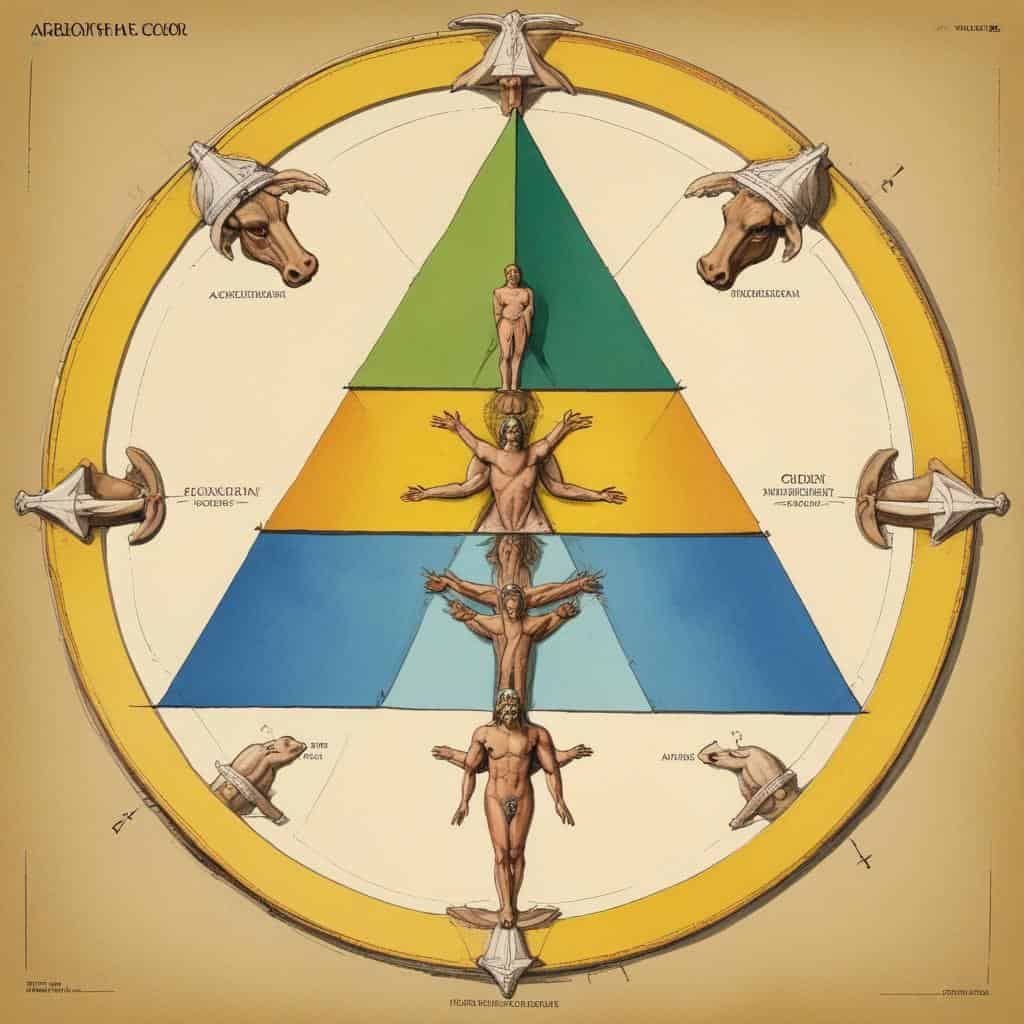
The Agrippan Trilemma, also known as the Münchhausen trilemma, posits that any system of knowledge or belief must rely on one of three types of justification: infinite regress, circular reasoning, or axiomatic assumptions. This philosophical dilemma challenges the possibility of providing a satisfactory justification for any claim, leading to skepticism about knowledge and truth.
Criticisms and Counterarguments
Critics of the Agrippan Trilemma argue that there may be ways to escape the dilemma by appealing to foundational beliefs that are self-evident or by accepting a limited form of circular reasoning. Some philosophers also question whether the trilemma accurately captures the complexity of epistemic justification and contend that it oversimplifies the nature of knowledge.
Modern Relevance
In today’s society, the Agrippan Trilemma remains relevant in discussions about the limits of human knowledge and the challenges of justifying beliefs in an era of information overload. The trilemma prompts us to critically evaluate the grounds for our beliefs and to recognize the inherent uncertainties that accompany the quest for truth. Understanding the implications of this philosophical concept can help individuals navigate the complexities of modern epistemology and foster intellectual humility.
The Agrippan Trilemma Games


Take Your Learning Offline
Want a convenient, print-ready study guide for this lesson? Become a Memory Wizards Pro member to unlock the downloadable " Memory Scrolls" for this topic and our entire library!
- ✓ Complete Vocabulary Lists
- ✓ Key Facts & Timelines
- ✓ Beautifully Formatted for Print & Mobile