
How Do You Learn Best?
Learn by Reading
Immerse yourself in the 10-minute visual lesson for a comprehensive understanding of the topic.
Learn by Reviewing
Jump directly to the key facts, timeline, and vocabulary lists to build a solid foundation of details.
Learn by Doing
Challenge yourself! Jump straight into the interactive games to learn by trial, error, and discovery.
The Watter’s Mou’ by Bram Stoker in 10 Minutes
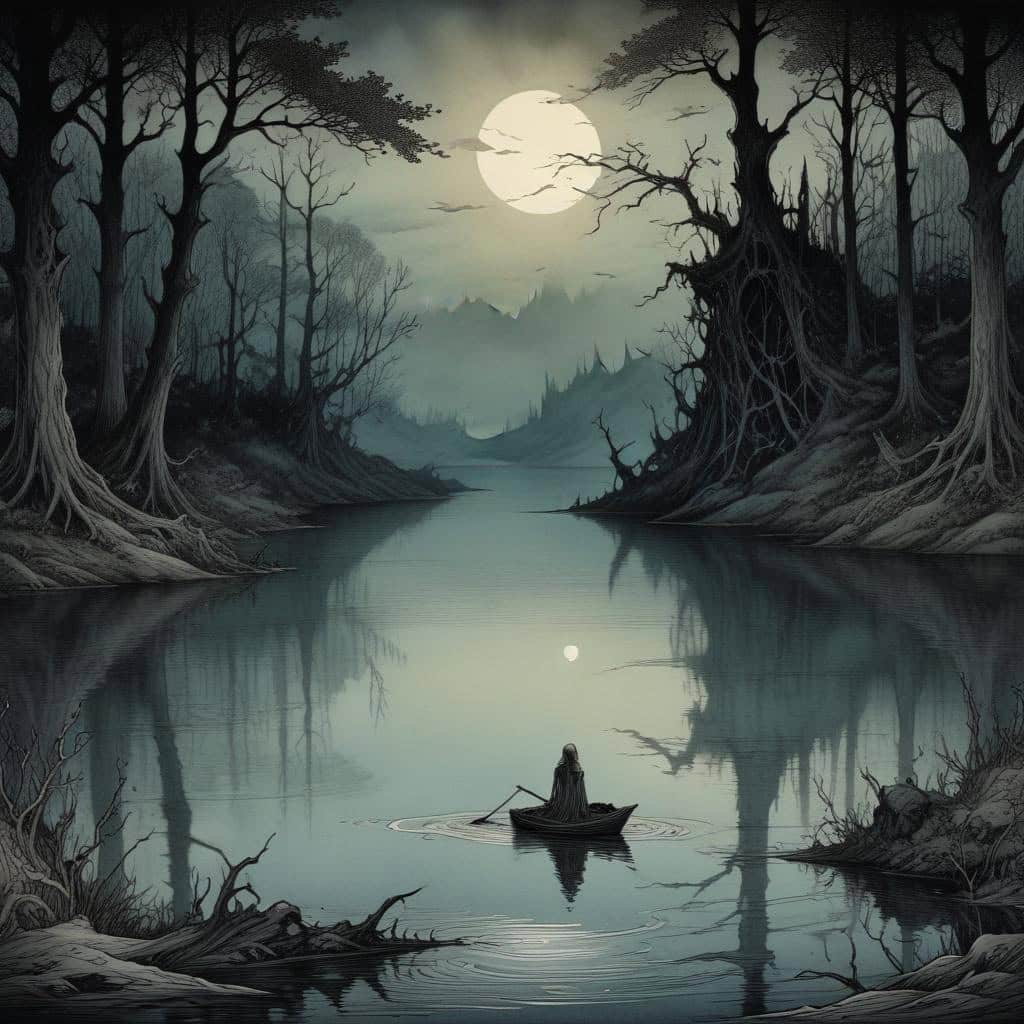
Introduction
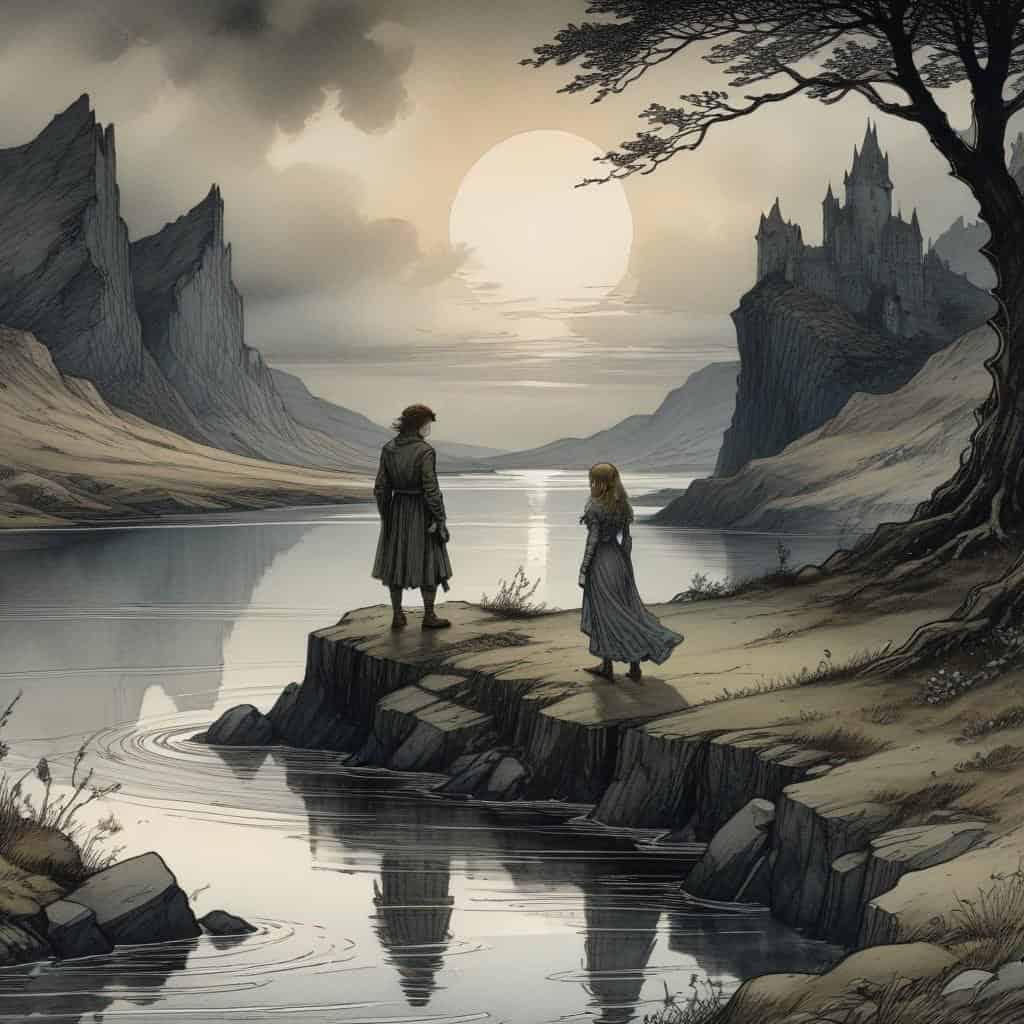

Donal

Old Jemmy

Phelim
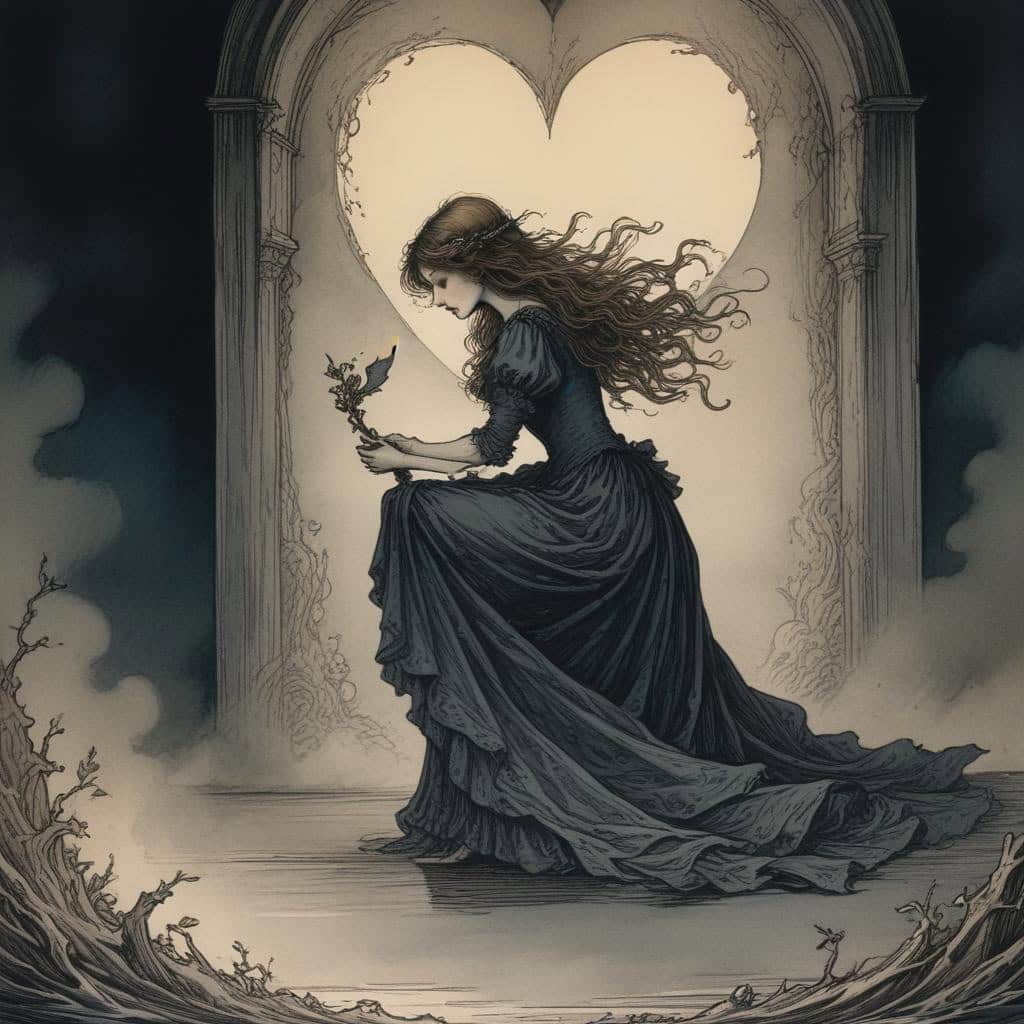
Miss Orla

The Banshee
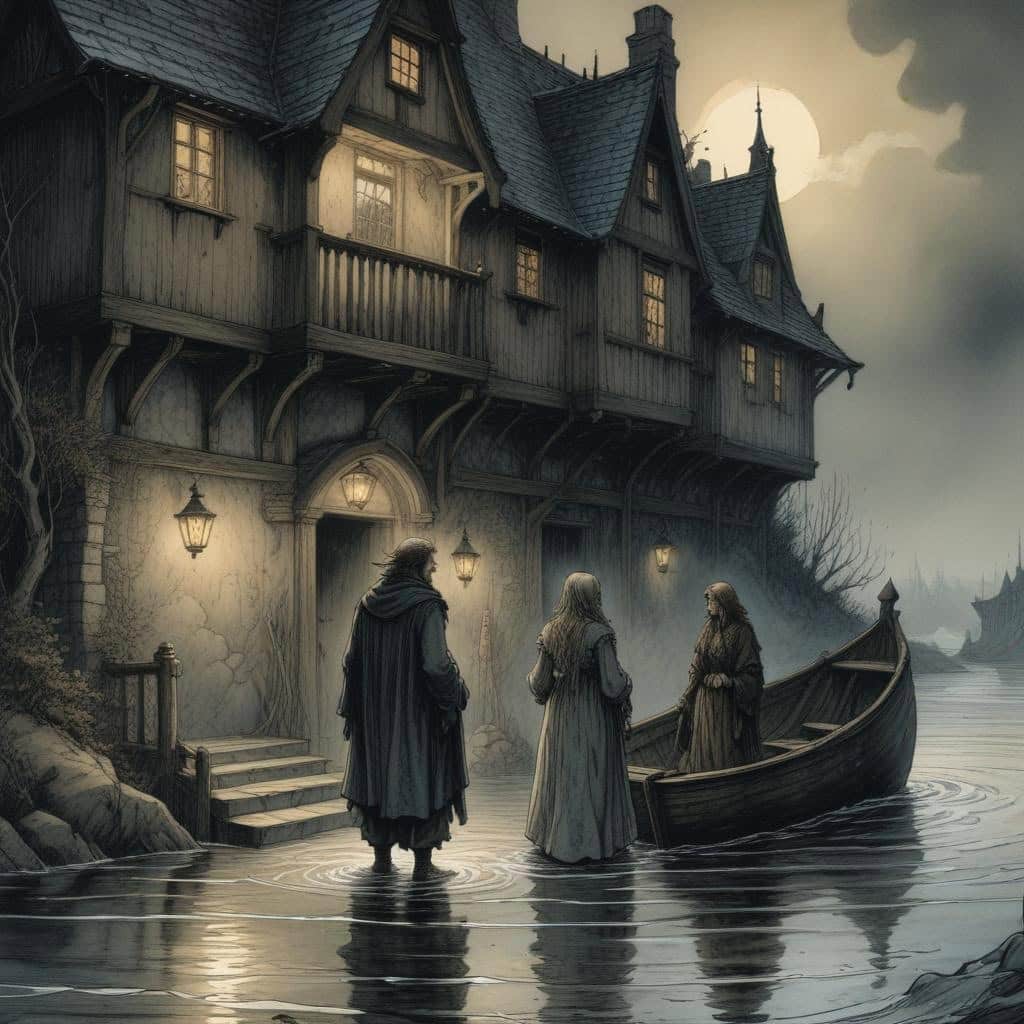
1. The Arrival at the Waters Mou
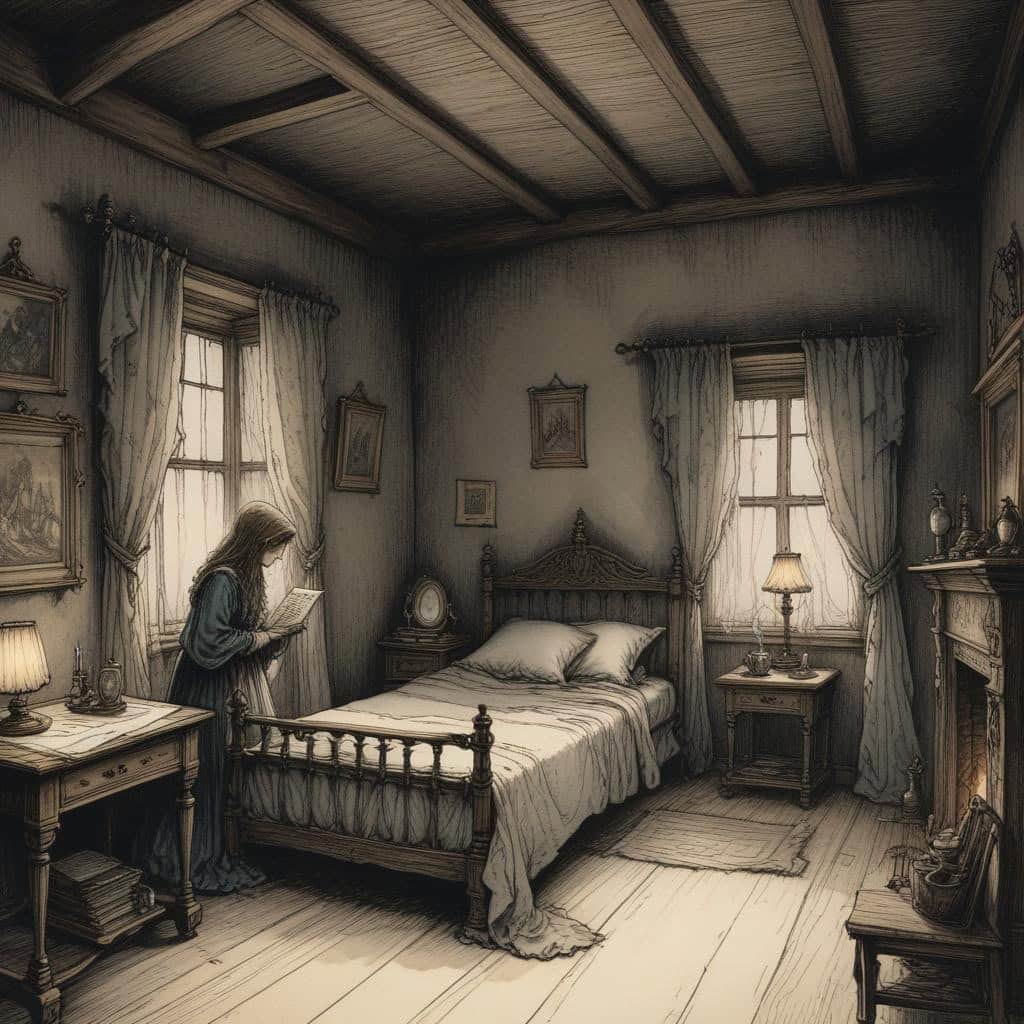
2. The Strange Happenings in the Inn
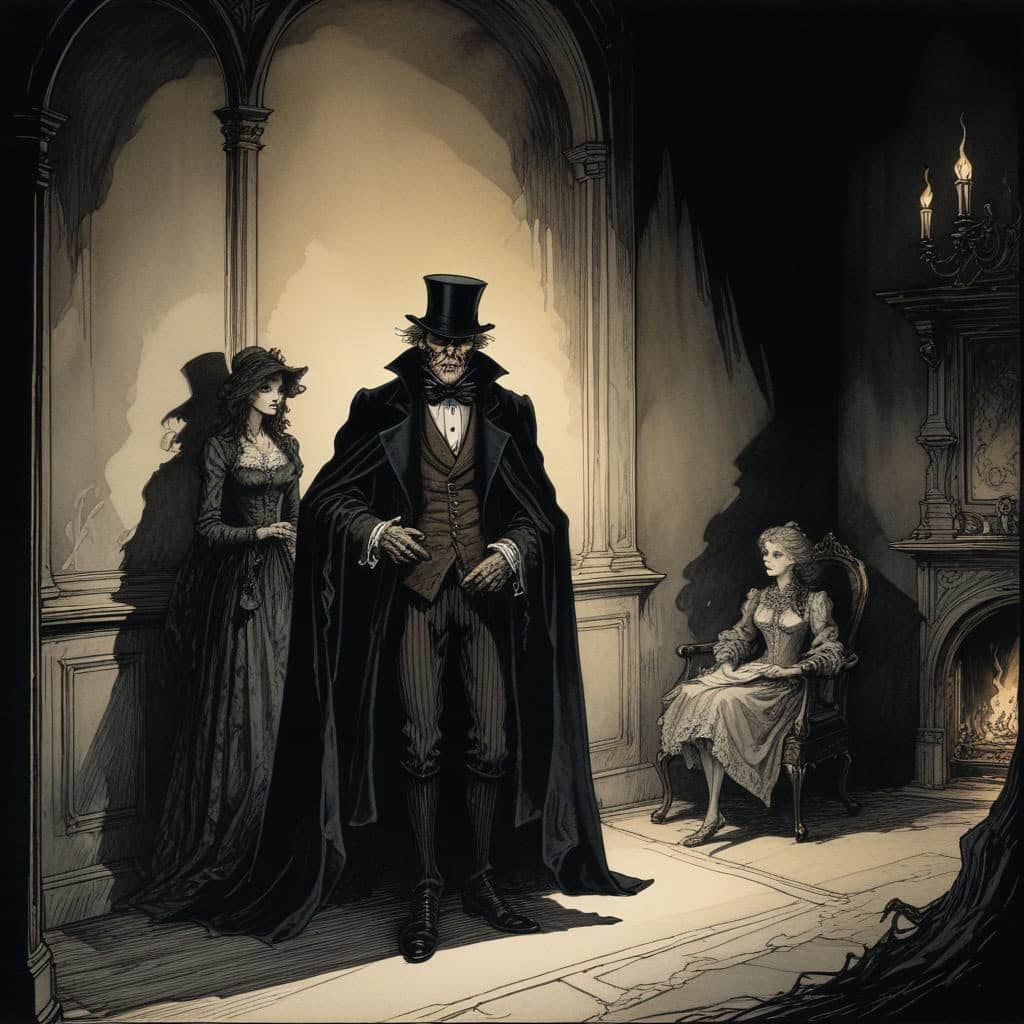
3. The Sinister Landlord
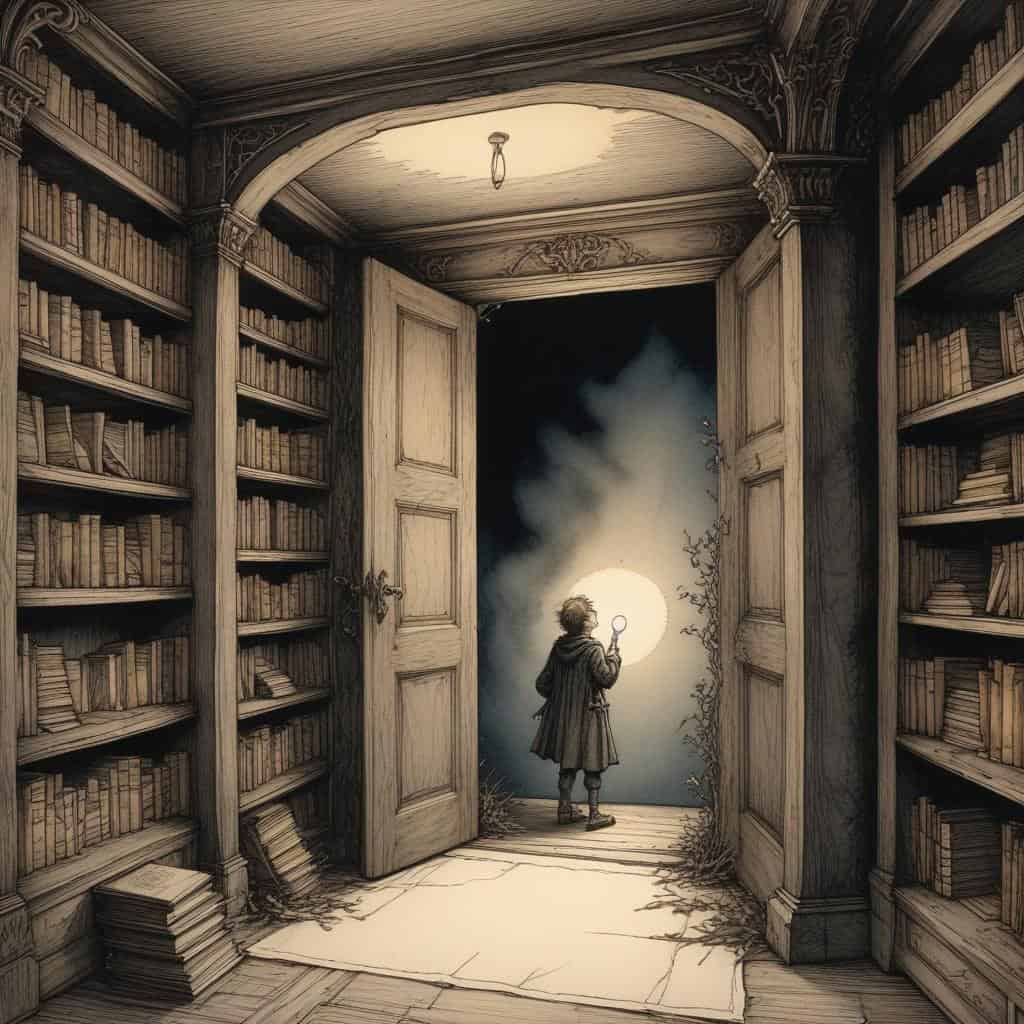
4. The Discovery of the Secret Passage
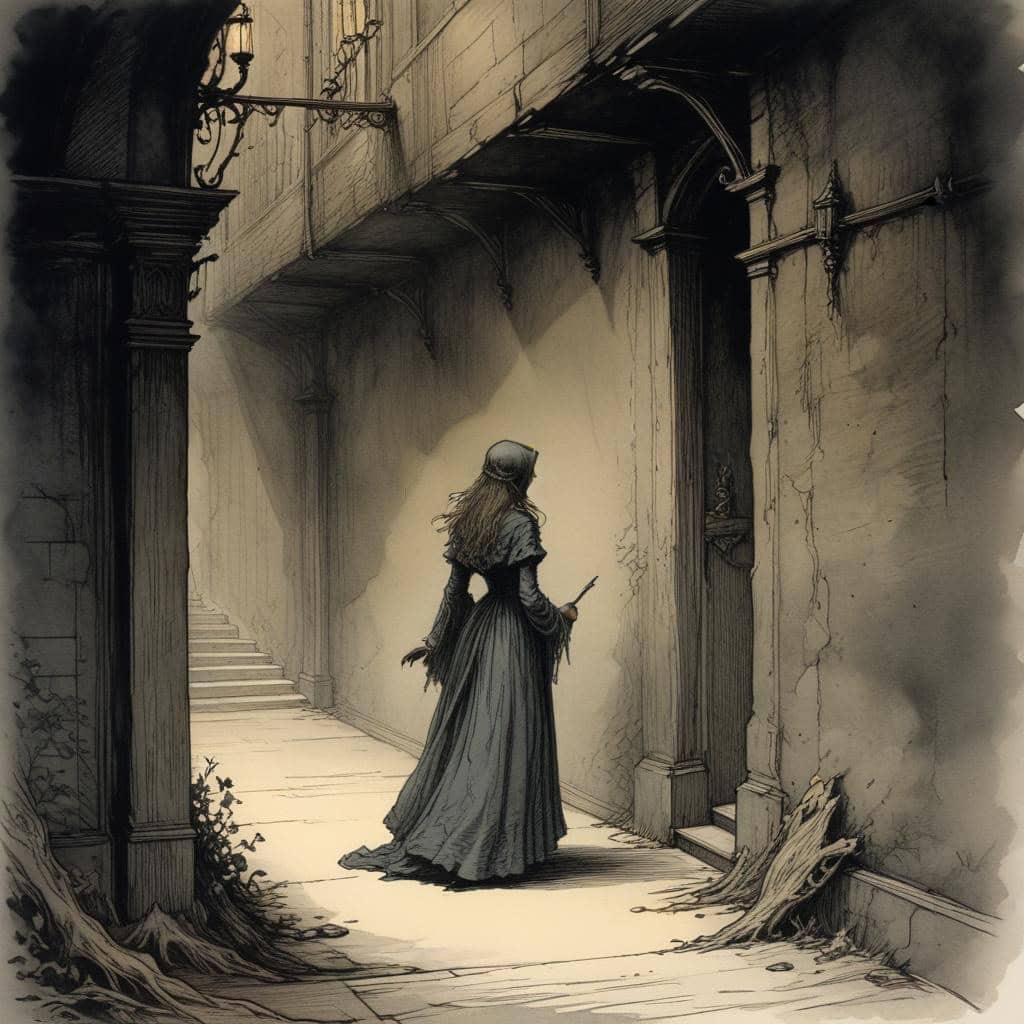
5. The Encounter with the Mysterious Woman
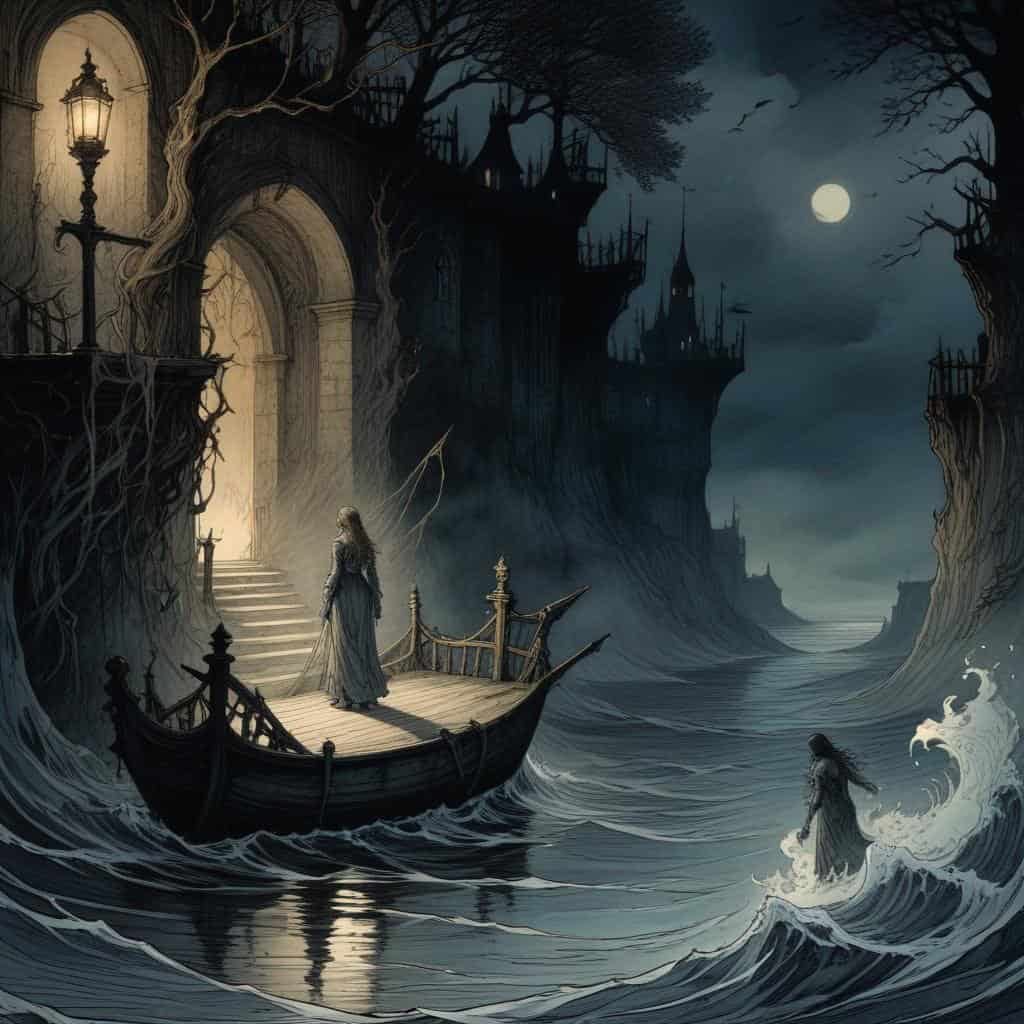
6. The Revelation of the Inns Dark History
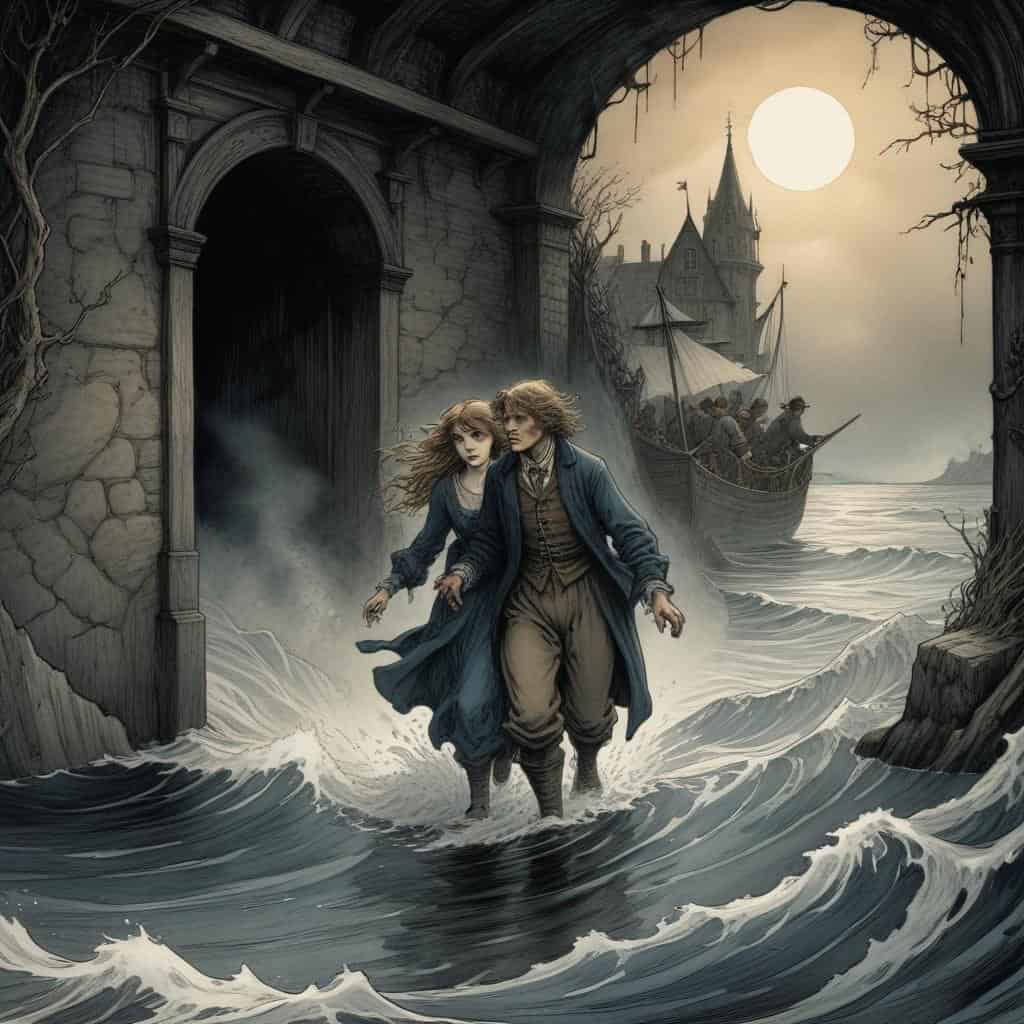
7. The Escape from the Waters Mou
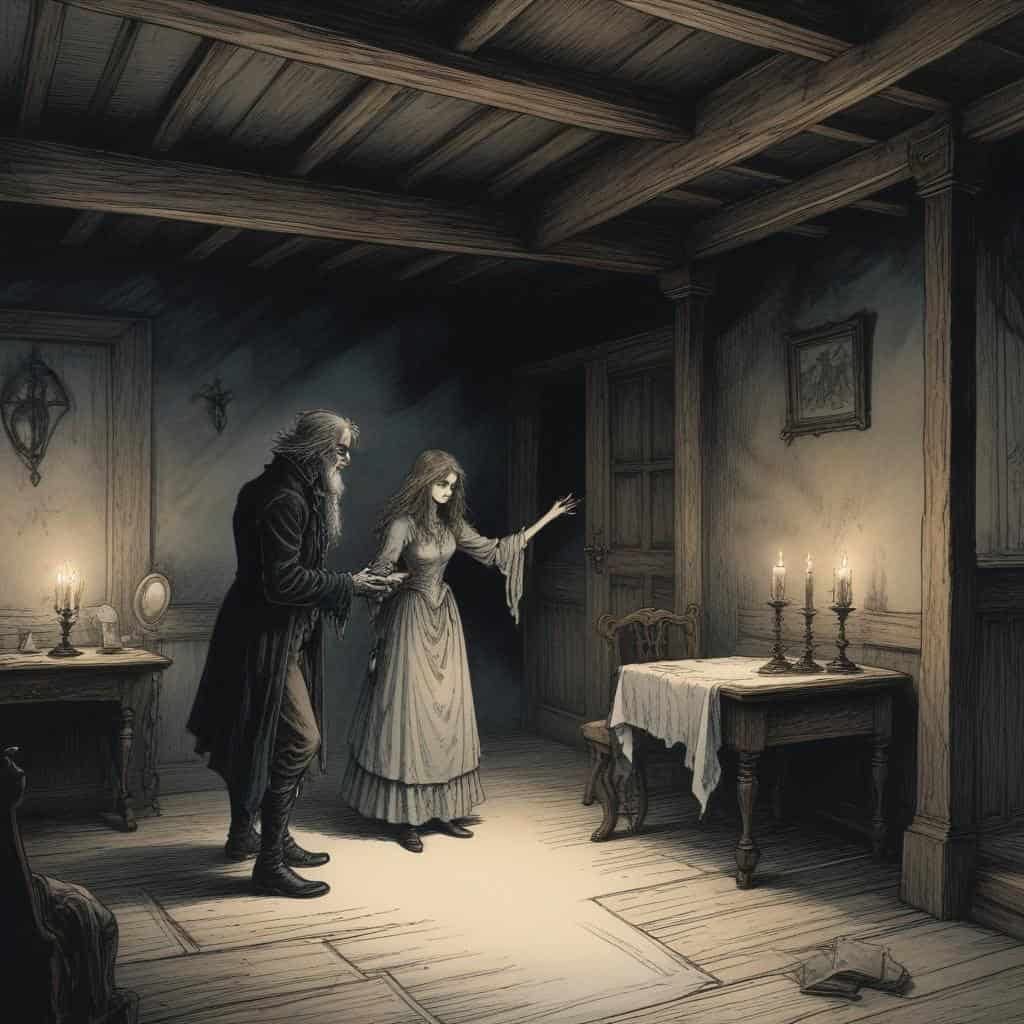
8. The Final Confrontation with Mr. Weatherby
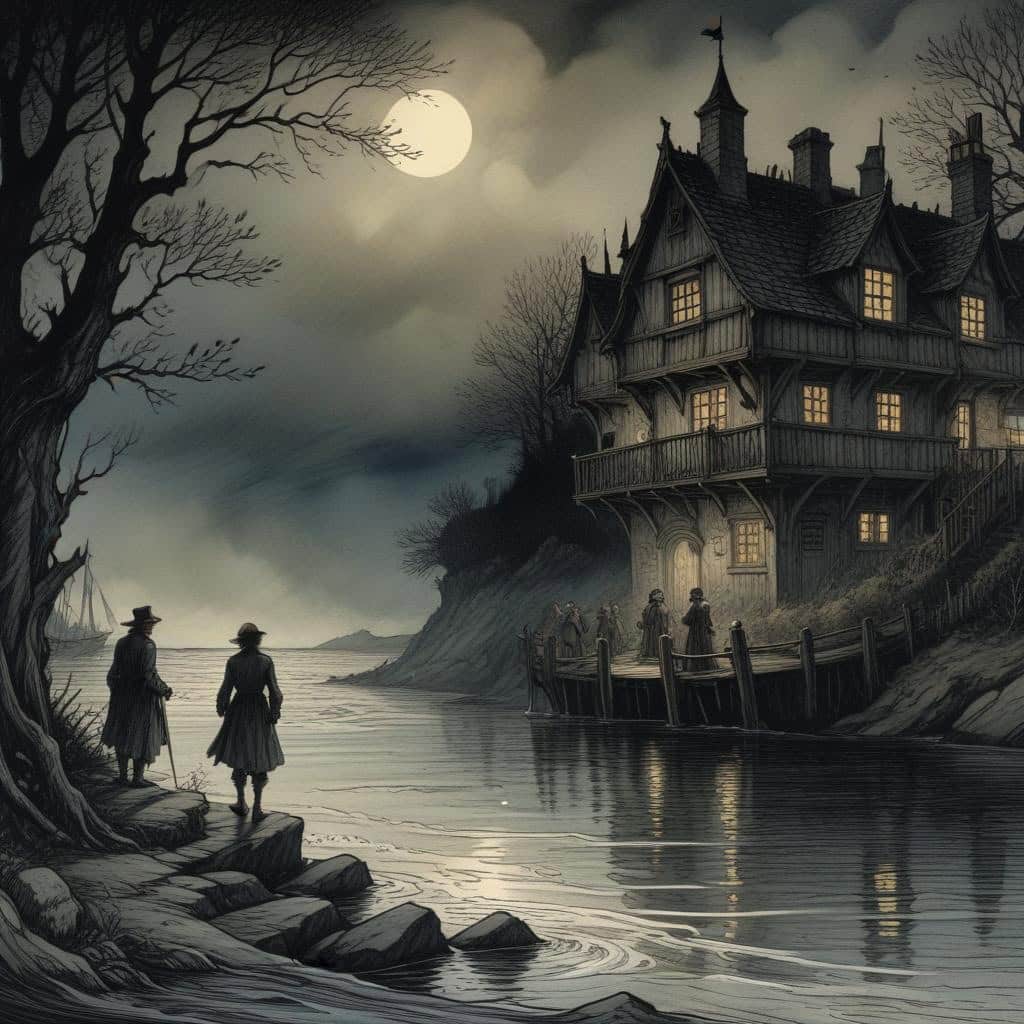
9. The Resolution of the Mystery

10. The Aftermath of the Waters Mou

Lesson Details & Resources
In a Nutshell
- What: The novella 'The Watter's Mou' by Bram Stoker
- When: Written in the 19th century
- Who: The main characters are Sir John and the mysterious stranger
- Theme: Themes of revenge, guilt, and the supernatural are explored in the work
List of Characters in The Watter’s Mou’ by Bram Stoker
-
Ludar
Ludar is a gypsy who is suspected of being involved in mysterious events at the Watter's Mou'.
-
Nance Oldfield
Nance Oldfield is the landlady of the Watter's Mou' and is known for her superstitious beliefs.
-
Molly
Molly is a serving girl at the Watter's Mou' who becomes entangled in the strange occurrences happening there.
Timeline of The Watter’s Mou’ by Bram Stoker
Tommy the piper plays his tunes at the Water's Mou' inn.
Tommy plays his tunes to entertain the guests at the inn.
Tommy meets the mysterious stranger, who requests a specific tune to be played.
The stranger reveals himself to be the Devil and demands Tommy's soul in exchange for his talent.
Tommy refuses to give up his soul and plays the Devil's requested tune flawlessly.
The Devil is impressed by Tommy's skill and offers him a second chance to save his soul.
Tommy plays a tune that moves the Devil to tears and wins back his soul.
Tommy escapes the Devil's grasp and continues to play his music at the Water's Mou' inn.
Vocabulary List
- Watter's Mou'
- The title of the story, referring to the location where the events take place.
- Muckle
- Used in the story to describe something large or significant.
- Neebor
- Scottish dialect term for neighbor, used in the story to refer to nearby residents.
- Sough
- A soft murmuring or rustling sound, mentioned in the story to describe the wind in the trees.
- Lave
- Scottish dialect term for the rest or remainder, used in the story to refer to the remaining villagers.
- Bide
- Scottish dialect term for stay or remain, used in the story to describe someone staying in a place.
- Kirk
- Scottish term for church, mentioned in the story as the location of a gathering.
- Mither
- Scottish dialect term for mother, used in the story to refer to a character's deceased mother.
- Siller
- Scottish dialect term for money, mentioned in the story as a valuable possession.
- Bairn
- Scottish dialect term for child, used in the story to refer to a young girl.
- Wean
- Scottish dialect term for child, mentioned in the story as a term of endearment for a young boy.
- Howe
- A small valley or hollow, used in the story to describe the landscape around the Watter's Mou'.
Key Facts
This is the information used in the fact matching game
- The Watter's Mou' is a short story written by Bram Stoker in 1895.
- The story was first published in the magazine The Shamrock in 1895.
- The Watter's Mou' is set in Ireland and features themes of folklore and superstition.
- The protagonist of the story is a man named Terence Mulvaney who encounters a mysterious woman at a water mill.
- The story explores the idea of fate and the supernatural.
- The Watter's Mou' is considered one of Stoker's lesser-known works.
- Stoker is best known for his novel Dracula, which was published in 1897.
- The story is written in a dialect that reflects the Irish setting.
- Stoker was inspired by Irish folklore and legends when writing The Watter's Mou'.
- The story has been praised for its atmospheric setting and supernatural elements.
- Some critics have compared The Watter's Mou' to the works of other Gothic writers such as Edgar Allan Poe.
- The story's title is a reference to the water mill where much of the action takes place.
- The Watter's Mou' was included in a collection of Stoker's short stories titled Under the Sunset.
- The story has been adapted for radio and stage productions.
- Stoker's writing style in The Watter's Mou' has been described as both lyrical and suspenseful.
- The story explores themes of love, loss, and the power of the supernatural.
- The Watter's Mou' has been praised for its evocative descriptions of the Irish countryside.
- Stoker's use of dialect in the story has been both praised and criticized by literary scholars.
- The story's mysterious and haunting atmosphere has made it a favorite among fans of Gothic literature.
- The Watter's Mou' is considered a classic example of Stoker's ability to blend horror and romance in his writing.
Analysis & Significance
Impact on Literature
‘The Watter’s Mou’ by Bram Stoker is a lesser-known work by the author of ‘Dracula’, but it still showcases his mastery of gothic storytelling. This novella explores themes of isolation, madness, and supernatural occurrences in a remote Scottish setting. Stoker’s ability to create a sense of dread and suspense in a short format influenced later horror writers and added to his reputation as a pioneer of the genre.
Enduring Themes
The themes of isolation, madness, and the unknown in ‘The Watter’s Mou’ continue to resonate with modern audiences. The novella delves into the psychological effects of being cut off from society and the fear of the supernatural, which are timeless fears that still captivate readers today. Stoker’s exploration of these themes in a gothic setting adds depth and complexity to the story.
Cultural Significance Today
While ‘The Watter’s Mou’ may not be as well-known as some of Stoker’s other works, its legacy can still be seen in modern horror literature and film. The novella has been adapted into stage plays and radio dramas, keeping the story alive for new generations. Stoker’s ability to create a sense of unease and mystery in ‘The Watter’s Mou’ continues to captivate audiences and solidify his place in literary history.
The Watter’s Mou’ by Bram Stoker Games


Take Your Learning Offline
Want a convenient, print-ready study guide for this lesson? Become a Memory Wizards Pro member to unlock the downloadable " Memory Scrolls" for this topic and our entire library!
- ✓ Complete Vocabulary Lists
- ✓ Key Facts & Timelines
- ✓ Beautifully Formatted for Print & Mobile