
How Do You Learn Best?
Learn by Listening
Start with the 3-minute audio summary to get the key facts and narrative highlights quickly.
Learn by Reading
Immerse yourself in the 10-minute visual lesson for a comprehensive understanding of the topic.
Learn by Reviewing
Jump directly to the key facts, timeline, and vocabulary lists to build a solid foundation of details.
Learn by Doing
Challenge yourself! Jump straight into the interactive games to learn by trial, error, and discovery.
Example of Baroque Scuplture: Apollo and Daphne Sculpture by Bernini

Deconstructing Baroque Scuplture
Dramatic Movement
Sculptures often depict dynamic poses and gestures, capturing a sense of movement and emotion in a frozen moment.
Emotional Expression
Facial expressions and body language are exaggerated to convey intense emotions and engage the viewer on a visceral level.
Theatricality
Works are designed to create a sense of spectacle, with dramatic lighting, elaborate costumes, and elaborate staging.
Audio Library
As one of our featured lessons, this topic includes premium audio guides.
A Guide to Baroque Sculpture in 10 Minutes
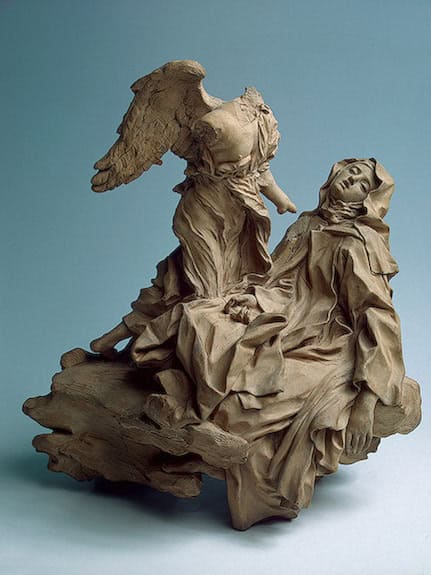
1. The Emergence of Baroque Sculpture
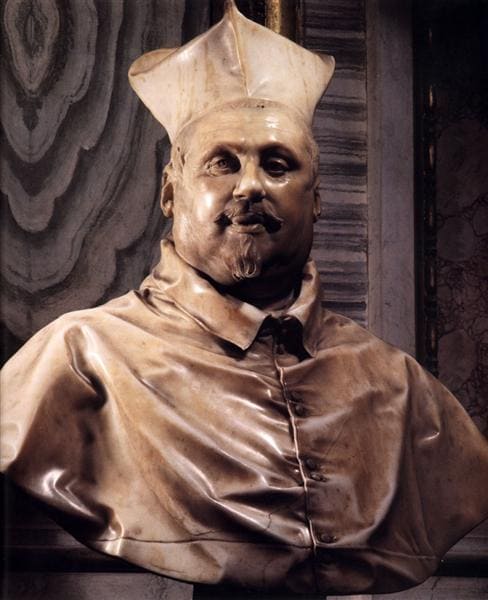
2. Influence of the Catholic Church
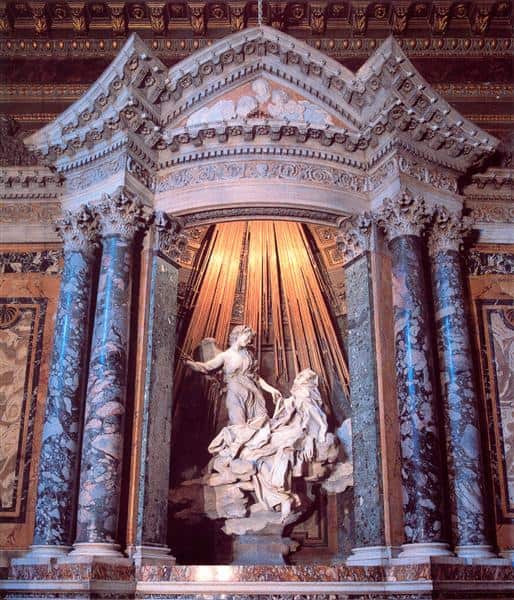
3. Bernini: The Master of Baroque Sculpture
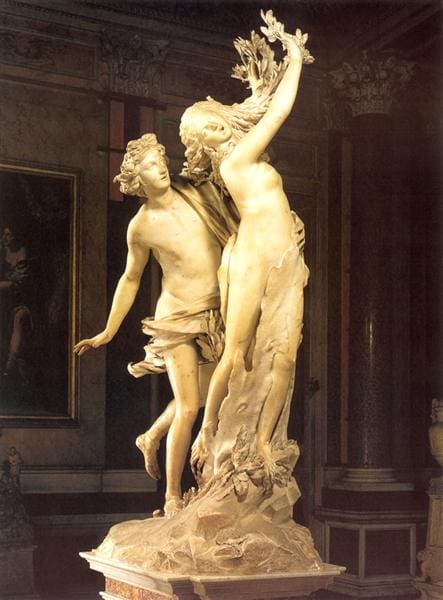
4. Theatricality and Movement
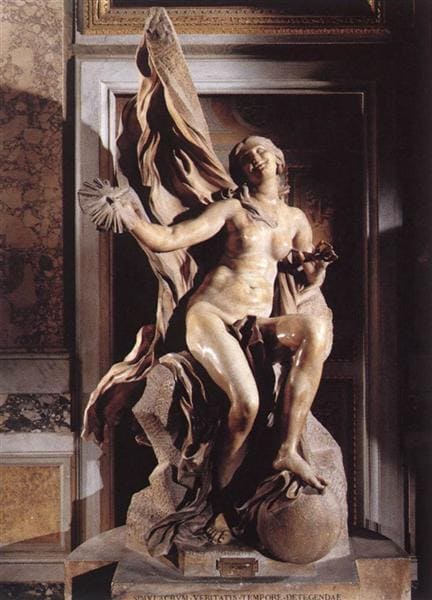
5. Emotion and Expression
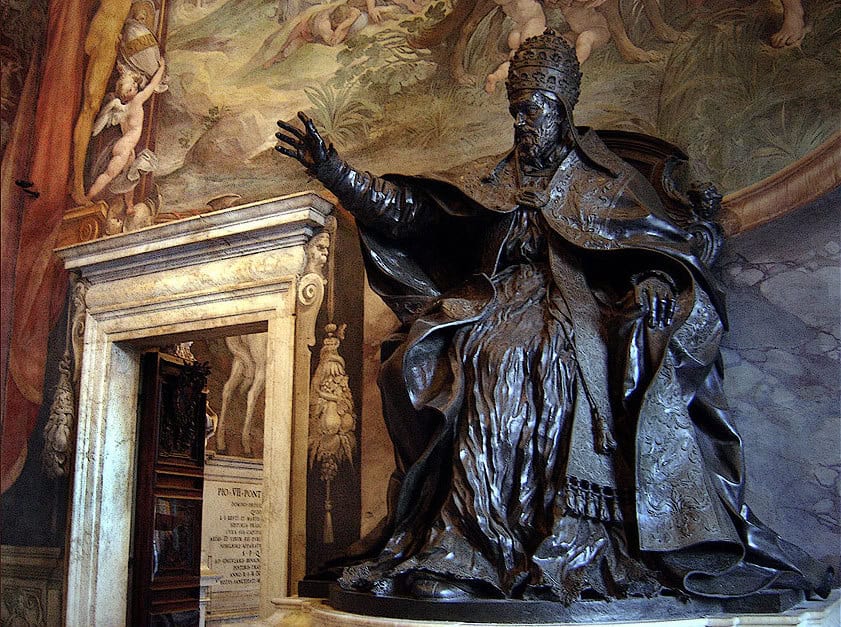
6. Materials and Techniques
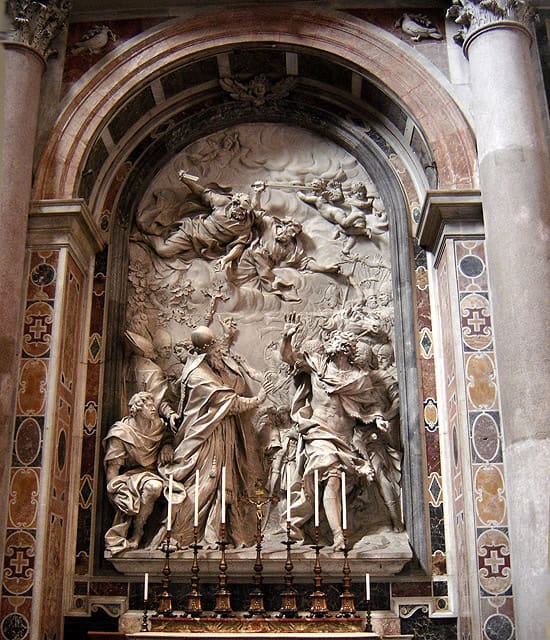
7. Baroque Sculpture in Architecture
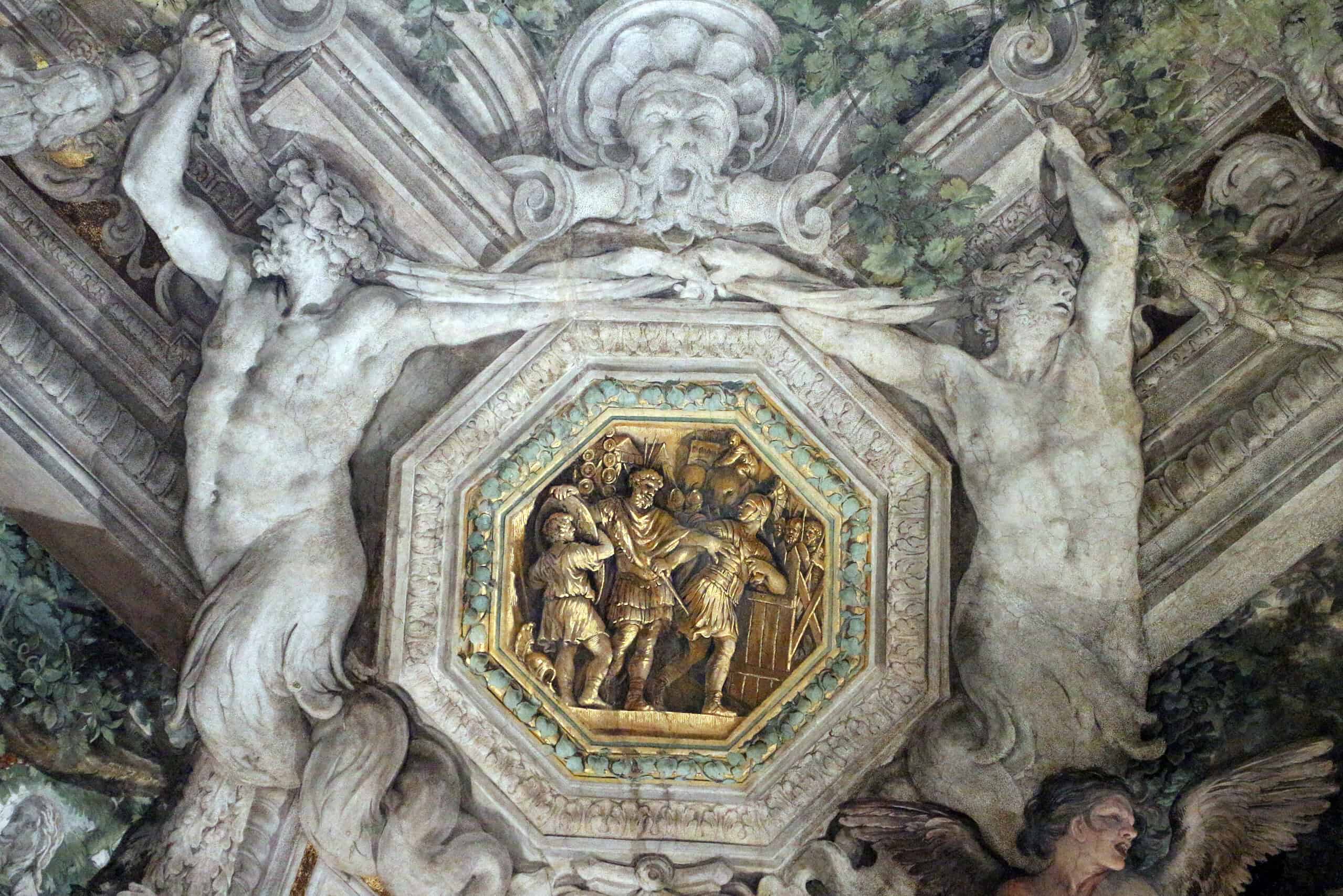
8. Regional Variations in Baroque Sculpture
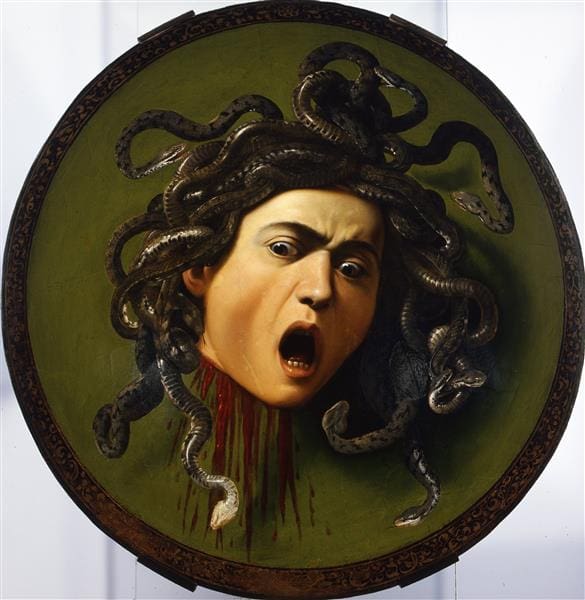
9. Legacy of Baroque Sculpture
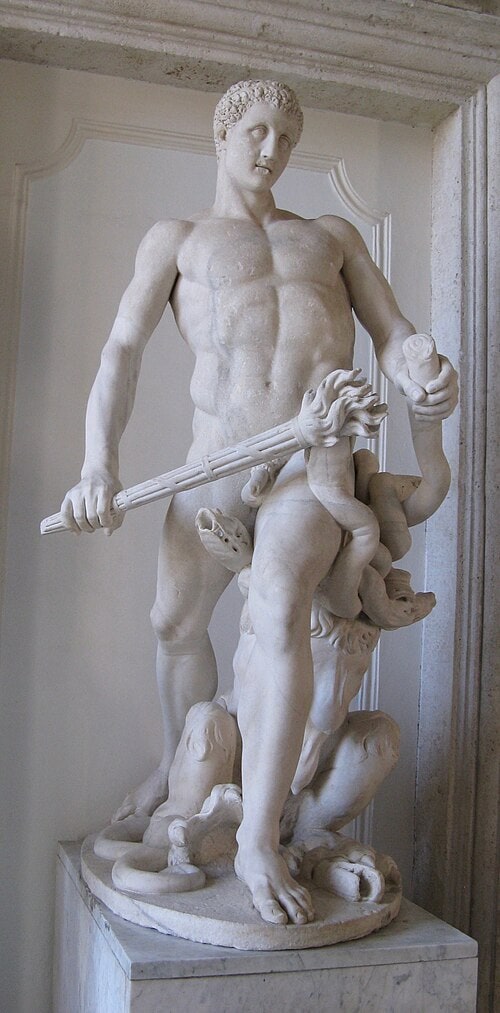
10. Appreciating Baroque Sculpture Today
Lesson Details & Resources
In a Nutshell
- When: 17th – 18th centuries
- Characteristics: Dramatic, emotional, ornate
- Key Artists: Gian Lorenzo Bernini, Francesco Borromini, Alessandro Algardi
Major Works
- Gian Lorenzo Bernini – “Apollo and Daphne”
- Gian Lorenzo Bernini – “Ecstasy of Saint Teresa”
- Michelangelo Merisi da Caravaggio – “David with the Head of Goliath”
- Alessandro Algardi – “The Rape of Proserpina”
- Peter Paul Rubens – “The Elevation of the Cross”
- Artemisia Gentileschi – “Judith Slaying Holofernes”
- Antonio Canova – “Psyche Revived by Cupid’s Kiss”
- François Girardon – “Louis XIV”
- Jean-Baptiste Carpeaux – “Ugolino and His Sons”
- Balthasar Permoser – “Neptune Fountain”
Vocabulary List
- Chiaroscuro
- The use of light and dark shading in the Baroque sculptures creates a dramatic effect.
- Dramatic
- The Baroque sculptures are known for their dramatic poses and expressions.
- Dynamic
- The dynamic movement in the Baroque sculptures brings them to life.
- Emotion
- The artists aimed to evoke strong emotions through their Baroque sculptures.
- Exaggerated
- The Baroque sculptures often feature exaggerated gestures and facial expressions.
- Folds
- The intricate folds of the drapery in the Baroque sculptures demonstrate the artist's attention to detail.
- Gesture
- The outstretched arm of the Baroque sculpture conveys a powerful gesture.
- Grandeur
- The Baroque sculptures were often created to display the grandeur and power of the subjects.
- Movement
- The sense of movement in the Baroque sculptures adds a dynamic element to the artwork.
- Ornate
- The Baroque sculptures are characterized by their ornate decorations and elaborate designs.
- Passion
- The Baroque sculptures express a deep sense of passion and intensity.
- Sculpture
- Baroque sculpture is a form of art that focuses on three-dimensional figures.
- Sensuality
- The Baroque sculptures often portray sensuality through their depictions of the human body.
- Stature
- The Baroque sculptures were created to enhance the stature and prestige of the subjects.
- Tension
- The Baroque sculptures often capture a moment of tension and suspense.
- Theatrical
- The Baroque sculptures have a theatrical quality, as if frozen in a dramatic scene.
- Triumph
- The Baroque sculptures often depict moments of triumph and victory.
- Undulating
- The flowing and undulating lines of the Baroque sculptures create a sense of movement.
- Vibrant
- The vibrant colors used in the Baroque sculptures make them visually stunning.
- Voluptuous
- The Baroque sculptures often feature voluptuous figures and curves.
- Wings
- The angel sculptures in Baroque art are often depicted with intricate and detailed wings.
Timeline of A Guide to Baroque Sculpture
Gian Lorenzo Bernini creates his first major sculpture, The Goat Amalthea with the Infant Jupiter and a Faun
Bernini completes his masterpiece, The Ecstasy of Saint Teresa
Francesco Borromini designs the Church of Sant'Ivo alla Sapienza in Rome
Alessandro Algardi sculpts the tomb of Pope Leo XI in St. Peter's Basilica
François Girardon creates the bronze equestrian statue of Louis XIV in Paris
Bernini sculpts the Fountain of the Four Rivers in Piazza Navona, Rome
Algardi completes the tomb of Pope Leo XI in St. Peter's Basilica
Baroque sculpture reaches its peak in Italy with the works of Bernini and Algardi
Gianlorenzo Bernini is appointed as the chief architect of St. Peter's Basilica
Bernini sculpts the David, a marble statue depicting the biblical figure
Algardi creates the bronze statue of Innocent X in Rome
Bernini sculpts the Apollo and Daphne marble group
Balthasar Permoser sculpts the Goldenes Reiterdenkmal, a monumental equestrian statue in Dresden
Algardi completes the statue of Pope Leo XI in St. Peter's Basilica
Bernini sculpts the bust of Cardinal Scipione Borghese
Algardi creates the marble statue of Pope Leo XI in St. Peter's Basilica
Bernini sculpts the Baldacchino, a monumental bronze canopy over the high altar of St. Peter's Basilica
Algardi sculpts the bronze statue of Pope Innocent X in Rome
Bernini sculpts the statue of Saint Longinus
Baroque sculpture spreads to other European countries, including France, Spain, and Germany
Key Facts
This is the information used in the fact matching game
- Baroque sculpture is a style of sculpture that emerged in the late 16th century and flourished during the 17th and 18th centuries.
- Baroque sculpture is characterized by its dramatic and emotional intensity, often displaying exaggerated poses, dynamic movement, and theatricality.
- Baroque sculpture often incorporated a sense of motion and energy, creating a sense of tension and dynamism.
- Baroque sculpture aimed to engage the viewer on a sensory and emotional level, evoking strong reactions and creating a sense of awe.
- Baroque sculpture frequently depicted religious themes and biblical narratives, aiming to inspire devotion and religious fervor.
- Baroque sculptors often worked in marble, stone, or bronze, using intricate and detailed techniques to achieve realistic and lifelike figures.
- Baroque sculpture was highly influenced by the Counter-Reformation, a period of Catholic resurgence that aimed to combat the spread of Protestantism.
- Gian Lorenzo Bernini was one of the most prominent Baroque sculptors, known for his dynamic and emotive sculptures, such as 'The Ecstasy of Saint Teresa.'
- Baroque sculpture often featured elaborate drapery and clothing, adding to the sense of movement and theatricality.
- Baroque sculptures were often commissioned by the Catholic Church and aristocracy to adorn churches, palaces, and public spaces.
- Baroque sculpture embraced the use of light and shadow to enhance the dramatic effect and create a sense of depth.
- Baroque sculptors aimed for a sense of naturalism, capturing the intricacies of human anatomy and expressions.
- Baroque sculpture often depicted saints, angels, and mythological figures, blending Christian and classical themes.
- Baroque sculpture was influenced by the Renaissance, Mannerism, and the ancient Greek and Roman sculptures.
- Baroque sculptors aimed to create a sense of spectacle and grandeur, often incorporating architectural elements and creating immersive environments.
- Baroque sculpture reached its peak during the 17th century in Italy, particularly in Rome, with the works of artists like Bernini and Alessandro Algardi.
- Baroque sculpture extended beyond Italy and had significant influence in other European countries, including France, Spain, and Austria.
- Baroque sculptors often used symbolism and allegory to convey deeper meanings and messages in their artwork.
- Baroque sculpture was characterized by its ornate and lavish style, featuring intricate details, embellishments, and decorative elements.
- Baroque sculpture declined in popularity in the 18th century with the rise of neoclassicism, a return to the classical styles of ancient Greece and Rome.
Analysis & Significance
Historical Context
The Baroque movement in sculpture emerged in the 17th century in Italy during a time of great political and religious upheaval. The Catholic Church, as a major patron of the arts, sought to use art as a means of propagating its message and countering the spread of Protestantism. This led to a renewed interest in religious subjects and a desire to create emotional and dramatic works that could inspire devotion and awe.
Defining Characteristics
Baroque sculpture is characterized by its dynamic and theatrical compositions, exaggerated gestures, and use of light and shadow to create a sense of movement and emotion. Sculptors sought to create works that engaged the viewer on an emotional level, often depicting religious scenes with a sense of drama and intensity. Figures were often depicted in exaggerated poses, with flowing drapery and intricate details that added to the sense of movement and depth.
Lasting Influence
The legacy of Baroque sculpture can be seen in subsequent art movements such as Rococo and Neoclassicism, which drew inspiration from its dramatic and emotional style. The emphasis on emotion and expression in Baroque sculpture also had a lasting impact on the development of Western art, influencing artists such as Bernini, Caravaggio, and Rubens. The use of light and shadow in Baroque sculpture would also influence later developments in art, including the chiaroscuro technique used by painters such as Rembrandt. Overall, the Baroque movement in sculpture left a lasting legacy that continues to influence art and culture to this day.
A Guide to Baroque Sculpture Games


Take Your Learning Offline
Want a convenient, print-ready study guide for this lesson? Become a Memory Wizards Pro member to unlock the downloadable " Memory Scrolls" for this topic and our entire library!
- ✓ Complete Vocabulary Lists
- ✓ Key Facts & Timelines
- ✓ Beautifully Formatted for Print & Mobile