
How Do You Learn Best?
Learn by Listening
Start with the 3-minute audio summary to get the key facts and narrative highlights quickly.
Learn by Reading
Immerse yourself in the 10-minute visual lesson for a comprehensive understanding of the topic.
Learn by Reviewing
Jump directly to the key facts, timeline, and vocabulary lists to build a solid foundation of details.
Learn by Doing
Challenge yourself! Jump straight into the interactive games to learn by trial, error, and discovery.
The Masterpiece: Magdalene Penitent Sculpture by Donatello
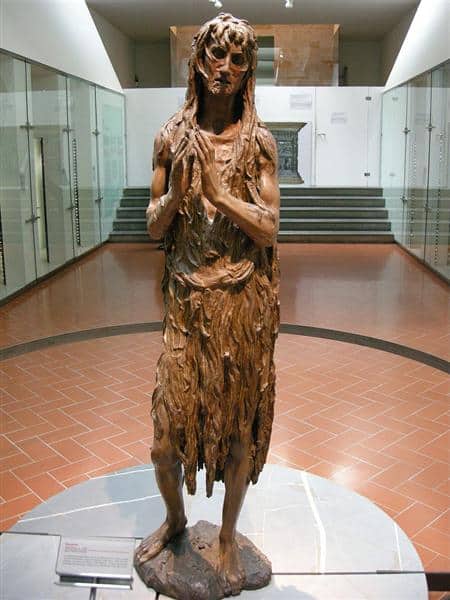
Deconstructing the Masterpiece
Contrapposto Pose
The figure's twisted posture creates a sense of movement and naturalism, adding dynamism and realism to the sculpture.
Expressive Face
The Magdalene's emotive facial expression conveys deep sorrow and repentance, engaging viewers on an emotional level.
Draperies
The meticulously carved drapery folds enhance the figure's sense of volume and movement, adding a lifelike quality to the sculpture.
Audio Library
As one of our featured lessons, this topic includes premium audio guides.
Unlock the Wizard's Cram Session
This powerful audio study guide is a Pro-exclusive feature. Upgrade to Memory Wizards Pro to access this and all of our premium learning tools.
Upgrade to ProDonatello: An Analysis in 10 Minutes
Introduction

Leonardo da Vinci
Michelangelo

Raphael

Early Life and Training
Innovative Sculptural Techniques
Masterpieces in Florence

Collaborations with Renaissance Masters
Influence on the Renaissance Art Movement
Commissioned Works for Churches and Palaces
Exploration of Classical Themes
Legacy in Art History
Lesson Details & Resources
In a Nutshell
- Artist: Donatello
- Year: 1440
- Medium: Bronze sculpture
- Location: Bargello Museum, Florence
Vocabulary List
- Sculpture
- Donatello was a renowned Italian sculptor known for his innovative approach to sculpture.
- Bronze
- Donatello used bronze as one of his preferred materials for creating his sculptures.
- Renaissance
- Donatello was a key figure in the Italian Renaissance art movement.
- Statue
- Donatello's statue of David is considered a masterpiece of Renaissance sculpture.
- Marble
- Donatello also worked with marble to create some of his most famous sculptures.
- Relief
- Donatello was known for his skill in creating intricate relief sculptures.
- Florence
- Donatello was based in Florence, where he created many of his most famous works.
- Classical
- Donatello drew inspiration from classical art and mythology in his sculptures.
- Patron
- Donatello had several influential patrons who supported his work.
- Technique
- Donatello's innovative techniques in sculpture set him apart from his contemporaries.
- Commission
- Donatello received numerous commissions for sculptures from wealthy patrons.
- Expression
- Donatello was known for his ability to capture emotion and expression in his sculptures.
- Beauty
- Donatello's sculptures are admired for their beauty and grace.
- Gilding
- Donatello sometimes used gilding to enhance the appearance of his sculptures.
- Humanism
- Donatello's work reflects the humanist ideals of the Renaissance.
- Technique
- Donatello's techniques in bronze casting were highly advanced for his time.
- Artistic
- Donatello's artistic genius is evident in his intricate and detailed sculptures.
- Inspiration
- Donatello's work continues to inspire artists and art lovers to this day.
- Innovation
- Donatello was known for his innovative approach to sculpture.
- Masterpiece
- Donatello's sculptures are considered masterpieces of Renaissance art.
Timeline of Donatello: An Analysis
Donatello is born in Florence, Italy
Donatello begins his apprenticeship with Ghiberti
Donatello collaborates with Nanni di Banco on a series of reliefs for the cathedral of Florence
Donatello travels to Rome and studies classical sculpture
Donatello creates the marble statue of David for the Medici family
Donatello works on the bronze pulpit for the Basilica of San Lorenzo in Florence
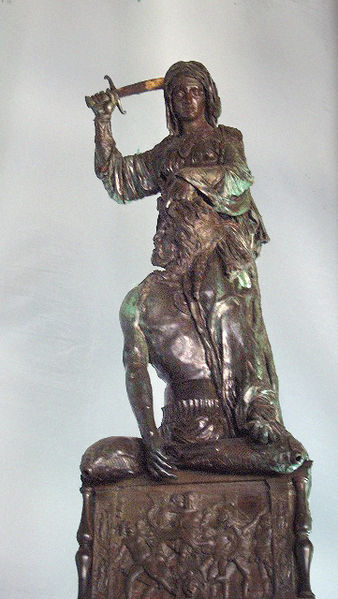
Donatello completes the bronze statue of Judith and Holofernes
Donatello creates the bronze reliefs for the tomb of Pope John XXIII in the Florence Cathedral
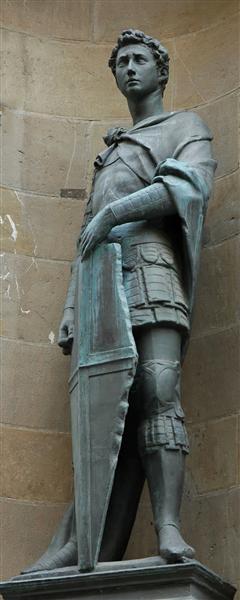
Donatello sculpts the bronze statue of Saint George for the guild of armorers in Florence
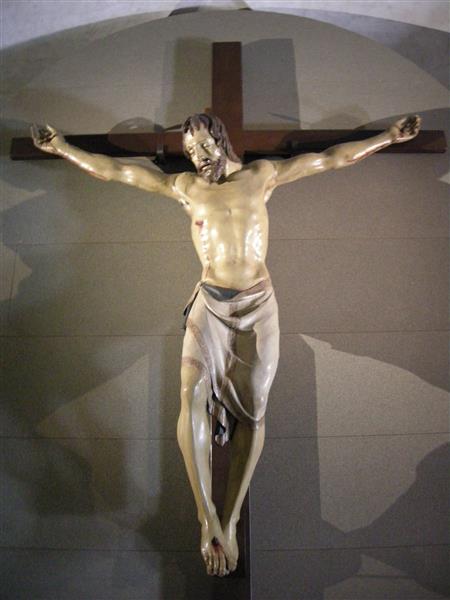
Donatello creates the wooden crucifix for the Santa Croce Basilica in Florence
Donatello produces the bronze statue of Saint Mark for the Orsanmichele church in Florence
Donatello is commissioned to create the bronze doors for the sacristy of the Florence Cathedral
Donatello sculpts the bronze statue of Saint Louis of Toulouse for the church of Santa Croce in Florence
Donatello works on the decoration of the Old Sacristy in the San Lorenzo Basilica in Florence
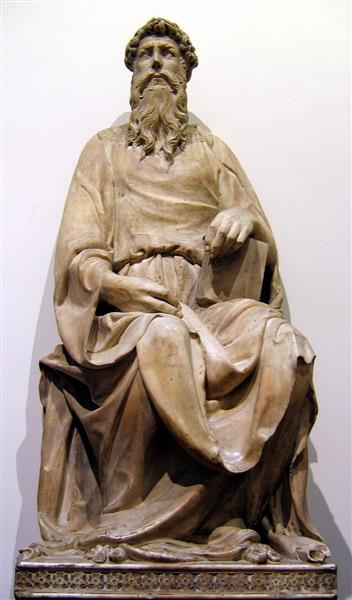
Donatello creates the bronze statue of Saint John the Evangelist for the Florence Cathedral
Donatello collaborates with Michelozzo on the tomb of the Antipope John XXIII in the Florence Cathedral
Donatello is appointed chief architect of the Florence Cathedral
Donatello completes the bronze statue of Saint George for the Orsanmichele church in Florence
Donatello sculpts the bronze statue of Saint John the Baptist for the Florence Cathedral
Donatello dies in Florence
Key Facts
This is the information used in the fact matching game
- Donatello was an Italian sculptor from the early Renaissance period.
- His full name was Donato di Niccolò di Betto Bardi.
- Donatello was born in Florence, Italy around 1386.
- He was a contemporary of other famous artists such as Brunelleschi and Masaccio.
- Donatello worked in various mediums, including bronze, marble, and wood.
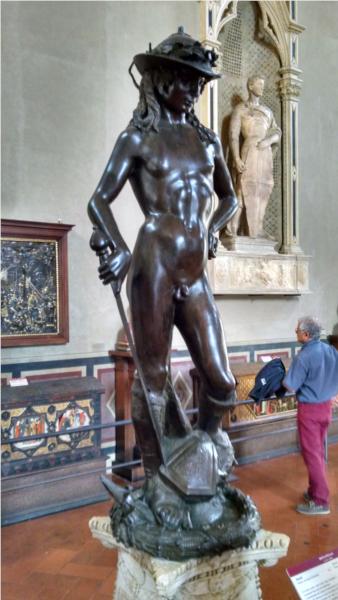
- One of his most famous works is the bronze statue of David, which was the first life-size nude sculpture since antiquity.
- Donatello's statue of David is now housed in the Bargello museum in Florence.
- He also created the bronze pulpits for the Basilica of San Lorenzo in Florence.
- Donatello was a master of perspective and his sculptures often had a sense of movement and depth.
- He was known for his attention to detail and naturalism in his sculptures.
- Donatello's work had a significant influence on later Renaissance artists, such as Michelangelo.
- He also created several works for the Duomo in Florence, including statues of prophets and other biblical figures.
- Donatello's sculptures often featured emotional expressions and realistic anatomy.
- He was commissioned to create many works for churches and wealthy patrons in Florence and other Italian cities.
- Donatello's work is characterized by its innovative use of perspective and his ability to convey complex emotions through sculpture.
- He was one of the first artists to use the technique of contrapposto, which gives his figures a more natural and dynamic pose.
- Donatello's later works show a greater emphasis on emotion and drama, such as his Mary Magdalene sculpture.
- He died in Florence in 1466 at the age of around 80.
- Donatello's legacy as a sculptor continues to be celebrated and studied by art historians and scholars.
- His work is considered a key part of the early Renaissance movement in Italy.
Analysis & Significance
Artistic Innovation
Donatello’s innovative use of perspective and his attention to detail in his sculptures brought a new level of realism and emotion to Renaissance art. His ability to capture movement and expression in his figures, such as in his famous bronze sculpture of David, revolutionized the way artists approached the representation of the human form.
Influence on Art History
Donatello’s work laid the foundation for the development of sculpture as a major art form in the Renaissance. His emphasis on naturalism and his exploration of new techniques inspired generations of artists, including Michelangelo and Bernini. His innovative approach to depicting emotion and storytelling through sculpture set the stage for the future of the medium.
Cultural Significance Today
Donatello’s sculptures, such as his David and his Mary Magdalene, continue to be celebrated as masterpieces of Renaissance art. His influence can be seen in the work of countless sculptors who followed him, as well as in the enduring popularity of his pieces in museums and galleries around the world. Donatello’s legacy as a pioneer of sculpture and a master of his craft ensures his continued relevance and importance in the art world today.
Donatello: An Analysis Games


Take Your Learning Offline
Want a convenient, print-ready study guide for this lesson? Become a Memory Wizards Pro member to unlock the downloadable " Memory Scrolls" for this topic and our entire library!
- ✓ Complete Vocabulary Lists
- ✓ Key Facts & Timelines
- ✓ Beautifully Formatted for Print & Mobile