
Summary of The Witenagemot
Uncover the ancient origins of English decision-making in the Witenagemot.
How Do You Learn Best?
Learn by Reading
Immerse yourself in the 10-minute visual lesson for a comprehensive understanding of the topic.
Learn by Reviewing
Jump directly to the key facts, timeline, and vocabulary lists to build a solid foundation of details.
Learn by Doing
Challenge yourself! Jump straight into the interactive games to learn by trial, error, and discovery.
The Witenagemot in 10 Minutes
Introduction
King Alfred the Great
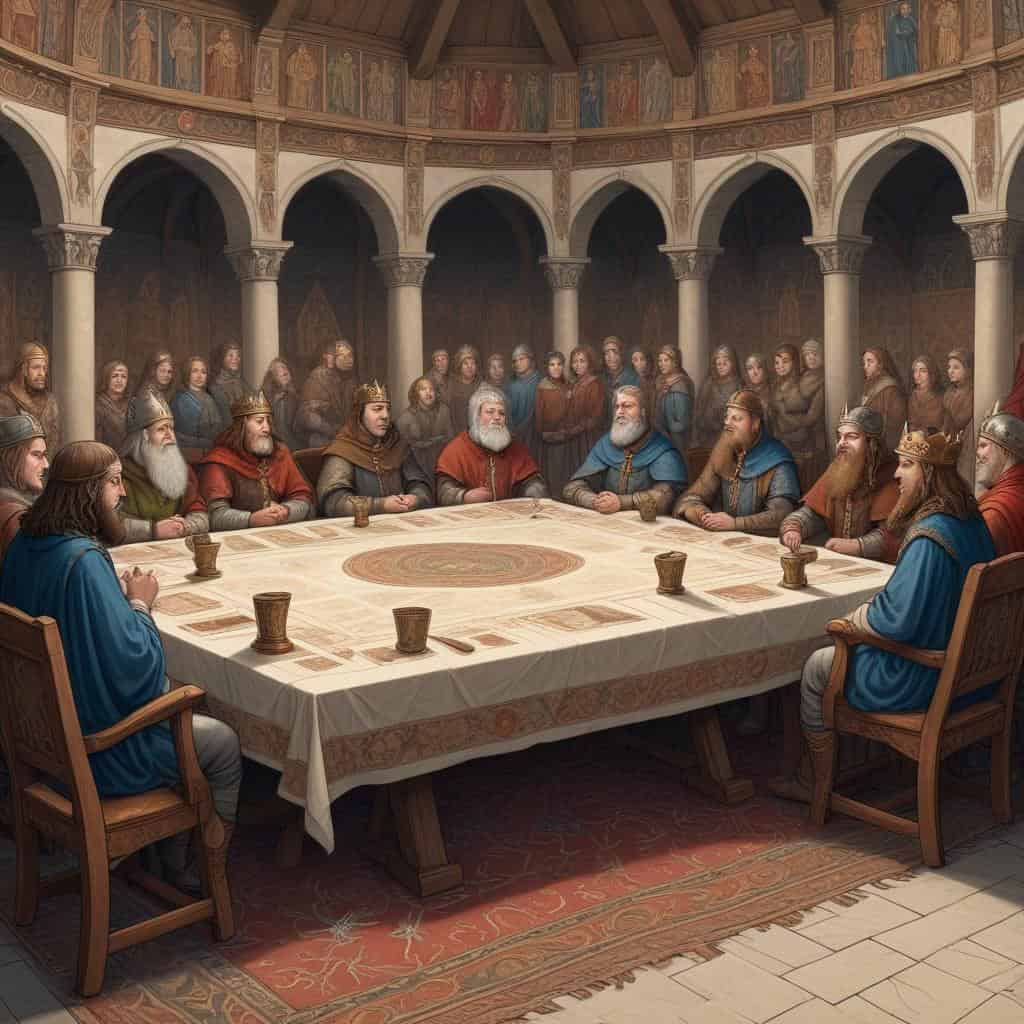
Ealdormen
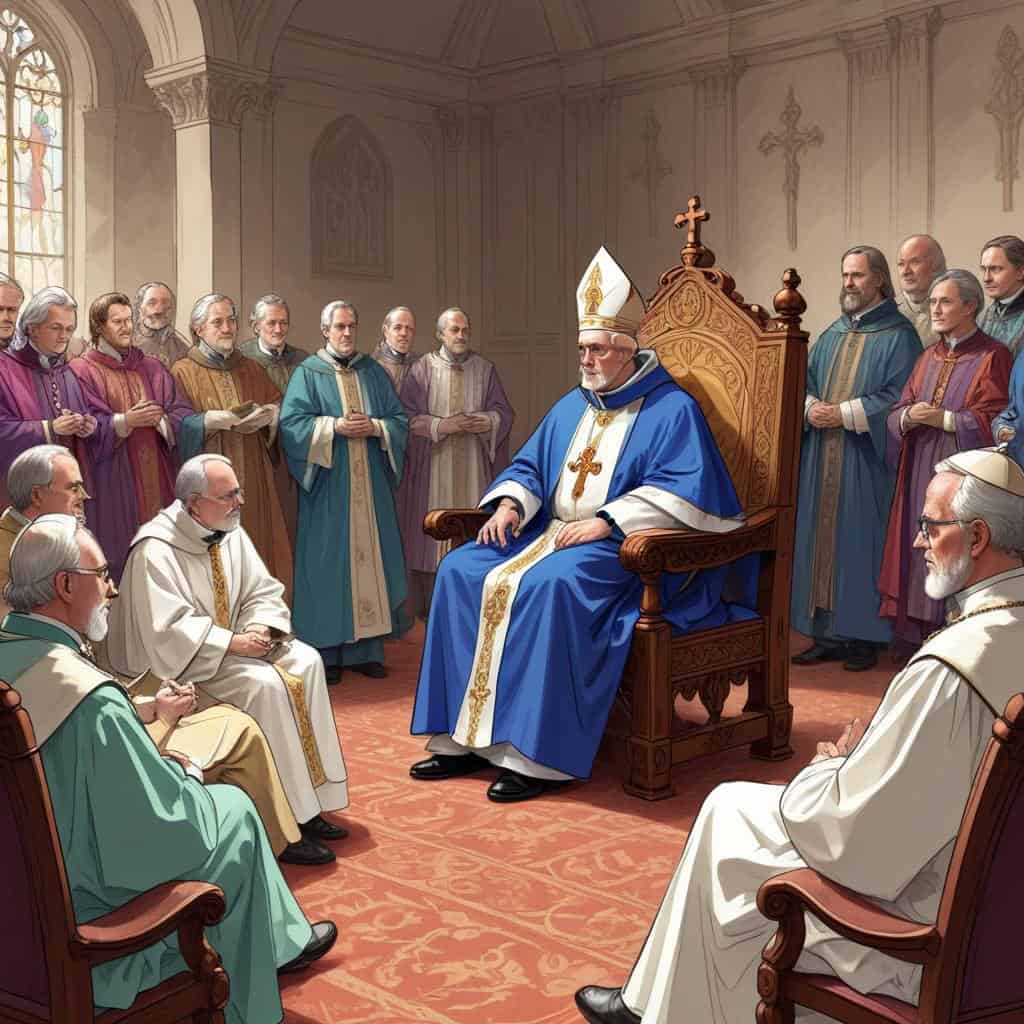
Bishops
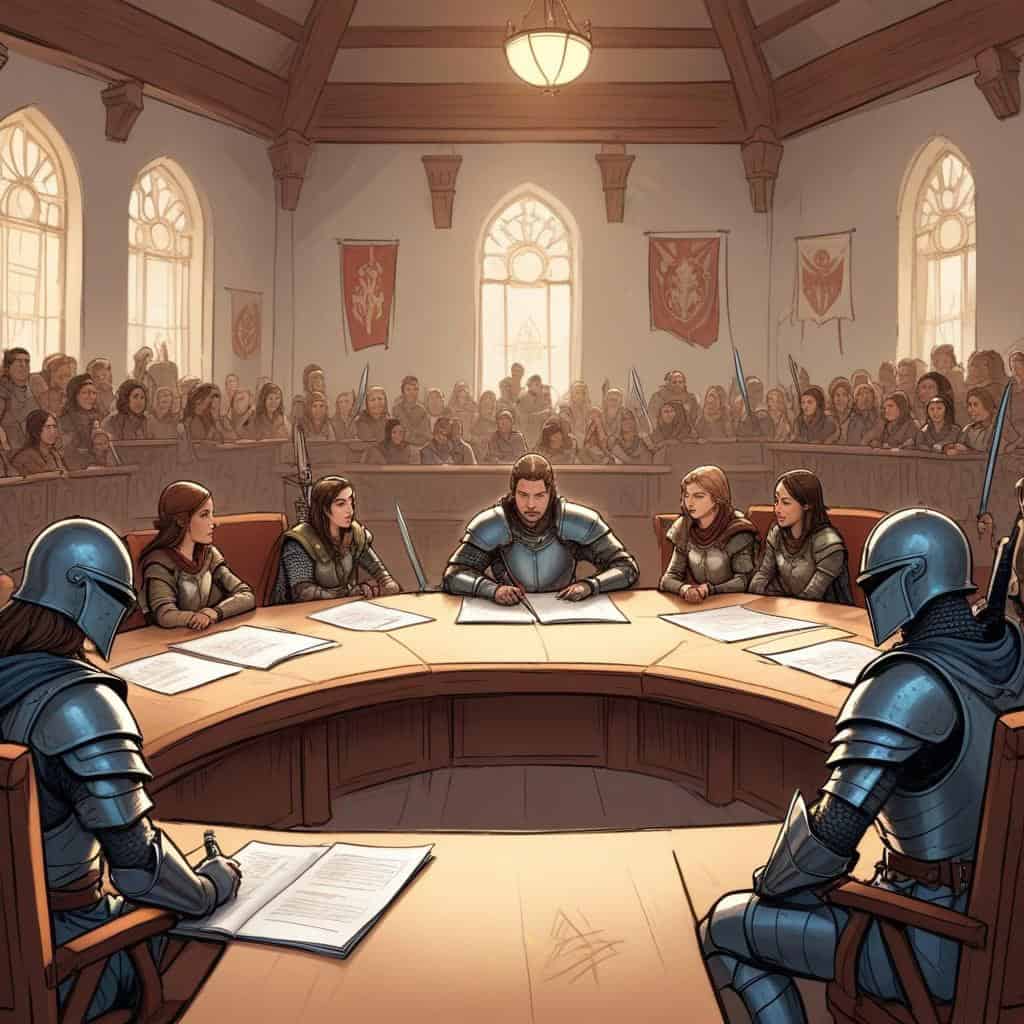
Thegn
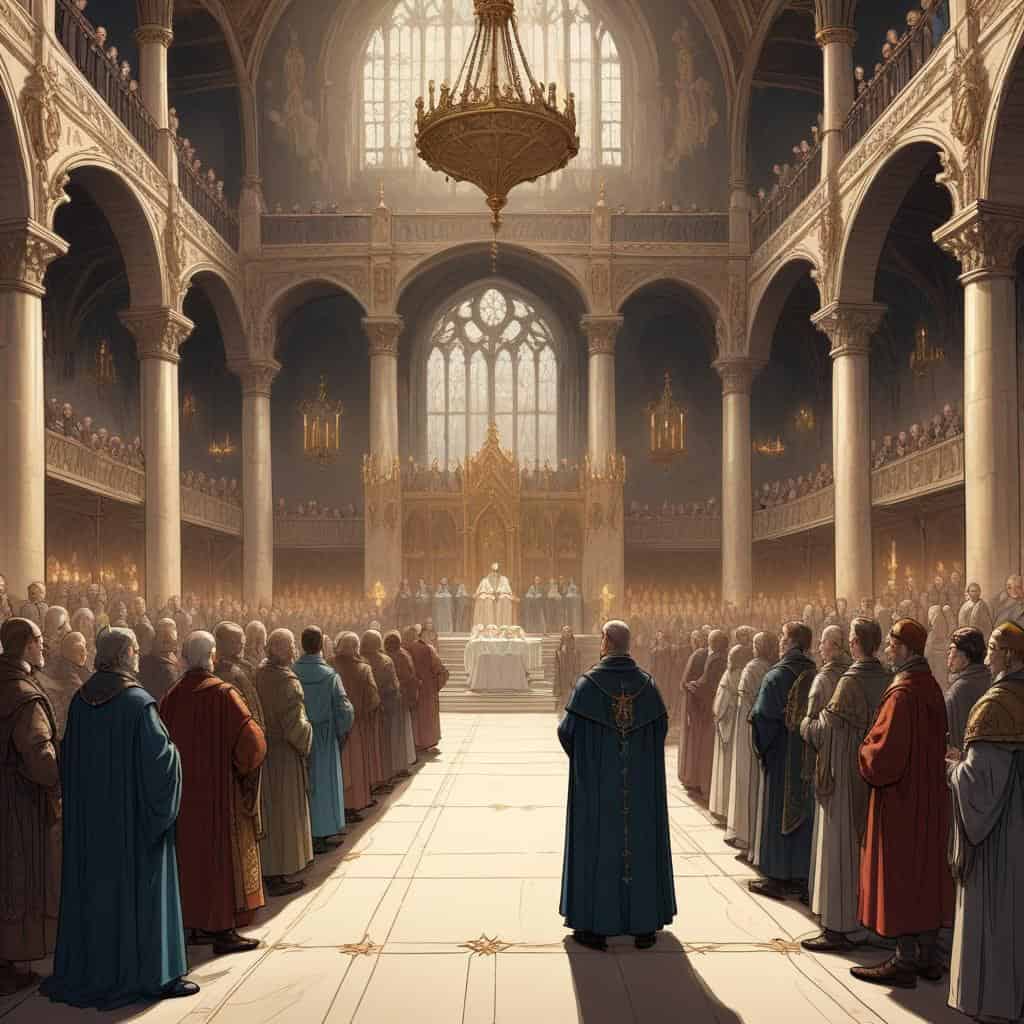
Witan

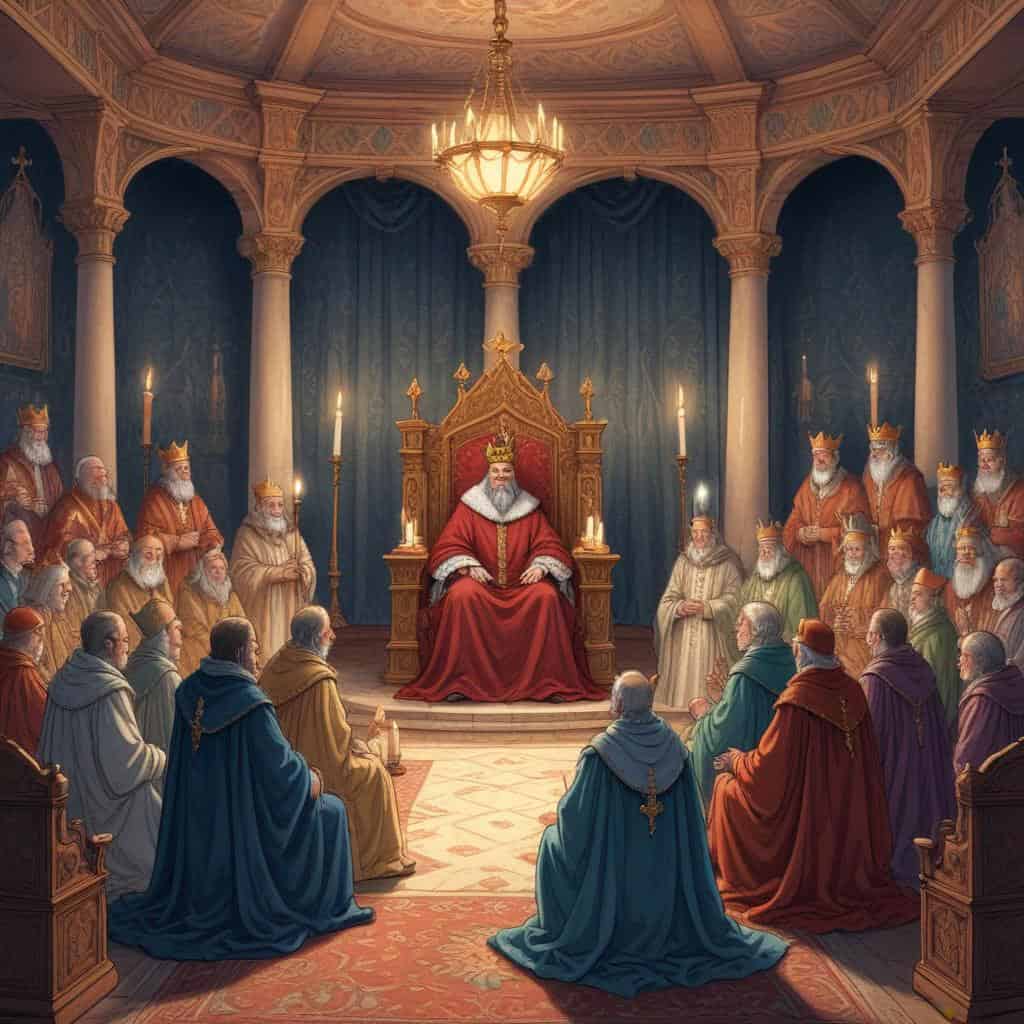
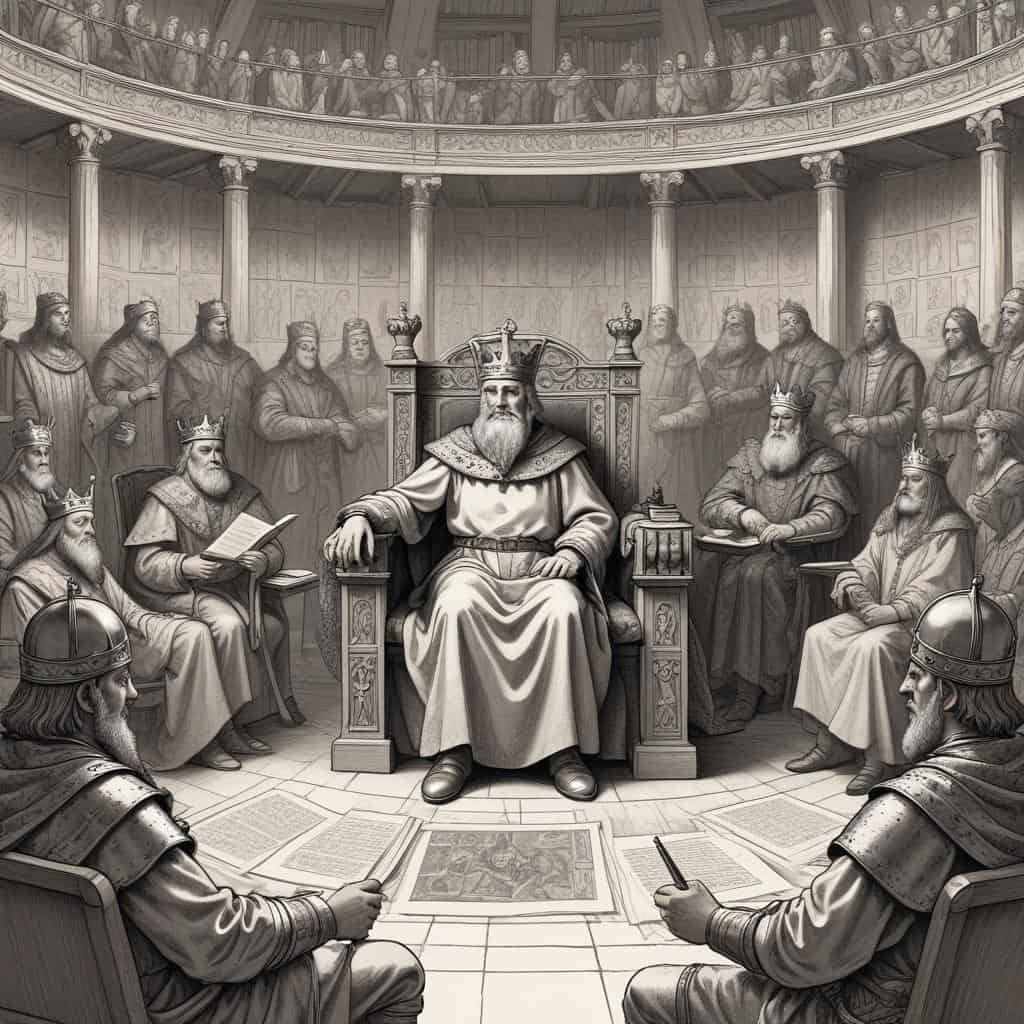
The Witenagemot: An Ancient Assembly

Origins of the Witenagemot

Powers of the Witenagemot
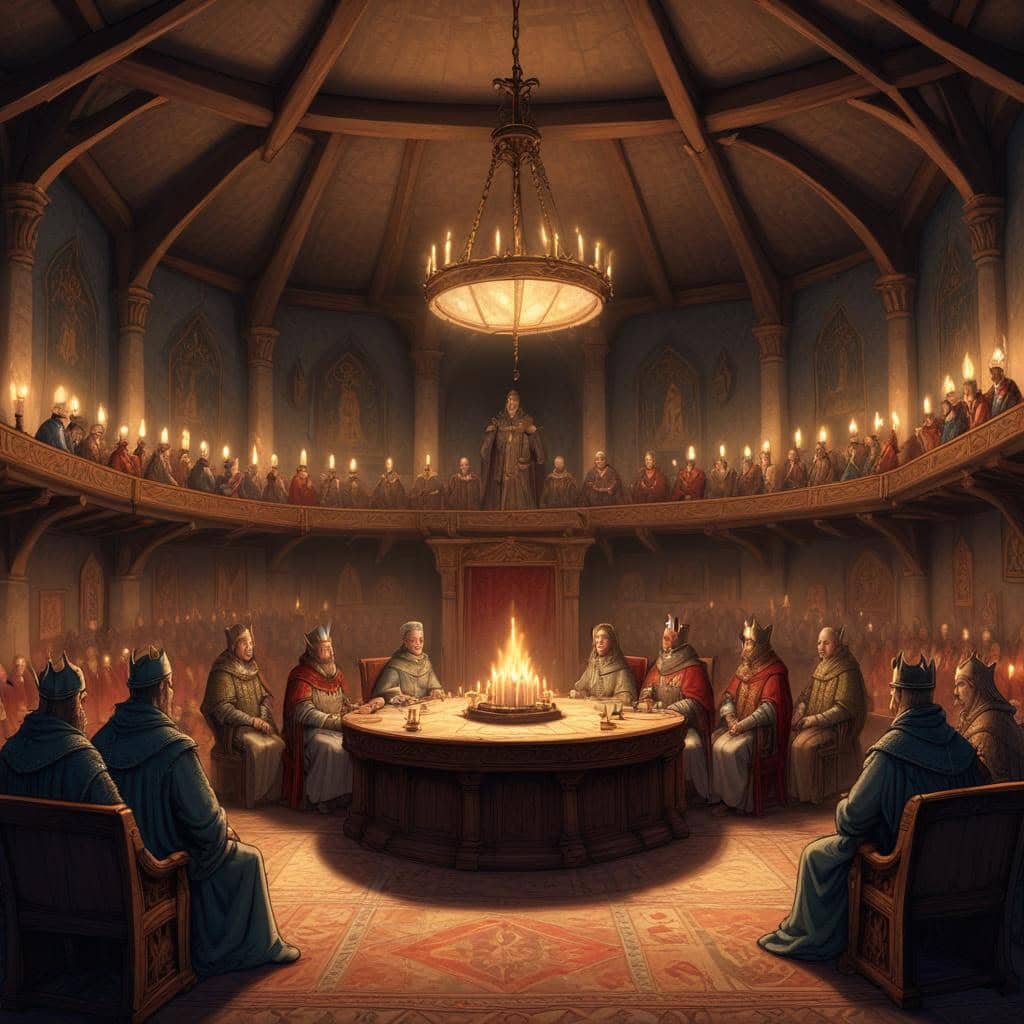
Membership of the Witenagemot

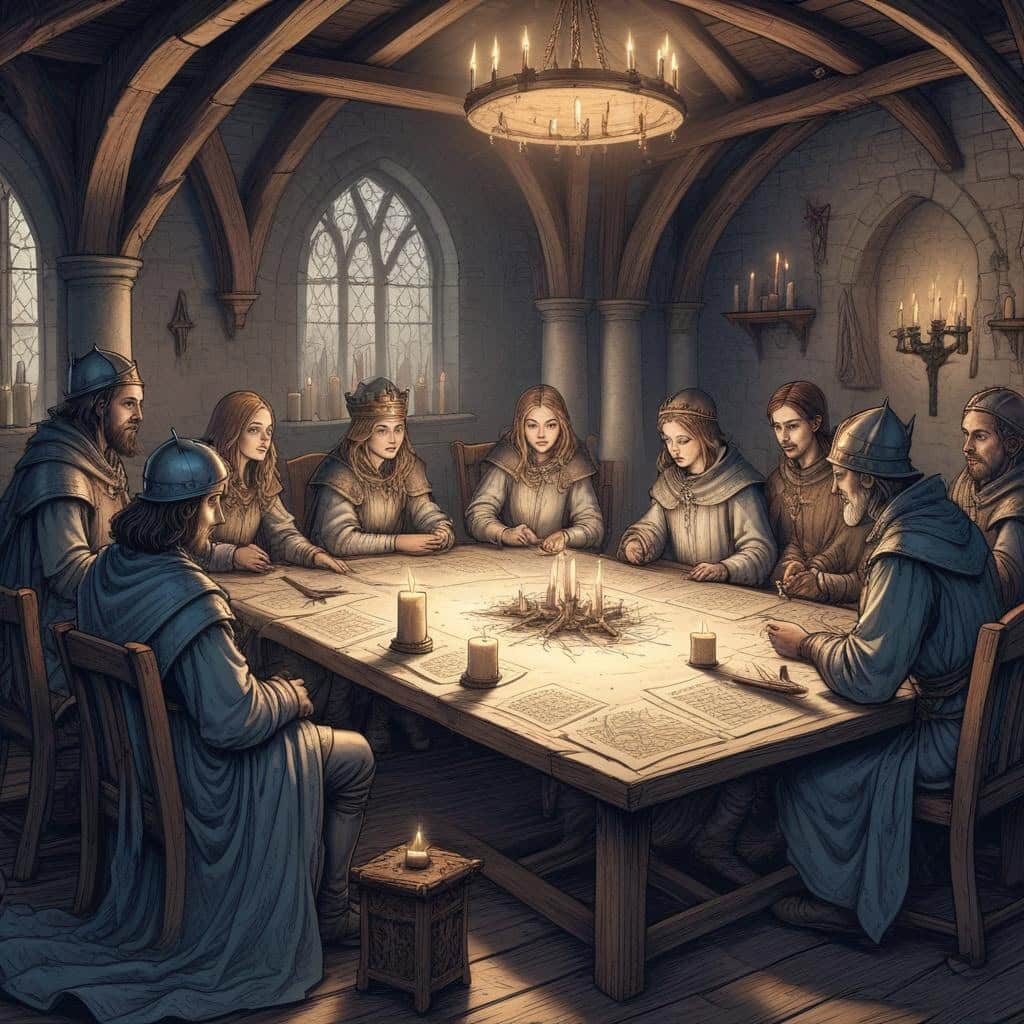
Meetings of the Witenagemot

Decline of the Witenagemot

Legacy of the Witenagemot

Importance of the Witenagemot

Historical Significance of the Witenagemot

Unlocking the Secrets of the Witenagemot
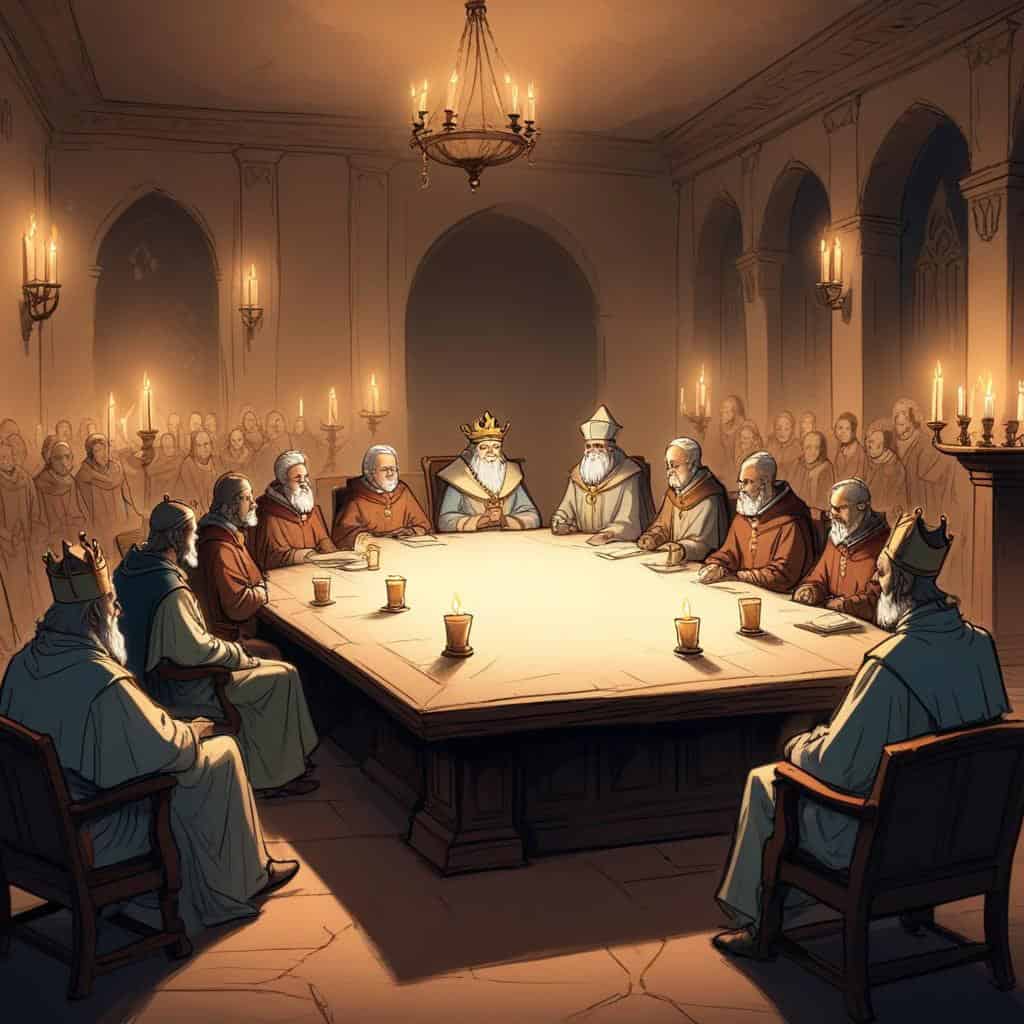
Lesson Details & Resources
In a Nutshell
- What: A council of Anglo-Saxon nobles and clergy in medieval England.
- When: 7th to 11th centuries.
- Who: Anglo-Saxon kings, nobles, and bishops.
- Outcome: Advised the king on matters of law, administration, and policy.
Famous Figures in the The Witenagemot
-
Alfred the Great
Alfred the Great was a king of Wessex who successfully defended his kingdom against Viking invasions and promoted learning and literacy.
-
Edward the Confessor
Edward the Confessor was the last Anglo-Saxon king of England before the Norman Conquest.
-
Harthacnut
Harthacnut was the son of Canute the Great and became the king of England in 1040.
-
Canute the Great
Canute the Great was a Danish king who ruled over England, Denmark, and Norway, known for his military successes and efforts to create a North Sea empire.
-
Edgar the Peaceful
Edgar the Peaceful was a king of England who achieved political stability and implemented the concept of the Witenagemot as a council of advisors.
-
Ethelred the Unready
Ethelred the Unready was a king of England who struggled with Viking invasions and faced internal conflicts during his reign.
-
Edmund Ironside
Edmund Ironside was a son of Ethelred the Unready and briefly became the king of England in 1016 during the Viking invasions.
-
Harold Godwinson
Harold Godwinson was the last Anglo-Saxon king of England who famously died in the Battle of Hastings against William the Conqueror.
-
William the Conqueror
William the Conqueror was the Duke of Normandy who successfully invaded England in 1066, establishing Norman rule.
-
Henry I
Henry I was the son of William the Conqueror and became the king of England, known for his administrative reforms and legal advancements.
Timeline of The Witenagemot
First recorded Witenagemot
Witenagemot becomes a regular institution
Meeting of the Witenagemot at Clofesho
Witenagemot at Pincanhall
Witenagemot at Clofesho
Witenagemot at Clofesho
Witenagemot at Clofesho
Witenagemot at Winchester
Witenagemot at Winchester
Witenagemot at Clofesho
Witenagemot at London
Witenagemot at London
Witenagemot at London
Witenagemot at London
Witenagemot at Winchester
Witenagemot at London
Witenagemot at London
Witenagemot at London
Witenagemot at Winchester
Last recorded Witenagemot
Vocabulary List
- Witenagemot
- The Witenagemot was an Anglo-Saxon assembly of wise men or councillors who advised the king on matters of governance and legislation.
- Anglo-Saxon
- The Witenagemot was an assembly of Anglo-Saxon nobles and clergy, reflecting the political and social structure of the time.
- Assembly
- The Witenagemot functioned as a legislative and advisory assembly, where important decisions regarding the kingdom were made.
- Councillors
- The Witenagemot consisted of wise men or councillors who were chosen by the king to provide guidance and advice.
- Governance
- The Witenagemot played a crucial role in the governance of Anglo-Saxon England, helping to shape laws and policies.
- Legislation
- The Witenagemot was involved in the creation and enactment of legislation, contributing to the legal framework of the kingdom.
- Nobles
- The Witenagemot included influential nobles who held positions of power and authority in the Anglo-Saxon society.
- Clergy
- The Witenagemot also featured members of the clergy, representing the religious institutions and providing spiritual guidance.
- Political
- The Witenagemot had a significant political role, aiding the king in making important decisions for the kingdom.
- Social
- The composition of the Witenagemot reflected the social structure of Anglo-Saxon England, with nobles and clergy playing prominent roles.
Key Facts
This is the information used in the fact matching game
- The Witenagemot was an Anglo-Saxon political institution in England.
- It was also known as the Witan or the Council of the Wise.
- The Witenagemot consisted of the king's councilors and influential nobles.
- It was the principal advisory body to the king and had legislative and judicial functions.
- The Witenagemot played a significant role in the governance and lawmaking of the Anglo-Saxon kingdoms.
- It was responsible for electing and deposing kings.
- The Witenagemot was composed of both secular and ecclesiastical members.
- It could also include influential landowners and military leaders.
- The meetings of the Witenagemot were held irregularly and at various locations.
- The Witenagemot was a precursor to the later English Parliament.
- It had considerable influence in the selection of bishops and archbishops.
- The Witenagemot gradually lost its significance after the Norman Conquest of England.
- Its powers and functions were absorbed by the new Norman rulers.
- The term 'Witenagemot' derives from Old English and means 'meeting of the wise'.
- The Witenagemot had both legislative and judicial powers.
- It played a role in the formulation and enactment of laws in Anglo-Saxon England.
- The Witenagemot had the authority to try and pass judgment on criminal cases.
- It also had the power to confiscate property and impose fines.
- The exact procedures and rules of the Witenagemot are not fully known due to limited historical records.
- The Witenagemot was a key institution in the governance of early medieval England.
Analysis & Significance
Immediate Consequences
The Witenagemot, or the meeting of wise men in Anglo-Saxon England, played a crucial role in advising the king and making important decisions. Its immediate consequences included shaping policies, resolving disputes, and influencing the governance of the kingdom. It served as a key institution in the early English legal and political system, ensuring the ruler had the support and counsel of respected individuals.
Long-Term Impact
The Witenagemot had a lasting impact on the development of the English monarchy and legal system. It laid the foundation for the establishment of parliamentary institutions in later centuries, influencing the evolution of representative government in England. The principles of consultation, consent, and collective decision-making that were practiced in the Witenagemot helped shape the democratic traditions of the country.
Cultural Significance Today
Although the Witenagemot no longer exists in its original form, its legacy lives on in the modern British Parliament and other democratic institutions around the world. The concept of a council of advisors to the ruler is still relevant today, highlighting the importance of collective decision-making and the role of oversight in governance. The Witenagemot continues to be remembered as a precursor to modern democratic practices and a symbol of early English political development.
The Witenagemot Games


Take Your Learning Offline
Want a convenient, print-ready study guide for this lesson? Become a Memory Wizards Pro member to unlock the downloadable " Memory Scrolls" for this topic and our entire library!
- ✓ Complete Vocabulary Lists
- ✓ Key Facts & Timelines
- ✓ Beautifully Formatted for Print & Mobile