
Summary of Construction of Westminster Abbey (c. 1050)
Uncover the secrets of one of England's most iconic landmarks.
How Do You Learn Best?
Learn by Reading
Immerse yourself in the 10-minute visual lesson for a comprehensive understanding of the topic.
Learn by Reviewing
Jump directly to the key facts, timeline, and vocabulary lists to build a solid foundation of details.
Learn by Doing
Challenge yourself! Jump straight into the interactive games to learn by trial, error, and discovery.
Construction of Westminster Abbey in 10 Minutes
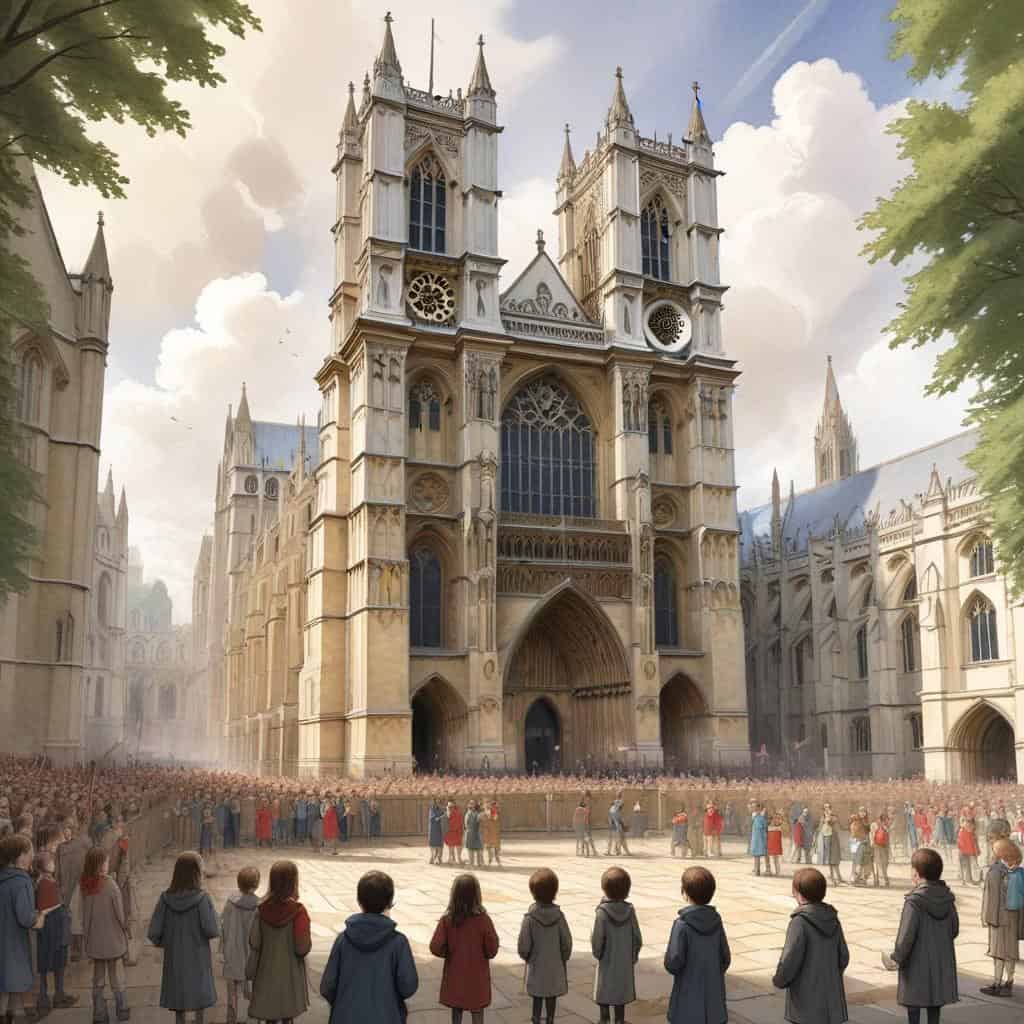
Introduction
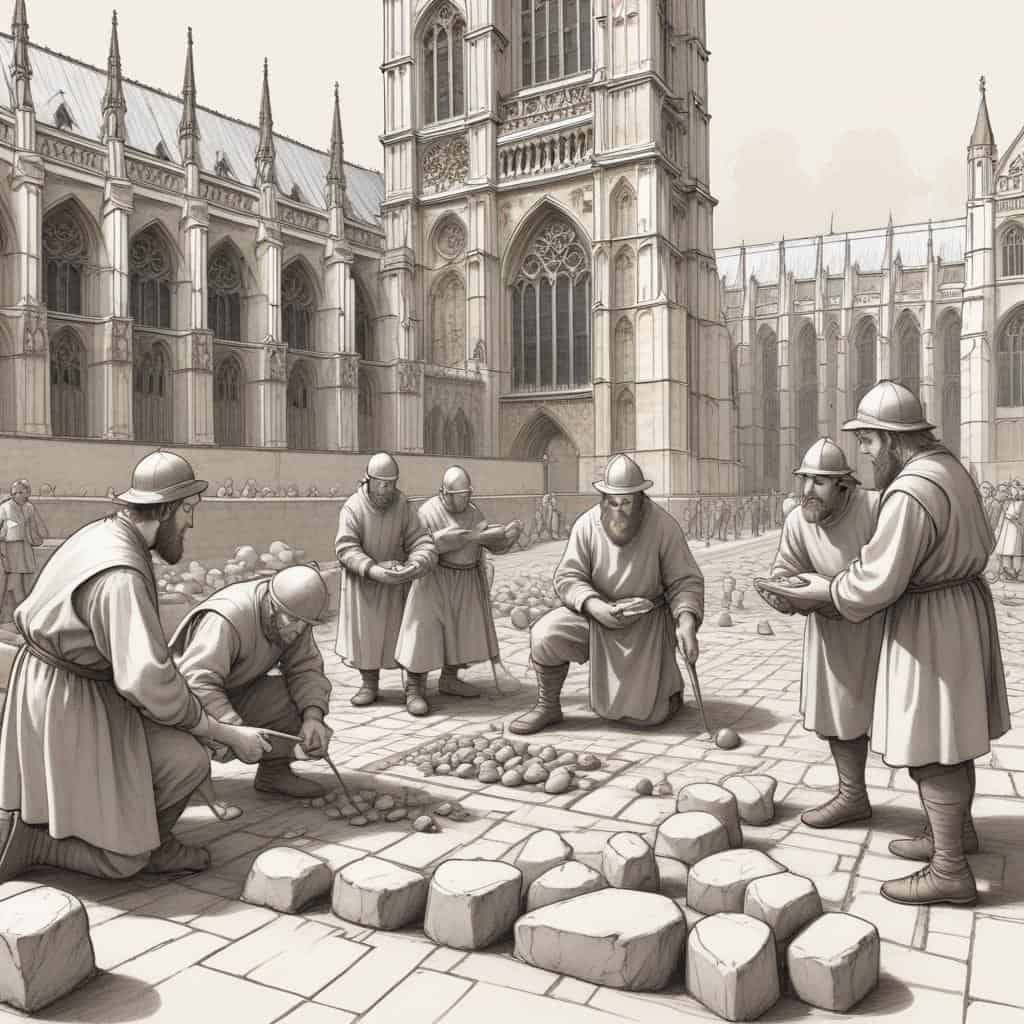
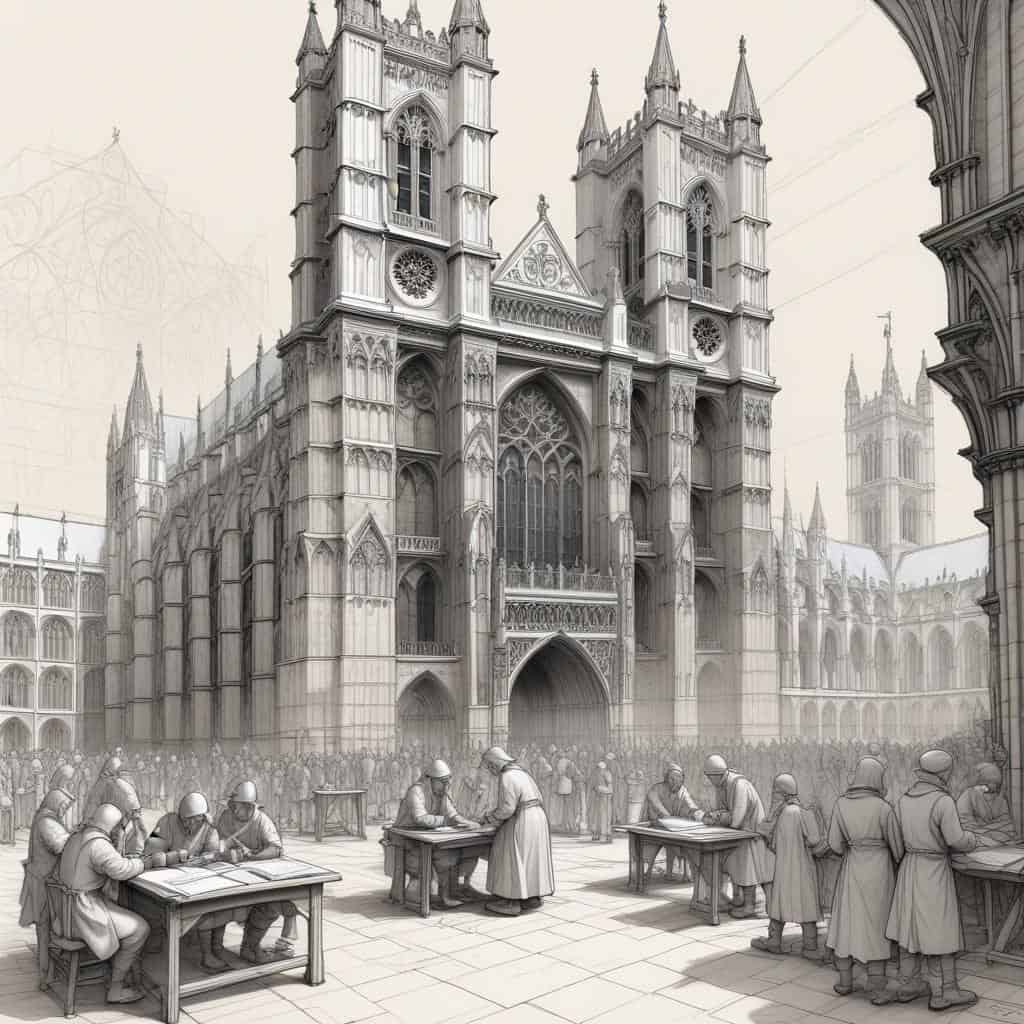
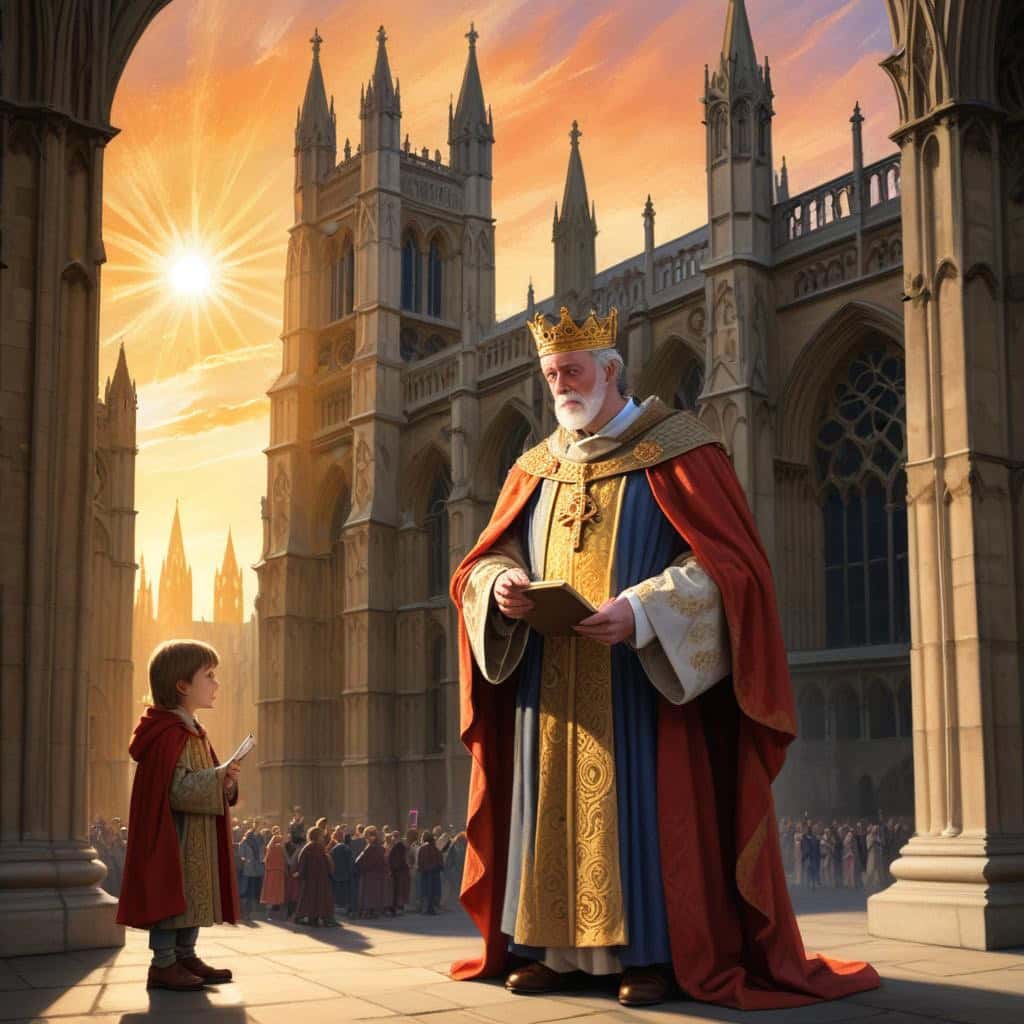
King Edward the Confessor
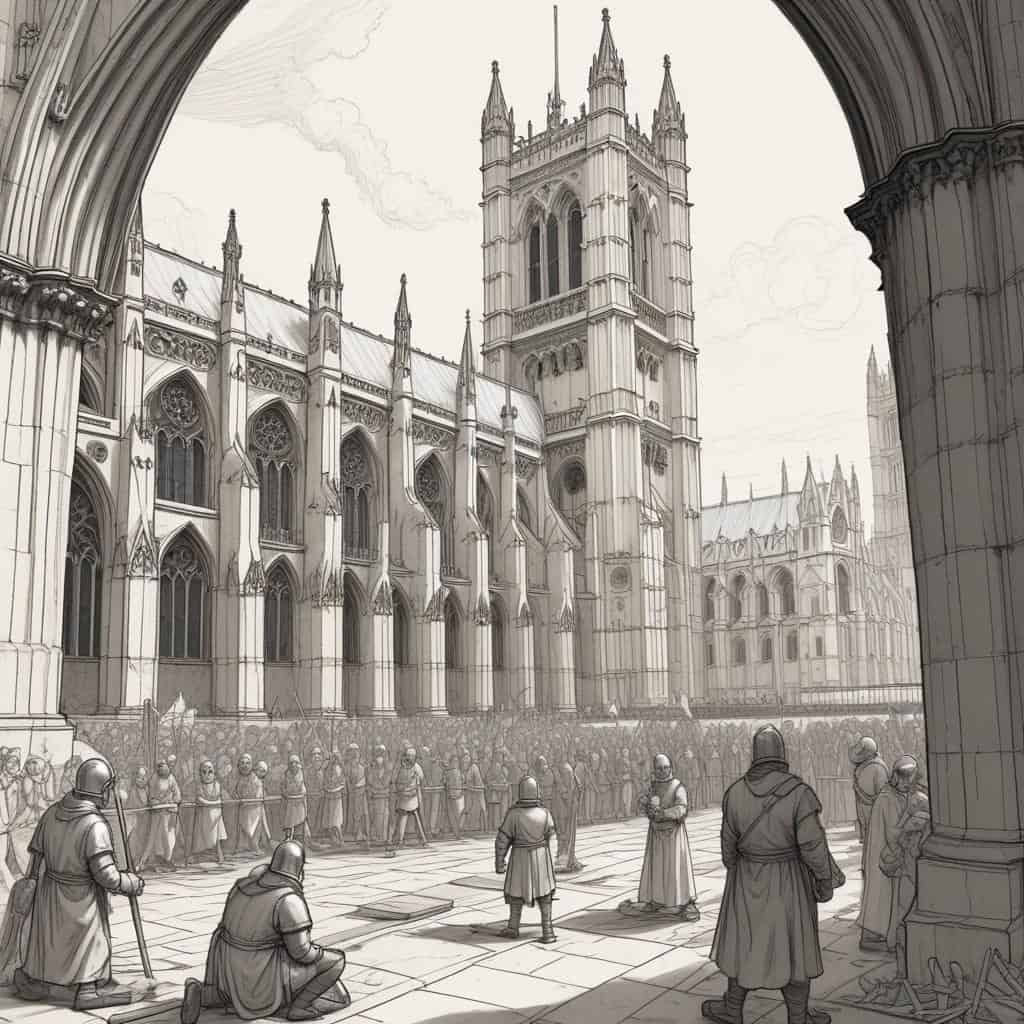
William the Conqueror
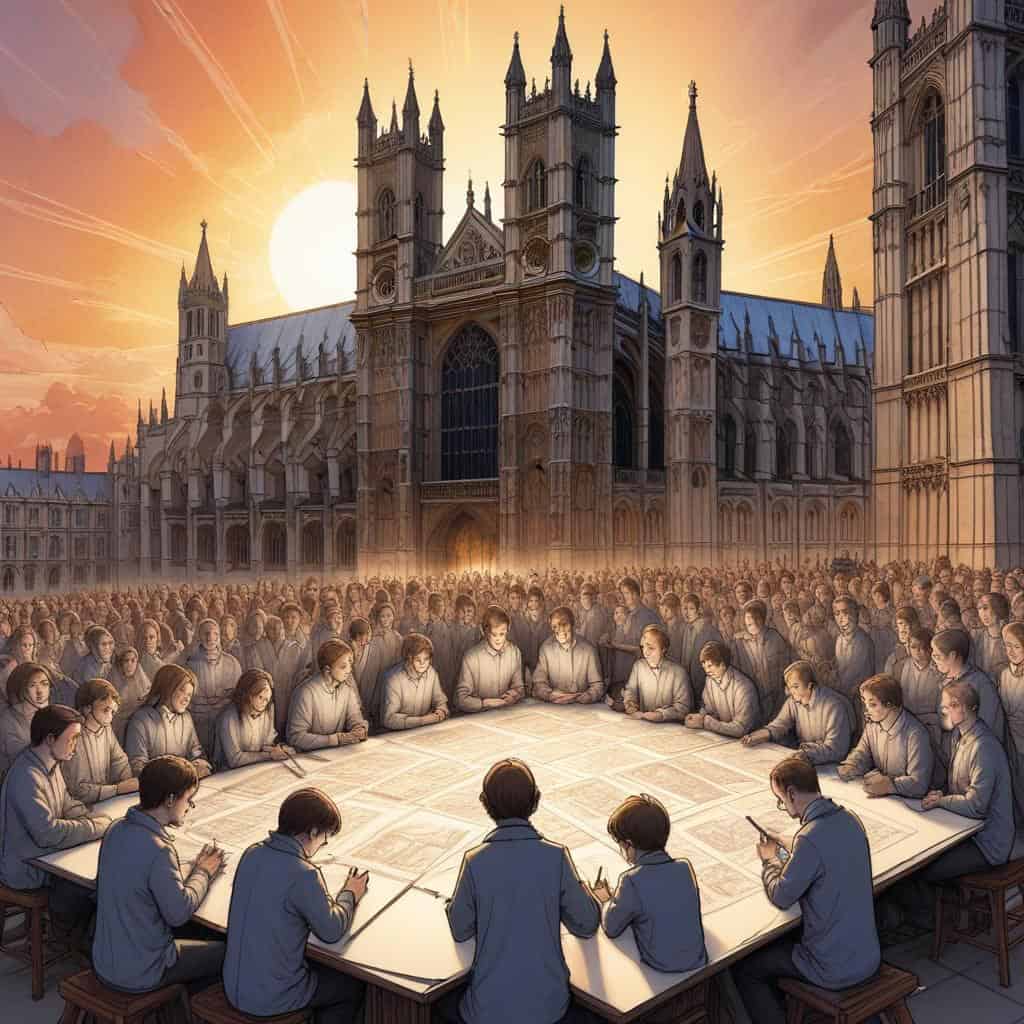
Architectural Masterminds

Medieval Masons and Laborers

The Decision to Build Westminster Abbey

Designing the Abbey

Gathering Materials

Laying the Foundation

Raising the Walls

Constructing the Roof

Adding Decorative Elements

Finishing Touches

Westminster Abbey is Completed

Legacy of Westminster Abbey
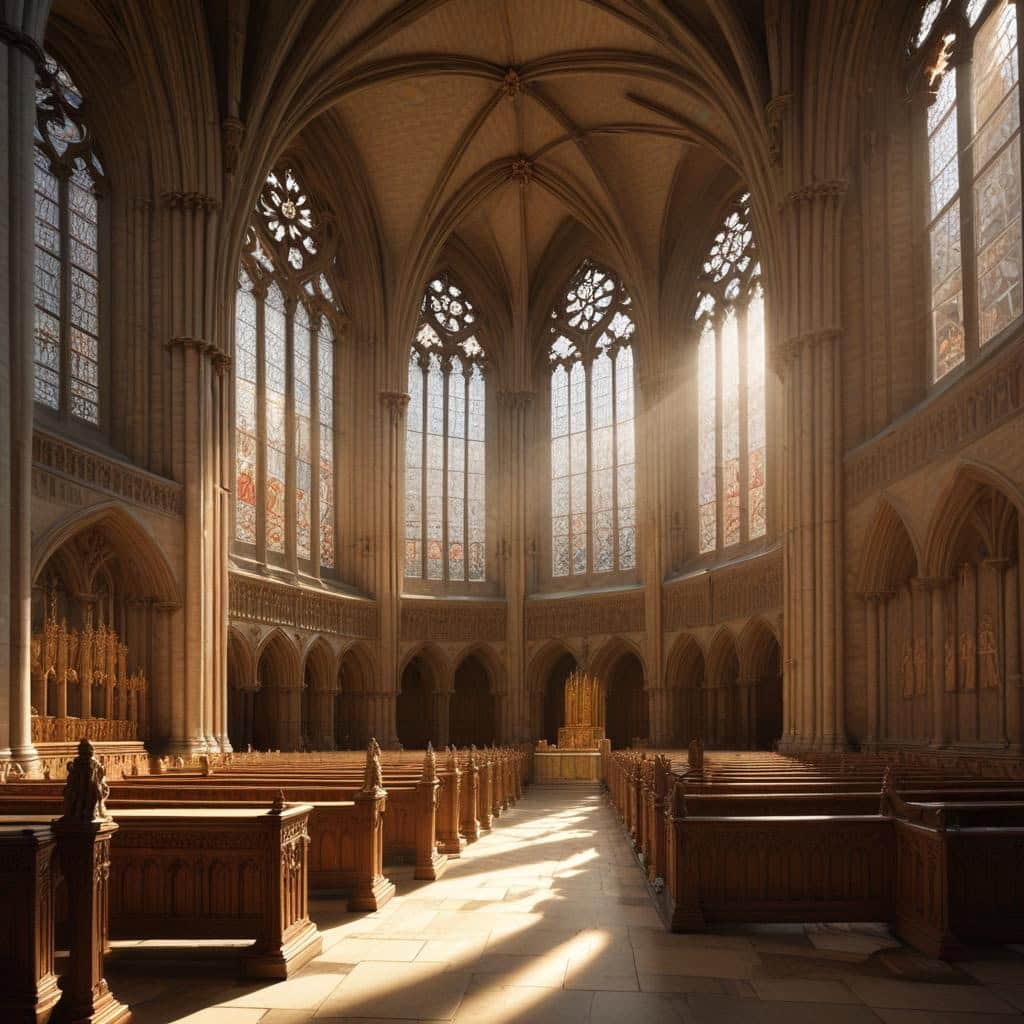
Lesson Details & Resources
In a Nutshell
- What: A significant construction project of Westminster Abbey
- When: Around 1050
- Who: Edward the Confessor, Unknown architects and builders
- Outcome: Establishment of a grand church that became a symbol of royal power in England
Famous Figures in the Construction of Westminster Abbey
-
King Edward the Confessor
King Edward the Confessor initiated the construction of Westminster Abbey in the 11th century.
-
Henry III of England
Henry III of England oversaw the rebuilding of Westminster Abbey in the 13th century, creating the Gothic masterpiece we see today.
-
Richard II of England
Richard II of England added the Westminster Scholars to the Abbey in the late 14th century.
-
Elizabeth I of England
Elizabeth I of England was crowned Queen at Westminster Abbey in 1559.
-
Queen Victoria
Queen Victoria married Prince Albert at Westminster Abbey in 1840.
-
King George V
King George V was crowned at Westminster Abbey in 1911.
-
William the Conqueror
William the Conqueror commissioned the construction of Westminster Abbey after the Norman Conquest in 1066.
-
Henry VII of England
Henry VII of England built the Lady Chapel at Westminster Abbey in the late 15th century.
-
Mary I of England
Mary I of England was buried at Westminster Abbey in 1558.
-
Queen Anne
Queen Anne was the last monarch to be buried at Westminster Abbey in 1714.
Timeline of Construction of Westminster Abbey
Foundation of Westminster Abbey laid by King Edward the Confessor
Construction of the Abbey church begins
Abbey consecrated by the Bishop of London
Death of King Edward the Confessor
Coronation of William the Conqueror in Westminster Abbey
Construction of the Abbey's nave and transepts completed
Addition of the Abbey's Chapter House
Construction of the Abbey's cloisters
Addition of the Abbey's Lady Chapel
Burial of Henry III in Westminster Abbey
Burial of Edward I in Westminster Abbey
Burial of Edward III in Westminster Abbey
Burial of Henry V in Westminster Abbey
Burial of Elizabeth I in Westminster Abbey
Coronation of Queen Victoria in Westminster Abbey
Great Fire of London damages Westminster Abbey
Restoration and renovation of Westminster Abbey
Burial of the Unknown Warrior in Westminster Abbey
Westminster Abbey designated a UNESCO World Heritage Site
Vocabulary List
- Abbey
- Westminster Abbey is a famous abbey located in London, England.
- Construction
- The construction of Westminster Abbey began around 1050 and continued for many years.
- Gothic architecture
- Westminster Abbey is known for its stunning Gothic architecture.
- Stone masonry
- Skilled stone masons were hired to work on the construction of Westminster Abbey.
- Vaulted ceilings
- The interior of Westminster Abbey features beautiful vaulted ceilings.
- Flying buttresses
- Flying buttresses were used to support the walls of Westminster Abbey.
- Cathedral
- Westminster Abbey is technically a cathedral, as it is the seat of the Bishop of London.
- Monastery
- Originally, Westminster Abbey was a Benedictine monastery before becoming a royal church.
Key Facts
This is the information used in the fact matching game
- Westminster Abbey was built by King Edward the Confessor around 1050.
- The construction of Westminster Abbey took over 50 years to complete.
- The original Westminster Abbey was a Benedictine monastery.
- The Abbey was consecrated on December 28, 1065.
- Westminster Abbey was the first church in the UK to be made with stone.
- The Abbey was built in the Romanesque architectural style.
- Westminster Abbey has been the site of every coronation since 1066.
- The Abbey was originally known as the 'west minster' to distinguish it from the 'east minster' (St. Paul's Cathedral).
- The construction of Westminster Abbey was funded by King Edward the Confessor's personal fortune.
- Westminster Abbey has been the burial place of monarchs and notable figures throughout history.
- The Abbey has undergone several expansions and renovations over the centuries.
- The construction of Westminster Abbey was supervised by skilled masons and craftsmen.
- The Abbey's intricate stained glass windows were added in the 13th century.
- Westminster Abbey is a UNESCO World Heritage Site.
- The Abbey's central tower was added in the 14th century.
- The coronation chair in Westminster Abbey dates back to 1300.
- Westminster Abbey has a rich history of royal weddings, including the marriage of Prince William and Kate Middleton in 2011.
- The Abbey's intricate stone carvings depict biblical scenes and saints.
- The construction of Westminster Abbey was a significant feat of medieval engineering.
- Westminster Abbey has a rich musical tradition, with a choir that dates back to the 14th century.
Analysis & Significance
Immediate Consequences
The construction of Westminster Abbey in 1050 marked a significant milestone in English history, as it solidified the power and influence of the monarchy. The abbey served as the coronation site for English monarchs, showcasing the close relationship between the church and the state.
Long-Term Impact
Over the centuries, Westminster Abbey has played a central role in shaping the cultural and religious identity of England. As a site of royal coronations, weddings, and burials, it has become a symbol of national unity and continuity. The stunning Gothic architecture of the abbey has also influenced countless other buildings and structures around the world.
Cultural Significance Today
Today, Westminster Abbey continues to be a revered symbol of British history and tradition. It remains a popular tourist attraction, drawing visitors from all over the globe to marvel at its beauty and historical significance. The abbey’s ongoing role in state ceremonies and events ensures that its legacy will endure for generations to come.
Construction of Westminster Abbey Games


Take Your Learning Offline
Want a convenient, print-ready study guide for this lesson? Become a Memory Wizards Pro member to unlock the downloadable " Memory Scrolls" for this topic and our entire library!
- ✓ Complete Vocabulary Lists
- ✓ Key Facts & Timelines
- ✓ Beautifully Formatted for Print & Mobile