
Summary of Treaty of Alfred and Guthrum (886)
Unravel the ancient pact that shaped Viking and Saxon history forever.
How Do You Learn Best?
Learn by Reading
Immerse yourself in the 10-minute visual lesson for a comprehensive understanding of the topic.
Learn by Reviewing
Jump directly to the key facts, timeline, and vocabulary lists to build a solid foundation of details.
Learn by Doing
Challenge yourself! Jump straight into the interactive games to learn by trial, error, and discovery.
Treaty of Alfred and Guthrum in 10 Minutes
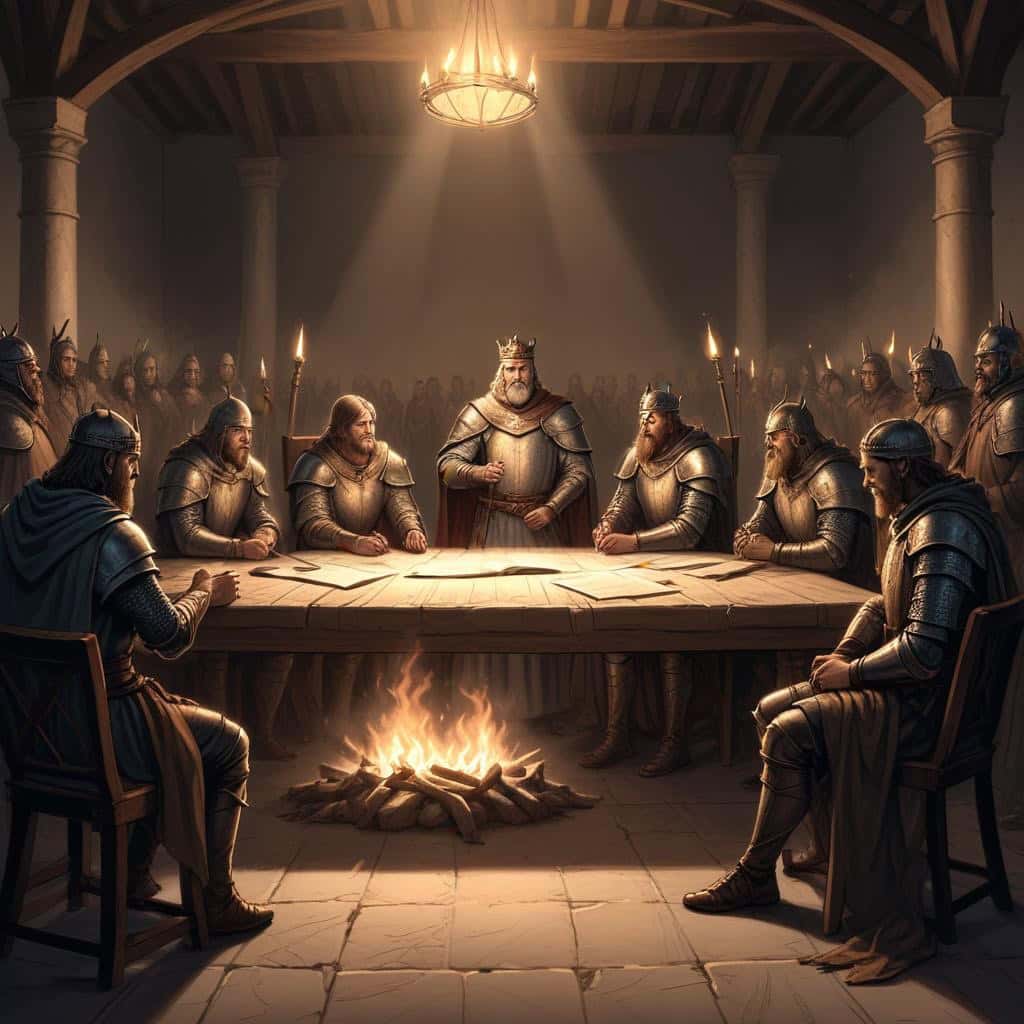
Introduction

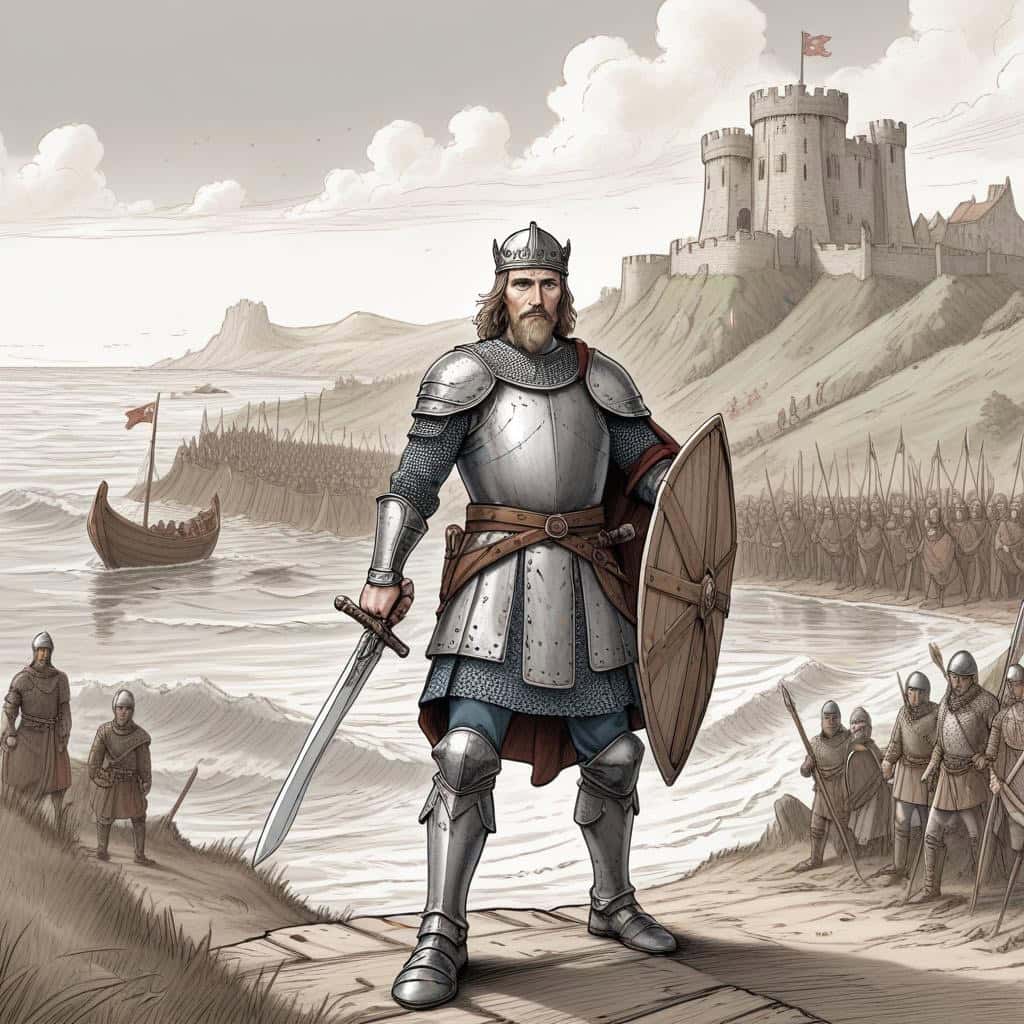
Alfred the Great
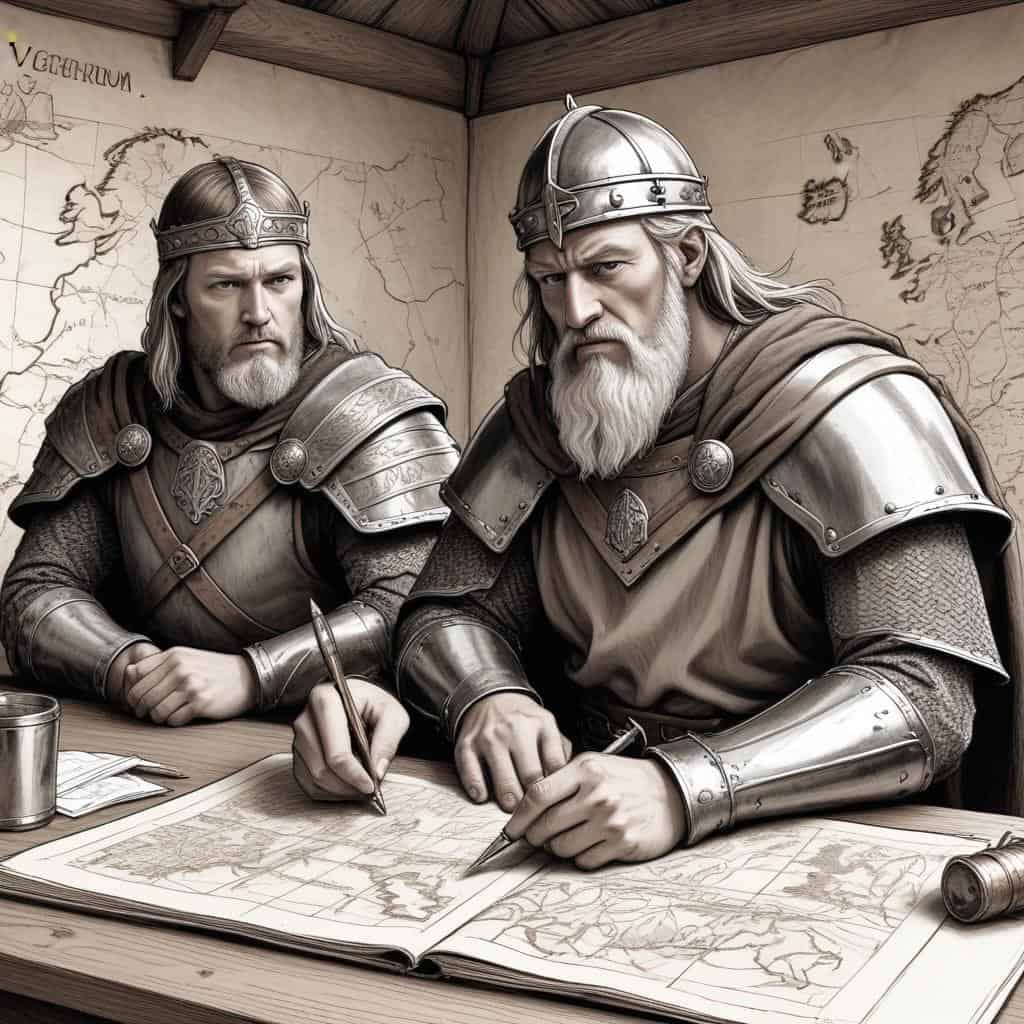
Guthrum
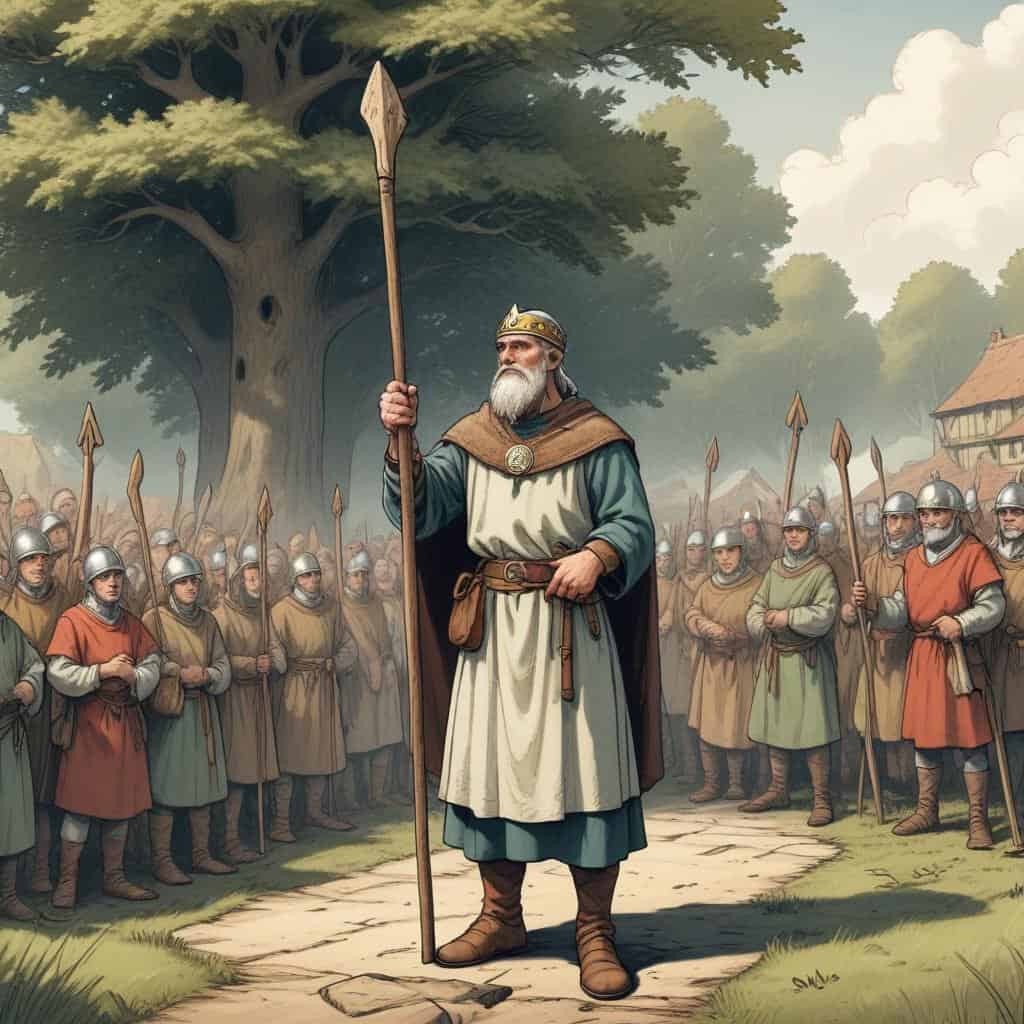
Ealdormen
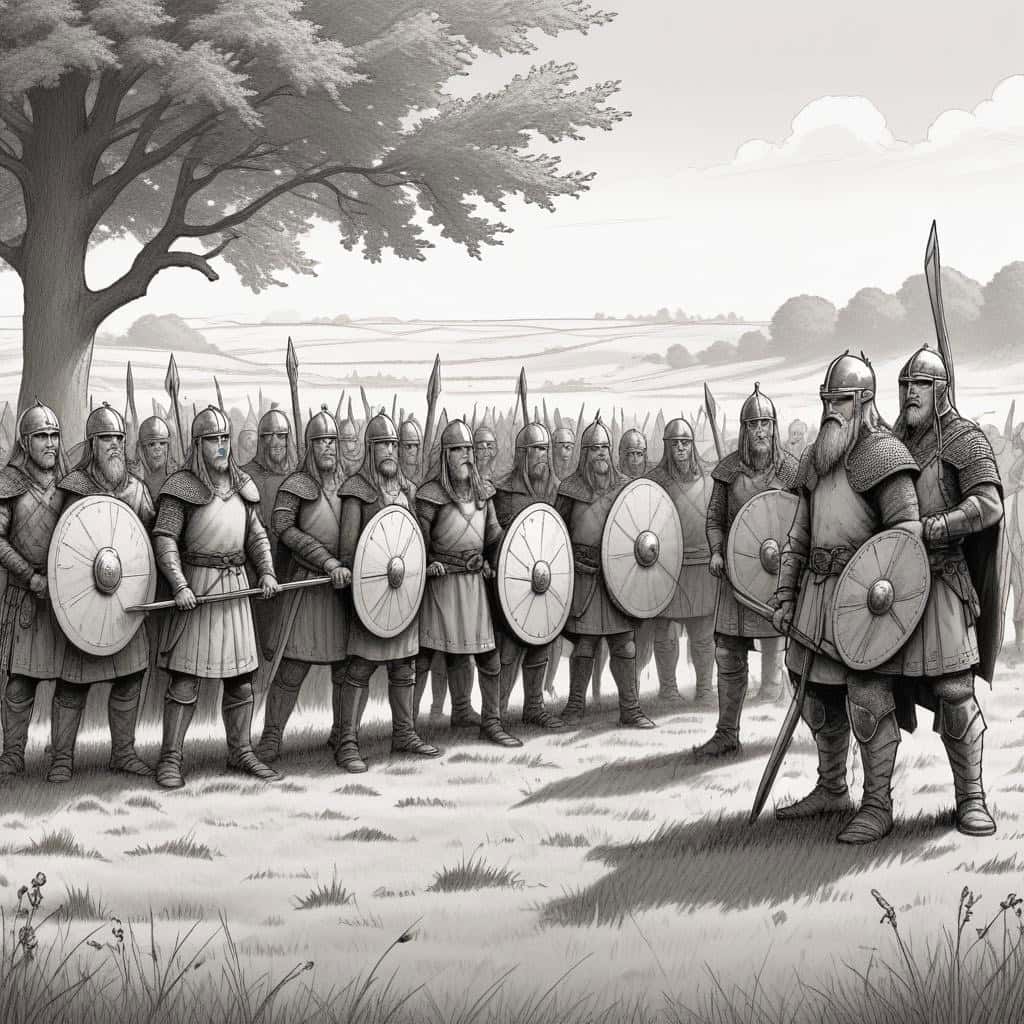
Warriors

1. Alfred the Great and the Viking Invasions

2. The Battle of Edington

3. The Treaty of Wedmore

4. The Treaty of Alfred and Guthrum

5. Terms of the Treaty

6. Conversion to Christianity

7. Establishment of Danelaw

8. Legacy of the Treaty

9. Historical Significance
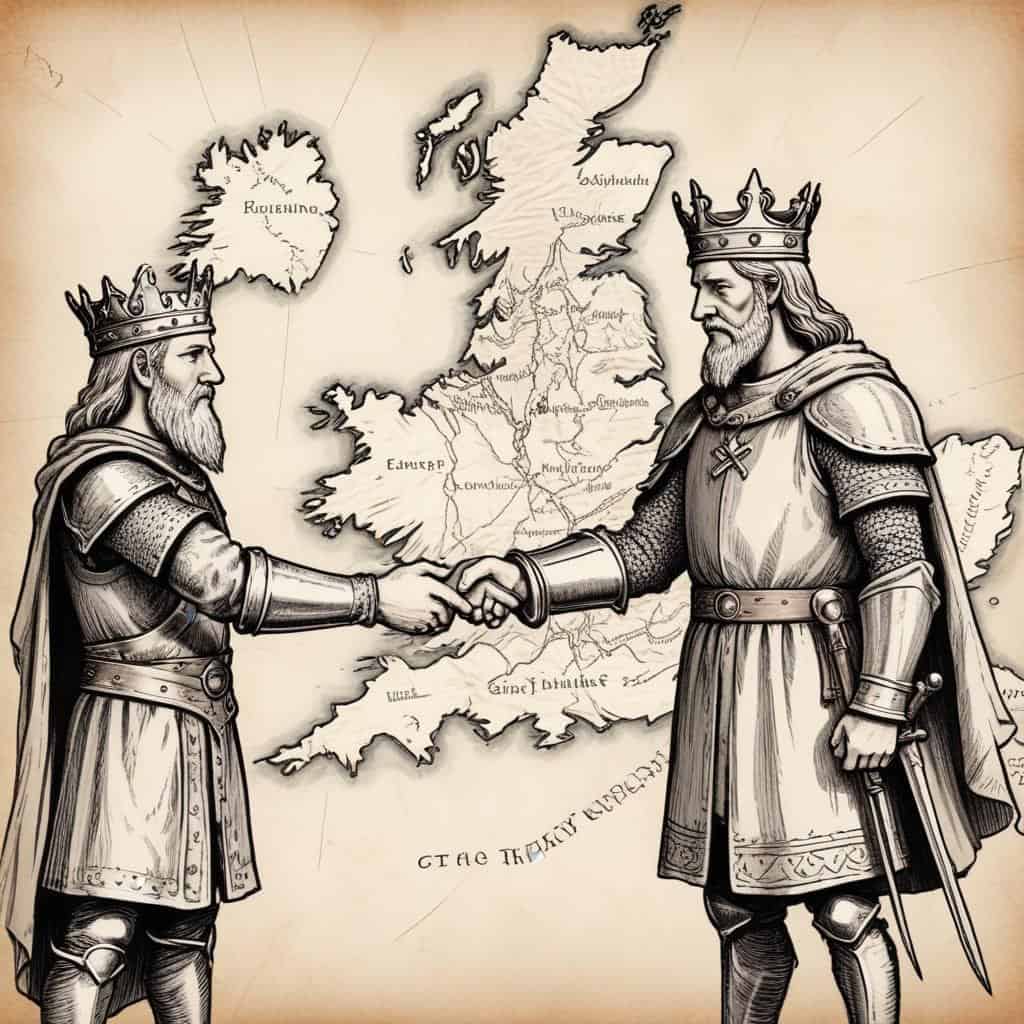
10. Conclusion
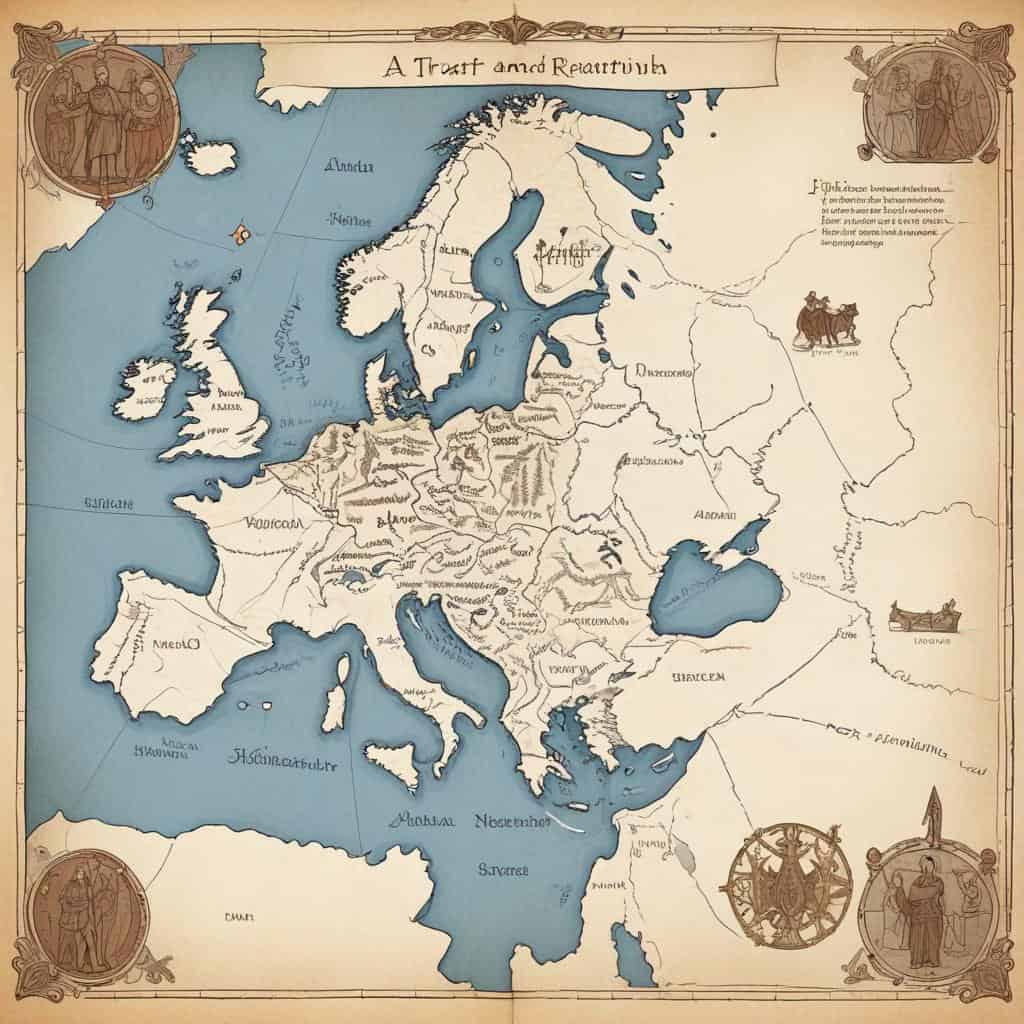
Lesson Details & Resources
In a Nutshell
- What: A treaty signed between King Alfred the Great of Wessex and Viking leader Guthrum.
- When: 886
- Who: King Alfred the Great, Viking leader Guthrum
- Outcome: Established boundaries between Wessex and Danelaw, leading to a period of relative peace between the Anglo-Saxons and Vikings.
Famous Figures in the Treaty of Alfred and Guthrum
-
Alfred the Great
King of Wessex who negotiated the Treaty of Alfred and Guthrum
-
Guthrum the Old
Viking leader who signed the Treaty of Alfred and Guthrum
-
Asser
Bishop and biographer of Alfred the Great
-
Æthelred
Brother of Alfred the Great and co-signer of the treaty
-
Athelstan of England
Grandson of Alfred the Great who continued his policies
-
Ealdorman Odda
Anglo-Saxon nobleman who fought in the battles leading to the treaty
-
Anarawd ap Rhodri
Welsh ruler who may have been involved in the treaty negotiations
-
Haakon I of Norway
Norwegian king who may have had diplomatic relations with Alfred
-
Charles the Fat
Holy Roman Emperor who may have influenced the treaty
-
Sigehelm, Bishop of Sherborne
Bishop who played a role in the implementation of the treaty
Timeline of Treaty of Alfred and Guthrum
Alfred the Great defeats the Viking leader Guthrum at the Battle of Edington
Treaty of Wedmore signed, dividing England between Alfred and Guthrum
Guthrum converts to Christianity and takes on the baptismal name Æthelstan
Peace negotiations between Alfred and Guthrum begin
Treaty of Alfred and Guthrum signed, establishing boundaries and terms for peace
Alfred and Guthrum exchange hostages as a sign of good faith
Guthrum agrees to withdraw his forces from Wessex
Alfred promises to provide food and supplies to Guthrum's men during their withdrawal
Alfred grants Guthrum control of the territory known as the Danelaw
Alfred and Guthrum establish trade agreements between their kingdoms
Alfred and Guthrum agree to mutual defense against external threats
Alfred and Guthrum hold a feast to celebrate the signing of the treaty
Guthrum returns to his kingdom in East Anglia
Alfred consolidates his power in Wessex and continues to strengthen his kingdom
The Treaty of Alfred and Guthrum is seen as a turning point in the Viking invasions of England
The treaty paves the way for a period of relative peace and stability in the region
Alfred is hailed as a hero for his role in negotiating the treaty and defending his kingdom
Guthrum's conversion to Christianity is seen as a significant step towards integration of the Viking and Anglo-Saxon cultures
The Treaty of Alfred and Guthrum is later cited as a model for diplomatic negotiations and conflict resolution
The legacy of the treaty continues to be felt in the relations between the Anglo-Saxons and the Vikings in the following centuries
Vocabulary List
- Treaty
- An agreement between two parties, in this case, Alfred the Great and Guthrum, establishing peace and defining territorial boundaries.
- Alfred the Great
- The King of Wessex who successfully defended his kingdom against Viking invasions and negotiated the treaty with Guthrum.
- Guthrum
- The Viking leader who became a key figure in the treaty, representing the Danish forces and agreeing to the terms set by Alfred.
- Danelaw
- The area of England under the control of the Vikings, which was formalized through the Treaty of Alfred and Guthrum.
- Viking
- Norse seafarers who raided and settled in parts of Europe, including England, during the late 8th to early 11th centuries.
- Peace
- The state of tranquility that the treaty aimed to achieve between the Anglo-Saxons and the Vikings.
- Boundaries
- The geographical limits established by the treaty that delineated territories controlled by Alfred and Guthrum.
- Christianity
- The religion that Alfred encouraged Guthrum to adopt as part of the treaty, symbolizing a cultural and religious shift.
- Alfredian Renaissance
- A period of cultural and intellectual revival in Wessex that was influenced by the stability achieved through the treaty.
- Anglo-Saxon
- Referring to the early medieval inhabitants of England, whose culture and governance were significantly impacted by the treaty.
Key Facts
This is the information used in the fact matching game
- The Treaty of Alfred and Guthrum was signed in 886 AD.
- The treaty established the boundaries between the Anglo-Saxon kingdom of Wessex and the Viking-controlled Danelaw.
- Under the treaty, Guthrum agreed to withdraw his forces from Wessex and cease raiding the kingdom.
- Alfred the Great, king of Wessex, was one of the signatories of the treaty.
- The treaty marked a turning point in the Viking invasions of England, as it halted their advance and secured the borders of Wessex.
- The treaty included provisions for the conversion of Guthrum and his followers to Christianity.
- Alfred the Great became Guthrum's godfather after the treaty was signed.
- The treaty allowed for peaceful coexistence between the Anglo-Saxons and the Vikings in the Danelaw.
- Guthrum was given control of the territory known as East Anglia under the terms of the treaty.
- The Treaty of Alfred and Guthrum helped pave the way for the unification of England under one ruler.
- The treaty was negotiated following the Battle of Edington, where Alfred the Great defeated Guthrum's forces.
- Both Alfred and Guthrum were motivated to reach a peaceful resolution due to the high cost of continued conflict.
- The Treaty of Alfred and Guthrum is also known as the Treaty of Wedmore, named after the location where the negotiations took place.
- The treaty included provisions for the exchange of hostages as a guarantee of compliance.
- The signing of the treaty was witnessed by a number of prominent figures from both sides, including bishops and nobles.
- The Treaty of Alfred and Guthrum helped stabilize the political situation in England and reduce the threat of Viking invasions.
- The treaty laid the foundation for the eventual assimilation of the Viking settlers into Anglo-Saxon society.
- Guthrum honored the terms of the treaty and remained at peace with Wessex for the remainder of his reign.
- The Treaty of Alfred and Guthrum was a significant milestone in the history of the Anglo-Saxon and Viking interactions in England.
- The treaty laid the groundwork for future alliances and cooperation between the Anglo-Saxons and Vikings in England.
Analysis & Significance
Immediate Consequences
The Treaty of Alfred and Guthrum in 886 brought an end to the Viking invasions of England, providing a period of relative peace and stability in the region. Both sides agreed to territorial boundaries and terms of cooperation, allowing for the establishment of a more organized governance system.
Long-Term Impact
This treaty marked a significant turning point in English history, as it laid the foundation for the eventual unification of England under one ruler. The agreement set the stage for the gradual assimilation of the Danish settlers into English society and contributed to the development of a distinct Anglo-Saxon identity.
Cultural Significance Today
The Treaty of Alfred and Guthrum continues to be remembered as a crucial moment in the history of England, highlighting the importance of diplomacy and compromise in resolving conflicts. Its legacy serves as a reminder of the enduring impact of historical agreements on shaping the course of nations and cultures.
Treaty of Alfred and Guthrum Games


Take Your Learning Offline
Want a convenient, print-ready study guide for this lesson? Become a Memory Wizards Pro member to unlock the downloadable " Memory Scrolls" for this topic and our entire library!
- ✓ Complete Vocabulary Lists
- ✓ Key Facts & Timelines
- ✓ Beautifully Formatted for Print & Mobile