
Summary of The Saxon Invasions
Uncover the ancient mysteries of the Saxon invasions in Britain.
How Do You Learn Best?
Learn by Reading
Immerse yourself in the 10-minute visual lesson for a comprehensive understanding of the topic.
Learn by Reviewing
Jump directly to the key facts, timeline, and vocabulary lists to build a solid foundation of details.
Learn by Doing
Challenge yourself! Jump straight into the interactive games to learn by trial, error, and discovery.
The Saxon Invasions in 10 Minutes
Introduction
King Vortigern
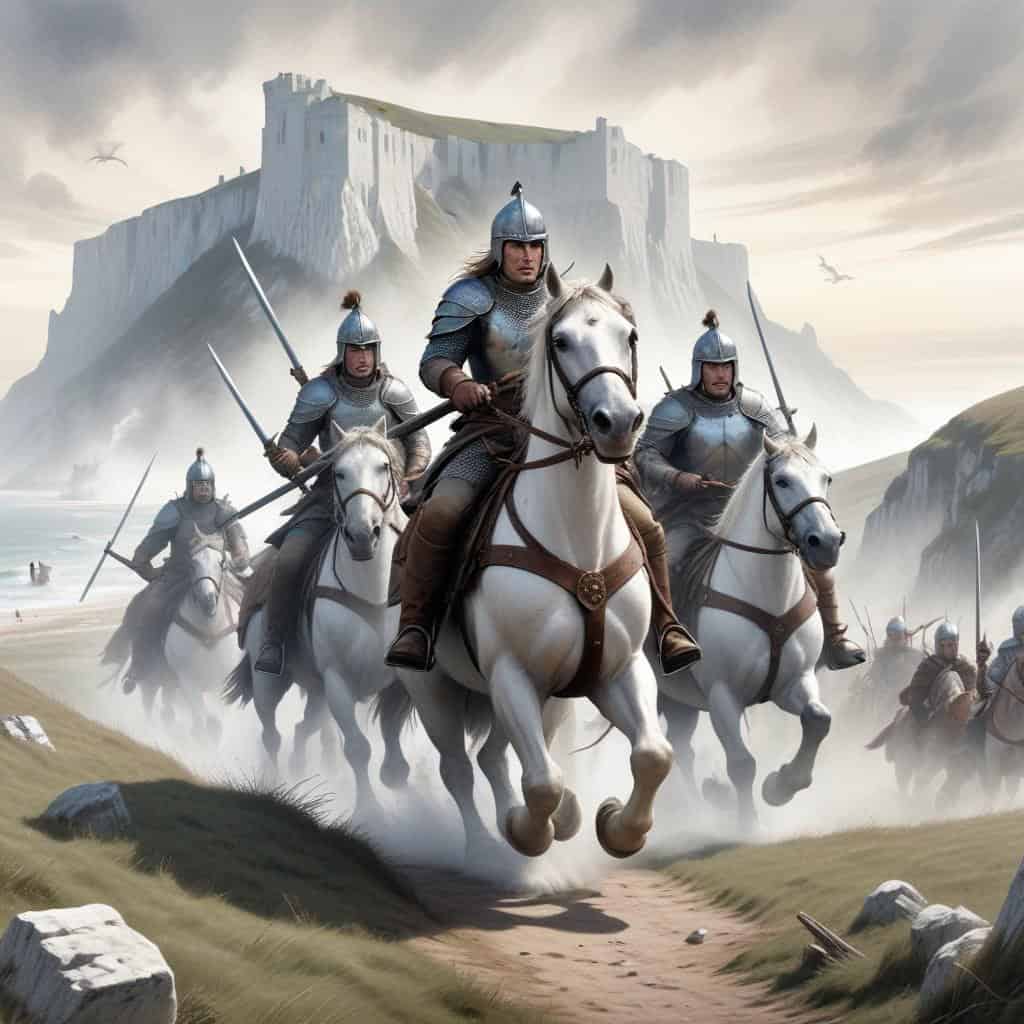
Hengist and Horsa
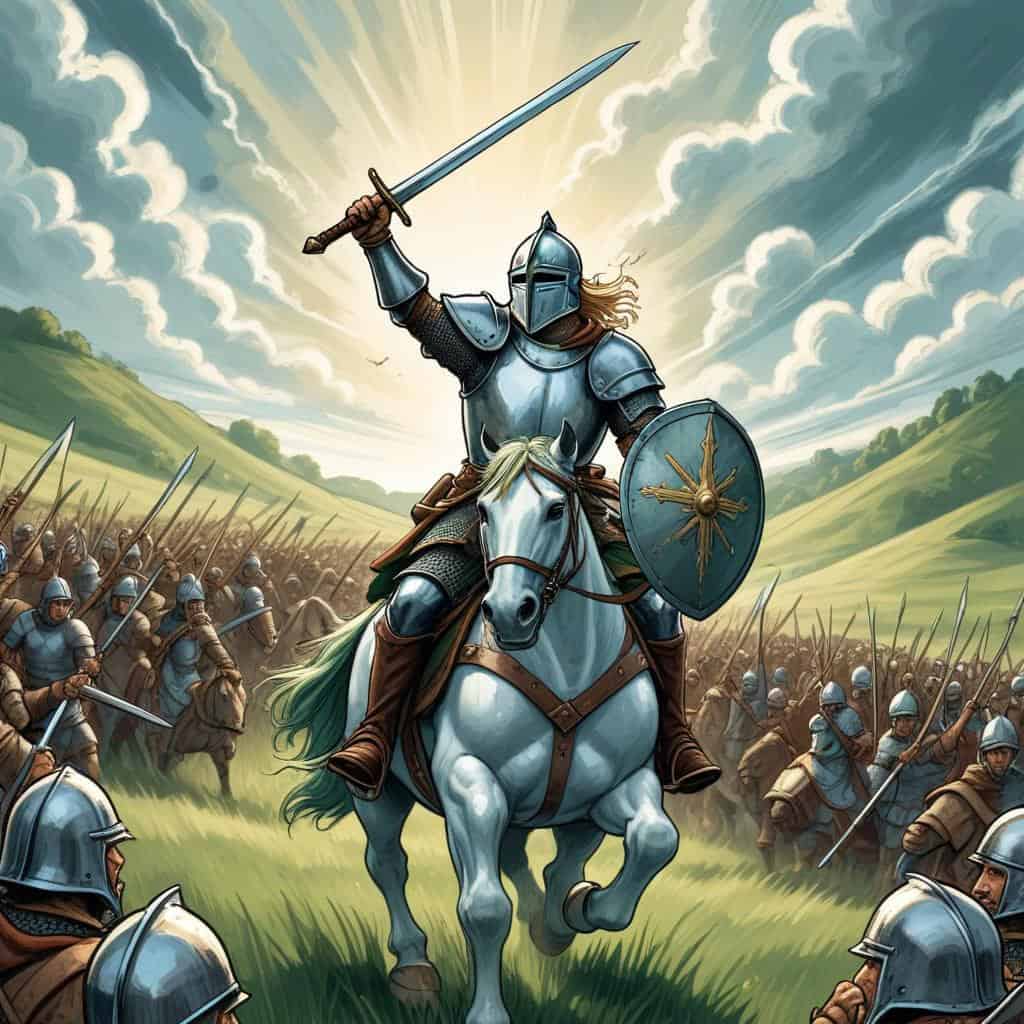
King Arthur
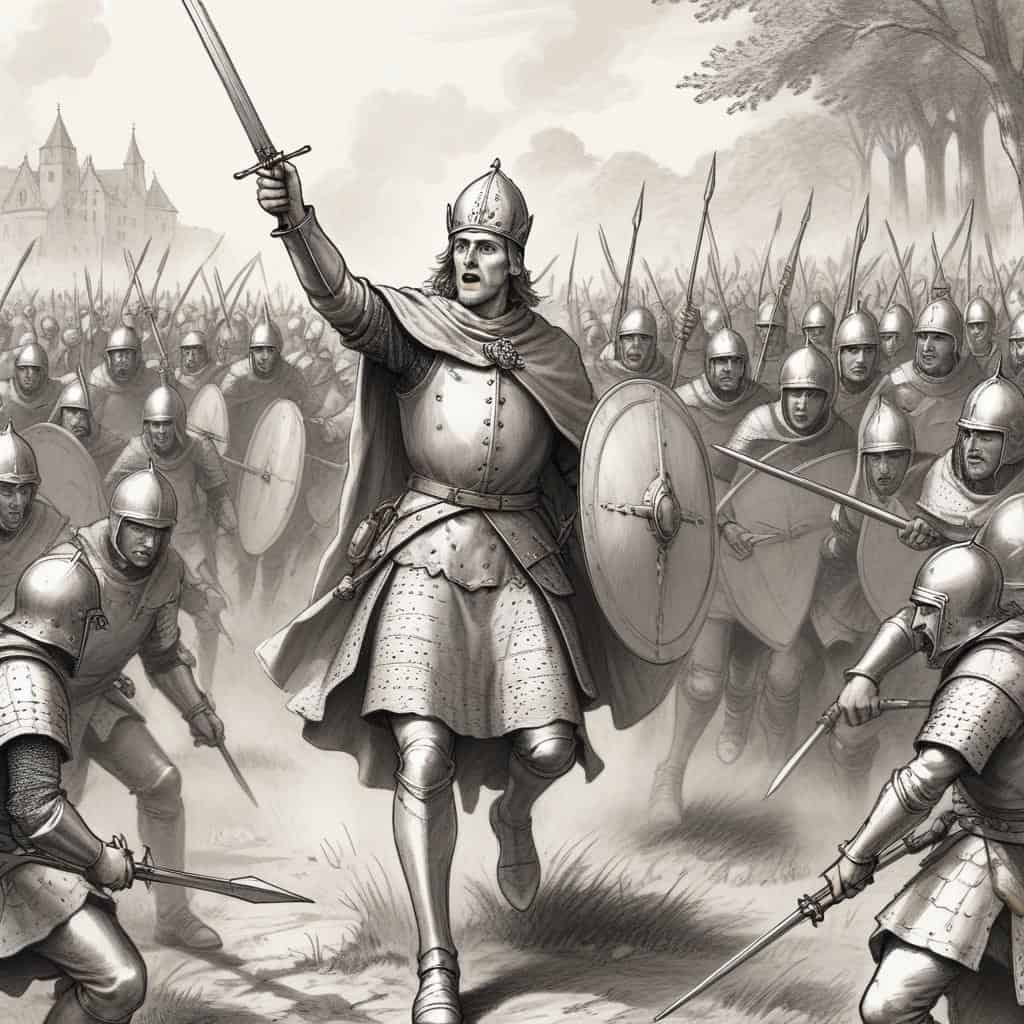
St. Germanus of Auxerre
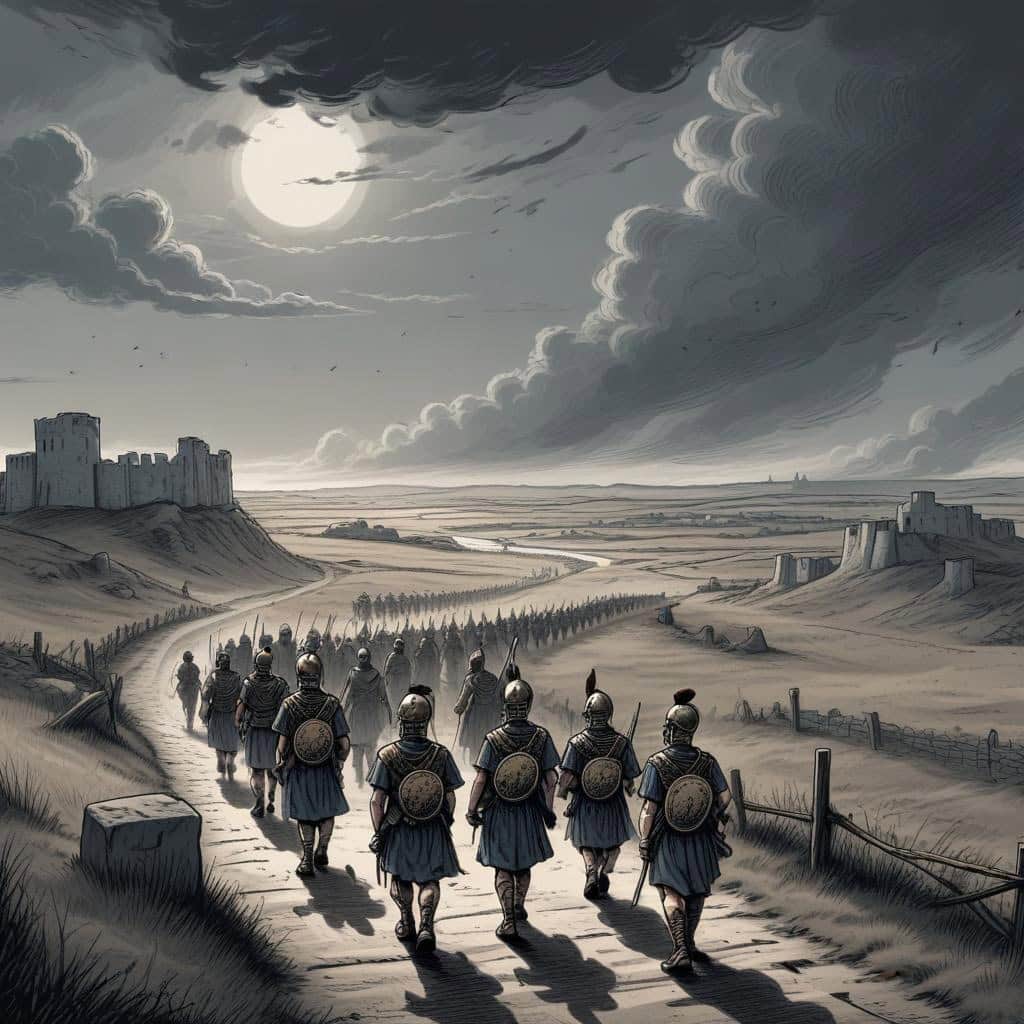
The Roman Withdrawal

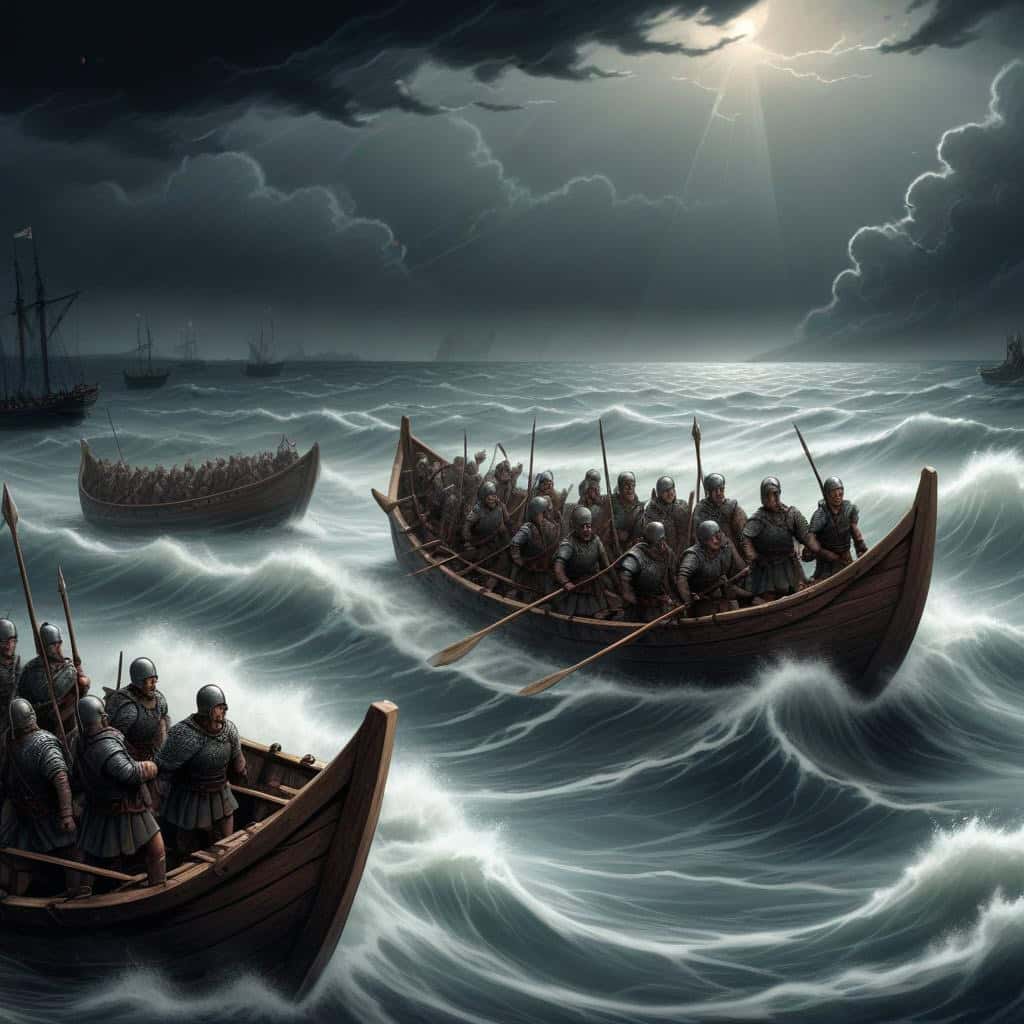
The Arrival of the Saxons

The Battle of Badon Hill

The Kingdom of Wessex

The Conversion to Christianity

The Viking Invasions

The Rise of Alfred the Great
The Danelaw

The Norman Conquest

The Legacy of the Saxons
Lesson Details & Resources
In a Nutshell
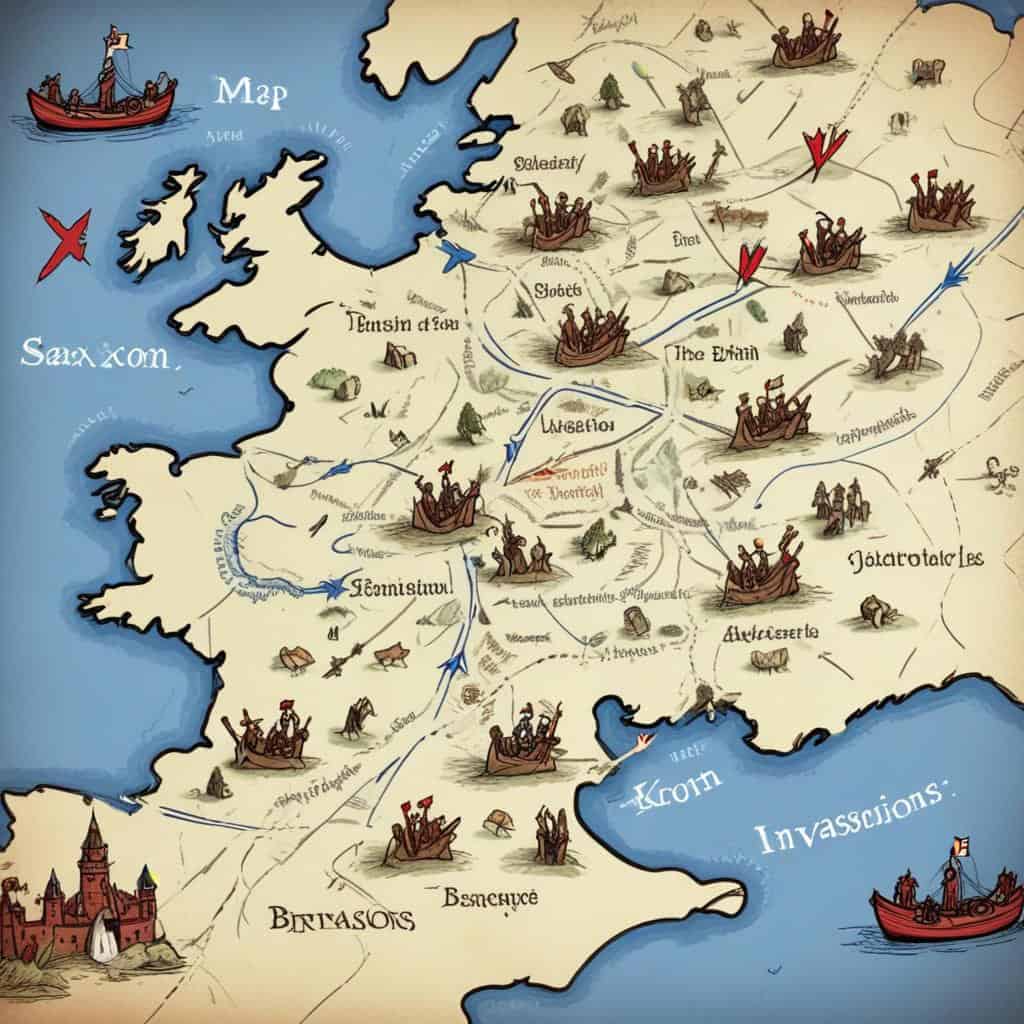
- What: Series of invasions by Germanic tribes from present-day Germany and Denmark into Roman Britain.
- When: 5th to 6th centuries AD
- Who: Angles, Saxons, Jutes, and Frisians
- Outcome: Establishment of Anglo-Saxon kingdoms and the beginning of the Anglo-Saxon period in England.
Famous Figures in the The Saxon Invasions
-
King Arthur
King Arthur is a legendary British leader who fought against the Saxon invasions in the 5th and 6th centuries.
-
Alfred the Great
Alfred the Great was the King of Wessex who successfully defended his kingdom against Viking and Saxon invasions, preserving the English culture and language.
-
Hengist and Horsa
Hengist and Horsa were legendary Saxon brothers who led the first wave of Saxon invasions into Britain in the 5th century.
-
Aethelred of Wessex
Aethelred of Wessex was a Saxon king who fought against the Viking and Saxon invasions in the late 8th and early 9th centuries.
-
Cerdic of Wessex
Cerdic of Wessex was the founder and first king of the Kingdom of Wessex, and he played a significant role in repelling the Saxon invasions.
Timeline of The Saxon Invasions
The arrival of the Saxons in Britain
Battle of Mons Badonicus
Saxon victories in various battles
The Saxons establish their own kingdoms in Britain
Saxon settlement in Essex
Saxon settlement in Kent
Saxon settlement in Sussex
Saxon settlement in Wessex
Saxon settlement in East Anglia
Saxon settlement in Mercia
Saxon settlement in Northumbria
Saxon settlement in East Saxony
Saxon settlement in Middle Saxony
Saxon settlement in West Saxony
Kingdom of Kent converted to Christianity
Kingdom of East Anglia converted to Christianity
Kingdom of Northumbria converted to Christianity
Kingdom of Wessex converted to Christianity
Kingdom of Mercia converted to Christianity
Viking raids and invasions begin
Vocabulary List
- Anglo-Saxons
- The Anglo-Saxons were a group of people who migrated to England from what is now Germany and Denmark during the 5th and 6th centuries.
- Saxon
- The Saxons were one of the Germanic tribes that invaded and settled in England during the Saxon Invasions.
- Invasions
- The Saxon Invasions refer to the period when Germanic tribes, including the Saxons, Angles, and Jutes, invaded and colonized parts of England.
- Migration
- The Saxon Invasions involved the migration of Germanic tribes to England, leading to significant changes in the population and culture of the region.
- Tribes
- Various Germanic tribes, such as the Saxons, Angles, and Jutes, played a role in the Saxon Invasions and the subsequent establishment of Anglo-Saxon kingdoms in England.
- Kingdoms
- The Saxon Invasions resulted in the creation of several Anglo-Saxon kingdoms in England, such as Wessex, Mercia, and Northumbria.
- Settlement
- The Saxon Invasions involved the settlement of Germanic tribes in different regions of England, leading to the formation of new communities and societies.
- Culture
- The Saxon Invasions had a significant impact on the culture of England, as the Germanic tribes brought their own customs, language, and traditions.
- Anglo-Saxon Chronicles
- The Anglo-Saxon Chronicles are a collection of historical records written during the Anglo-Saxon period, providing valuable insights into the Saxon Invasions and their aftermath.
- Conversion to Christianity
- The Saxon Invasions were followed by the conversion of the Anglo-Saxon kingdoms to Christianity, which brought about further changes in religious practices and societal norms.
Key Facts
This is the information used in the fact matching game
- The Saxon Invasions were a series of invasions by Germanic tribes, mainly the Angles, Saxons, and Jutes, into Britain during the 5th and 6th centuries.
- The Saxon Invasions resulted in the decline and fall of the Roman rule in Britain.
- The invasions started around 410 AD after the Romans withdrew their military from Britain.
- The Saxon invaders initially came to Britain as mercenaries invited by the Roman authorities to help defend against other invading tribes.
- Over time, the Saxon mercenaries turned against the Roman authorities and began to conquer and settle in Britain.
- The Saxon Invasions led to the establishment of seven separate kingdoms in Britain, known as the Anglo-Saxon Heptarchy.
- The Saxon invaders brought their own Germanic language, Old English, which eventually evolved into Middle English and then Modern English.
- The Saxon Invasions significantly influenced the culture, language, and society of Britain, laying the foundations for English identity.
- The Saxon Invasions led to the conversion of the Anglo-Saxons to Christianity, with missionaries from Rome playing a crucial role.
- The Saxon Invasions caused the displacement and assimilation of the indigenous Britons, who were pushed to the fringes of the island.
- The Saxon invaders brought their own political and social structures, replacing the Roman imperial administration.
- The Saxon Invasions resulted in the establishment of a warrior aristocracy in Britain.
- The Saxon invasions introduced new agricultural practices, leading to the development of a more settled and rural society.
- The Saxon Invasions brought about a decline in urban life and trade in Britain.
- The Saxon invaders established several significant kingdoms, including Wessex, Mercia, and Northumbria.
- The Saxon Invasions led to the formation of early English laws and legal systems.
- The Saxon invaders brought their own pagan beliefs, which gradually gave way to Christianity.
- The Saxon Invasions saw the construction of various impressive burial mounds and grave goods, reflecting their cultural practices.
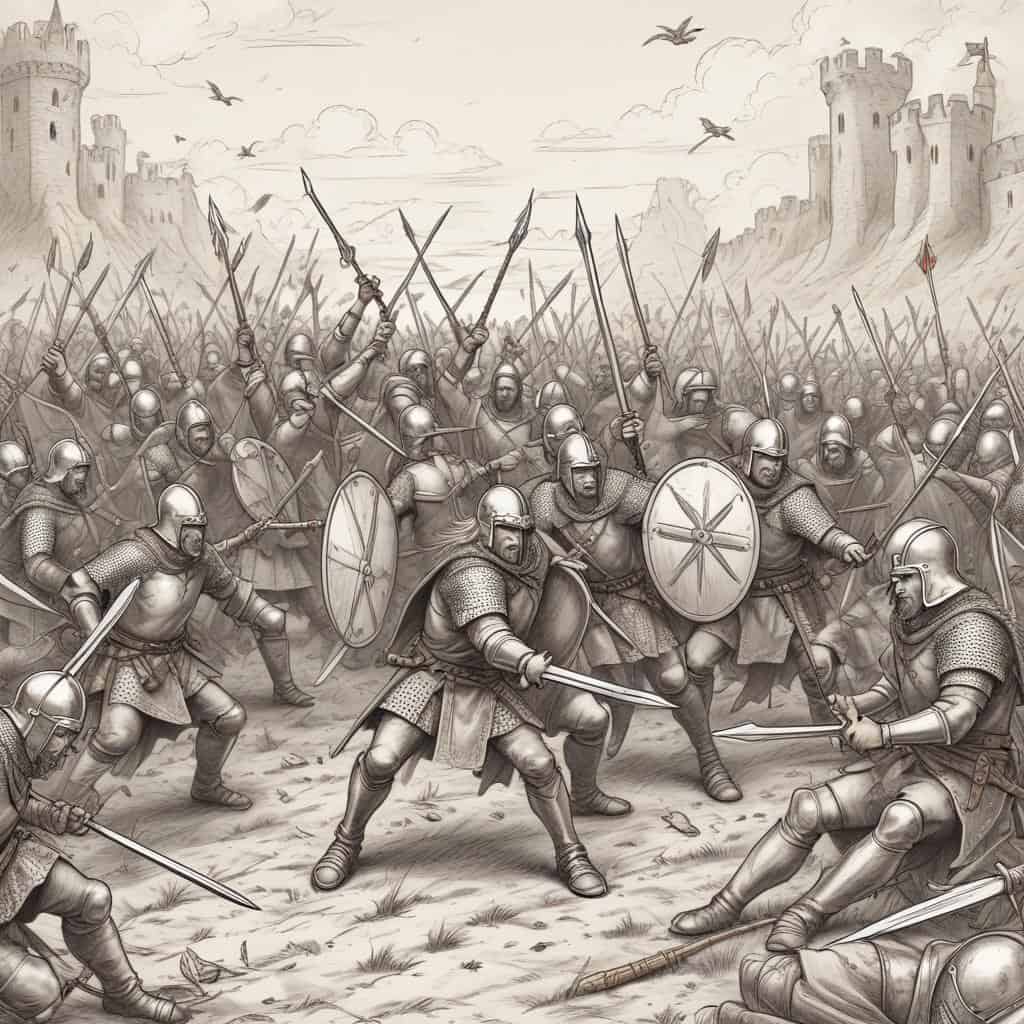
- The Saxon invaders faced resistance from the Britons, leading to several battles and conflicts.
Analysis & Significance
Immediate Consequences
The Saxon Invasions led to widespread destruction, displacement of populations, and the collapse of Roman-British society. The invaders established their own kingdoms, reshaping the political landscape of Britain.
Long-Term Impact
The Saxon Invasions had a lasting impact on the demographic composition of Britain, with the establishment of Anglo-Saxon kingdoms and the assimilation of Celtic peoples. This period also laid the groundwork for the development of the English language and culture.
Cultural Significance Today
The legacy of the Saxon Invasions can be seen in the language, place names, and cultural traditions of modern-day England. The Anglo-Saxon influence is still evident in English society, highlighting the enduring impact of this pivotal historical event.
The Saxon Invasions Games


Take Your Learning Offline
Want a convenient, print-ready study guide for this lesson? Become a Memory Wizards Pro member to unlock the downloadable " Memory Scrolls" for this topic and our entire library!
- ✓ Complete Vocabulary Lists
- ✓ Key Facts & Timelines
- ✓ Beautifully Formatted for Print & Mobile