
Summary of Godwinson family exile (1051)
The tragic tale of the Godwinson family's fateful exile in 1051.
How Do You Learn Best?
Learn by Reading
Immerse yourself in the 10-minute visual lesson for a comprehensive understanding of the topic.
Learn by Reviewing
Jump directly to the key facts, timeline, and vocabulary lists to build a solid foundation of details.
Learn by Doing
Challenge yourself! Jump straight into the interactive games to learn by trial, error, and discovery.
Godwinson family exile in 10 Minutes

Introduction
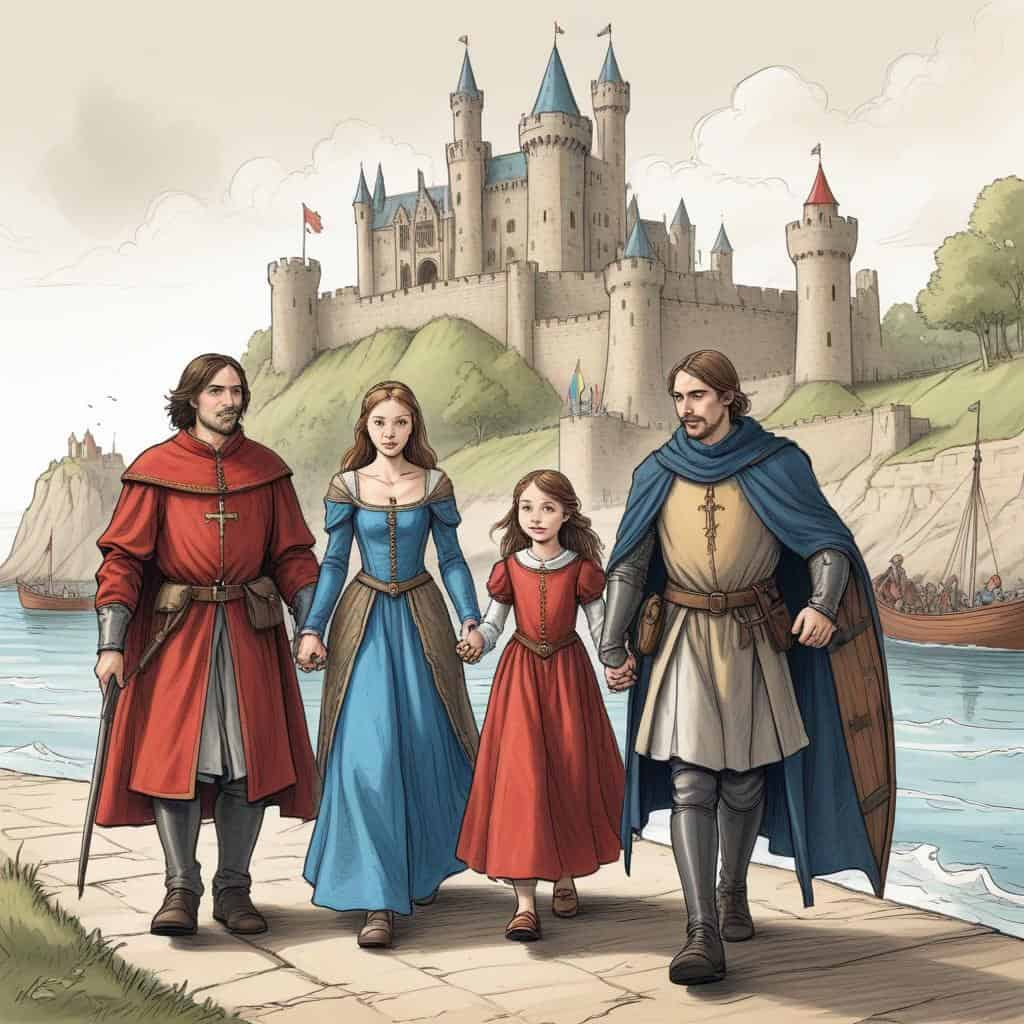
Harold Godwinson
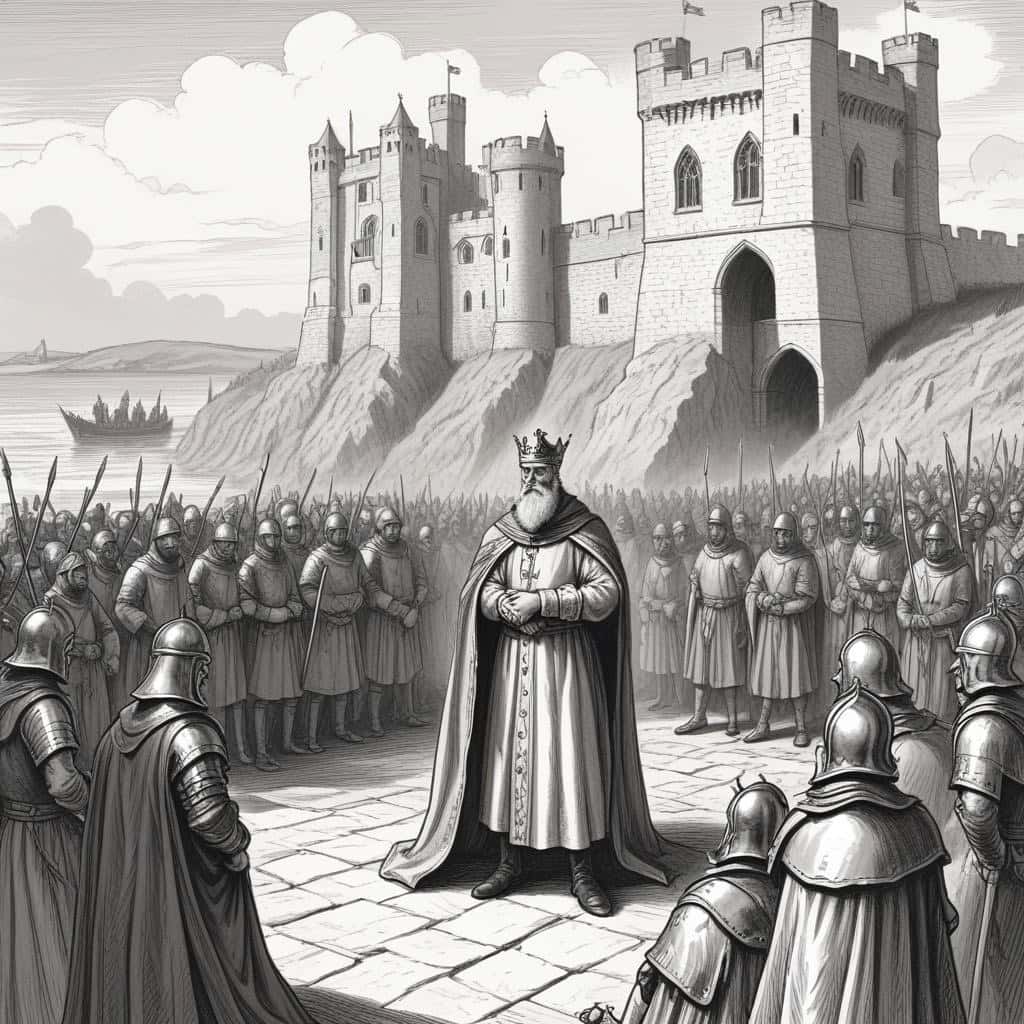
Earl Godwin of Wessex

Gytha Thorkelsdóttir

Tostig Godwinson

The Godwinson Family Exile: A Brief Overview

Earl Godwins Exile

Harold Godwinsons Rise to Power

Return of Earl Godwin

Marriage Alliances

Harolds Ambitions

Legacy of Exile

Aftermath of the Battle of Hastings

Lesson Details & Resources
In a Nutshell
- What: Exile of the Godwinson family
- When: 1051
- Who: Godwinson family
- Outcome: Forced to leave England and seek refuge in Flanders
Famous Figures in the Godwinson family exile
-
Edward the Confessor
King of England who died without an heir, leading to the Norman Conquest
-
Harold Godwinson
Last Anglo-Saxon King of England before the Norman Conquest
-
Edith of Wessex
Wife of Harold Godwinson and sister of King Edward the Confessor
-
Tostig Godwinson
Brother of Harold Godwinson who rebelled against him and allied with the Normans
-
Queen Edith
Wife of King Edward the Confessor and sister of Harold Godwinson
-
King Sweyn II of Denmark
Danish king who invaded England and claimed the throne
-
King Harald Hardrada
Norwegian king who also invaded England in 1066
-
Earl Godwin of Wessex
Powerful Anglo-Saxon earl and father of Harold Godwinson
-
Earl Leofric of Mercia
Husband of Lady Godiva and father of Edith of Wessex
-
Earl Siward of Northumbria
Anglo-Saxon earl who played a significant role in the events leading to the Norman Conquest
Timeline of Godwinson family exile
Earl Godwin and his sons, including Harold Godwinson, are exiled from England by King Edward the Confessor
The Godwin family travels to Flanders for exile
Earl Godwin dies in exile in Flanders
Harold Godwinson marries Edith Swannesha
Harold Godwinson returns to England and is restored to his lands and titles by King Edward the Confessor
Harold Godwinson becomes Earl of East Anglia
Harold Godwinson becomes Earl of Hereford
Harold Godwinson becomes Earl of Essex
Harold Godwinson becomes Earl of Wessex
Harold Godwinson becomes the most powerful noble in England
Harold Godwinson's sister, Edith, marries King Edward the Confessor
Harold Godwinson helps to negotiate the return of his brother, Tostig, to England
Harold Godwinson becomes a trusted advisor to King Edward the Confessor
Harold Godwinson is chosen as King Edward the Confessor's successor on his deathbed
Harold Godwinson is crowned King of England after the death of King Edward the Confessor
Harold Godwinson defeats an invasion by Harald Hardrada of Norway at the Battle of Stamford Bridge
Harold Godwinson is defeated by William the Conqueror at the Battle of Hastings and killed in battle
The Godwin family's exile comes to an end with Harold Godwinson's death
Vocabulary List
- Exile
- After the Battle of Hastings in 1066, Harold Godwinson's family went into exile in Normandy.
- Godwinson
- The Godwinson family was a powerful Anglo-Saxon noble family in England.
- Normandy
- Harold Godwinson's family sought refuge in Normandy after their exile from England in 1051.
- Battle of Hastings
- The Battle of Hastings in 1066 marked the end of Harold Godwinson's reign and the beginning of Norman rule in England.
- Anglo-Saxon
- The Godwinson family was part of the Anglo-Saxon aristocracy in England before their exile.
- Noble
- The Godwinson family was a noble family in England, with close ties to the royal family.
- Reign
- Harold Godwinson's reign as King of England was short-lived, ending with his defeat at the Battle of Hastings.
- Royal
- The Godwinson family had close connections to the royal family of England before their exile.
Key Facts
This is the information used in the fact matching game
- Harold Godwinson was exiled from England in 1051 by King Edward the Confessor after a dispute with his brother Tostig.
- Harold's exile lasted for about a year, during which he sought refuge in Normandy.
- While in exile, Harold formed a close relationship with William, Duke of Normandy, who would later become William the Conqueror.
- Harold's exile was a result of political intrigue and power struggles within the Godwinson family.
- During his time in exile, Harold gained valuable military experience and contacts that would later prove useful in his claim to the English throne.
- Harold's exile was a turning point in his life, shaping his future decisions and actions as King of England.
- Harold's exile also strained his relationship with his brother Tostig, who remained loyal to King Edward the Confessor.
- The Godwinson family exile in 1051 was part of a larger power struggle within the English nobility.
- Harold's exile forced him to rely on foreign allies and resources to maintain his position and influence in England.
- The Godwinson family exile in 1051 foreshadowed the turmoil and conflicts that would later culminate in the Norman Conquest of England.
- Harold's exile tested his leadership skills and ability to navigate complex political situations, preparing him for the challenges of ruling a kingdom.
- The Godwinson family exile in 1051 marked a period of instability and uncertainty in English politics, leading to the eventual downfall of the Godwinson dynasty.
- Harold's exile influenced his alliances and loyalties, shaping the course of events that would ultimately lead to the Battle of Hastings in 1066.
- The Godwinson family exile in 1051 highlighted the fragility of power and the importance of diplomacy in medieval Europe.
- Harold's exile allowed him to gain a broader perspective on international politics and warfare, which he would later apply in his military campaigns as King of England.
- The Godwinson family exile in 1051 deepened the rift between Harold and his brother Tostig, leading to further conflict and division within the Godwinson family.
- Harold's exile forced him to confront his own ambitions and limitations, shaping his approach to leadership and decision-making in the years to come.
- The Godwinson family exile in 1051 highlighted the dangers of internal rivalries and power struggles within noble families, which could have far-reaching consequences for the kingdom.
- Harold's exile served as a lesson in resilience and adaptability, teaching him to overcome adversity and persevere in the face of challenges.
- The Godwinson family exile in 1051 underscored the importance of loyalty and trust in maintaining political alliances and securing power in medieval England.
Analysis & Significance
Immediate Consequences
The exile of the Godwinson family in 1051 led to immediate political instability in England. With one of the most powerful noble families ousted from the country, King Edward the Confessor faced challenges in maintaining control and unity among his subjects.
Long-Term Impact
The long-term impact of the Godwinson family exile was significant, as it ultimately set the stage for the Norman Conquest of England in 1066. The absence of the Godwinsons weakened English resistance and paved the way for William the Conqueror to claim the English throne.
Cultural Significance Today
The Godwinson family exile remains a crucial event in English history, shaping the course of the country’s monarchy and governance. It serves as a reminder of the political intrigues and power struggles that have influenced the development of England. The legacy of this event is still felt today in the historical narratives and cultural heritage of the nation.
Godwinson family exile Games


Take Your Learning Offline
Want a convenient, print-ready study guide for this lesson? Become a Memory Wizards Pro member to unlock the downloadable " Memory Scrolls" for this topic and our entire library!
- ✓ Complete Vocabulary Lists
- ✓ Key Facts & Timelines
- ✓ Beautifully Formatted for Print & Mobile