
Summary of the Danelaw
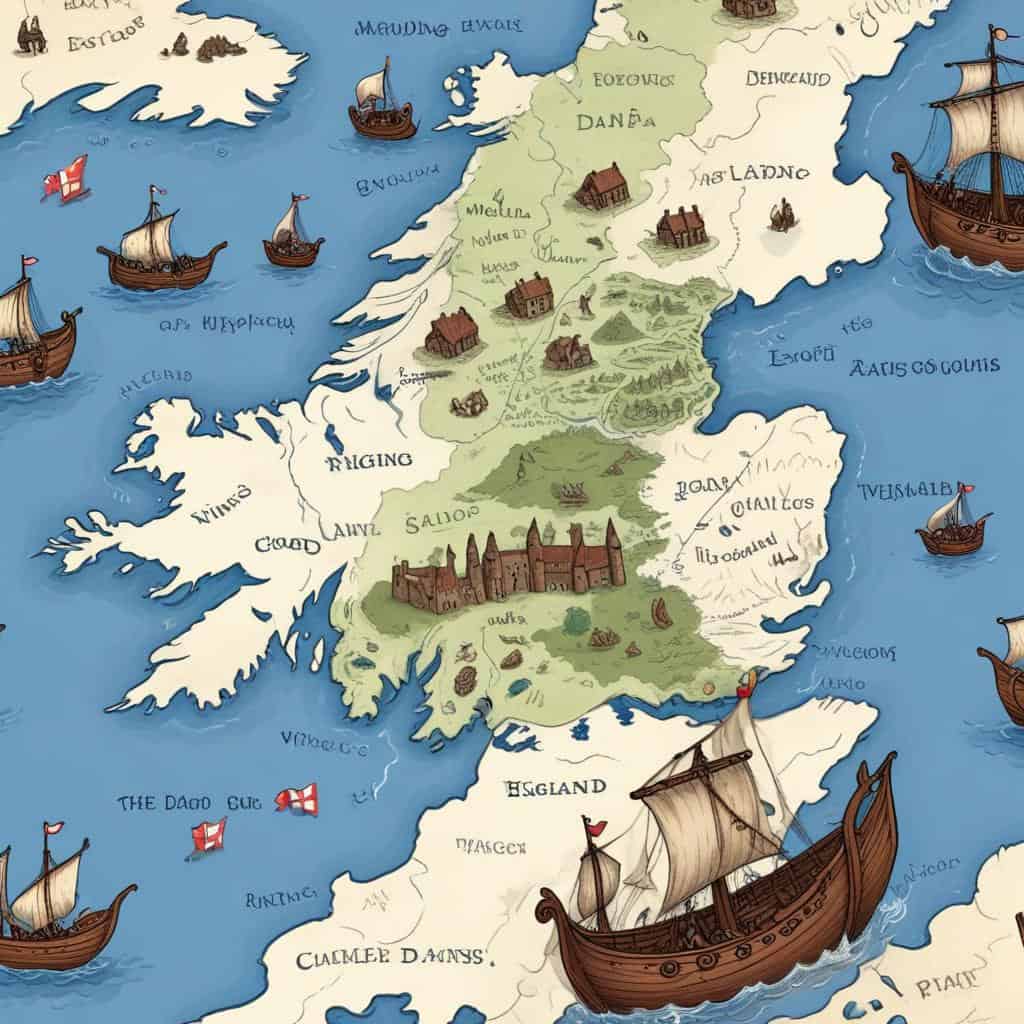
Unveil the mysteries of Viking rule in medieval England.
How Do You Learn Best?
Learn by Reading
Immerse yourself in the 10-minute visual lesson for a comprehensive understanding of the topic.
Learn by Reviewing
Jump directly to the key facts, timeline, and vocabulary lists to build a solid foundation of details.
Learn by Doing
Challenge yourself! Jump straight into the interactive games to learn by trial, error, and discovery.
the Danelaw in 10 Minutes
Introduction
1. King Alfred the Great
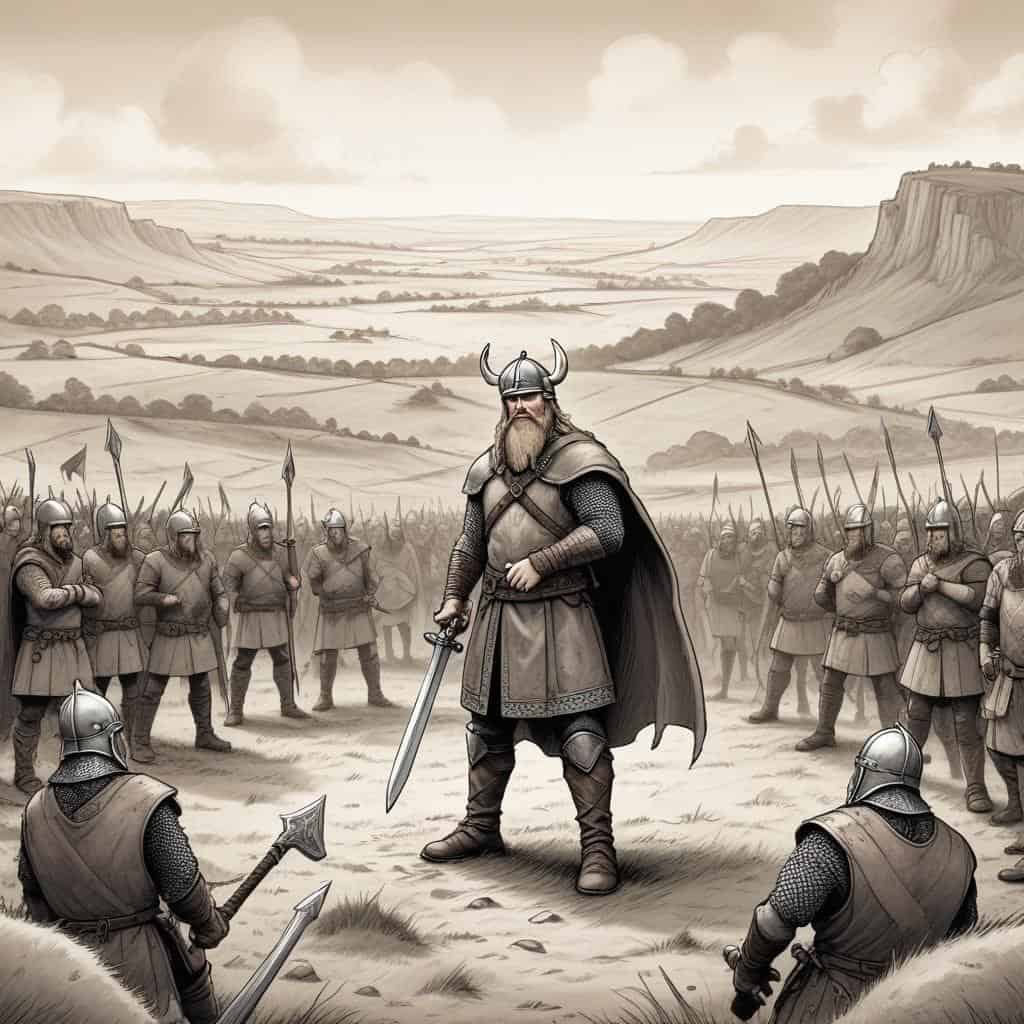
2. Guthrum
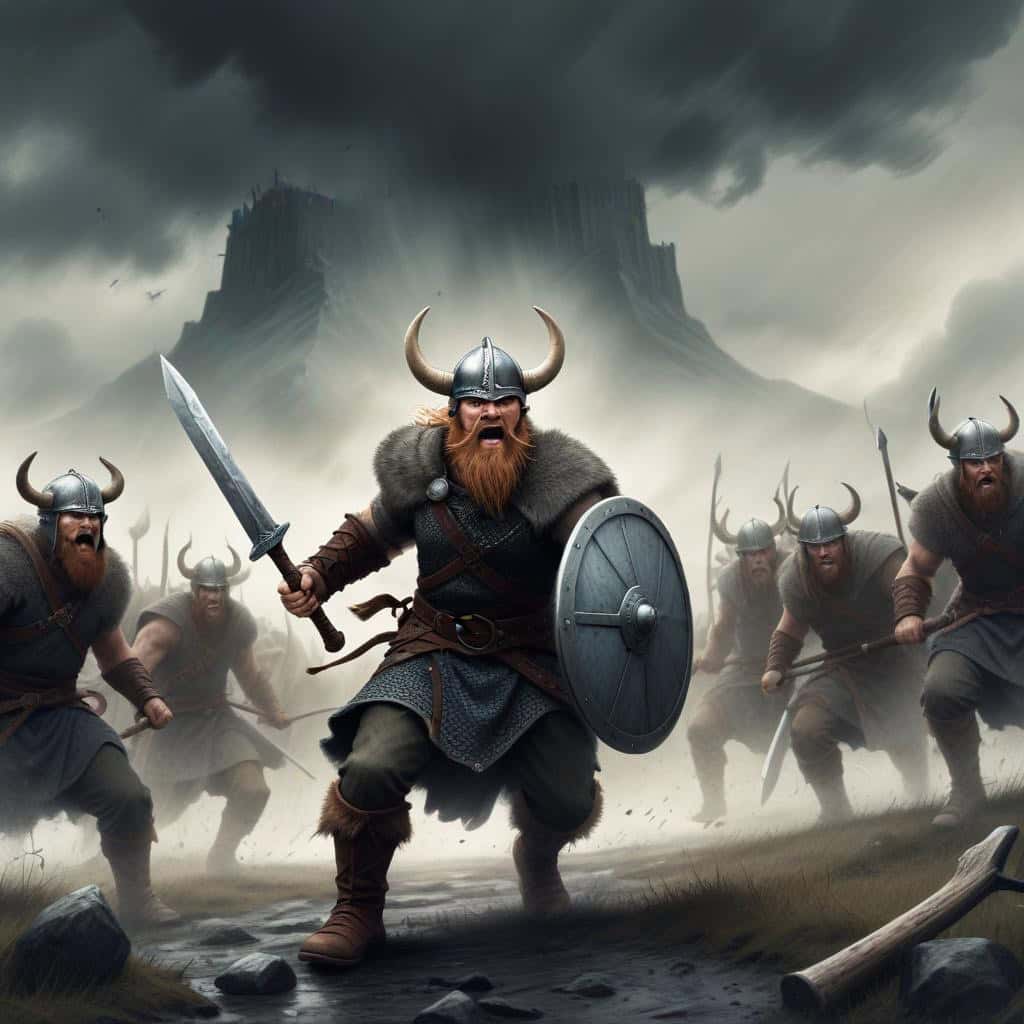
3. Ivar the Boneless
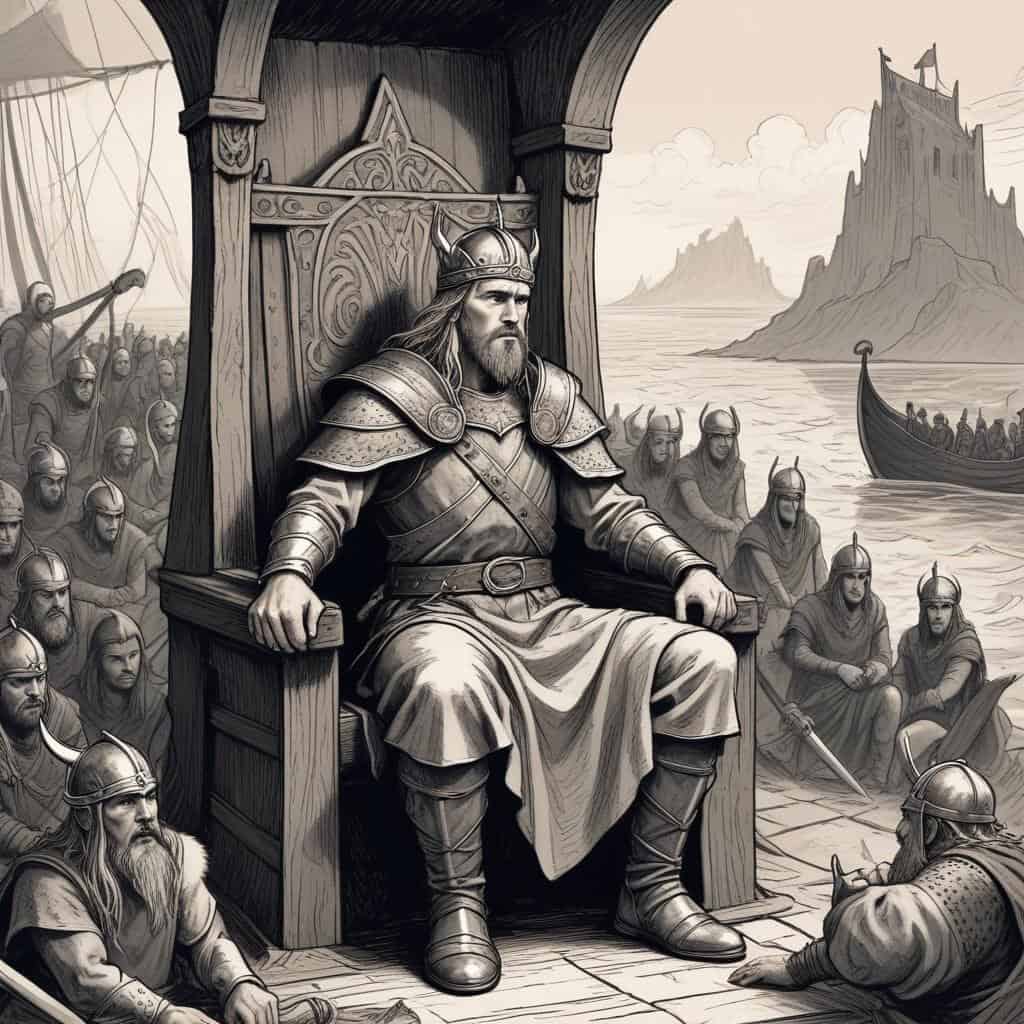
4. Æthelred the Unready
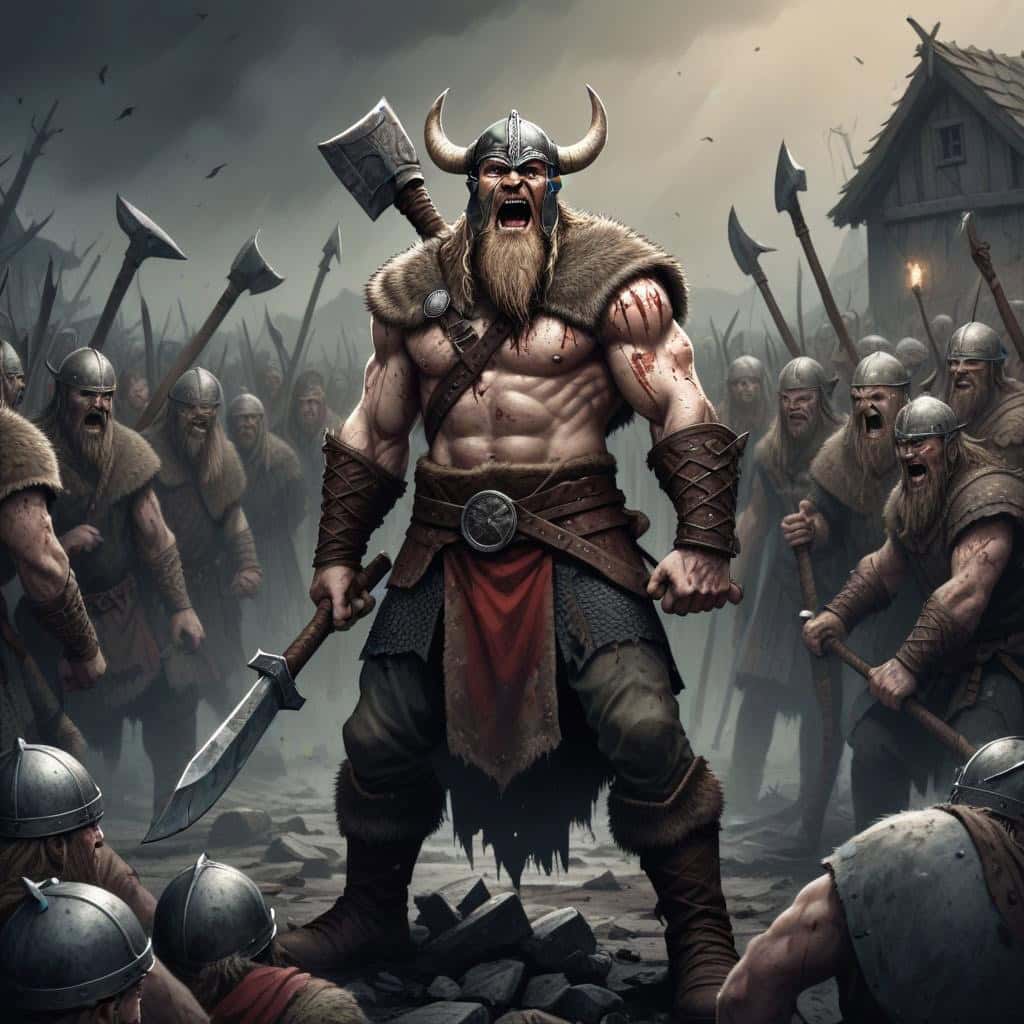
5. Eric Bloodaxe
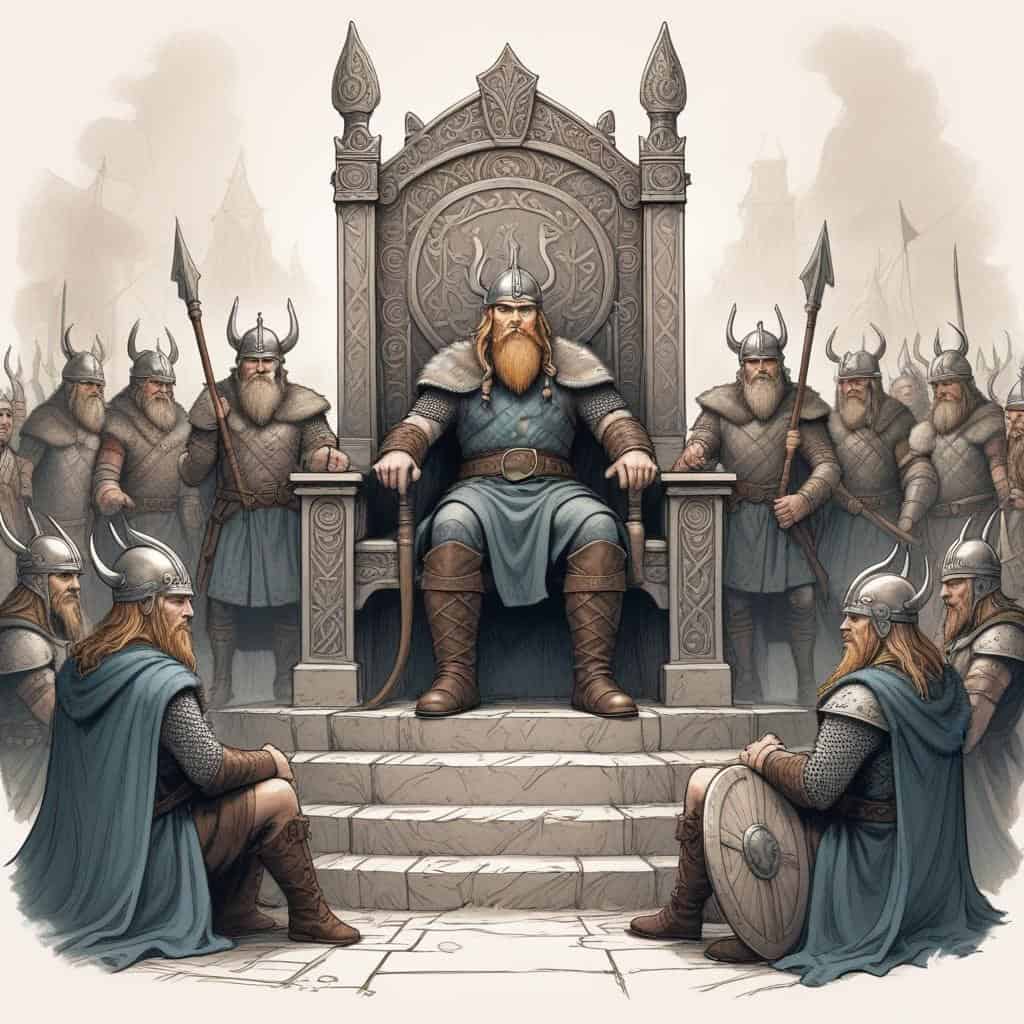
6. Olaf Tryggvason

The Arrival of the Vikings

Establishment of the Danelaw

Division of Land
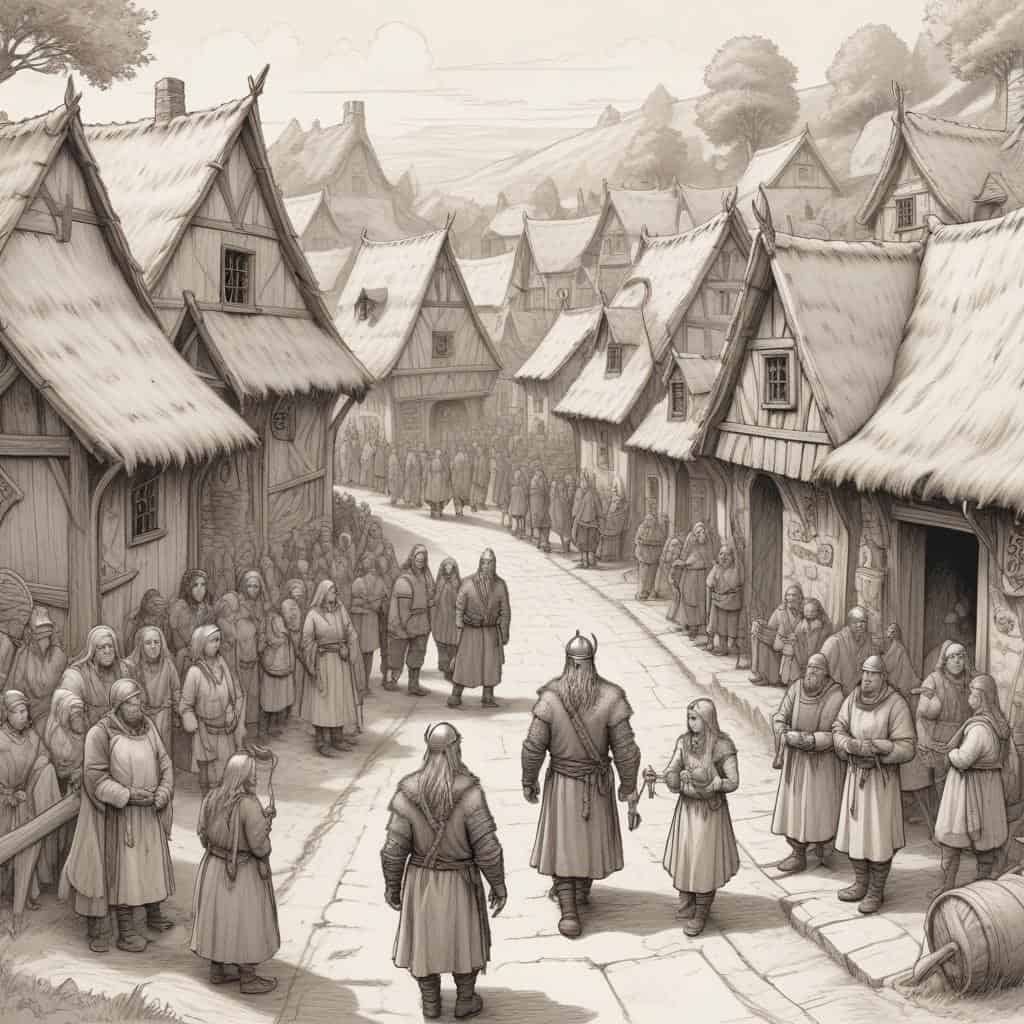
Integration of Cultures

Decline of the Danelaw

Legacy of the Danelaw

Archaeological Discoveries
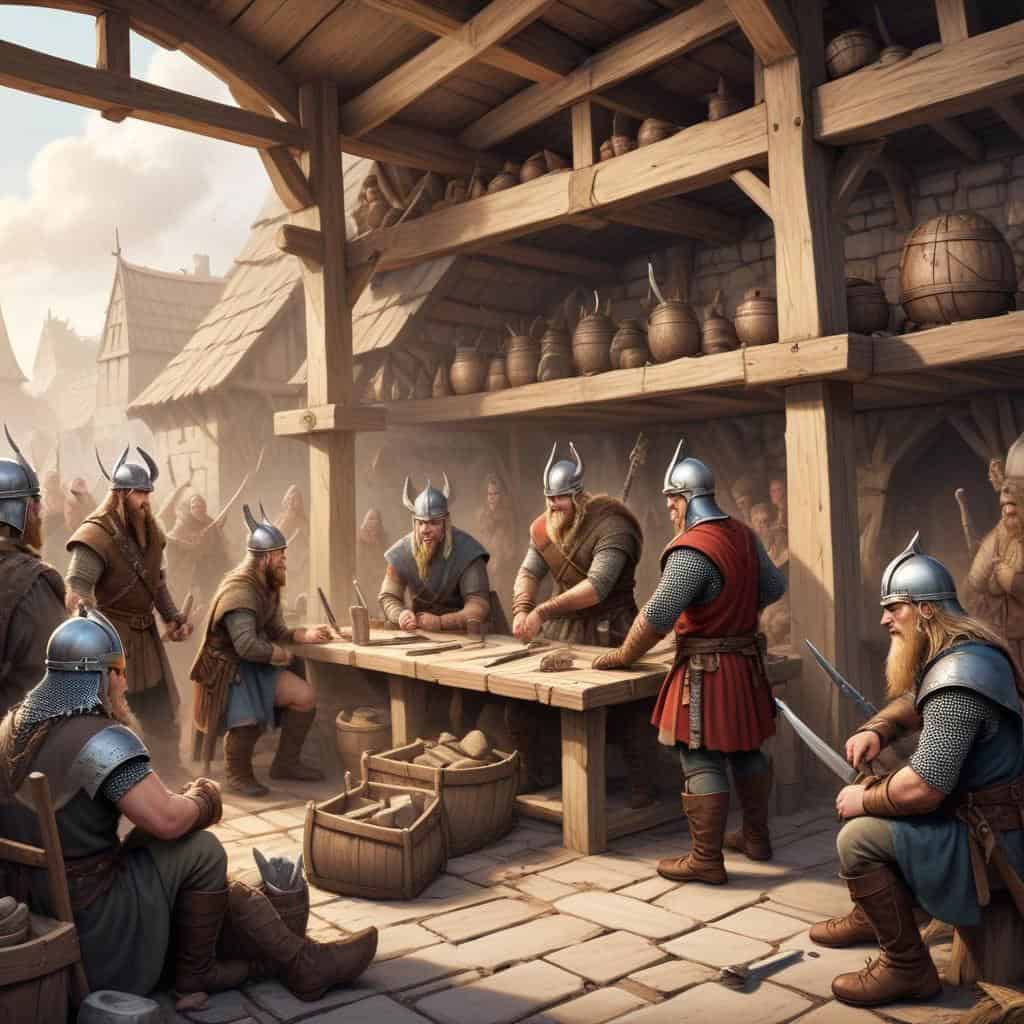
Conflict and Cooperation

End of the Danelaw
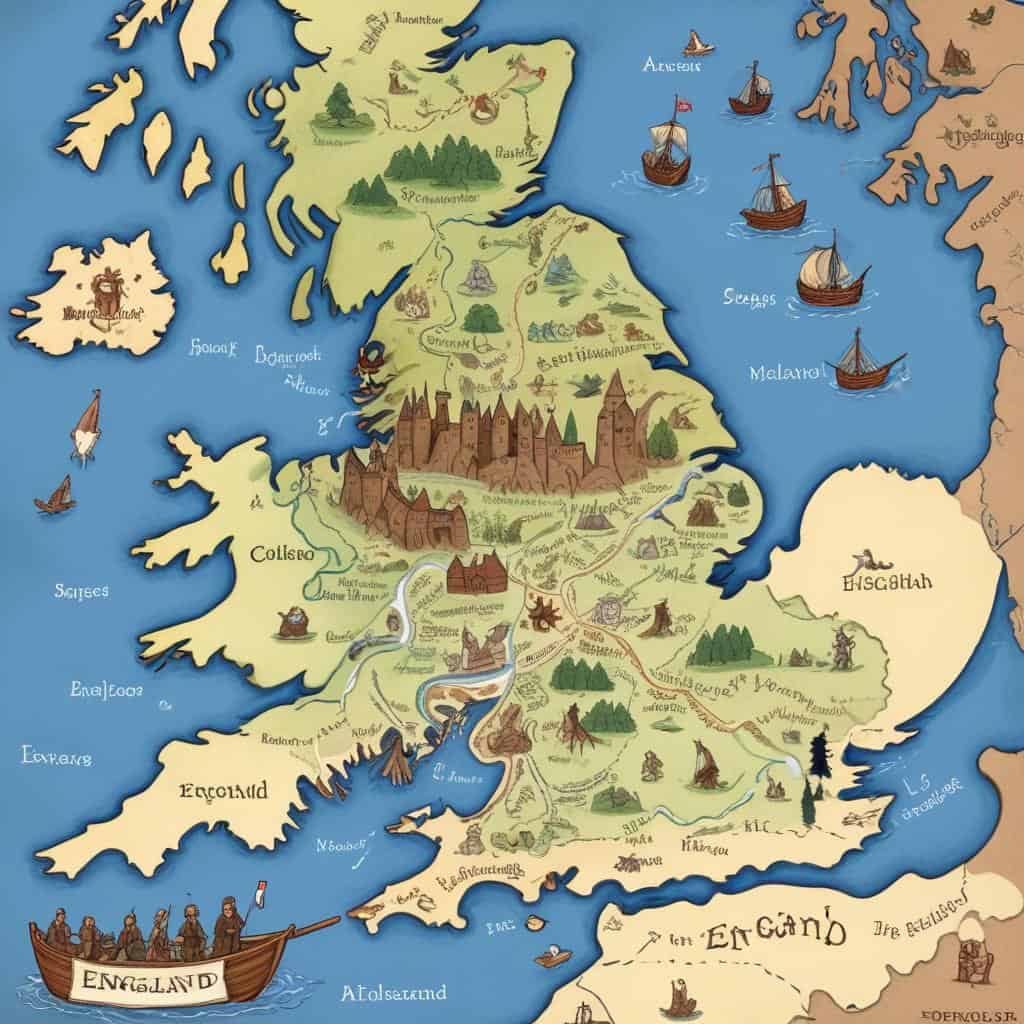
Lesson Details & Resources
In a Nutshell
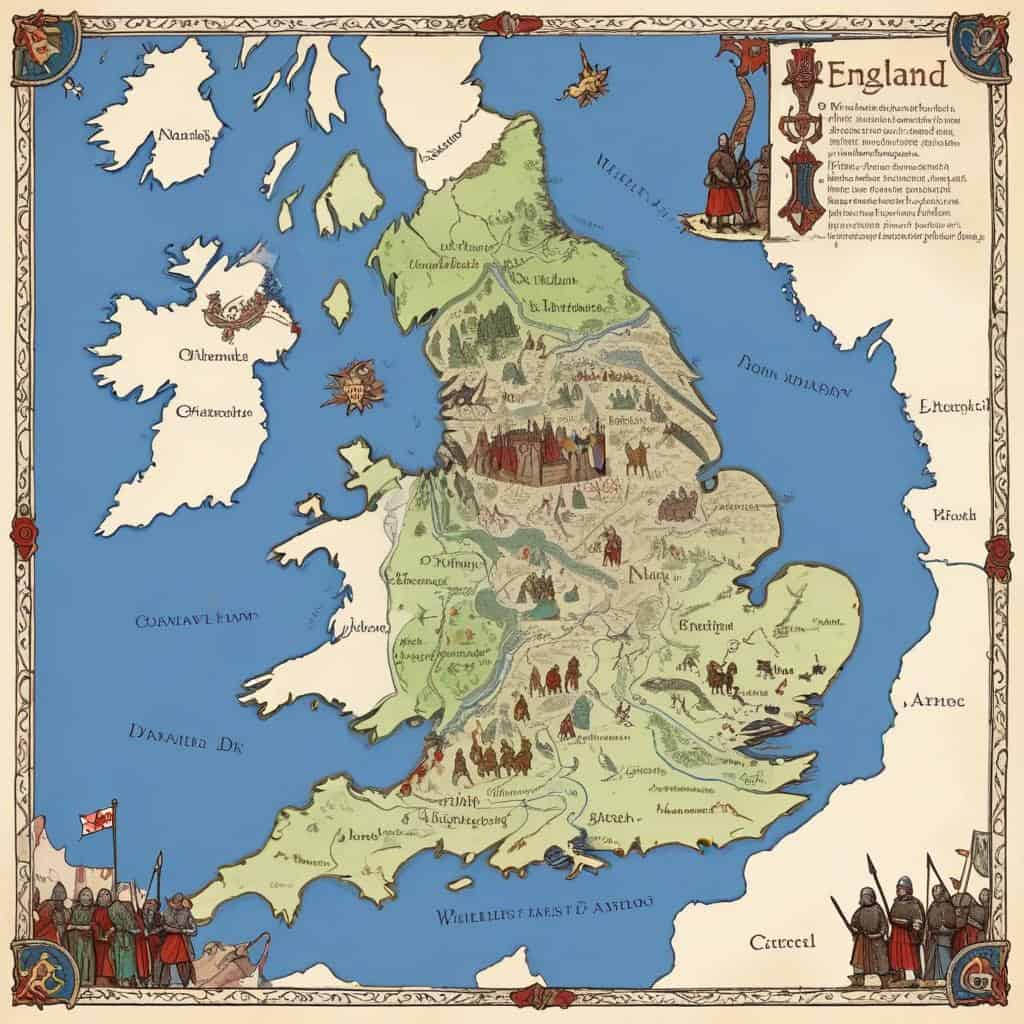
- What: A period during the 9th-11th century where Danish Vikings ruled parts of England.
- When: 9th-11th century
- Who: Danish Vikings, Anglo-Saxons, King Alfred the Great
- Outcome: Establishment of a separate Viking-ruled territory in England known as the Danelaw.
Famous Figures in the the Danelaw
-
Alfred the Great
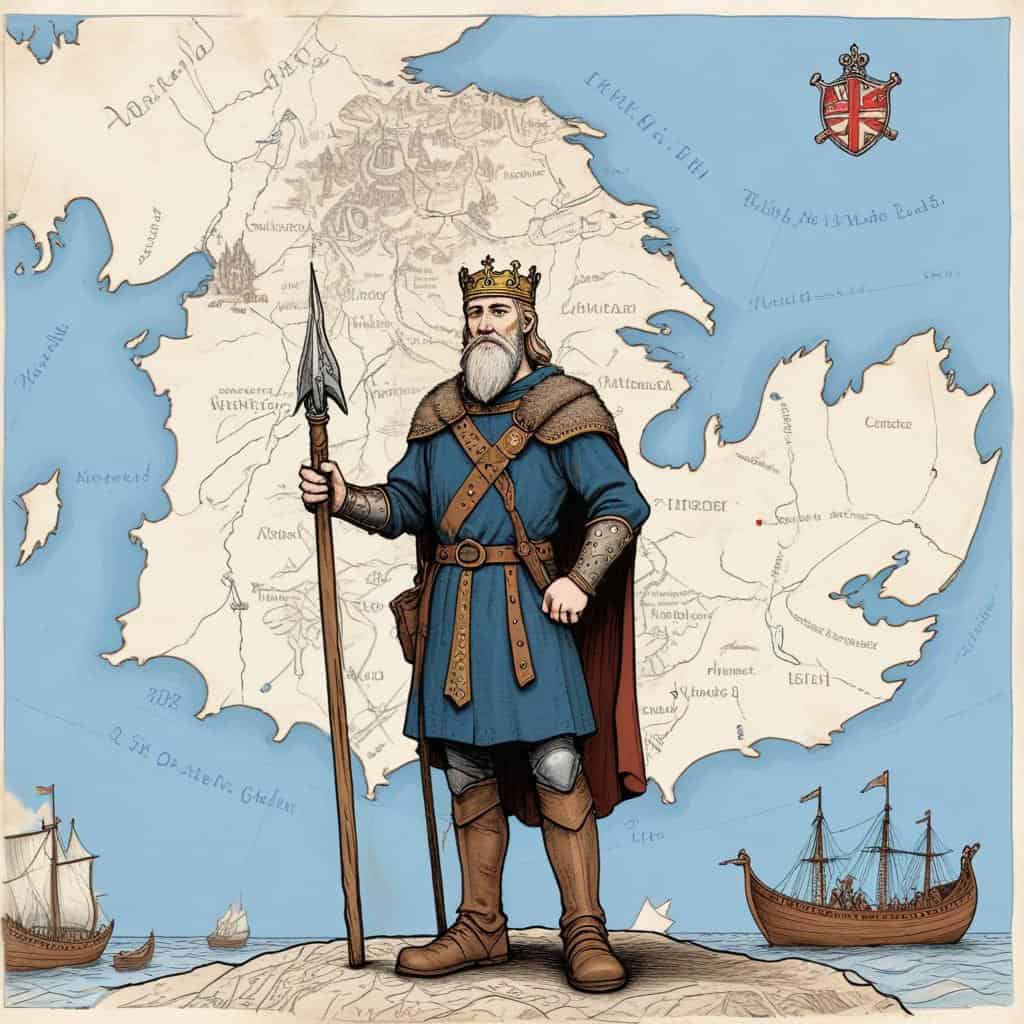
Alfred the Great was the king of Wessex and played a key role in defending against Viking invasions.
-
Guthrum
Guthrum was a Viking leader who led the Great Heathen Army and later became the first Danish king of East Anglia.
-
Canute the Great
Canute the Great was a Danish king who ruled over England, Denmark, Norway, and parts of Sweden.
-
Sweyn Forkbeard
Sweyn Forkbeard was a Danish Viking king who briefly ruled over England.
-
Ragnar Lothbrok
Ragnar Lothbrok is a legendary Viking hero who was believed to have raided England during the Danelaw period.
-
Ubba
Ubba was a Viking leader who participated in the Great Heathen Army's invasion of England.
-
Ivar the Boneless
Ivar the Boneless was a Viking leader and one of the sons of Ragnar Lothbrok who played a significant role in the Danelaw.
-
Erik Bloodaxe
Erik Bloodaxe was a Norwegian king who ruled over parts of Northumbria during the Danelaw period.
-
Rollo
Rollo was a Viking leader who became the first ruler of Normandy, which was established as a result of Viking expeditions.
Timeline of the Danelaw
Formation of the Danelaw
Great Heathen Army led by the sons of Ragnar Lodbrok invades England
Viking army captures York and establishes a Viking kingdom in Northumbria
King Alfred the Great of Wessex signs the Treaty of Alfred and Guthrum, dividing England into Danelaw and English-controlled territories
Viking army led by Guthrum attacks Wessex
Viking king Guthrum converts to Christianity and is baptized
Reign of Viking king Guthfrith in York
Erik Bloodaxe becomes the last Viking king of Jorvik (York)
Erik Bloodaxe is expelled from Jorvik and the Danelaw comes under English control
Harold Bluetooth of Denmark gains control over the Danelaw
Harold Bluetooth loses control over the Danelaw to English forces
Canute the Great, a Danish king, becomes King of England and unites the Danelaw with the rest of England
Earl Siward of Northumbria leads an unsuccessful rebellion against the English king Edward the Confessor
Norman Conquest of England by William the Conqueror
End of the Danelaw as England comes under Norman control
Vocabulary List
- Danelaw
- The area of England in which the laws of the Danes held sway during the 9th to 11th centuries.
- Vikings
- Seafaring people from the late eighth to early 11th century, originating from the Scandinavian countries of Norway, Denmark, and Sweden, who played a significant role in the establishment of Danelaw.
- Alfred the Great
- King of Wessex from 871 to 899 who successfully defended his kingdom against Viking invasions, including those from Danelaw.
- Guthrum
- A Danish Viking leader who led the Great Heathen Army and later settled in East Anglia, establishing the Danelaw.
- Burgh
- A fortified town or settlement established by the Anglo-Saxons in response to Viking invasions, often located within or near the boundaries of Danelaw.
- Thing
- A legislative and judicial assembly in Norse societies, including the Danelaw, where disputes were settled and laws were made.
- Hustings
- Old English term referring to a Viking assembly or council, similar to the Thing, held in the Danelaw region.
- Hundred
- A division of land in Anglo-Saxon England, often used in Danelaw, roughly corresponding to an administrative unit comprising of several villages.
- Wergild
- A legal concept in Danelaw and Anglo-Saxon England, referring to the amount of compensation or payment required to settle a crime or injury, based on the social status of the victim.
Key Facts
This is the information used in the fact matching game
- Danelaw was a region in England where Danish law and customs were followed during the 9th to 11th centuries.
- The Danelaw encompassed areas of England that were predominantly settled by Scandinavian Vikings.
- The Danelaw was established after the Great Heathen Army of Vikings conquered parts of England in the 9th century.
- The boundary of the Danelaw extended from London up to the Wirral Peninsula in the northwest.
- The Danelaw had its own legal system separate from the rest of Anglo-Saxon England.
- Trade and commerce flourished in the Danelaw, with the Vikings bringing their expertise in shipbuilding and seafaring.
- Some of the major cities in the Danelaw included York, Nottingham, Derby, and Lincoln.
- The Danelaw had a significant impact on the English language, with many Scandinavian words entering the vocabulary.
- The Danelaw was marked by a distinct cultural and social identity, blending Scandinavian and Anglo-Saxon elements.
- The Danelaw provided a level of autonomy to the Viking settlers, allowing them to govern themselves to some extent.
- The Danelaw gradually declined in the 10th and 11th centuries with the resurgence of Anglo-Saxon rule under kings like Edgar the Peaceful.
- The Danelaw was finally absorbed into the unified Kingdom of England after the Norman Conquest in 1066.
- The Danelaw left a lasting impact on the legal and administrative systems of England.
- The Danelaw allowed for the coexistence of Danish and Anglo-Saxon laws in certain areas.
- The Danelaw had its own system of taxation and governance, separate from the rest of England.
- The Danelaw was a result of both Viking conquest and negotiated settlements between the Vikings and Anglo-Saxon kingdoms.
- The Danelaw allowed for the practice of Norse paganism alongside Christianity.
- The Danelaw had its own court system known as the Thing, where disputes were resolved.
- The Danelaw contributed to the cultural diversity and fusion of traditions in medieval England.
- The Danelaw is considered a significant period in the history of England, showcasing the influence of Viking settlers on the nation.
Analysis & Significance
Immediate Consequences
The establishment of the Danelaw in the 9th century marked a significant shift in power in England, with Viking rulers controlling a large portion of the country. This led to a period of political instability and conflict as Anglo-Saxon and Viking forces vied for control of the region.
Long-Term Impact
The Danelaw had a lasting impact on English society, influencing language, law, and culture. Old Norse words became integrated into the English language, and legal systems adopted some Viking practices. This period also saw the blending of Anglo-Saxon and Viking traditions, shaping the future development of England.
Cultural Significance Today
The legacy of the Danelaw can still be seen in modern England, with place names and local customs reflecting the influence of Viking settlers. The Danelaw also serves as a reminder of the rich tapestry of history that has shaped the country, highlighting the complex interactions between different cultures and peoples over time.
the Danelaw Games


Take Your Learning Offline
Want a convenient, print-ready study guide for this lesson? Become a Memory Wizards Pro member to unlock the downloadable " Memory Scrolls" for this topic and our entire library!
- ✓ Complete Vocabulary Lists
- ✓ Key Facts & Timelines
- ✓ Beautifully Formatted for Print & Mobile