
Summary of The Battle of Stamford Bridge (1066)
Uncover the epic clash that shaped English history in 1066.
How Do You Learn Best?
Learn by Reading
Immerse yourself in the 10-minute visual lesson for a comprehensive understanding of the topic.
Learn by Reviewing
Jump directly to the key facts, timeline, and vocabulary lists to build a solid foundation of details.
Learn by Doing
Challenge yourself! Jump straight into the interactive games to learn by trial, error, and discovery.
The Battle of Stamford Bridge in 10 Minutes
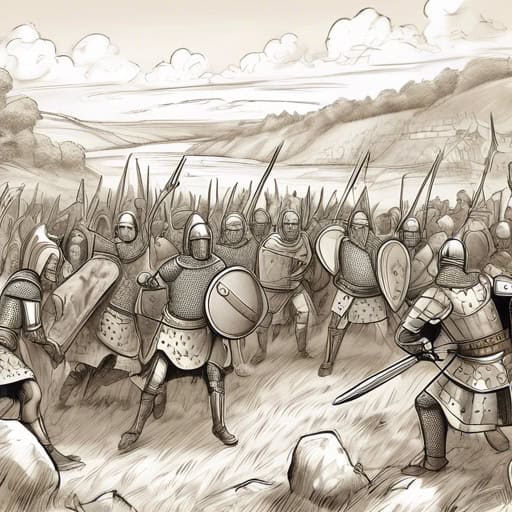
Introduction
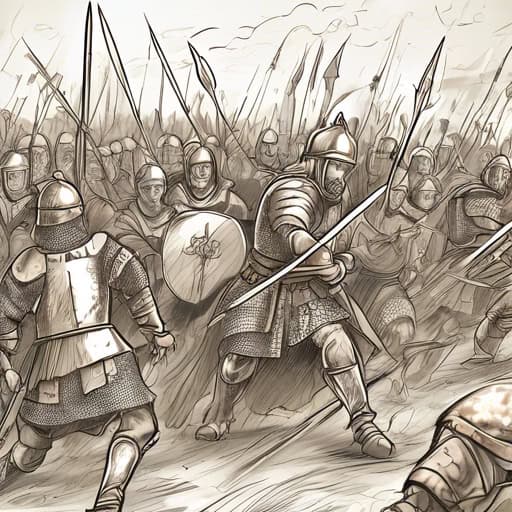
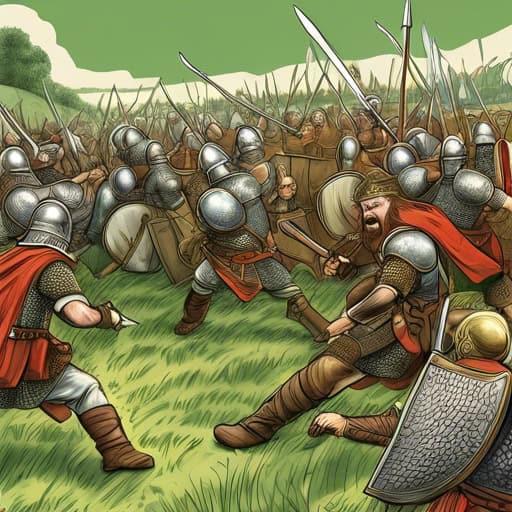
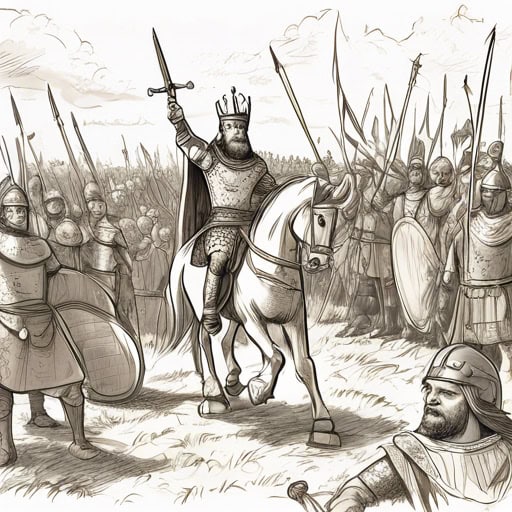
King Harold II
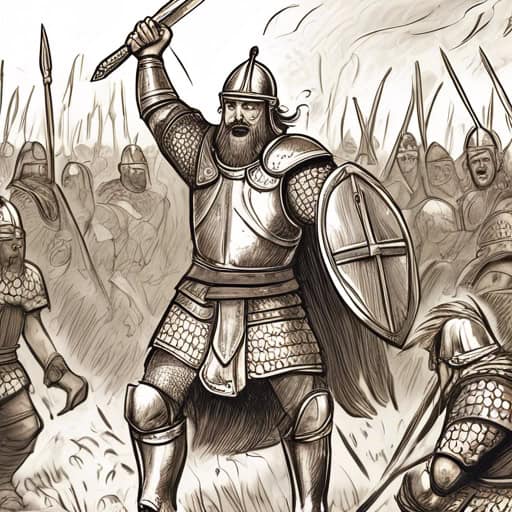
Harald Hardrada
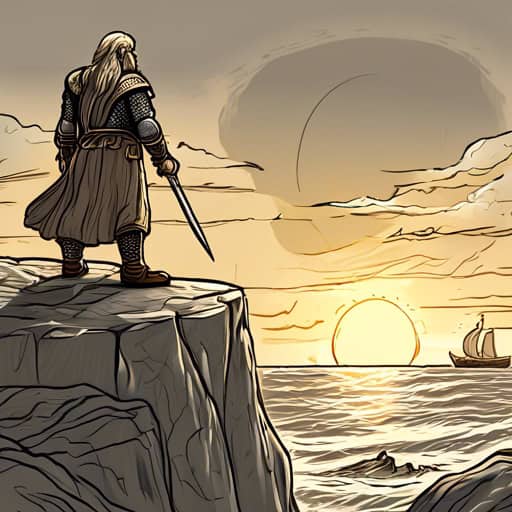
Tostig Godwinson

The Vikings Invade England

The Battle Begins

The Vikings Caught Off Guard

Fierce Fighting
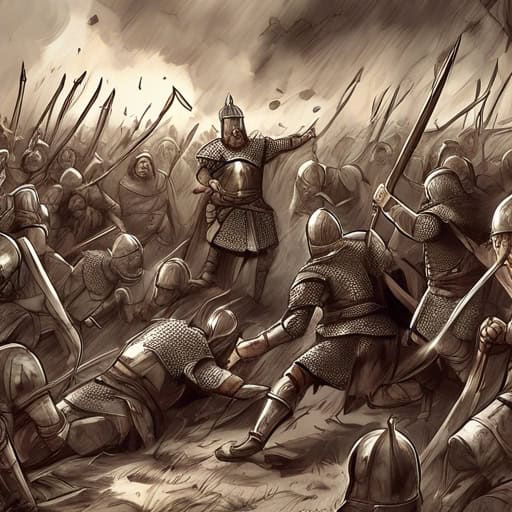
Death of King Harald Hardrada

The Vikings Retreat

Victory for the English

High Cost of Victory

Impact on History

Remembering the Battle
Lesson Details & Resources
In a Nutshell
- What: A pivotal battle in the lead-up to the Norman conquest of England.
- When: September 25, 1066
- Who: King Harold Godwinson of England vs. King Harald Hardrada of Norway
- Outcome: Decisive English victory; Harald Hardrada was killed, but Harold Godwinson’s forces were severely weakened before the Battle of Hastings.
Famous Figures in the The Battle of Stamford Bridge
-
Harold Godwinson
King of England who fought in the Battle of Stamford Bridge against Harald Hardrada
-
Harald Hardrada
Norwegian king who invaded England and was defeated at Stamford Bridge
-
Tostig Godwinson
Brother of King Harold who allied with Harald Hardrada in the battle
-
Edwin, Earl of Mercia
Earl who joined King Harold's forces in the battle against the invaders
-
Morcar, Earl of Northumbria
Earl who also fought alongside King Harold in the battle
-
King Edward the Confessor
King of England whose death triggered the succession crisis leading to the battle
-
William the Conqueror
Norman duke who invaded England shortly after the Battle of Stamford Bridge
-
Earl Waltheof
English earl who later rebelled against William the Conqueror
-
Bishop Odo
Bishop who fought in the Battle of Hastings alongside William the Conqueror
-
Earl Edwin of Mercia
Earl who fought alongside King Harold in the battle against the invaders
Timeline of The Battle of Stamford Bridge
Harald Hardrada of Norway invades England
Battle of Fulford takes place near York, resulting in a victory for the Norwegians
King Harold II of England learns of the Norwegian invasion and marches north
Harold's forces arrive at Stamford Bridge and surprise the Norwegians
Battle of Stamford Bridge begins
Harold's army defeats the Norwegians, killing Harald Hardrada and Tostig Godwinson
Remaining Norwegians retreat and are pursued by Harold's forces
Norwegian forces surrender and are allowed to leave England
Harold receives news of William the Conqueror's invasion at Hastings
Harold rushes south to meet William's forces
Battle of Hastings takes place, resulting in a victory for William the Conqueror
Harold is killed in battle, leading to the end of Anglo-Saxon rule in England
William the Conqueror is crowned King of England
Vocabulary List
- Harald Hardrada
- King of Norway who invaded England in 1066, leading to the Battle of Stamford Bridge.
- Tostig Godwinson
- Brother of King Harold II of England who allied with Harald Hardrada in the invasion.
- Anglo-Saxons
- The native population of England at the time of the Battle of Stamford Bridge, led by King Harold II.
- Shield Wall
- A defensive formation used by both the Anglo-Saxons and the Norsemen during the battle.
- Vikings
- Warriors from Scandinavia who were part of Harald Hardrada's army in the invasion of England.
- Huscarls
- The elite household troops of Anglo-Saxon kings, who fought in the Battle of Stamford Bridge.
Key Facts
This is the information used in the fact matching game
- The Battle of Stamford Bridge took place on September 25, 1066.
- It was fought between the English army led by King Harold II and the Viking army led by King Harald Hardrada of Norway.
- The Vikings were defeated in the battle, resulting in a decisive victory for the English.
- King Harald Hardrada was killed in the battle, along with many of his men.
- The English army was able to surprise the Vikings by launching a sudden attack on their camp at Stamford Bridge.
- The battle lasted for several hours and was fiercely fought on both sides.
- After the battle, the English army marched south to face another invading force led by William the Conqueror at the Battle of Hastings.
- The Battle of Stamford Bridge is considered one of the last major battles of the Viking Age.
- The victory at Stamford Bridge helped to secure the English throne for King Harold II, at least temporarily.
- The battle was named after a bridge located near the battlefield, where much of the fighting took place.
- The Vikings were caught off guard by the English attack and were unable to form a proper defensive line.
- The English army was able to exploit gaps in the Viking formation and gain the upper hand in the battle.
- The Battle of Stamford Bridge is often overshadowed by the Battle of Hastings, which took place just a few weeks later.
- Despite his victory at Stamford Bridge, King Harold II would be defeated and killed at the Battle of Hastings by William the Conqueror.
- The Battle of Stamford Bridge is remembered as a significant event in English history, marking the end of the Viking threat to the English throne.
- The battlefield at Stamford Bridge is now a protected historic site in England, where visitors can learn about the battle and its significance.
- The Battle of Stamford Bridge is depicted in the Bayeux Tapestry, a famous medieval artwork that chronicles the events leading up to the Norman Conquest of England.
- The English victory at Stamford Bridge helped to boost morale and strengthen the resolve of the English army before the Battle of Hastings.
- The Vikings had initially come to England to claim the throne for Harald Hardrada, who believed he had a legitimate claim through an earlier agreement with King Magnus of Norway.
- The Battle of Stamford Bridge is seen as a turning point in English history, marking the end of the Viking era in England and the beginning of the Norman Conquest.
Analysis & Significance
Immediate Consequences
The Battle of Stamford Bridge in 1066 marked a decisive victory for King Harold II of England against the invading Norwegian forces led by King Harald Hardrada. The immediate consequence was the elimination of the Norwegian threat to the English throne, solidifying Harold’s position as king.
Long-Term Impact
However, this victory was short-lived as Harold’s forces were severely depleted, leaving them vulnerable to William the Conqueror’s Norman invasion just days later at the Battle of Hastings. The Battle of Stamford Bridge ultimately paved the way for the Norman Conquest of England, forever altering the course of English history.
Cultural Significance Today
The Battle of Stamford Bridge is remembered as a pivotal moment in English history, marking the end of the Viking Age in England and the beginning of Norman rule. It symbolizes the complex web of alliances and conflicts that shaped medieval Europe, and serves as a reminder of the enduring impact of military conquests on nations and cultures.
The Battle of Stamford Bridge Games


Take Your Learning Offline
Want a convenient, print-ready study guide for this lesson? Become a Memory Wizards Pro member to unlock the downloadable " Memory Scrolls" for this topic and our entire library!
- ✓ Complete Vocabulary Lists
- ✓ Key Facts & Timelines
- ✓ Beautifully Formatted for Print & Mobile