
Summary of Battle of Edington (878)
Unveiling the historic clash that changed the course of English history.
How Do You Learn Best?
Learn by Reading
Immerse yourself in the 10-minute visual lesson for a comprehensive understanding of the topic.
Learn by Reviewing
Jump directly to the key facts, timeline, and vocabulary lists to build a solid foundation of details.
Learn by Doing
Challenge yourself! Jump straight into the interactive games to learn by trial, error, and discovery.
Battle of Edington in 10 Minutes
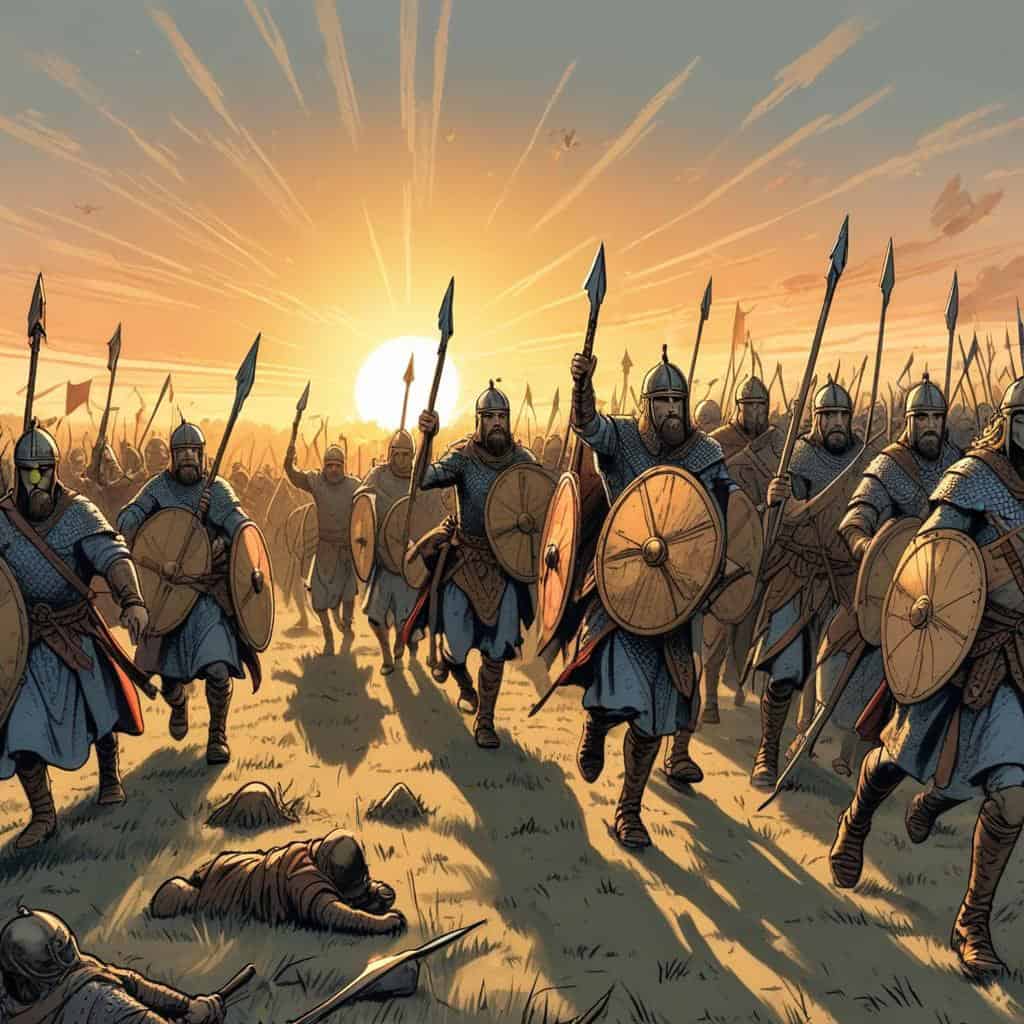
Introduction
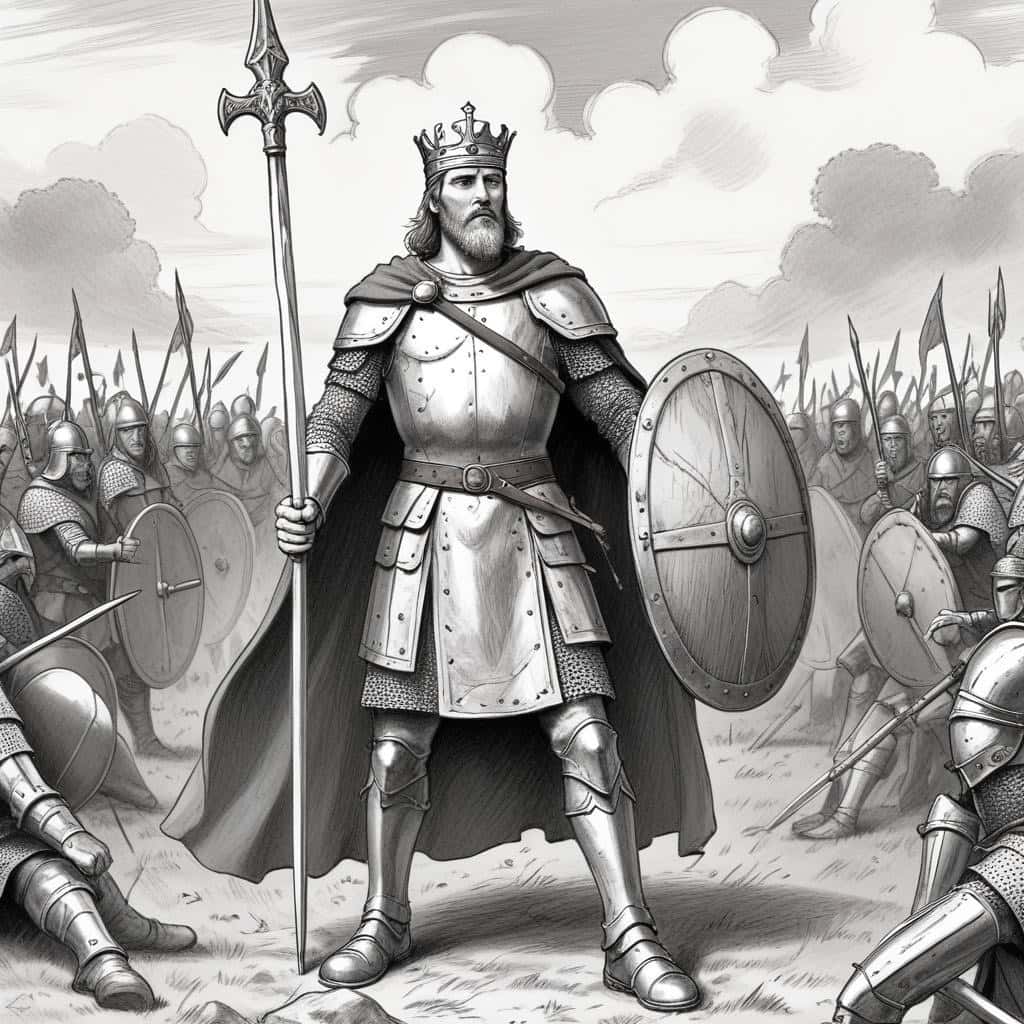
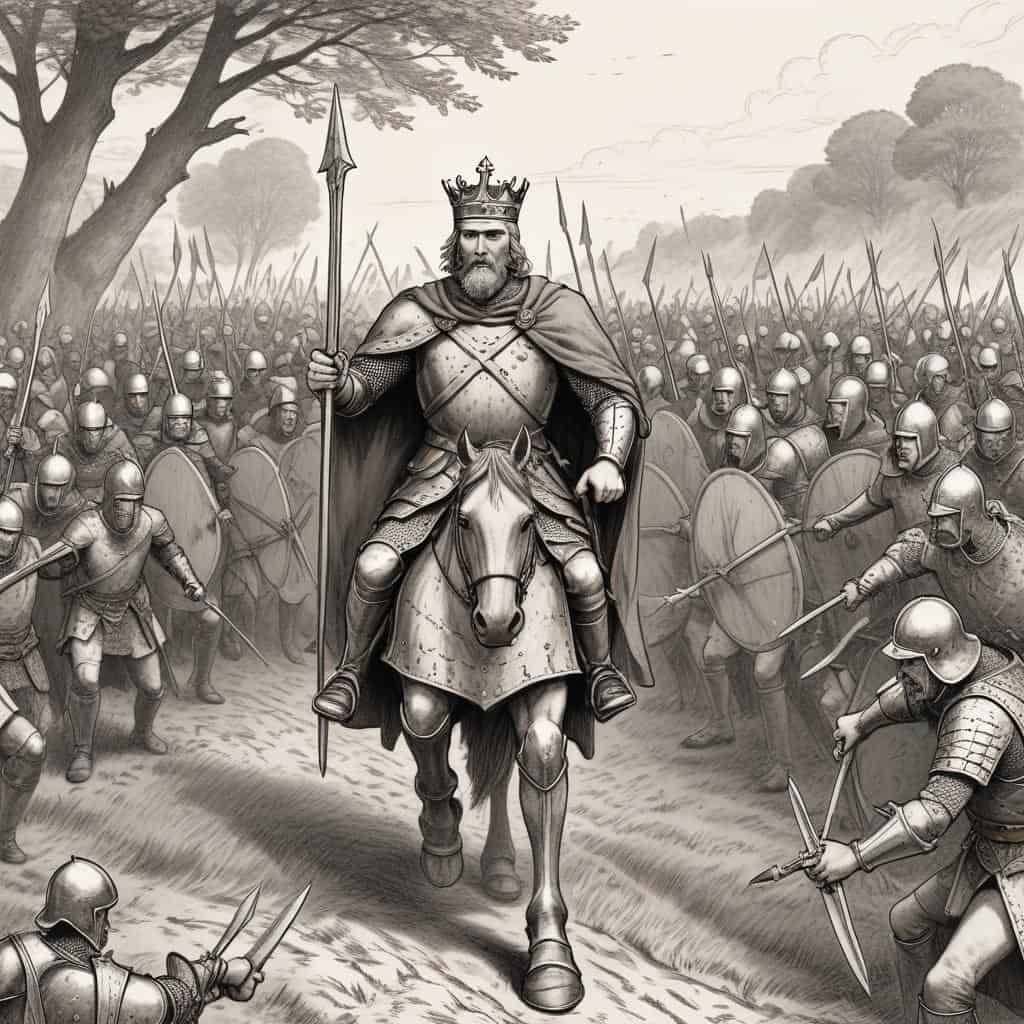
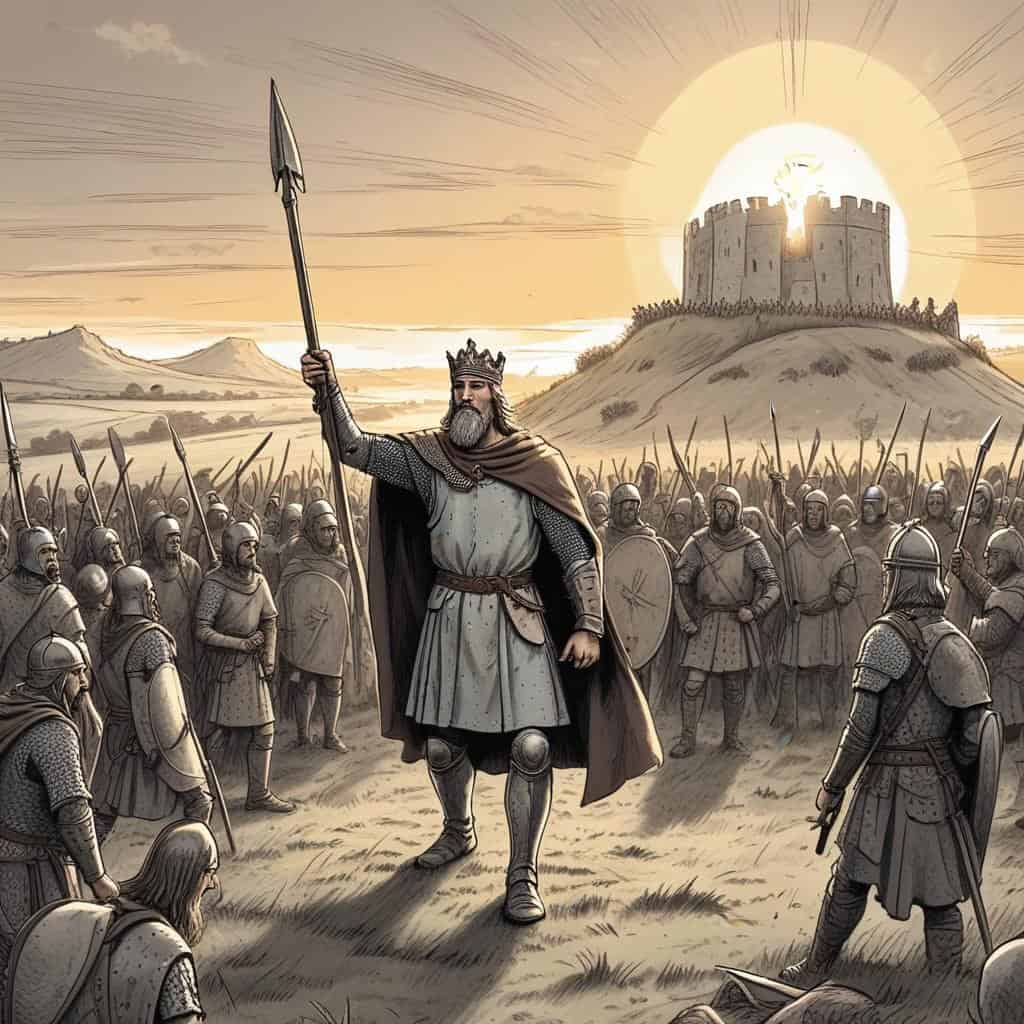
Alfred the Great
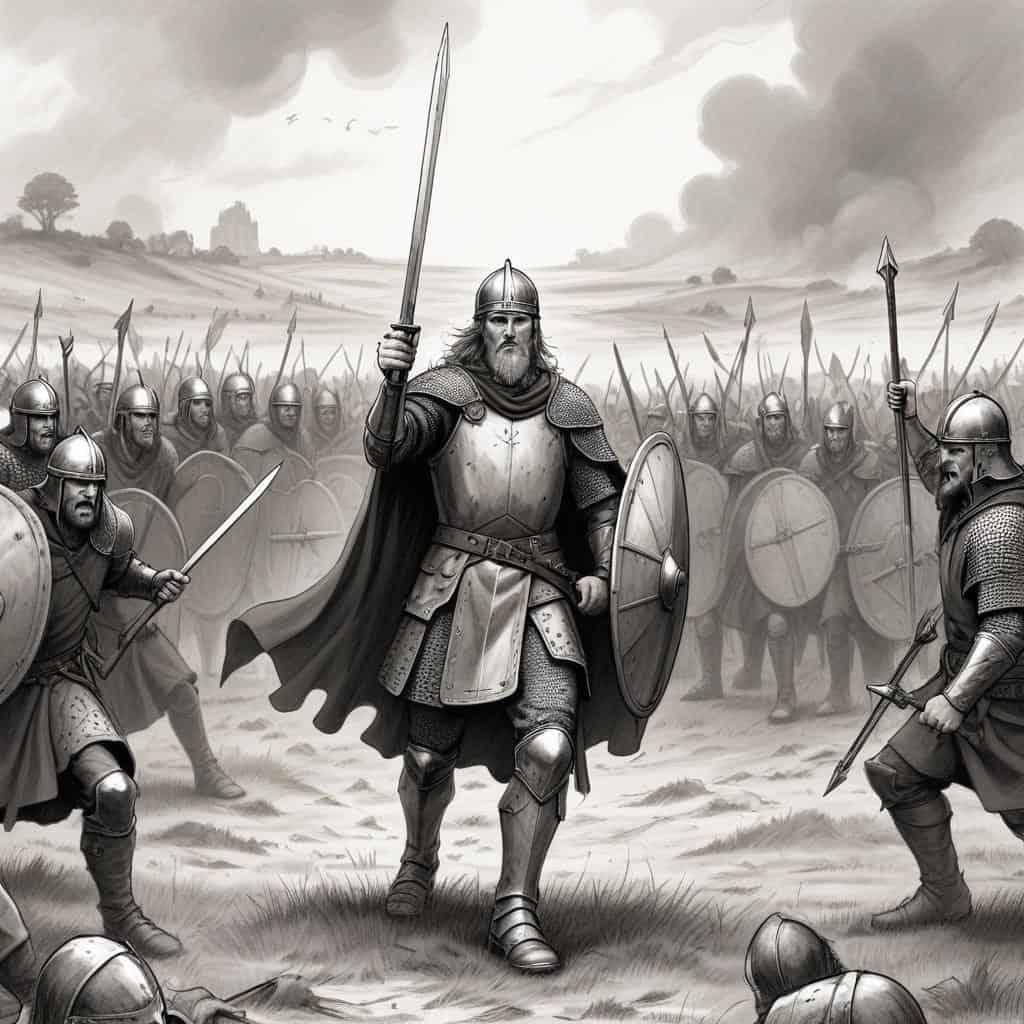
Guthrum
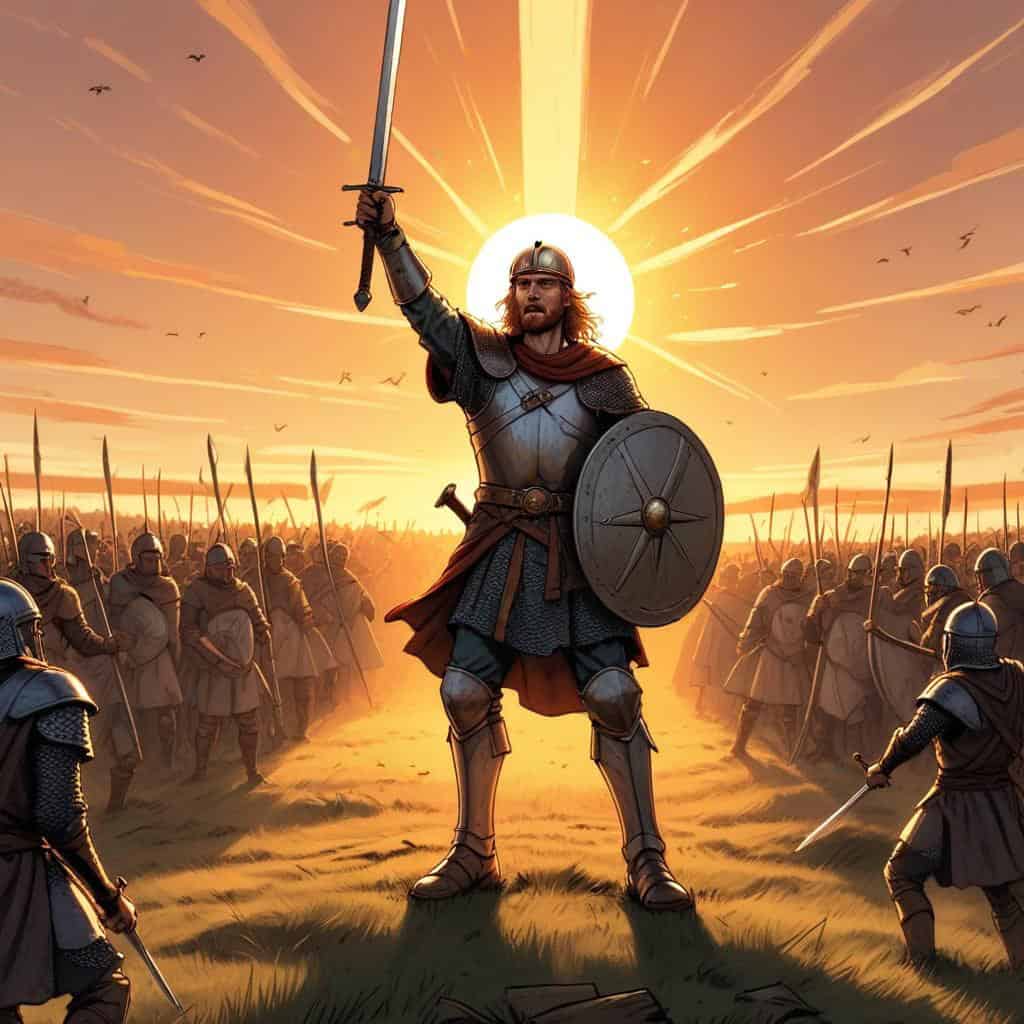
Æthelnoth

The Gathering Storm
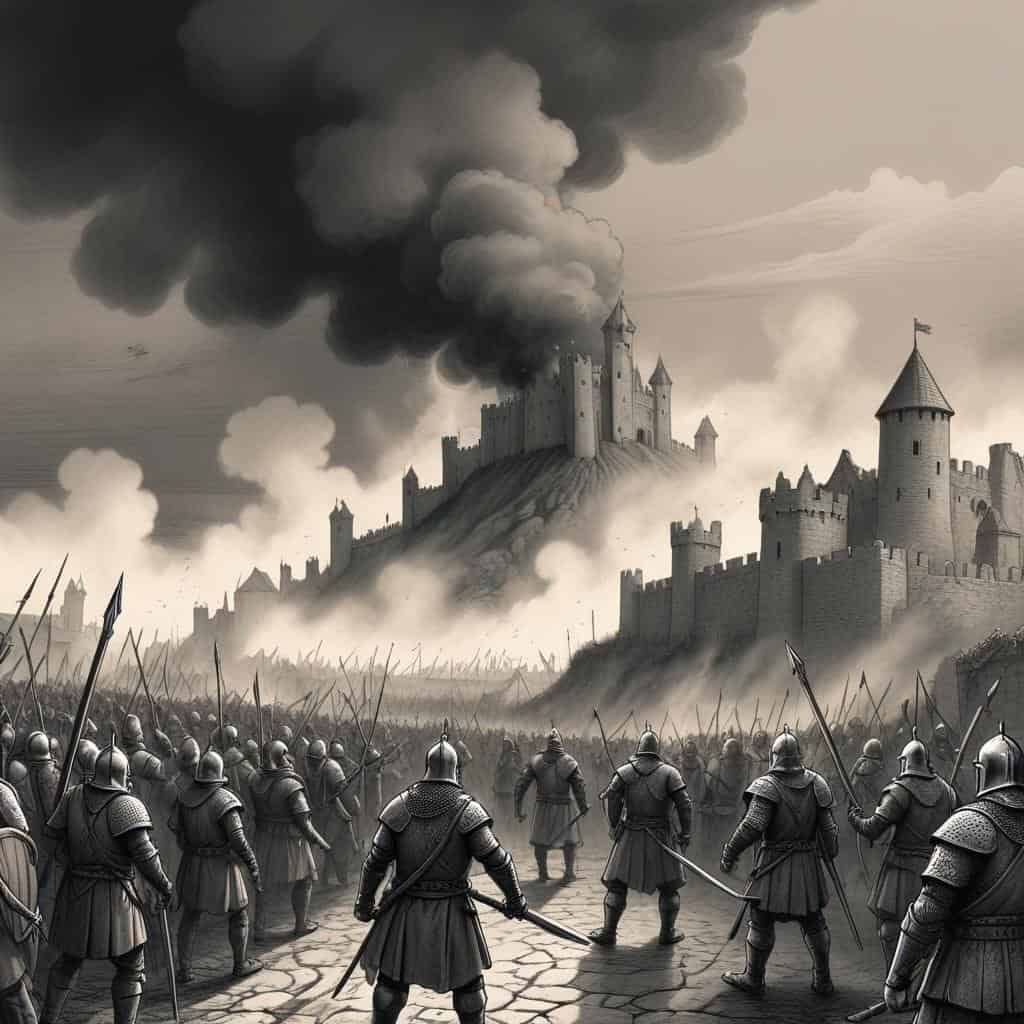
The Siege of Wareham
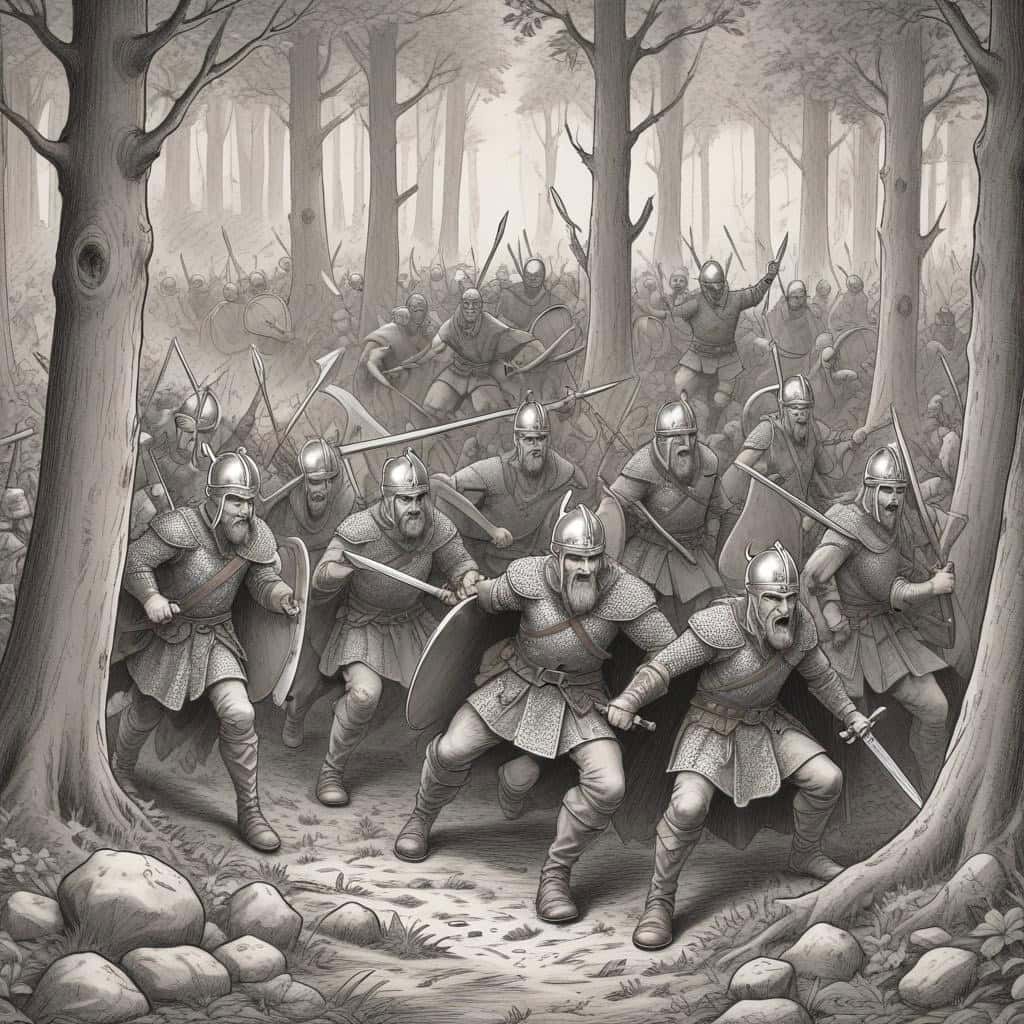
The Guerilla Warfare

The Battle of Edington

The Turning Point
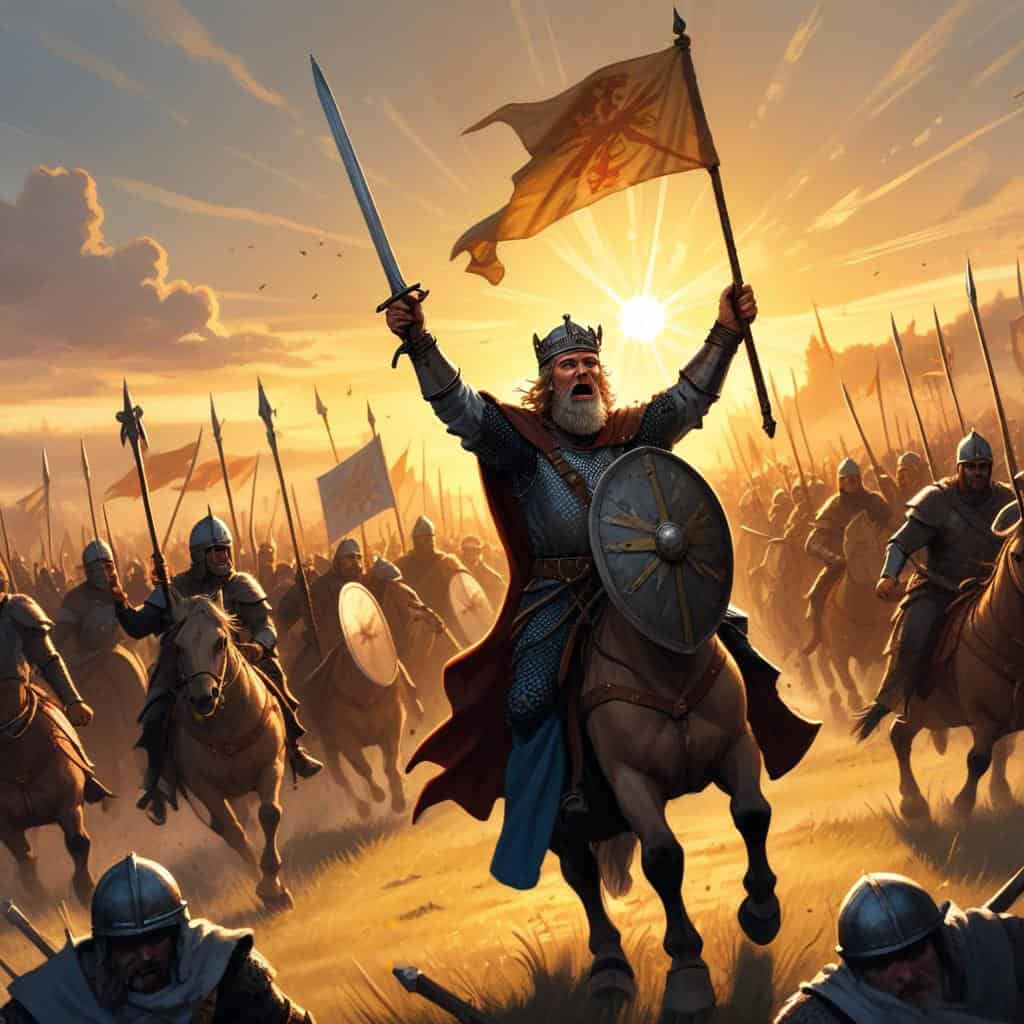
The Victory
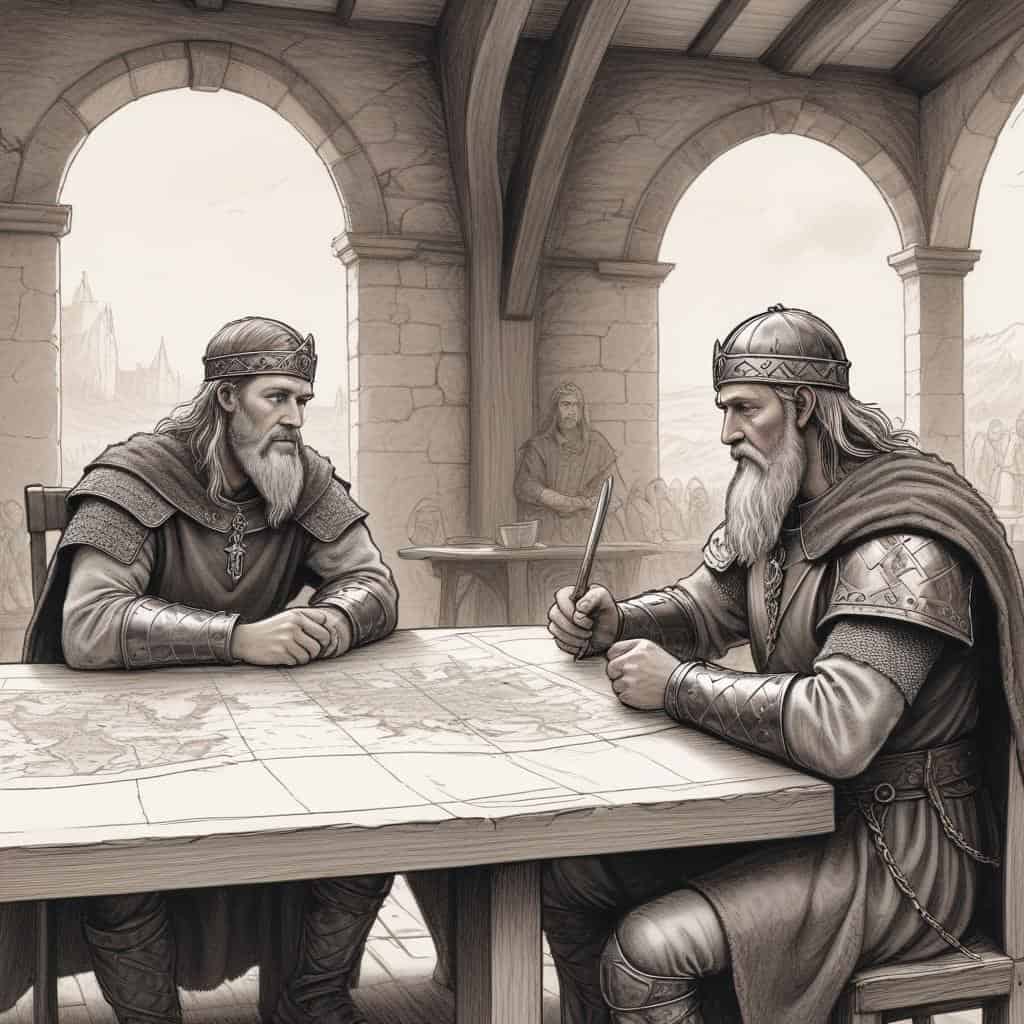
The Treaty of Wedmore

The Legacy of Alfred the Great
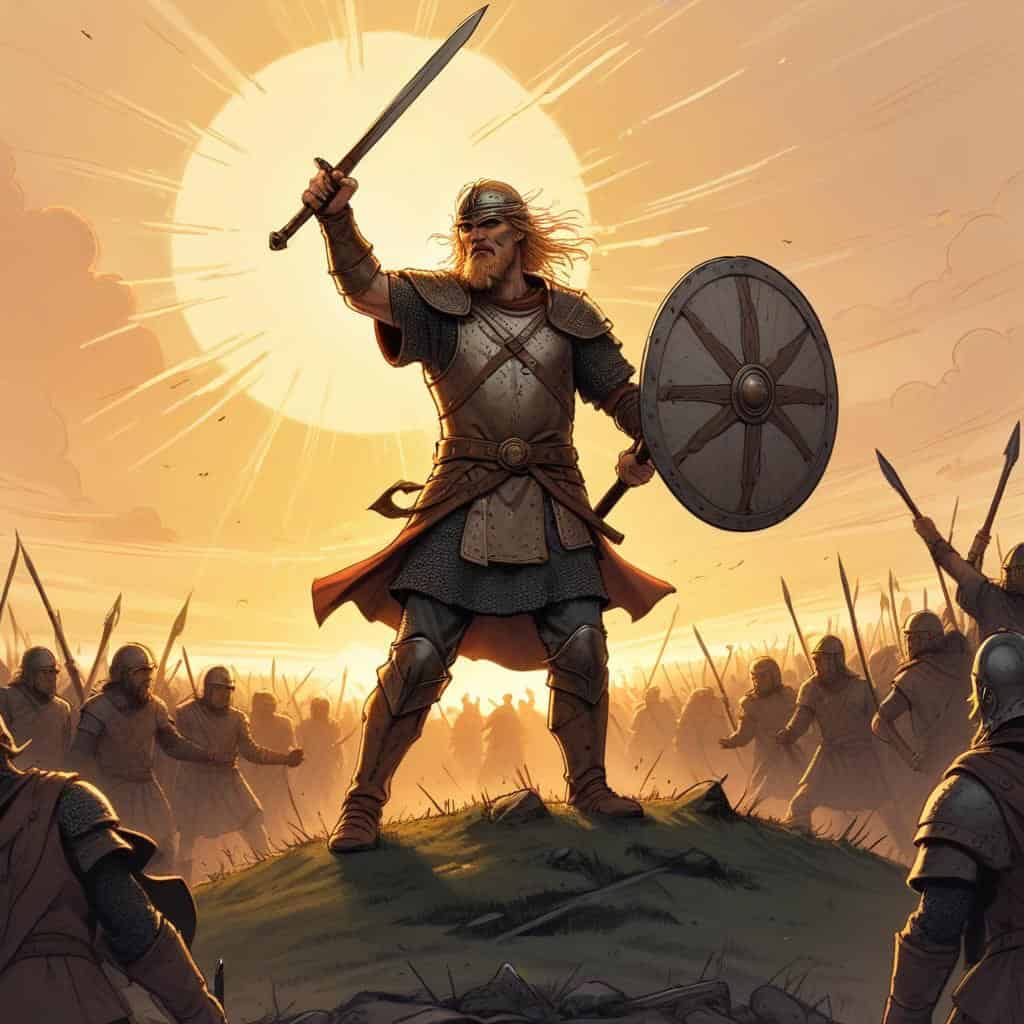
The Importance of the Battle

The Enduring Symbol of Resilience
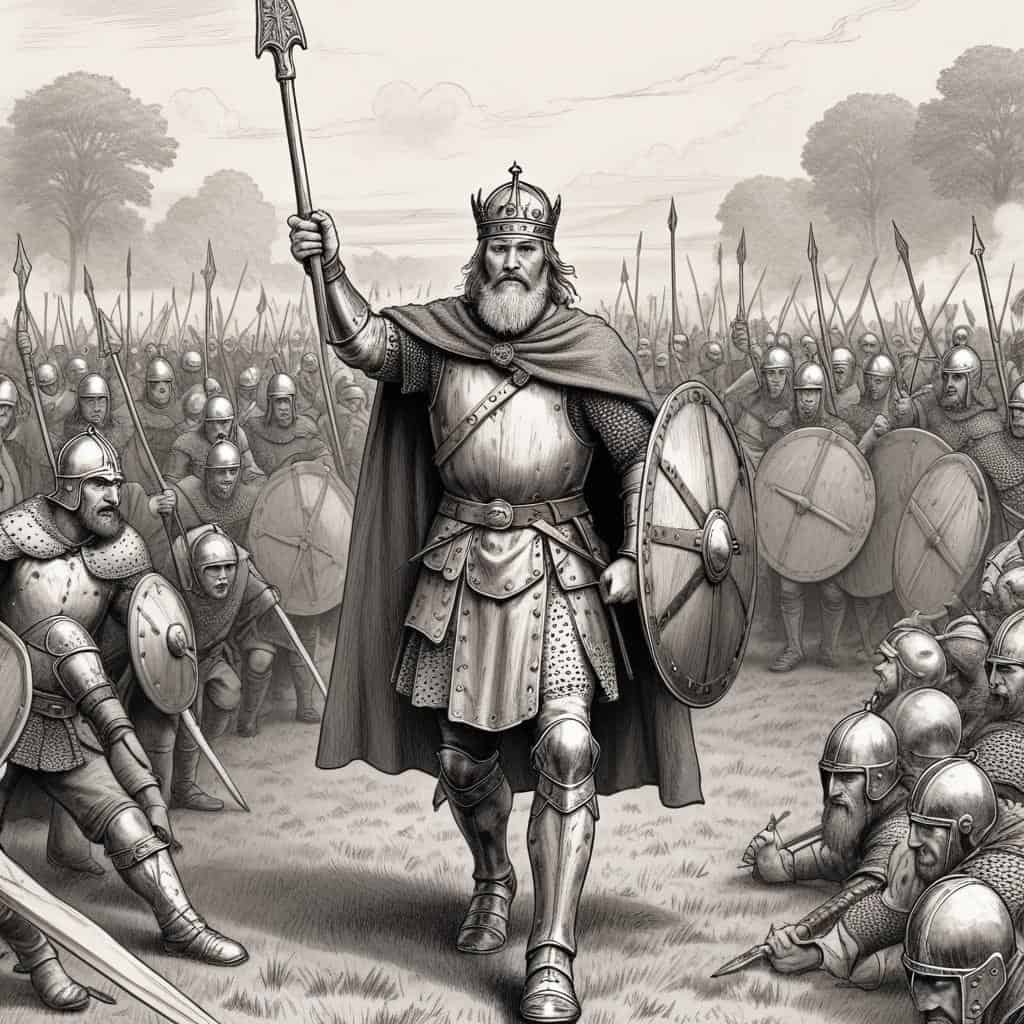
Lesson Details & Resources
In a Nutshell
- What: A key battle during the Viking invasions of England.
- When: 878
- Who: King Alfred the Great of Wessex vs. Guthrum, leader of the Great Heathen Army
- Outcome: Victory for Alfred the Great, marking a turning point in the Viking invasions and securing Wessex from further attacks.
Famous Figures in the Battle of Edington
-
Alfred the Great
Alfred the Great was the King of Wessex who led the Anglo-Saxon forces to victory against the Viking army at the Battle of Edington.
-
Guthrum
Guthrum was the leader of the Viking army that was defeated by Alfred the Great at the Battle of Edington.
-
Ubba
Ubba was a Viking warrior who fought against Alfred the Great at the Battle of Edington.
-
Ealdorman Odda
Ealdorman Odda was a Saxon nobleman who played a key role in the victory of the Anglo-Saxon forces at the Battle of Edington.
Timeline of Battle of Edington
Viking Great Heathen Army led by Guthrum occupies Wareham
Guthrum's forces move to Exeter
Battle of Cynwit
King Alfred of Wessex rallies forces and defeats Viking army at Battle of Edington
Guthrum and his forces retreat to Chippenham
Alfred lays siege to Guthrum's forces at Chippenham
Guthrum surrenders to Alfred and is baptized as a Christian
Treaty of Wedmore signed between Alfred and Guthrum, dividing England into Danish and English territories
Guthrum's forces leave Wessex and settle in East Anglia
Alfred the Great begins fortifying Wessex against further Viking invasions
Alfred establishes a network of fortified towns known as burhs
Alfred commissions the translation of Latin works into Old English
Alfred's reforms lead to a period of peace and stability in Wessex
Alfred becomes known as Alfred the Great for his leadership during the Viking invasions
Alfred's victory at Edington marks a turning point in the Viking invasions of England
Alfred's legacy as a defender of Anglo-Saxon England is established
Alfred's reforms pave the way for the eventual unification of England
Alfred's victory at Edington is celebrated as a national holiday in Wessex
Alfred's reign as King of Wessex continues for over two decades
Alfred's achievements lead to the emergence of a unified English identity
Vocabulary List
- Battle of Edington
- The Battle of Edington was a decisive victory for the Anglo-Saxons over the Viking invaders in the year 878.
- Alfred the Great
- Alfred the Great was the King of Wessex who led the Anglo-Saxon forces to victory at the Battle of Edington.
- Viking invaders
- The Viking invaders, led by Guthrum, were defeated by Alfred the Great at the Battle of Edington.
- Danelaw
- After the Battle of Edington, the Treaty of Wedmore was signed, establishing the Danelaw, a boundary between Anglo-Saxon and Viking territories.
- Guthrum
- Guthrum was the leader of the Viking invaders who were defeated by Alfred the Great at the Battle of Edington.
Key Facts
This is the information used in the fact matching game
- The Battle of Edington took place in 878 AD.
- The battle was fought between the Anglo-Saxons led by Alfred the Great and the Vikings led by Guthrum.
- Alfred the Great's victory at Edington is considered a turning point in the Viking invasions of England.
- The battle took place in Wiltshire, England.
- Alfred the Great's army was outnumbered by the Vikings at the Battle of Edington.
- Alfred the Great used a defensive strategy at Edington, constructing a fortified camp to protect his forces.
- The Vikings were besieged by Alfred's forces at Edington, leading to their eventual defeat.
- Guthrum, the Viking leader, was forced to surrender to Alfred the Great after the battle.
- The Treaty of Wedmore was signed after the Battle of Edington, establishing the boundaries of the Danelaw in England.
- The Treaty of Wedmore allowed the Vikings to control part of England known as the Danelaw in exchange for peace.
- Alfred the Great's victory at Edington secured his position as King of Wessex.
- The Battle of Edington marked the beginning of Alfred the Great's efforts to unify England under his rule.
- The Vikings suffered heavy casualties at the Battle of Edington, leading to their defeat.
- Alfred the Great is credited with introducing a system of burhs (fortified towns) to defend against Viking invasions.
- The Battle of Edington is also known as the Battle of Ethandun.
- The victory at Edington was one of Alfred the Great's most significant military accomplishments.
- The Battle of Edington was a decisive victory for the Anglo-Saxons over the Vikings.
- Alfred the Great's defeat of the Vikings at Edington helped to secure the future of England as a united kingdom.
- The Battle of Edington is commemorated in the Anglo-Saxon Chronicle as a significant event in English history.
- Alfred the Great's victory at Edington is considered a defining moment in the history of England.
Analysis & Significance
Immediate Consequences
The immediate consequences of the Battle of Edington in 878 were significant. King Alfred the Great’s victory over the Viking leader Guthrum at Edington marked a turning point in the Viking invasions of England. It led to the signing of the Treaty of Wedmore, which established a boundary between the Anglo-Saxon kingdoms and the Danelaw, bringing a temporary halt to Viking attacks in the region.
Long-Term Impact
The long-term impact of the Battle of Edington was profound. King Alfred’s successful defense of Wessex against the Vikings laid the foundation for the unification of England under a single monarch. Alfred’s reign marked the beginning of a period of relative peace and stability in England, known as the Anglo-Saxon period, which saw the consolidation of the English kingdoms and the development of a strong central government.
Cultural Significance Today
The Battle of Edington continues to hold cultural significance today. It is remembered as a key moment in English history when a determined leader stood up against a formidable enemy and secured the future of the English kingdom. The legacy of Alfred the Great and his victory at Edington lives on in English folklore and historical narratives, serving as a symbol of resilience and national unity in times of adversity.
Battle of Edington Games


Take Your Learning Offline
Want a convenient, print-ready study guide for this lesson? Become a Memory Wizards Pro member to unlock the downloadable " Memory Scrolls" for this topic and our entire library!
- ✓ Complete Vocabulary Lists
- ✓ Key Facts & Timelines
- ✓ Beautifully Formatted for Print & Mobile