
Summary of Battle of Brunanburh (937)
Unravel the epic clash that shaped the fate of kingdoms.
How Do You Learn Best?
Learn by Reading
Immerse yourself in the 10-minute visual lesson for a comprehensive understanding of the topic.
Learn by Reviewing
Jump directly to the key facts, timeline, and vocabulary lists to build a solid foundation of details.
Learn by Doing
Challenge yourself! Jump straight into the interactive games to learn by trial, error, and discovery.
Battle of Brunanburh in 10 Minutes
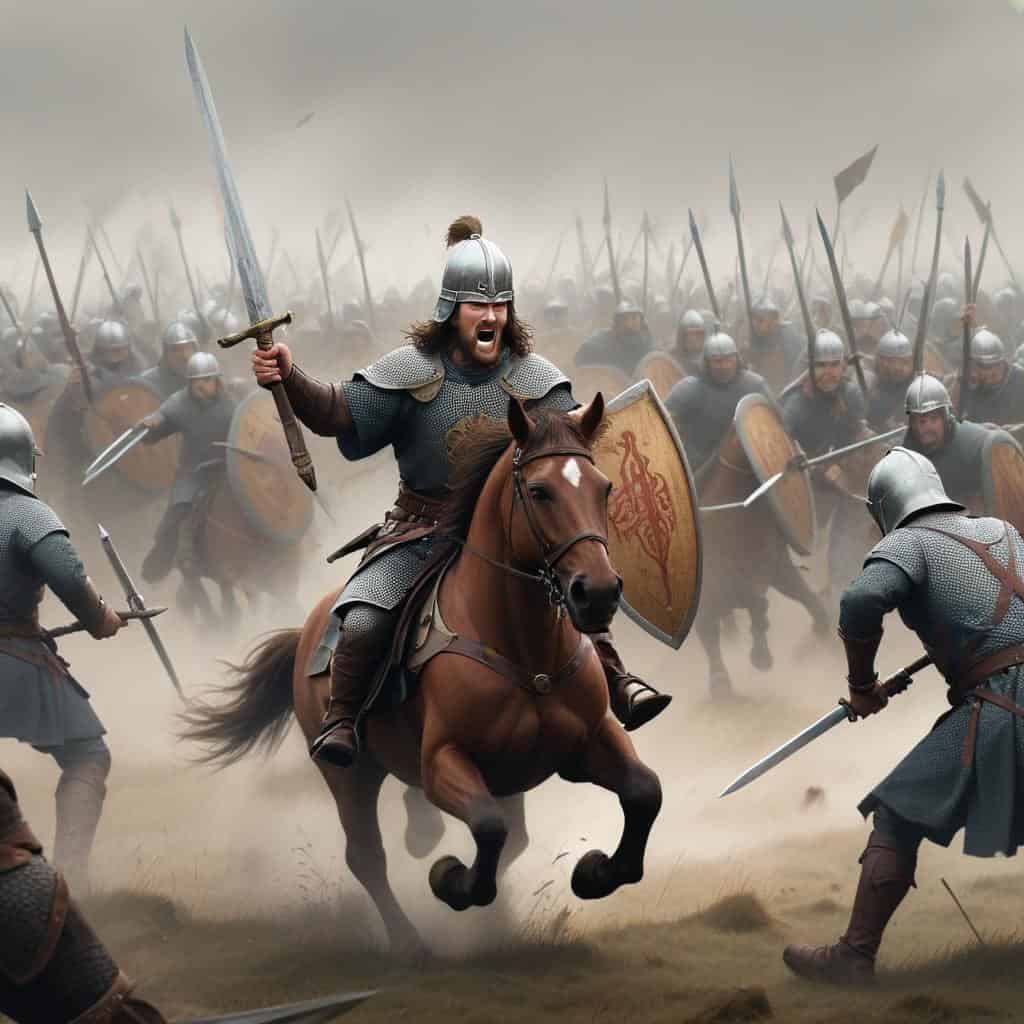
Introduction
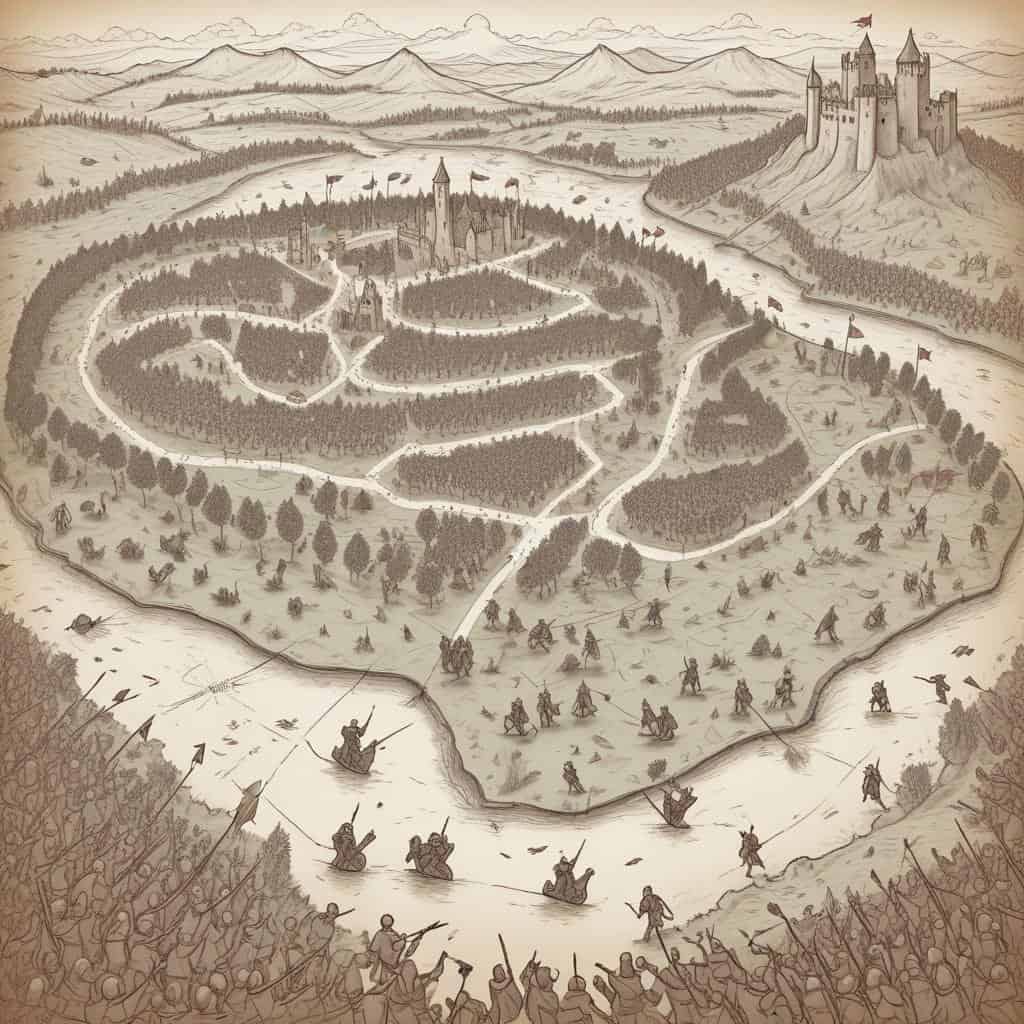
King Athelstan
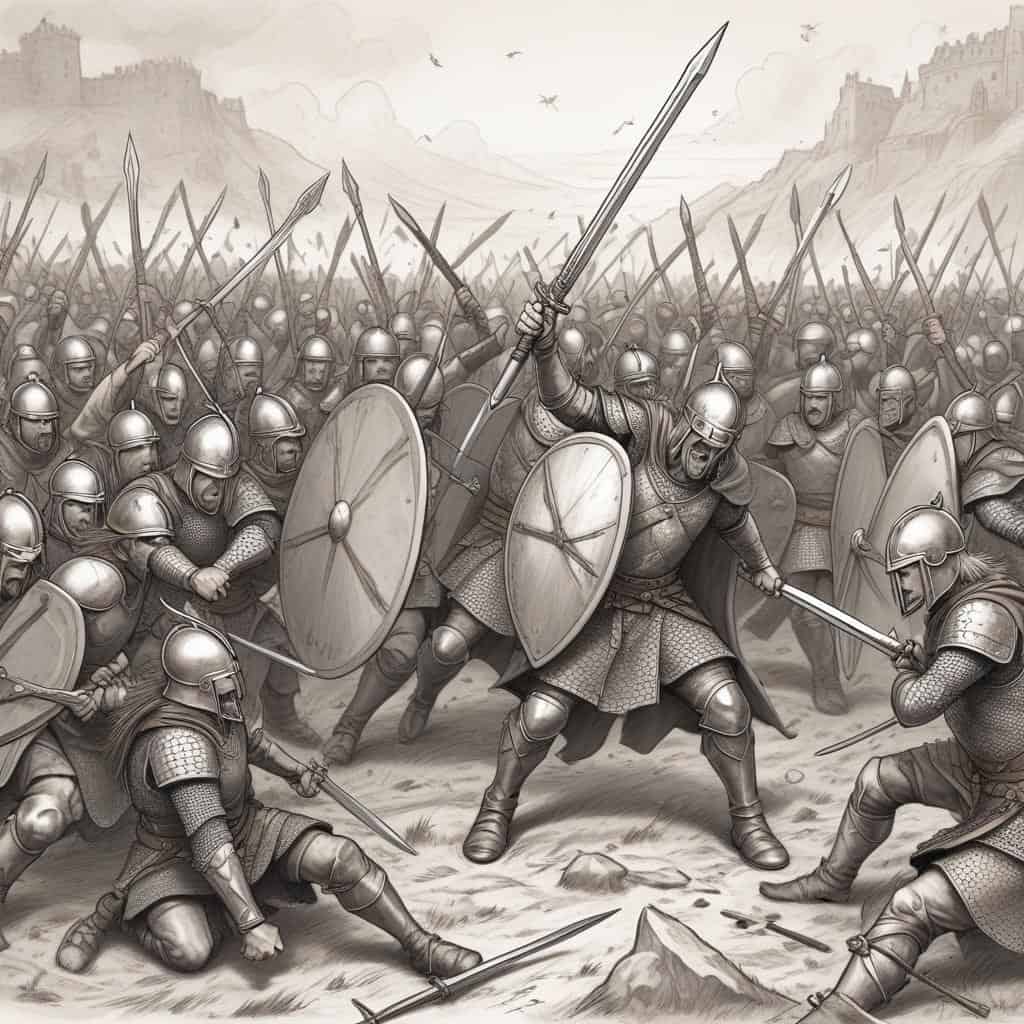
King Anlaf
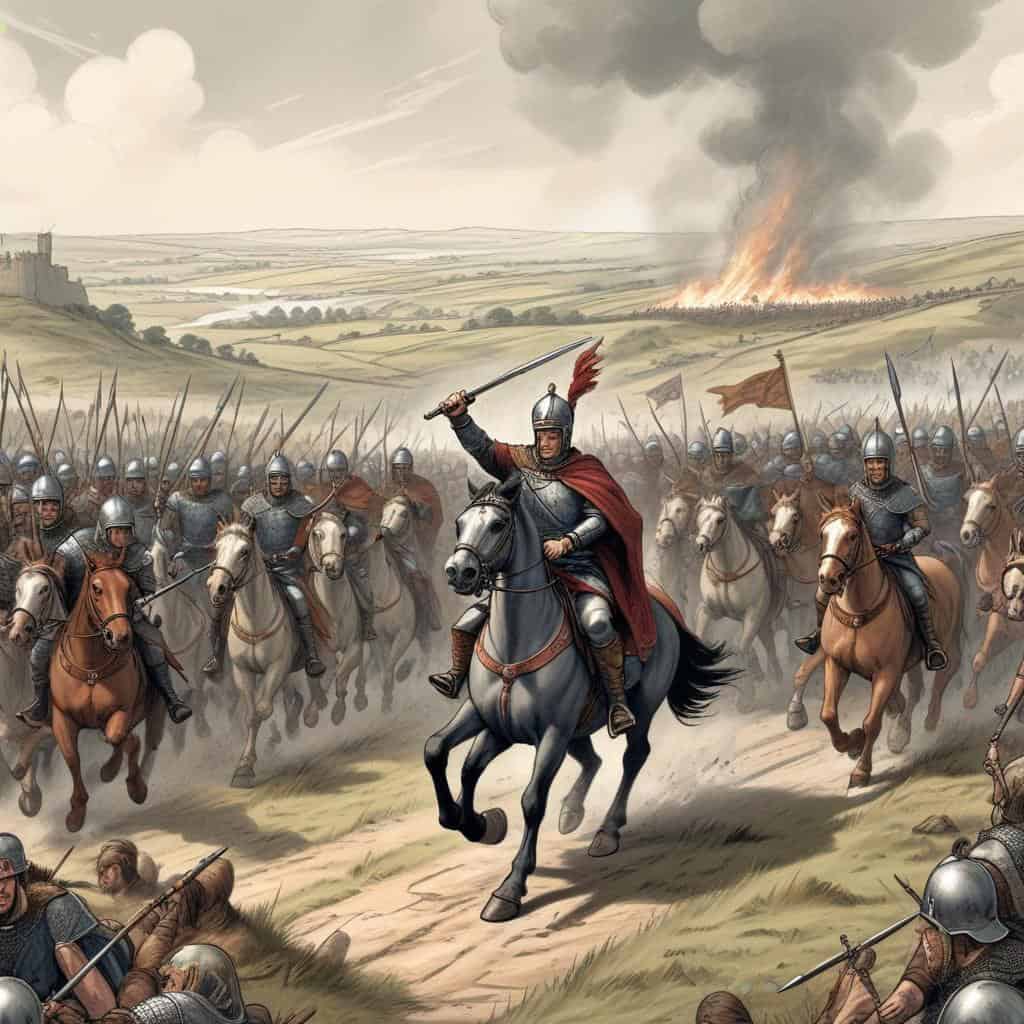
King Constantine II
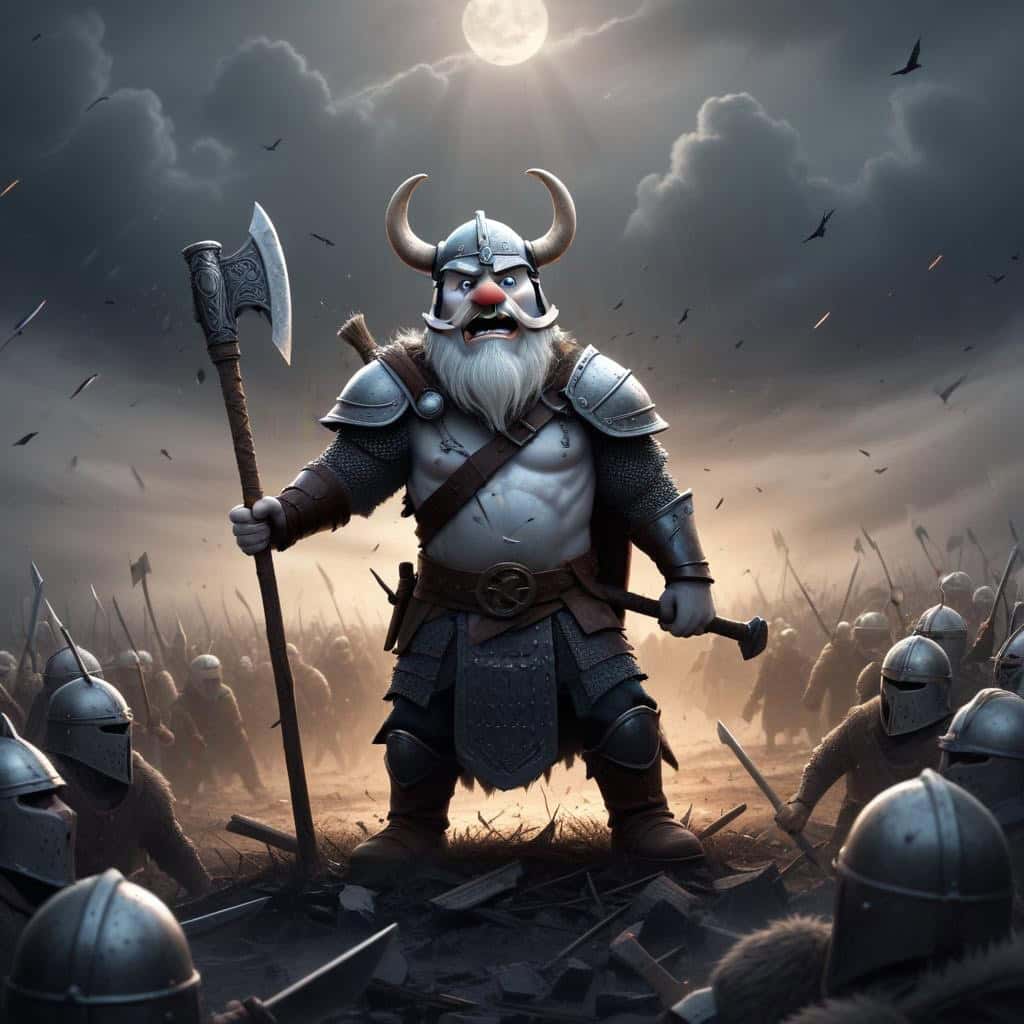
Olaf Guthfrithson

The Prelude to Battle

The Gathering of Armies

The Battle Begins

The Turning Point

The Final Stand
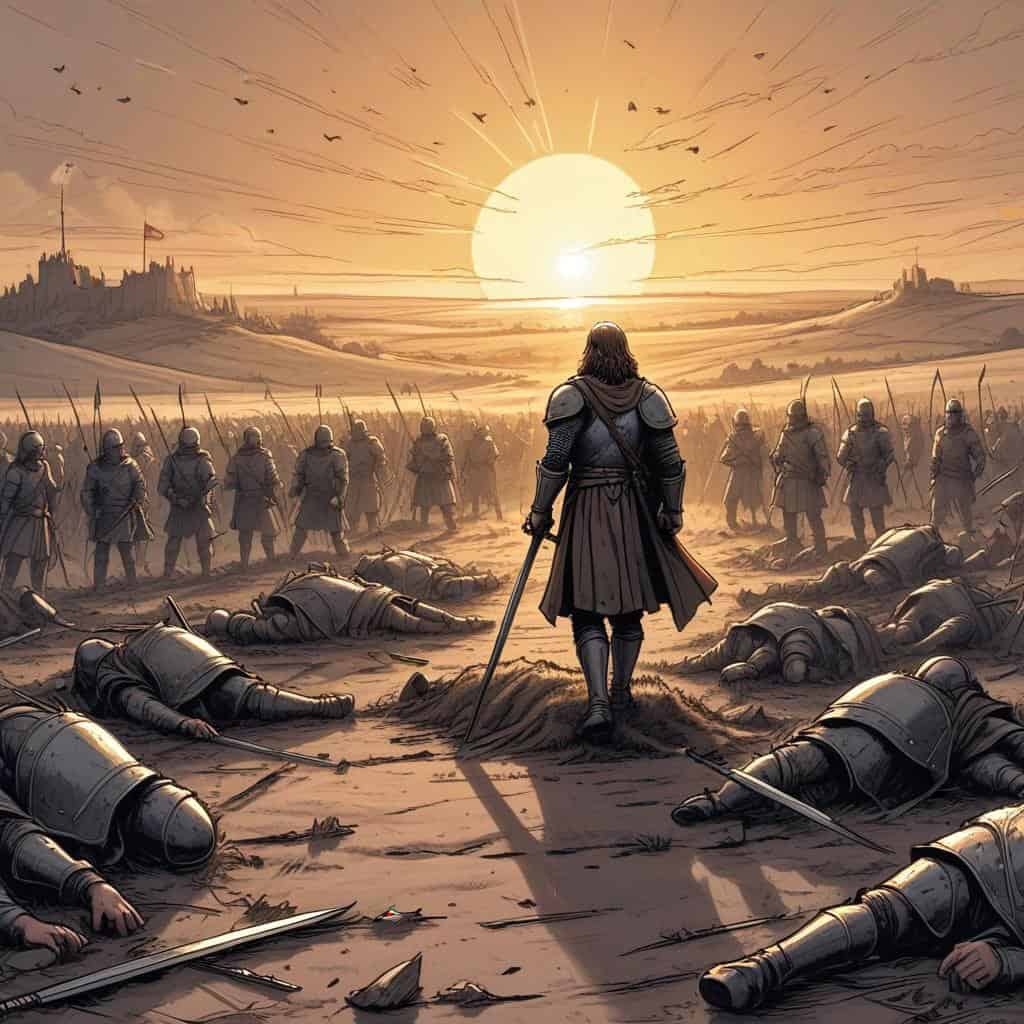
The Aftermath

The Legacy of Brunanburh
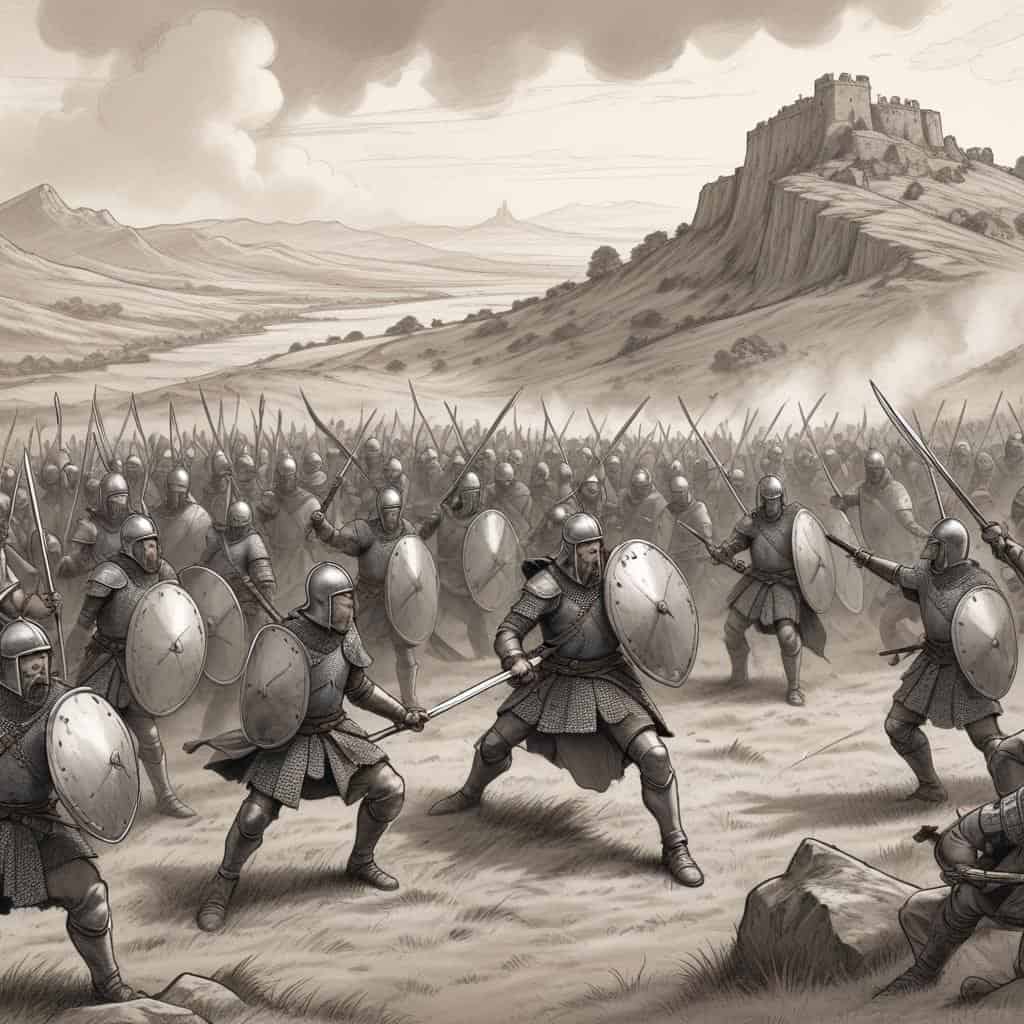
The Historical Significance

The Lessons Learned

The Enduring Legacy
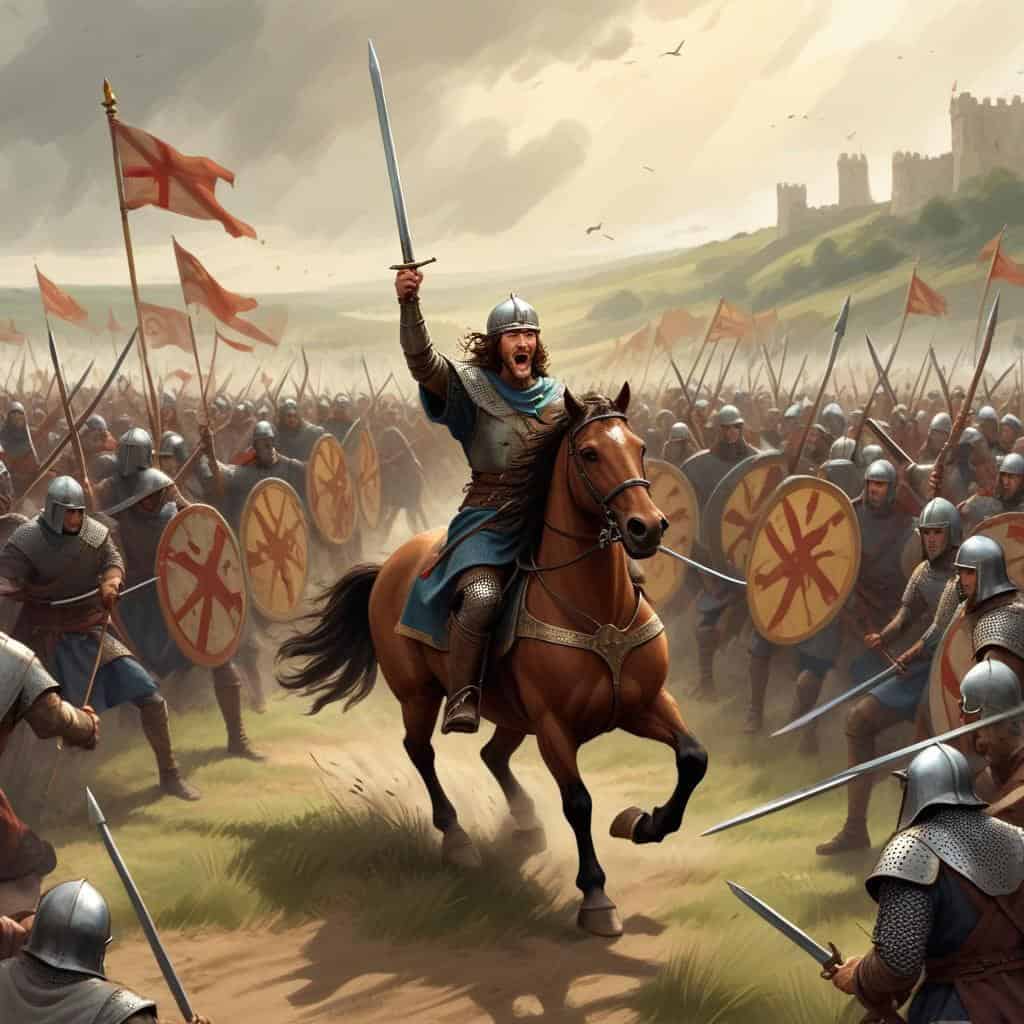
Lesson Details & Resources
In a Nutshell
- What: A significant battle fought in 937 in England.
- When: 937
- Who: King Æthelstan of England vs. a coalition of Norse, Scots, and Strathclyde Britons.
- Outcome: Decisive victory for King Æthelstan, solidifying his control over England and establishing him as a dominant ruler in Britain.
Famous Figures in the Battle of Brunanburh
-
King Athelstan
King Athelstan was the Anglo-Saxon king who led the English forces to victory at the Battle of Brunanburh.
-
King Olaf Guthfrithson
King Olaf Guthfrithson was the Norse-Gaelic king who allied with the Scots and Vikings at the Battle of Brunanburh.
-
King Constantine II of Scotland
King Constantine II of Scotland was one of the leaders of the coalition forces that fought against King Athelstan at the Battle of Brunanburh.
-
King Owain of Strathclyde
King Owain of Strathclyde was another leader who fought alongside the Scots and Vikings at the Battle of Brunanburh.
Timeline of Battle of Brunanburh
Aethelstan, King of England, leads an army against a coalition of Norse, Scots, and Strathclyde Britons at the Battle of Brunanburh
The battle results in a decisive victory for Aethelstan's forces
The victory solidifies Aethelstan's control over England and establishes him as the first King of England
The battle is described in the Anglo-Saxon Chronicle as a great slaughter of the enemy forces
Aethelstan's victory at Brunanburh is celebrated in a poem known as The Battle of Brunanburh
The poem praises Aethelstan's military prowess and portrays him as a heroic figure
The Battle of Brunanburh is considered one of the greatest battles of the Anglo-Saxon period
The exact location of the Battle of Brunanburh is uncertain, with various theories suggesting different sites in England
The battle is significant in English history as it marks a turning point in the struggle for dominance between the Anglo-Saxons and their enemies
The victory at Brunanburh helps to establish Aethelstan's reputation as a strong and capable ruler
The Battle of Brunanburh is referenced in later medieval chronicles as a key event in English history
Aethelstan's victory at Brunanburh cements his position as the most powerful monarch in Britain
The Battle of Brunanburh is commemorated in various historical sources and poems from the period
The battle is seen as a defining moment in the consolidation of Anglo-Saxon power in England
The victory at Brunanburh helps to secure Aethelstan's legacy as a successful and respected king
The Battle of Brunanburh is remembered in later English literature and folklore as a symbol of Anglo-Saxon unity and strength
Aethelstan's triumph at Brunanburh is seen as a key moment in the history of England and the English people
The Battle of Brunanburh is a subject of ongoing scholarly debate and research into its historical significance
The legacy of the Battle of Brunanburh continues to be felt in English culture and national identity
Vocabulary List
- Brunanburh
- The site of a major battle fought in 937 between the forces of Æthelstan, King of England, and an alliance of Scots, Vikings, and Strathclyde Britons.
- Æthelstan
- The King of England who led the Anglo-Saxon forces to victory at the Battle of Brunanburh in 937.
- Vikings
- One of the groups that formed an alliance against Æthelstan at the Battle of Brunanburh, known for their raiding and pillaging of coastal regions.
- Scots
- Another group that joined the alliance against Æthelstan at the Battle of Brunanburh, hailing from the region of Scotland.
- Strathclyde Britons
- A group of Britons from the region of Strathclyde who also fought against Æthelstan at the Battle of Brunanburh.
- Battle
- A violent confrontation between opposing forces, such as the Battle of Brunanburh, which was a key event in the history of England and its surrounding regions.
Key Facts
This is the information used in the fact matching game
- The Battle of Brunanburh took place in 937 AD.
- The battle was fought between the forces of Æthelstan, King of England, and an alliance of Norse, Scots, and Strathclyde Britons.
- Æthelstan's victory at Brunanburh solidified his control over the whole of England.
- The exact location of the Battle of Brunanburh is still debated among historians.
- The battle was one of the largest and bloodiest fought in Anglo-Saxon history.
- The poem 'The Battle of Brunanburh' was written in Old English and celebrates Æthelstan's victory.
- The forces of Æthelstan were made up of Anglo-Saxons, Welsh, and Mercians.
- The alliance opposing Æthelstan included Olaf Guthfrithson of Dublin and Constantine II of Scotland.
- The Battle of Brunanburh is considered a key event in the unification of England.
- The battle lasted for an entire day and resulted in heavy casualties on both sides.
- Æthelstan's victory at Brunanburh helped establish England as a major power in Europe.
- The Battle of Brunanburh is mentioned in various medieval sources, including the Anglo-Saxon Chronicle.
- The outcome of the battle led to a period of relative peace and stability in England.
- The victory at Brunanburh is often seen as a defining moment in English history.
- The alliance against Æthelstan at Brunanburh was motivated by a desire to challenge his authority.
- The Battle of Brunanburh is seen as a turning point in the struggle for dominance in the British Isles.
- The legacy of the Battle of Brunanburh is still felt in England today.
- Æthelstan's victory at Brunanburh is celebrated in various Anglo-Saxon poems and chronicles.
- The Battle of Brunanburh has been the subject of much scholarly debate and analysis.
- The exact number of troops involved in the Battle of Brunanburh is unknown, but estimates range from 10,000 to 20,000.
Analysis & Significance
Immediate Consequences
The Battle of Brunanburh in 937 was a pivotal event that resulted in the decisive victory of the English forces over a coalition of Vikings and Scots. The immediate consequence of this battle was the consolidation of King Athelstan’s power in the region and the establishment of Anglo-Saxon dominance in Britain.
Long-Term Impact
The long-term impact of the Battle of Brunanburh cannot be understated. It solidified the borders of the Anglo-Saxon kingdom and marked the beginning of a period of relative peace and stability in the region. The battle also had lasting implications for the balance of power in Britain and set the stage for the eventual unification of England.
Cultural Significance Today
The Battle of Brunanburh is remembered as a key moment in English history that shaped the nation’s identity and sense of unity. The heroic deeds of the warriors who fought in this battle have been immortalized in poetry and literature, serving as a source of inspiration for generations. Today, the legacy of Brunanburh continues to influence our understanding of the past and the formation of modern England.
Battle of Brunanburh Games


Take Your Learning Offline
Want a convenient, print-ready study guide for this lesson? Become a Memory Wizards Pro member to unlock the downloadable " Memory Scrolls" for this topic and our entire library!
- ✓ Complete Vocabulary Lists
- ✓ Key Facts & Timelines
- ✓ Beautifully Formatted for Print & Mobile