
Summary of Declaration of Independence
Uncover the secrets behind America's most cherished founding document.
How Do You Learn Best?
Learn by Listening
Start with the 3-minute audio summary to get the key facts and narrative highlights quickly.
Learn by Reading
Immerse yourself in the 10-minute visual lesson for a comprehensive understanding of the topic.
Learn by Reviewing
Jump directly to the key facts, timeline, and vocabulary lists to build a solid foundation of details.
Learn by Doing
Challenge yourself! Jump straight into the interactive games to learn by trial, error, and discovery.
Audio Library
As one of our featured lessons, this topic includes premium audio guides.
Unlock the Wizard's Cram Session
This powerful audio study guide is a Pro-exclusive feature. Upgrade to Memory Wizards Pro to access this and all of our premium learning tools.
Upgrade to ProDeclaration of Independence in 10 Minutes
Introduction
Thomas Jefferson
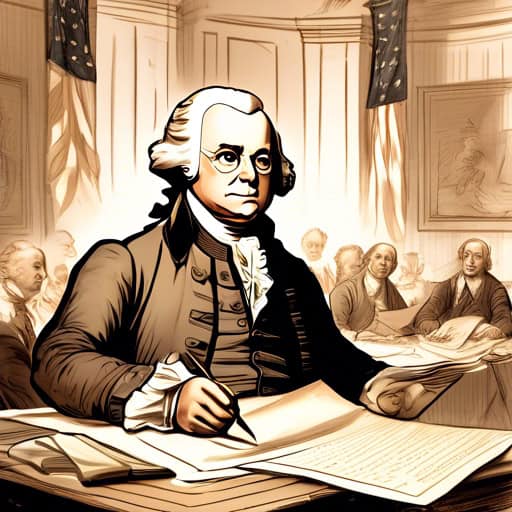
John Adams
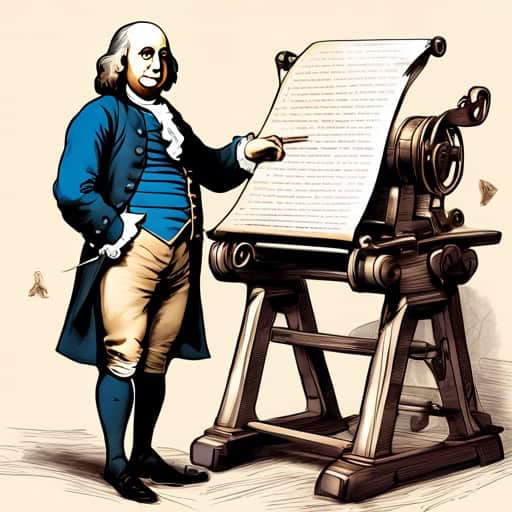
Benjamin Franklin
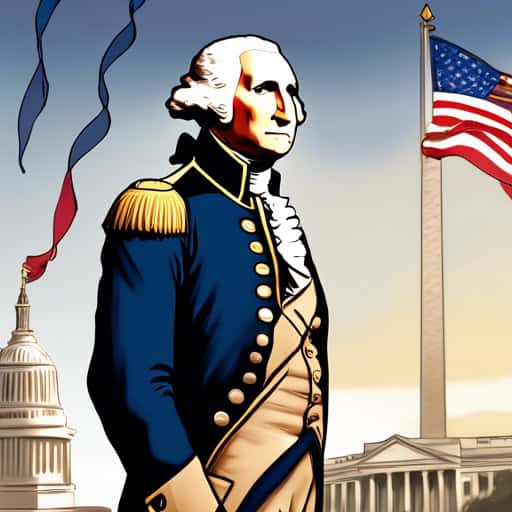
George Washington

1. Colonists Grievances

2. Unalienable Rights

3. Independence from Great Britain
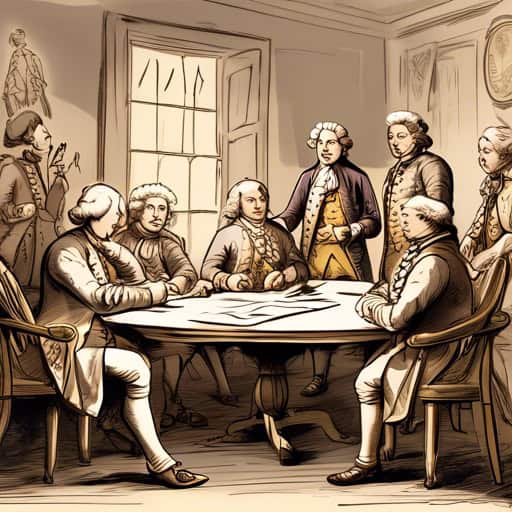
4. Grievances Against King George III

5. Preamble

6. Justification for Independence

7. Signatures of Founding Fathers

8. Impact on American History

9. Legacy of the Declaration

10. Continuing Relevance
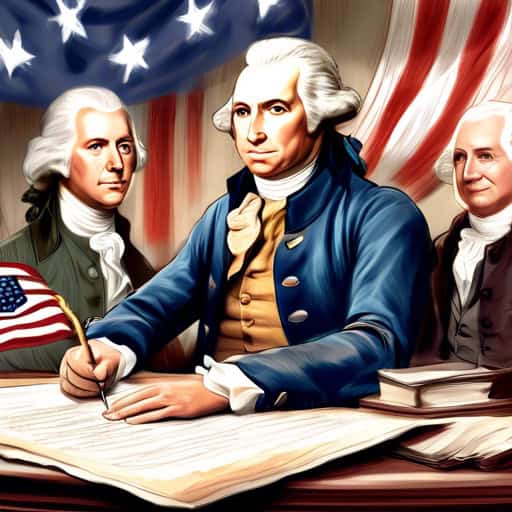
Lesson Details & Resources
In a Nutshell
- What: The formal statement written by Thomas Jefferson declaring the freedom of the thirteen American colonies from Great Britain.
- When: July 4, 1776
- Who: Thomas Jefferson, Benjamin Franklin, John Adams
- Outcome: The United States officially declared its independence from British rule, leading to the Revolutionary War.
Famous Figures in the Declaration of Independence
-
Thomas Jefferson
Thomas Jefferson was the principal author of the Declaration of Independence and later became the third President of the United States.
-
John Adams
John Adams was a Founding Father and served as the second President of the United States. He played a crucial role in promoting and defending the Declaration of Independence.
-
Benjamin Franklin
Benjamin Franklin was a polymath who contributed to the drafting of the Declaration of Independence and played an important role in securing foreign support for the American Revolution.
-
George Washington
George Washington, the first President of the United States, was a key figure in the American Revolution and supported the principles outlined in the Declaration of Independence.
-
Alexander Hamilton
Alexander Hamilton was one of the Founding Fathers and a strong advocate for the principles of the Declaration of Independence. He later played a vital role in establishing the United States' financial system.
Timeline of Declaration of Independence
The Stamp Act
The Boston Massacre
The Boston Tea Party
The First Continental Congress
The Battles of Lexington and Concord
The Second Continental Congress
The Olive Branch Petition
The Declaration of the Causes and Necessity of Taking Up Arms
The Battle of Bunker Hill
The Thomas Paine's 'Common Sense' published
The Virginia Declaration of Rights
The Drafting of the Declaration of Independence
The Approval of the Lee Resolution
The Adoption of the Declaration of Independence
The Signing of the Declaration of Independence
The Battle of Trenton
The Battle of Saratoga
The Treaty of Alliance with France
The Battle of Yorktown
The Treaty of Paris
Vocabulary List
- Independence
- The Declaration of Independence was a document that declared the colonies' desire for independence from Great Britain.
- Unalienable
- The Declaration of Independence states that all men are endowed with certain unalienable rights, such as life, liberty, and the pursuit of happiness.
- Self-evident
- The Declaration of Independence asserts that certain truths are self-evident, including that all men are created equal.
- Consent
- The Declaration of Independence emphasizes that governments derive their just powers from the consent of the governed.
- Tyranny
- The Declaration of Independence lists a series of grievances against King George III, accusing him of tyranny and abuse of power.
- Inalienable
- The Declaration of Independence proclaims that certain rights, such as the pursuit of happiness, are inalienable and cannot be taken away.
- Revolution
- The Declaration of Independence marks the beginning of the American Revolution, a war fought for independence from British rule.
- Self-government
- The Declaration of Independence expresses the desire for self-government, allowing the American colonies to govern themselves.
- Equality
- The Declaration of Independence asserts that all men are created equal and should be treated as such.
- Inalienable
- The Declaration of Independence asserts that certain rights, such as life and liberty, are inalienable and cannot be taken away.
Key Facts
This is the information used in the fact matching game
- The Declaration of Independence was adopted by the Second Continental Congress on July 4, 1776.
- Thomas Jefferson was the primary author of the Declaration of Independence.
- The Declaration of Independence was influenced by the Enlightenment ideas of philosophers like John Locke.
- The Declaration of Independence announced the thirteen American colonies' decision to break away from British rule.
- The Declaration of Independence states that all individuals are endowed with certain unalienable rights, including life, liberty, and the pursuit of happiness.
- The Declaration of Independence lists a series of grievances against King George III of Britain.
- The Declaration of Independence was signed by 56 delegates representing the 13 colonies.
- The original copy of the Declaration of Independence is housed in the National Archives in Washington, D.C.
- John Hancock's signature on the Declaration of Independence is the most prominent and well-known.
- The Declaration of Independence was heavily influenced by Virginia's Declaration of Rights.
- The Declaration of Independence served as a formal justification for the American Revolution.
- The Declaration of Independence was not immediately embraced by all Americans, and some remained loyal to Britain.
- The Declaration of Independence was a pivotal moment in the formation of the United States as an independent nation.
- The Declaration of Independence inspired other nations around the world in their struggles for independence.
- The final version of the Declaration of Independence was edited and revised by the Committee of Five.
- The Declaration of Independence declares that governments derive their power from the consent of the governed.
- The signing of the Declaration of Independence marked the formal separation of the 13 colonies from Britain.
- The Declaration of Independence is considered one of the most important documents in American history.
- The Declaration of Independence laid the foundation for the United States Constitution.
- The original Declaration of Independence was written on parchment.
Analysis & Significance
Immediate Consequences
The Declaration of Independence immediately sparked a revolution, leading to the American colonies breaking away from British rule. It declared the colonies’ independence and laid the foundation for the formation of a new nation.
Long-Term Impact
The Declaration of Independence had a profound and lasting impact on history, as it inspired other nations to fight for their own independence and served as a model for future declarations of independence worldwide. It also influenced the drafting of the United States Constitution and the principles of democracy.
Cultural Significance Today
The Declaration of Independence remains a symbol of freedom and democracy, and its words continue to inspire people around the world. It is celebrated annually on the Fourth of July in the United States, reminding us of the importance of individual rights, equality, and government by the people.
Declaration of Independence Games


Take Your Learning Offline
Want a convenient, print-ready study guide for this lesson? Become a Memory Wizards Pro member to unlock the downloadable " Memory Scrolls" for this topic and our entire library!
- ✓ Complete Vocabulary Lists
- ✓ Key Facts & Timelines
- ✓ Beautifully Formatted for Print & Mobile