
Summary of Continental Congress
Uncover the secrets and struggles behind America's founding fathers.
How Do You Learn Best?
Learn by Listening
Start with the 3-minute audio summary to get the key facts and narrative highlights quickly.
Learn by Reading
Immerse yourself in the 10-minute visual lesson for a comprehensive understanding of the topic.
Learn by Reviewing
Jump directly to the key facts, timeline, and vocabulary lists to build a solid foundation of details.
Learn by Doing
Challenge yourself! Jump straight into the interactive games to learn by trial, error, and discovery.
Audio Library
As one of our featured lessons, this topic includes premium audio guides.
Unlock the Wizard's Cram Session
This powerful audio study guide is a Pro-exclusive feature. Upgrade to Memory Wizards Pro to access this and all of our premium learning tools.
Upgrade to ProContinental Congress in 10 Minutes
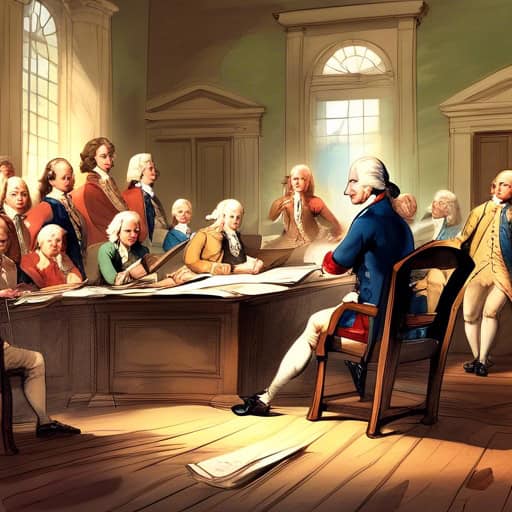
Introduction
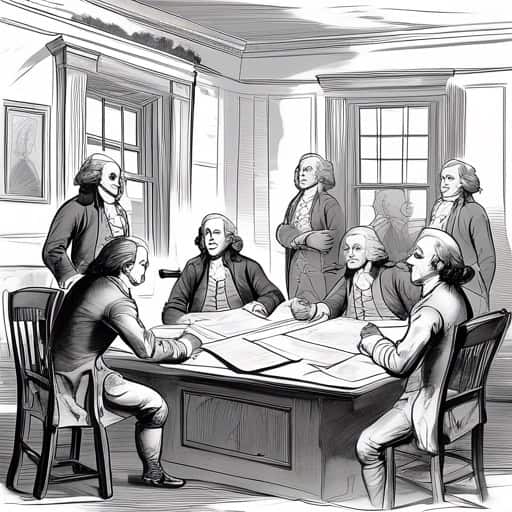
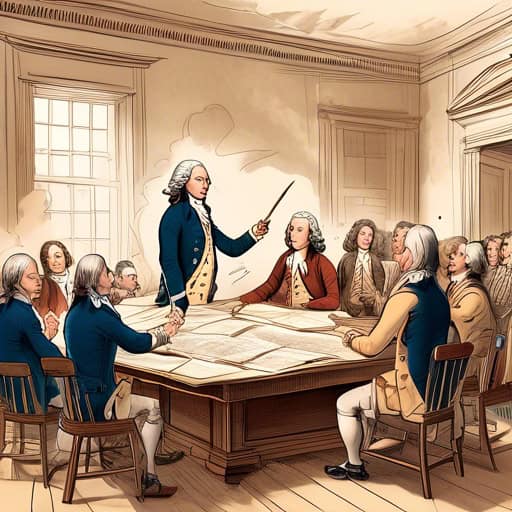
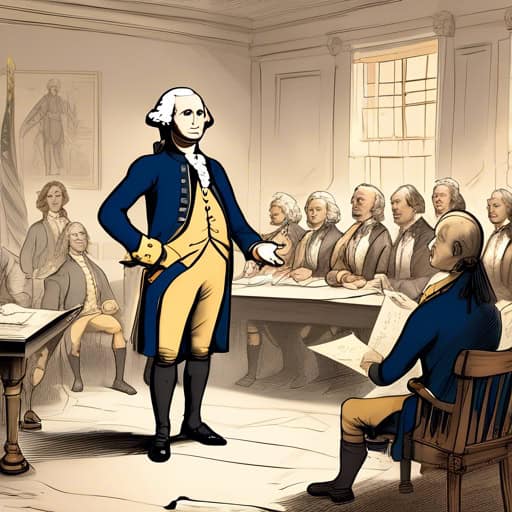
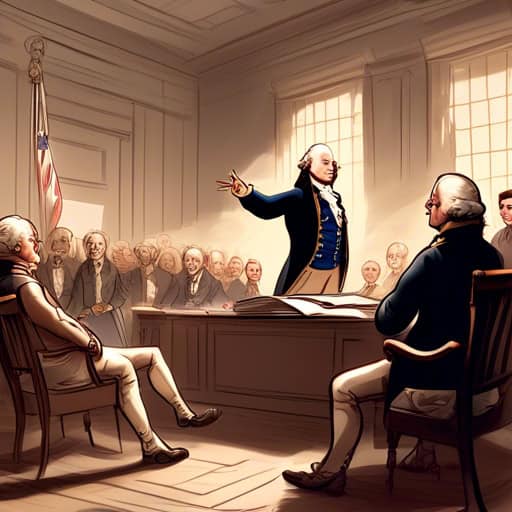
George Washington
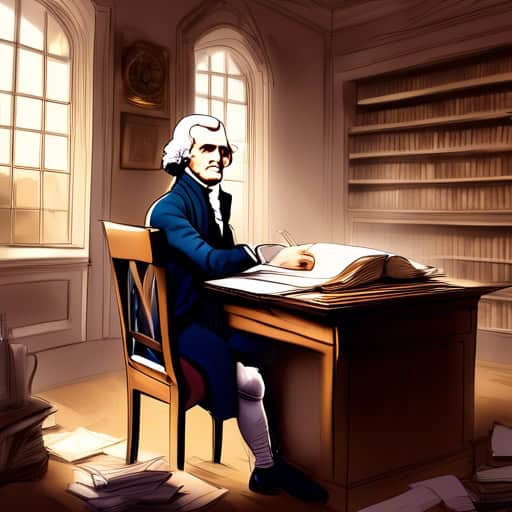
John Adams
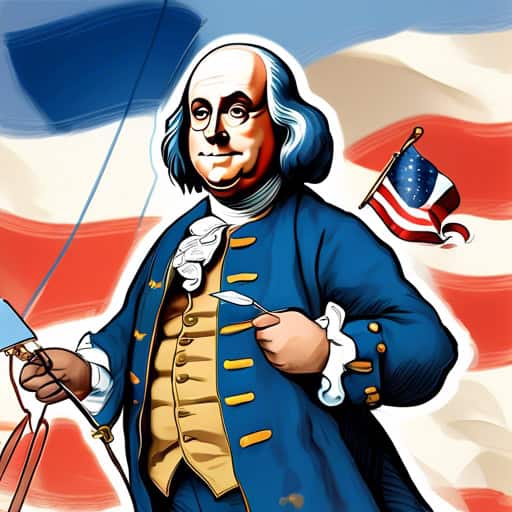
Thomas Jefferson
Benjamin Franklin

John Hancock

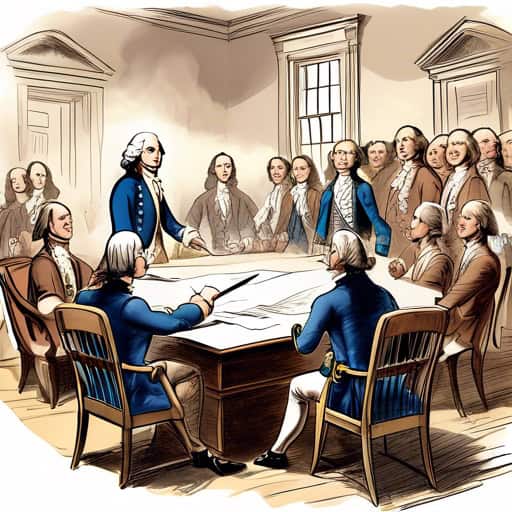
The First Continental Congress
The Second Continental Congress

The Articles of Confederation
The Treaty of Paris

The Northwest Ordinance

The Constitutional Convention

The End of the Continental Congress
Lesson Details & Resources
In a Nutshell
- What: A series of meetings held by delegates from the Thirteen Colonies to address grievances with Great Britain.
- When: 1774-1789
- Who: John Adams, Benjamin Franklin, Thomas Jefferson
- Outcome: Declaration of Independence, Articles of Confederation
Famous Figures in the Continental Congress
-
George Washington
George Washington was the Commander-in-Chief of the Continental Army and later became the first President of the United States.
-
John Adams
John Adams was a prominent lawyer and diplomat who served as the second President of the United States.
-
Thomas Jefferson
Thomas Jefferson was one of the primary authors of the Declaration of Independence and the third President of the United States.
-
Benjamin Franklin
Benjamin Franklin was a renowned polymath, inventor, and statesman who played a crucial role in drafting the Declaration of Independence.
-
Samuel Adams
Samuel Adams was a staunch supporter of American independence and a key organizer of the Boston Tea Party.
-
John Hancock
John Hancock was the President of the Second Continental Congress and the first person to sign the Declaration of Independence.
-
John Jay
John Jay was a diplomat and one of the Founding Fathers who later became the first Chief Justice of the United States.
-
Alexander Hamilton
Alexander Hamilton was a statesman, economist, and the first Secretary of the Treasury of the United States.
-
James Madison
James Madison was a political theorist and the fourth President of the United States, known as the 'Father of the Constitution.'
-
Patrick Henry
Patrick Henry was an orator and a passionate advocate for American independence, famously delivering the line 'Give me liberty or give me death!'
Timeline of Continental Congress
First Continental Congress
Declaration and Resolves of the First Continental Congress
Intolerable Acts passed by the British Parliament
Battle of Lexington and Concord
Second Continental Congress convenes
Olive Branch Petition sent to King George III
Declaration of the Causes and Necessity of Taking Up Arms
George Washington appointed as Commander-in-Chief of the Continental Army
Battle of Bunker Hill
Common Sense pamphlet published by Thomas Paine
Declaration of Independence adopted
Articles of Confederation adopted by the Continental Congress
Battle of Saratoga
Valley Forge encampment of the Continental Army
Treaty of Alliance with France
Battle of Yorktown
Treaty of Paris signed, officially ending the American Revolutionary War
Northwest Ordinance passed by the Continental Congress
Constitutional Convention begins in Philadelphia
Constitution of the United States ratified by the Continental Congress
Vocabulary List
- Continental Congress
- The Continental Congress was a convention of delegates from the Thirteen Colonies that became the governing body during the American Revolution.
- Delegates
- Delegates were individuals chosen or elected to represent their respective colonies in the Continental Congress.
- Revolution
- The Continental Congress played a crucial role in the American Revolution, which was a war fought by the colonies against Great Britain for independence.
- Colony
- The Thirteen Colonies were British colonies in North America that later formed the United States. They were represented in the Continental Congress.
- Governing Body
- The Continental Congress served as the governing body for the colonies and later for the United States, making important decisions and enacting laws.
- Convention
- The Continental Congress was a convention where representatives from the colonies would gather to discuss and make decisions on important matters.
Key Facts
This is the information used in the fact matching game
- The Continental Congress was a convention of delegates from the Thirteen Colonies that became the governing body of the United States during the American Revolution.
- The First Continental Congress was held in 1774 in response to the Intolerable Acts imposed by the British Parliament.
- The Second Continental Congress convened in 1775 and assumed the role of the national government during the Revolutionary War.
- George Washington was appointed as the commander-in-chief of the Continental Army by the Second Continental Congress.
- The Declaration of Independence was drafted and adopted by the Second Continental Congress on July 4, 1776.
- The Continental Congress established the Articles of Confederation, the first constitution of the United States, in 1777.
- The Continental Congress authorized the creation of the Continental Navy in 1775, which later became the United States Navy.
- The Olive Branch Petition, a final attempt at reconciliation with Britain, was sent by the Continental Congress to King George III in 1775.
- The Continental Congress established the Committee of Five, including Thomas Jefferson, to draft the Declaration of Independence.
- The Continental Congress passed the Northwest Ordinance of 1787, which established the process for admitting new states to the Union.
- The Continental Congress served as the temporary national government until the ratification of the United States Constitution in 1789.
- The Continental Congress established the Continental Association to boycott British goods and put economic pressure on Britain.
- The Continental Congress authorized the printing of paper money, known as Continental currency, to finance the Revolutionary War.
- The Continental Congress established a postal system in 1775, which laid the foundation for the modern United States Postal Service.
- The Continental Congress played a crucial role in coordinating colonial resistance against British rule.
- The Continental Congress authorized the creation of the Committee of Secret Correspondence, which engaged in covert operations to support the revolution.
- The Continental Congress negotiated alliances with France and other European powers to gain support for the American Revolution.
- The Continental Congress established a committee to draft the Articles of Confederation, which were ratified in 1781.
- The Continental Congress issued the Declaration of the Causes and Necessity of Taking Up Arms in 1775, outlining the reasons for armed resistance against Britain.
- The Continental Congress adjourned on March 2, 1789, marking the end of its existence as the national government.
Analysis & Significance
Immediate Consequences
The convening of the Continental Congress marked the beginning of organized resistance against British rule in the American colonies. It resulted in the creation of the Continental Association, a unified boycott of British goods, and the establishment of committees to enforce colonial rights and coordinate actions.
Long-Term Impact
The decisions made during the Continental Congress, such as the Declaration of Independence, laid the foundation for the American Revolution and the eventual establishment of the United States as an independent nation. It set the stage for the formation of a new government and the drafting of the U.S. Constitution.
Cultural Significance Today
The Continental Congress is remembered as a pivotal moment in American history that symbolizes the spirit of unity and determination in the face of oppression. It continues to inspire people to stand up for their rights and fight for freedom and democracy. The principles and values established during this time still influence the political and cultural landscape of the United States today.
Continental Congress Games


Take Your Learning Offline
Want a convenient, print-ready study guide for this lesson? Become a Memory Wizards Pro member to unlock the downloadable " Memory Scrolls" for this topic and our entire library!
- ✓ Complete Vocabulary Lists
- ✓ Key Facts & Timelines
- ✓ Beautifully Formatted for Print & Mobile