
Summary of Battle of Bunker Hill
The legendary battle that changed the course of American history.
How Do You Learn Best?
Learn by Listening
Start with the 3-minute audio summary to get the key facts and narrative highlights quickly.
Learn by Reading
Immerse yourself in the 10-minute visual lesson for a comprehensive understanding of the topic.
Learn by Reviewing
Jump directly to the key facts, timeline, and vocabulary lists to build a solid foundation of details.
Learn by Doing
Challenge yourself! Jump straight into the interactive games to learn by trial, error, and discovery.
Audio Library
As one of our featured lessons, this topic includes premium audio guides.
Unlock the Wizard's Cram Session
This powerful audio study guide is a Pro-exclusive feature. Upgrade to Memory Wizards Pro to access this and all of our premium learning tools.
Upgrade to ProBattle of Bunker Hill in 10 Minutes
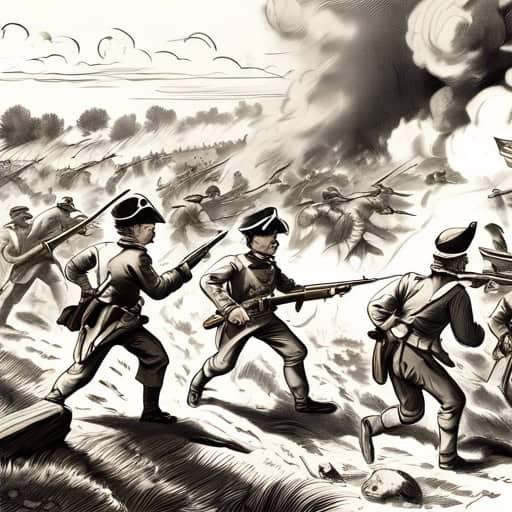
Introduction
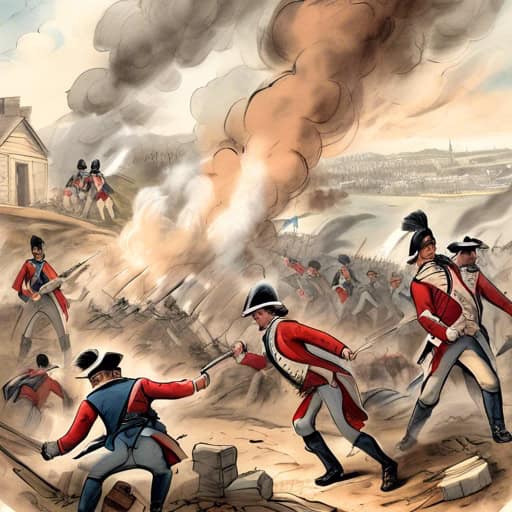
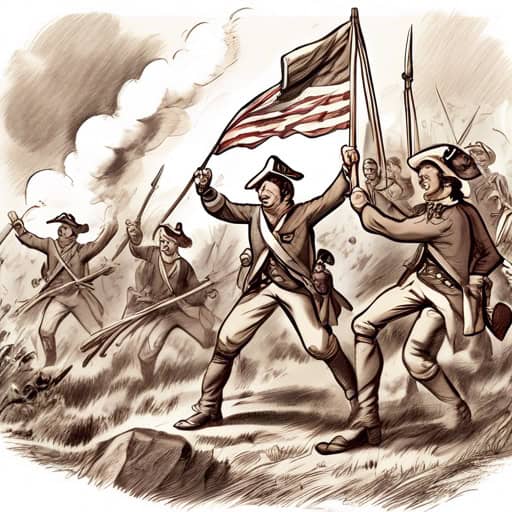
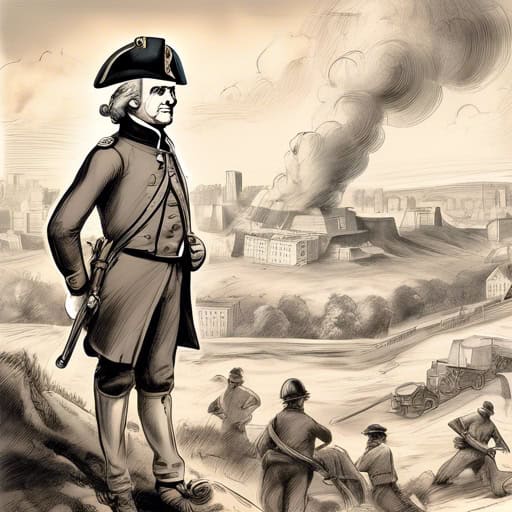
Colonel William Prescott
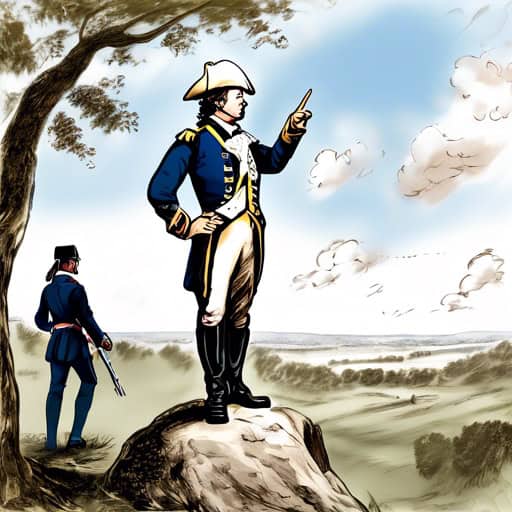
Major General Israel Putnam
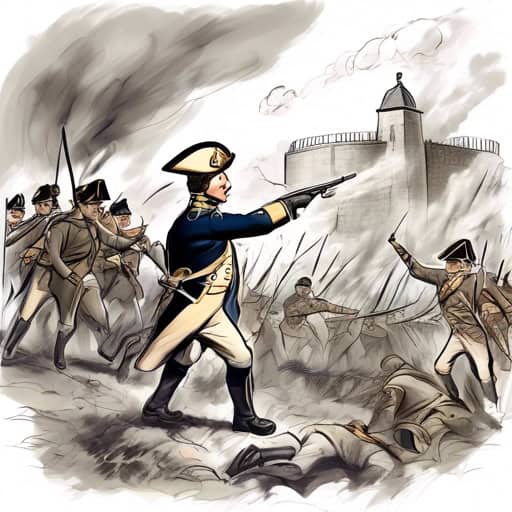
General Thomas Gage
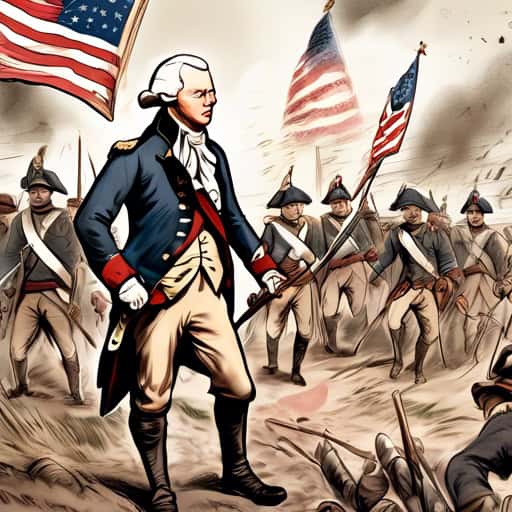
Joseph Warren

The Battle Begins

The British Advance

The Americans Strategy

The British Victory

The Aftermath

The Legacy

The Monument

The Impact
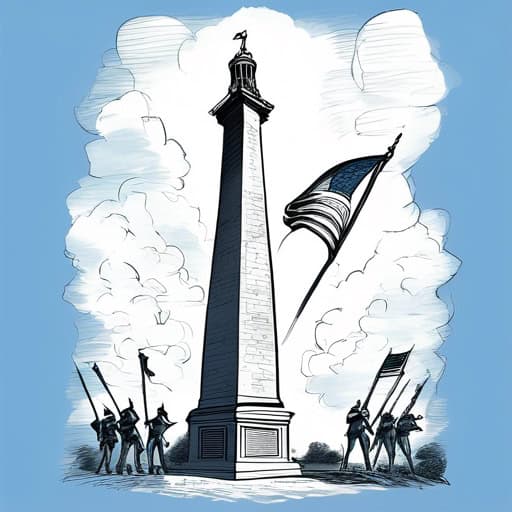
The Symbolism

The Lessons Learned

Lesson Details & Resources
In a Nutshell
- What: A significant battle in the American Revolutionary War.
- When: June 17, 1775
- Who: Continental Army under Colonel William Prescott vs. British Army under Major General William Howe
- Outcome: British victory, but with heavy casualties; Boosted American morale and confidence.
Famous Figures in the Battle of Bunker Hill
-
George Washington
George Washington was the commander-in-chief of the Continental Army during the American Revolutionary War.
-
William Prescott
William Prescott was a colonel in the Continental Army and played a crucial role in leading the American forces during the Battle of Bunker Hill.
-
Israel Putnam
Israel Putnam was a general in the Continental Army and fought alongside Prescott during the Battle of Bunker Hill.
-
Benedict Arnold
Benedict Arnold was an American general who initially fought for the Continental Army but later defected to the British Army.
-
Joseph Warren
Joseph Warren was a physician and one of the early leaders of the American Revolution. He was killed in action during the Battle of Bunker Hill.
Timeline of Battle of Bunker Hill
British troops arrive in Boston to enforce the Coercive Acts
Battle of Lexington and Concord
Colonial militia surround British troops in Boston
General Artemas Ward becomes commander of the colonial forces
Continental Army is formed
British General Thomas Gage is replaced by General William Howe
Colonists fortify Breed's Hill overlooking Boston
Battle of Bunker Hill (actually fought on Breed's Hill)
British forces capture Breed's Hill after heavy losses
Colonial forces retreat from Breed's Hill to Cambridge
British casualties: 1,054 killed and wounded
Colonial casualties: 450 killed and wounded
Colonists gain confidence after showing they can stand up to British regulars
British begin blockading American ports
Congress appoints George Washington as commander-in-chief of the Continental Army
Publication of Thomas Paine's 'Common Sense'
Declaration of Independence is signed
British evacuate Boston
End of the Siege of Boston
Battle of Bunker Hill is considered a moral victory for the colonists
Vocabulary List
- Battle of Bunker Hill
- The Battle of Bunker Hill was a major battle fought on June 17, 1775, during the American Revolutionary War.
- Revolutionary War
- The Battle of Bunker Hill was a significant event in the Revolutionary War, as it was one of the earliest major battles between the American colonists and the British forces.
- American colonists
- The Battle of Bunker Hill saw the American colonists, who were fighting for independence from British rule, defending their position against the British troops.
- British forces
- The Battle of Bunker Hill involved the British forces, who were attempting to assert their control over the American colonies and suppress the rebellion.
- Militia
- The American colonists at the Battle of Bunker Hill were largely made up of militia forces, who were untrained but determined to defend their cause.
- Redcoats
- The British forces at the Battle of Bunker Hill were often referred to as redcoats, due to their distinctive red uniforms.
- Fortifications
- Both sides in the Battle of Bunker Hill heavily relied on fortifications, with the American colonists building makeshift defenses on Breed's Hill and the British utilizing naval support and artillery.
- Casualties
- The Battle of Bunker Hill resulted in significant casualties on both sides, with the American colonists inflicting heavy losses on the British troops before ultimately being forced to retreat.
- Strategic importance
- The Battle of Bunker Hill had strategic importance as it showed that the American colonists were capable of standing up to the British forces and boosted their morale and determination for the rest of the Revolutionary War.
- Consequences
- The Battle of Bunker Hill had consequences that further escalated the conflict between the American colonists and the British forces, leading to the eventual Declaration of Independence and the creation of the United States of America.
Key Facts
This is the information used in the fact matching game
- The Battle of Bunker Hill took place on June 17, 1775 during the early stages of the American Revolutionary War.
- Although called the Battle of Bunker Hill, most of the fighting actually took place on nearby Breed's Hill.
- The British forces were led by Major General William Howe and Brigadier General Robert Pigot.
- The American forces were led by Colonel William Prescott, Major John Pitcairn, and General Israel Putnam.
- The battle resulted in a British victory, but at a high cost in casualties.
- The British suffered over 1,000 casualties, including many officers.
- The American forces suffered around 400 casualties, including over 100 killed.
- The battle demonstrated that the American forces were capable of standing up to the British regulars in a pitched battle.
- The battle is known for the order given to the American troops, 'Don't fire until you see the whites of their eyes.'
- The British won control of the Charlestown Peninsula after the battle, but suffered heavy losses in the process.
- The battle was a morale boost for the American forces, despite being a tactical defeat.
- The Battle of Bunker Hill is considered one of the bloodiest battles of the American Revolutionary War.
- The battle was a turning point in the war, showing that the American forces were a formidable opponent for the British.
- The battle inspired the famous poem 'The Midnight Ride of Paul Revere' by Henry Wadsworth Longfellow.
- The Battle of Bunker Hill is commemorated annually in Massachusetts with a reenactment and parade.
- The battle site is now part of the Boston National Historical Park and is open to visitors.
- The battle marked the beginning of a long and bloody conflict that would ultimately lead to American independence.
- The Battle of Bunker Hill is also known as the Battle of Breed's Hill.
- The battle was one of the first major engagements of the American Revolutionary War.
- The battle site is located in present-day Charlestown, Massachusetts.
Analysis & Significance
Immediate Consequences
The Battle of Bunker Hill marked a significant turning point in the American Revolutionary War. Although technically a British victory, the high casualties suffered by the British forces and the morale boost it provided to the American troops fueled the spirit of resistance and determination among the colonists.
Long-Term Impact
The Battle of Bunker Hill inspired the colonists to continue fighting for independence, leading to the Declaration of Independence and ultimately the birth of the United States of America. It also demonstrated to the world that the American forces were a formidable opponent, gaining international support for the American cause.
Cultural Significance Today
The Battle of Bunker Hill is remembered as a symbol of American perseverance and determination in the face of adversity. It is commemorated annually in the United States as Bunker Hill Day, and the famous command “Don’t fire until you see the whites of their eyes” has become a lasting symbol of American ingenuity and resourcefulness.
Battle of Bunker Hill Games


Take Your Learning Offline
Want a convenient, print-ready study guide for this lesson? Become a Memory Wizards Pro member to unlock the downloadable " Memory Scrolls" for this topic and our entire library!
- ✓ Complete Vocabulary Lists
- ✓ Key Facts & Timelines
- ✓ Beautifully Formatted for Print & Mobile