
How Do You Learn Best?
Learn by Reading
Immerse yourself in the 10-minute visual lesson for a comprehensive understanding of the topic.
Learn by Reviewing
Jump directly to the key facts, timeline, and vocabulary lists to build a solid foundation of details.
Learn by Doing
Challenge yourself! Jump straight into the interactive games to learn by trial, error, and discovery.
Boris Godunov by Alexander Pushkin in 10 Minutes
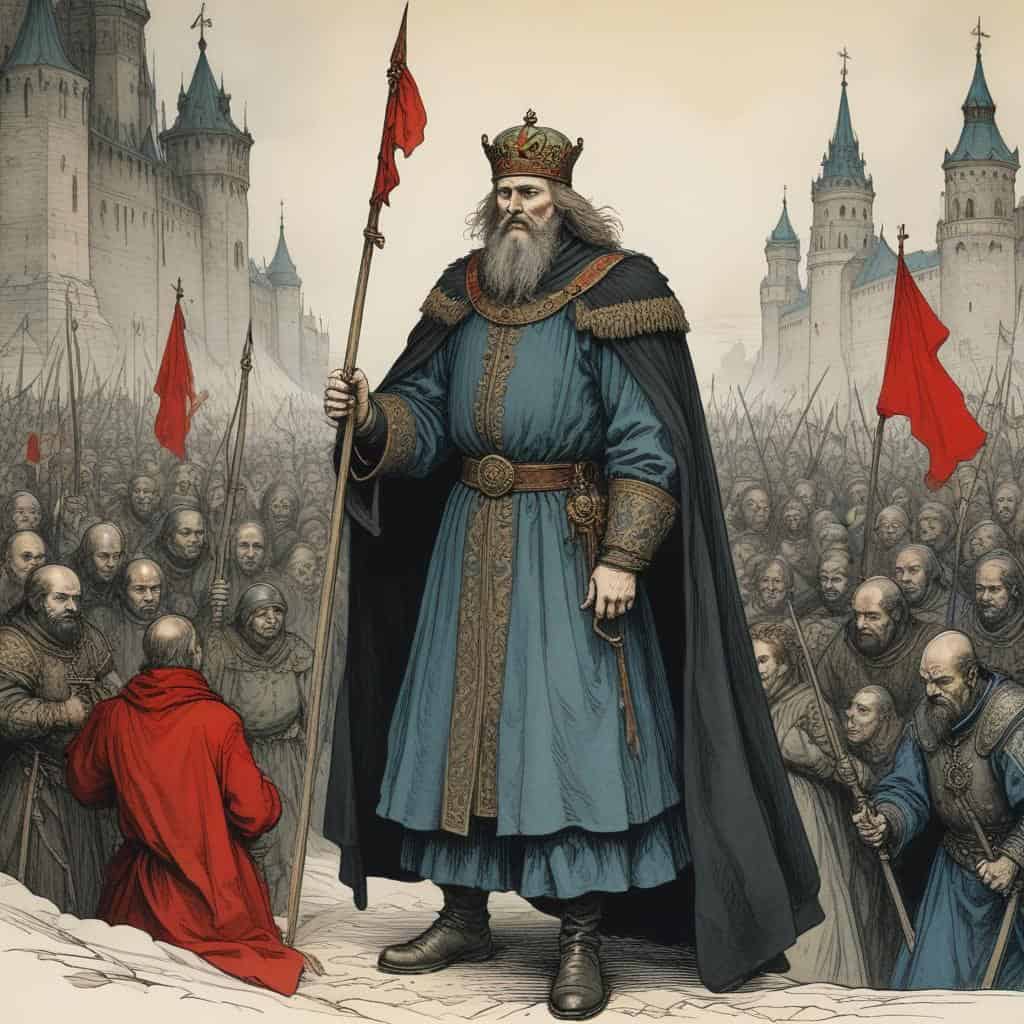
Introduction

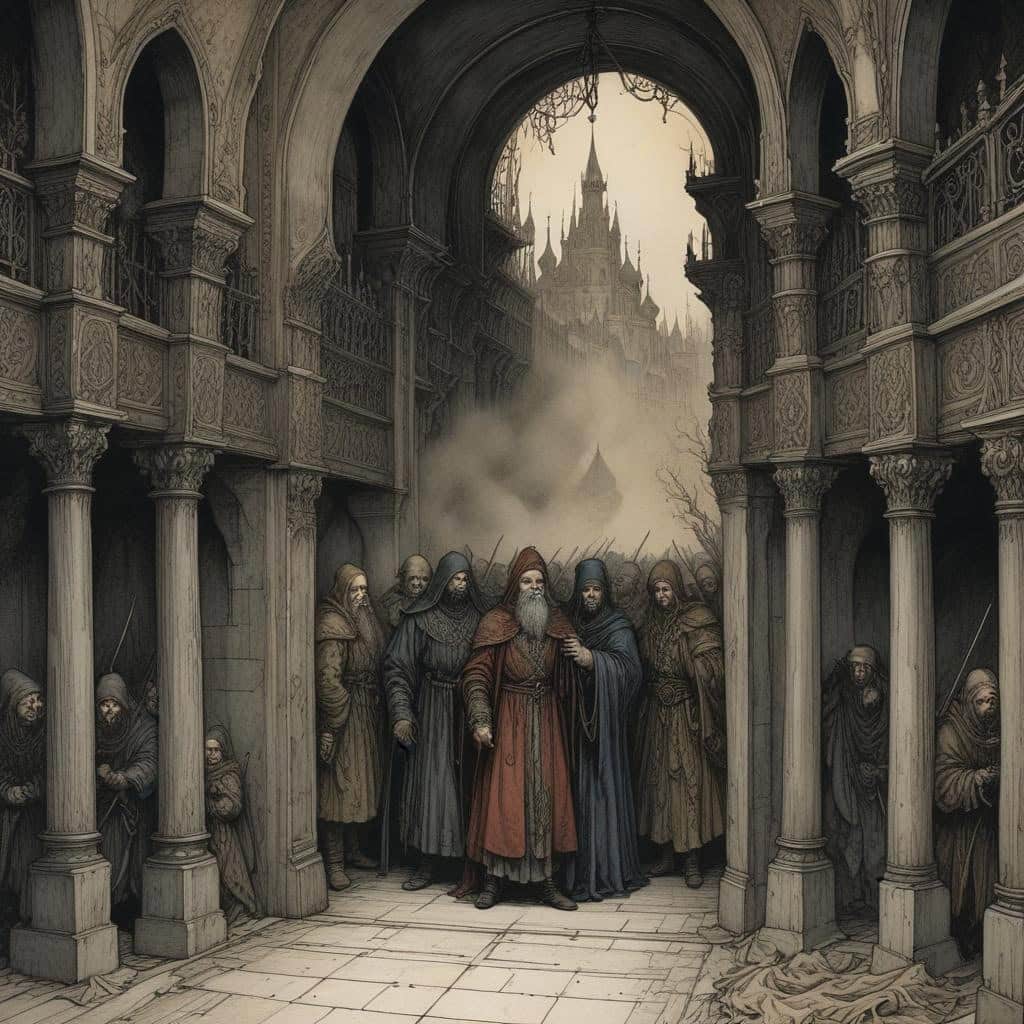

Boris Godunov

Grigory Otrepiev

Marina Mnishek

Vasili Shuisky
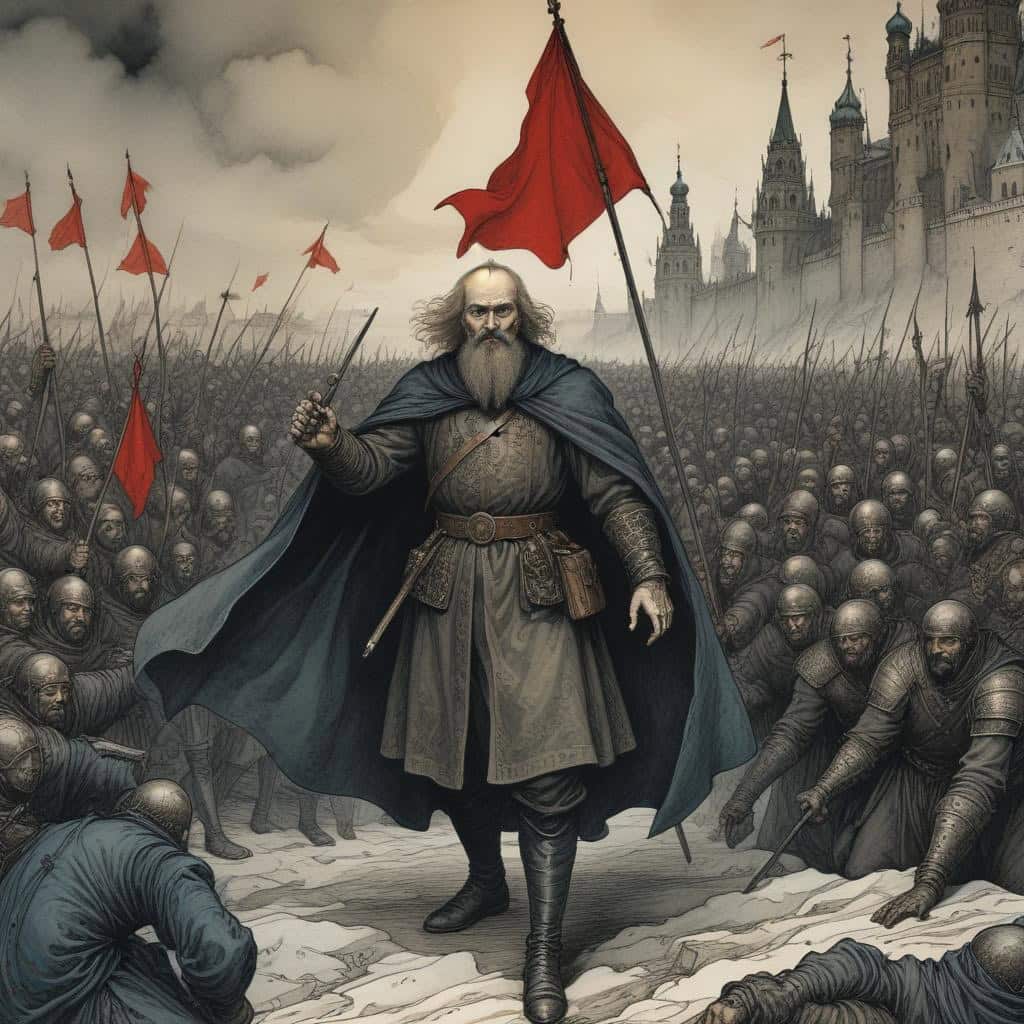
The Rise of Boris Godunov
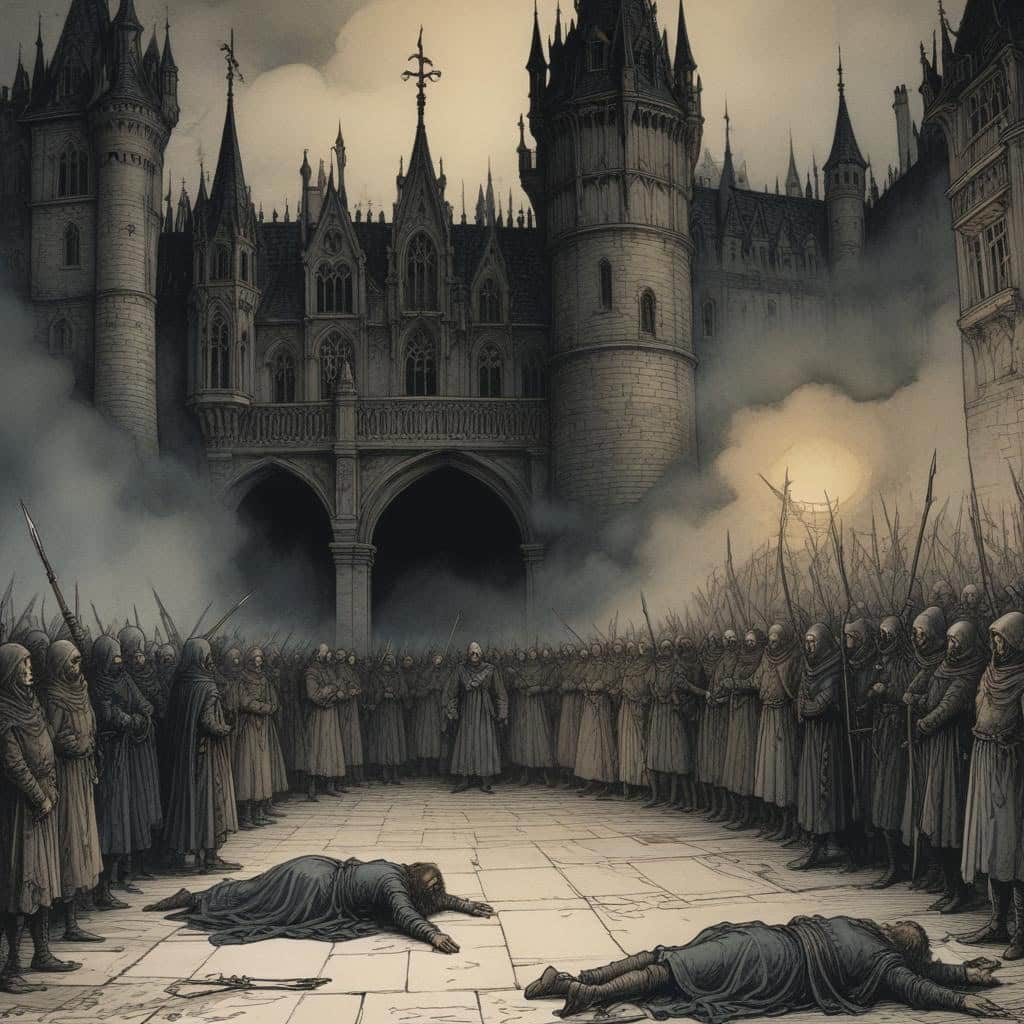
The Murder of Dmitri
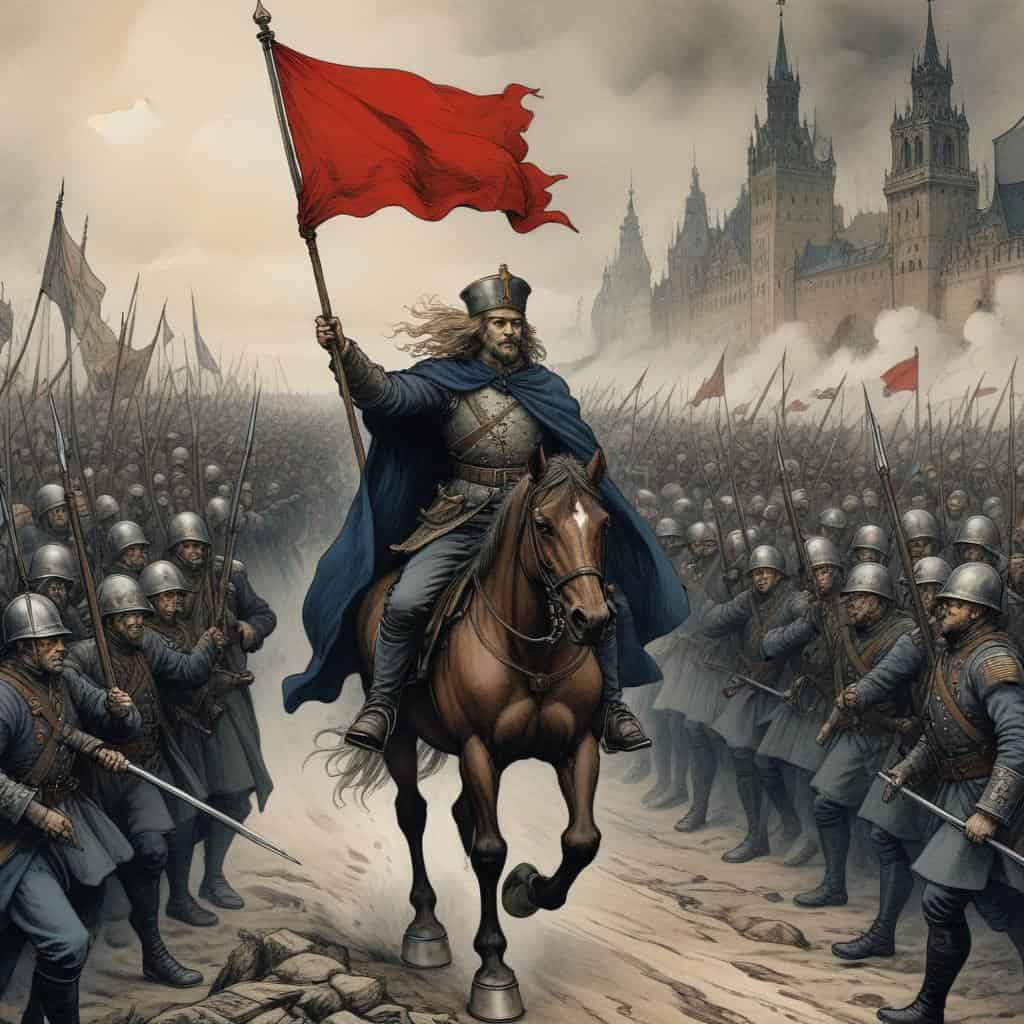
The Pretenders Rise to Power
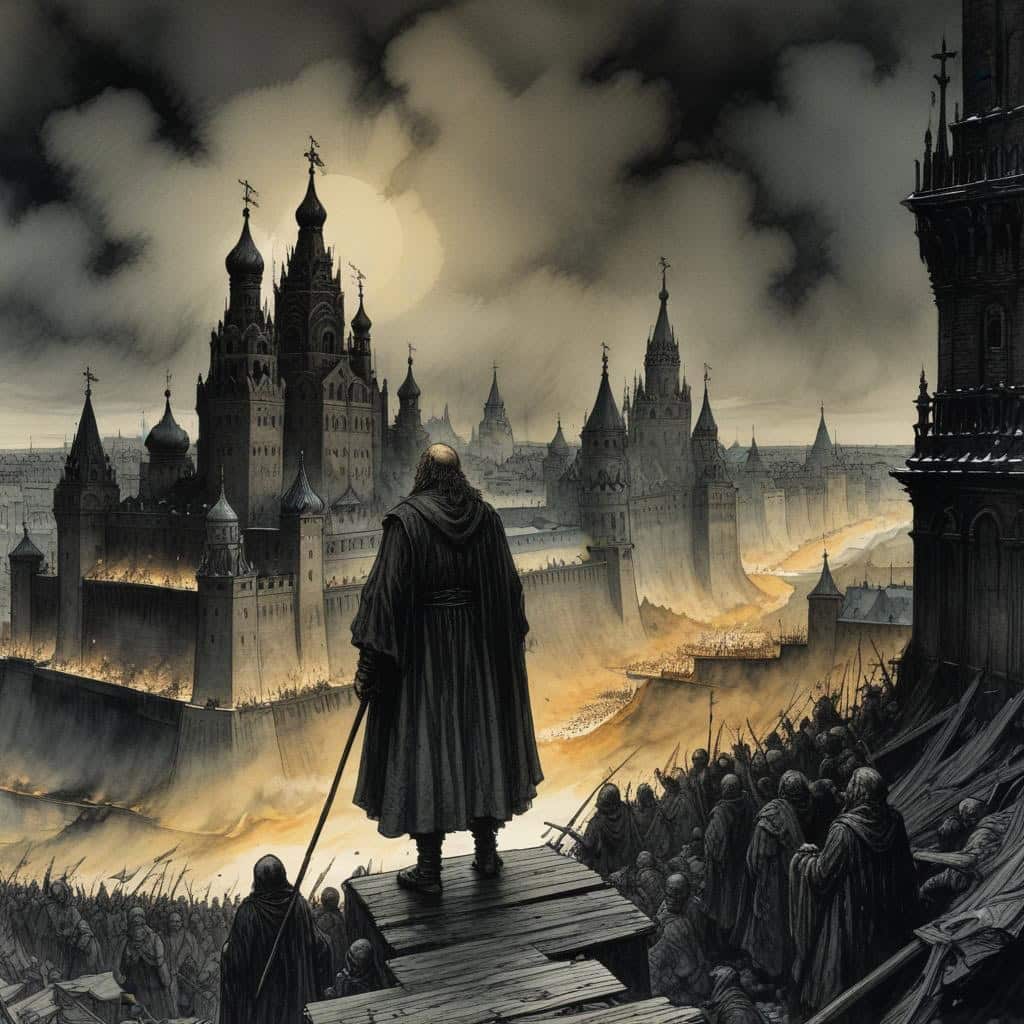
The Fall of Boris Godunov
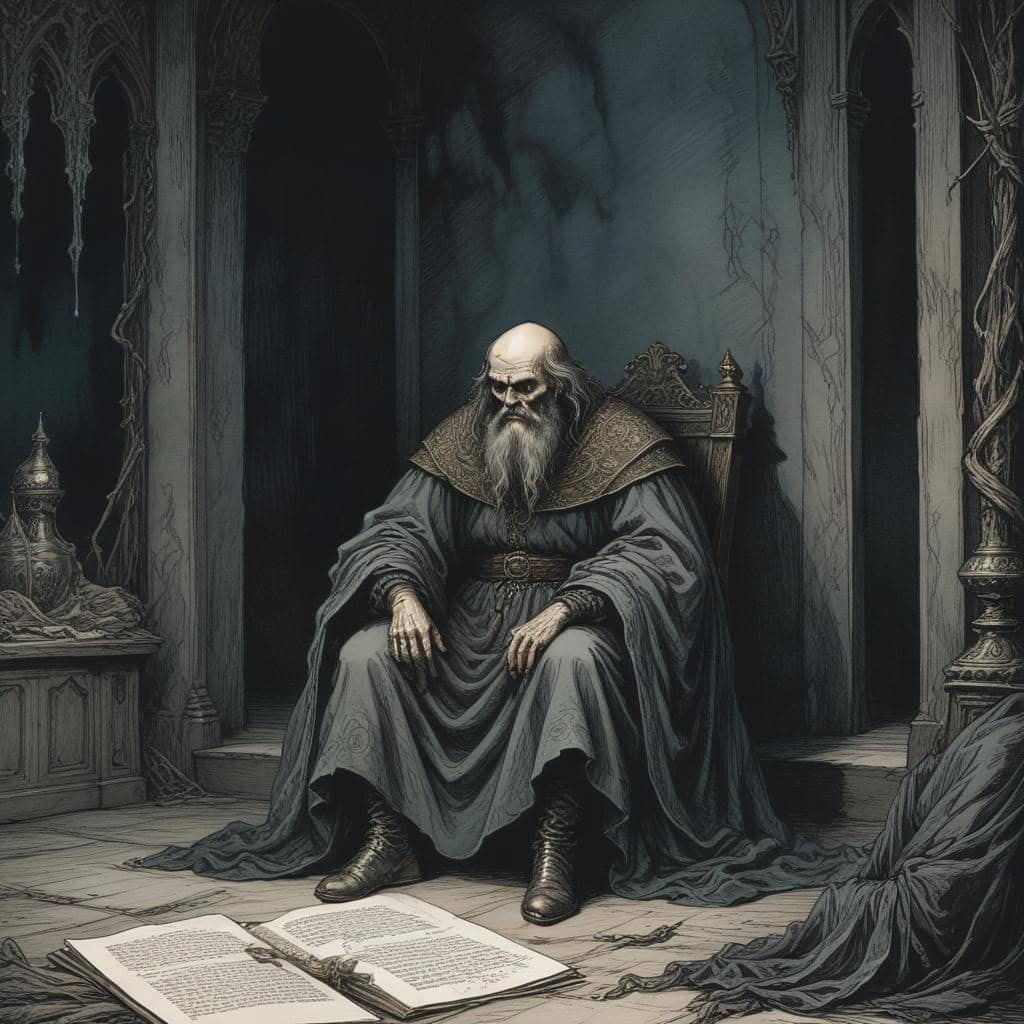
The Death of Boris Godunov

The Ascension of False Dmitri
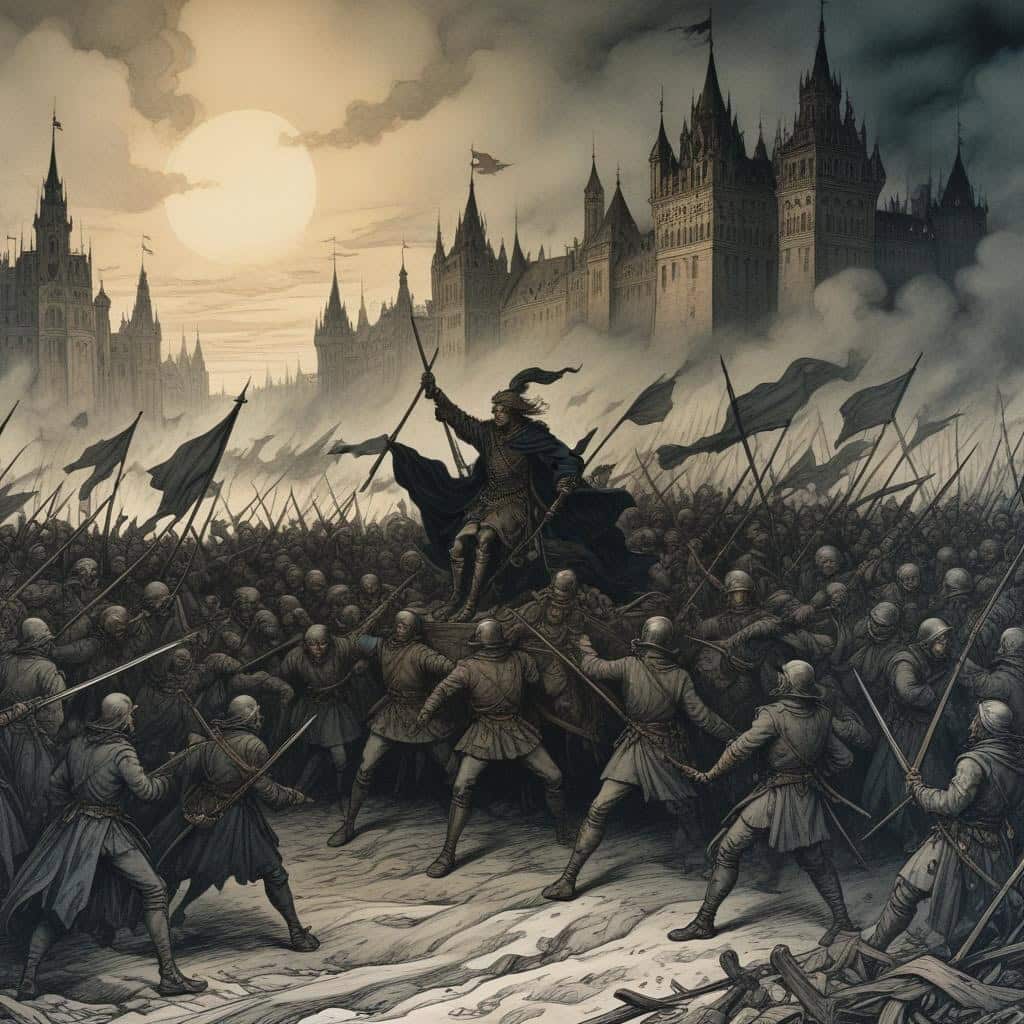
The End of False Dmitri
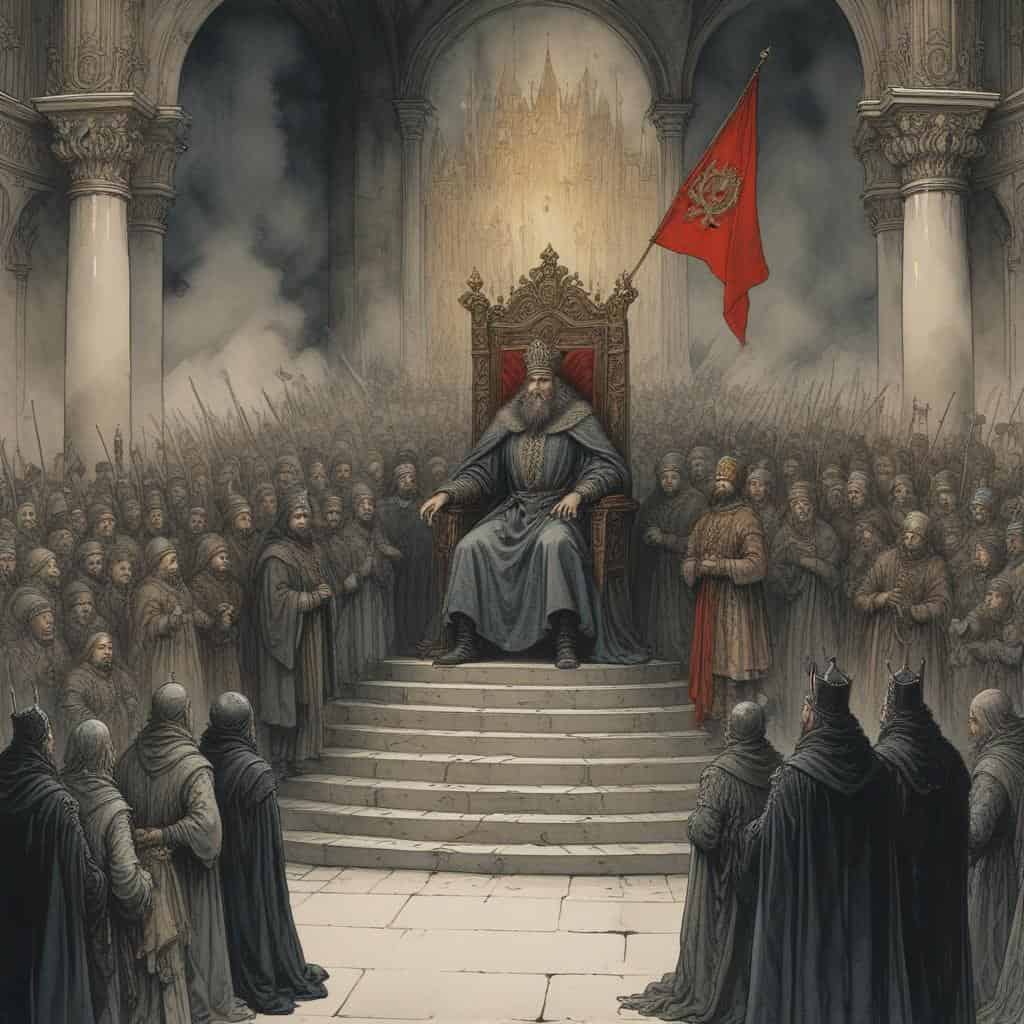
The Return of Boris Godunovs Son
The Restoration of Order

The Legacy of Boris Godunov
Lesson Details & Resources
In a Nutshell
- What: ‘Boris Godunov’ by Alexander Pushkin
- When: Written in the 19th century
- Who: Boris Godunov
- Theme: Power and ambition
List of Characters in Boris Godunov by Alexander Pushkin
-
Boris Godunov
Boris Godunov is a historical figure who becomes the Tsar of Russia after the death of Ivan the Terrible.
-
Grigory Otrepiev (False Dmitriy I)
Grigory Otrepiev claims to be the true heir to the throne and causes unrest in Russia.
-
Marina Mniszech
Marina Mniszech is a Polish noblewoman who marries False Dmitriy I and plays a significant role in the events of the story.
Timeline of Boris Godunov by Alexander Pushkin
Vocabulary List
- Tsar
- Boris Godunov is portrayed as a powerful and authoritative tsar in the play.
- Boyars
- The boyars in the court of Boris Godunov were often at odds with each other.
- Czarina
- The czarina's death greatly affected Boris Godunov and his reign.
- Regicide
- The play explores the themes of regicide and the consequences of killing a king.
- Usurper
- Some characters accuse Boris Godunov of being an usurper who took the throne by force.
Key Facts
This is the information used in the fact matching game
- Boris Godunov is a historical play written by Alexander Pushkin in 1825.
- The play is based on the reign of Boris Godunov, who ruled Russia as regent for Ivan the Terrible's son, Feodor I.
- Boris Godunov was Pushkin's first completed play and is considered one of his greatest works.
- The play explores themes of power, ambition, and the complexities of ruling a nation.
- Boris Godunov was originally banned from performance by the Russian government due to its controversial political themes.
- Pushkin's portrayal of Boris Godunov as a complex and conflicted character was revolutionary for its time.
- The play was eventually adapted into an opera by Modest Mussorgsky in 1874.
- Boris Godunov is considered one of the greatest works of Russian literature and has been translated into many languages.
- The play is divided into seven scenes and features a large cast of characters.
- Boris Godunov has been adapted for film and television several times, including a 1986 film directed by Sergei Bondarchuk.
- The play's exploration of political intrigue and manipulation continues to resonate with audiences today.
- Pushkin's use of language and symbolism in Boris Godunov has been praised by critics for its depth and complexity.
- The character of Boris Godunov is based on a real historical figure who ruled Russia from 1598 to 1605.
- The play's exploration of guilt and redemption adds a psychological depth to its characters.
- Boris Godunov's rise to power and subsequent downfall is a central focus of the play's plot.
- The play's historical accuracy has been questioned by some scholars, but its dramatic power remains undeniable.
- Boris Godunov's relationship with his advisor Pimen is a key element of the play's narrative.
- The play's exploration of the Russian national identity and its place in European history is a recurring theme throughout.
- Boris Godunov's portrayal as a tragic figure torn between his personal desires and his duty to his country is a central theme of the play.
- The play's richly drawn characters and intricate plot have made it a staple of the Russian literary canon.
Analysis & Significance
Impact on Literature
‘Boris Godunov’ by Alexander Pushkin has had a significant impact on Russian literature, often considered one of the greatest works of Russian literature. Pushkin’s poetic drama revolutionized the way historical events were depicted in literature, using a blend of fact and fiction to create a compelling narrative that continues to inspire writers to this day.
Enduring Themes
The themes of power, corruption, and the burden of leadership explored in ‘Boris Godunov’ remain relevant and resonate with modern audiences. Pushkin’s exploration of the human condition and the consequences of unchecked ambition continue to captivate readers, offering insights into timeless struggles and moral dilemmas that transcend time and place.
Cultural Significance Today
‘Boris Godunov’ continues to hold cultural significance today, with numerous adaptations in various art forms including opera, ballet, and film. The story of Boris Godunov’s rise to power and the moral complexities of his rule have inspired countless artists, ensuring that Pushkin’s work remains a timeless classic that continues to shape and influence the cultural landscape.
Boris Godunov by Alexander Pushkin Games


Take Your Learning Offline
Want a convenient, print-ready study guide for this lesson? Become a Memory Wizards Pro member to unlock the downloadable " Memory Scrolls" for this topic and our entire library!
- ✓ Complete Vocabulary Lists
- ✓ Key Facts & Timelines
- ✓ Beautifully Formatted for Print & Mobile