
How Do You Learn Best?
Learn by Listening
Start with the 3-minute audio summary to get the key facts and narrative highlights quickly.
Learn by Reading
Immerse yourself in the 10-minute visual lesson for a comprehensive understanding of the topic.
Learn by Reviewing
Jump directly to the key facts, timeline, and vocabulary lists to build a solid foundation of details.
Learn by Doing
Challenge yourself! Jump straight into the interactive games to learn by trial, error, and discovery.
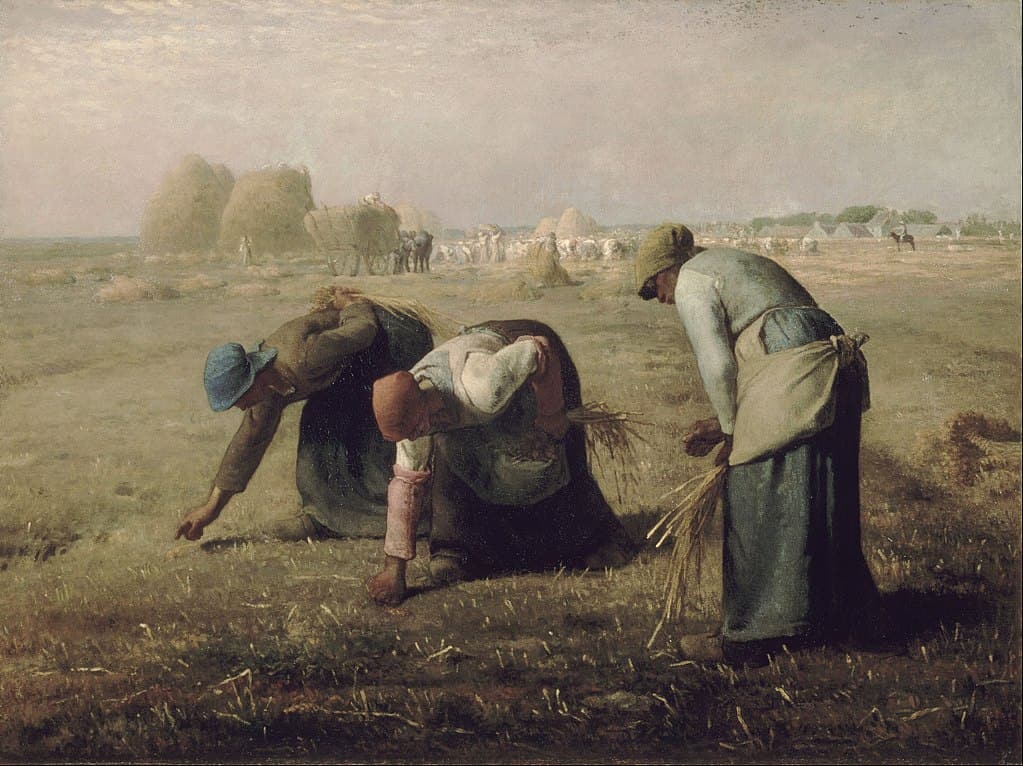
The Masterpiece: The Gleaners By Jean-François Millet

Deconstructing the Masterpiece
No composition analysis points available.
Audio Library
As one of our featured lessons, this topic includes premium audio guides.
Unlock the Wizard's Cram Session
This powerful audio study guide is a Pro-exclusive feature. Upgrade to Memory Wizards Pro to access this and all of our premium learning tools.
Upgrade to ProJean-François Millet: An Analysis in 10 Minutes
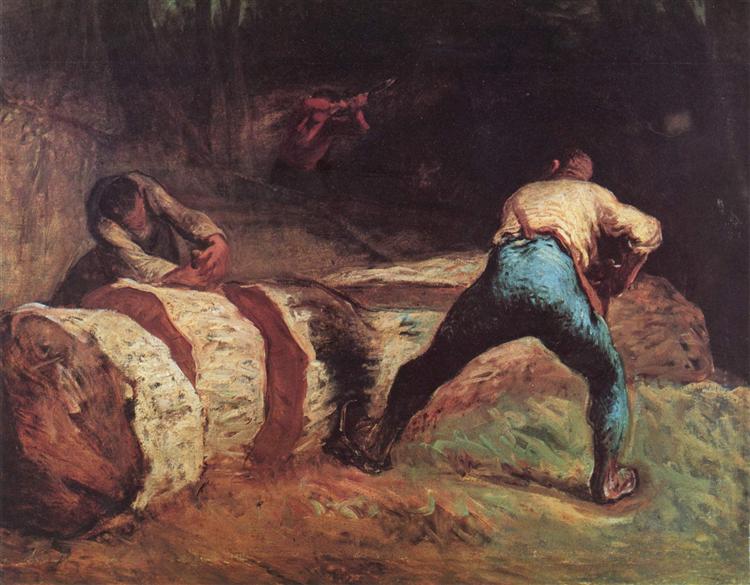
Introduction
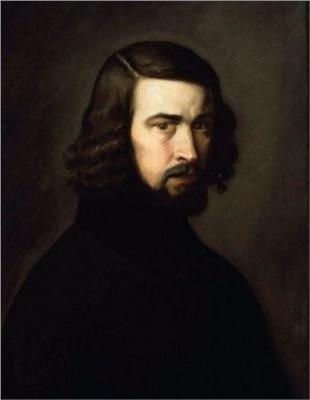
Early Life and Education
Moving to Paris
Barbizon School
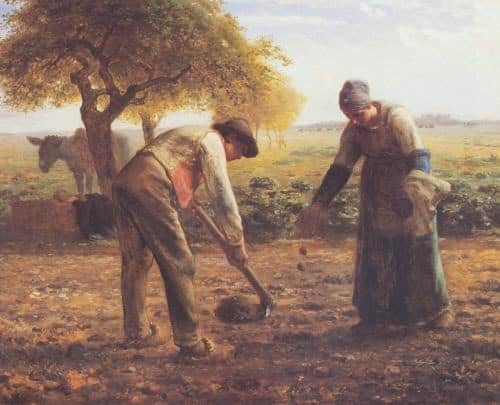
Recognition and Controversy
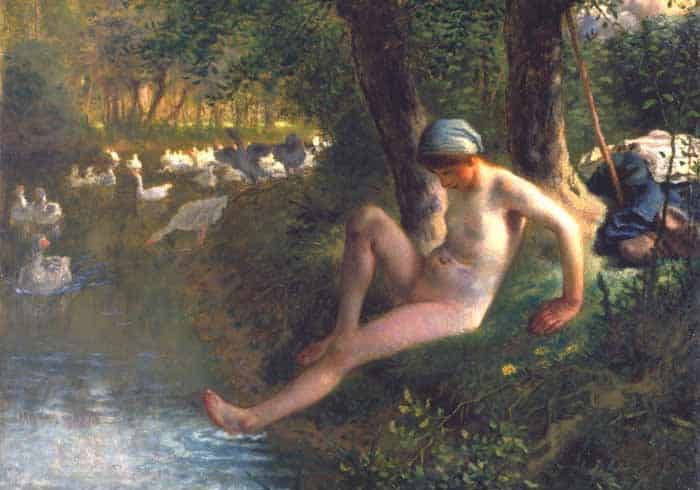
Influence on Other Artists
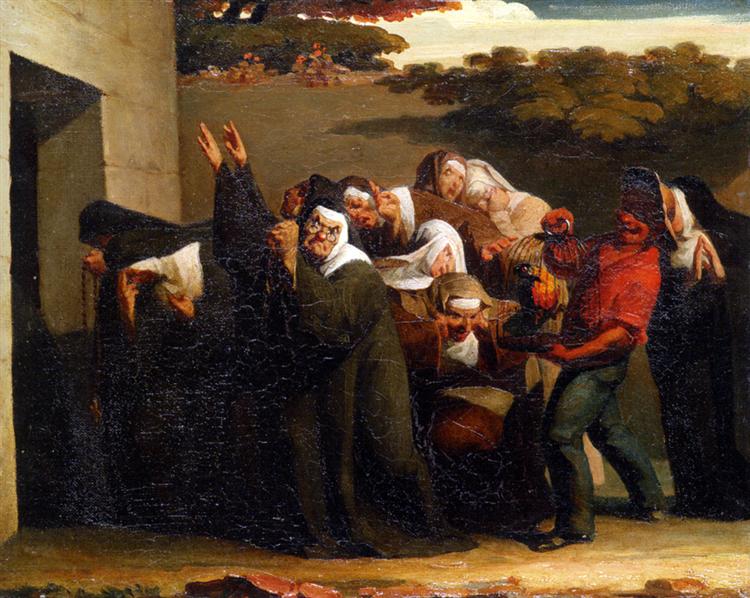
Later Years and Legacy
Lesson Details & Resources
In a Nutshell
- Artist: Jean-François Millet
- Year: 1857
- Medium: Oil on canvas
- Location: Musée d’Orsay, Paris
Vocabulary List
- Peasant
- Millet's paintings often depict peasant life in rural France.
- Harvest
- One of Millet's most famous works is 'The Gleaners', which shows women harvesting crops in a field.
- Landscape
- Millet's landscapes are characterized by their realism and attention to detail.
- Sowing
- Millet's painting 'The Sower' shows a farmer sowing seeds in a field.
- Realism
- Millet was known for his realistic depictions of rural life.
- Poverty
- Millet's paintings often highlight the poverty and hardship faced by peasants.
- Nature
- Millet's work often celebrates the beauty of the natural world.
- Work
- Millet's paintings often depict the hard work and labor of rural life.
- Farm
- Millet's paintings frequently feature farms and agricultural scenes.
- Solitude
- Many of Millet's works feature figures in quiet moments of solitude.
- Sunlight
- Millet was known for his skillful use of sunlight in his paintings.
- Humble
- Millet's work often celebrates the humble and ordinary aspects of life.
- Hope
- Millet's paintings often convey a sense of hope and resilience.
- Fields
- Millet's landscapes are often dominated by vast fields and open spaces.
- Labor
- Millet's paintings frequently depict the physical labor involved in rural life.
- Dignity
- Millet's work often portrays the dignity and strength of the peasant class.
- Countryside
- Millet's paintings capture the beauty and tranquility of the French countryside.
- Honesty
- Millet's paintings are praised for their honesty and authenticity.
- Rustic
- Millet's paintings often have a rustic, earthy quality to them.
- Chiaroscuro
- Millet used chiaroscuro to create dramatic lighting effects in his paintings.
Timeline of Jean-François Millet: An Analysis
Jean-François Millet is born in Gruchy, France
Millet moves to Cherbourg to study art
Millet moves to Paris to study at the École des Beaux-Arts
Millet's painting 'The Winnower' is exhibited at the Salon
Millet's painting 'The Sower' is exhibited at the Salon
Millet's painting 'The Gleaners' is exhibited at the Salon
Millet moves to Barbizon and joins the Barbizon School of painters
Millet's painting 'The Angelus' is completed
Millet's painting 'The Angelus' is exhibited at the Salon
Millet's wife, Pauline-Virginie Ono, dies
Millet's painting 'The Gleaners' is purchased by the French government
Millet dies in Barbizon, France
Millet's painting 'The Gleaners' is exhibited at the Exposition Universelle in Paris
Millet's painting 'The Sower' is purchased by the French government
Millet's painting 'The Man with a Hoe' is completed
Millet's painting 'The Man with a Hoe' is exhibited at the Salon
Millet's painting 'The Gleaners' is exhibited at the Royal Academy in London
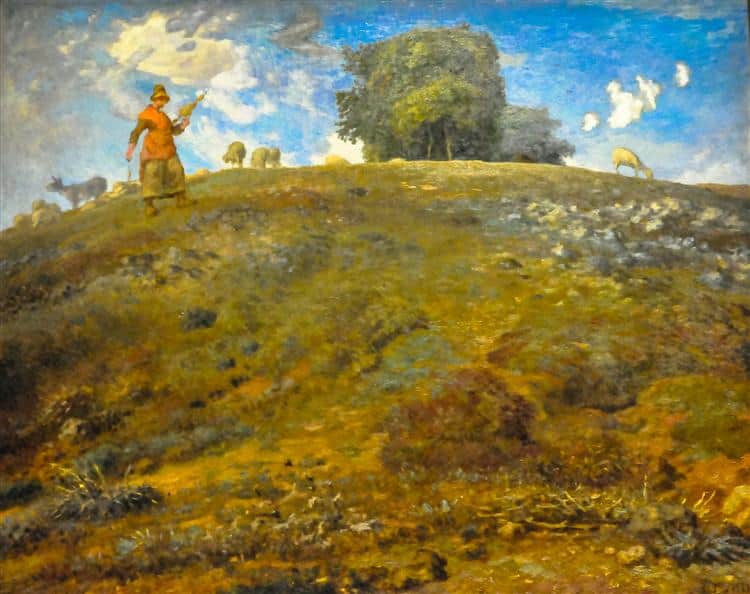
Millet's painting 'The Shepherdess' is completed
Millet's painting 'The Shepherdess' is exhibited at the Salon
Millet's painting 'The Shepherdess' is purchased by the French government
Key Facts
Analysis & Significance
Artistic Innovation
Jean-François Millet’s artwork introduced a revolutionary approach to depicting rural life, focusing on the dignity and humanity of peasant farmers. His use of natural light, earthy tones, and realistic details brought a new level of emotional depth and authenticity to the genre of rural realism.
Influence on Art History
Millet’s work had a profound impact on later artists, inspiring the Realist movement and influencing painters like Vincent van Gogh and Georges Seurat. His emphasis on the struggles and everyday life of the working class challenged traditional notions of beauty and subject matter in art, paving the way for a more socially conscious approach to painting.
Cultural Significance Today
Today, Jean-François Millet’s artwork continues to be celebrated for its powerful depiction of the human experience and its enduring relevance to contemporary social issues. His paintings are revered as masterpieces of 19th-century art, captivating global audiences with their timeless beauty and profound commentary on the human condition.
Jean-François Millet: An Analysis Games


Take Your Learning Offline
Want a convenient, print-ready study guide for this lesson? Become a Memory Wizards Pro member to unlock the downloadable " Memory Scrolls" for this topic and our entire library!
- ✓ Complete Vocabulary Lists
- ✓ Key Facts & Timelines
- ✓ Beautifully Formatted for Print & Mobile