
Philosophical Arguments For Determinism
Are our choices truly our own, or are they predestined?
How Do You Learn Best?
Learn by Reading
Immerse yourself in the 10-minute visual lesson for a comprehensive understanding of the topic.
Learn by Reviewing
Jump directly to the key facts, timeline, and vocabulary lists to build a solid foundation of details.
Learn by Doing
Challenge yourself! Jump straight into the interactive games to learn by trial, error, and discovery.
Philosophical Arguments For Determinism in 10 Minutes

Introduction



Albert Einstein

Baruch Spinoza

Thomas Hobbes

David Hume

Friedrich Nietzsche

1. Introduction to Determinism

2. Historical Roots
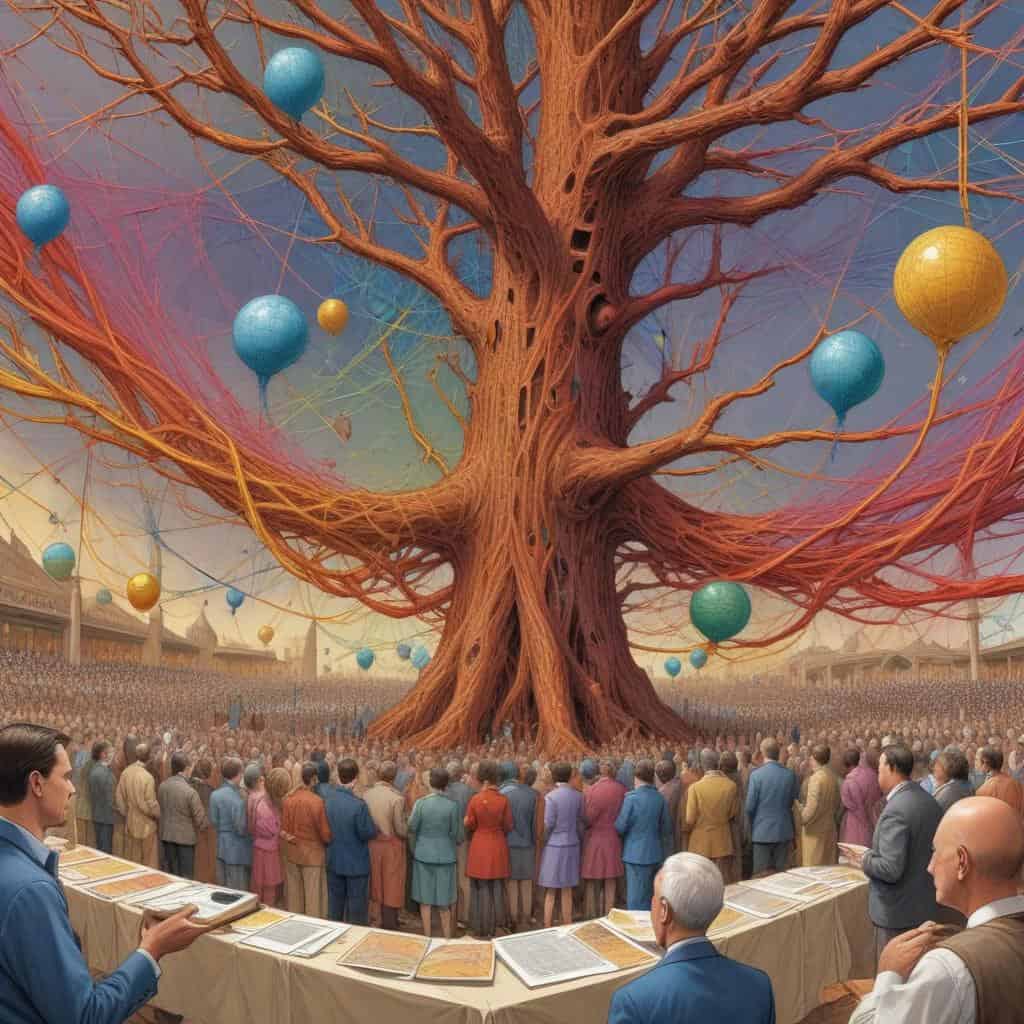
3. Causal Determinism

4. Hard Determinism

5. Soft Determinism

6. The Argument of Universal Causation

7. The Argument from Physical Laws

8. The Argument from Predictability

9. Criticisms of Determinism
Lesson Details & Resources
In a Nutshell
- Concept: Philosophical Arguments for Determinism
- Thinkers: David Hume, Baruch Spinoza, and Thomas Hobbes, 17th-18th Century
- Central Question: Are human actions and events in the universe determined by prior causes or are they random and free?
- Core Implication: The belief that all events, including human actions, are ultimately determined by causes external to the will.
Timeline of Philosophical Arguments For Determinism
Ancient Greek philosophers such as Democritus and Leucippus develop the concept of determinism as part of their atomic theory
Stoic philosophers such as Chrysippus argue for a deterministic worldview based on the idea of fate
Medieval Islamic philosophers such as Avicenna and Averroes discuss determinism in relation to divine foreknowledge
Rene Descartes argues for a form of determinism in his philosophical works
Thomas Hobbes presents a deterministic view of human behavior in his work Leviathan
Baruch Spinoza develops a comprehensive deterministic philosophy in his Ethics
David Hume explores the implications of determinism in his philosophical works
Immanuel Kant critiques determinism in his Critique of Pure Reason
Arthur Schopenhauer argues for a deterministic view of human will in his work The World as Will and Representation
Friedrich Nietzsche critiques determinism in his philosophical works
Bertrand Russell discusses determinism in his work The Problems of Philosophy
Ludwig Wittgenstein explores the concept of determinism in his Tractatus Logico-Philosophicus
Jean-Paul Sartre argues against determinism in his existentialist philosophy
Daniel Dennett presents a compatibilist view of determinism in his book Freedom Evolves
Sam Harris argues for a deterministic view of human behavior in his book Free Will
Vocabulary List
- Determinism
- Many philosophers argue that determinism is incompatible with free will.
- Causal Determinism
- Causal determinism is a key concept in many philosophical arguments.
- Compatibilism
- Some philosophers argue for a compatibilist view of determinism and free will.
- Hard Determinism
- Hard determinists argue that human actions are completely determined by prior causes.
- Indeterminism
- Indeterminism is often seen as a challenge to the idea of causal determinism.
Key Facts
This is the information used in the fact matching game
- Determinism is the philosophical position that every event, including human actions, is causally determined by previous events.
- Many arguments for determinism are based on the idea that everything in the universe operates according to natural laws.
- One argument for determinism is the causal determinism argument, which states that every event has a cause that necessitates its occurrence.
- Determinism is often contrasted with the concept of free will, which suggests that individuals have the ability to make choices that are not predetermined.
- Some philosophers argue for determinism based on the idea that the laws of physics govern all events in the universe.
- Determinism can be seen as a threat to moral responsibility, as it suggests that individuals may not be truly responsible for their actions if they are predetermined.
- The Laplace's demon argument for determinism posits that if a being knew the positions and velocities of all particles in the universe at a given time, they could predict all future events.
- The determinist argument from neuroscience suggests that brain activity and neural processes are deterministic, leading to the conclusion that human behavior is also determined.
- Some philosophers argue for determinism based on the idea that the future is predetermined by the initial conditions of the universe and the laws of physics.
- Determinism is often associated with the philosophical idea of fatalism, which suggests that events are predetermined and inevitable.
- The argument from divine foreknowledge suggests that if an omniscient deity exists, then the future must be predetermined, leading to a form of determinism.
- Some philosophers argue for determinism based on the idea that the universe is a closed system, with all events being determined by the interactions of its components.
- Determinism is often criticized for undermining the concept of human agency and the possibility of genuine choice.
- The argument from physical determinism suggests that if the laws of physics are deterministic, then all events in the universe must also be deterministic.
- Some philosophers argue for determinism based on the idea that the past and present are fixed, leading to a deterministic future.
- Determinism is often discussed in relation to debates about the nature of time and the possibility of changing the past or future.
- The argument from causation suggests that if every event has a cause, then all events must be determined by their causes, leading to determinism.
- Some philosophers argue for determinism based on the idea that human actions are ultimately determined by factors such as genetics, upbringing, and societal influences.
- Determinism is often seen as incompatible with the idea of moral responsibility, as it suggests that individuals may not have control over their actions.
- The argument from the principle of sufficient reason suggests that if every event must have a reason or cause, then determinism must be true.
Analysis & Significance
The Core Argument
Philosophical arguments for determinism posit that all events, including human actions, are determined by previous causes, leading to the conclusion that free will is an illusion. This idea challenges traditional notions of personal responsibility and moral accountability.
Criticisms and Counterarguments
Critics of determinism argue that it undermines the concept of moral agency and diminishes the importance of individual choices. They propose alternative views like compatibilism, which seeks to reconcile determinism with free will by suggesting that they are not mutually exclusive.
Modern Relevance
The debate over determinism continues to be relevant in modern society, particularly in discussions on criminal justice, artificial intelligence, and neuroscience. Understanding the implications of determinism can have profound implications on how we view ethical dilemmas, personal identity, and societal structures.
Philosophical Arguments For Determinism Games


Take Your Learning Offline
Want a convenient, print-ready study guide for this lesson? Become a Memory Wizards Pro member to unlock the downloadable " Memory Scrolls" for this topic and our entire library!
- ✓ Complete Vocabulary Lists
- ✓ Key Facts & Timelines
- ✓ Beautifully Formatted for Print & Mobile