
The Problem Of Continuity In Identity
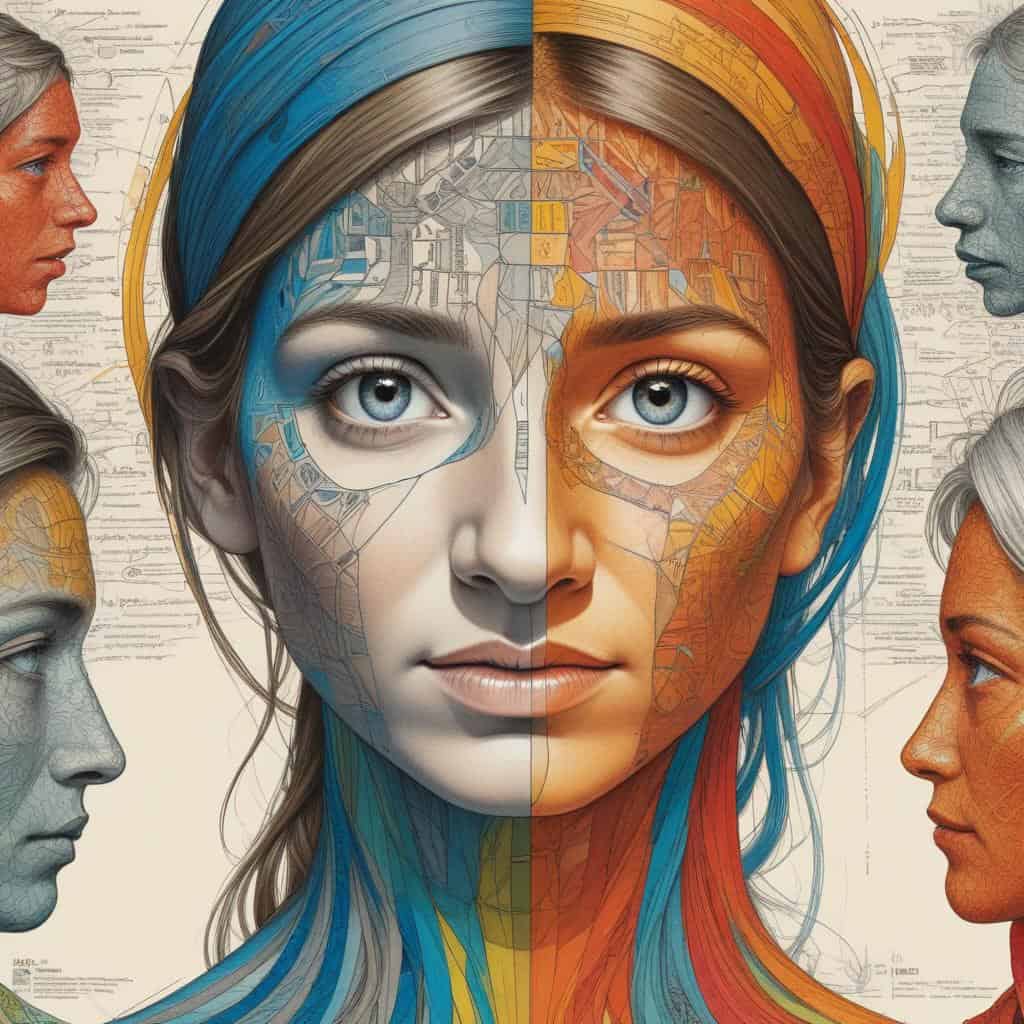
Do we remain the same person through life's changes?
How Do You Learn Best?
Learn by Reading
Immerse yourself in the 10-minute visual lesson for a comprehensive understanding of the topic.
Learn by Reviewing
Jump directly to the key facts, timeline, and vocabulary lists to build a solid foundation of details.
Learn by Doing
Challenge yourself! Jump straight into the interactive games to learn by trial, error, and discovery.
The Problem Of Continuity In Identity in 10 Minutes

Introduction


1. John Smith

2. Dr. Elizabeth Chang

3. Sarah Johnson

The Problem of Continuity in Identity

Lily Seeks Help

Searching for Clues

A Mysterious Stranger

The Journey Begins

Ancient Prophecy

Showdown with the Sorcerer

Regaining her Identity

A New Beginning
Lesson Details & Resources
In a Nutshell
- Concept: A philosophical problem that deals with the idea of personal identity and the continuity of self over time.
- Thinkers: John Locke, David Hume, and Derek Parfit, 17th-20th Century.
- Central Question: How can we account for the persistence of personal identity despite changes in physical and mental attributes?
- Core Implication: The concept of a fixed, unchanging self may be an illusion, and our identity is more fluid and complex than commonly believed.
Timeline of The Problem Of Continuity In Identity
The Ship of Theseus paradox is first recorded by Plutarch
John Locke introduces the concept of personal identity in 'An Essay Concerning Human Understanding'
David Hume challenges the idea of a continuous self in 'A Treatise of Human Nature'
Immanuel Kant proposes the concept of transcendental apperception in 'Critique of Pure Reason'
Derek Parfit publishes 'Reasons and Persons', discussing the problem of personal identity
Bernard Williams criticizes the concept of personal identity in 'The Self and the Future'
Daniel Dennett presents his views on personal identity in 'The Self as a Center of Narrative Gravity'
Thomas Metzinger explores the illusion of the self in 'Being No One: The Self-Model Theory of Subjectivity'
Oliver Sacks discusses cases of disrupted personal identity in 'The Man Who Mistook His Wife for a Hat'
Raymond Tallis argues against reductionist views of personal identity in 'The Hand: A Philosophical Inquiry into Human Being'
Alan Watts explores Eastern philosophies on selfhood in 'The Book: On the Taboo Against Knowing Who You Are'
Susan Blackmore discusses the concept of self in 'Conversations on Consciousness'
Thomas Nagel examines the limits of subjective experience in 'What Does It All Mean? A Very Short Introduction to Philosophy'
Elizabeth Anscombe challenges the idea of a persisting self in 'The First Person'
Rene Descartes posits the existence of a thinking self in 'Meditations on First Philosophy'
Galen Strawson argues for the reality of the self in 'The Evident Connexion: Hume on Personal Identity'
Thomas Reid defends the existence of a continuous self in 'Essays on the Intellectual Powers of Man'
Paul Ricoeur explores the narrative construction of personal identity in 'Oneself as Another'
Marya Schechtman discusses the problem of narrative identity in 'The Constitution of Selves'
Anil Seth presents a neuroscientific perspective on selfhood in 'Being You: A New Science of Consciousness'
Vocabulary List
- Continuity
- The problem of continuity in identity arises when considering how a person remains the same individual over time despite changes in appearance, beliefs, and experiences.
- Identity
- The problem of continuity in identity deals with the question of what makes a person the same individual over time, despite changes in physical and mental attributes.
- Persistence
- The problem of continuity in identity concerns the persistence of a person's identity despite changes in their physical and mental characteristics.
- Selfhood
- The problem of continuity in identity delves into the concept of selfhood and how it is maintained over time despite changes in external factors.
- Memory
- Memory plays a crucial role in the problem of continuity in identity, as it helps individuals maintain a sense of self and continuity over time by recalling past experiences and knowledge.
Key Facts
Analysis & Significance
The Core Argument
The problem of continuity in identity delves into the question of what makes a person the same individual over time. It challenges our intuitive sense of self and explores whether personal identity can be defined by physical continuity, psychological continuity, or a combination of both.
Criticisms and Counterarguments
One major criticism of the concept is the Ship of Theseus paradox, where gradual replacement of parts raises the question of whether the ship remains the same. Philosophers also debate whether memory plays a crucial role in defining identity, as memory can be fallible and change over time.
Modern Relevance
The problem of continuity in identity has significant implications in modern debates surrounding personal identity, artificial intelligence, and the ethics of cloning. As technology advances and questions of consciousness arise, understanding how we define and preserve individual identity becomes increasingly important in areas such as bioethics and digital privacy.
The Problem Of Continuity In Identity Games


Take Your Learning Offline
Want a convenient, print-ready study guide for this lesson? Become a Memory Wizards Pro member to unlock the downloadable " Memory Scrolls" for this topic and our entire library!
- ✓ Complete Vocabulary Lists
- ✓ Key Facts & Timelines
- ✓ Beautifully Formatted for Print & Mobile