
The Philosophy Of Diogenes
Can true happiness be found in simplicity and honest living?
How Do You Learn Best?
Learn by Reading
Immerse yourself in the 10-minute visual lesson for a comprehensive understanding of the topic.
Learn by Reviewing
Jump directly to the key facts, timeline, and vocabulary lists to build a solid foundation of details.
Learn by Doing
Challenge yourself! Jump straight into the interactive games to learn by trial, error, and discovery.
The Philosophy Of Diogenes in 10 Minutes

Introduction
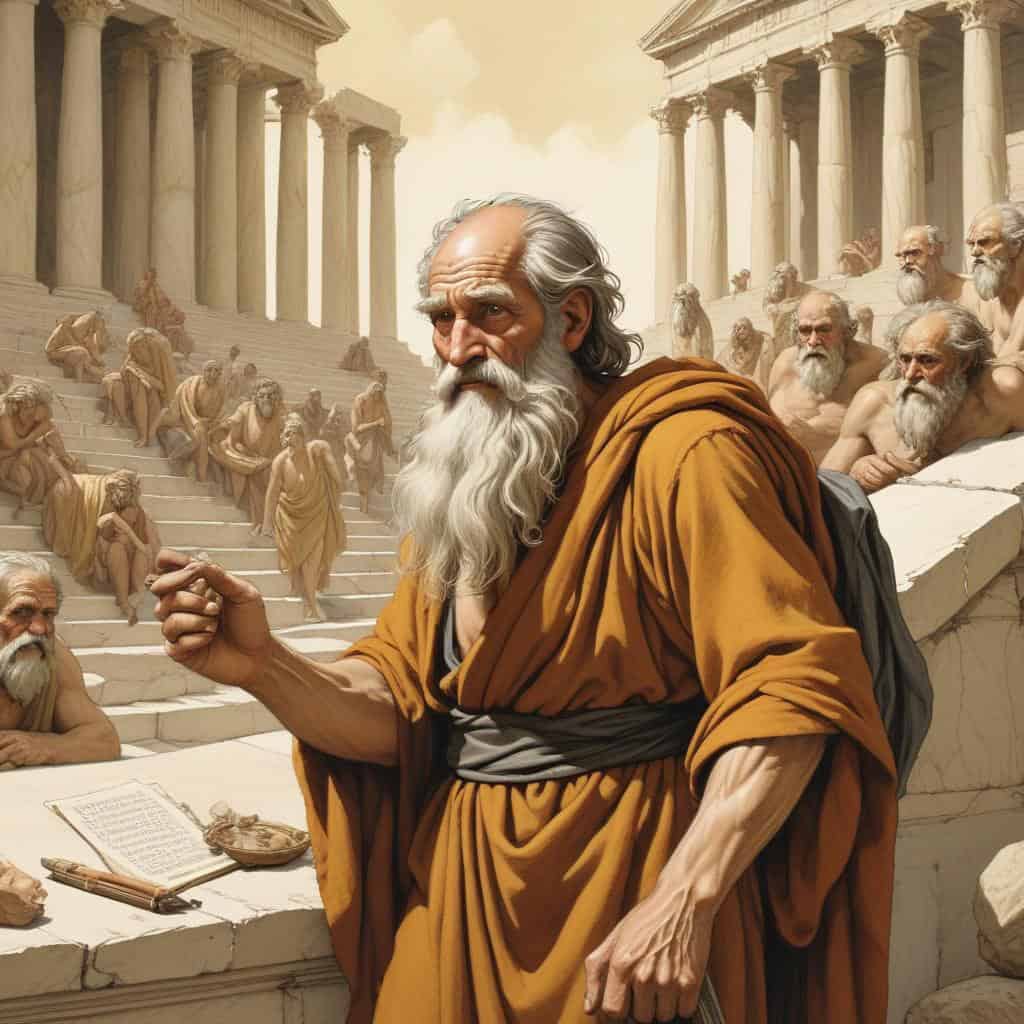
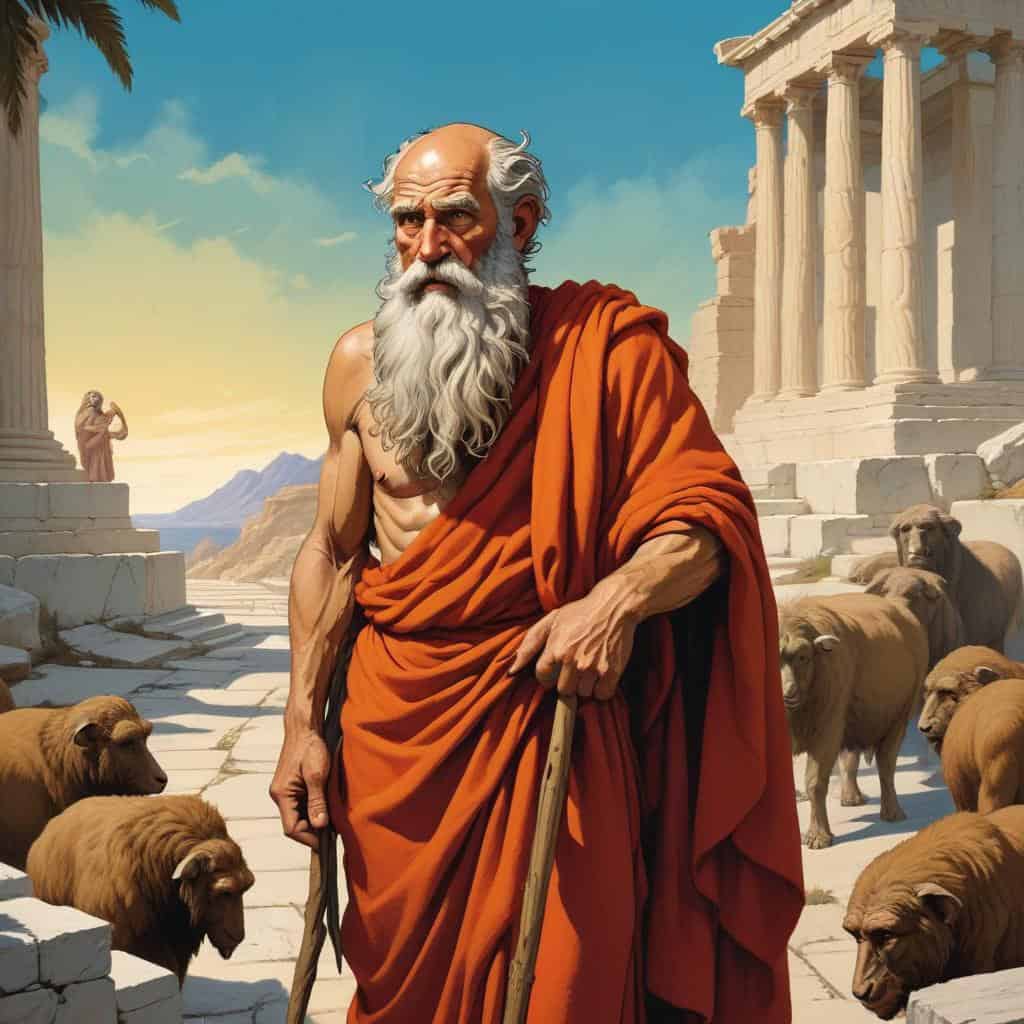

Diogenes of Sinope
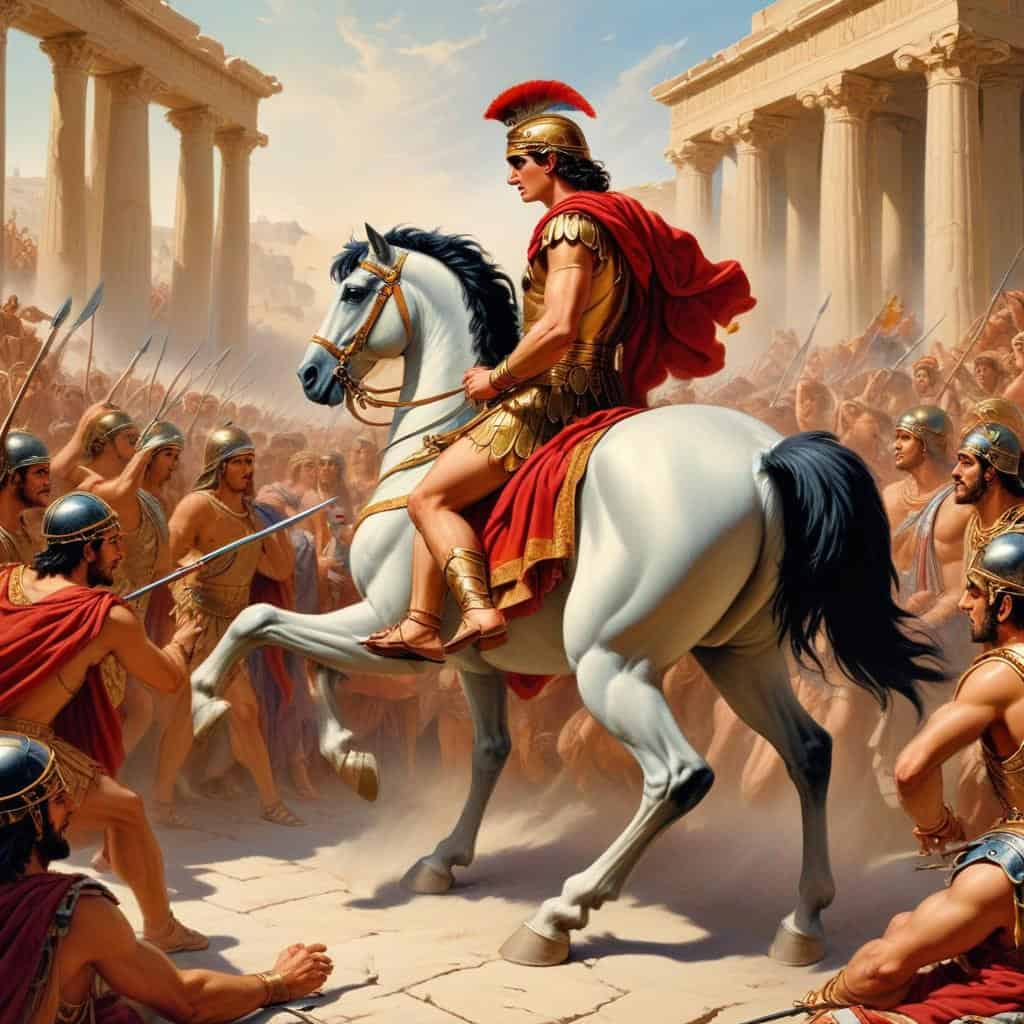
Alexander the Great

Crates of Thebes
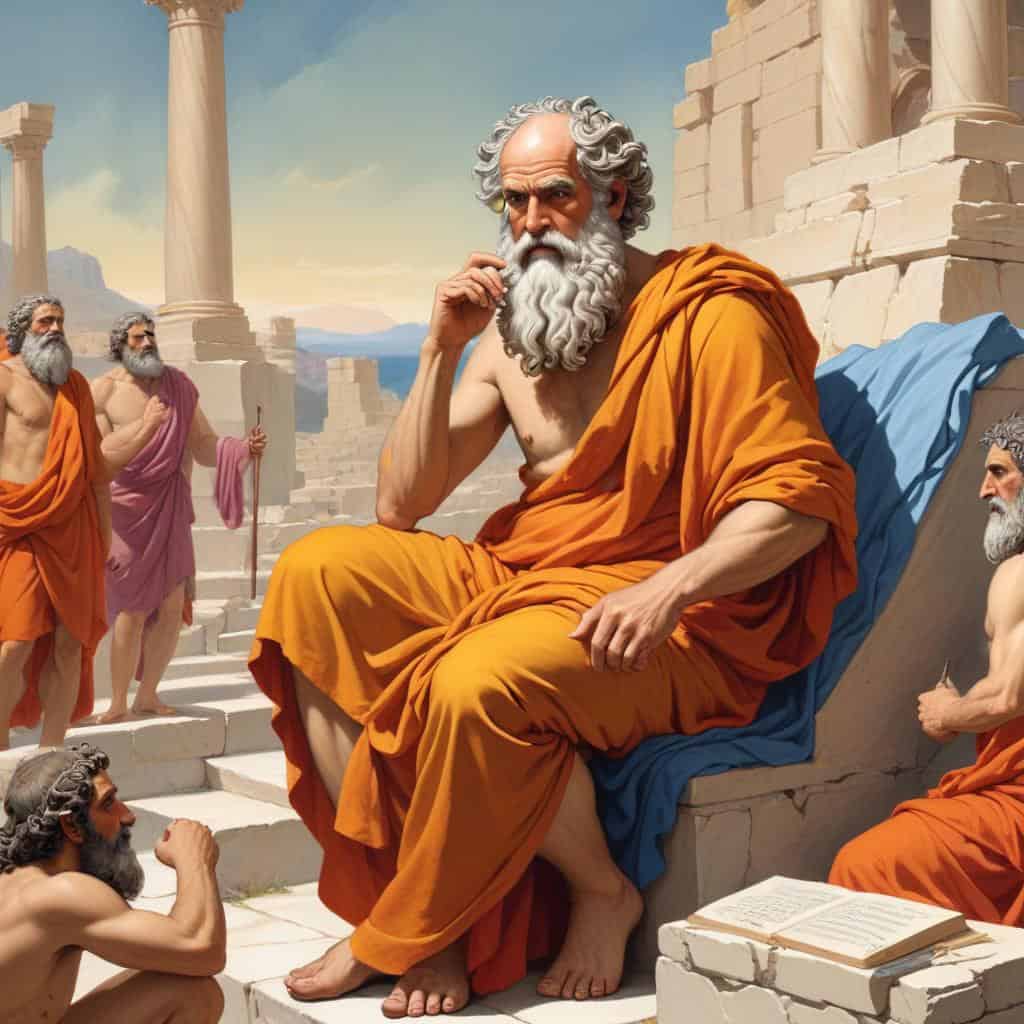
Antisthenes

Diogenes Early Life and Background

The Cynic Philosophy

Diogenes Lifestyle and Beliefs

Diogenes Famous Interactions

Diogenes Philosophy on Virtue

Diogenes Legacy


Lesson Details & Resources
In a Nutshell
- Concept: A philosophical school of thought emphasizing minimalism, self-sufficiency, and living in accordance with nature.
- Key Philosopher(s): Diogenes of Sinope, 4th Century BC.
- Central Question: How can one live a virtuous and fulfilling life by rejecting societal norms and material possessions?
- Most Important Conclusion: True freedom and happiness can be achieved by embracing simplicity, honesty, and self-reliance.
Timeline of The Philosophy Of Diogenes
Vocabulary List
- Cynicism
- Diogenes was a prominent figure in Cynicism, often living in poverty and rejecting societal conventions.
- Virtue
- Diogenes believed that true virtue could be achieved through self-sufficiency and living in accordance with nature.
- Asceticism
- Diogenes practiced asceticism by living in a barrel and owning very few possessions.
- Self-sufficiency
- Diogenes believed in the importance of self-sufficiency and living independently from society.
- Honesty
- Diogenes valued honesty above all else, often speaking his mind without regard for social conventions.
Key Facts
Analysis & Significance
The Core Argument
Diogenes, the ancient Greek philosopher, believed in living a simple and virtuous life, free from societal norms and conventions. He sought to live in accordance with nature and to embrace self-sufficiency, advocating for a life of minimalism and honesty.
Criticisms and Counterarguments
Critics of Diogenes argue that his extreme rejection of societal norms and values could lead to chaos and anarchy. They question the feasibility of his philosophy in a complex society and point out that his disregard for social conventions may hinder social cohesion and progress.
Modern Relevance
Despite the criticisms, Diogenes’ philosophy resonates with modern discussions on consumerism, materialism, and authenticity. In a world driven by consumer culture and social media influence, his emphasis on living a simple and honest life serves as a powerful reminder to prioritize values over possessions and to stay true to oneself in a world filled with external pressures.
The Philosophy Of Diogenes Games


Take Your Learning Offline
Want a convenient, print-ready study guide for this lesson? Become a Memory Wizards Pro member to unlock the downloadable " Memory Scrolls" for this topic and our entire library!
- ✓ Complete Vocabulary Lists
- ✓ Key Facts & Timelines
- ✓ Beautifully Formatted for Print & Mobile