Overcoming Fear Of Death

What lies beyond our final breath?

How Do You Learn Best?

Note: You can explore any or all of these paths in any order you prefer!

Overcoming Fear Of Death in 10 Minutes

Introduction
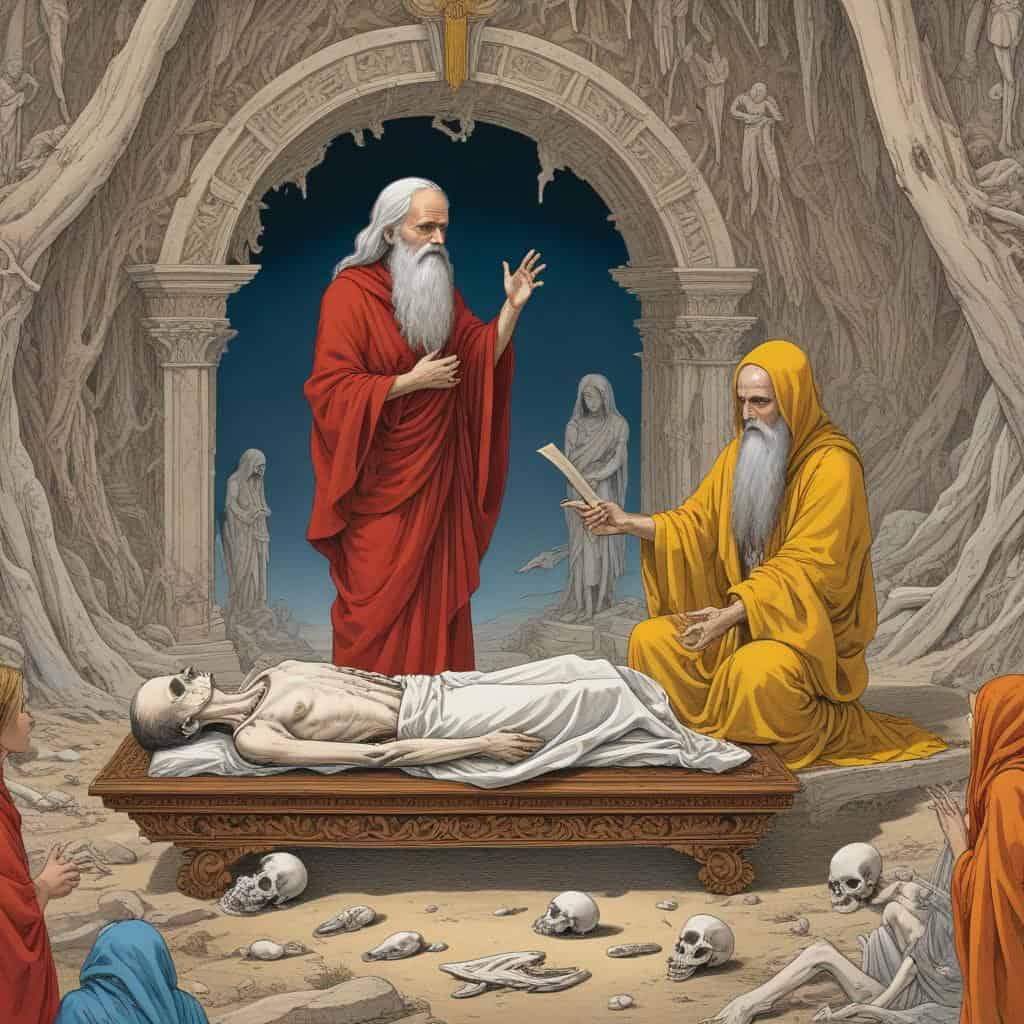
Introduction

Death is a universal fear that has plagued humanity for centuries. Many people find themselves paralyzed by thoughts of their own mortality, leading to anxiety and distress. However, philosophers throughout history have offered insights and perspectives on how to overcome this fear and embrace the inevitable.

In this article, we will explore the various philosophical approaches to understanding and accepting death. From the teachings of ancient Stoics to modern existentialist thinkers, we will delve into the ways in which different belief systems and philosophies can help individuals come to terms with the concept of mortality.

By examining the works of renowned philosophers such as Epicurus, Socrates, and Albert Camus, we will uncover the common themes and techniques for conquering the fear of death. Through reflection, acceptance, and a shift in perspective, individuals can learn to live more fully in the face of their own mortality.

Socrates

Socrates

Socrates, the ancient Greek philosopher, famously argued that philosophy is the practice of preparing for death. By examining the nature of life and death, Socrates believed that one could overcome the fear of death and live a more fulfilling life.

Epictetus

Epictetus

Epictetus, a Stoic philosopher, taught that the key to conquering the fear of death is to focus on what is within our control. By accepting the inevitability of death and focusing on living a virtuous life, one can find peace and contentment.

Albert Camus

Albert Camus

Albert Camus, a 20th-century existentialist philosopher, explored the concept of the absurdity of life and the inevitability of death. Camus argued that by embracing the absurdity of existence, one can find freedom from the fear of death and live authentically.

Elisabeth Kubler-Ross

Elisabeth Kubler-Ross

Elisabeth Kubler-Ross, a Swiss-American psychiatrist, is known for her work on the stages of grief and death. Through her research and writings, Kubler-Ross has helped many individuals confront and overcome their fear of death.

Seneca

Seneca

Seneca, another Stoic philosopher, believed that one should meditate on death daily in order to prepare for it. By confronting the reality of death and accepting its inevitability, Seneca argued that one could live a more meaningful and fearless life.

Reflecting on Mortality

Reflecting on Mortality

One way to overcome the fear of death in a philosophical context is to reflect on the nature of mortality itself. By contemplating the impermanence of life, one can come to accept death as a natural part of the life cycle.

Embracing Existentialism

Embracing Existentialism

Another approach is to embrace existentialist philosophy, which emphasizes the importance of living authentically and embracing the uncertainties of life. By focusing on the present moment and finding meaning in the here and now, one can transcend the fear of death.

Studying Stoicism

Studying Stoicism

Stoic philosophy also offers valuable insights into overcoming the fear of death. Stoics believe in the importance of accepting what is beyond our control, including death. By practicing acceptance and detachment, one can cultivate a sense of inner peace.

Exploring Buddhist Teachings

Exploring Buddhist Teachings

Buddhist teachings on impermanence and the nature of suffering can also help individuals confront their fear of death. By understanding the interconnectedness of all things and the concept of rebirth, one can develop a more peaceful attitude towards mortality.

Contemplating Legacy

Contemplating Legacy

Reflecting on the legacy one leaves behind can also provide comfort in the face of death. By focusing on the impact one has had on others and the contributions they have made to the world, individuals can find a sense of purpose that transcends mortality.

Practicing Mindfulness

Practicing Mindfulness

Mindfulness practices, such as meditation and deep breathing exercises, can help individuals stay grounded in the present moment and cultivate a sense of inner calm. By learning to observe their thoughts and emotions without judgment, individuals can reduce anxiety about death.

Engaging in Dialogue

Engaging in Dialogue

Engaging in open and honest conversations about death with loved ones can also help individuals overcome their fear. By sharing their fears and concerns with others, individuals can gain perspective and support in confronting mortality.

Finding Comfort in Religion

Finding Comfort in Religion

For those who are religious, finding comfort in their faith and beliefs can be a source of solace in the face of death. Many religious traditions offer teachings on the afterlife and the meaning of death, providing hope and reassurance to believers.

Seeking Professional Help

Seeking Professional Help

If the fear of death becomes overwhelming, seeking support from a therapist or counselor can be beneficial. Professional guidance can help individuals process their emotions and fears in a healthy way, leading to greater peace of mind.

Cultivating Gratitude

Cultivating Gratitude

Finally, cultivating a sense of gratitude for the gift of life can help individuals overcome their fear of death. By focusing on the beauty and joy present in each day, individuals can develop a sense of appreciation for the preciousness of life, even in the face of mortality.

In conclusion, exploring philosophical perspectives on death can help individuals confront their fear of the unknown. By examining different theories and beliefs, one can develop a deeper understanding of the nature of death and its place in the cycle of life.

Ultimately, overcoming the fear of death in a philosophical context involves embracing the idea of mortality as a natural part of existence. By accepting the inevitable, individuals can find peace and live more fully in the present moment.

1 / 19

Lesson Details & Resources

In a Nutshell

  • Concept: The philosophical concept of 'Overcoming Fear of Death'
  • Thinkers: Various philosophers throughout history
  • Central Question: How can individuals come to terms with the inevitability of death?
  • Core Implication: By accepting the impermanence of life, individuals can live more fully and authentically.

Timeline of Overcoming Fear Of Death

341-270 BCE

Epicurus teaches that death is not to be feared as it is the end of consciousness and therefore not something to be experienced

1st century CE

Stoic philosophers like Seneca and Epictetus advocate for acceptance of death as a natural part of life

387 BCE

Plato's Phaedo explores the idea of the immortality of the soul and the fear of death

6th century BCE

Buddhist teachings on impermanence and detachment help followers overcome fear of death

13th century CE

Thomas Aquinas argues that fear of death is natural but can be overcome through faith in the afterlife

20th century CE

Existentialist philosophers like Sartre and Camus confront the fear of death as an essential part of human existence

8th century CE

Tibetan Book of the Dead provides guidance on how to navigate the process of dying and overcome fear

20th century CE

Modern psychology research explores ways to help individuals cope with and overcome fear of death

14th century CE

Medieval Christian mystics like Meister Eckhart and Julian of Norwich find peace in the idea of union with God after death

399 BCE

Socrates accepts his own death with calmness and courage in Plato's dialogue, the Apology

12th century CE

Zen Buddhism emphasizes living in the present moment to overcome fear of death

20th century CE

Freud's theories on the fear of death as a primal fear influence psychoanalytic thought

11th century CE

Islamic philosophers like Avicenna explore the nature of the soul and its relationship to death

ancient times

Hindu teachings on reincarnation and karma offer a way to overcome fear of death by viewing it as part of a larger cycle of rebirth

21st century CE

Modern mindfulness practices help individuals confront and accept the reality of death

16th century CE

Renaissance humanists like Montaigne write about facing death with courage and acceptance

1942

Albert Camus' essay 'The Myth of Sisyphus' explores the absurdity of life and the inevitability of death

ancient times

Bhagavad Gita teaches that the true self is immortal and death is only the end of the physical body

19th century CE

Nietzsche's concept of the eternal return challenges individuals to embrace life fully in the face of death

20th century CE

Martin Heidegger's philosophy of Being-toward-death encourages individuals to confront their own mortality as a way to live authentically

Vocabulary List

Mortality
One of the key themes in philosophy is the contemplation of mortality and how individuals can come to terms with their own mortality.
Existentialism
Existentialist philosophers often grapple with the fear of death and seek ways to find meaning and purpose in the face of mortality.
Immortality
Some philosophical traditions explore the concept of immortality as a way to overcome the fear of death and find solace in the idea of eternal existence.
Transcendence
Philosophers may seek transcendence as a way to overcome the fear of death by connecting with something greater than themselves.
Acceptance
One approach to overcoming the fear of death in philosophy is through acceptance of mortality as a natural part of the human experience.

Key Facts

This is the information used in the fact matching game

    No key facts found.

Analysis & Significance

The Core Argument

Overcoming the fear of death is a central theme in many philosophical traditions, challenging individuals to face their mortality and embrace the impermanence of life. Proponents argue that by accepting death as a natural part of existence, one can live more fully and authentically without being paralyzed by fear.

Criticisms and Counterarguments

Critics of this concept contend that fear of death is a rational response to the unknown and the loss of consciousness. They argue that embracing death may lead to nihilism or a lack of concern for life itself. Some suggest that the fear of death is a fundamental part of human nature that cannot be easily overcome.

Modern Relevance

In today’s society, the fear of death is often masked by distractions and avoidance tactics, leading to a superficial existence devoid of deeper meaning. By grappling with the philosophical challenge of overcoming the fear of death, individuals can confront their own mortality and make more conscious choices about how they live their lives. This concept is particularly relevant in the face of global crises and uncertainties, prompting reflection on the fragility and preciousness of life.

Overcoming Fear Of Death Games

Was This Lesson Helpful?

Please log in or sign up to rate this lesson. 

Take Your Learning Offline

Want a convenient, print-ready study guide for this lesson? Become a Memory Wizards Pro member to unlock the downloadable " Memory Scrolls" for this topic and our entire library!

  • ✓ Complete Vocabulary Lists
  • ✓ Key Facts & Timelines
  • ✓ Beautifully Formatted for Print & Mobile
Upgrade to Pro

You must be logged in to provide feedback. Please log in or create a free account.

Scroll to Top