
An Analysis of The Atomists: Leucippus and Democritus
Unveiling the hidden truth: Do atoms compose our reality?
How Do You Learn Best?
Learn by Listening
Start with the 3-minute audio summary to get the key facts and narrative highlights quickly.
Learn by Reading
Immerse yourself in the 10-minute visual lesson for a comprehensive understanding of the topic.
Learn by Reviewing
Jump directly to the key facts, timeline, and vocabulary lists to build a solid foundation of details.
Learn by Doing
Challenge yourself! Jump straight into the interactive games to learn by trial, error, and discovery.
Audio Library
As one of our featured lessons, this topic includes premium audio guides.
Unlock the Wizard's Cram Session
This powerful audio study guide is a Pro-exclusive feature. Upgrade to Memory Wizards Pro to access this and all of our premium learning tools.
Upgrade to ProAn The Atomists: Leucippus and Democritus in 10 Minutes
Introduction

Leucippus
Democritus
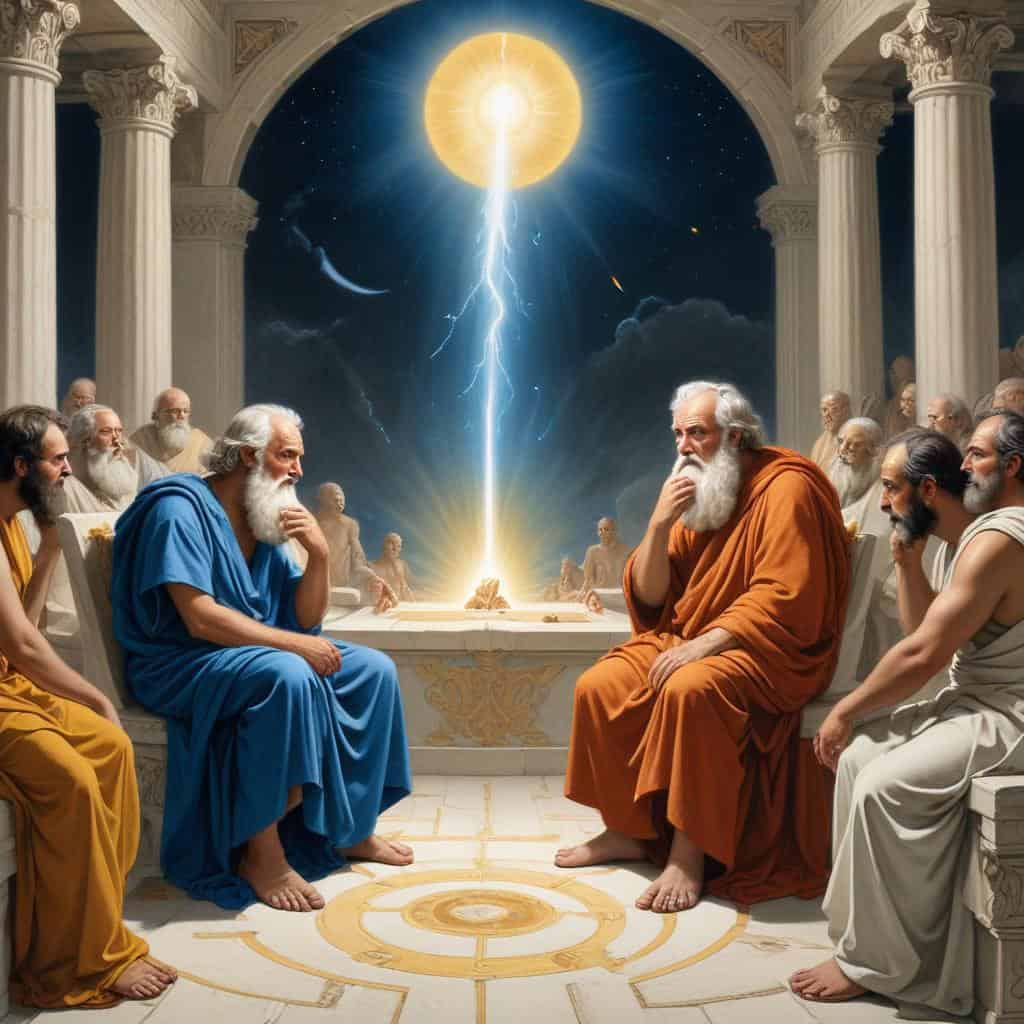
The Birth of Atomism
The Concept of Atomism
The Nature of Atoms
The Void
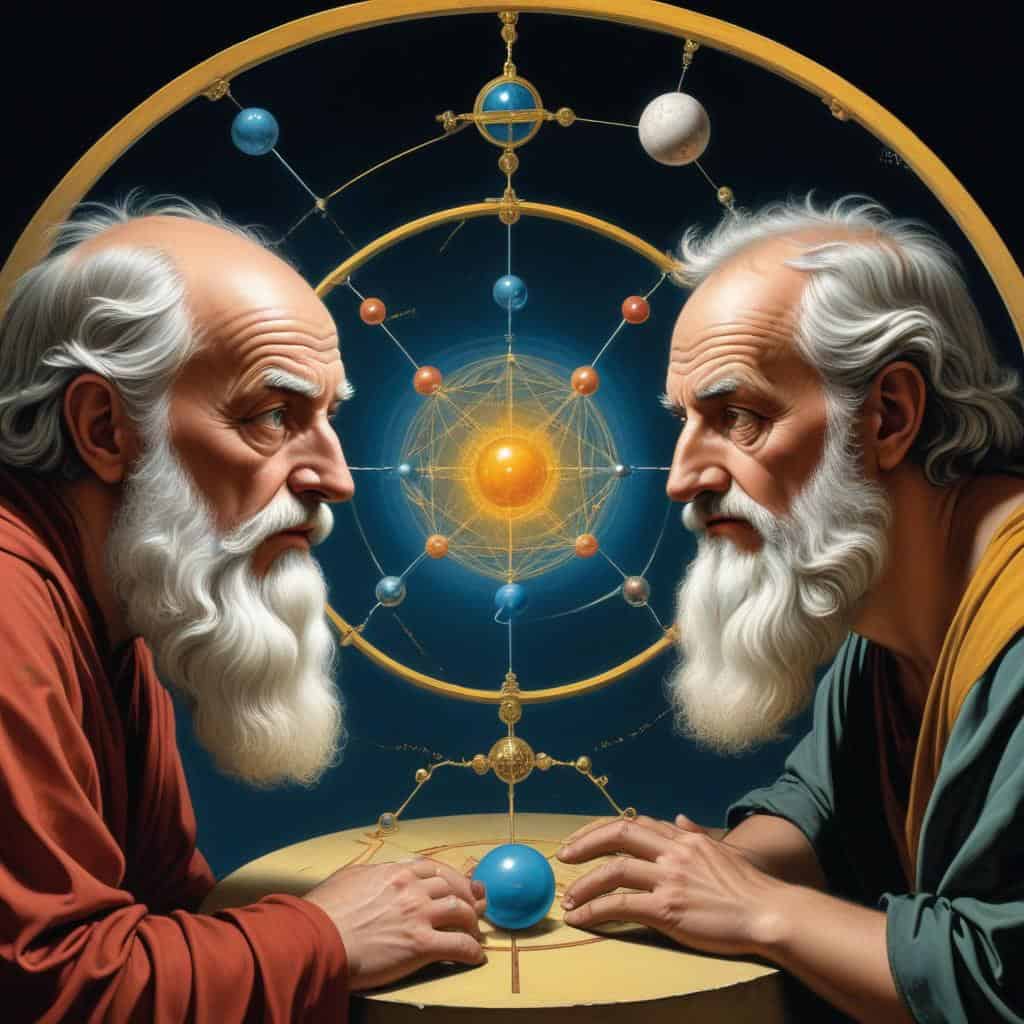
Perception and Reality
Impact on Philosophy
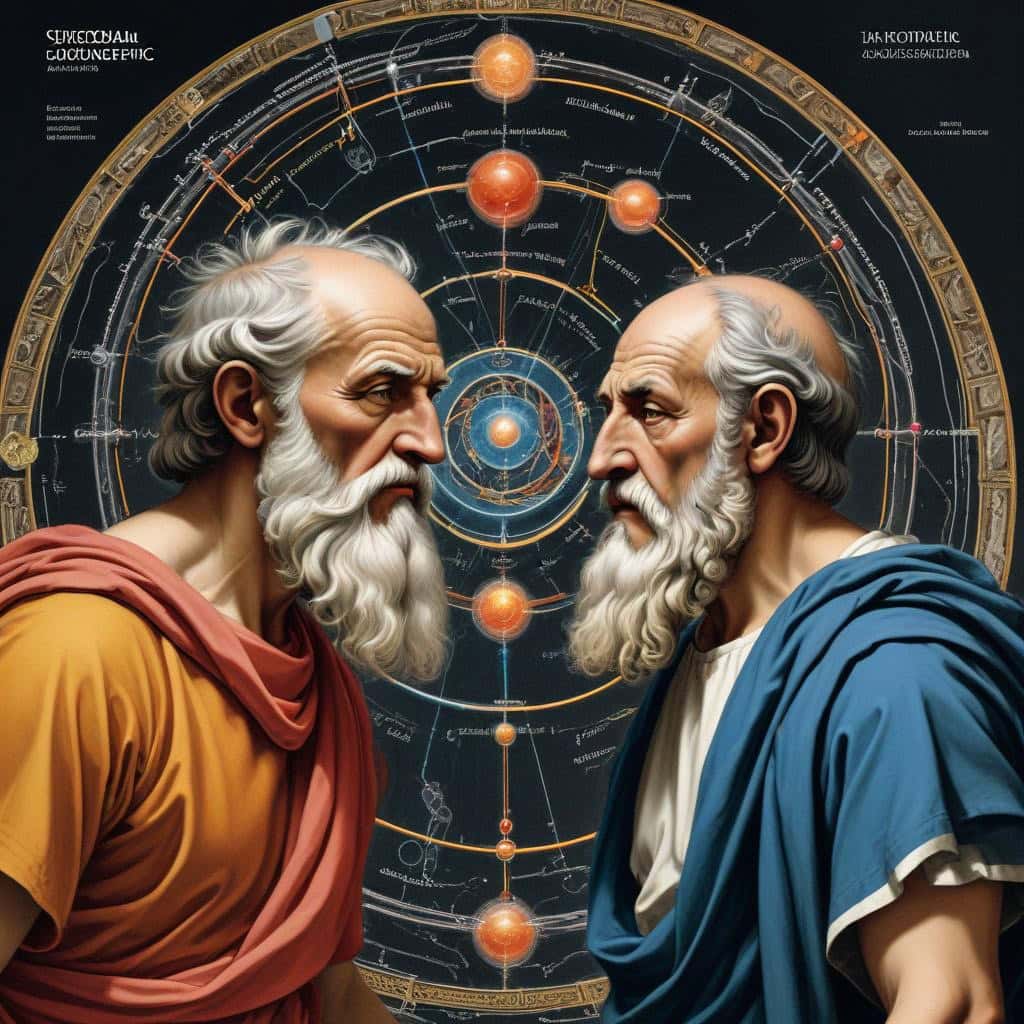
Legacy of Atomism
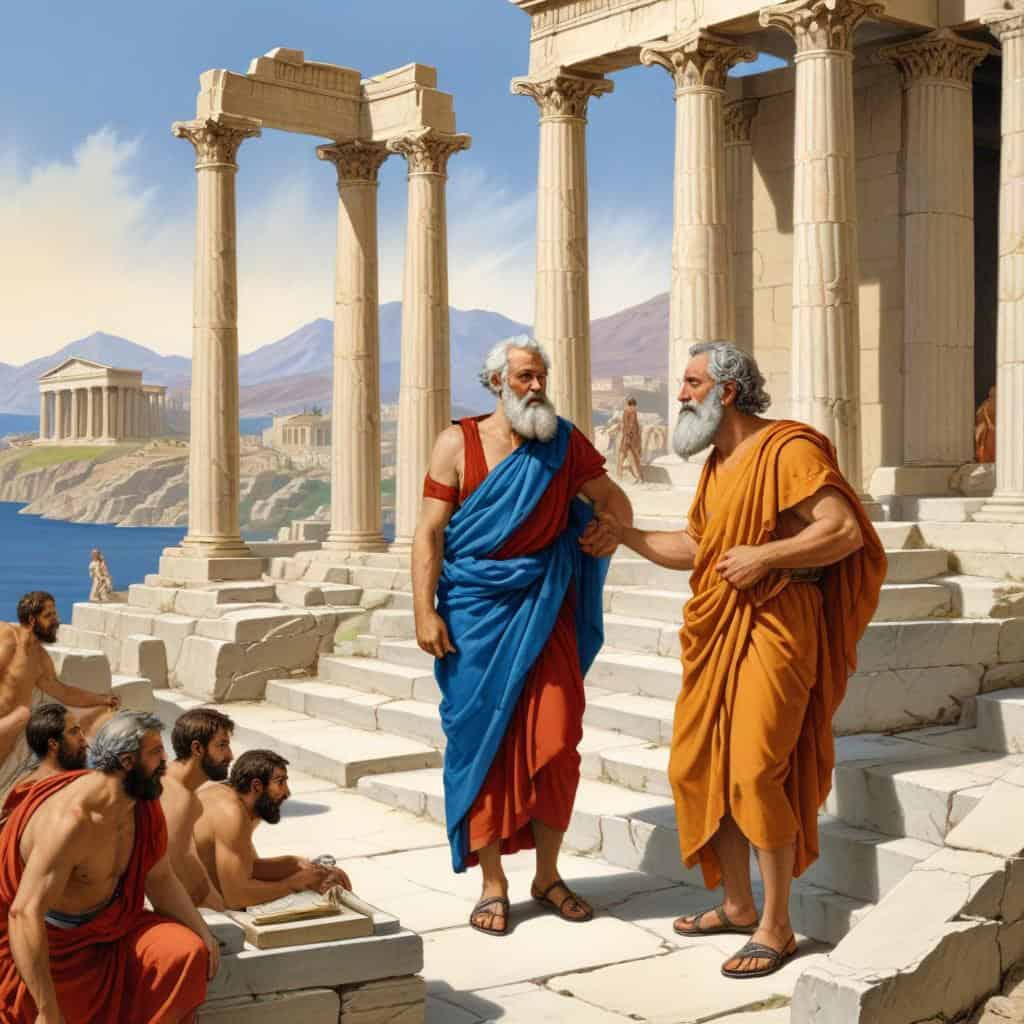
Historical Context
Continued Relevance
Lesson Details & Resources
In a Nutshell
- Concept: A philosophical school of thought that focuses on the idea of indivisible particles called atoms.
- Thinkers: Leucippus and Democritus, 5th century BC.
- Central Question: What is the fundamental nature of reality?
- Core Implication: The universe is made up of tiny, unchanging, and indestructible atoms that combine and recombine to form all things.
Timeline of An The Atomists: Leucippus and Democritus
Leucippus introduces the concept of atoms as the fundamental building blocks of the universe
Democritus expands on the atomic theory and proposes that everything is made up of indivisible atoms in constant motion
Leucippus and Democritus develop the idea that atoms are infinite in number and come in different shapes and sizes
Democritus coins the term 'atomos' to describe these indivisible particles
Leucippus and Democritus argue that the universe is composed of a void in which atoms move and interact
Democritus proposes that atoms combine and separate to form different substances and objects
Leucippus and Democritus believe that all natural phenomena can be explained by the interactions of atoms and void
Democritus suggests that the soul is also made up of atoms and is mortal
Leucippus and Democritus influence later philosophers such as Epicurus and Lucretius with their atomic theory
The atomic theory of Leucippus and Democritus is largely overshadowed by the teachings of Plato and Aristotle
The works of Leucippus and Democritus are mostly lost to history, with only fragments and references remaining
The atomic theory of Leucippus and Democritus experiences a revival in the Renaissance and early modern period
Modern science and physics confirm many aspects of the atomic theory proposed by Leucippus and Democritus
Vocabulary List
- Atomism
- The philosophical theory that everything in the universe is made up of tiny, indivisible particles called atoms.
- Atom
- The smallest unit of matter, according to the Atomists, that cannot be divided further.
- Void
- The empty space in which atoms move and exist, according to the Atomists.
- Determinism
- The belief that every event or action is caused by preceding events and conditions, an idea present in Atomism.
- Indeterminism
- The belief that not every event or action is determined by preceding events, a contrast to the deterministic view of Atomism.
- Infinite
- The Atomists believed that the universe and the number of atoms within it are infinite.
- Materialism
- The philosophical view that everything in the universe is made up of physical matter, a key aspect of Atomism.
- Pleasure
- The Atomists believed that pleasure is the ultimate good and pain is the ultimate evil.
- Democritus
- An ancient Greek philosopher who developed the ideas of Atomism alongside his teacher Leucippus.
Key Facts
Analysis & Significance
The Core Argument
The Atomists, Leucippus and Democritus, proposed that all matter is composed of indivisible and unchangeable particles called atoms. These atoms differ in shape, size, and arrangement, creating the diversity we observe in the physical world.
Criticisms and Counterarguments
Critics argue that the Atomists’ theory raises questions about the nature of change and identity. If everything is made of unchanging atoms, how do we explain growth, decay, and transformation? Additionally, the idea of atoms moving randomly without purpose challenges traditional views of causation and teleology.
Modern Relevance
The concept of atoms as the building blocks of reality has influenced modern scientific thought, particularly in the fields of physics and chemistry. Furthermore, the Atomists’ emphasis on materialism and determinism continues to spark debates about free will, ethics, and the nature of consciousness in contemporary society.
An The Atomists: Leucippus and Democritus Games


Take Your Learning Offline
Want a convenient, print-ready study guide for this lesson? Become a Memory Wizards Pro member to unlock the downloadable " Memory Scrolls" for this topic and our entire library!
- ✓ Complete Vocabulary Lists
- ✓ Key Facts & Timelines
- ✓ Beautifully Formatted for Print & Mobile