
An Analysis of Zeno’s Paradoxes
Can motion truly exist if everything is always halved?
How Do You Learn Best?
Learn by Listening
Start with the 3-minute audio summary to get the key facts and narrative highlights quickly.
Learn by Reading
Immerse yourself in the 10-minute visual lesson for a comprehensive understanding of the topic.
Learn by Reviewing
Jump directly to the key facts, timeline, and vocabulary lists to build a solid foundation of details.
Learn by Doing
Challenge yourself! Jump straight into the interactive games to learn by trial, error, and discovery.
Audio Library
As one of our featured lessons, this topic includes premium audio guides.
Unlock the Wizard's Cram Session
This powerful audio study guide is a Pro-exclusive feature. Upgrade to Memory Wizards Pro to access this and all of our premium learning tools.
Upgrade to ProAn Zeno’s Paradoxes in 10 Minutes
Introduction

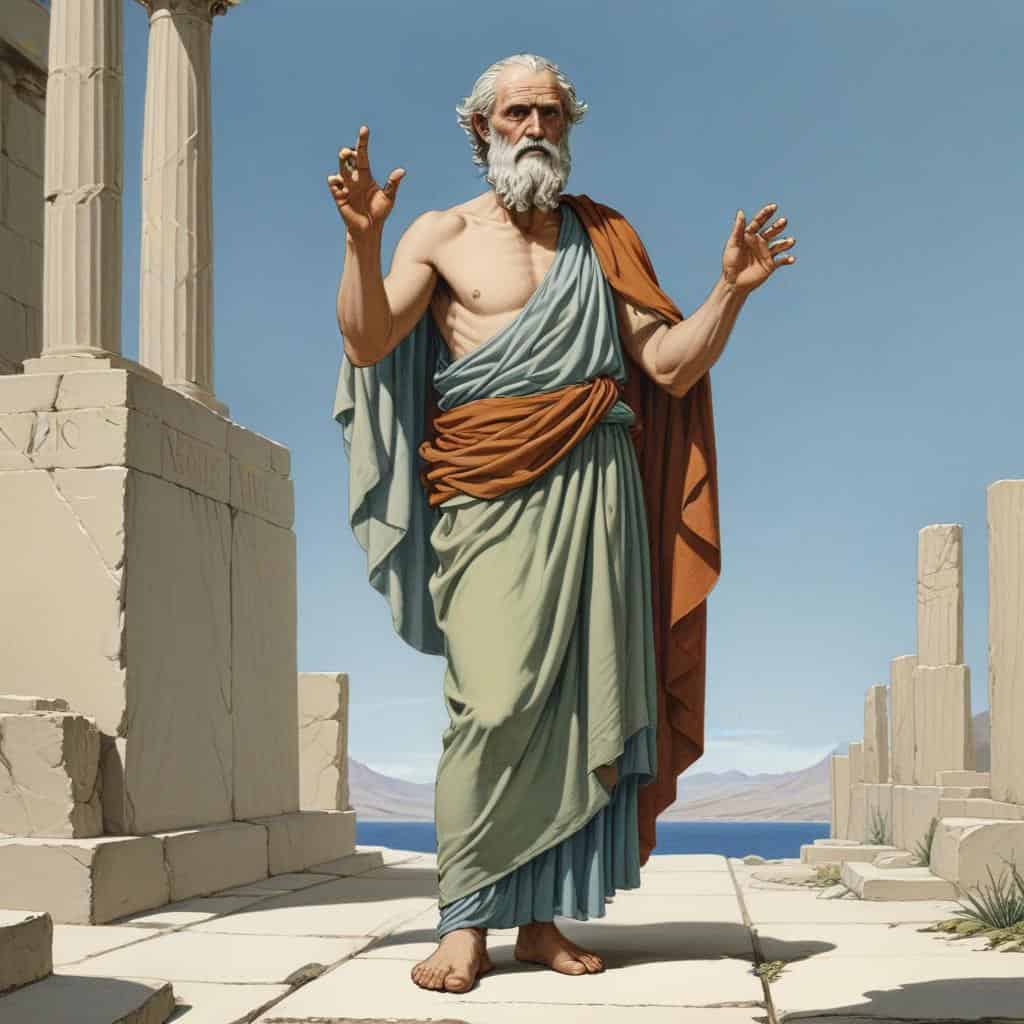
Zeno of Elea
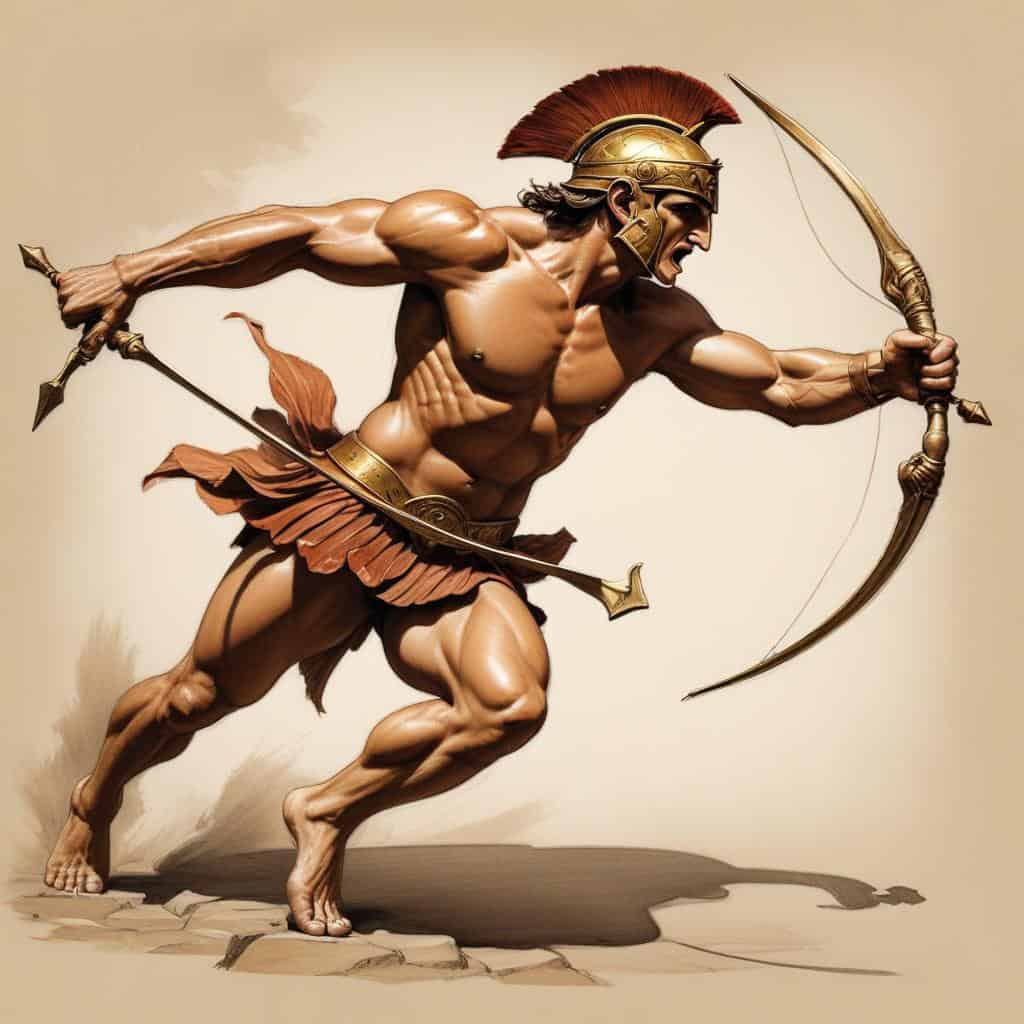
Achilles

The Tortoise
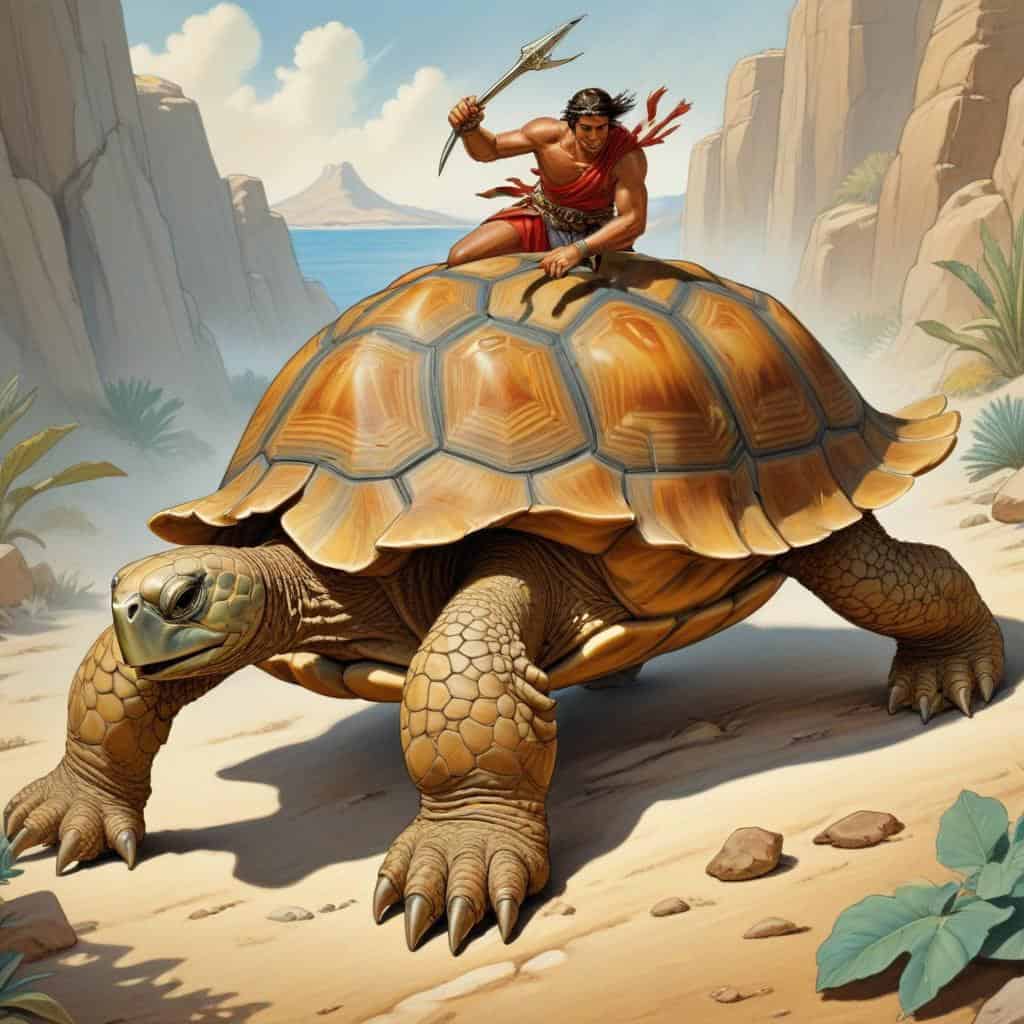
1. The Paradox of Achilles and the Tortoise
2. The Dichotomy Paradox

3. The Arrow Paradox

4. The Stadium Paradox
5. The Paradox of Plurality

6. The Paradox of the Moving Rows

7. The Paradox of the Grain of Millet

8. The Paradox of the Moving Arrow

9. The Paradox of the Two Arrows
10. The Paradox of the Circle

Lesson Details & Resources
In a Nutshell
- Concept: A series of paradoxes proposed by the Greek philosopher Zeno of Elea.
- Thinkers: Zeno of Elea, 5th century BC.
- Central Question: How can motion and change be explained and understood?
- Core Implication: The paradoxes challenge our understanding of space, time, and the nature of reality.
Timeline of An Zeno’s Paradoxes
Zeno of Elea is born
Zeno develops his paradoxes
Zeno presents his paradoxes to the public
Zeno's paradox of motion - Achilles and the Tortoise
Zeno's paradox of motion - Dichotomy
Zeno's paradox of motion - Arrow
Zeno's paradox of plurality - The Arrow
Zeno's paradox of plurality - The Stadium
Zeno's paradox of plurality - The Moving Rows
Zeno's paradox of infinity - The Grain of Millet
Zeno's paradox of infinity - The Plenum
Zeno's paradox of place - The Place
Zeno's paradox of place - The Chariot
Zeno's paradox of time - The River
Zeno's paradox of time - The Moving Rows
Zeno's paradox of time - The Stadium
Plato and Aristotle respond to Zeno's paradoxes
Zeno's paradoxes continue to influence philosophy and mathematics
Zeno's paradoxes are still debated and studied by modern philosophers and mathematicians
Vocabulary List
- Achilles and the Tortoise
- One of Zeno's paradoxes in which Achilles, a fast runner, cannot overtake a tortoise in a race due to infinitely dividing the distance between them.
- Dichotomy Paradox
- A paradox in which motion is impossible because in order to reach a destination, one must first reach halfway, then halfway of the remaining distance, and so on infinitely.
- Paradox
- A seemingly contradictory statement or situation that defies common sense but may have a valid explanation.
- Zeno of Elea
- Ancient Greek philosopher known for his paradoxes that challenge our understanding of motion and infinity.
- Arrow Paradox
- A paradox in which an arrow in flight is at rest at every instant, leading to the question of how motion is possible.
- Aporia
- A state of puzzlement or confusion arising from a paradox or contradictory situation.
- Motion
- The act of changing position or location over time, a concept that Zeno's paradoxes call into question.
- Infinite Regress
- The idea that a series of events or causes can continue indefinitely, as seen in Zeno's paradoxes involving infinite divisions of space or time.
Key Facts
This is the information used in the fact matching game
- Zeno of Elea was a pre-Socratic Greek philosopher who is known for his paradoxes that challenge our understanding of motion and change.
- Zeno's most famous paradox is the paradox of Achilles and the Tortoise, which argues that in a race, the slower runner will never be overtaken by the faster runner.
- Zeno's paradoxes were meant to show that our everyday understanding of motion and change is flawed and that reality is more complex than it appears.
- The paradox of the Dichotomy argues that in order to reach a destination, one must first travel half the distance, then half the remaining distance, ad infinitum, leading to the conclusion that motion is impossible.
- Zeno's Arrow paradox argues that an arrow in flight is motionless at every instant, since at each moment it occupies a single position.
- The paradox of the Moving Rows argues that an object cannot change its position in a moving row of objects, as it would have to both be in motion and at rest at the same time.
- Zeno's paradoxes have been the subject of much debate and discussion among philosophers, mathematicians, and physicists throughout history.
- Zeno's paradoxes highlight the tension between our intuitive understanding of motion and the mathematical concept of infinity.
- Some philosophers have argued that Zeno's paradoxes can be resolved through a better understanding of the nature of space, time, and motion.
- Zeno's paradoxes have had a significant influence on the development of Western philosophy and the philosophy of mathematics.
- Zeno's paradoxes challenge our assumptions about the nature of reality and the possibility of change and motion.
- Zeno's paradoxes have been used to explore the limits of human knowledge and understanding.
- Zeno's paradoxes have been interpreted in different ways by different philosophers, leading to a variety of proposed solutions.
- Zeno's paradoxes have been a source of inspiration for thinkers in various fields, including mathematics, physics, and metaphysics.
- Zeno's paradoxes continue to be studied and debated by modern philosophers and scientists, who seek to understand the implications of his arguments.
- Zeno's paradoxes raise questions about the nature of time, space, and motion that are still relevant in contemporary philosophy.
- Zeno's paradoxes challenge our assumptions about the nature of reality and the limits of human knowledge.
- Zeno's paradoxes demonstrate the power of thought experiments in philosophy to challenge and expand our understanding of the world.
- Zeno's paradoxes are an important part of the history of philosophy, illustrating the enduring interest in questions about motion, change, and infinity.
- Zeno's paradoxes invite us to reconsider our assumptions about the nature of reality and the limits of human understanding.
Analysis & Significance
The Core Argument
Zeno’s Paradoxes are a series of thought experiments designed to challenge the very idea of motion and change. The most famous paradox, Achilles and the Tortoise, poses a scenario where the faster Achilles can never overtake the slower tortoise, leading to the conclusion that motion is impossible.
Criticisms and Counterarguments
One major criticism of Zeno’s Paradoxes is that they rely on a flawed understanding of infinite divisibility and the concept of limits. Critics argue that real-world motion can be explained through calculus and modern physics, rendering Zeno’s arguments obsolete.
Modern Relevance
Despite being over two millennia old, Zeno’s Paradoxes still hold relevance in modern discussions about time, space, and the nature of reality. These paradoxes challenge our intuitions about motion and change, forcing us to reconsider our assumptions about the fundamental nature of the universe and our place within it.
An Zeno’s Paradoxes Games


Take Your Learning Offline
Want a convenient, print-ready study guide for this lesson? Become a Memory Wizards Pro member to unlock the downloadable " Memory Scrolls" for this topic and our entire library!
- ✓ Complete Vocabulary Lists
- ✓ Key Facts & Timelines
- ✓ Beautifully Formatted for Print & Mobile