
An Analysis of Inference
Unlock the hidden truths: What can we infer from the unknown?
How Do You Learn Best?
Learn by Listening
Start with the 3-minute audio summary to get the key facts and narrative highlights quickly.
Learn by Reading
Immerse yourself in the 10-minute visual lesson for a comprehensive understanding of the topic.
Learn by Reviewing
Jump directly to the key facts, timeline, and vocabulary lists to build a solid foundation of details.
Learn by Doing
Challenge yourself! Jump straight into the interactive games to learn by trial, error, and discovery.
Audio Library
As one of our featured lessons, this topic includes premium audio guides.
Unlock the Wizard's Cram Session
This powerful audio study guide is a Pro-exclusive feature. Upgrade to Memory Wizards Pro to access this and all of our premium learning tools.
Upgrade to ProAn Inference in 10 Minutes

Introduction



1. Socrates

2. Rene Descartes

3. Immanuel Kant
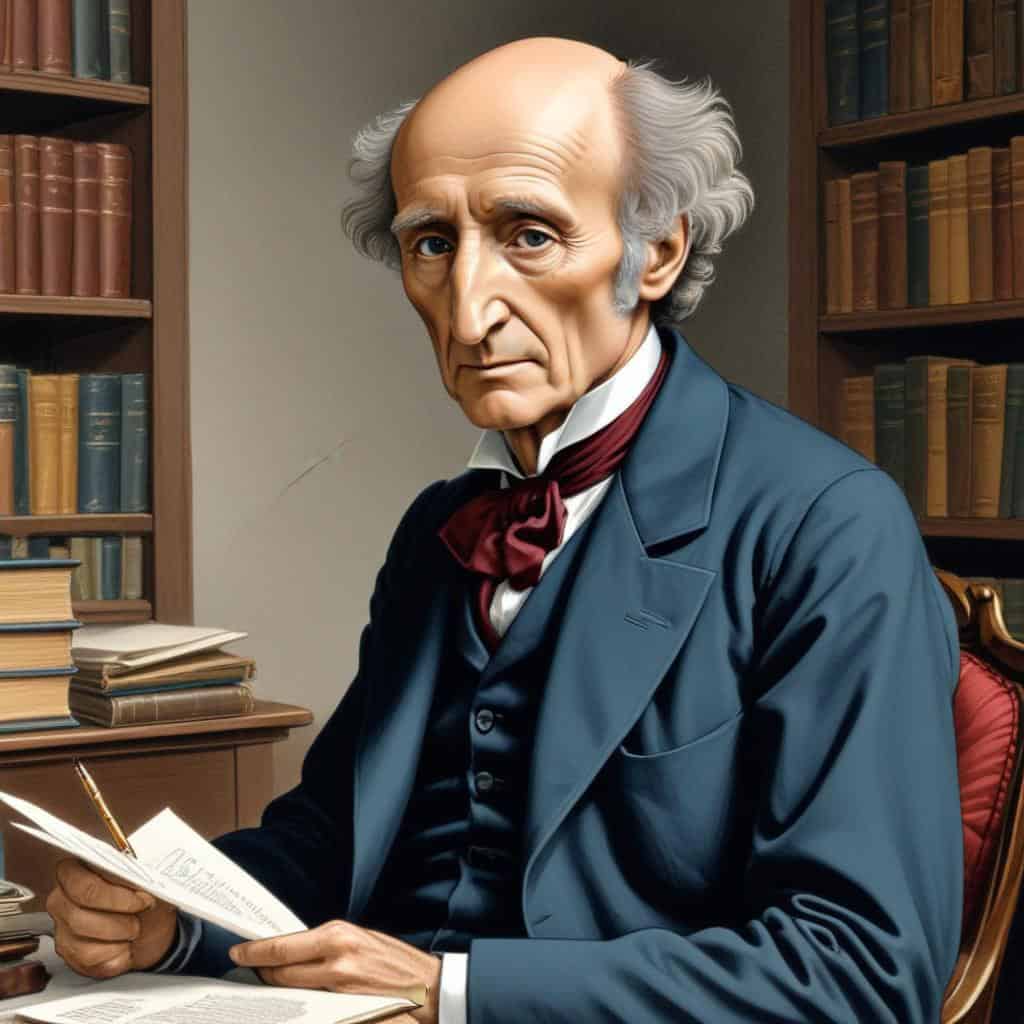
4. John Stuart Mill

5. Bertrand Russell

Understanding Inference

Types of Inference

Role of Inference in Philosophy

Challenges of Inference

Importance of Valid Inferences

Examples of Inference

Practical Applications of Inference

Continued Exploration of Inference

Lesson Details & Resources
In a Nutshell
- Concept: A form of reasoning where a conclusion is drawn based on evidence and reasoning.
- Thinkers: Aristotle, 4th Century BC.
- Central Question: How do we arrive at new knowledge or beliefs based on existing information?
- Core Implication: Inferences allow us to make sense of the world and make decisions based on available information.
Timeline of An Inference
Aristotle introduces the concept of syllogism in his work 'Prior Analytics'
Stoics develop the concept of hypothetical syllogism
Medieval philosophers like Thomas Aquinas use syllogistic reasoning in their theological works
Rene Descartes introduces the method of doubt as a tool for philosophical inquiry
John Locke emphasizes the importance of empiricism in reasoning and inference
David Hume challenges the concept of causality and induction in his work 'An Enquiry Concerning Human Understanding'
Immanuel Kant introduces the concept of synthetic a priori judgments in 'Critique of Pure Reason'
George Boole develops the system of logic known as Boolean algebra
Auguste Comte argues for the use of positivism in scientific inference
Charles Sanders Peirce introduces the concept of abduction as a form of reasoning
Bertrand Russell and Alfred North Whitehead publish 'Principia Mathematica' which formalizes mathematical logic
Ludwig Wittgenstein explores the limits of language and meaning in 'Tractatus Logico-Philosophicus'
Karl Popper introduces the concept of falsifiability as a criterion for scientific theories
Willard Van Orman Quine challenges the analytic-synthetic distinction in 'Two Dogmas of Empiricism'
Thomas Kuhn argues for paradigm shifts in scientific inference in 'The Structure of Scientific Revolutions'
Donald Davidson develops the principle of charity in interpretation and understanding of language
Daniel Dennett explores the nature of intentionality and consciousness in 'Consciousness Explained'
John Searle introduces the concept of 'speech acts' in linguistic inference
Timothy Williamson develops epistemic logic to study knowledge and belief
Elizabeth Anscombe challenges the concept of intention in 'Intention'
Vocabulary List
- Deductive reasoning
- Inference in philosophy often involves deductive reasoning, where conclusions are drawn from premises that are assumed to be true.
- Inductive reasoning
- Another type of inference used in philosophy is inductive reasoning, where general conclusions are drawn from specific observations or examples.
- Syllogism
- A syllogism is a type of logical argument that consists of two premises and a conclusion, often used in philosophical reasoning.
- Fallacy
- In philosophical inference, it is important to watch out for logical fallacies, which are errors in reasoning that can lead to false conclusions.
- Abductive reasoning
- Abductive reasoning is a form of inference that involves making educated guesses or hypotheses based on the available evidence, often used in philosophy to fill in gaps in knowledge.
- Validity
- In philosophical inference, the validity of an argument refers to whether the conclusion logically follows from the premises.
- Soundness
- A sound argument in philosophy is one that is both valid and has true premises, leading to a true conclusion.
- Premise
- A premise is a statement or proposition that serves as the basis for an argument in philosophical inference.
- Conclusion
- The conclusion of an argument in philosophy is the statement that follows logically from the premises and is intended to be accepted as true.
- Inference to the best explanation
- In philosophy, inference to the best explanation is a form of reasoning where the most plausible explanation for a set of evidence is considered to be the most likely.
- Meta-inference
- Meta-inference in philosophy involves reasoning about the process of inference itself, examining the methods and assumptions used in making conclusions.
- Reasoning
- Reasoning is the process of making inferences and drawing conclusions based on evidence and logic, a central aspect of philosophical inquiry.
Key Facts
This is the information used in the fact matching game
- Inference in philosophy refers to the process of drawing conclusions from premises or evidence.
- In philosophy, inference is often used to determine the validity of arguments and to make logical connections between ideas.
- Inference can be deductive or inductive, with deductive inference relying on strict logical rules and inductive inference relying on probabilities and generalizations.
- Philosophers use inference to make sense of complex ideas and to evaluate the truth or validity of claims.
- Inference in philosophy can involve both formal logic and informal reasoning processes.
- Inference plays a key role in philosophical debates and discussions, helping philosophers to clarify their positions and make persuasive arguments.
- Philosophers often use inference to explore the implications of their theories and to test the logical consistency of their arguments.
- Inference in philosophy can involve analogical reasoning, where similarities between two cases are used to draw conclusions about a third case.
- Inference in philosophy can also involve abductive reasoning, where the best explanation for a set of observations or data is inferred.
- Inference is central to the practice of philosophy, helping philosophers to analyze arguments, evaluate evidence, and develop new ideas.
- Philosophers often use inference to explore the implications of their theories and to predict the outcomes of different scenarios.
- Inference in philosophy can involve both deductive and inductive reasoning, with deductive reasoning aiming for certainty and inductive reasoning aiming for probability.
- Inference in philosophy can be used to identify hidden assumptions, reveal logical fallacies, and clarify the structure of arguments.
- Philosophers often use inference to explore the consequences of different ethical principles and to determine the most morally justifiable course of action.
- Inference in philosophy is not limited to formal logic, but also involves creative thinking, intuition, and imaginative reasoning.
- Inference in philosophy can involve reasoning by analogy, where similarities between two cases are used to draw conclusions about a third case.
- Inference in philosophy can involve reasoning by example, where specific instances are used to draw general conclusions.
- Philosophers often use inference to evaluate the soundness of arguments, identify logical errors, and construct valid reasoning chains.
- Inference in philosophy can involve probabilistic reasoning, where the likelihood of different outcomes is assessed based on available evidence.
- Inference in philosophy is a dynamic and iterative process, often involving revisiting and revising earlier conclusions based on new evidence or insights.
Analysis & Significance
The Core Argument
The concept of inference in philosophy refers to the process of drawing conclusions or making predictions based on available evidence and reasoning. It involves connecting pieces of information to form a coherent understanding of the world, allowing us to make sense of complex situations and make informed decisions.
Criticisms and Counterarguments
Some critics argue that inference can be subjective and influenced by biases, leading to errors in judgment. They question the validity of assuming causation from correlation and challenge the reliability of deductive reasoning. Others suggest that the limitations of human cognition and the uncertainty of the world make it difficult to draw definitive conclusions through inference alone.
Modern Relevance
In today’s society, the ability to critically evaluate information and infer logical connections is crucial. From navigating the complexities of fake news and misinformation to making ethical decisions in a globalized world, understanding the principles of inference can help individuals distinguish between facts and opinions, recognize logical fallacies, and make sound judgments in various aspects of life.
An Inference Games


Take Your Learning Offline
Want a convenient, print-ready study guide for this lesson? Become a Memory Wizards Pro member to unlock the downloadable " Memory Scrolls" for this topic and our entire library!
- ✓ Complete Vocabulary Lists
- ✓ Key Facts & Timelines
- ✓ Beautifully Formatted for Print & Mobile