
An Analysis of Interpretation
Unraveling reality: How do we decipher the world around us?
How Do You Learn Best?
Learn by Listening
Start with the 3-minute audio summary to get the key facts and narrative highlights quickly.
Learn by Reading
Immerse yourself in the 10-minute visual lesson for a comprehensive understanding of the topic.
Learn by Reviewing
Jump directly to the key facts, timeline, and vocabulary lists to build a solid foundation of details.
Learn by Doing
Challenge yourself! Jump straight into the interactive games to learn by trial, error, and discovery.
Audio Library
As one of our featured lessons, this topic includes premium audio guides.
Unlock the Wizard's Cram Session
This powerful audio study guide is a Pro-exclusive feature. Upgrade to Memory Wizards Pro to access this and all of our premium learning tools.
Upgrade to ProAn Interpretation in 10 Minutes

Introduction


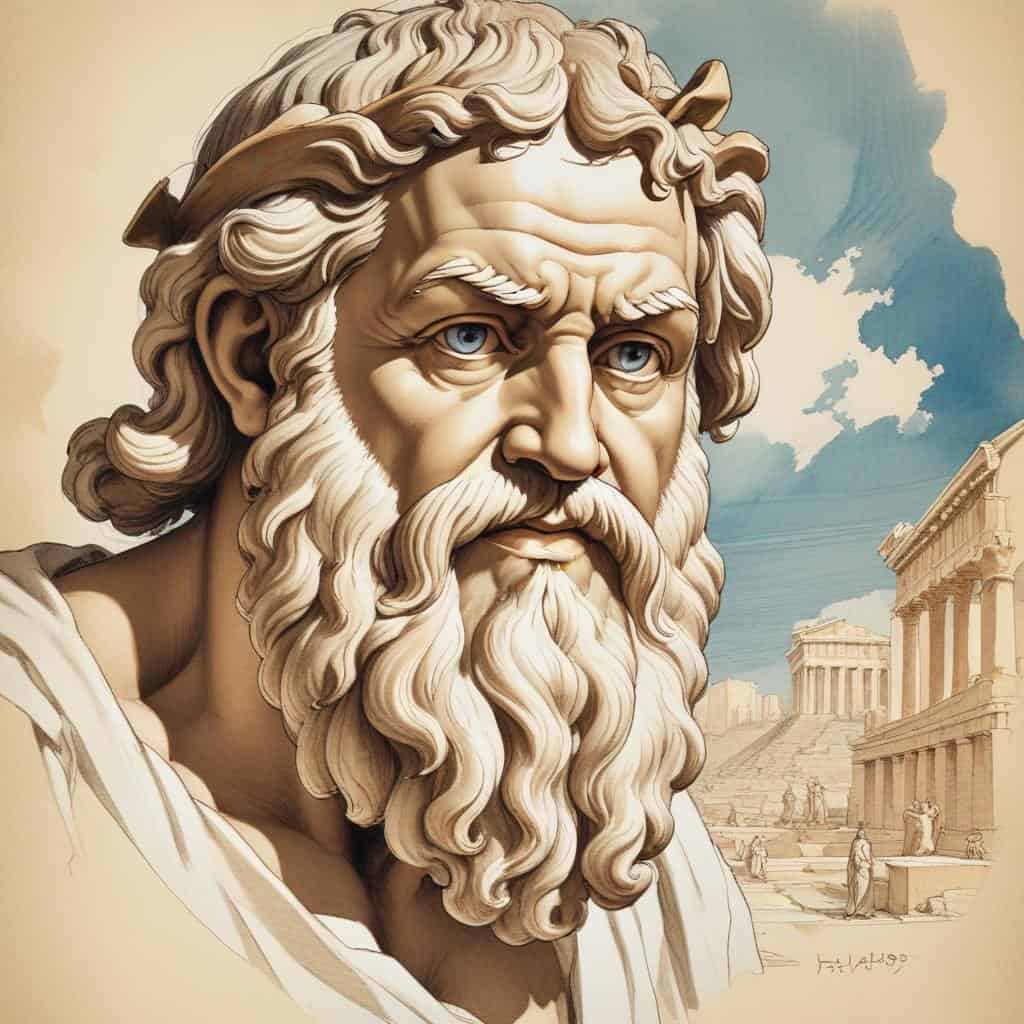
Plato

Friedrich Nietzsche
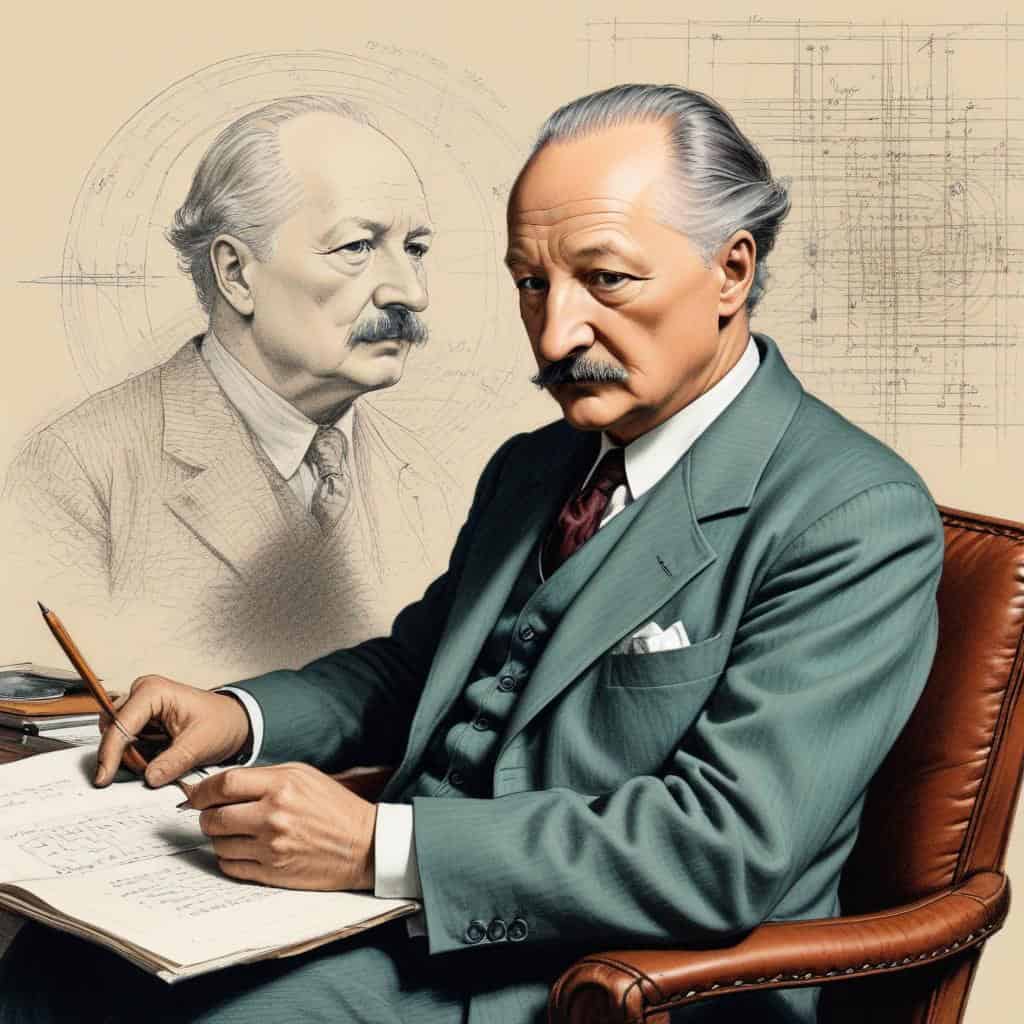
Martin Heidegger

Michel Foucault

Jacques Derrida

1. What is Interpretation?

2. Importance of Interpretation in Philosophy

3. Different Approaches to Interpretation

4. Hermeneutics

5. Deconstruction

6. Analytic Philosophy

7. Challenges in Interpretation

8. Role of the Interpreter

9. Interpretation and Meaning


Lesson Details & Resources
In a Nutshell
- Concept: A philosophical concept that deals with understanding and assigning meaning to various phenomena.
- Thinkers: Friedrich Nietzsche, Hans-Georg Gadamer, 19th-20th Century.
- Central Question: How do we make sense of the world and our experiences?
- Core Implication: Interpretation is subjective and influenced by individual perspectives and biases.
Timeline of An Interpretation
Plato founds the Academy in Athens
Aristotle founds the Lyceum in Athens
Stoicism founded by Zeno of Citium
Epicureanism founded by Epicurus
Neoplatonism developed by Plotinus
Augustine of Hippo writes 'Confessions'
Boethius writes 'Consolation of Philosophy'
Islamic Golden Age leads to translation of Greek philosophical texts
Thomas Aquinas integrates Aristotelian philosophy into Christian theology
Rene Descartes publishes 'Meditations on First Philosophy'
John Locke's 'Essay Concerning Human Understanding' is published
Immanuel Kant's 'Critique of Pure Reason' published
Georg Wilhelm Friedrich Hegel's 'Phenomenology of Spirit' published
Friedrich Nietzsche's 'Thus Spoke Zarathustra' published
Martin Heidegger's 'Being and Time' published
Jean-Paul Sartre's 'Being and Nothingness' published
Simone de Beauvoir's 'The Second Sex' published
Jacques Derrida develops deconstructionist philosophy
Martha Nussbaum's capabilities approach to ethics gains prominence
Peter Singer's utilitarian philosophy applied to animal rights advocacy
Vocabulary List
- Hermeneutics
- The theory and methodology of interpretation, especially the interpretation of texts.
- Intentional fallacy
- The mistaken belief that the author's intention is the sole determining factor in the meaning of a text.
- Interpretive charity
- The principle of assuming that a text is coherent, rational, and meaningful, even if it seems confusing or contradictory at first.
- Deconstruction
- A method of literary analysis that seeks to uncover and destabilize the underlying assumptions and binary oppositions in a text.
- Hermeneutic circle
- The idea that understanding a text requires a circular movement between the whole and its parts, with each informing the other.
- Phenomenology
- A philosophical approach that focuses on the study of consciousness and the structures of experience, often involving interpretation of lived experiences.
- Hermeneutic injustice
- The idea that certain groups are systematically disadvantaged in their ability to interpret and communicate their experiences due to societal biases and prejudices.
- Interpretation as appropriation
- The view that interpretation involves not just understanding a text, but also making it one's own, incorporating it into one's own worldview and perspective.
Key Facts
This is the information used in the fact matching game
- Interpretation in philosophy refers to the process of analyzing and understanding philosophical texts or ideas.
- Hermeneutics is the branch of philosophy that focuses on the theory and methodology of interpretation.
- Interpretation involves uncovering the meaning or intention behind a text or concept.
- Different philosophical traditions have varying approaches to interpretation, such as analytic philosophy, continental philosophy, and Eastern philosophy.
- Interpretation can be influenced by factors such as historical context, cultural background, and personal bias.
- Philosophers often engage in interpretation to better understand complex philosophical ideas and arguments.
- Interpretation can lead to multiple valid interpretations of a text or concept, known as the plurality of interpretations.
- Hermeneutic circles refer to the idea that understanding parts of a text depends on understanding the whole, and vice versa.
- Interpretation is central to the field of ethics, as ethical theories often require interpretation and application to specific moral dilemmas.
- Philosophers such as Friedrich Nietzsche and Martin Heidegger have made significant contributions to the philosophy of interpretation.
- Interpretation can involve both exegesis (drawing out meaning from a text) and hermeneutics (understanding the conditions of interpretation).
- Interpretation can be applied to various philosophical texts, including works by Plato, Aristotle, Descartes, Kant, and others.
- The hermeneutic circle is a key concept in interpretation theory, emphasizing the circular nature of understanding a text.
- Interpretation is often used in the analysis of religious texts, such as the Bible, the Quran, and the Vedas.
- Hermeneutics involves considering the historical context, authorial intent, and linguistic nuances of a text in interpretation.
- Interpretation can be seen as a creative process, where the interpreter actively engages with the text to produce meaning.
- Interpretation is not limited to textual analysis but can also apply to art, music, film, and other forms of expression.
- Interpretation can involve a balance between fidelity to the original text and creative reimagining of its meaning.
- Theories of interpretation can have practical applications in law, literature, psychology, and other fields beyond philosophy.
- Interpretation can reveal hidden or implicit meanings in a text that may not be immediately apparent to the reader.
Analysis & Significance
The Core Argument
Interpretation is a fundamental concept in philosophy that explores the idea that reality is not directly accessible to us, but rather filtered through our subjective experiences and perceptions. It raises questions about how we make sense of the world, how language shapes our understanding, and the role of context in shaping meaning.
Criticisms and Counterarguments
Critics of interpretation argue that it can lead to relativism, where all interpretations are considered equally valid, undermining the possibility of objective truth. They also question the extent to which interpretation can be controlled or influenced by external factors, such as power dynamics or social norms.
Modern Relevance
In today’s society, the concept of interpretation is crucial in understanding and navigating complex issues such as fake news, cultural differences, and ethical dilemmas. It highlights the need for critical thinking, empathy, and open-mindedness in order to engage with diverse perspectives and engage in meaningful dialogue. By recognizing the subjectivity of interpretation, we can better appreciate the richness and complexity of human experiences.
An Interpretation Games


Take Your Learning Offline
Want a convenient, print-ready study guide for this lesson? Become a Memory Wizards Pro member to unlock the downloadable " Memory Scrolls" for this topic and our entire library!
- ✓ Complete Vocabulary Lists
- ✓ Key Facts & Timelines
- ✓ Beautifully Formatted for Print & Mobile