
Summary of The Rebellion of Chen Sheng and Wu Guang (209 BCE)
Unleash the power of the people in ancient China's uprising.
How Do You Learn Best?
Learn by Reading
Immerse yourself in the 10-minute visual lesson for a comprehensive understanding of the topic.
Learn by Reviewing
Jump directly to the key facts, timeline, and vocabulary lists to build a solid foundation of details.
Learn by Doing
Challenge yourself! Jump straight into the interactive games to learn by trial, error, and discovery.
The Rebellion of Chen Sheng and Wu Guang in 10 Minutes
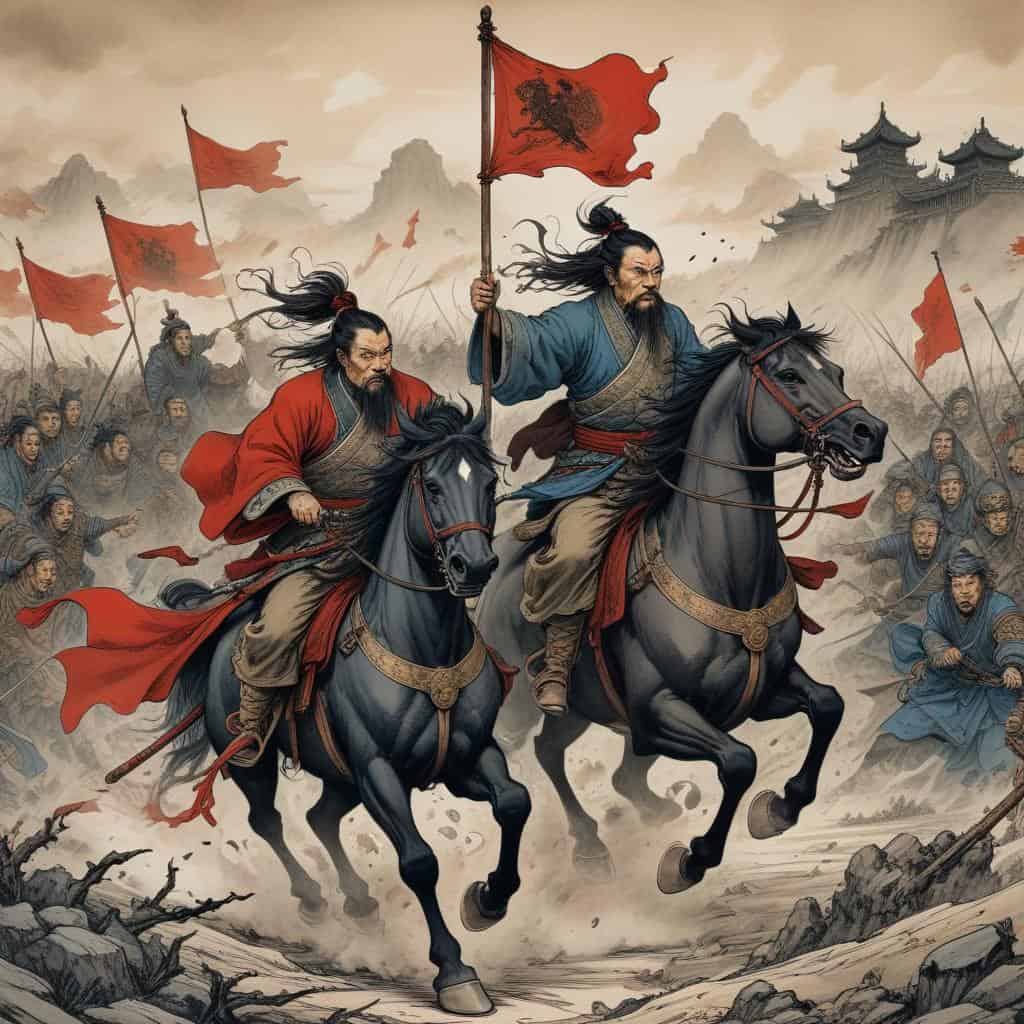
Introduction
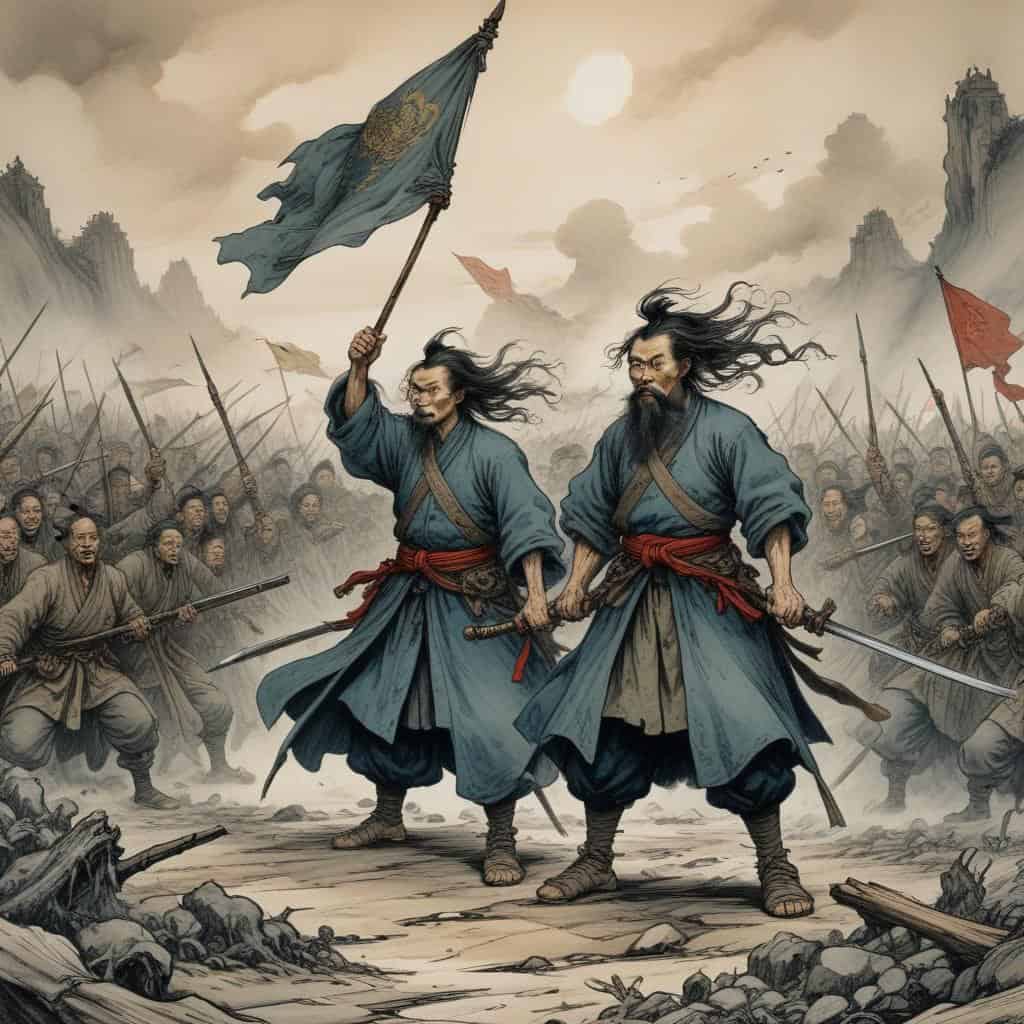
Chen Sheng
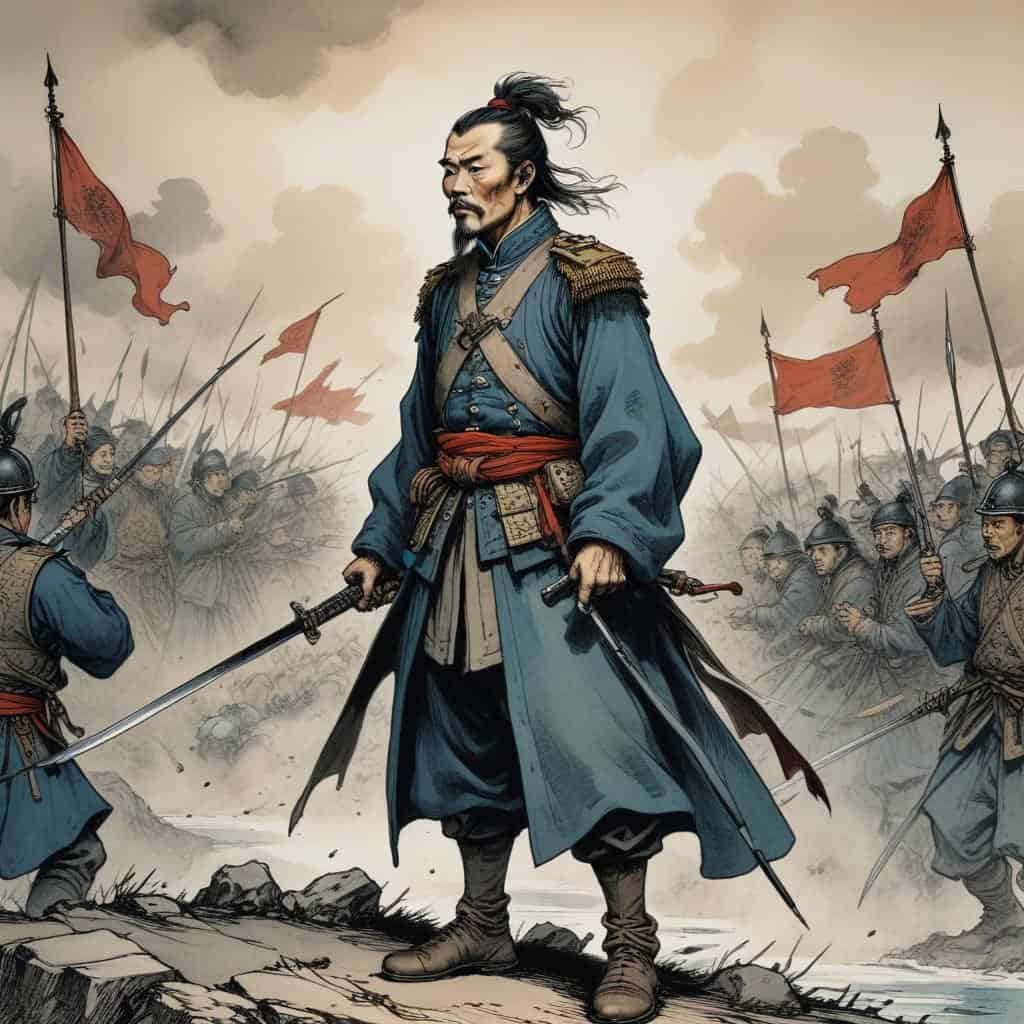
Wu Guang

The Rise of Chen Sheng and Wu Guang
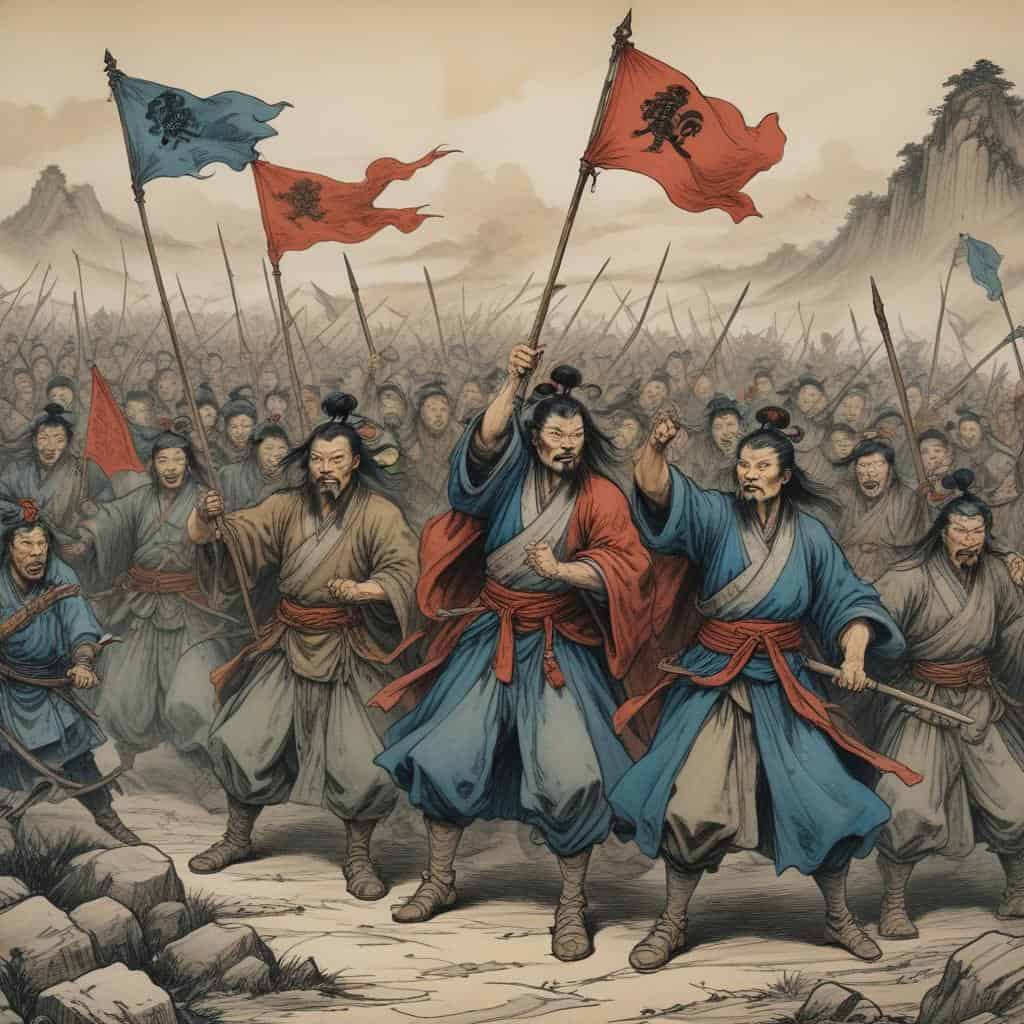
The Call to Action

The Declaration of Rebellion
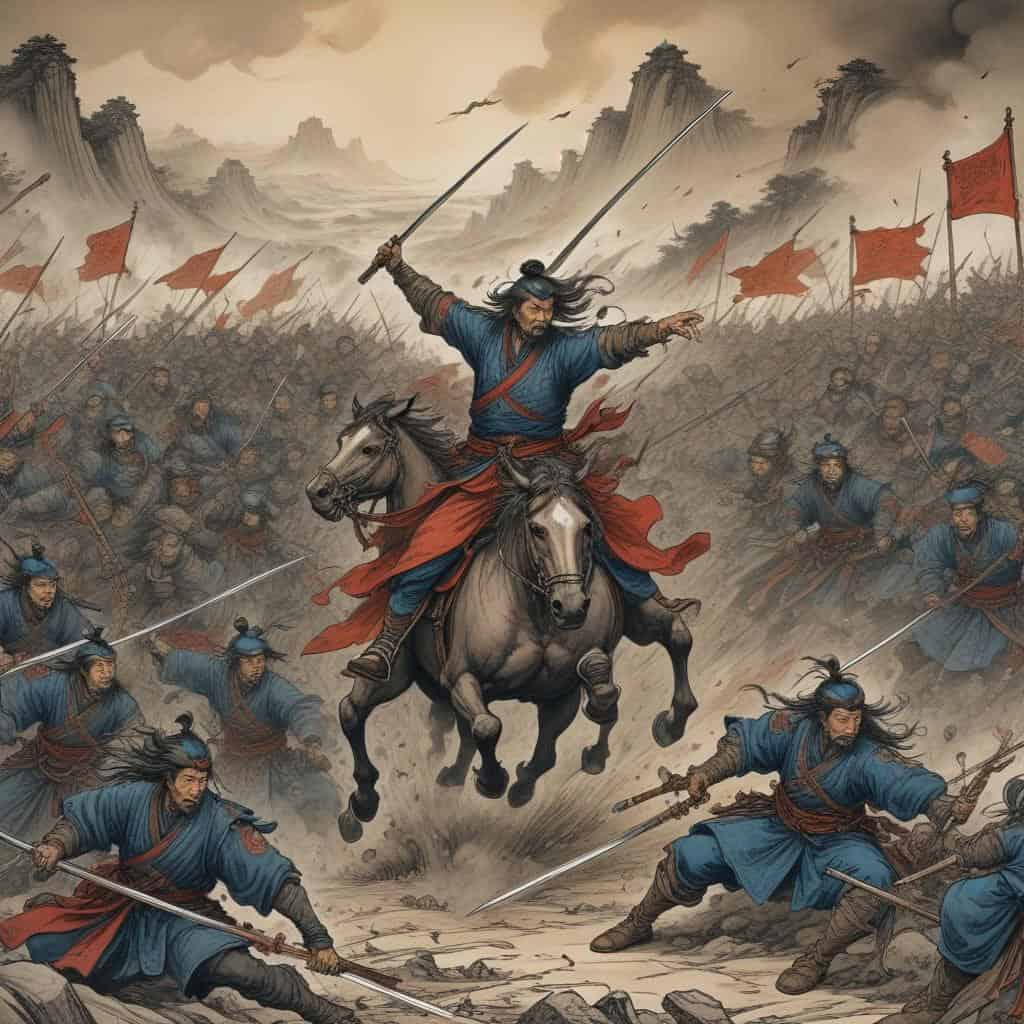
The Battle for Justice

The Capture of Chen Sheng

The Leadership of Wu Guang

The Siege of Guangzong

The Fall of Guangzong

The Legacy of Chen Sheng and Wu Guang
Lesson Details & Resources
In a Nutshell
- What: A rebellion led by Chen Sheng and Wu Guang against the Qin Dynasty.
- When: 209 BCE
- Who: Chen Sheng, Wu Guang, Qin Dynasty
- Outcome: The rebellion marked the beginning of the Chu-Han Contention, a civil war that eventually led to the downfall of the Qin Dynasty.
Famous Figures in the The Rebellion of Chen Sheng and Wu Guang
-
Chen Sheng
Chen Sheng was a Chinese rebel leader who played a key role in the Rebellion of Chen Sheng and Wu Guang in 209 BCE.
-
Wu Guang
Wu Guang was a Chinese rebel leader who, along with Chen Sheng, led the Rebellion of Chen Sheng and Wu Guang in 209 BCE.
-
Xiang Yu
Xiang Yu was a prominent military leader during the Chu-Han Contention, a period of civil war following the collapse of the Qin Dynasty.
-
Liu Bang
Liu Bang was the founding emperor of the Han Dynasty and emerged victorious in the Chu-Han Contention, defeating Xiang Yu.
Timeline of The Rebellion of Chen Sheng and Wu Guang
Chen Sheng and Wu Guang lead a rebellion against the Qin Dynasty
Chen Sheng and Wu Guang gather a group of followers and begin attacking government officials
Chen Sheng and Wu Guang capture the city of Julu
Chen Sheng declares himself King of Chu
Chen Sheng and Wu Guang gain support from other rebel groups
Chen Sheng and Wu Guang defeat Qin forces in several battles
Chen Sheng and Wu Guang continue to expand their territory and gain more followers
Chen Sheng and Wu Guang's rebellion spreads to other parts of China
Chen Sheng and Wu Guang's forces capture the city of Xianyang, the capital of the Qin Dynasty
Chen Sheng and Wu Guang overthrow the Qin Dynasty and establish the Han Dynasty
Chen Sheng is killed in battle
Wu Guang becomes the leader of the Han Dynasty
Wu Guang faces internal resistance and power struggles within the Han Dynasty
Wu Guang is betrayed and killed by his own men
The Rebellion of Chen Sheng and Wu Guang comes to an end
Vocabulary List
- Rebellion
- The Rebellion of Chen Sheng and Wu Guang was a major uprising against the Qin Dynasty in 209 BCE.
- Chen Sheng
- Chen Sheng was one of the leaders of the rebellion and played a significant role in organizing the uprising.
- Wu Guang
- Wu Guang was another leader of the rebellion who, along with Chen Sheng, led troops against the Qin Dynasty.
- Qin Dynasty
- The Qin Dynasty was the ruling dynasty in China at the time of the rebellion, known for its harsh policies and oppressive rule.
- Uprising
- The Rebellion of Chen Sheng and Wu Guang was an uprising of common people against the ruling Qin Dynasty.
- Oppression
- The rebellion was fueled by the people's frustration with the oppression and cruelty of the Qin Dynasty.
- Revolt
- The Rebellion of Chen Sheng and Wu Guang is often referred to as a revolt against the Qin Dynasty's tyrannical rule.
Key Facts
This is the information used in the fact matching game
- The Rebellion of Chen Sheng and Wu Guang was a peasant uprising in China during the Qin Dynasty.
- Chen Sheng was a fisherman who became a leader in the rebellion.
- Wu Guang was a salt merchant who also played a key role in the rebellion.
- The rebellion began in 209 BCE after the death of Qin Shi Huang, the first emperor of China.
- The rebels were motivated by anger towards the oppressive policies of the Qin Dynasty.
- Chen Sheng and Wu Guang gathered a large group of followers and began attacking government officials and military outposts.
- The rebellion quickly spread to other parts of China, with many peasants joining the cause.
- The rebels were initially successful in their campaigns, capturing several cities and gaining popular support.
- The rebellion was eventually suppressed by Qin Dynasty forces, leading to the deaths of Chen Sheng and Wu Guang.
- After the rebellion, the Han Dynasty was established, bringing an end to the Qin Dynasty.
- The Rebellion of Chen Sheng and Wu Guang is considered one of the key events that led to the fall of the Qin Dynasty.
- Many scholars view the rebellion as a precursor to the peasant uprisings that occurred throughout Chinese history.
- The rebellion inspired other rebellions against oppressive rulers in Chinese history.
- Chen Sheng and Wu Guang are remembered as heroes in Chinese folklore and literature.
- The rebellion highlighted the discontent and suffering of the peasant class in ancient China.
- The rebellion had a lasting impact on Chinese society, leading to reforms and changes in government policies.
- The rebellion is often cited as an example of the power of popular uprisings in bringing about political change.
- The events of the rebellion have been romanticized in Chinese literature and art.
- Chen Sheng and Wu Guang are often portrayed as symbols of resistance against tyranny in Chinese culture.
- The rebellion continues to be studied and commemorated in China as a significant moment in the country's history.
Analysis & Significance
Immediate Consequences
The rebellion of Chen Sheng and Wu Guang in 209 BCE resulted in the formation of a large peasant army that successfully overthrew the Qin Dynasty. This marked the beginning of the Chu-Han Contention, a period of civil war that ultimately led to the establishment of the Han Dynasty.
Long-Term Impact
The rebellion had a profound impact on Chinese history, as it not only ended the oppressive Qin rule but also laid the foundation for the Han Dynasty, which would go on to rule China for over 400 years. The Han Dynasty is considered a golden age in Chinese history, known for its advancements in art, culture, and governance.
Cultural Significance Today
The rebellion of Chen Sheng and Wu Guang is remembered as a symbol of resistance against tyranny and oppression. It serves as a reminder of the power of the people to stand up against injustice and fight for a better future. The legacy of this rebellion continues to inspire movements for social change and democracy around the world.
The Rebellion of Chen Sheng and Wu Guang Games


Take Your Learning Offline
Want a convenient, print-ready study guide for this lesson? Become a Memory Wizards Pro member to unlock the downloadable " Memory Scrolls" for this topic and our entire library!
- ✓ Complete Vocabulary Lists
- ✓ Key Facts & Timelines
- ✓ Beautifully Formatted for Print & Mobile