
How Do You Learn Best?
Learn by Reading
Immerse yourself in the 10-minute visual lesson for a comprehensive understanding of the topic.
Learn by Reviewing
Jump directly to the key facts, timeline, and vocabulary lists to build a solid foundation of details.
Learn by Doing
Challenge yourself! Jump straight into the interactive games to learn by trial, error, and discovery.
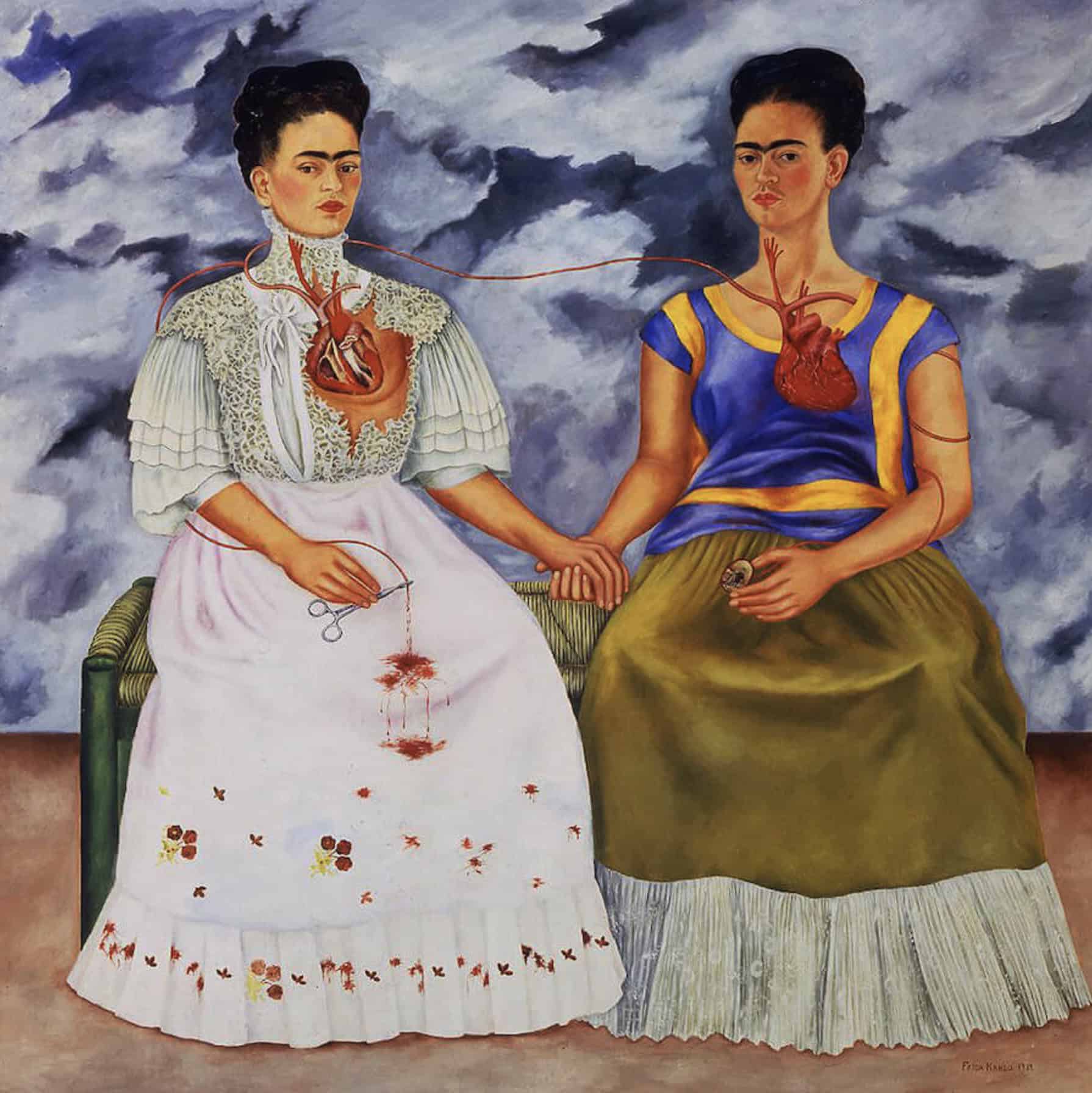
The Masterpiece: The Two Fridas
Deconstructing the Masterpiece
Dual Identity
The two distinct figures represent the dual nature of Frida Kahlo's identity, exploring themes of duality, self-reflection, and inner conflict.
Symbolic Heart
The exposed hearts connect the two figures, symbolizing love, pain, and vulnerability, serving as a focal point for emotional expression and connection.
Contrasting Attire
The traditional Mexican dress on one Frida and European costume on the other highlight cultural and personal contrasts, reflecting Kahlo's mixed heritage and identity.
Frida Kahlo: An Analysis in 10 Minutes

Introduction
The Early Life of Frida Kahlo
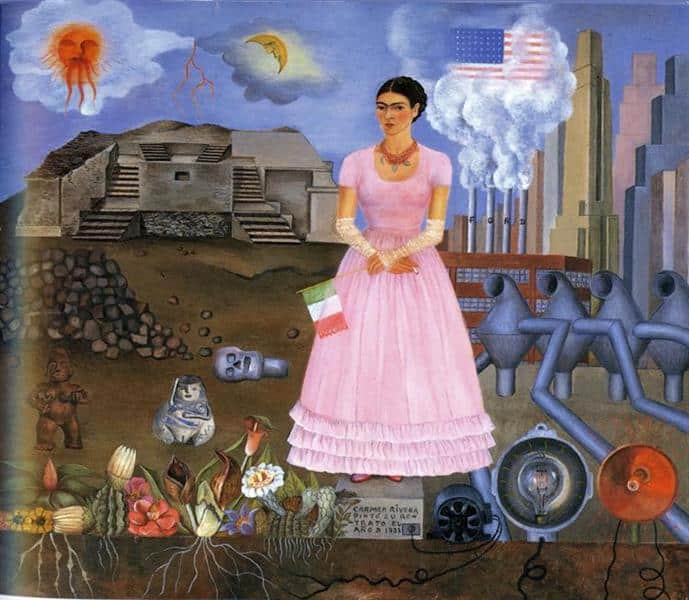
Fridas Artistic Journey
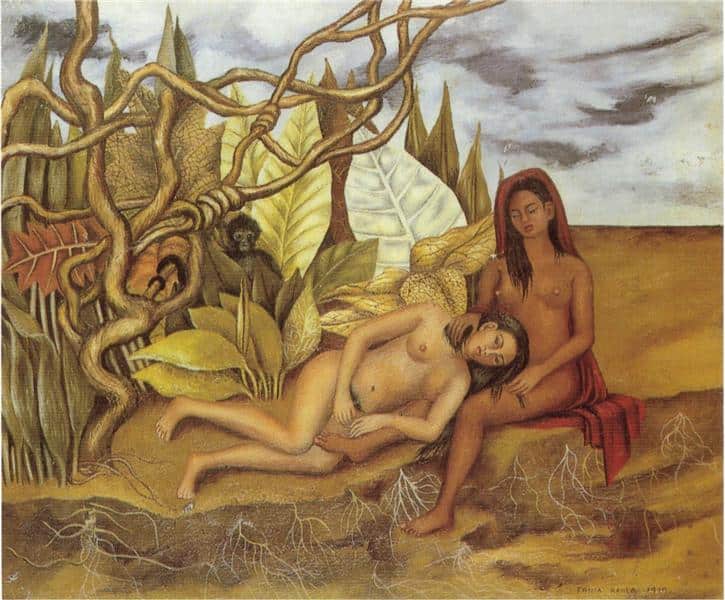
Rejection of Surrealism
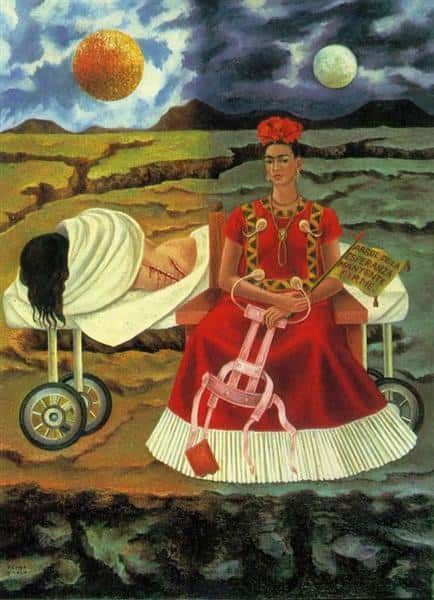
Exploring Identity
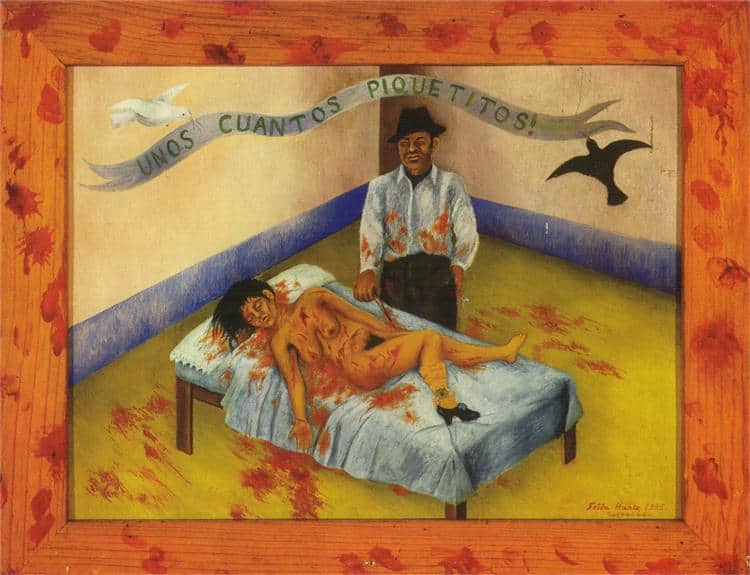
Suffering and Resilience
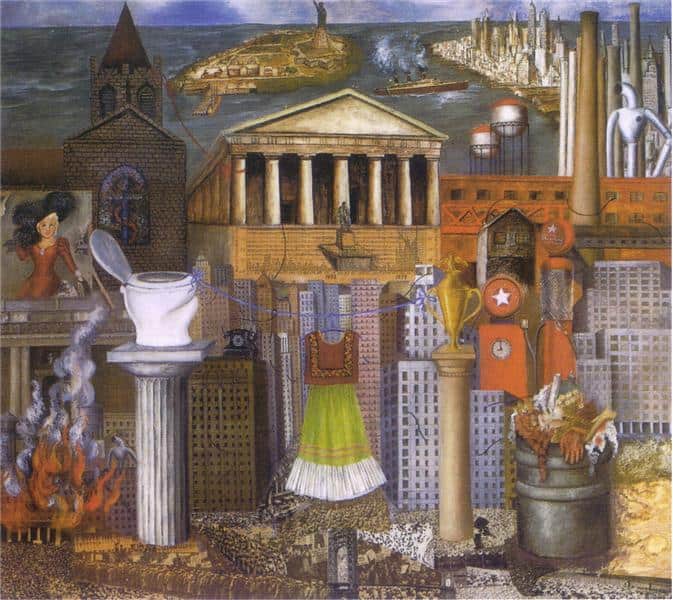
Mexican Culture and Symbolism
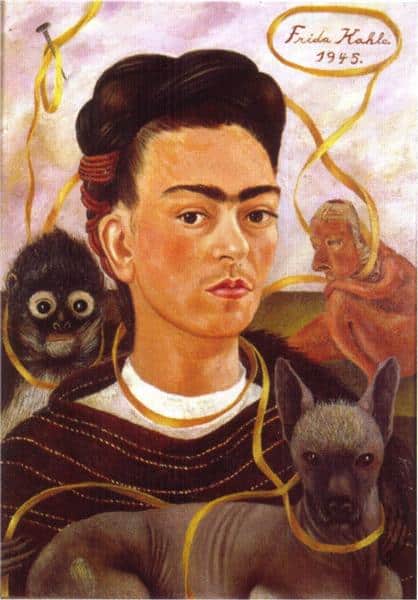
Influence and Legacy
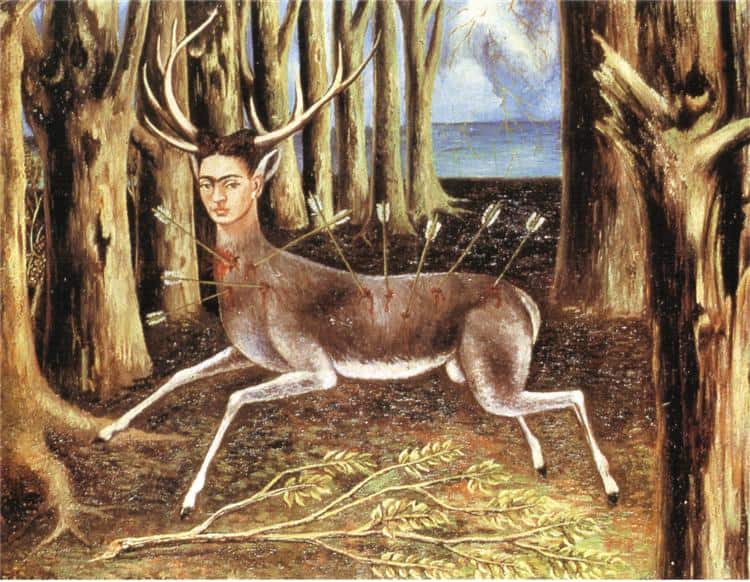
Recognition and Success
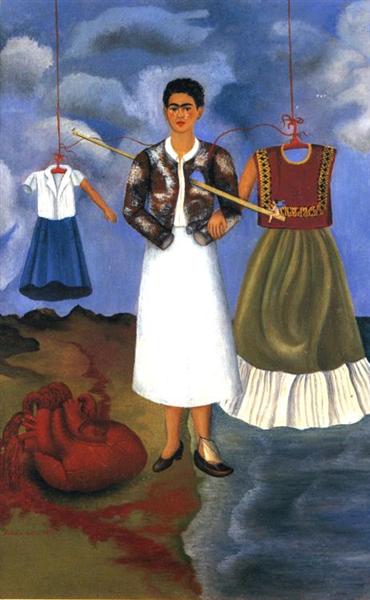
Fridas Personal Life
Final Years and Death
Lesson Details & Resources
In a Nutshell
- Artist: Frida Kahlo
- Year: 1939
- Medium: Oil on masonite
- Location: Museum of Modern Art, Mexico City
Vocabulary List
- Self-portrait
- Frida Kahlo's self-portraits often depict her physical and emotional pain, as well as her cultural identity.
- Symbolic imagery
- Kahlo's use of symbolic imagery, such as animals and plants, adds layers of meaning to her artwork.
- Identity
- Identity, both personal and cultural, is a central theme in Kahlo's art.
- Suffering
- Kahlo's paintings often reflect her experiences of physical and emotional suffering.
- Mexican culture
- Kahlo's work is deeply influenced by Mexican culture, including its traditions, folklore, and symbols.
- Feminism
- Kahlo's art has been seen as a form of feminist expression, challenging traditional gender roles and stereotypes.
- Pain
- Physical and emotional pain are recurring motifs in Kahlo's work.
- Folk art
- Kahlo's art is often characterized by its use of vibrant colors and folk art motifs.
- Surrealism
- While Kahlo rejected the label of Surrealist, her work is often associated with the Surrealist movement.
- Trauma
- Kahlo's art is rooted in her experiences of trauma, both physical and emotional.
- Injury
- Kahlo's self-portraits often depict her injuries from a bus accident that left her disabled.
- Emotion
- Kahlo's paintings are known for their intense emotional expression.
- Rebellion
- Kahlo's art can be seen as a form of rebellion against societal norms and expectations.
- Mexicanidad
- Kahlo's work embodies the concept of mexicanidad, or Mexican identity.
- Surrealist
- Although Kahlo rejected the label of Surrealist, her work is often grouped with the Surrealist movement.
- Skeleton
- Skeletons are a recurring motif in Kahlo's art, symbolizing death and the fragility of life.
- Nature
- Nature and plant imagery are common in Kahlo's paintings.
- Beauty
- Despite her physical pain and disabilities, Kahlo's self-portraits often emphasize her inner beauty.
- Tears
- Tears are often depicted in Kahlo's paintings, symbolizing her emotional pain and suffering.
- Bold
- Kahlo's use of bold colors and strong lines make her paintings visually striking.
- Cultural heritage
- Kahlo's work reflects her deep connection to her Mexican cultural heritage.
Timeline of Frida Kahlo: An Analysis
Frida Kahlo is born in Coyoacán, Mexico City
Frida contracts polio, which leaves her right leg shorter and thinner than the left
Frida is involved in a bus accident that leaves her with lifelong injuries and chronic pain
Frida meets Diego Rivera, a prominent Mexican artist, for the first time
Frida marries Diego Rivera in a civil ceremony
Frida's first solo exhibition is held at the Julien Levy Gallery in New York City
Frida's painting 'The Two Fridas' is completed
Frida's father, Guillermo Kahlo, passes away
Frida divorces Diego Rivera
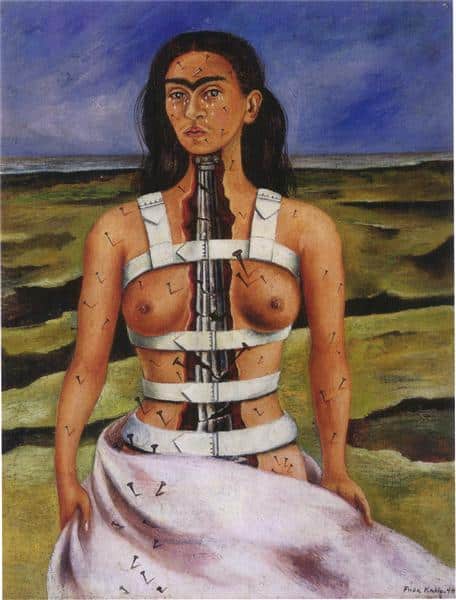
Frida's painting 'The Broken Column' is completed
Frida's health deteriorates, leading to multiple surgeries and hospitalizations
Frida's first major solo exhibition in Mexico takes place at the Galería de Arte Contemporáneo
Frida's right leg is amputated due to gangrene
Frida dies at the age of 47
Frida's final public appearance is at a Communist demonstration in Mexico City
Frida's Blue House in Coyoacán is turned into the Frida Kahlo Museum
Frida's work gains renewed popularity in the 1980s and 1990s, sparking a 'Fridamania' craze
Frida's painting 'Self-Portrait with Thorn Necklace and Hummingbird' sells for a record price at auction
Frida's influence on art, feminism, and Mexican culture continues to be celebrated and studied worldwide
Key Facts
This is the information used in the fact matching game
- Frida Kahlo's artwork is known for its deeply personal and symbolic self-portraits.
- She is considered one of the most important female artists of the 20th century.
- Her paintings often explore themes of identity, suffering, and Mexican culture.
- Kahlo's work is often associated with Surrealism, although she rejected the label.
- She suffered from various health issues throughout her life, which influenced her artwork.
- Kahlo's art often features vibrant colors and intricate details.
- She is known for her iconic unibrow and braided hair, which frequently appear in her self-portraits.
- Kahlo's work has had a significant impact on feminist art movements.
- She was married to fellow artist Diego Rivera, who also influenced her artwork.
- Kahlo's paintings often depict her physical and emotional pain, stemming from a bus accident she survived as a teenager.
- She incorporated elements of traditional Mexican folk art into her work.
- Kahlo's self-portraits blur the lines between reality and fantasy.
- Her art often includes symbols of Mexican culture, such as indigenous motifs and religious iconography.
- Kahlo's work has been the subject of numerous exhibitions and retrospectives around the world.
- She was influenced by European Renaissance art and Mexican muralists.
- Kahlo's art reflects her tumultuous personal life, including her relationships and struggles with infertility.
- She often painted herself with animals, which held symbolic meaning in her work.
- Kahlo's work continues to inspire contemporary artists and activists.
- Her paintings have been the subject of numerous books, films, and documentaries.
- Kahlo's legacy as an artist and feminist icon endures to this day.
Analysis & Significance
Artistic Innovation
Frida Kahlo’s art introduced a raw and intimate exploration of personal pain, identity, and female experience. Her self-portraits, often depicting her physical and emotional struggles, broke away from traditional artistic norms and embraced a bold and unapologetic authenticity.
Influence on Art History
Kahlo’s work paved the way for the feminist art movement and challenged the male-dominated art world. Her unique style and subject matter inspired generations of artists to use art as a tool for self-expression and social commentary, reshaping the definition of what art could be.
Cultural Significance Today
Frida Kahlo’s art continues to resonate with audiences worldwide, transcending time and borders. Her iconic imagery and powerful storytelling have made her a symbol of resilience, empowerment, and artistic innovation. Kahlo’s work remains a beacon of inspiration for artists, activists, and individuals seeking to explore and celebrate the complexities of the human experience.
Frida Kahlo: An Analysis Games


Take Your Learning Offline
Want a convenient, print-ready study guide for this lesson? Become a Memory Wizards Pro member to unlock the downloadable " Memory Scrolls" for this topic and our entire library!
- ✓ Complete Vocabulary Lists
- ✓ Key Facts & Timelines
- ✓ Beautifully Formatted for Print & Mobile