
At a Glance - Infographic
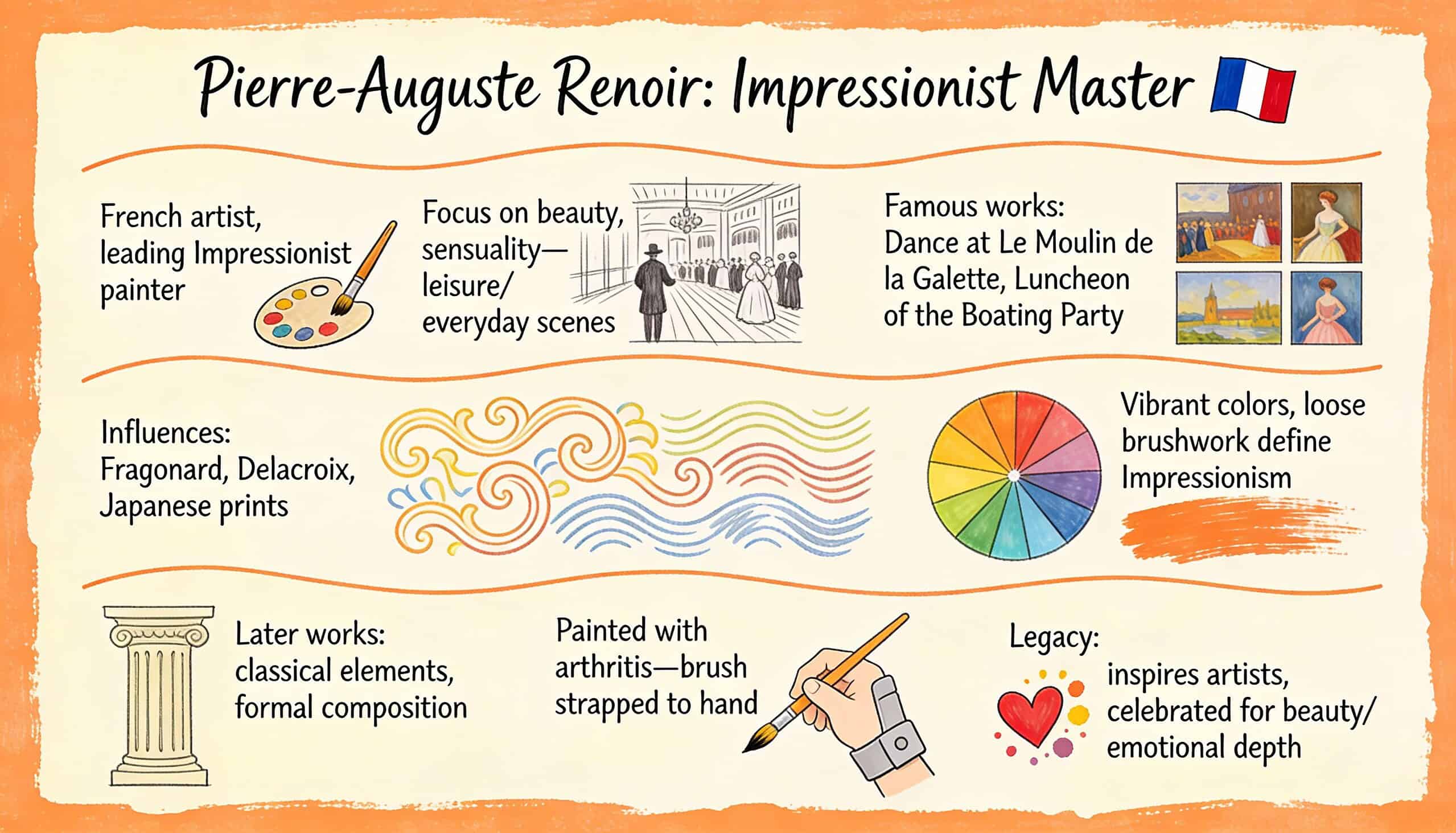
How Do You Learn Best?
Learn by Listening
Start with the 3-minute audio summary to get the key facts and narrative highlights quickly.
Learn by Reading
Immerse yourself in the 10-minute visual lesson for a comprehensive understanding of the topic.
Learn by Reviewing
Jump directly to the key facts, timeline, and vocabulary lists to build a solid foundation of details.
Learn by Doing
Challenge yourself! Jump straight into the interactive games to learn by trial, error, and discovery.
The Masterpiece: Dance at the Moulin de la Galette by Pierre-Auguste Renoir

Deconstructing the Masterpiece
Crowded Composition
The busy arrangement of figures and activities creates a lively and bustling atmosphere, capturing the essence of the lively dance scene.
Play of Light and Shadow
Renoir's skillful use of light and shadow adds depth and dimension to the painting, enhancing the sense of movement and vitality.
Capture of Momentary Joy
The candid depiction of people enjoying themselves in a moment of leisure conveys a sense of spontaneity and happiness.
Impressionistic Brushwork
Renoir's loose and fluid brushstrokes capture the fleeting nature of the scene, emphasizing the transient joy and energy of the dancers.
Audio Library
As one of our featured lessons, this topic includes premium audio guides.
Unlock the Wizard's Cram Session
This powerful audio study guide is a Pro-exclusive feature. Upgrade to Memory Wizards Pro to access this and all of our premium learning tools.
Upgrade to ProPierre-Auguste Renoir: An Analysis in 10 Minutes
Introduction
Early Life and Education
Impressionist Movement
Popular Works
Personal Life
Legacy
Lesson Details & Resources
In a Nutshell
- Artist: Pierre-Auguste Renoir
- Year: 1876
- Medium: Oil on canvas
- Location: Musée d’Orsay, Paris
Vocabulary List
- Impressionism
- Renoir was a prominent figure in the Impressionist movement.
- Brushstrokes
- Renoir's paintings are known for their loose and flowing brushstrokes.
- Color palette
- Renoir used a vibrant color palette in his artworks.
- Landscape
- Renoir painted many landscapes of the French countryside.
- Portraiture
- Renoir was also known for his portraits of friends and family.
- Light and shadow
- Renoir expertly captured the interplay of light and shadow in his paintings.
- Feminine beauty
- Renoir's paintings often celebrate the beauty of women.
- Outdoor scenes
- Renoir frequently painted outdoor scenes, such as picnics and garden parties.
- Dance
- Renoir's paintings often feature dancers in motion.
- Parisian life
- Renoir captured the lively atmosphere of Parisian society in his works.
- Still life
- Renoir also painted still life compositions.
- Elegance
- Renoir's artworks exude elegance and sophistication.
- Texture
- Renoir's paintings often have a rich, tactile texture.
- Rococo influence
- Renoir was influenced by the Rococo style in his paintings.
- Happiness
- Renoir's paintings often convey a sense of joy and happiness.
- Movement
- Renoir's works capture a sense of movement and energy.
- Water
- Renoir painted many scenes of water, such as rivers and lakes.
- Gardens
- Renoir's paintings often feature lush, colorful gardens.
- Fashion
- Renoir's artworks showcase the fashionable clothing of the time.
- Al fresco dining
- Renoir painted many scenes of people dining outdoors.
Timeline of Pierre-Auguste Renoir: An Analysis
Pierre-Auguste Renoir is born in Limoges, France
Renoir begins his artistic training at the Ecole des Beaux-Arts in Paris
Renoir meets Claude Monet and other future Impressionist artists
Renoir's painting 'Luncheon of the Boating Party' is completed
Renoir begins to experiment with a more abstract style in his paintings
Renoir's health begins to decline due to rheumatoid arthritis
Renoir travels to Algeria in search of a warmer climate for his health
Renoir's son, Jean Renoir, is born
Renoir's work becomes more popular and he gains recognition as a leading Impressionist artist
Renoir's painting 'Bal du moulin de la Galette' is exhibited at the Salon des Independants
Renoir's wife, Aline Charigot, passes away
Renoir moves to the French Riviera for a milder climate
Renoir completes his famous painting 'Dance at Le Moulin de la Galette'
Renoir is awarded the Legion of Honour by the French government
Renoir's works are exhibited at the first Impressionist exhibition in Paris
Renoir's painting 'La Grenouillere' is completed
Renoir's health deteriorates further and he is confined to a wheelchair
Renoir's last major work, 'The Bathers', is completed
Pierre-Auguste Renoir passes away at the age of 78
Key Facts
This is the information used in the fact matching game
- Pierre-Auguste Renoir was a French artist who was a leading painter in the development of the Impressionist style.
- Renoir was known for his celebration of beauty and sensuality in his paintings, often depicting scenes of leisure and everyday life.
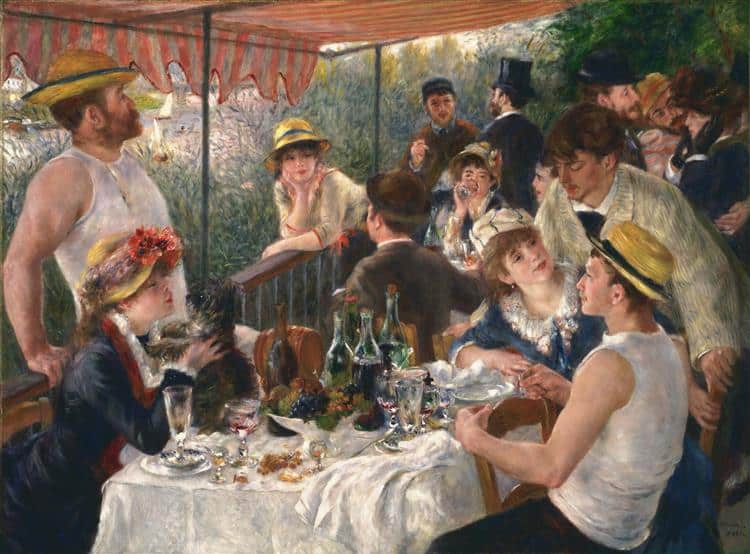
- One of Renoir's most famous works is 'Luncheon of the Boating Party', which captures a group of his friends relaxing by the Seine River.
- Renoir's paintings often feature soft, blended brushstrokes and a warm color palette, giving his works a sense of lightness and movement.
- He was influenced by the works of Claude Monet and Edouard Manet, two other prominent Impressionist painters of the time.
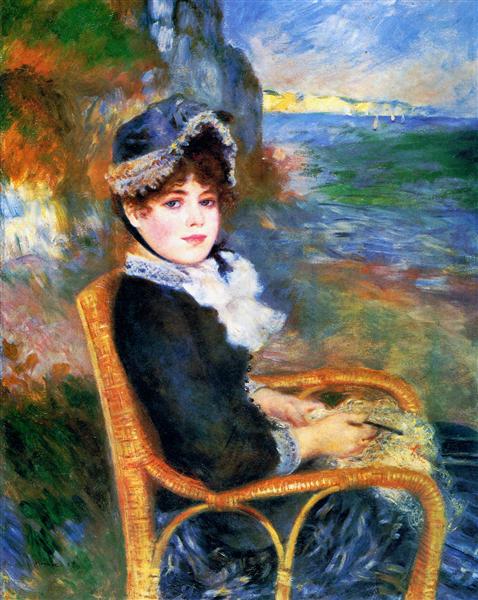
- Renoir's paintings of women were particularly renowned for their beauty and grace, with many depicting women in elegant settings.
- In his later years, Renoir suffered from severe arthritis, which limited his mobility and forced him to adapt his painting technique.
- Despite his physical limitations, Renoir continued to paint prolifically, creating over 4,000 works of art in his lifetime.
- Renoir's works are now housed in museums and galleries around the world, including the Louvre in Paris and the National Gallery in London.
- Some of Renoir's most famous paintings include 'Dance at Le Moulin de la Galette' and 'Two Sisters (On the Terrace)'.
- Renoir's style evolved over the course of his career, moving from a more traditional approach to a looser, more expressive technique.
- He was a founding member of the Impressionist group and exhibited in their first exhibition in 1874.
- Renoir's use of light and color was a defining feature of his work, capturing the fleeting moments of everyday life with a sense of immediacy.
- His paintings often depict scenes of outdoor leisure, such as picnics, boating trips, and dances, showcasing the joy of everyday activities.
- Renoir's later works were characterized by a greater focus on form and structure, as he experimented with more classical compositions.
- He was known for his skillful depictions of the human figure, capturing the subtle nuances of expression and movement in his subjects.
- Renoir's paintings have been praised for their emotional depth and sensitivity, drawing viewers into the intimate moments he portrayed.
- He often painted en plein air, or outdoors, to capture the effects of natural light and atmosphere on his subjects.
- Renoir's works have had a lasting impact on the development of modern art, inspiring generations of artists with his innovative approach to painting.
- His legacy continues to be celebrated today, with retrospectives and exhibitions dedicated to his work in museums worldwide.
Analysis & Significance
Artistic Innovation
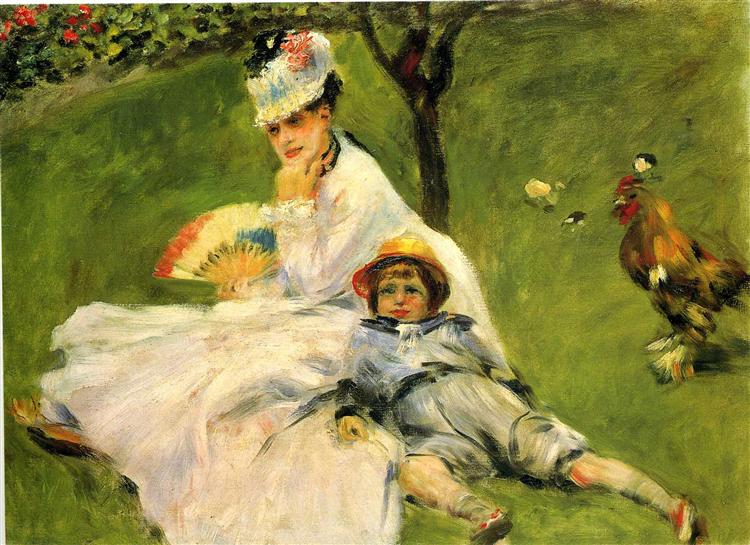
Pierre-Auguste Renoir’s use of vibrant colors, loose brushwork, and emphasis on capturing fleeting moments of joy and beauty in everyday life was groundbreaking for its time. His focus on light and movement, as seen in his Impressionist works, revolutionized the traditional approach to painting and paved the way for modern art.
Influence on Art History
Renoir’s work had a significant impact on the development of Impressionism and Post-Impressionism. His emphasis on capturing the essence of a moment rather than precise details influenced artists like Matisse and Picasso. Additionally, his dedication to portraying the beauty of everyday life inspired future generations to explore new ways of expressing emotion and human experience through art.
Cultural Significance Today
Renoir’s work continues to be celebrated for its timeless beauty and emotional resonance. His paintings, such as “Dance at Le Moulin de la Galette” and “Luncheon of the Boating Party,” are considered masterpieces of art history and are beloved by audiences around the world. Renoir’s legacy as a pioneer of Impressionism remains influential in contemporary art and continues to captivate art enthusiasts globally.
Pierre-Auguste Renoir: An Analysis Games


Take Your Learning Offline
Want a convenient, print-ready study guide for this lesson? Become a Memory Wizards Pro member to unlock the downloadable " Memory Scrolls" for this topic and our entire library!
- ✓ Complete Vocabulary Lists
- ✓ Key Facts & Timelines
- ✓ Beautifully Formatted for Print & Mobile