
How Do You Learn Best?
Learn by Listening
Start with the 3-minute audio summary to get the key facts and narrative highlights quickly.
Learn by Reading
Immerse yourself in the 10-minute visual lesson for a comprehensive understanding of the topic.
Learn by Reviewing
Jump directly to the key facts, timeline, and vocabulary lists to build a solid foundation of details.
Learn by Doing
Challenge yourself! Jump straight into the interactive games to learn by trial, error, and discovery.
The Masterpiece: Girl With A Pearl Earring Johannes Vermeer
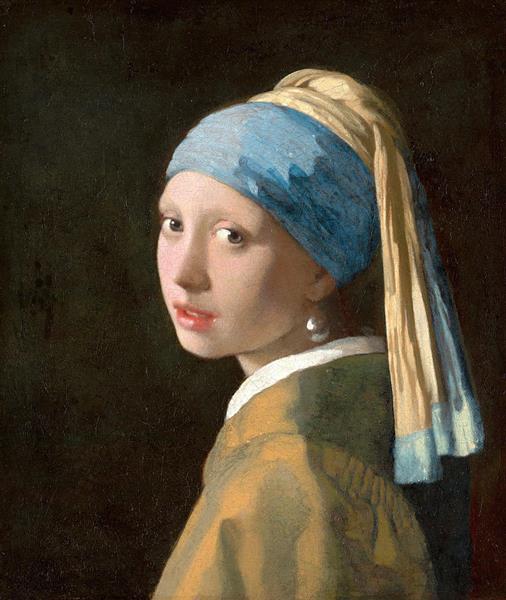
Deconstructing the Masterpiece
Enigmatic Expression
The ambiguous expression of the girl adds mystery and intrigue, inviting viewers to interpret her emotions.
Unique Headwear
The exotic turban worn by the girl adds an element of exoticism and cultural curiosity to the composition.
Singular Earring
The large, luminous pearl earring serves as a focal point, drawing attention to the girl's face and enhancing her beauty.
Soft Focus Background
The blurred background creates a sense of depth and intimacy, isolating the girl and emphasizing her presence in the scene.
Audio Library
As one of our featured lessons, this topic includes premium audio guides.
A Guide to Johannes Vermeer: The Master of Light and Composition in 10 Minutes
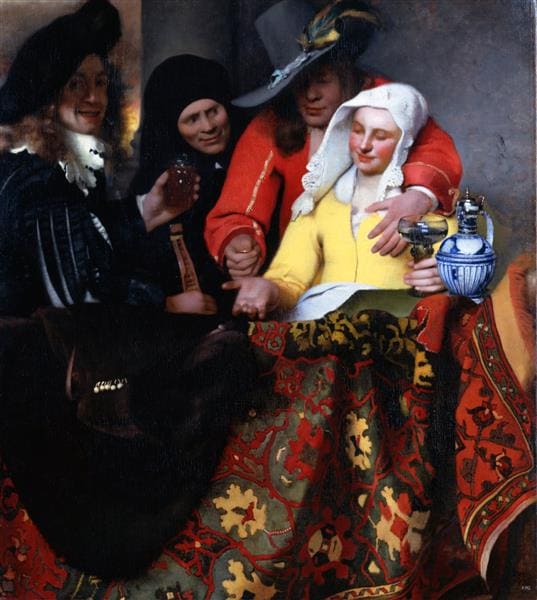
The Early Life of Johannes Vermeer
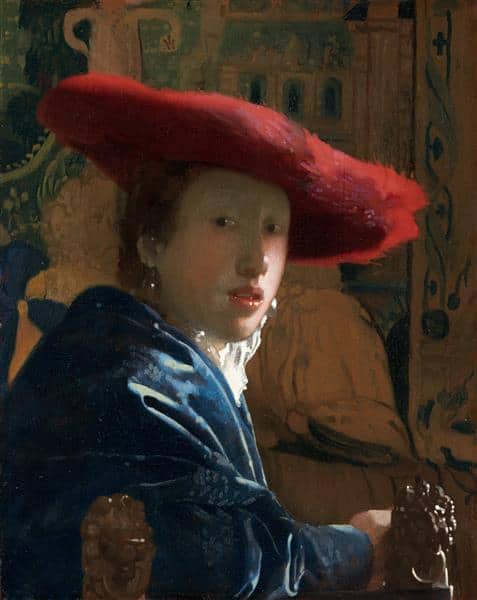
Vermeers Unique Style
The Milkmaid and The Girl with a Pearl Earring
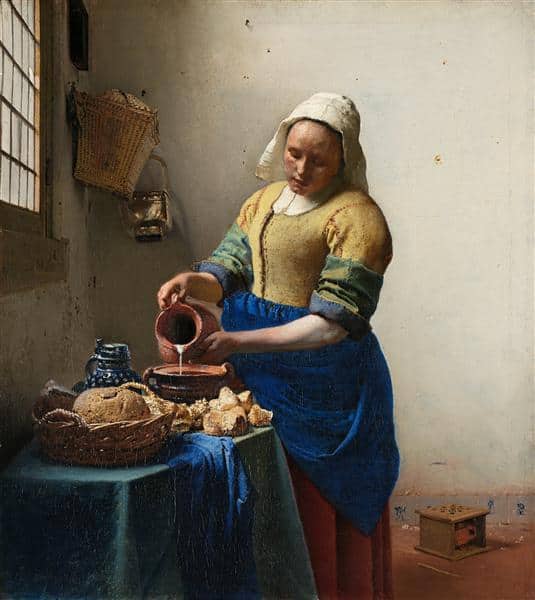
Vermeers Influence on Baroque Art
The Mystery of Vermeers Techniques
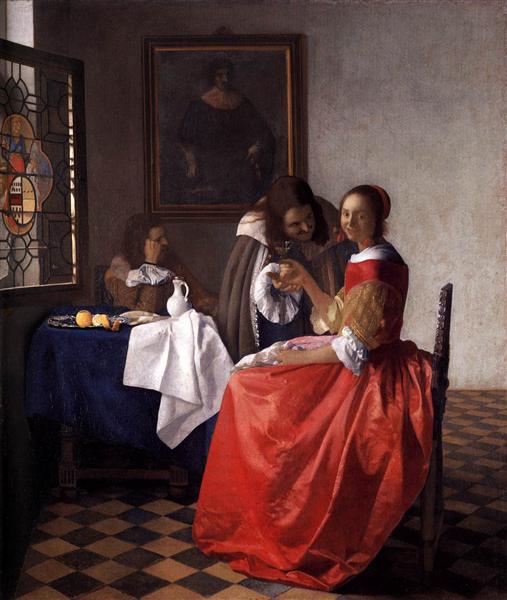
Vermeers Legacy
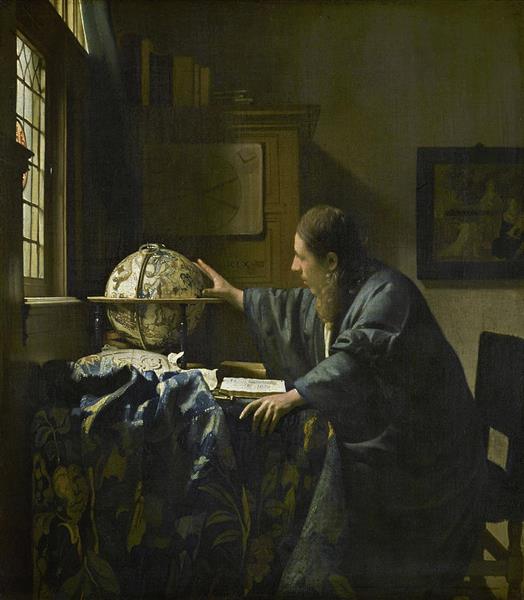
Lesson Details & Resources
In a Nutshell
- When: 17th century
- Characteristics: Realism, use of light
- Key Artists: Johannes Vermeer, Pieter de Hooch
- Major Work: “Girl with a Pearl Earring”
Vocabulary List
- Genre painting
- Johannes Vermeer was known for his genre paintings depicting scenes of everyday life in 17th century Netherlands.
- Chiaroscuro
- Vermeer's use of chiaroscuro, or the contrast between light and dark, created a sense of depth and drama in his paintings.
- Perspective
- Vermeer's meticulous attention to detail and use of linear perspective contributed to the realism of his artwork.
- Luminosity
- Vermeer's paintings are characterized by their luminosity, or the quality of being filled with light.
- Allegory
- Some art historians believe that Vermeer's paintings contain allegorical meanings, hidden beneath the surface.
- Optical illusion
- Vermeer's precise rendering of light and shadow created optical illusions that captivate viewers.
- Dutch golden age
- Vermeer was a prominent artist during the Dutch Golden Age, a period of great wealth and cultural flourishing in the Netherlands.
- Trompe l'oeil
- Vermeer's skillful use of trompe l'oeil, or the technique of creating realistic illusions, made his paintings appear almost three-dimensional.
- Composition
- Vermeer's careful composition of his paintings drew the viewer's eye to specific details and created a sense of balance.
- Mastery
- Vermeer's mastery of light, color, and perspective set him apart as one of the greatest artists of the Baroque period.
- Subtle
- Vermeer's use of subtle details and nuanced expressions added depth and complexity to his paintings.
- Domestic scene
- Vermeer often depicted domestic scenes, such as women reading or engaged in household tasks, in his paintings.
- Iconic
- Vermeer's painting 'Girl with a Pearl Earring' is considered one of the most iconic works of art in history.
- Reflection
- Vermeer's use of reflections in mirrors and other surfaces added a sense of realism and depth to his paintings.
- Atmosphere
- Vermeer's paintings are known for their atmospheric quality, with soft, diffused light and serene settings.
- Verisimilitude
- Vermeer's attention to detail and commitment to verisimilitude, or the appearance of truth, made his paintings incredibly lifelike.
- Timelessness
- Vermeer's artwork has a timeless quality that continues to captivate viewers centuries after it was created.
- Symbolism
- Some art historians interpret certain objects in Vermeer's paintings as symbols of wealth, status, or morality.
- Mystery
- Vermeer's paintings often have an air of mystery, with hidden meanings and ambiguous narratives.
- Serene
- Vermeer's paintings are known for their serene and tranquil compositions, inviting viewers to contemplate the beauty of everyday life.
Timeline of A Guide to Johannes Vermeer: The Master of Light and Composition
Johannes Vermeer is born in Delft, Netherlands
Vermeer becomes a member of the Guild of Saint Luke in Delft
Vermeer marries Catharina Bolnes
Vermeer paints 'The Procuress'
Vermeer paints 'Girl Reading a Letter at an Open Window'
Vermeer paints 'The Milkmaid'
Vermeer paints 'Woman Holding a Balance'
Vermeer paints 'The Art of Painting'
Vermeer's financial difficulties worsen
Vermeer dies in Delft
Vermeer's widow Catharina declares bankruptcy
Vermeer's paintings start to gain recognition and value in the late 18th century
Vermeer's 'Girl with a Pearl Earring' becomes a famous painting
Vermeer's works are exhibited in major museums around the world
Key Facts
This is the information used in the fact matching game
- Johannes Vermeer was a Dutch Baroque artist known for his meticulously detailed paintings of domestic life.
- Vermeer's most famous painting is 'Girl with a Pearl Earring', which is often referred to as the Dutch Mona Lisa.
- Vermeer's paintings are characterized by their use of light and shadow, as well as their subtle color palette.
- Vermeer was a master of creating realistic textures, such as the shimmering surface of a pearl or the softness of a velvet curtain.
- Vermeer's works often feature a single figure engaged in everyday activities, such as reading a letter or pouring milk.
- Vermeer's painting technique involved building up layers of translucent glazes to achieve a luminous quality in his works.
- Vermeer's paintings are highly sought after today, with some selling for tens of millions of dollars.
- Vermeer's use of perspective and composition was highly innovative for his time, influencing later artists such as Édouard Manet and Edgar Degas.
- Vermeer's most famous works include 'The Milkmaid', 'The Art of Painting', and 'View of Delft'.
- Vermeer's paintings often feature a sense of quiet contemplation and intimacy, inviting the viewer to enter into the scene.
- Vermeer's use of light and shadow was influenced by the work of Caravaggio, a Baroque artist known for his dramatic use of chiaroscuro.
- Vermeer was relatively unknown during his lifetime and only produced around 35 known works.
- Vermeer's paintings often feature a sense of mystery and ambiguity, leaving the viewer to interpret the scene for themselves.
- Vermeer's meticulous attention to detail in his paintings has led some art historians to speculate that he may have used a camera obscura to aid in his compositions.
- Vermeer's works became more widely recognized in the 19th century when they were rediscovered by art critics and collectors.
- Vermeer's paintings often feature symbolic elements, such as maps or musical instruments, that add layers of meaning to the composition.
- Vermeer's paintings capture moments of everyday life with a sense of timelessness, making them resonate with viewers across centuries.
- Vermeer's works are celebrated for their quiet beauty and emotional depth, inviting viewers to contemplate the mysteries of human existence.
- Vermeer's use of light and shadow creates a sense of drama and depth in his paintings, drawing the viewer into the scene.
- Vermeer's legacy as a master of light and composition continues to inspire artists and art lovers around the world.
Analysis & Significance
Historical Context
Johannes Vermeer was a Dutch painter who lived during the Dutch Golden Age in the 17th century. This period was characterized by economic prosperity, maritime power, and cultural flowering in the Netherlands. Vermeer’s work reflected the interest in realism and domestic scenes that were popular during this time.
Defining Characteristics
Vermeer’s style is characterized by his use of light and shadow, meticulous attention to detail, and his ability to capture everyday moments with a sense of intimacy and tranquility. His paintings often feature a limited color palette and a focus on domestic settings, such as women engaged in daily activities.
Lasting Influence
Vermeer’s work had a lasting influence on subsequent art movements, particularly in the way he captured light and created a sense of atmosphere in his paintings. His emphasis on realism and domestic scenes also had an impact on later artists who sought to portray everyday life in a similar manner. Vermeer’s legacy continues to be celebrated today, with his paintings admired for their beauty and technical skill.
A Guide to Johannes Vermeer: The Master of Light and Composition Games


Take Your Learning Offline
Want a convenient, print-ready study guide for this lesson? Become a Memory Wizards Pro member to unlock the downloadable " Memory Scrolls" for this topic and our entire library!
- ✓ Complete Vocabulary Lists
- ✓ Key Facts & Timelines
- ✓ Beautifully Formatted for Print & Mobile