
How Do You Learn Best?
Learn by Listening
Start with the 3-minute audio summary to get the key facts and narrative highlights quickly.
Learn by Reading
Immerse yourself in the 10-minute visual lesson for a comprehensive understanding of the topic.
Learn by Reviewing
Jump directly to the key facts, timeline, and vocabulary lists to build a solid foundation of details.
Learn by Doing
Challenge yourself! Jump straight into the interactive games to learn by trial, error, and discovery.
The Masterpiece: The Calling Of Saint Matthew Caravaggio
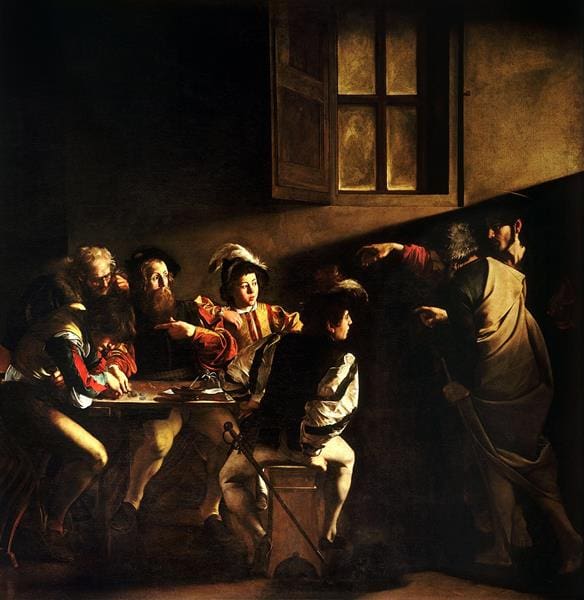
Deconstructing the Masterpiece
Chiaroscuro
The strong contrast between light and dark adds depth and drama to the scene, emphasizing the divine light illuminating Saint Matthew.
Gestural Poses
The expressive gestures of the figures convey emotion and narrative, capturing the moment of Saint Matthew's spiritual awakening.
Naturalism
Caravaggio's realistic depiction of figures and settings brings a sense of immediacy and authenticity to the biblical narrative.
Audio Library
As one of our featured lessons, this topic includes premium audio guides.
A Guide to Caravaggio: Exploring the Baroque Master in 10 Minutes
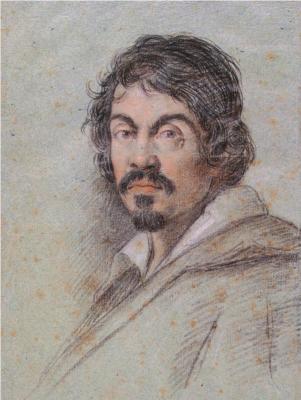
The Early Life of Caravaggio
Caravaggios Innovative Techniques
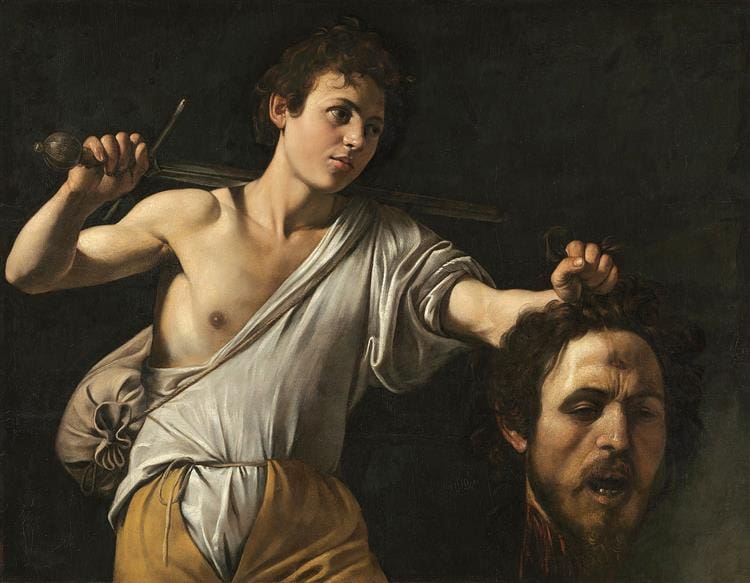
Controversy and Scandals
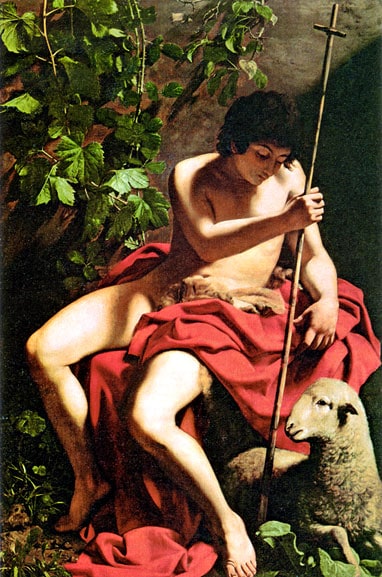
Religious Works and Commissions
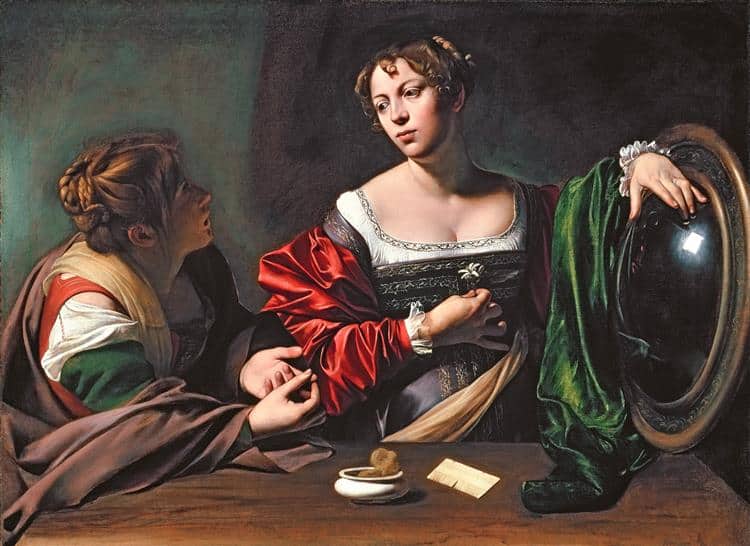
Caravaggios Influence on the Baroque Style
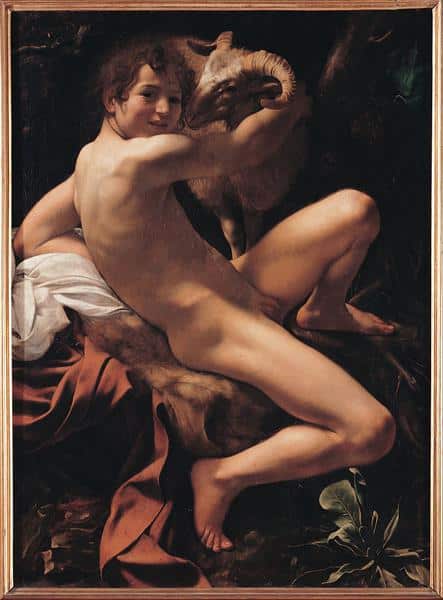
Exile and Death
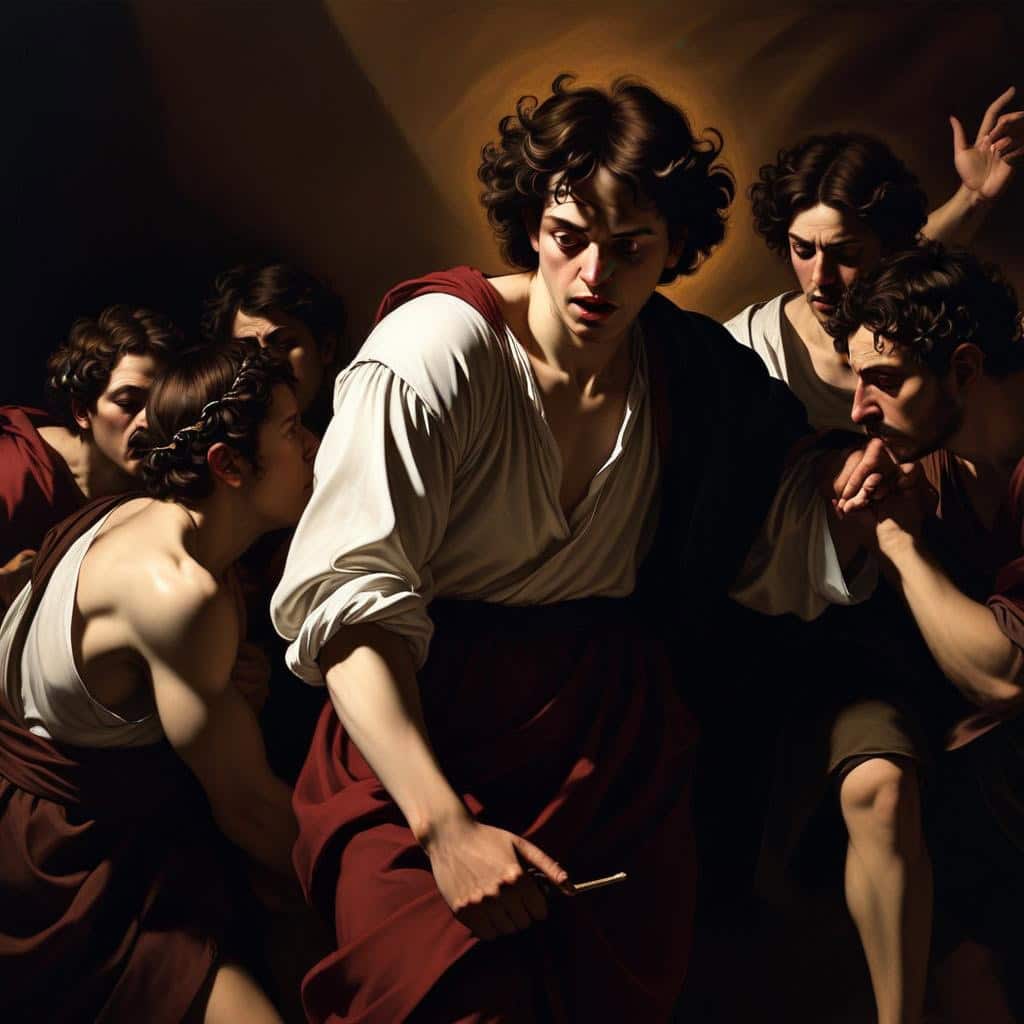
Legacy and Rediscovery
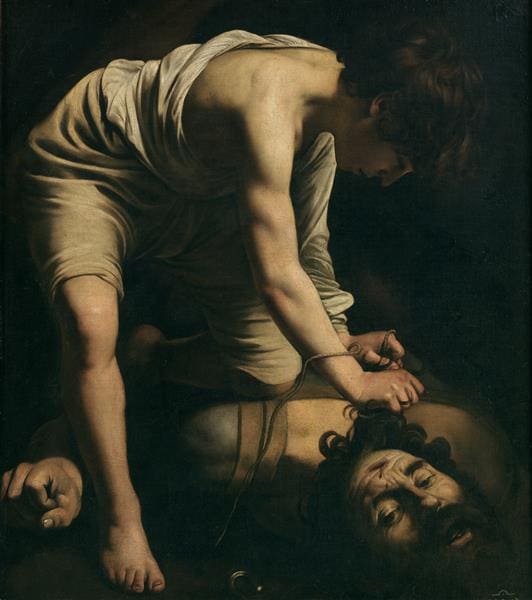
Controversies Surrounding Caravaggios Art
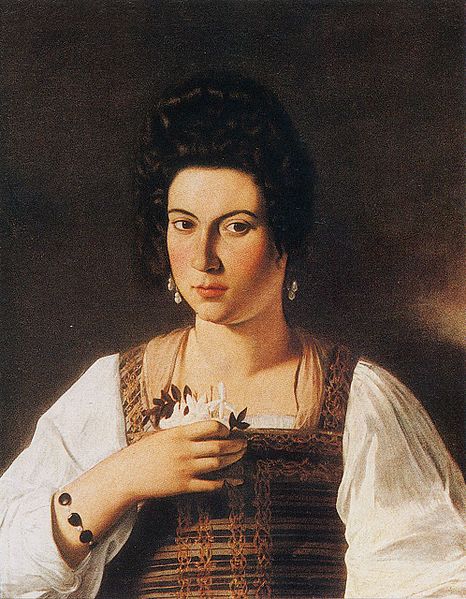
The Continuing Impact of Caravaggios Art
Lesson Details & Resources
In a Nutshell
- When: 17th century
- Characteristics: Realism, dramatic use of light and shadow
- Key Artists: Caravaggio, Artemisia Gentileschi
- Major Work: “The Calling of Saint Matthew”
Vocabulary List
- Chiaroscuro
- Caravaggio was known for his use of chiaroscuro, a technique of using strong contrasts between light and dark to create a sense of volume and drama in his paintings.
- Tenebrism
- Caravaggio's use of tenebrism, a style of painting that emphasizes darkness and dramatic lighting effects, was influential in the development of Baroque art.
- Realism
- Caravaggio's paintings often depicted scenes with a sense of realism, capturing the raw emotions and physicality of his subjects.
- Dramatic
- Caravaggio's paintings are known for their dramatic compositions and intense emotional impact on viewers.
- Narrative
- Caravaggio's works often tell a story or convey a specific narrative through the use of gesture, expression, and setting.
- Composition
- Caravaggio's innovative use of composition, with figures placed close to the picture plane and dramatic diagonals, created a sense of immediacy and tension in his works.
- Naturalism
- Caravaggio's paintings are characterized by their naturalism, with detailed depictions of human anatomy and everyday life.
- Emotional
- Caravaggio's paintings evoke strong emotions in viewers, with their intense lighting and expressive figures.
- Religious
- Many of Caravaggio's works were religious in subject matter, often depicting scenes from the Bible with a sense of realism and emotion.
- Controversial
- Caravaggio's paintings were often controversial for their unconventional subject matter and use of light and shadow.
- Mastery
- Caravaggio was a master painter, known for his technical skill and innovative approach to composition and lighting.
- Naturalistic
- Caravaggio's naturalistic style of painting, with its attention to detail and emphasis on physical reality, was groundbreaking in the art world of his time.
- Intense
- Caravaggio's paintings are known for their intense emotional impact, with figures that seem to leap off the canvas.
- Mysterious
- Caravaggio's use of dark shadows and enigmatic expressions in his paintings create a sense of mystery and intrigue.
- Dramatic lighting
- Caravaggio's use of dramatic lighting, with strong contrasts between light and dark, adds a sense of drama and depth to his works.
- Powerful
- Caravaggio's paintings have a powerful presence, with their strong compositions and emotional intensity.
- Evocative
- Caravaggio's paintings are evocative, stirring strong emotions and responses in viewers.
- Atmosphere
- Caravaggio's works are known for their atmospheric quality, with a sense of space and depth created through his use of light and shadow.
- Expressive
- Caravaggio's figures are highly expressive, conveying a range of emotions and psychological depth.
- Masterpiece
- Many consider Caravaggio's paintings to be masterpieces of Baroque art, with their innovative techniques and emotional impact.
- Influential
- Caravaggio's work was highly influential on subsequent generations of artists, shaping the development of Baroque art in Italy and beyond.
Timeline of A Guide to Caravaggio: Exploring the Baroque Master
Caravaggio is born in Milan, Italy
Caravaggio moves to Rome
Caravaggio completes his first major commission, 'The Cardsharps'
Caravaggio completes 'The Supper at Emmaus'
Caravaggio completes 'The Calling of Saint Matthew'
Caravaggio is involved in a brawl and kills Ranuccio Tomassoni
Caravaggio flees Rome and travels to Naples
Caravaggio travels to Malta and is made a Knight of the Order of St. John
Caravaggio is expelled from the Order of St. John
Caravaggio travels to Sicily
Caravaggio dies under mysterious circumstances in Porto Ercole, Tuscany
Caravaggio's influence on Baroque art becomes more widely recognized
Caravaggio's works experience a resurgence in popularity during the 20th century
Many of Caravaggio's paintings are rediscovered and authenticated
Caravaggio is considered one of the most important figures in the development of Baroque art
Numerous exhibitions and publications are dedicated to Caravaggio's life and work
Key Facts
This is the information used in the fact matching game
- Caravaggio was an Italian painter active in Rome in the late 16th and early 17th centuries.
- Caravaggio is known for his use of dramatic lighting and intense realism in his artworks.
- Caravaggio's style had a major influence on the Baroque art movement.
- Caravaggio's paintings often featured religious themes and figures.
- Caravaggio's use of chiaroscuro, or the contrast between light and dark, was revolutionary in his time.
- Caravaggio's work was controversial for its realistic depictions of biblical figures.
- Caravaggio's painting 'The Calling of Saint Matthew' is one of his most famous works.
- Caravaggio's use of ordinary people as models for his religious figures was unconventional for the time.
- Caravaggio's use of tenebrism, a style of painting with heightened chiaroscuro, added to the drama in his artworks.
- Caravaggio's painting 'Judith Beheading Holofernes' is a powerful and violent depiction of the biblical story.
- Caravaggio had a tumultuous personal life, which often overshadowed his artistic achievements.
- Caravaggio's use of naturalism in his paintings was groundbreaking for the time.
- Caravaggio's works were highly sought after by collectors and patrons during his lifetime.
- Caravaggio's painting 'The Supper at Emmaus' is a masterful example of his use of perspective and composition.
- Caravaggio's use of contemporary clothing and settings in his biblical scenes was innovative.
- Caravaggio's painting 'Bacchus' is a sensual and realistic portrayal of the Roman god of wine.
- Caravaggio's use of foreshortening, or the distortion of perspective to create depth, was a key element in his compositions.
- Caravaggio's use of light and shadow created a sense of drama and emotion in his paintings.
- Caravaggio's painting 'The Conversion of Saint Paul' is a powerful and dynamic representation of the biblical event.
- Caravaggio's legacy as an artist has had a lasting impact on the history of Western art.
Analysis & Significance
Historical Context
Caravaggio was an Italian artist who emerged during the late 16th and early 17th centuries, a time of great social and political upheaval in Italy. The Counter-Reformation was in full swing, and the Catholic Church was looking for art that could communicate religious stories in a more relatable and emotional way. Caravaggio’s dramatic use of light and shadow, as well as his realistic depictions of human emotion, resonated with the religious fervor of the time.
Defining Characteristics
Caravaggio’s style is characterized by a strong contrast between light and dark, known as chiaroscuro, which creates a sense of drama and immediacy in his paintings. He often used everyday people as models for his religious scenes, giving them a sense of realism and emotional depth. His compositions are dynamic and often feature figures in action, drawing the viewer into the scene.
Lasting Influence
Caravaggio’s innovative approach to painting had a profound influence on subsequent artists, particularly those of the Baroque period. His use of light and shadow, as well as his focus on naturalism and emotion, paved the way for a new kind of realism in art. Many artists, such as Peter Paul Rubens and Diego Velázquez, were inspired by Caravaggio’s work and incorporated his techniques into their own paintings. His legacy can be seen in the dramatic and emotional art of later periods, as well as in the continued interest in the human experience in art.
A Guide to Caravaggio: Exploring the Baroque Master Games


Take Your Learning Offline
Want a convenient, print-ready study guide for this lesson? Become a Memory Wizards Pro member to unlock the downloadable " Memory Scrolls" for this topic and our entire library!
- ✓ Complete Vocabulary Lists
- ✓ Key Facts & Timelines
- ✓ Beautifully Formatted for Print & Mobile