
How Do You Learn Best?
Learn by Reading
Immerse yourself in the 10-minute visual lesson for a comprehensive understanding of the topic.
Learn by Reviewing
Jump directly to the key facts, timeline, and vocabulary lists to build a solid foundation of details.
Learn by Doing
Challenge yourself! Jump straight into the interactive games to learn by trial, error, and discovery.
Poltava by Alexander Pushkin in 10 Minutes
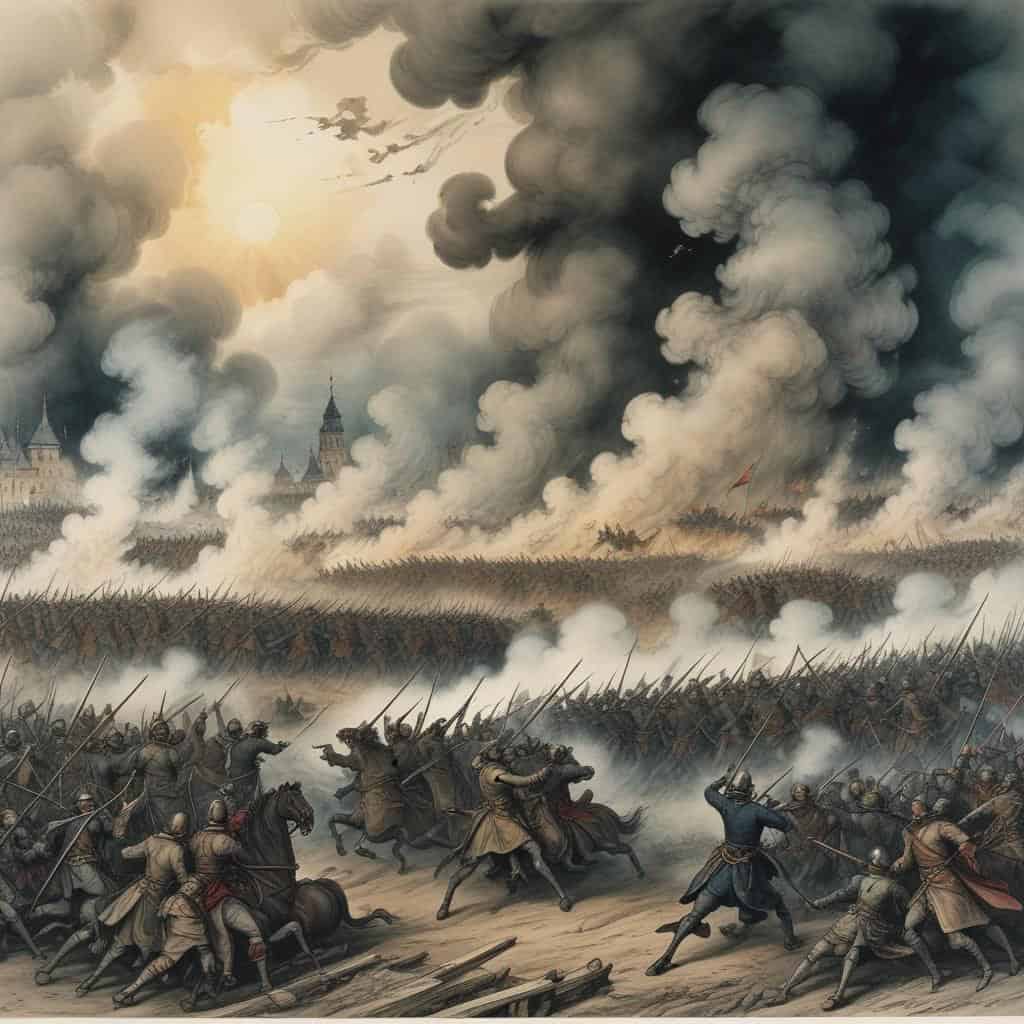
Introduction
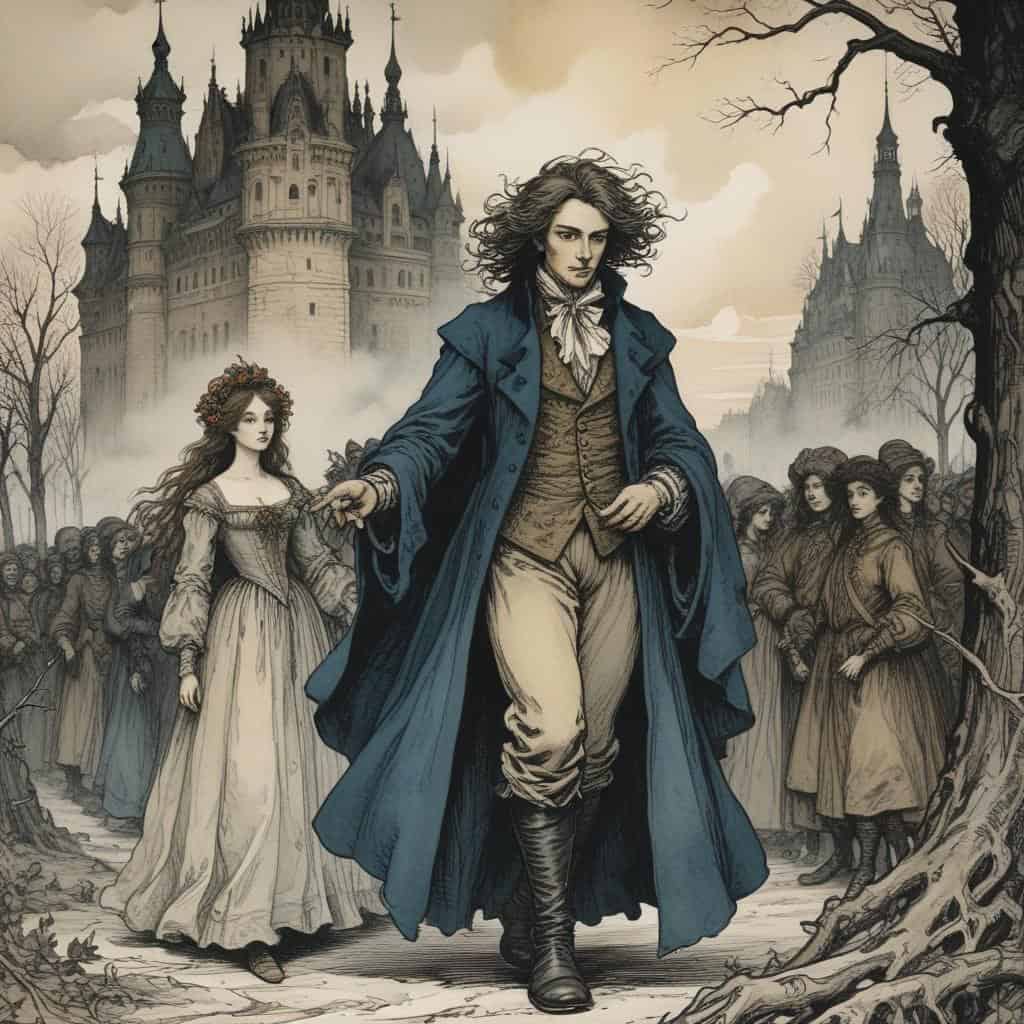
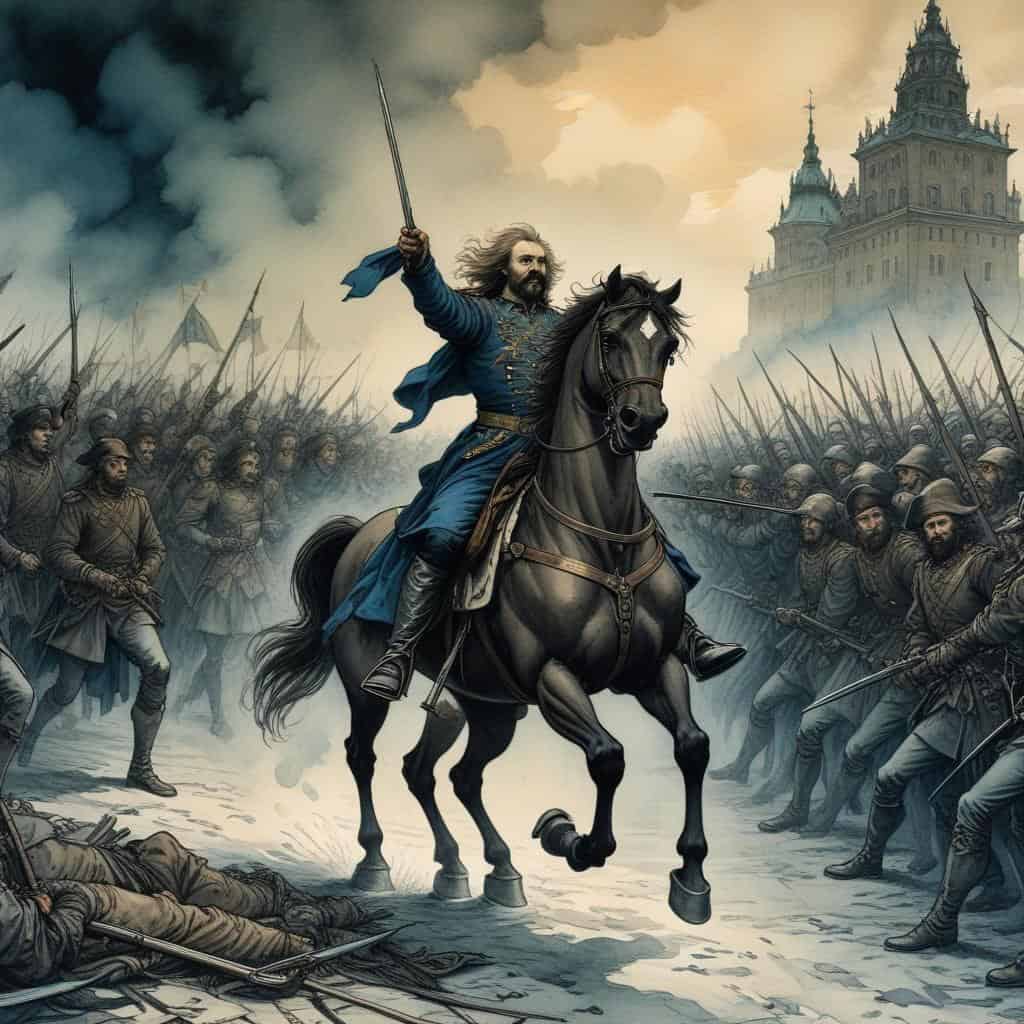
Ivan Mazepa
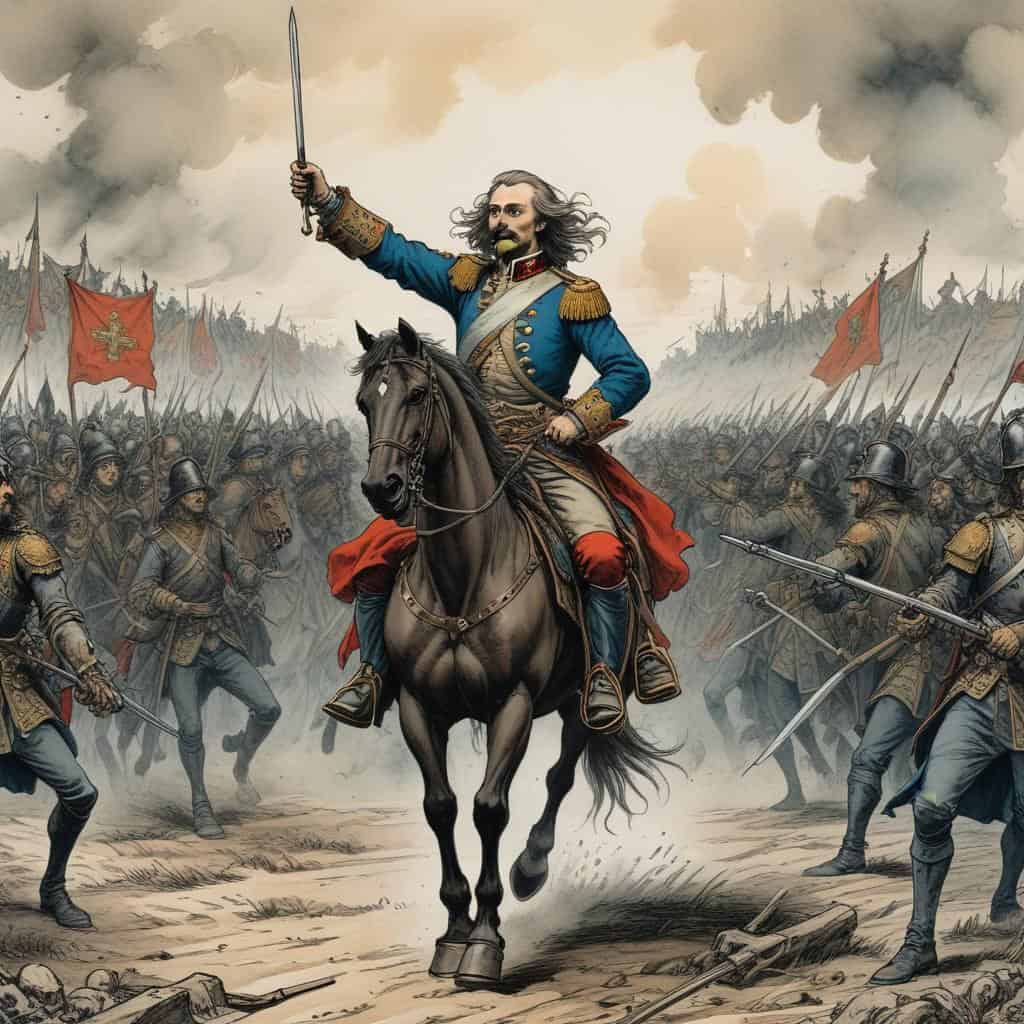
Tsar Peter the Great
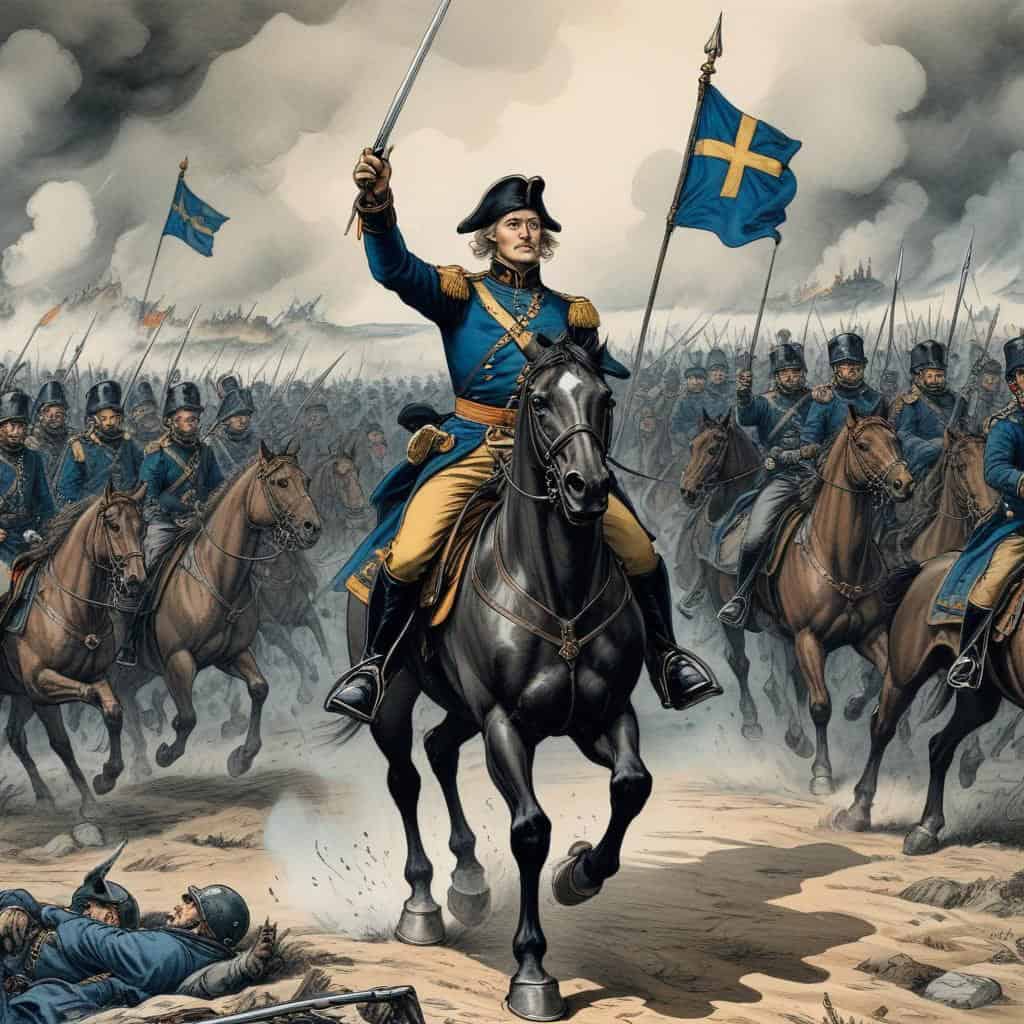
Charles XII of Sweden

Maria Skuratova-Belskaya
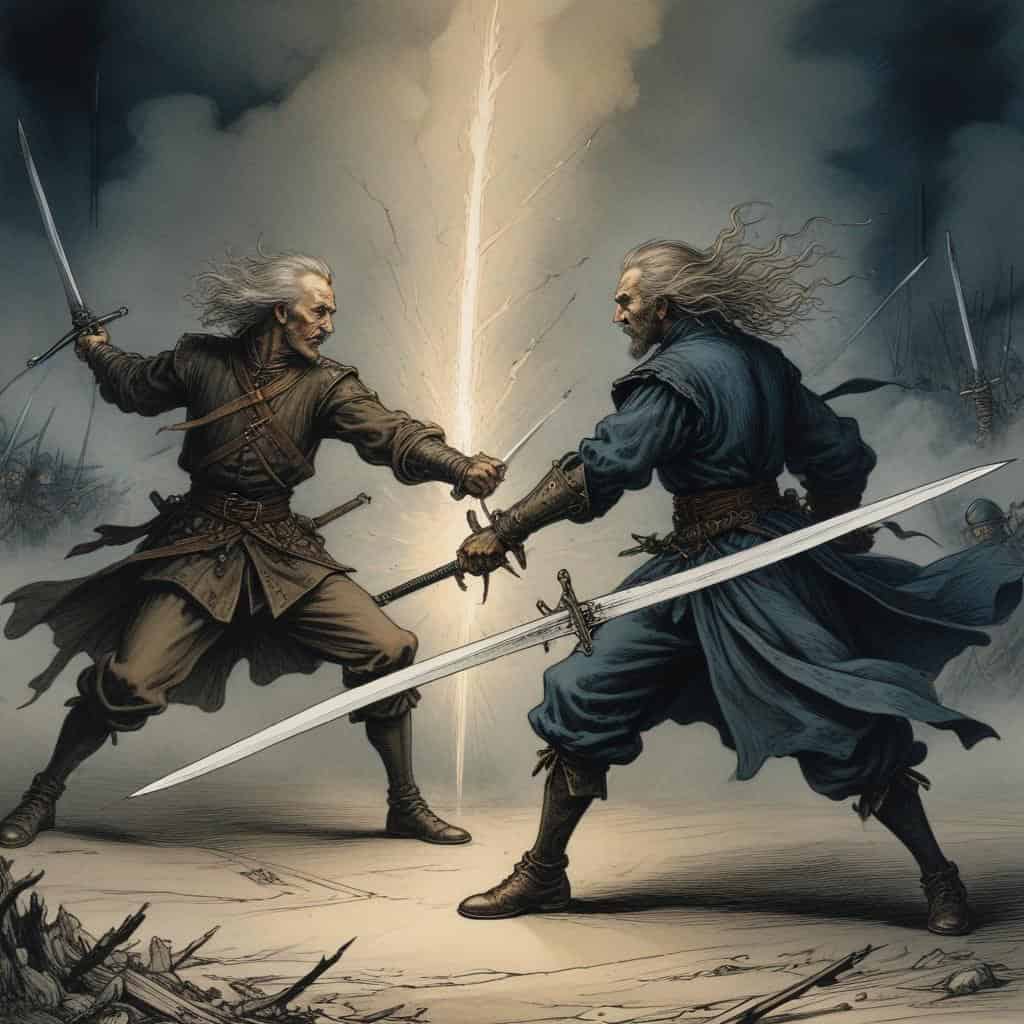
The Duel
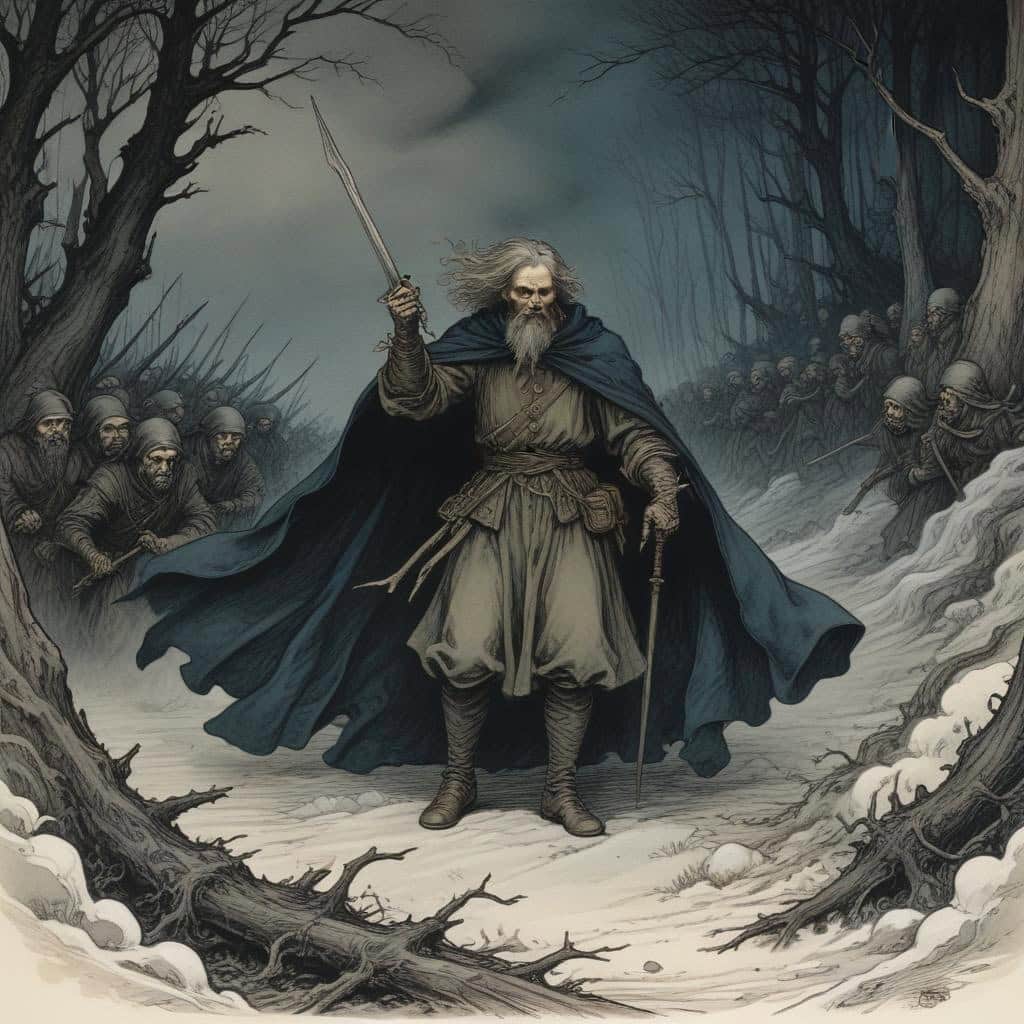
The Betrayal
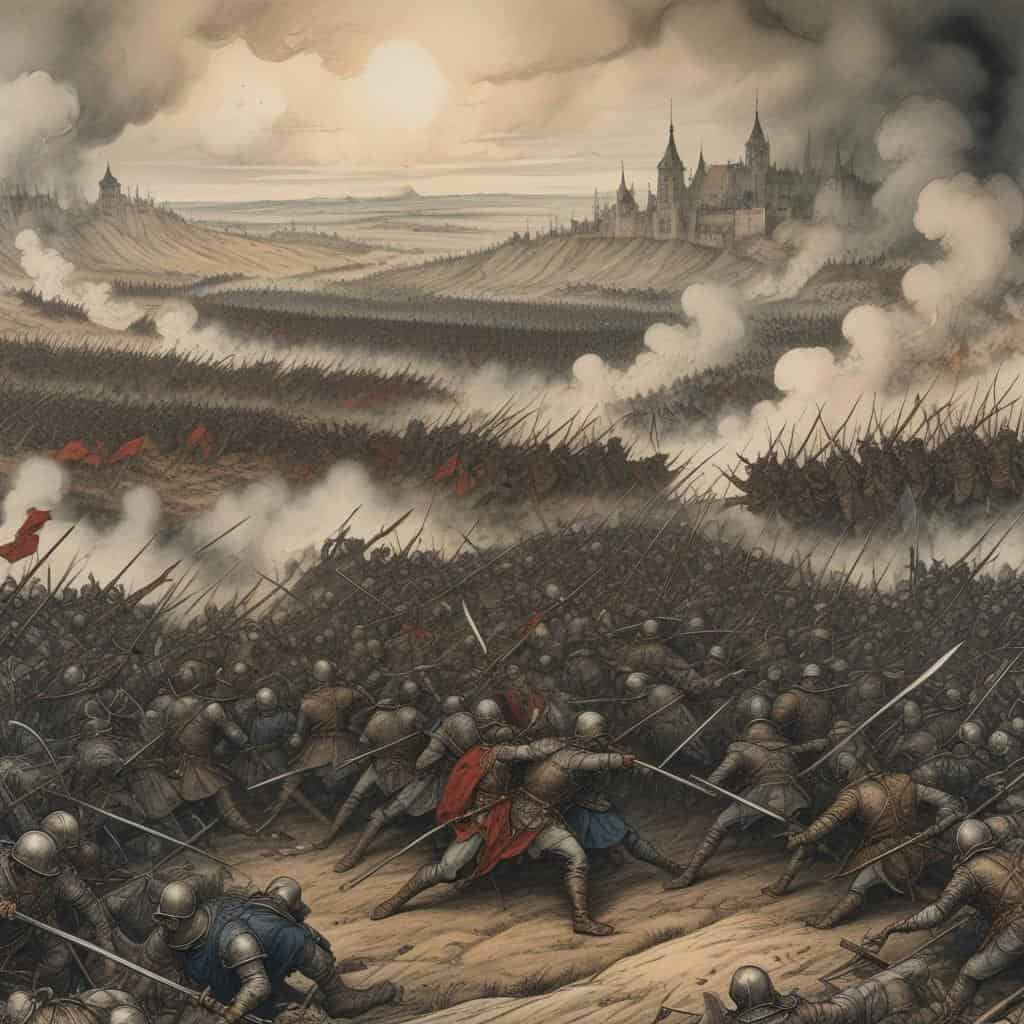
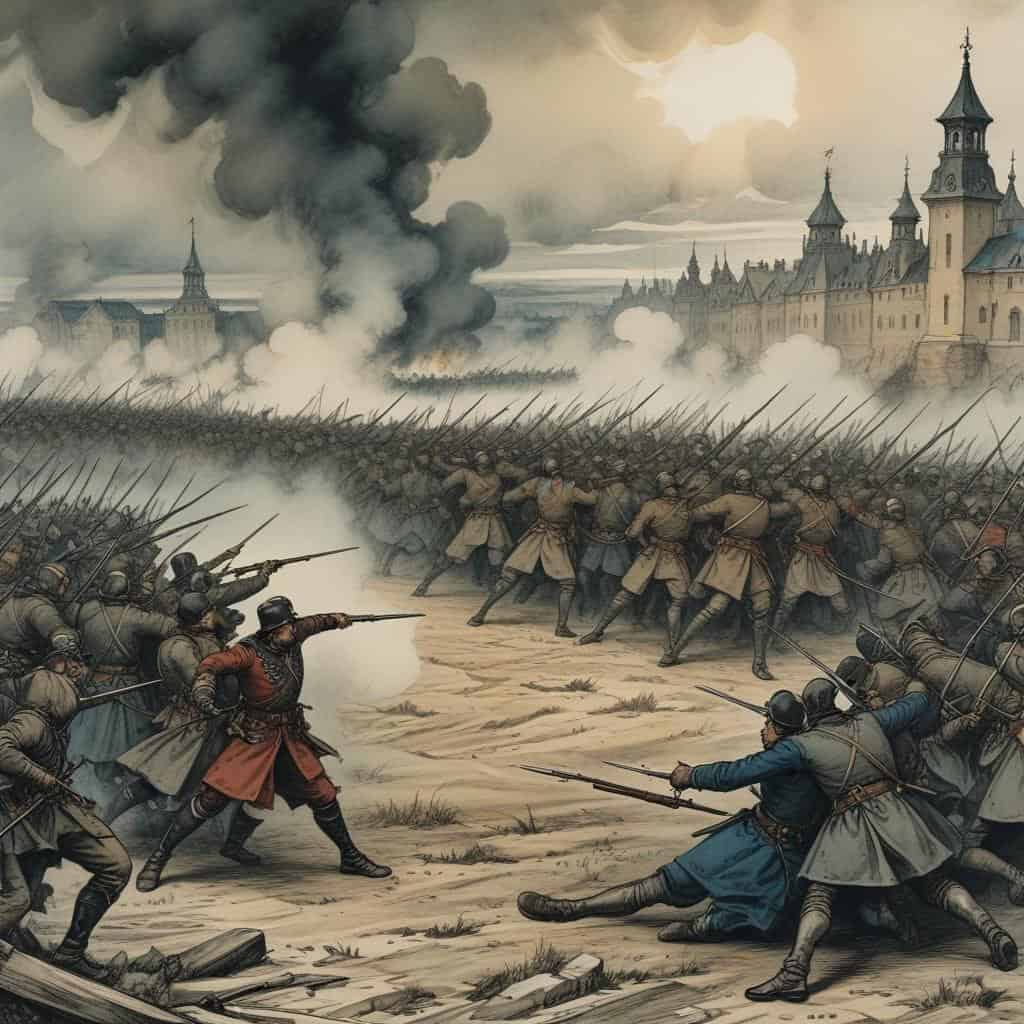
The Battle of Poltava
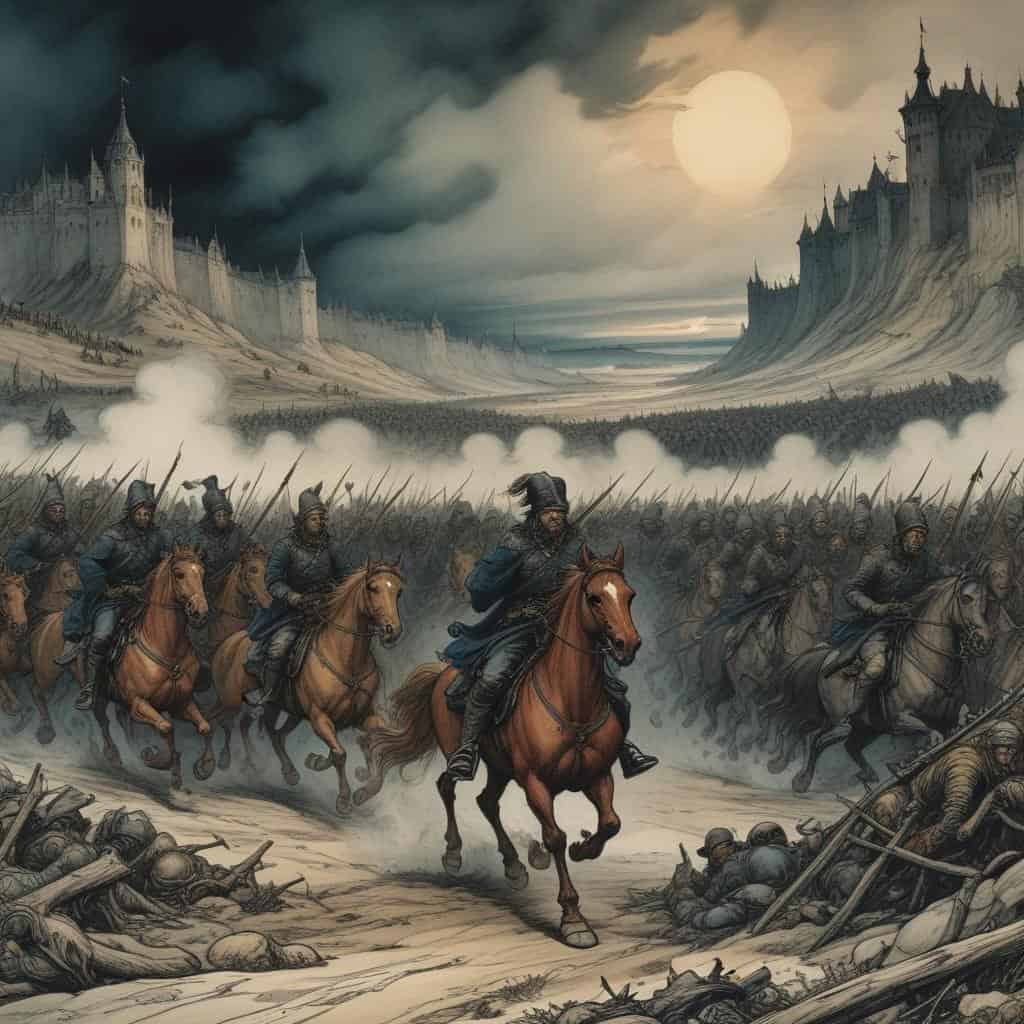
The Retreat
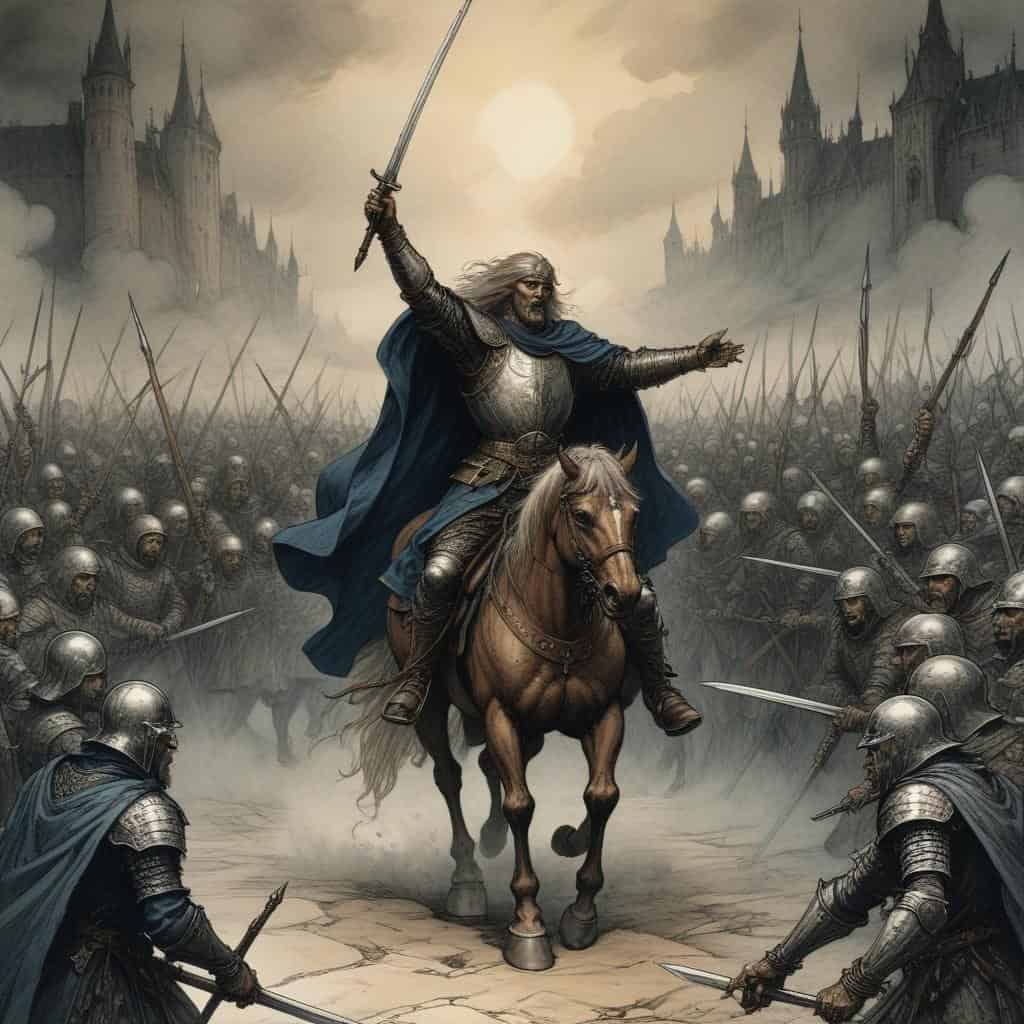
The Capture
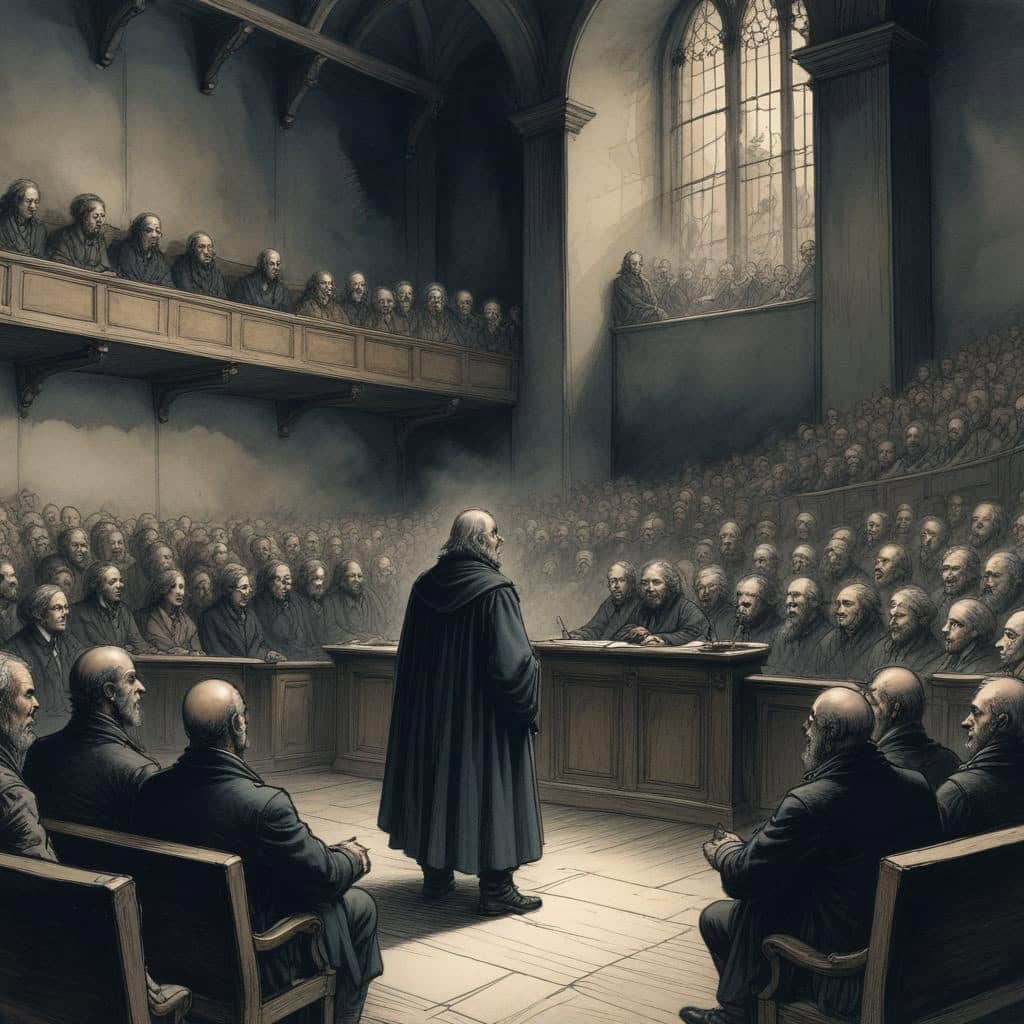
The Trial
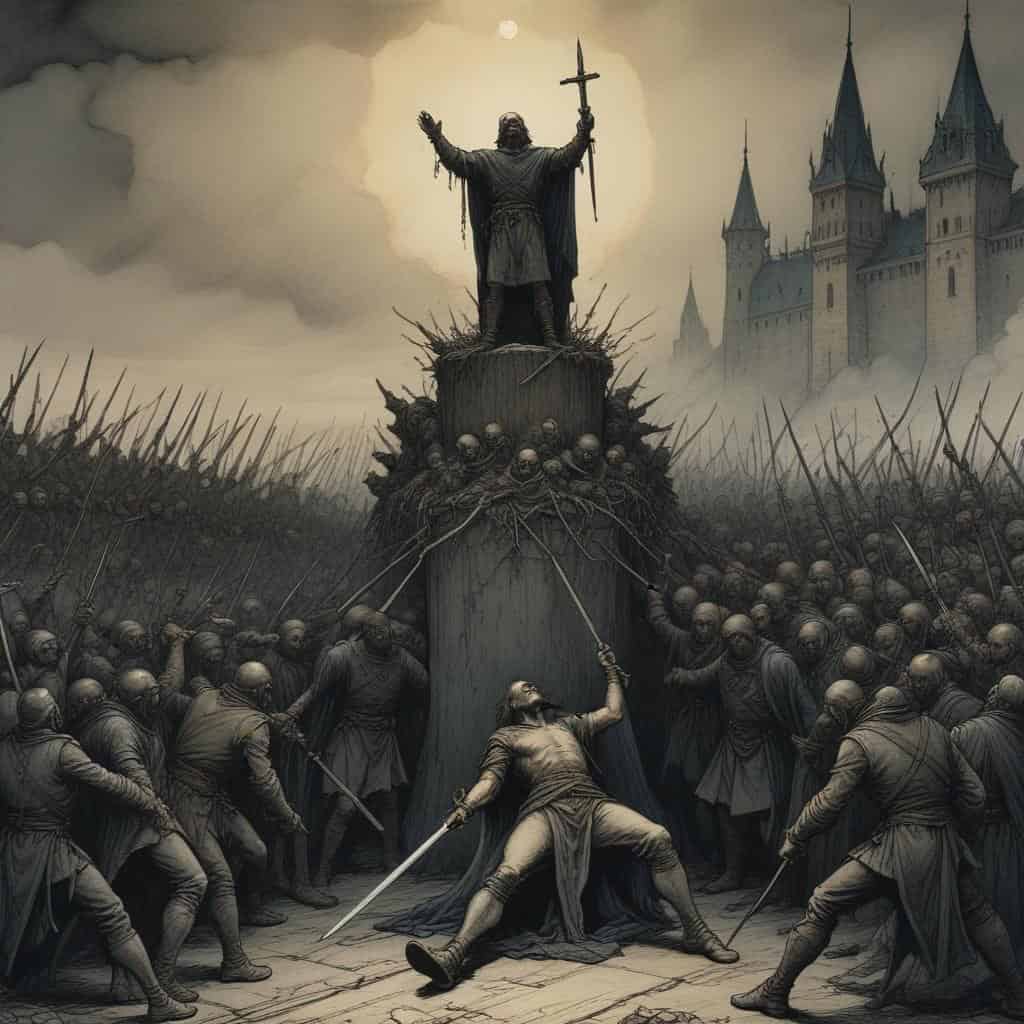
The Execution

The Legacy
Lesson Details & Resources
In a Nutshell
- What: ‘Poltava’ by Alexander Pushkin
- When: Written in the Romantic era
- Who: The main characters include Ivan Mazepa and Peter the Great
- Theme: The core theme of the work revolves around betrayal, power, and political intrigue
List of Characters in Poltava by Alexander Pushkin
-
Peter the Great
Peter the Great is the Tsar of Russia and the main protagonist of the story.
-
Mazepa
Mazepa is a Cossack leader who betrays Peter the Great and allies with Charles XII of Sweden.
-
Charles XII of Sweden
Charles XII of Sweden is the King of Sweden and a key figure in the battle of Poltava.
-
Hetman Ivan Mazepa
Hetman Ivan Mazepa is a historical figure who plays a significant role in the events leading up to the battle of Poltava.
Timeline of Poltava by Alexander Pushkin
King Charles XII of Sweden invades Russia in 1700.
Peter the Great of Russia forms an alliance with Ivan Mazepa, Hetman of the Ukrainian Cossacks.
Mazepa betrays Peter the Great and joins forces with Charles XII.
The Battle of Poltava takes place on June 27, 1709.
Peter the Great's forces defeat the Swedish and Ukrainian forces.
Charles XII flees to the Ottoman Empire, leaving Mazepa and the Ukrainian Cossacks defeated.
Mazepa dies in exile and Charles XII remains in the Ottoman Empire for several years before returning to Sweden.
The Battle of Poltava is seen as a turning point in the Great Northern War, solidifying Russia's dominance in the region.
Vocabulary List
- Poltava
- The battle of Poltava was a significant event in Russian history.
- Cossacks
- The Cossacks played a crucial role in the battle of Poltava.
- Swedish
- The Swedish army suffered a defeat at the battle of Poltava.
- Tsar
- The Tsar of Russia emerged victorious in the battle of Poltava.
- Ukraine
- The city of Poltava is located in Ukraine.
- Defeat
- The Swedish forces faced a crushing defeat at Poltava.
- Victory
- The Russian army celebrated a great victory at the battle of Poltava.
- Warfare
- The battle of Poltava was a fierce display of military warfare.
- Strategy
- The Tsar's strategic planning was key to the success at Poltava.
- History
- The battle of Poltava is a significant event in Russian history.
Key Facts
This is the information used in the fact matching game
- Poltava is a historical novel written by Alexander Pushkin in 1828-1829.
- The novel is based on the historical events of the Battle of Poltava in 1709.
- Pushkin was inspired to write Poltava after visiting the battlefield in 1829.
- The novel is written in verse and is considered one of Pushkin's greatest works.
- Poltava is divided into 8 cantos, each with its own unique style and tone.
- The novel explores themes of love, honor, and patriotism.
- Poltava was banned by the Russian government for its perceived anti-government sentiment.
- Pushkin's friend, Pyotr Vyazemsky, helped smuggle copies of Poltava out of Russia for publication.
- The novel was eventually published in 1829 in Paris.
- Poltava was well-received by critics and readers alike, cementing Pushkin's reputation as a literary giant.
- The novel has been translated into multiple languages and continues to be studied and analyzed by scholars.
- Poltava has been adapted into various forms, including operas, ballets, and films.
- The Battle of Poltava was a decisive victory for the Russian Empire over the Swedish Empire.
- The battle marked the beginning of Sweden's decline as a major power in Europe.
- The Battle of Poltava is considered one of the most important events in Russian history.
- The battle was fought on June 27, 1709, near the Ukrainian city of Poltava.
- The Swedish King Charles XII was wounded during the battle and fled to the Ottoman Empire.
- The Russian victory at Poltava solidified Peter the Great's reputation as a military genius.
- The Battle of Poltava is often seen as a turning point in the Great Northern War.
- The legacy of the Battle of Poltava continues to be felt in the politics and culture of Ukraine and Russia.
Analysis & Significance
Impact on Literature
‘Poltava’ by Alexander Pushkin is a seminal work in Russian literature, known for its poetic retelling of historical events. Pushkin’s use of vivid imagery and emotional depth has influenced generations of writers, inspiring them to explore the intersection of history and literature in their own works.
Enduring Themes
The themes of love, honor, betrayal, and sacrifice in ‘Poltava’ continue to resonate with modern audiences. Pushkin’s exploration of these timeless themes through the lens of a historical battle allows readers to reflect on the complexities of human nature and the impact of personal choices on larger events.
Cultural Significance Today
‘Poltava’ remains a celebrated work in Russian culture, with adaptations in various art forms such as opera, ballet, and theater. Its enduring popularity speaks to the universal appeal of Pushkin’s storytelling and the way in which he captured the essence of a pivotal moment in Russian history. The work’s influence can still be seen in contemporary literature and performances, keeping Pushkin’s legacy alive in the cultural landscape.
Poltava by Alexander Pushkin Games


Take Your Learning Offline
Want a convenient, print-ready study guide for this lesson? Become a Memory Wizards Pro member to unlock the downloadable " Memory Scrolls" for this topic and our entire library!
- ✓ Complete Vocabulary Lists
- ✓ Key Facts & Timelines
- ✓ Beautifully Formatted for Print & Mobile