
How Do You Learn Best?
Learn by Listening
Start with the 3-minute audio summary to get the key facts and narrative highlights quickly.
Learn by Reading
Immerse yourself in the 10-minute visual lesson for a comprehensive understanding of the topic.
Learn by Reviewing
Jump directly to the key facts, timeline, and vocabulary lists to build a solid foundation of details.
Learn by Doing
Challenge yourself! Jump straight into the interactive games to learn by trial, error, and discovery.
Audio Library
As one of our featured lessons, this topic includes premium audio guides.
Unlock the Wizard's Cram Session
This powerful audio study guide is a Pro-exclusive feature. Upgrade to Memory Wizards Pro to access this and all of our premium learning tools.
Upgrade to ProAdventures of Huckleberry Finn in 10 Minutes

Introduction
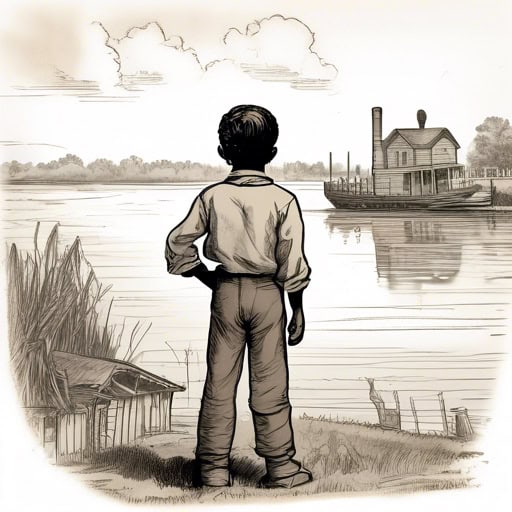
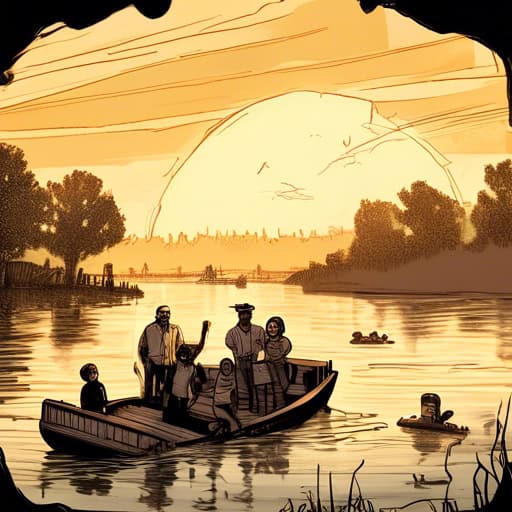
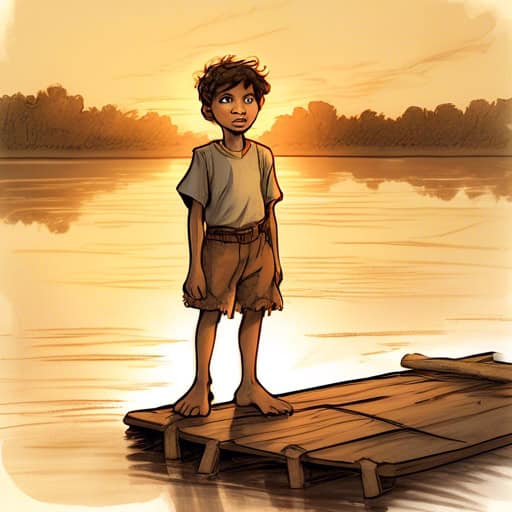
1. Huckleberry Finn
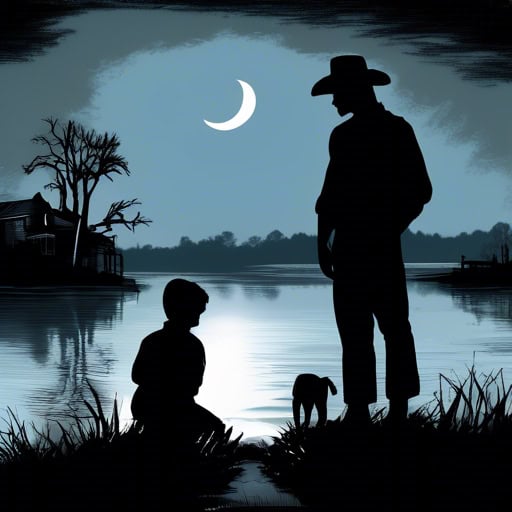
2. Jim
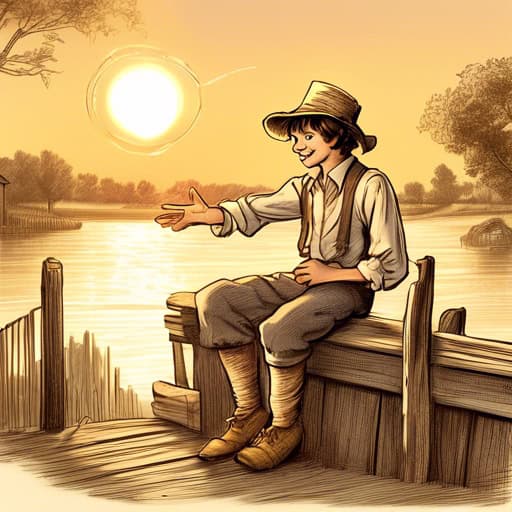
3. Tom Sawyer

4. Pap Finn
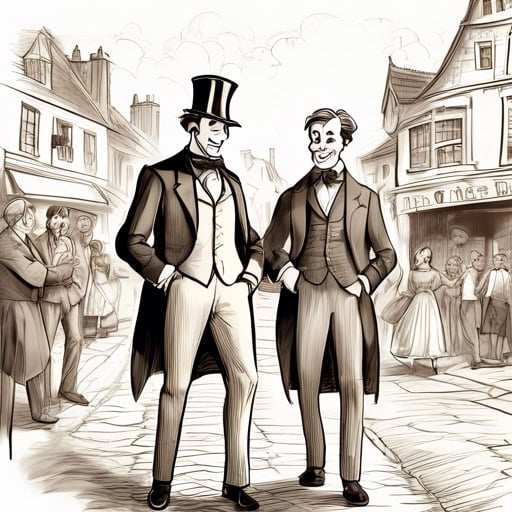
5. The Duke and The Dauphin
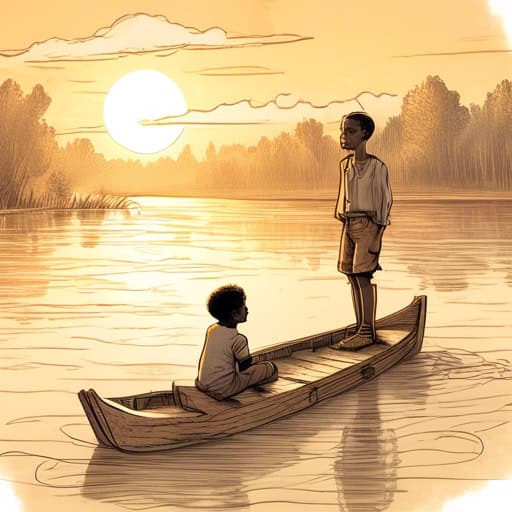
The Unforgettable Journey Begins
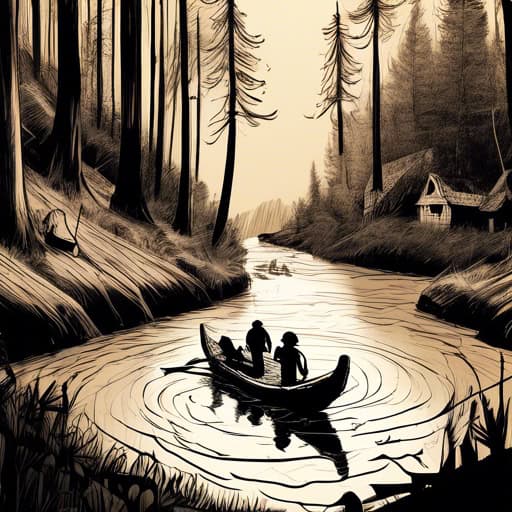
The Rafting Adventure
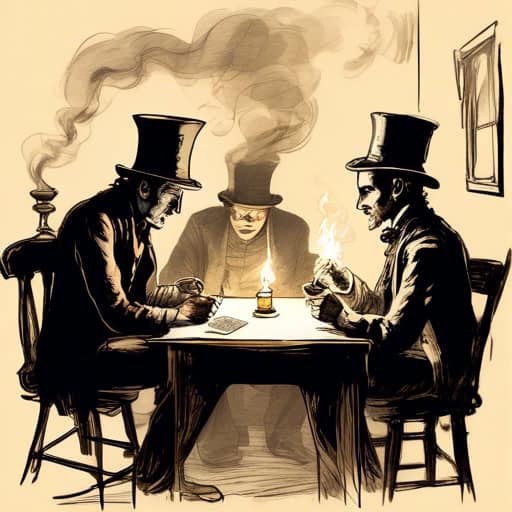
The Duke and the King
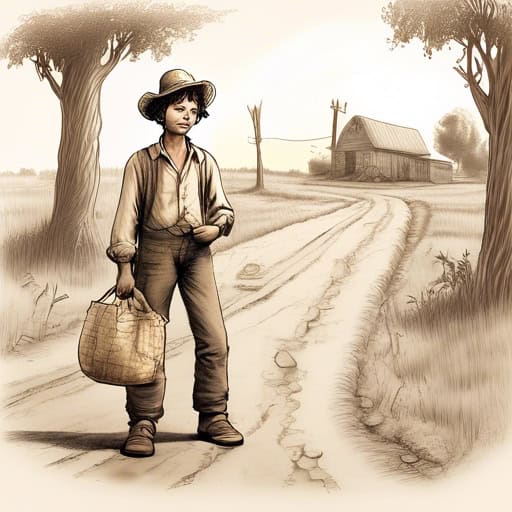
The Wilkes Family Scam
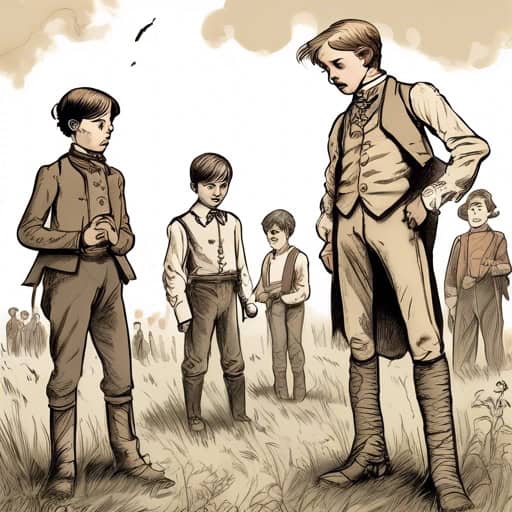
The Grangerford-Shepherdson Feud
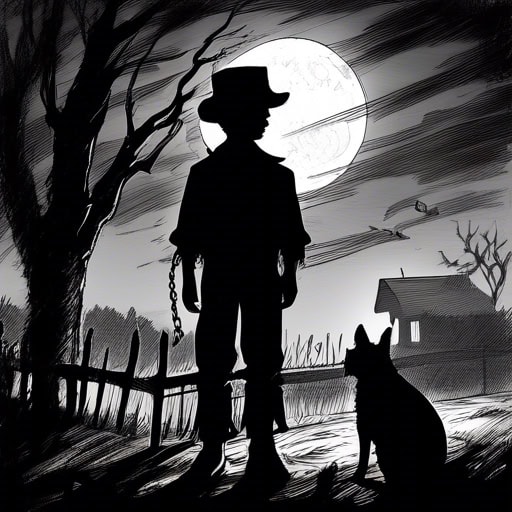
The Kings Betrayal

The Final Showdown

The Resolution

Lesson Details & Resources
In a Nutshell
- What: The Adventures of Huckleberry Finn by Mark Twain
- When: Written in the post-Civil War era, published in 1884
- Who: Huck Finn, Jim, Tom Sawyer
- Theme: The journey to freedom, racism, and morality
List of Characters in Adventures of Huckleberry Finn
-
Huckleberry Finn
Huckleberry Finn is the protagonist and narrator of the story, a young boy who escapes his abusive father and goes on a journey down the Mississippi River with Jim, a runaway slave.
-
Jim
Jim is a runaway slave who becomes friends with Huck and accompanies him on his journey. He is a kind and loyal companion to Huck.
-
Tom Sawyer
Tom Sawyer is Huck's best friend who is adventurous and imaginative. He helps Huck with his various schemes and plans.
-
Pap Finn
Pap Finn is Huck's abusive and alcoholic father who tries to claim custody of Huck and his money.
-
Widow Douglas
Widow Douglas and Miss Watson are two sisters who take care of Huck and try to civilize him. They have conflicting views on how to raise him.
-
Miss Watson
Judge Thatcher is a respected judge in the town who looks out for Huck's interests and tries to protect him from his father.
Timeline of Adventures of Huckleberry Finn
Huck Finn is introduced as a young boy living with the Widow Douglas and her sister, Miss Watson in St. Petersburg, Missouri.
Huck runs away from home and meets Jim, a runaway slave who is also trying to escape.
Huck and Jim travel down the Mississippi River on a raft, encountering various adventures and people along the way.
Huck and Jim come across a group of robbers on a wrecked steamboat and manage to escape.
Huck and Jim are separated when the Duke and Dauphin, two con men, join them on the raft.
Huck helps Jim escape from captivity and they continue their journey down the river.
Huck is faced with a moral dilemma when he has to decide whether to turn Jim in as a runaway slave or help him reach freedom.
Huck decides to help Jim and they continue their journey together, forming a close bond.
Huck and Jim are finally reunited with Tom Sawyer, Huck's friend, who helps them with a plan to free Jim.
After a series of elaborate and comical schemes, Jim is finally freed and the three friends are reunited.
Huck decides to head west for a new adventure, leaving behind the society that has tried to civilize him.
The novel ends with Huck expressing his desire for freedom and independence, symbolizing his rejection of society's norms and values.
Vocabulary List
- Raft
- Huck and Jim build a raft to travel down the Mississippi River.
- River
- The novel takes place along the Mississippi River.
- Slave
- Jim is a runaway slave seeking freedom.
- Freedom
- Jim dreams of escaping slavery and finding freedom.
- Adventure
- Huck and Jim have various adventures during their journey.
- Friendship
- Huck and Jim develop a close friendship throughout the novel.
- Society
- The novel critiques the society and norms of the time period.
- Morality
- Huck struggles with his own sense of morality and what is right.
- Racism
- The novel addresses issues of racism and prejudice in the South.
- Mississippi
- The Mississippi River serves as a central setting in the story.
Key Facts
This is the information used in the fact matching game
- Mark Twain's Adventures of Huckleberry Finn was published in 1885.
- The novel is a sequel to Twain's The Adventures of Tom Sawyer.
- Huckleberry Finn is an orphan who runs away from his abusive father and goes on a journey down the Mississippi River.
- The novel is written in first person from Huck's perspective.
- Huckleberry Finn is often considered one of the first great American novels.
- The novel deals with themes of race, freedom, and morality.
- The character Jim, a runaway slave, accompanies Huck on his journey.
- The novel has been banned and challenged in various schools and libraries for its language and themes.
- Huckleberry Finn's use of dialect and vernacular speech was groundbreaking for its time.
- The novel is often studied for its commentary on racism and the legacy of slavery in America.
- Huckleberry Finn has been adapted into numerous films, plays, and musicals.
- The novel has been praised for its realistic depiction of life on the Mississippi River.
- Huckleberry Finn's character development throughout the novel is a key focus of literary analysis.
- The novel has been translated into many languages and is studied worldwide.
- Huckleberry Finn's friendship with Jim is central to the novel's plot and themes.
- The novel's satirical commentary on society and human nature is a hallmark of Twain's writing style.
- Huckleberry Finn is known for its use of humor and wit to address serious social issues.
- The novel has been the subject of literary criticism and debate for its portrayal of race and racism.
- Huckleberry Finn's journey down the Mississippi River is symbolic of his quest for freedom and independence.
- The character of Huckleberry Finn has become an iconic figure in American literature.
Analysis & Significance
Impact on Literature
‘Adventures of Huckleberry Finn’ by Mark Twain is considered a seminal work in American literature, known for its realistic depiction of life in the antebellum South. The novel’s use of vernacular language and its exploration of complex themes such as race, morality, and freedom have had a lasting impact on storytelling, inspiring generations of writers to tackle similar social issues in their own works.
Enduring Themes
Despite being written over a century ago, ‘Adventures of Huckleberry Finn’ continues to resonate with modern audiences due to its timeless themes of friendship, individualism, and the search for personal identity. The novel’s exploration of the conflict between societal norms and personal conscience remains relevant today, making it a classic that still sparks discussion and debate.
Cultural Significance Today
The legacy of ‘Adventures of Huckleberry Finn’ can be seen in its enduring popularity and numerous adaptations in various forms of media. The novel’s influence on American culture is undeniable, with its characters and themes often referenced in literature, film, and music. Despite its controversial portrayal of race and language, the novel’s impact on shaping the American literary canon cannot be denied.
Adventures of Huckleberry Finn Games


Take Your Learning Offline
Want a convenient, print-ready study guide for this lesson? Become a Memory Wizards Pro member to unlock the downloadable " Memory Scrolls" for this topic and our entire library!
- ✓ Complete Vocabulary Lists
- ✓ Key Facts & Timelines
- ✓ Beautifully Formatted for Print & Mobile