
How Do You Learn Best?
Learn by Reading
Immerse yourself in the 10-minute visual lesson for a comprehensive understanding of the topic.
Learn by Reviewing
Jump directly to the key facts, timeline, and vocabulary lists to build a solid foundation of details.
Learn by Doing
Challenge yourself! Jump straight into the interactive games to learn by trial, error, and discovery.
The Lion and the Unicorn in 10 Minutes
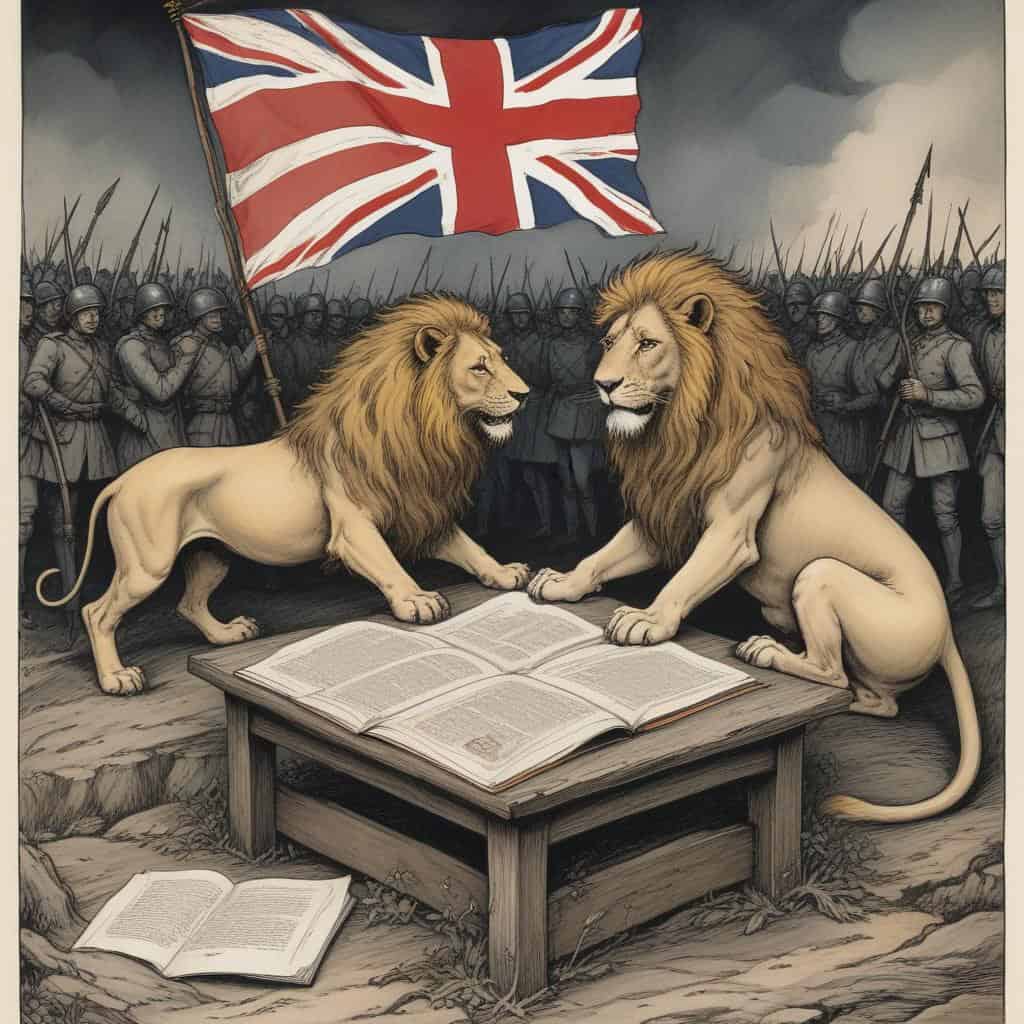
Introduction
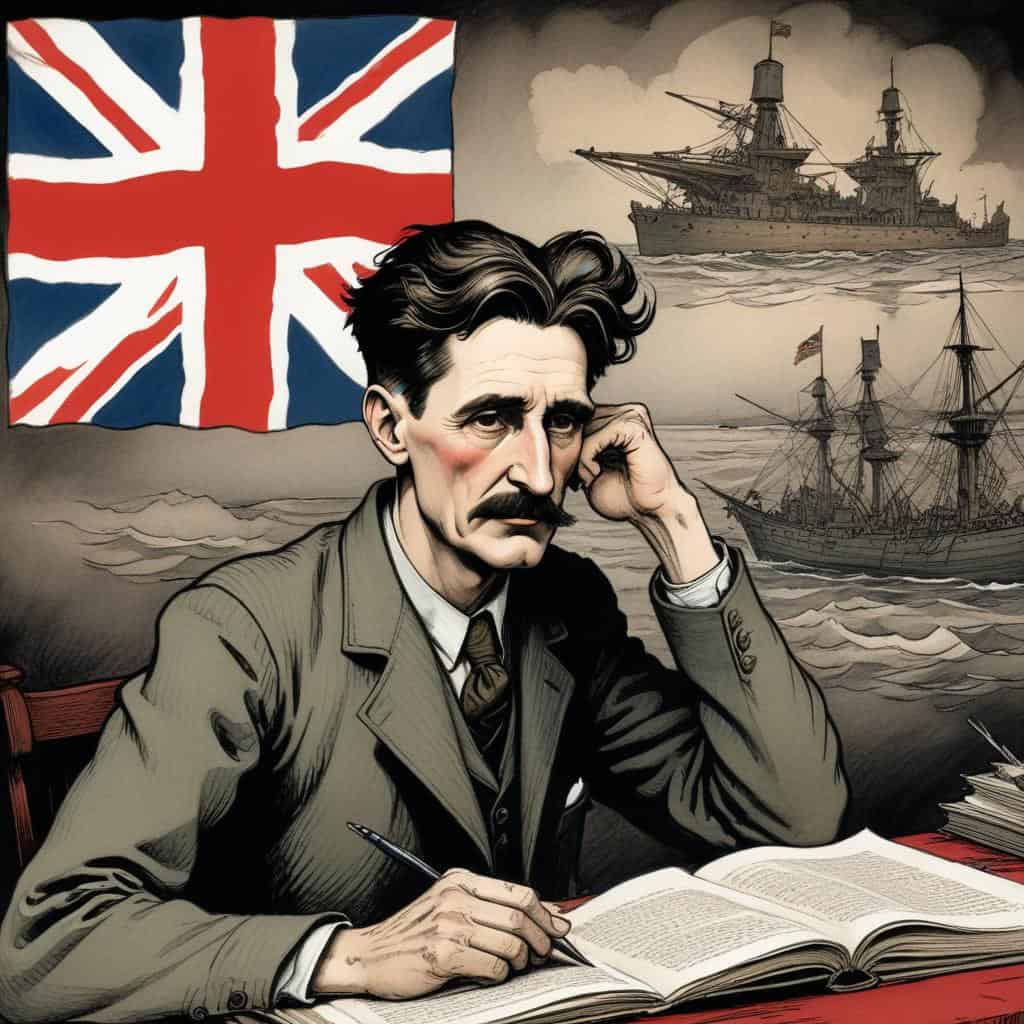
George Orwell
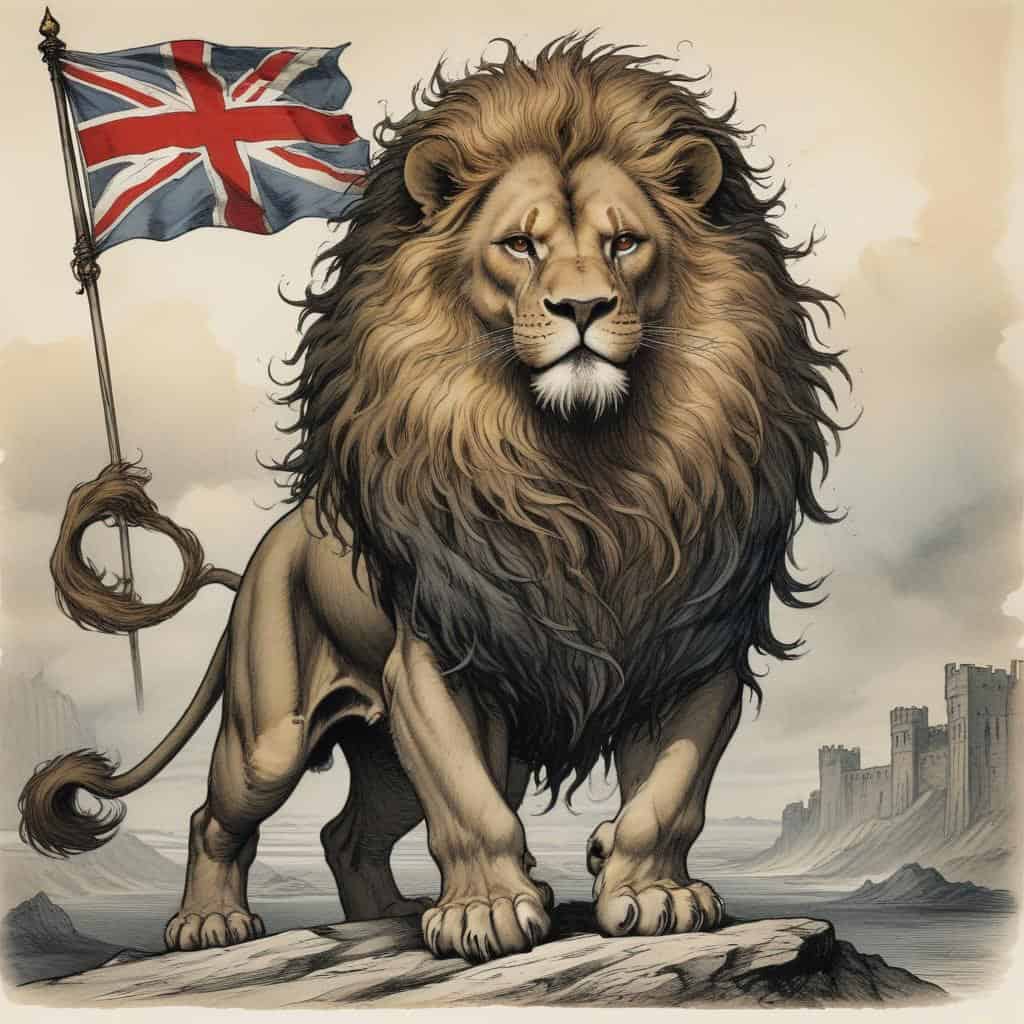
The Lion
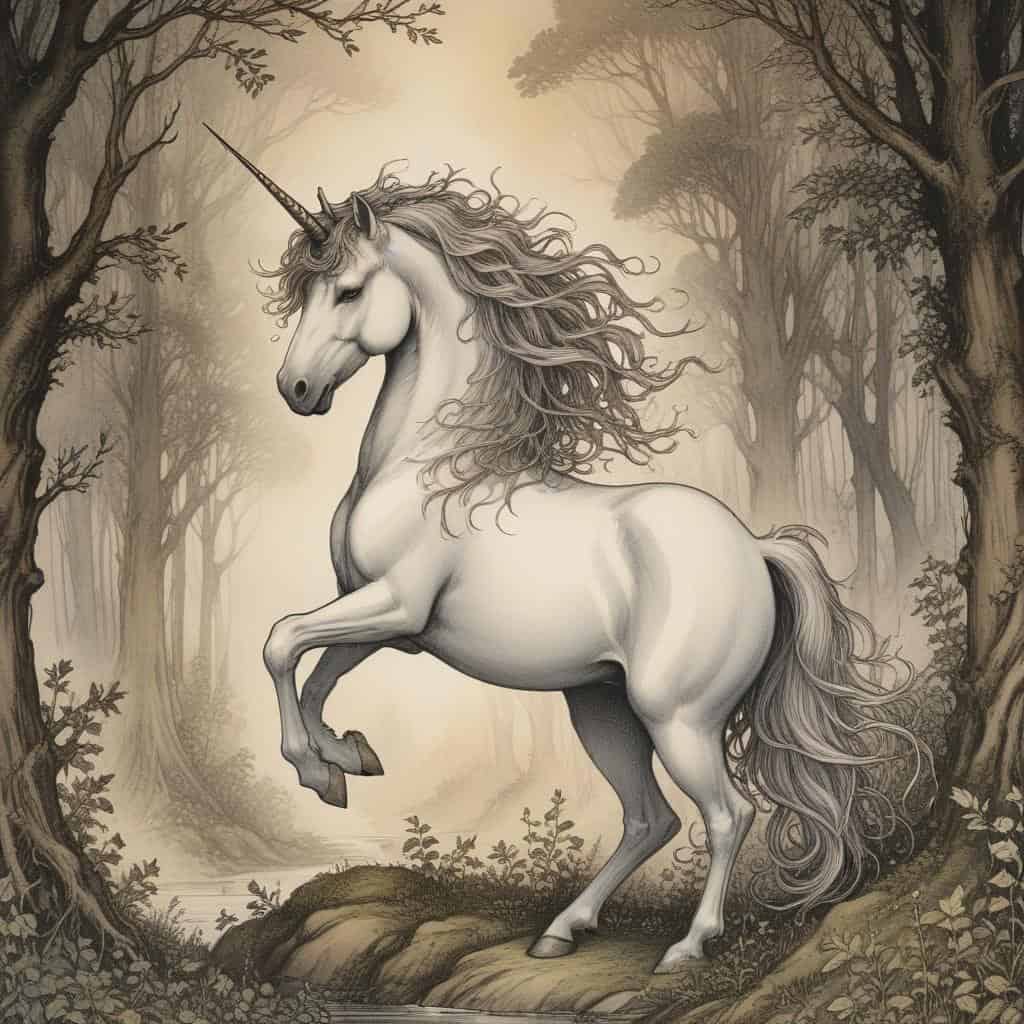
The Unicorn
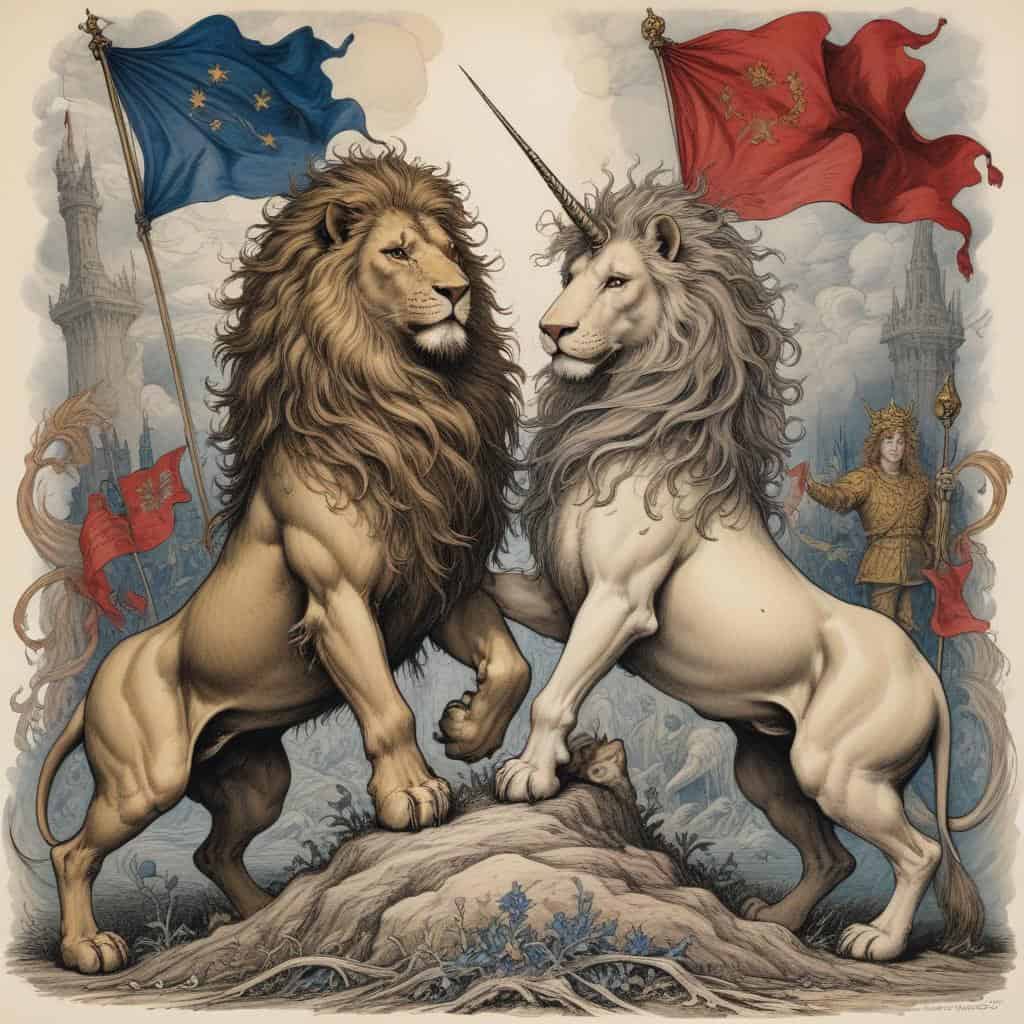
The Lion and the Unicorn Summary
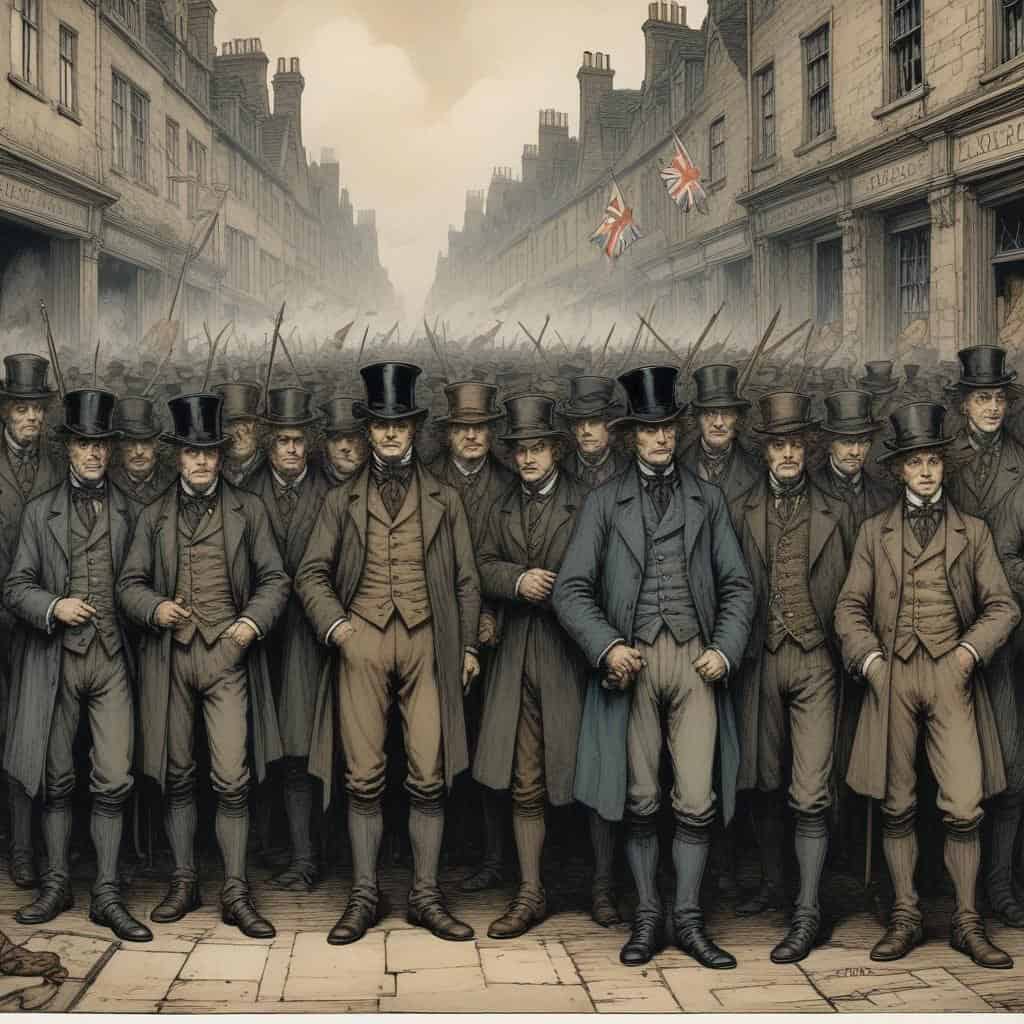
The Class Divide
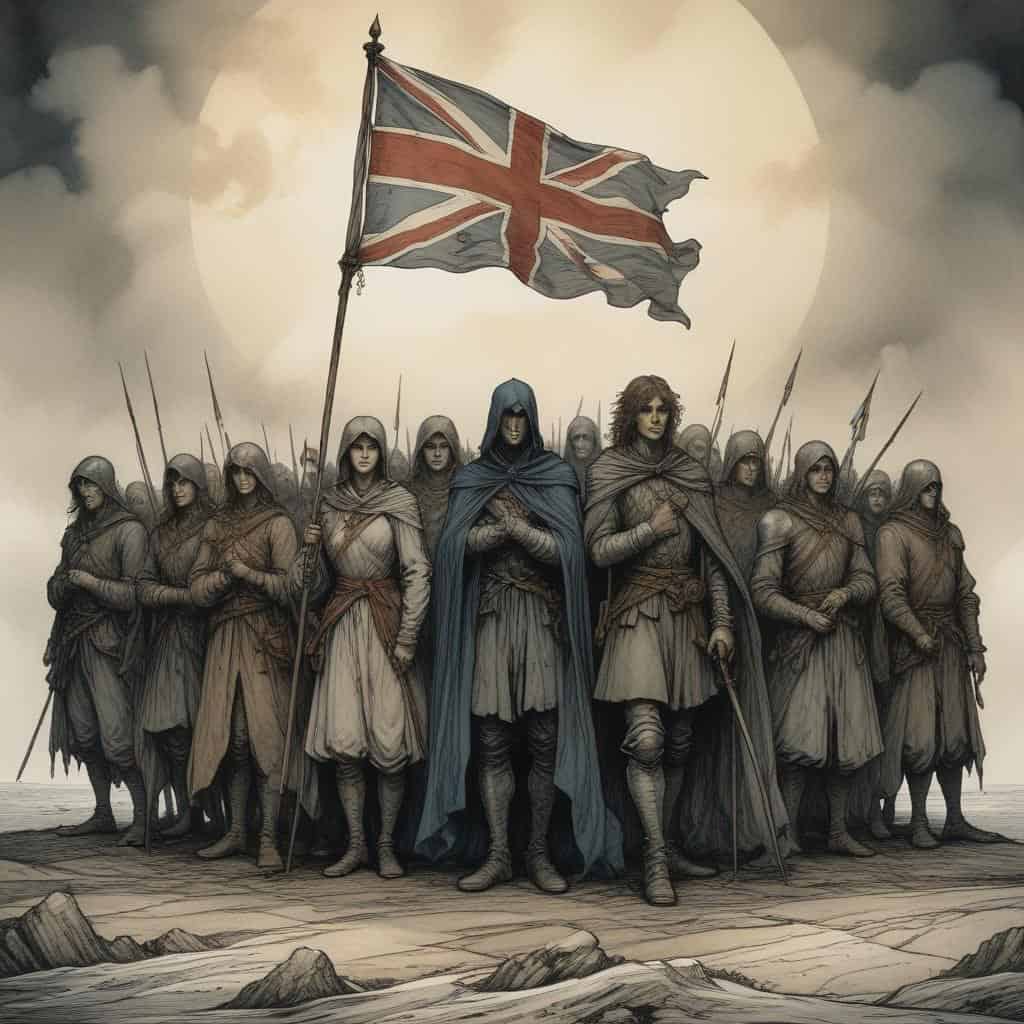
The English Identity
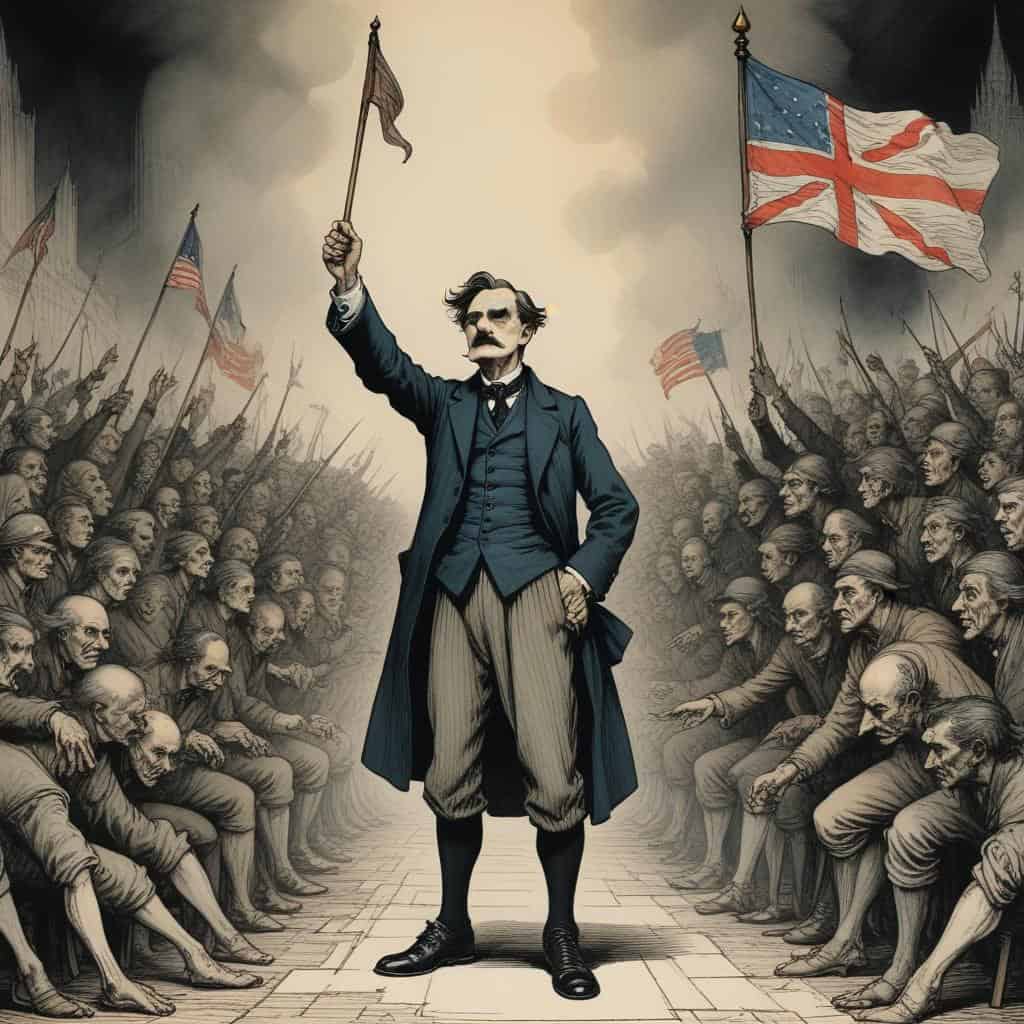
The Role of the Government
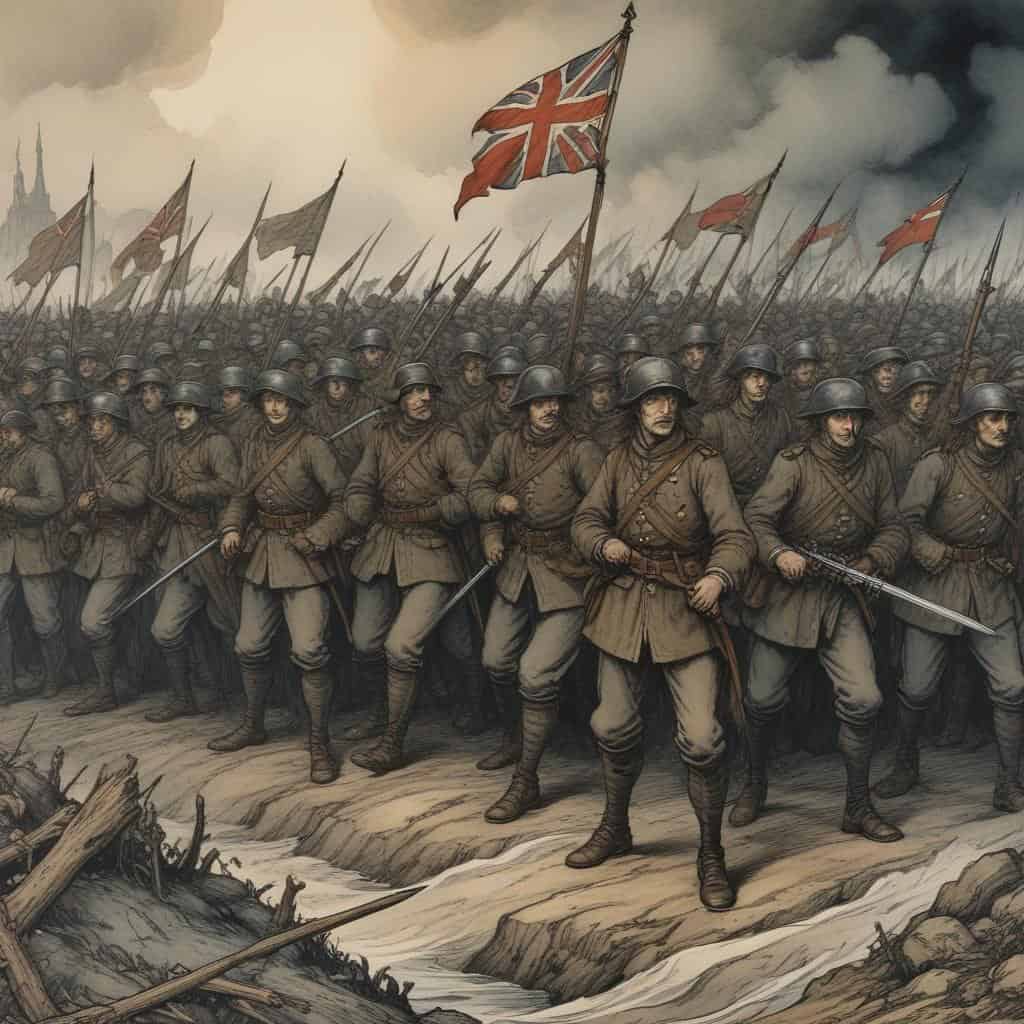
The Peoples War
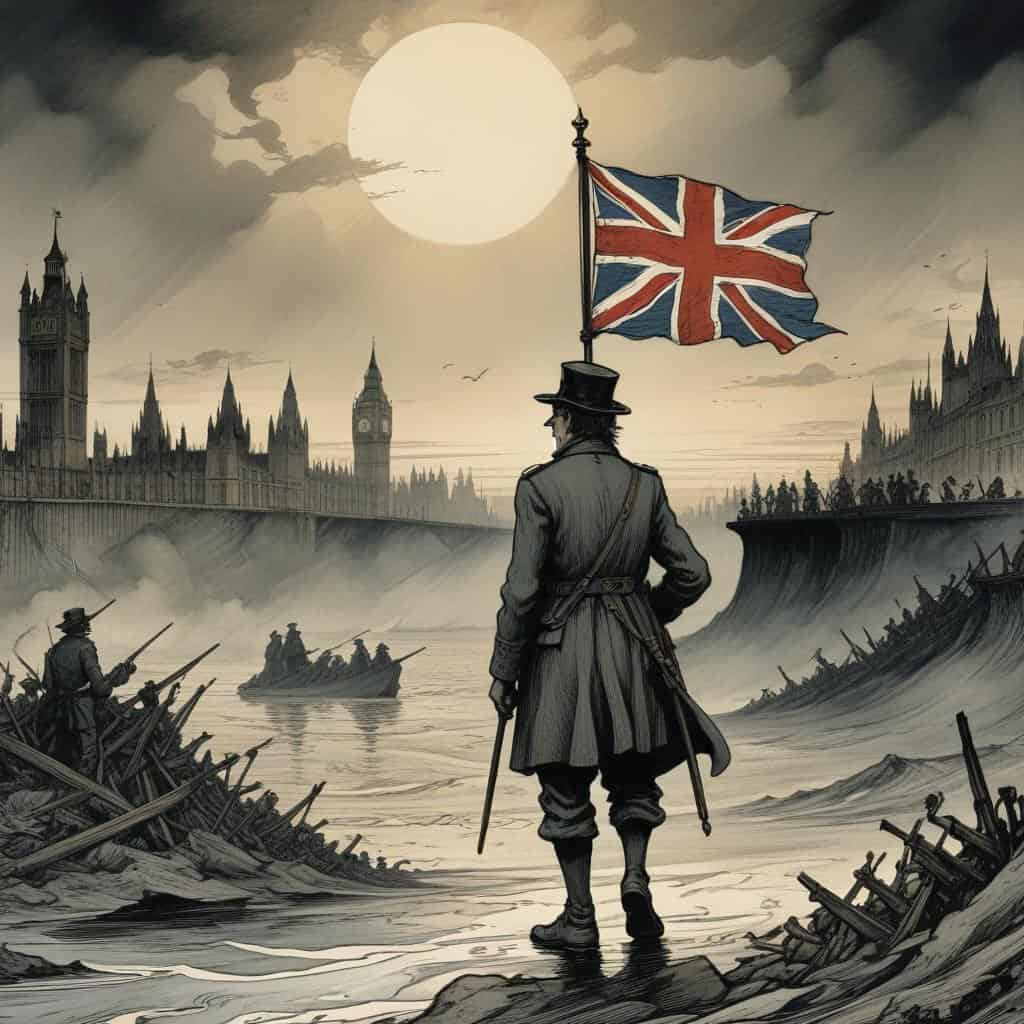
The Future of England
Lesson Details & Resources
In a Nutshell
- What: A short story by George Orwell
- When: Written in 1941
- Who: The Lion and the Unicorn
- Theme: Patriotism and the British identity
List of Characters in The Lion and the Unicorn
-
The Lion
The Lion and the Unicorn are symbolic characters representing the ruling classes in the story.
-
The Unicorn
Old Major is the wise and respected elder pig who inspires the animals to rebel against their human oppressors.
-
Old Major
Napoleon is a ruthless and power-hungry pig who eventually becomes the dictator of the farm.
-
Napoleon
Snowball is a clever and charismatic pig who becomes a rival to Napoleon in the leadership of the farm.
-
Snowball
Boxer is a strong and hardworking horse who represents the loyal working class of the farm.
-
Boxer
Squealer is a slick and persuasive pig who serves as Napoleon's propaganda minister.
-
Squealer
Mollie is a vain and materialistic horse who is more concerned with her own comfort than the well-being of the farm.
-
Mollie
Benjamin is a cynical and intelligent donkey who is skeptical of the revolution and its leaders.
-
Benjamin
Mr. Jones is the irresponsible and neglectful owner of the farm who is driven off by the animals' rebellion.
Timeline of The Lion and the Unicorn
The poem "The Lion and the Unicorn" is introduced as a recurring theme throughout the story.
The protagonist, James Barnett, is described as a middle-aged man working at a London office.
The story takes place during the air raids of World War II in London.
James Barnett witnesses a bombing raid and takes shelter in a pub.
He engages in a conversation with an old man, who tells him about a lion and a unicorn on a coat of arms.
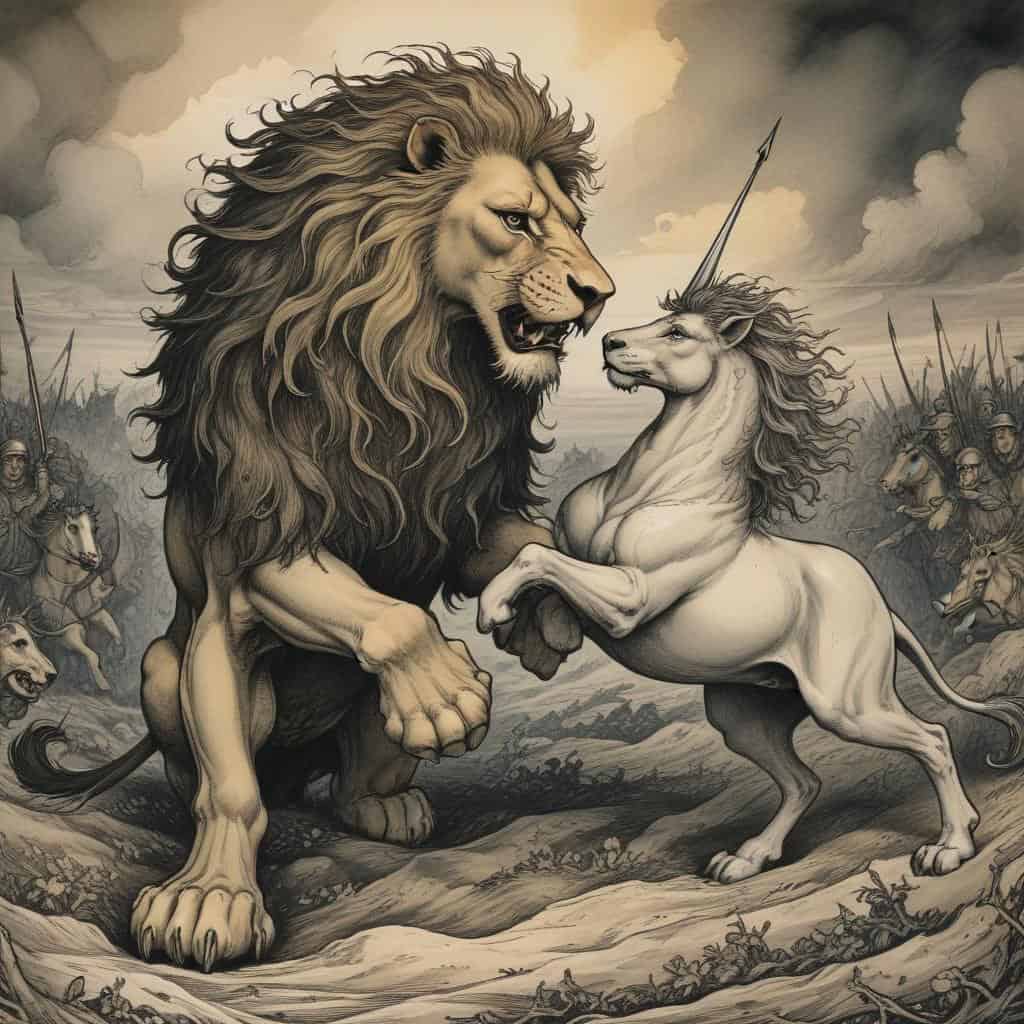
James Barnett starts daydreaming, imagining the lion and the unicorn coming to life and engaging in a battle.
He sees a young woman named Rosemary enter the pub and is instantly attracted to her.
James Barnett and Rosemary strike up a conversation and discuss their views on the war.
They both express their desire for peace and an end to the destruction caused by the war.
James Barnett and Rosemary share a moment of connection and intimacy.
The air raid ends, and James Barnett leaves the pub, feeling hopeful for a better future.
He reflects on the symbolism of the lion and the unicorn, representing England and Scotland respectively, and their fight for dominance.
James Barnett contemplates the meaning of the poem and its relevance to the war and society as a whole.
Vocabulary List
- Lion
- The lion represents the British monarchy.
- Unicorn
- The unicorn represents Scotland.
- England
- The lion and the unicorn fighting for the crown of England.
- Crown
- The symbol of power and authority in the story.
- Battle
- The lion and the unicorn engage in a fierce battle.
- Political allegory
- The story is a political allegory about the power struggle between different factions.
- Symbolism
- The lion and the unicorn are symbolic representations of different aspects of British society.
- Royalty
- The lion represents royalty and the unicorn represents the Scottish monarchy.
- Power struggle
- The story depicts a power struggle between the lion and the unicorn.
- National identity
- The lion and the unicorn represent different aspects of British national identity.
Key Facts
This is the information used in the fact matching game
- - The Lion and the Unicorn is a book written by George Orwell in 1941.
- - The book was published during World War II and explores the future of Britain.
- - The title of the book refers to the symbols of the lion and the unicorn, which are associated with British royalty.
- - Orwell wrote The Lion and the Unicorn as a response to the political situation in Britain at the time.
- - The book discusses the idea of a socialist revolution in Britain.
- - Orwell criticizes the British ruling class and their lack of preparation for war.
- - The Lion and the Unicorn argues for a patriotic socialism that would unite the British population.
- - Orwell explores the concept of a national identity and what it means to be British.
- - The book also addresses the class system in Britain and its impact on society.
- - Orwell suggests that the British people need to come together in order to defend their country.
- - The Lion and the Unicorn was well received by critics and is considered a classic of political writing.
- - Orwell's writing style in the book is clear and persuasive.
- - The book includes several memorable quotes, such as "England is a family with the wrong members in control."
- - Orwell's experiences during the Spanish Civil War influenced his ideas in The Lion and the Unicorn.
- - The book argues that a socialist revolution in Britain would not be a violent overthrow, but a gradual transformation.
- - Orwell emphasizes the importance of education and the need for a well-informed population.
- - The Lion and the Unicorn suggests that Britain's future lies in a more egalitarian society.
- - Orwell predicts that the war would lead to social change and a reevaluation of British values.
- - The book also touches on the role of imperialism and its impact on Britain's decline.
- - The Lion and the Unicorn remains relevant today as it raises questions about nationalism, patriotism, and social inequality.
Analysis & Significance
Impact on Literature
George Orwell’s ‘The Lion and the Unicorn’ has had a lasting impact on political and social commentary in literature. By exploring themes of patriotism, democracy, and national identity, the work has influenced countless writers to address similar issues in their own works, sparking important conversations about the state of society.
Enduring Themes
The timeless themes of power, loyalty, and the struggle for freedom depicted in ‘The Lion and the Unicorn’ continue to resonate with modern audiences. Orwell’s exploration of the complexities of human nature and the challenges of navigating political landscapes is still relevant today, making the work a classic in the literary canon.
Cultural Significance Today
‘The Lion and the Unicorn’ remains culturally significant today for its commentary on the nature of power and the importance of individual freedoms. The work has been adapted into various forms, including stage productions and radio broadcasts, further solidifying its place in popular culture. Its messages about the dangers of totalitarianism and the need for vigilance in protecting democratic values continue to resonate in today’s world.
The Lion and the Unicorn Games


Take Your Learning Offline
Want a convenient, print-ready study guide for this lesson? Become a Memory Wizards Pro member to unlock the downloadable " Memory Scrolls" for this topic and our entire library!
- ✓ Complete Vocabulary Lists
- ✓ Key Facts & Timelines
- ✓ Beautifully Formatted for Print & Mobile