
How Do You Learn Best?
Learn by Reading
Immerse yourself in the 10-minute visual lesson for a comprehensive understanding of the topic.
Learn by Reviewing
Jump directly to the key facts, timeline, and vocabulary lists to build a solid foundation of details.
Learn by Doing
Challenge yourself! Jump straight into the interactive games to learn by trial, error, and discovery.
Apology in 10 Minutes
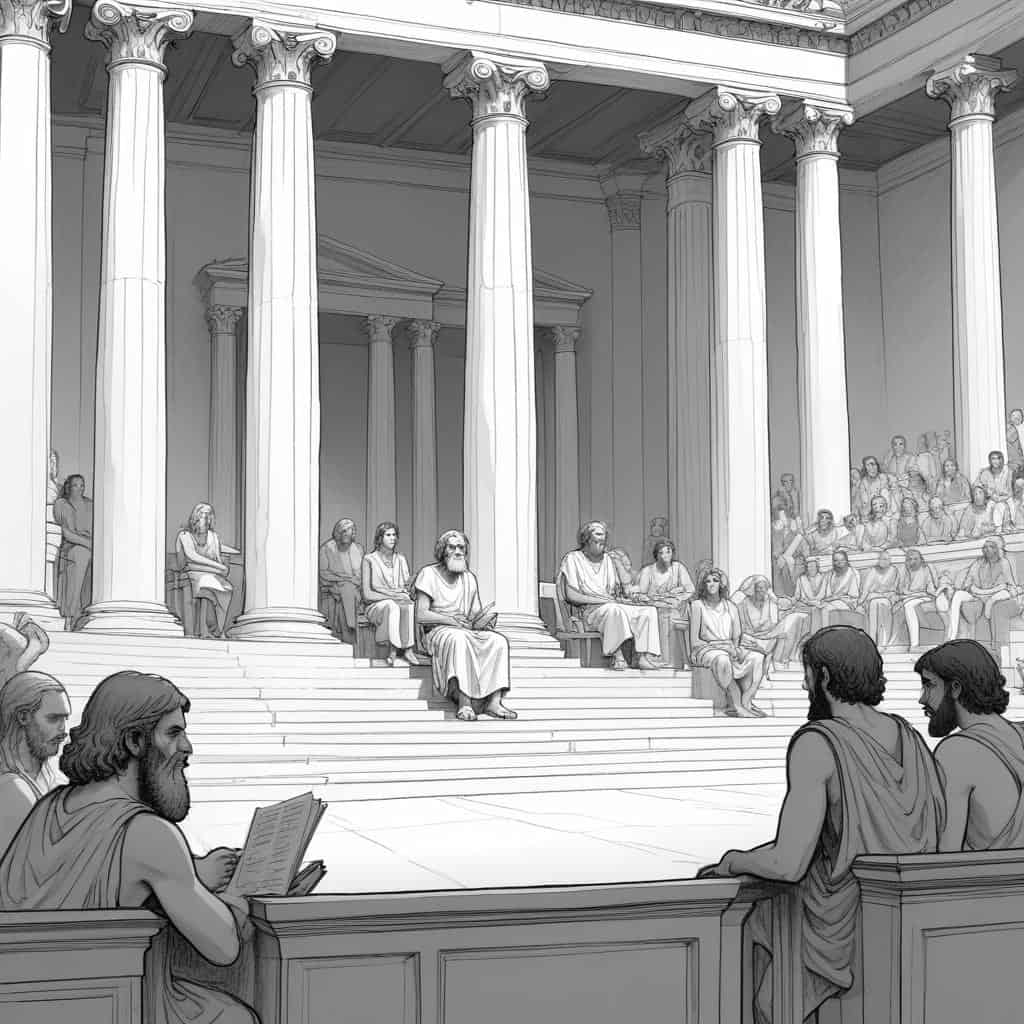
Introduction
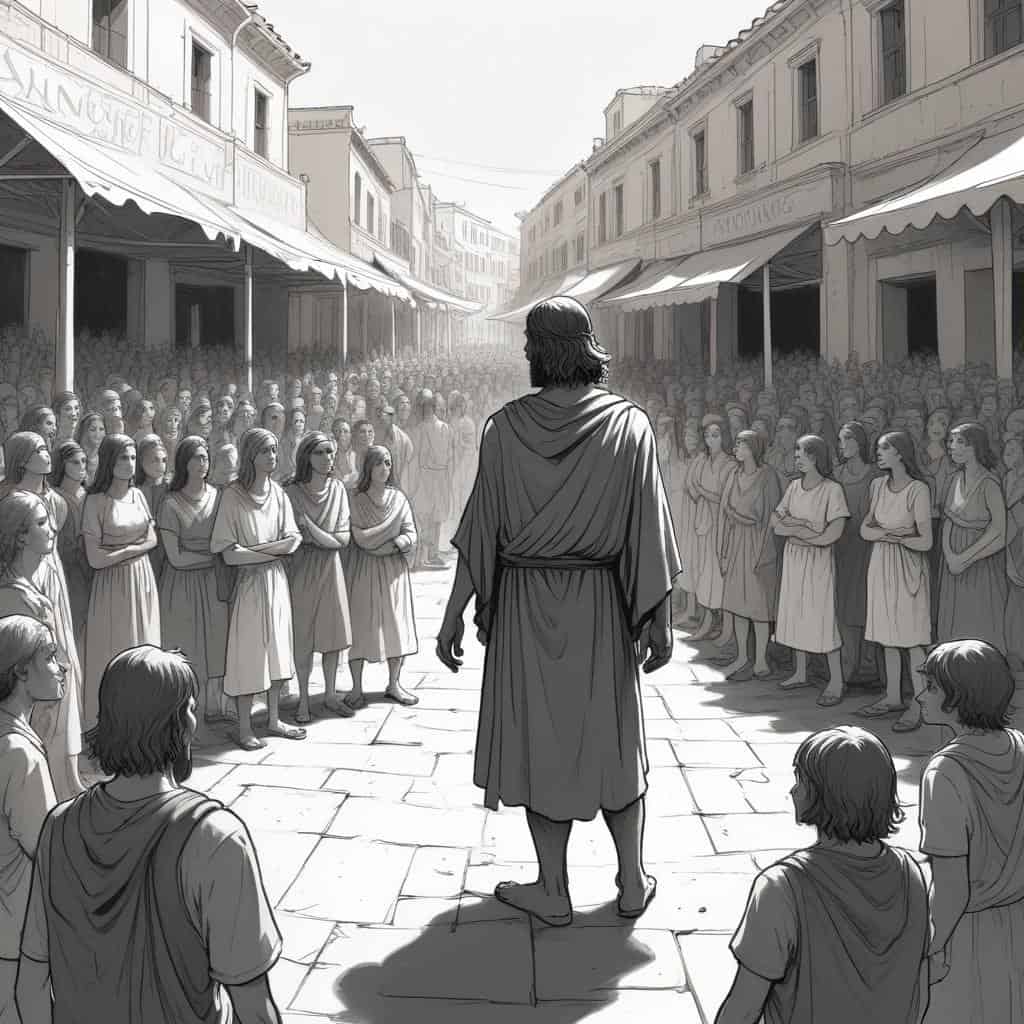
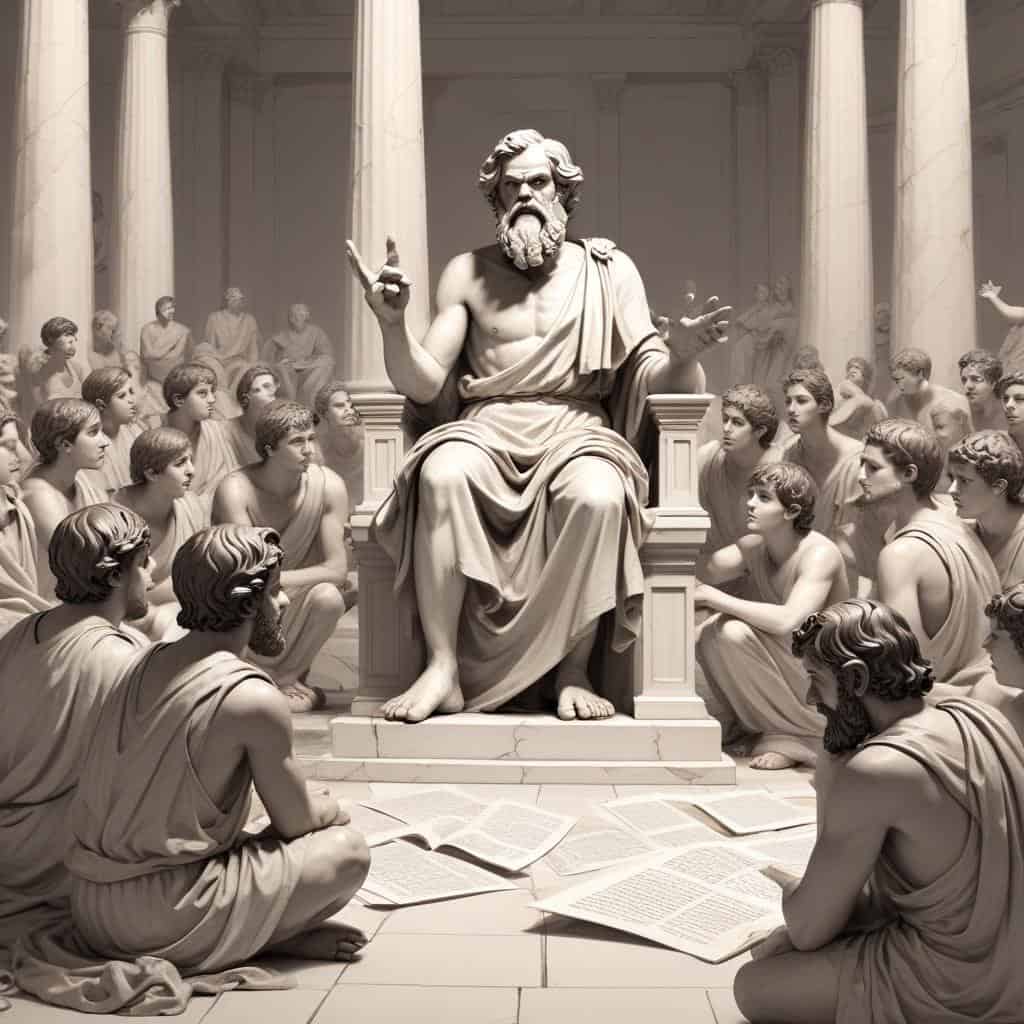

Socrates

Meletus

Anytus

Apollodorus

Plato
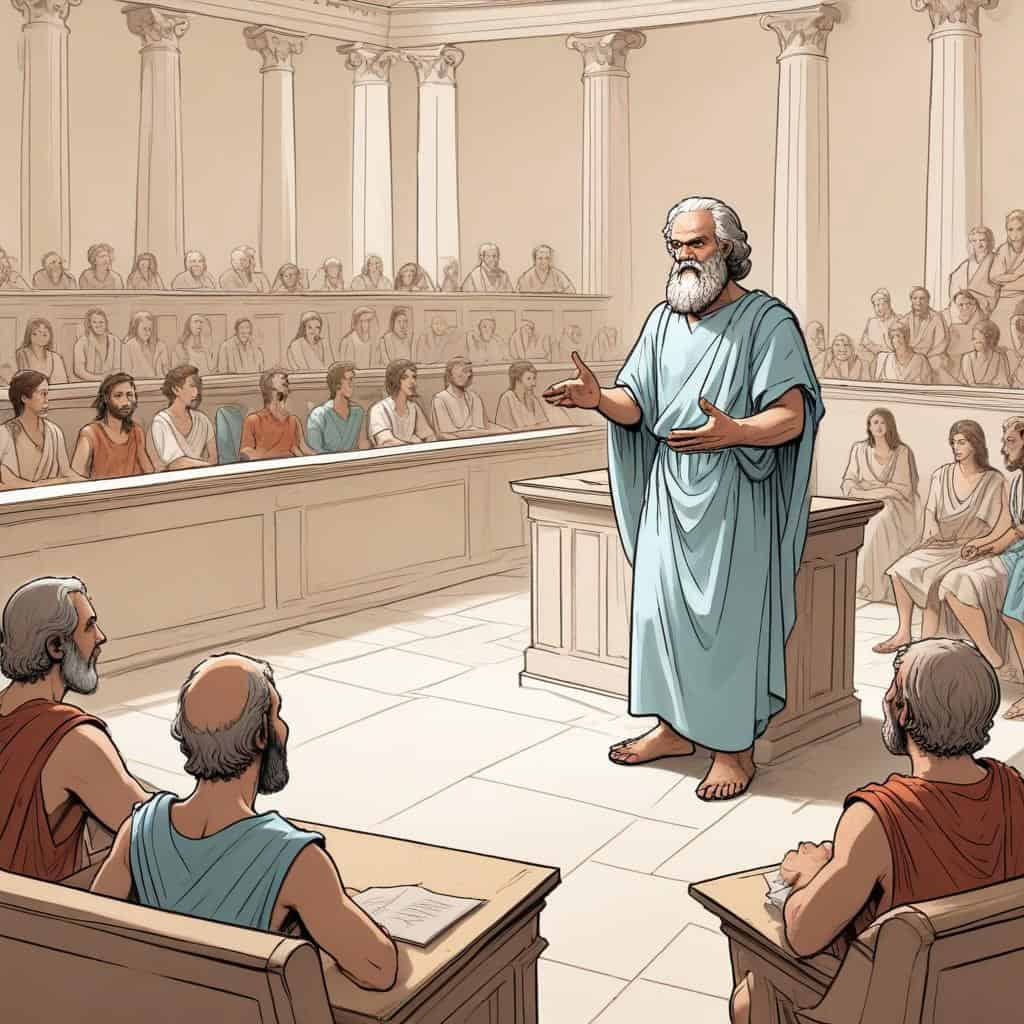
1. Socrates on Trial
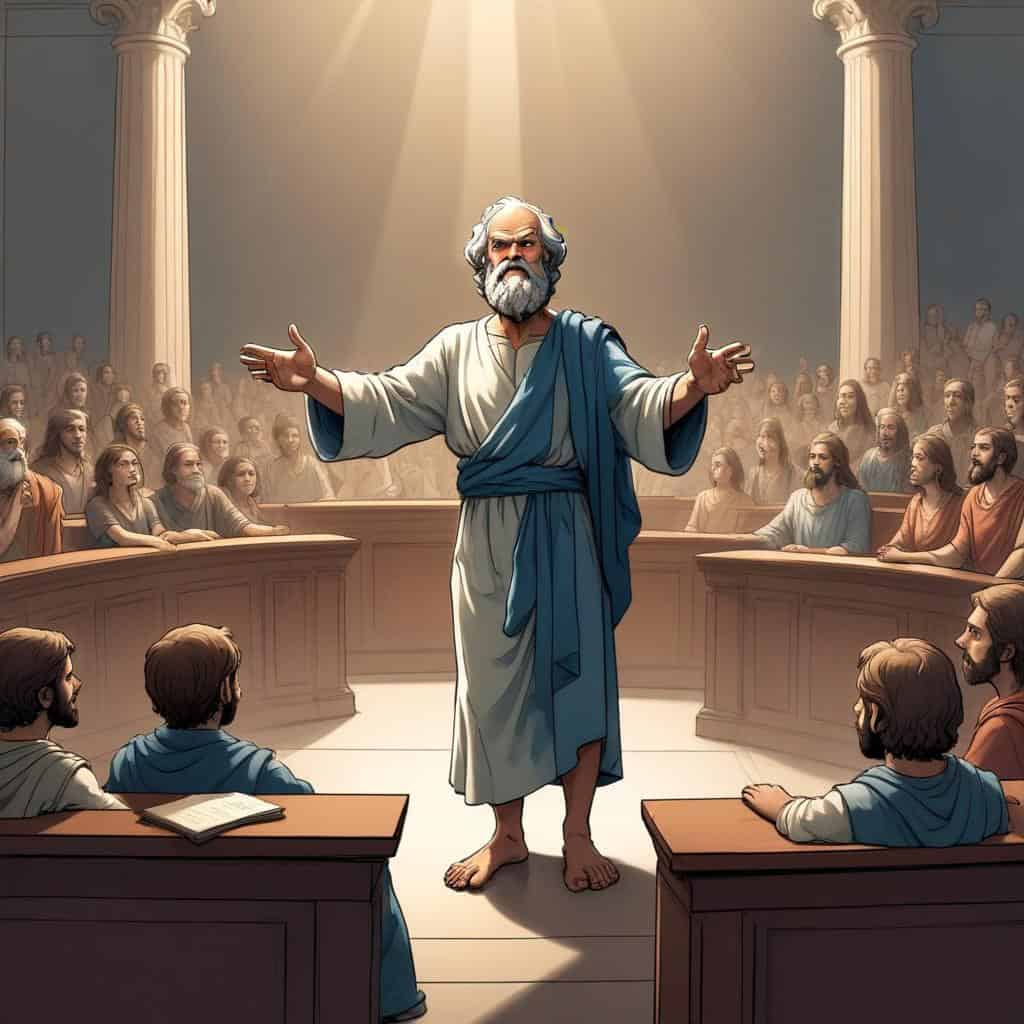
2. Socrates Defense
3. The Oracle at Delphi
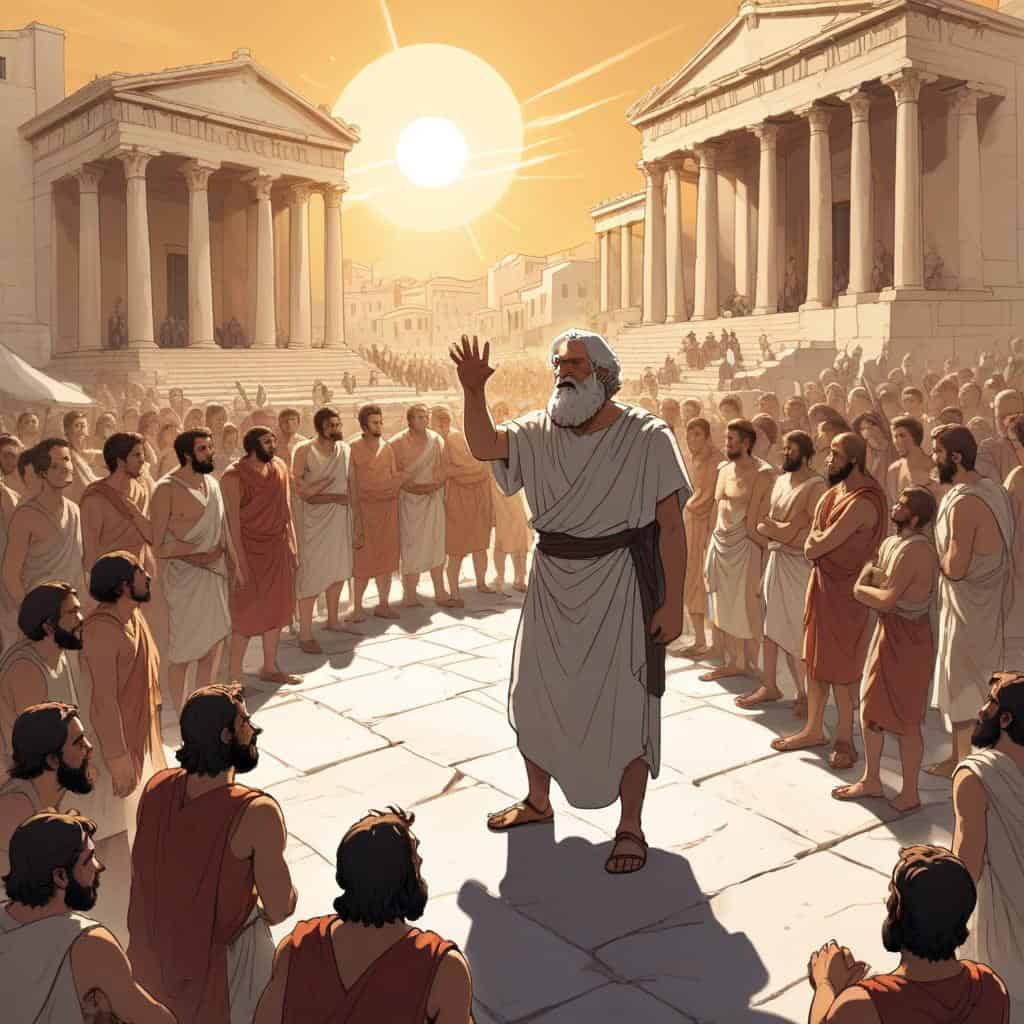
4. Socrates Interrogation
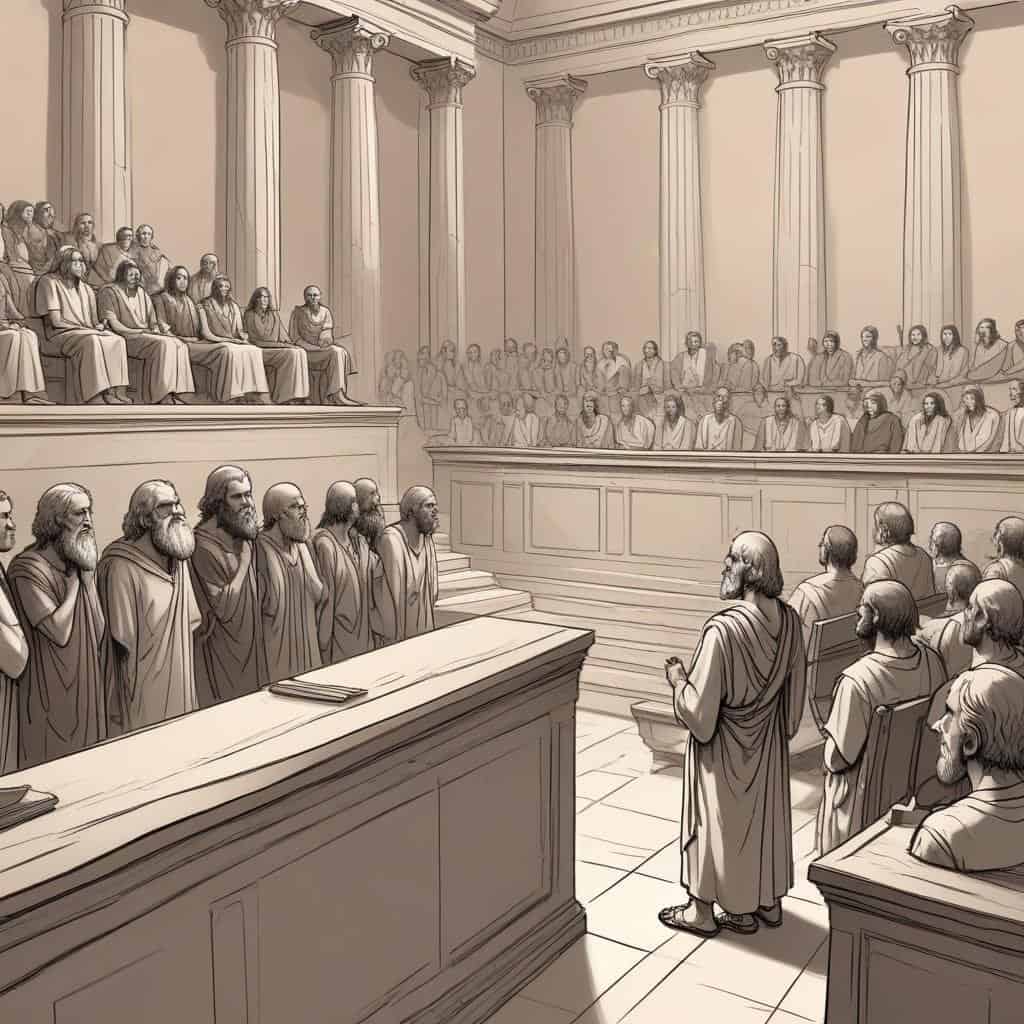
5. Socrates Verdict
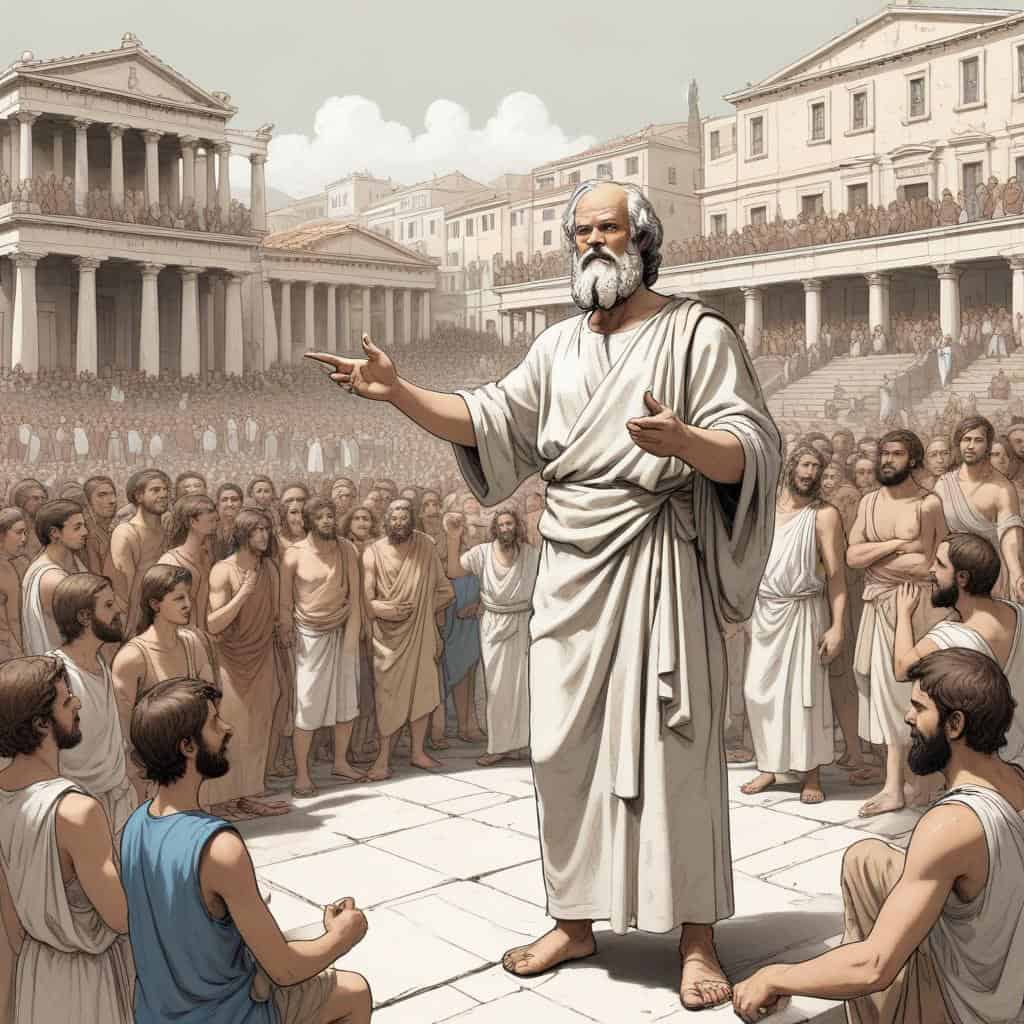
6. Socrates Response
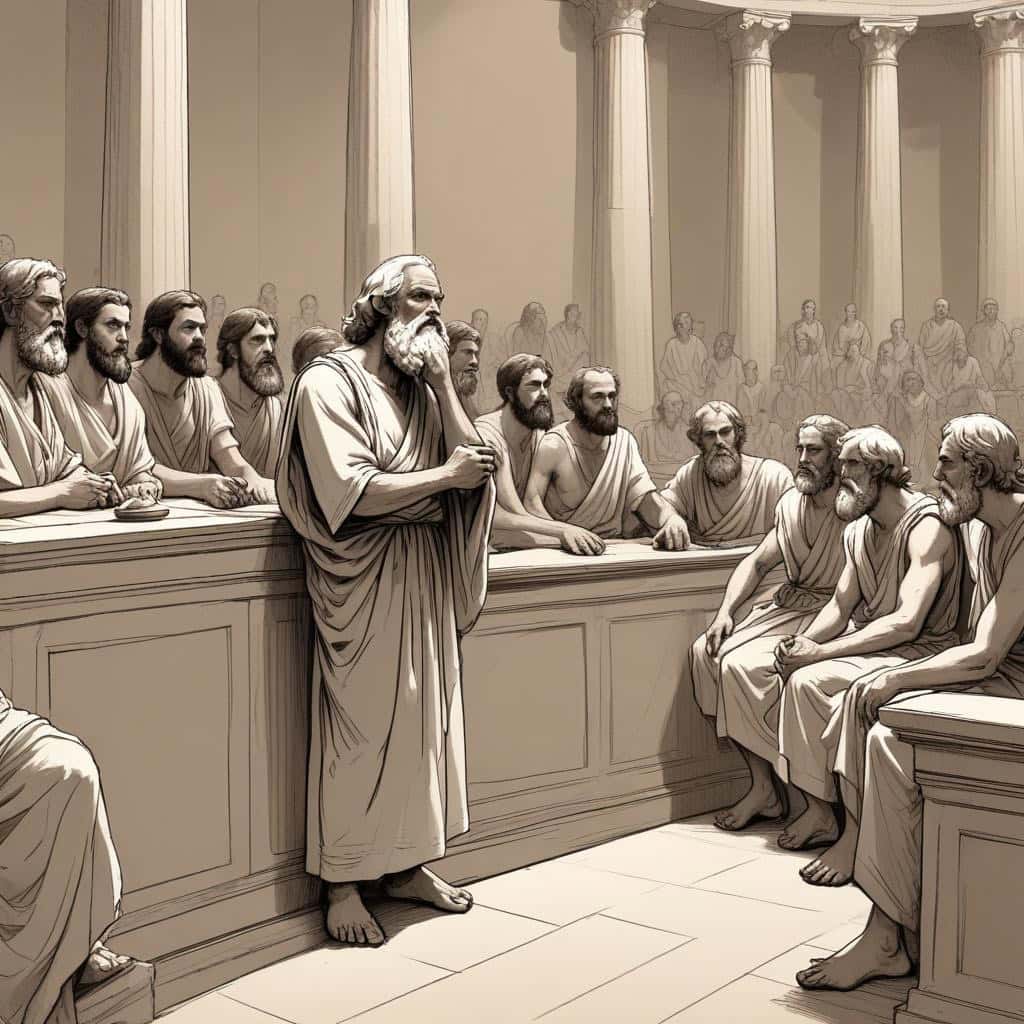
7. Socrates Condemnation
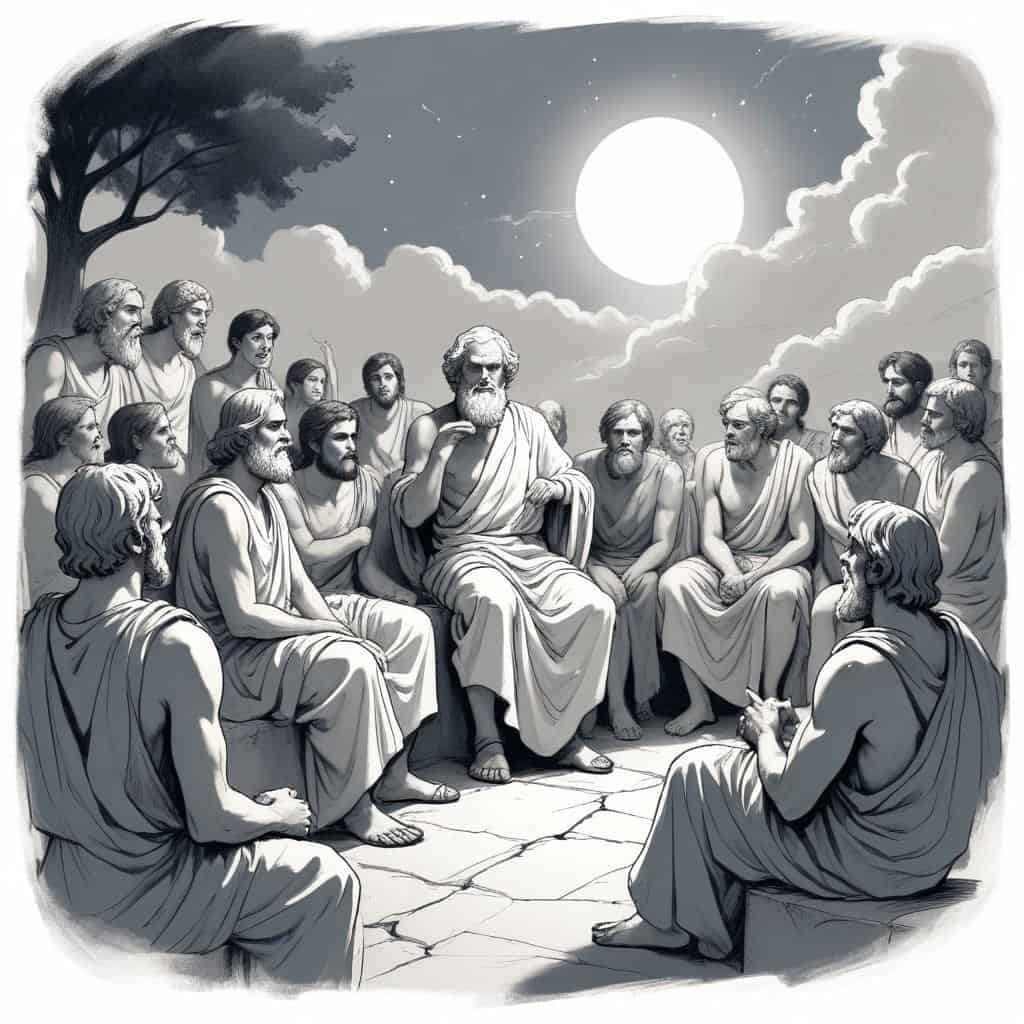
8. Socrates Final Words
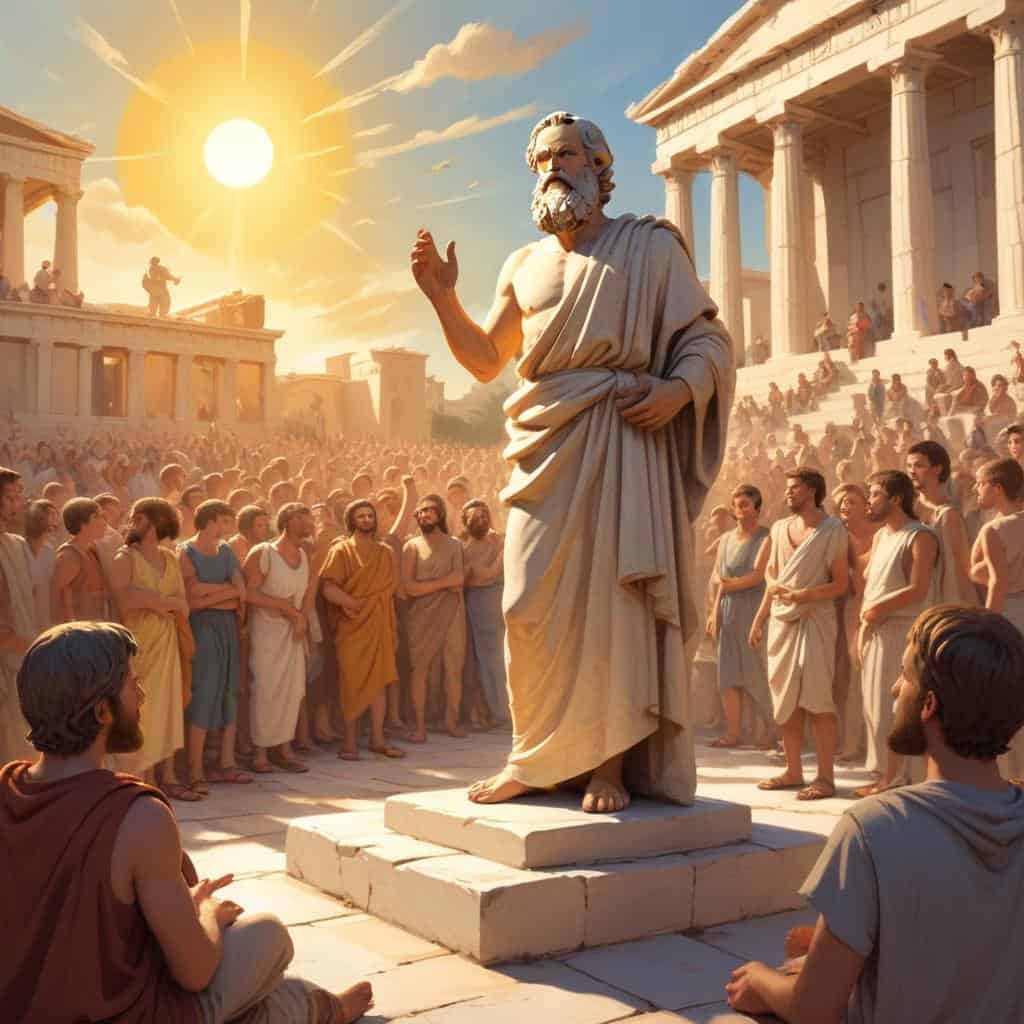
9. The Legacy of Socrates
10. Conclusion
Lesson Details & Resources
In a Nutshell
- What: The literary work ‘Apology’ by Plato
- When: Written in the Classical period of Ancient Greece
- Who: Socrates
- Theme: Justice, morality, and the search for truth
List of Characters in Apology
-
Socrates
Socrates is the main character of the story and is on trial for corrupting the youth of Athens and not believing in the gods of the city.
-
Meletus
Meletus is one of Socrates' accusers and accuses him of corrupting the youth.
-
Anytus
Anytus is another one of Socrates' accusers and accuses him of corrupting the youth as well.
-
Theodorus
Theodorus is a friend of Socrates who is present at the trial.
-
Euthyphro
Euthyphro is a young man who encounters Socrates before the trial and is discussing the nature of piety.
Timeline of Apology
Socrates is accused of corrupting the youth and impiety by Meletus, Anytus, and Lycon.
Socrates defends himself in court, arguing that he has not corrupted the youth and that he believes in a higher power.
Socrates recounts his interactions with various individuals who claimed to be wise, demonstrating that their wisdom was flawed.
Socrates is found guilty by the jury and is given the opportunity to propose an alternative punishment.
Socrates rejects the idea of fleeing Athens or paying a fine, choosing instead to accept his fate.
Socrates delivers a speech in which he reflects on his life and philosophy, expressing his belief in the importance of seeking truth and virtue.
Socrates is sentenced to death by drinking poison hemlock.
Socrates bids farewell to his friends and followers, accepting his fate with dignity and composure.
Socrates drinks the poison and dies, leaving behind a legacy of philosophical inquiry and moral courage.
Vocabulary List
- Socrates
- Socrates is the central figure in Apology, as he defends himself against the charges brought against him.
- Athenian
- The Athenian jurors are the ones who will ultimately decide Socrates' fate in the trial.
- Accusations
- The accusations against Socrates include impiety and corrupting the youth of Athens.
- Philosopher
- Socrates is known as a philosopher, someone who seeks wisdom and truth through questioning and dialogue.
- Corruption
- Socrates is accused of corrupting the youth by challenging traditional beliefs and values.
- Defense
- In Apology, Socrates presents his defense against the charges brought against him.
- Wisdom
- Socrates claims that his wisdom lies in knowing that he knows nothing.
- Truth
- Throughout Apology, Socrates seeks the truth through questioning and dialogue.
- Justice
- Socrates believes that it is just to question authority and challenge societal norms in the pursuit of truth.
- Death
- Socrates faces the possibility of death as a result of the trial, but he remains steadfast in his beliefs.
Key Facts
This is the information used in the fact matching game
- The Apology is Plato's account of Socrates' trial and defense in 399 BC.
- Socrates was accused of corrupting the youth of Athens and impiety.
- The Apology is one of Plato's early dialogues.
- Socrates was sentenced to death by drinking hemlock.
- The Apology is considered one of Plato's most famous works.
- Socrates' defense in the Apology is a classic example of the Socratic method.
- The Apology is written in the form of a dialogue between Socrates and his accusers.
- Socrates' main defense in the Apology is that he is on a divine mission to question and challenge the wisdom of others.
- The Apology is part of a trilogy of dialogues by Plato, along with Euthyphro and Crito.
- The Apology is a key text in the history of Western philosophy.
- Socrates' defense in the Apology is known for its irony and wit.
- The Apology addresses fundamental questions about justice, wisdom, and the nature of knowledge.
- The Apology is often studied in philosophy courses as an introduction to Plato's philosophy.
- Socrates' famous line 'the unexamined life is not worth living' is found in the Apology.
- The Apology is a defense of philosophy and the pursuit of truth.
- The Apology raises questions about the nature of democracy and the role of dissent in society.
- The Apology is considered a foundational text in the history of Western thought.
- The Apology has been interpreted in many different ways by scholars and philosophers.
- The Apology continues to be a source of inspiration for thinkers and writers today.
- The Apology remains a key text in the study of ethics and moral philosophy.
Analysis & Significance
Impact on Literature
Plato’s ‘Apology’ is a seminal work in the history of Western literature, setting a standard for philosophical dialogue and argumentation. Its influence can be seen in subsequent works of philosophy, rhetoric, and drama, shaping the way authors explore themes of justice, truth, and morality.
Enduring Themes
The themes of integrity, defiance, and the search for truth in ‘Apology’ continue to resonate with modern audiences. The work’s exploration of the complexities of human nature and the struggle for justice remains relevant in today’s society, making it a timeless piece of literature.
Cultural Significance Today
‘Apology’ remains culturally significant today, with its legacy evident in adaptations across various mediums. The work has been referenced in literature, film, and art, showcasing its enduring impact on contemporary culture. Its message of standing up for one’s beliefs in the face of adversity continues to inspire audiences worldwide.
Apology Games


Take Your Learning Offline
Want a convenient, print-ready study guide for this lesson? Become a Memory Wizards Pro member to unlock the downloadable " Memory Scrolls" for this topic and our entire library!
- ✓ Complete Vocabulary Lists
- ✓ Key Facts & Timelines
- ✓ Beautifully Formatted for Print & Mobile