
How Do You Learn Best?
Learn by Reading
Immerse yourself in the 10-minute visual lesson for a comprehensive understanding of the topic.
Learn by Reviewing
Jump directly to the key facts, timeline, and vocabulary lists to build a solid foundation of details.
Learn by Doing
Challenge yourself! Jump straight into the interactive games to learn by trial, error, and discovery.
Emma in 10 Minutes
Introduction

Emma Woodhouse

Mr. Knightley
Harriet Smith

Frank Churchill

Jane Fairfax
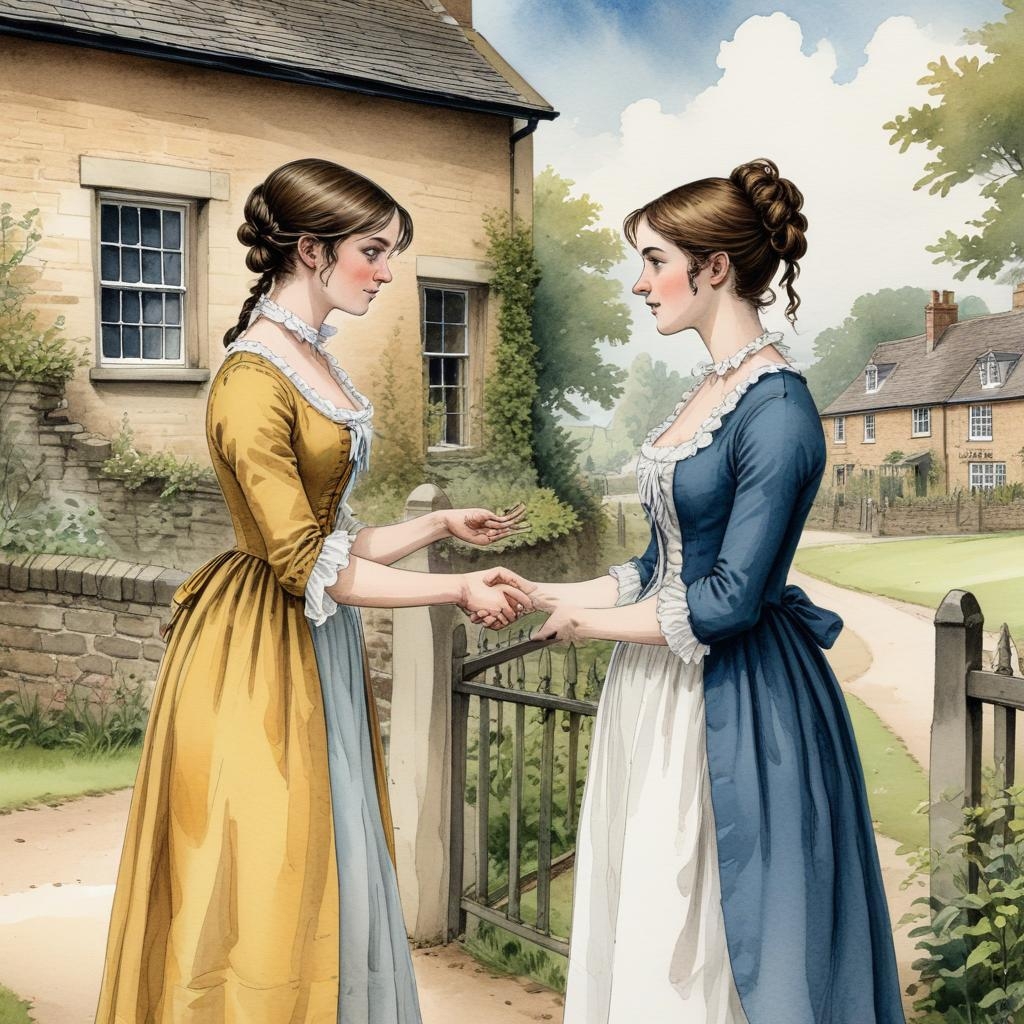
Emma Meets Harriet Smith
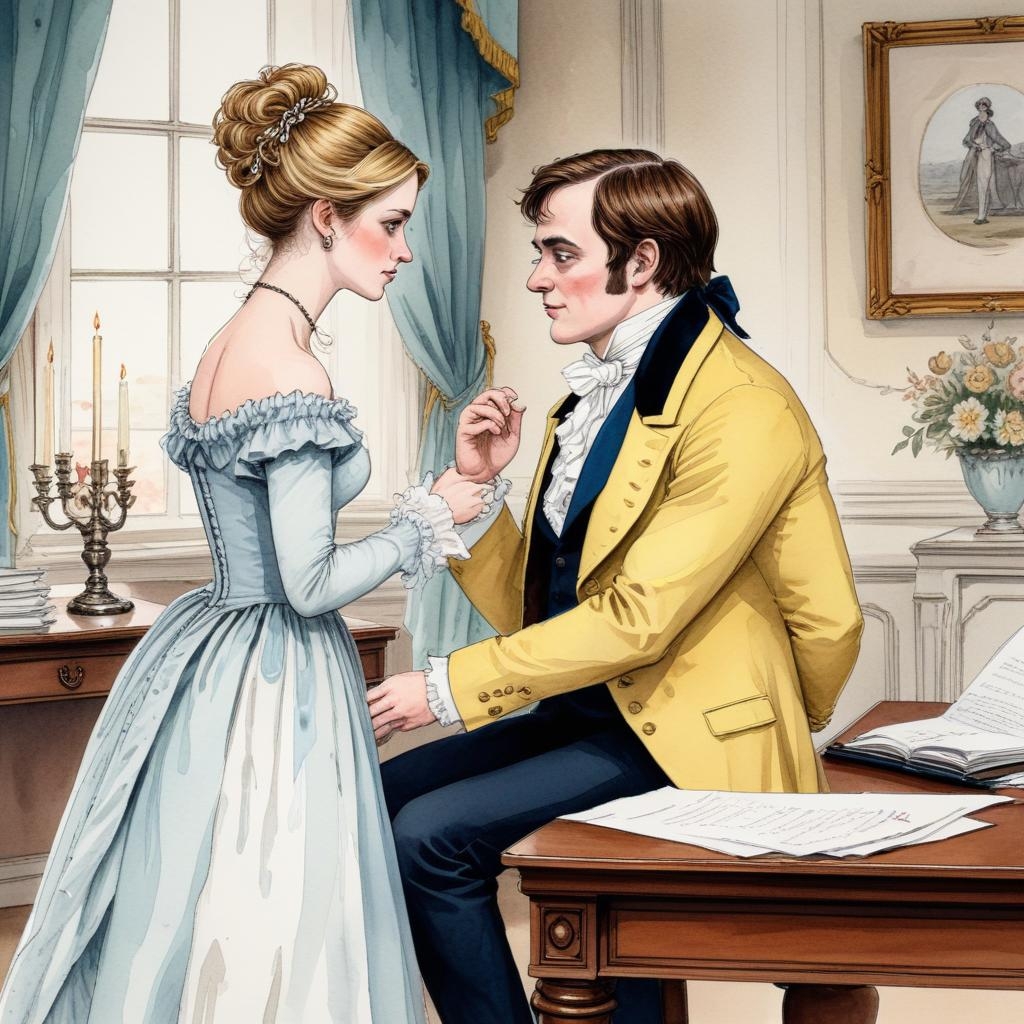
Emmas Failed Matchmaking
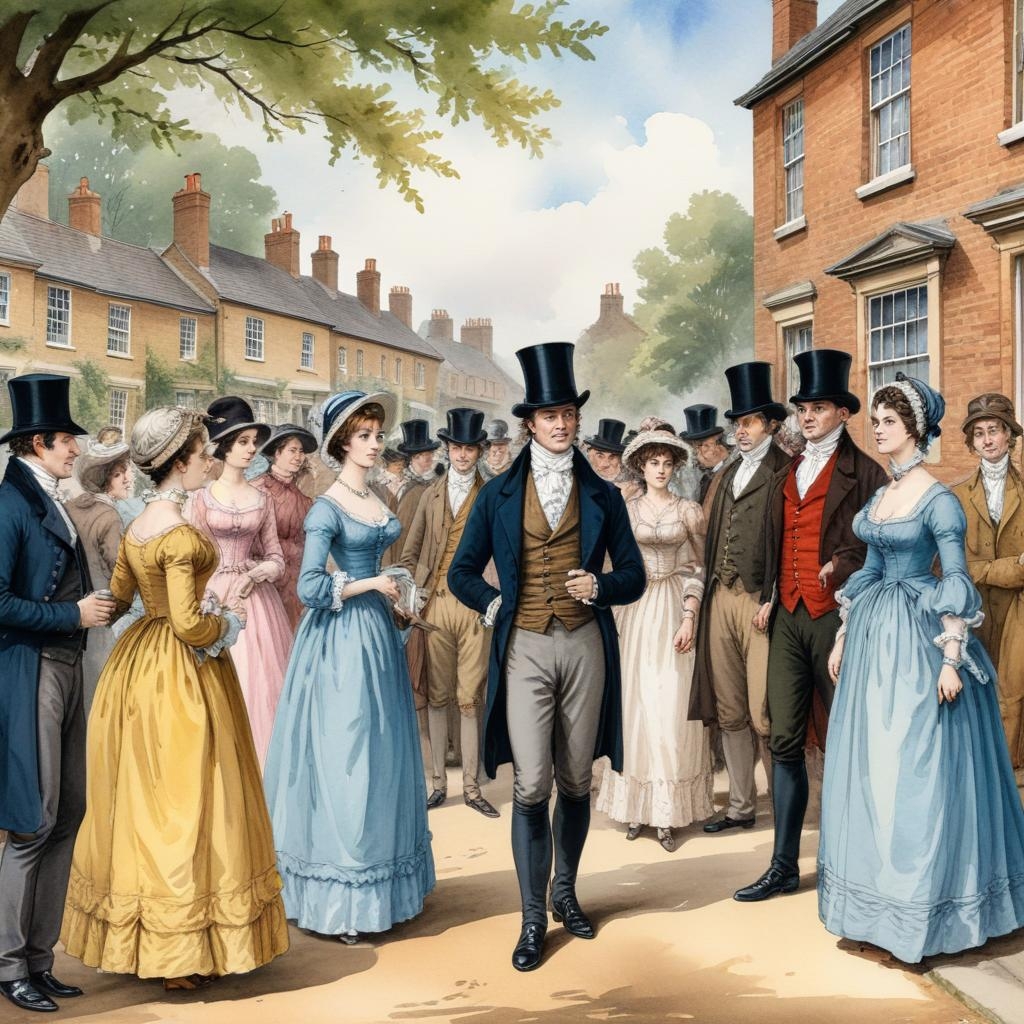
Frank Churchill Arrives
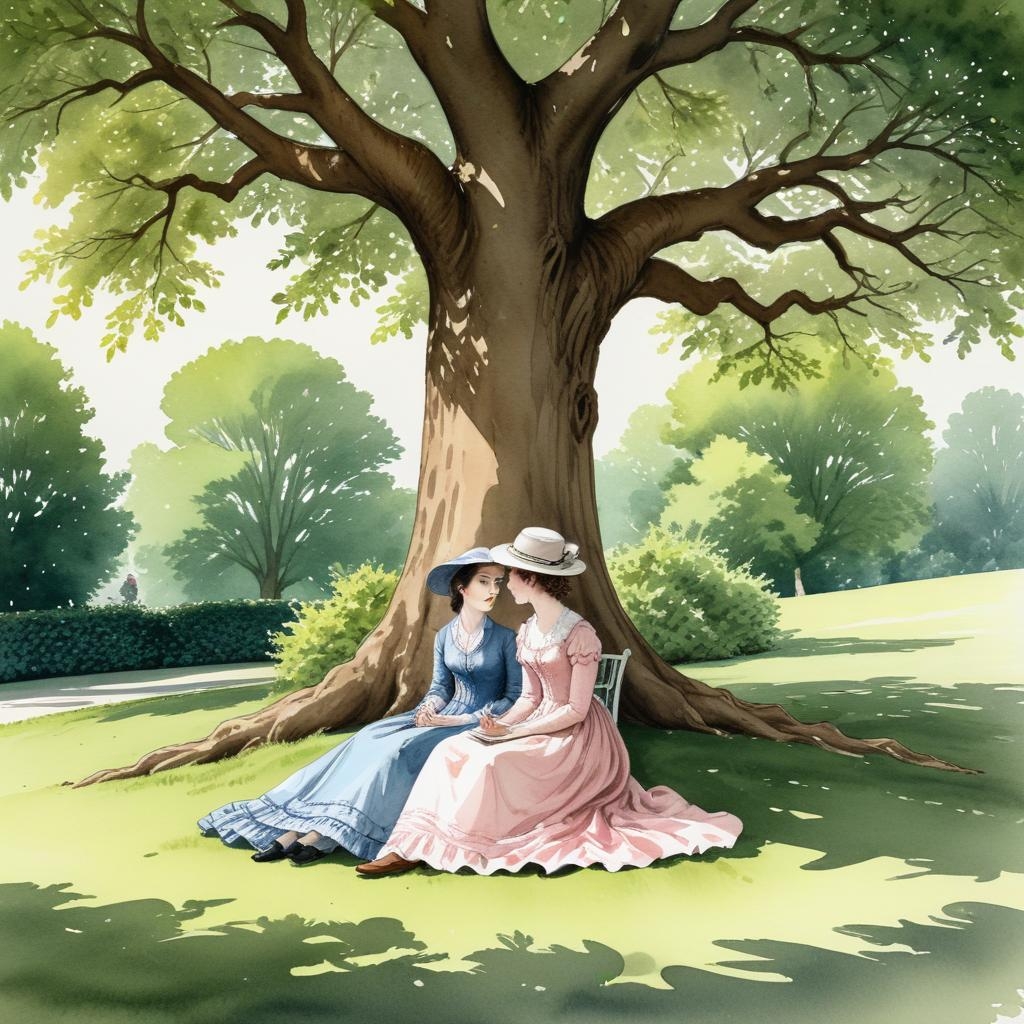
Emmas Friendship with Jane Fairfax
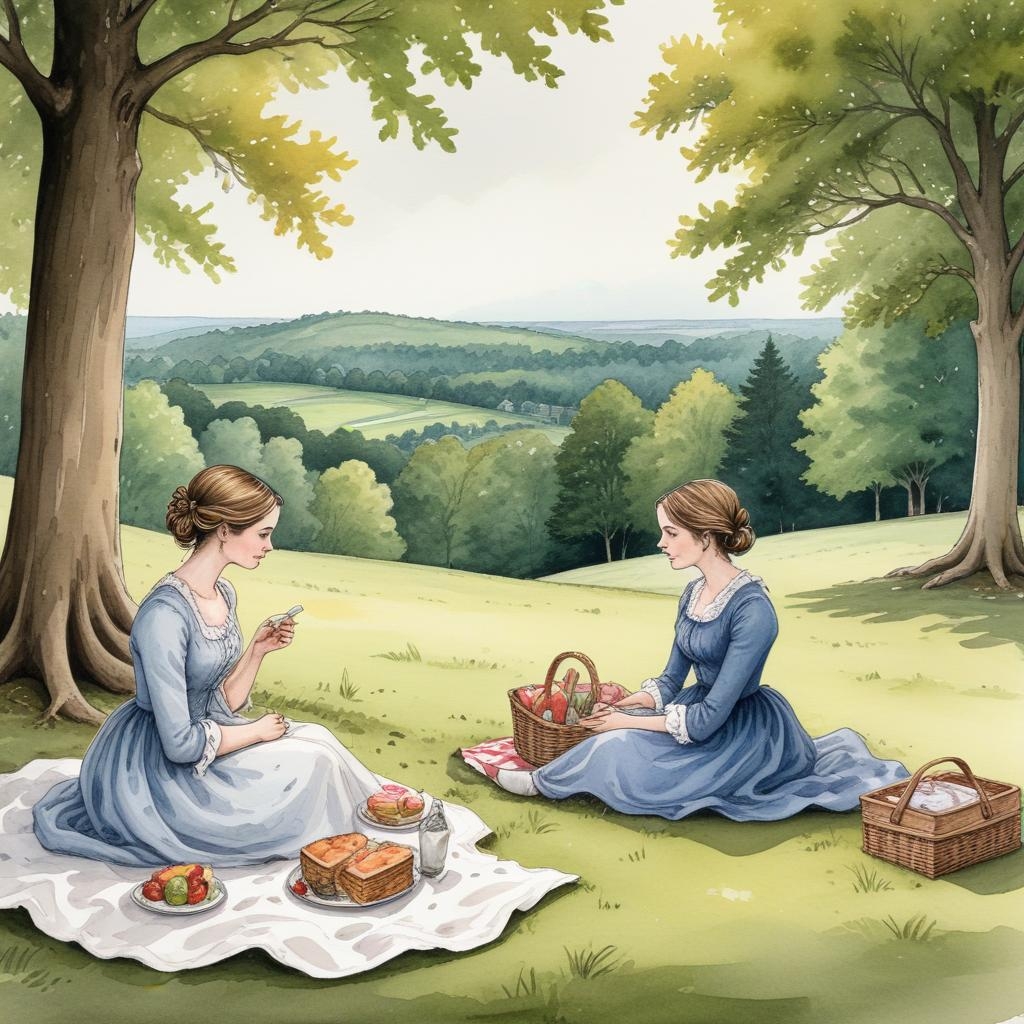
The Box Hill Picnic
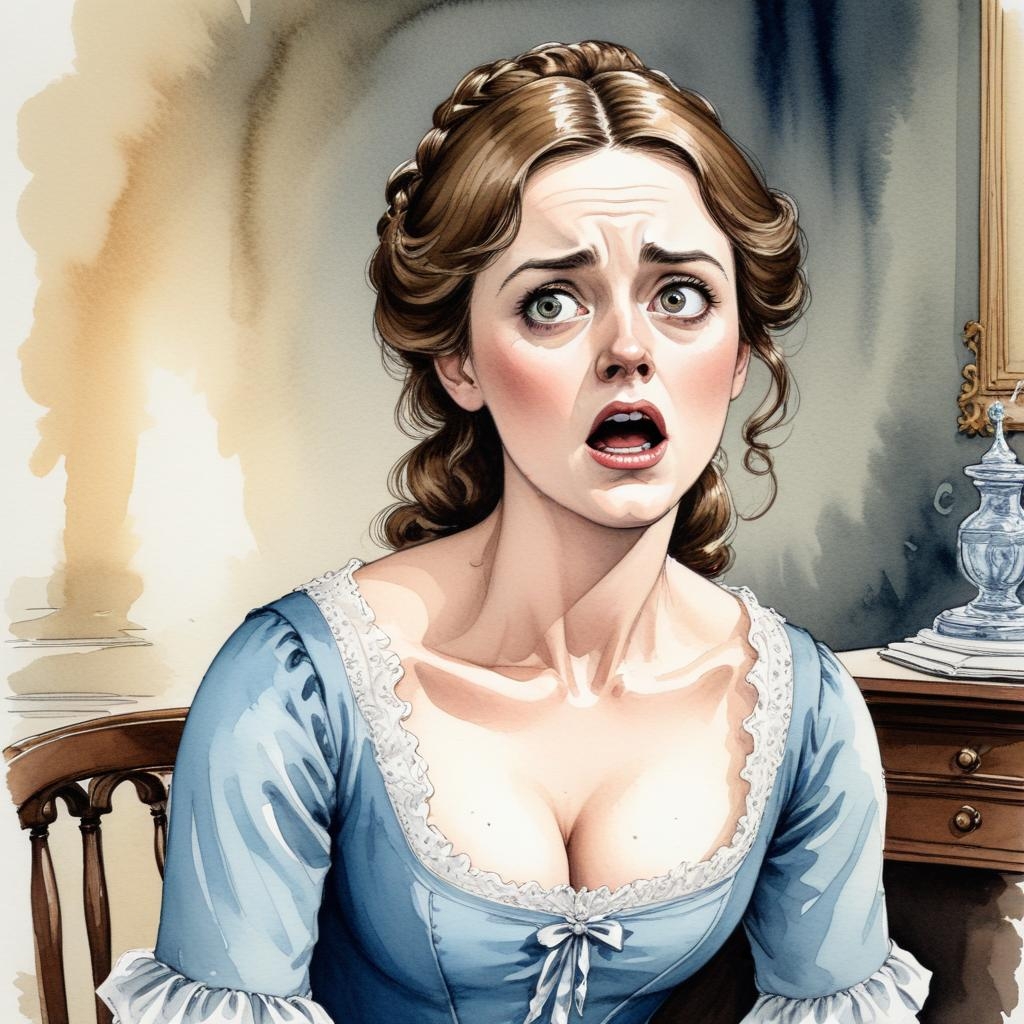
The Truth About Frank Churchill
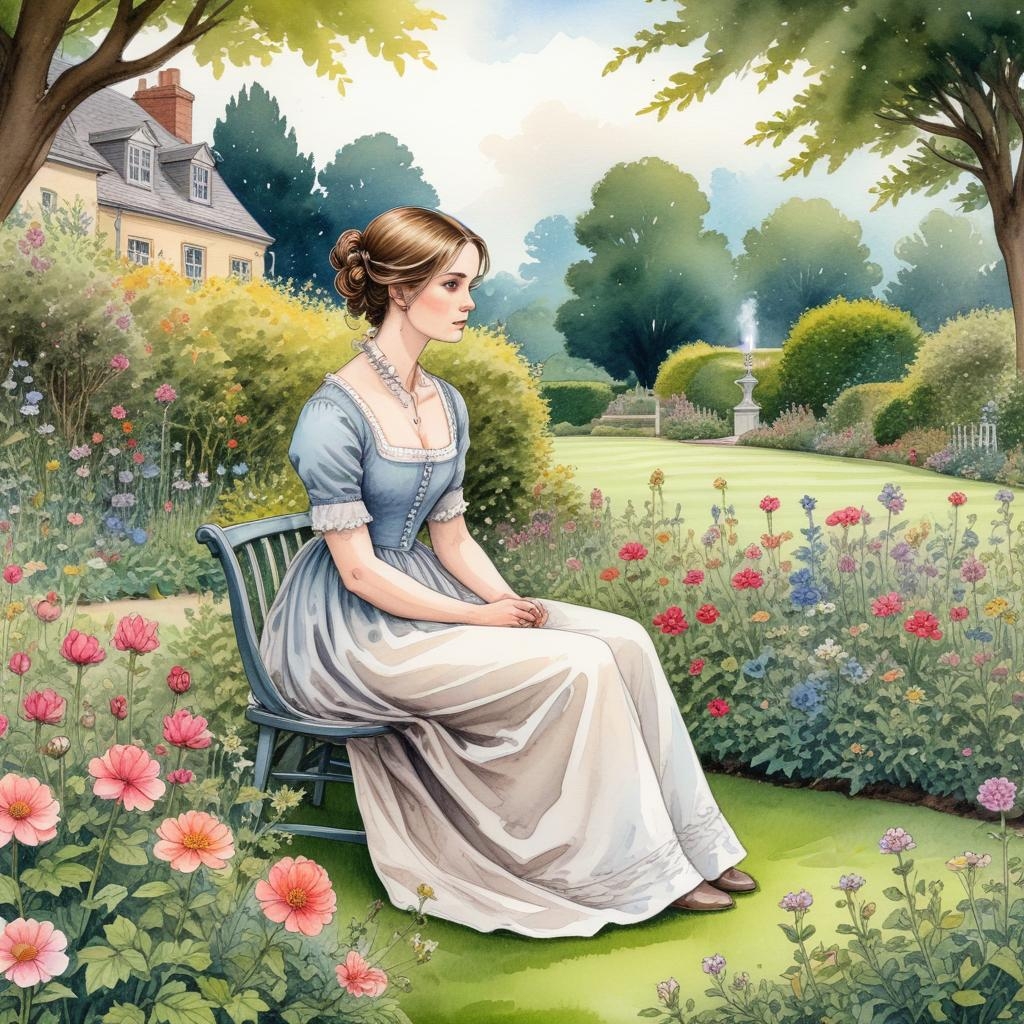
Emmas Realization of Love
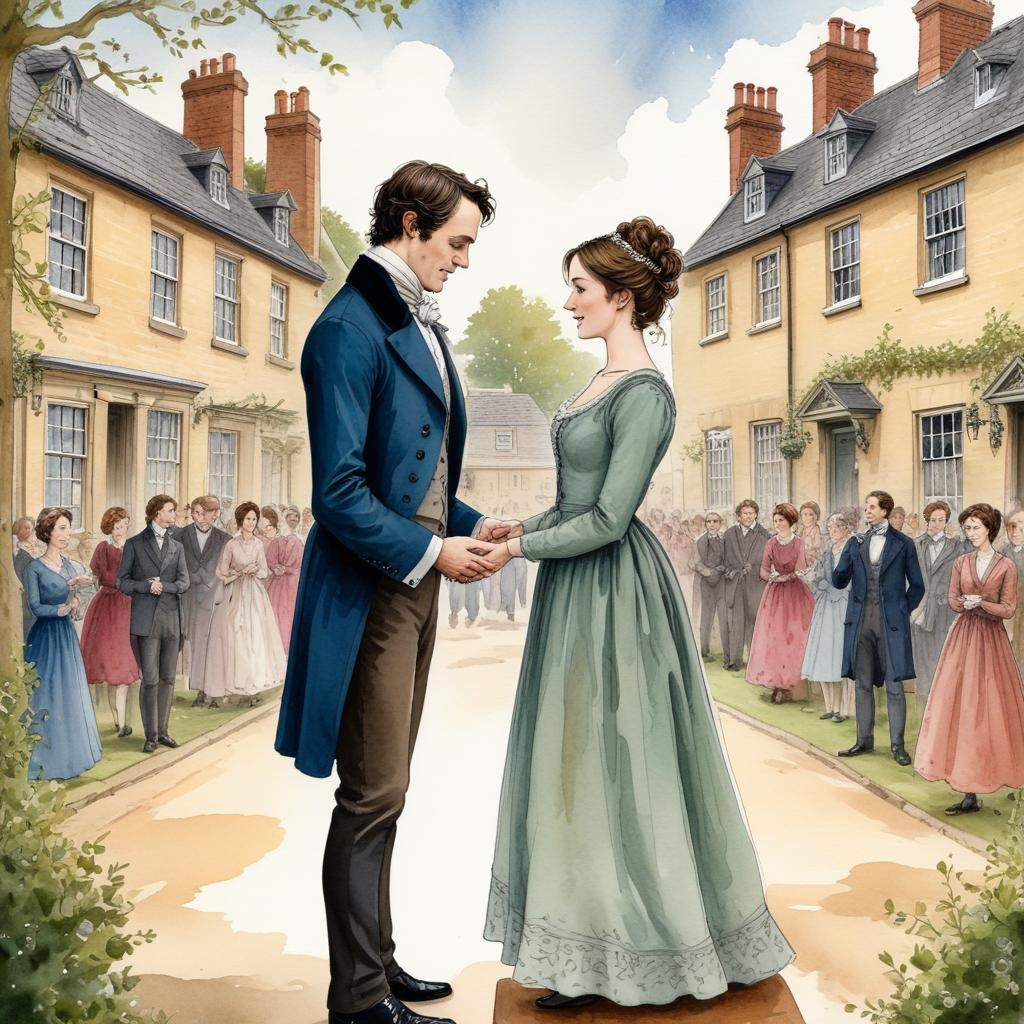
The Engagement of Emma and Mr. Knightley
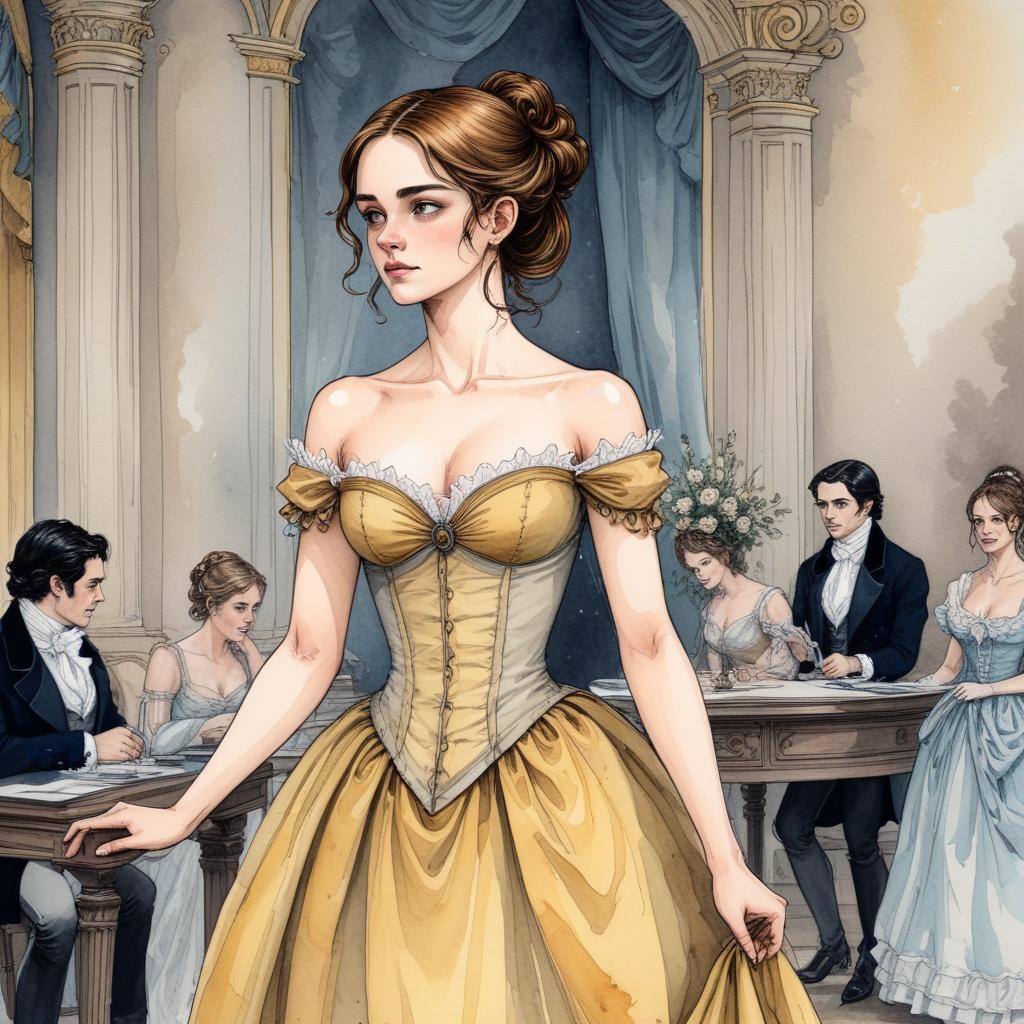
Emmas Growth and Transformation
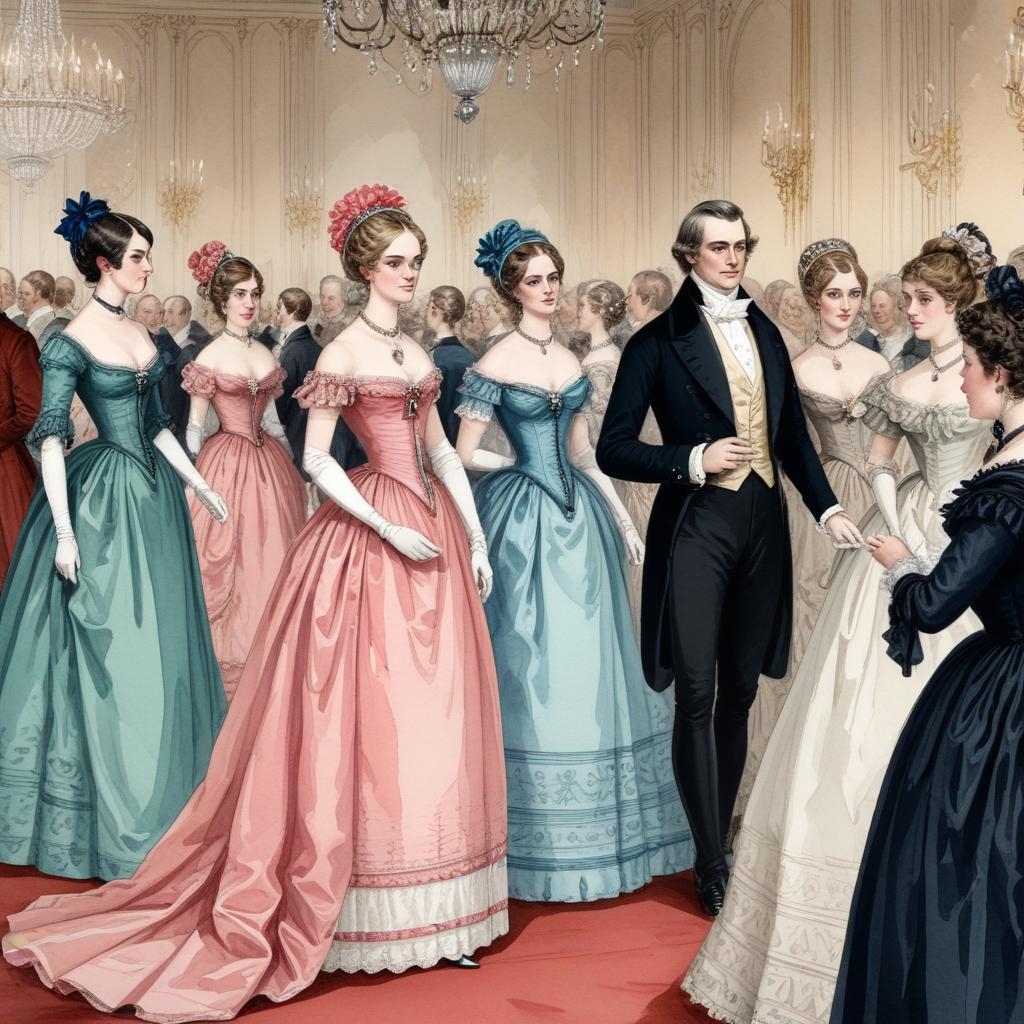
Lesson Details & Resources
In a Nutshell
- What: Novel by Jane Austen
- When: Written in the Regency era, early 19th century
- Who: Emma Woodhouse, Mr. Knightley, Harriet Smith
- Theme: The complexities of love, friendship, and social class in a small English village
List of Characters in Emma
-
Emma Woodhouse
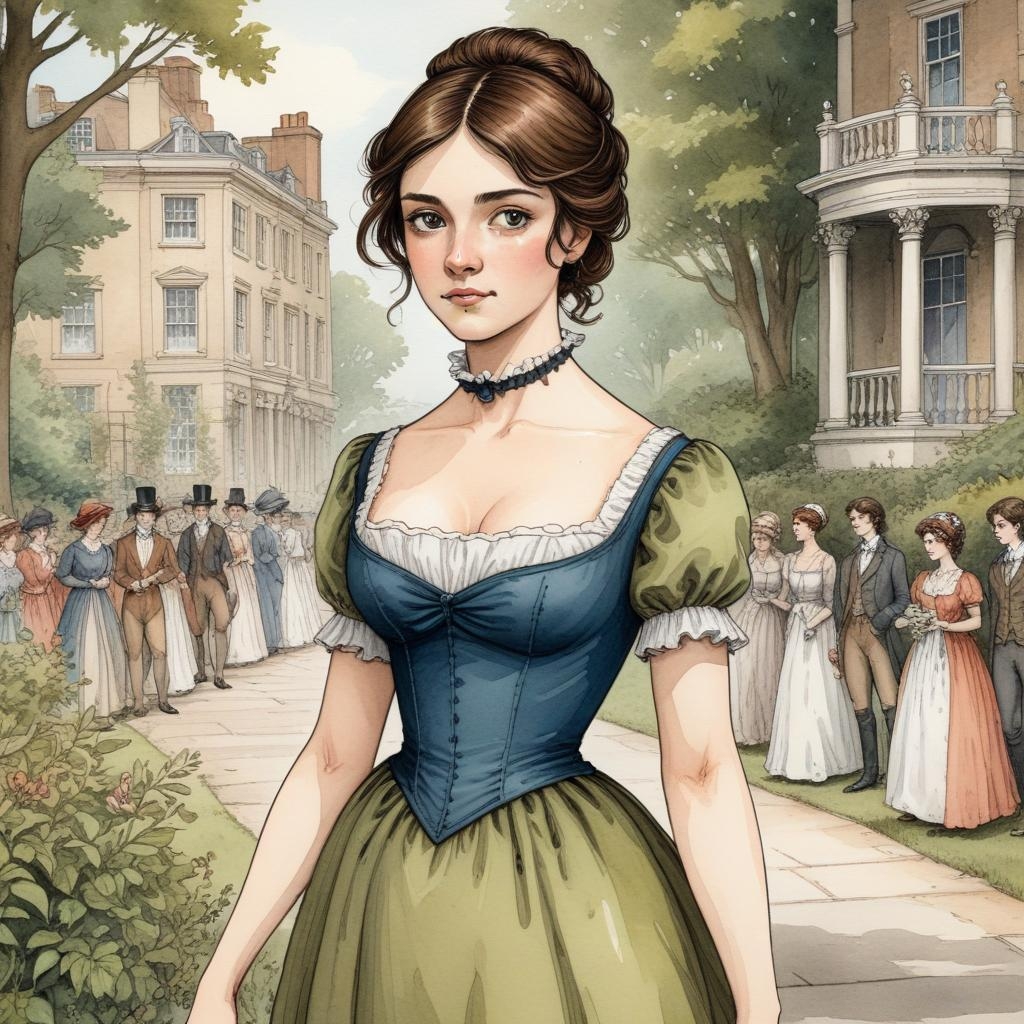
Emma Woodhouse is the main character, a young woman who enjoys matchmaking but struggles with her own feelings.
-
Mr. Knightley
Mr. Knightley is a close friend of Emma's family and eventually falls in love with her.
-
Mr. Elton
Mr. Elton is a clergyman who Emma tries to match with Harriet, but he ends up pursuing Emma instead.
-
Harriet Smith
Harriet Smith is a young woman of unknown parentage who becomes friends with Emma.
-
Frank Churchill
Frank Churchill is a charming and mysterious young man who catches Emma's eye.
-
Miss Bates
Miss Bates is a kind but talkative woman who is a close friend of Emma's family.
-
Jane Fairfax
Jane Fairfax is a talented and reserved young woman who causes jealousy in Emma.
-
Mr. Weston
Mr. Weston is a widower who eventually marries Miss Taylor, Emma's former governess.
-
Mrs. Weston
Mrs. Weston is the former Miss Taylor who marries Mr. Weston and remains close friends with Emma.
-
Mr. Woodhouse
Mr. Woodhouse is Emma's hypochondriac father who is overprotective of his daughter.
Timeline of Emma
Emma Woodhouse is introduced as a twenty-one-year-old woman living with her father in the village of Highbury.
Emma befriends Harriet Smith, a young girl of unknown parentage.
Emma decides to take Harriet under her wing and improve her social status.
Emma discourages Harriet from accepting a marriage proposal from Robert Martin, a farmer.
Emma meets Frank Churchill, the son of her neighbor and friend, Mr. Weston.
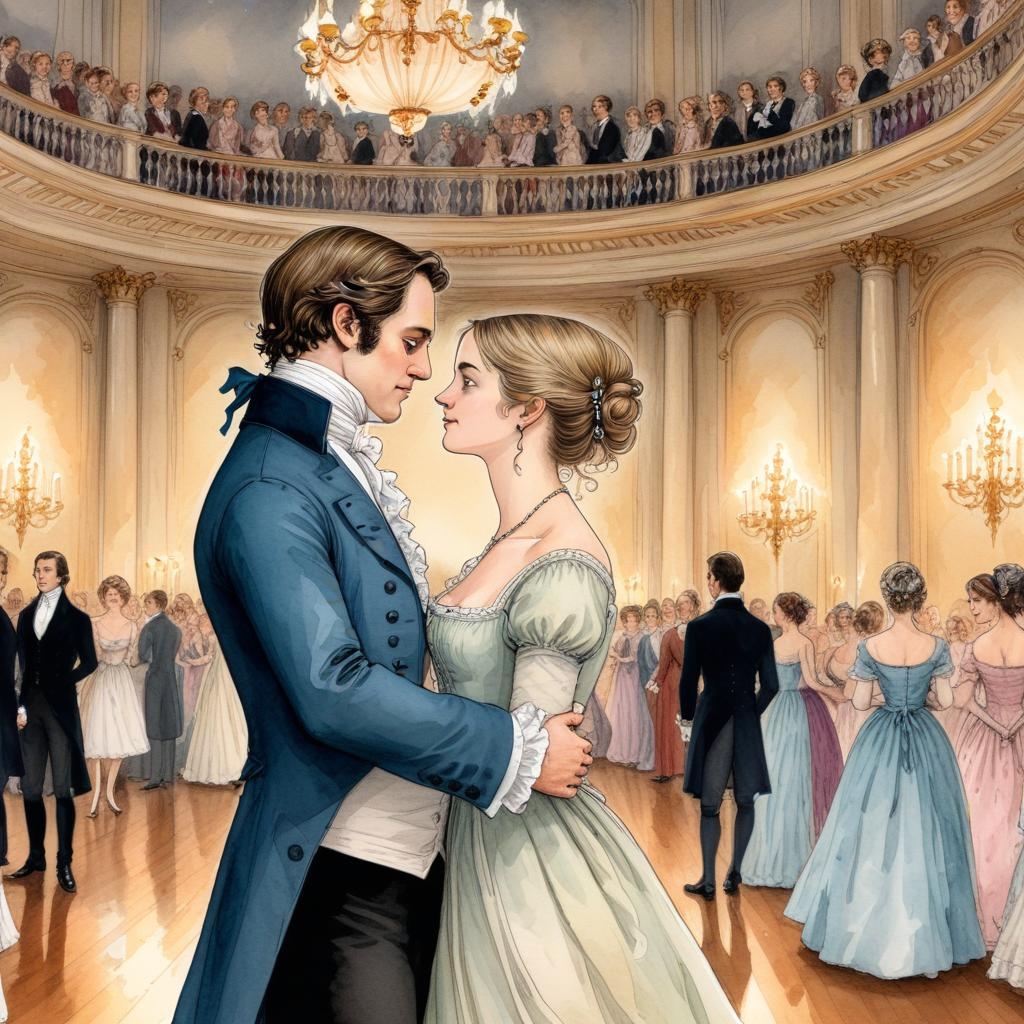
Emma attends a harvest ball and dances with Mr. Knightley, her neighbor and brother-in-law.
Frank Churchill flirts with Emma and they develop a friendly relationship.
Emma suspects that Mr. Elton, the village vicar, is interested in Harriet, but is surprised when he declares his love for Emma.
Emma rejects Mr. Elton's proposal, causing him to leave Highbury.
Emma realizes that she has been mistaken about Mr. Elton's intentions towards Harriet.
Emma encourages Harriet to pursue a relationship with Mr. Knightley, thinking it would be a good match.
Emma becomes jealous when she hears that Frank Churchill and Jane Fairfax are spending time together.
Emma discovers that Frank Churchill has been secretly engaged to Jane Fairfax.
Frank Churchill's engagement is revealed to the public, causing shock and disappointment.
Emma realizes her own feelings for Mr. Knightley and begins to question her matchmaking abilities.
Emma's father becomes ill, causing her to prioritize her family over her personal relationships.
Emma accepts Mr. Knightley's proposal of marriage.
Emma and Mr. Knightley announce their engagement to their friends and family.
Emma and Mr. Knightley marry and settle down in Hartfield.
Emma reflects on her past mistakes and learns the importance of humility and self-reflection.
Vocabulary List
- Ballroom
- A large room used for dancing at social events
- Gossip
- Casual or idle talk about other people, typically involving details that are not confirmed as being true
- Romance
- A feeling of excitement and mystery associated with love
- Inheritance
- The action of receiving money, property, or a title as an heir at the death of the previous holder
- Manor
- A large country house with lands
- Matchmaking
- The practice of arranging marriages or relationships between others
- Society
- The aggregate of people living together in a more or less ordered community
- Marriage
- The legally or formally recognized union of two people as partners in a personal relationship
- Wealth
- An abundance of valuable possessions or money
- Prejudice
- Preconceived opinion that is not based on reason or actual experience
- Etiquette
- The customary code of polite behavior in society or among members of a particular profession or group
- Manner
- A way in which a thing is done or happens
- Courtship
- A period during which a couple develop a romantic relationship, usually leading to marriage
- Genteel
- Polite, refined, or respectable, often in an affected or ostentatious way
- Scandal
- An action or event regarded as morally or legally wrong and causing general public outrage
- Gentleman
- A chivalrous, courteous, or honorable man
- Propriety
- The state or quality of conforming to conventionally accepted standards of behavior or morals
- Aristocracy
- The highest class in certain societies, typically comprising people of noble birth holding hereditary titles
- Character
- The mental and moral qualities distinctive to an individual
- Cottage
- A small simple house, typically one near a lake or beach
- Social status
- The position or rank of a person or group within the society.
Key Facts
This is the information used in the fact matching game
- 1. Emma Woodhouse is a young, wealthy, and beautiful woman living in the village of Highbury.
- 2. Emma is known for her matchmaking skills and often meddles in the love lives of those around her.
- 3. The novel explores themes of social class, self-discovery, and the consequences of meddling in other people's affairs.
- 4. Emma's closest companion is her father, Mr. Woodhouse, who is a hypochondriac.
- 5. Mr. Knightley, a family friend and neighbor, becomes Emma's voice of reason and moral compass throughout the story.
- 6. Harriet Smith, a young and naive friend of Emma's, becomes the focus of her matchmaking endeavors.
- 7. Emma attempts to find a suitable match for Harriet, leading to a series of misunderstandings and complications.
- 8. Frank Churchill, a charming and mysterious newcomer to Highbury, captures Emma's attention.
- 9. Emma's attempts at matchmaking often backfire, causing heartache and confusion among her friends.
- 10. Jane Fairfax, a talented and reserved young woman, becomes another source of intrigue for Emma.
- 11. Secrets and hidden motives play a significant role in the unfolding of the story, adding suspense and intrigue.
- 12. The novel highlights the societal expectations placed on women during the Regency era, including the pressure to marry.
- 13. Emma's own journey of self-discovery and personal growth is a central theme in the novel.
- 14. The character of Emma undergoes a transformation, learning valuable lessons about humility and empathy.
- 15. The story features witty dialogue and satirical social commentary, typical of Jane Austen's writing style.
- 16. The setting of the novel, Highbury, is a small and close-knit community where gossip and rumors abound.
- 17. The relationship between Emma and Mr. Knightley evolves from friendship to love throughout the story.
- 18. Emma's matchmaking endeavors ultimately lead to her own romantic realization.
- 19. The novel explores the complexities of relationships, highlighting the importance of communication and understanding.
- 20. Emma is considered one of Jane Austen's most beloved and enduring works, showcasing her mastery of character development and social satire.
Analysis & Significance
Impact on Literature
‘Emma’ by Jane Austen has had a profound impact on literature by setting a standard for character development and social commentary in the Regency era. Austen’s wit and keen observations of human nature have influenced countless authors and readers, shaping the way we view relationships and societal norms in fiction.
Enduring Themes
The timeless themes of love, friendship, class, and self-discovery in ‘Emma’ continue to resonate with modern audiences. The complexities of relationships, the consequences of meddling in other people’s lives, and the importance of personal growth are all themes that still have relevance in today’s society.
Cultural Significance Today
‘Emma’ remains culturally significant today through various adaptations in film, television, and literature. The story of a young woman navigating the challenges of love and social expectations has been reimagined in different forms, keeping Austen’s legacy alive and introducing new generations to her work.
Emma Games


Take Your Learning Offline
Want a convenient, print-ready study guide for this lesson? Become a Memory Wizards Pro member to unlock the downloadable " Memory Scrolls" for this topic and our entire library!
- ✓ Complete Vocabulary Lists
- ✓ Key Facts & Timelines
- ✓ Beautifully Formatted for Print & Mobile