
Summary of The Great Fire of London (1666)
Uncover the mysteries and mayhem of London's fiery catastrophe.
How Do You Learn Best?
Learn by Reading
Immerse yourself in the 10-minute visual lesson for a comprehensive understanding of the topic.
Learn by Reviewing
Jump directly to the key facts, timeline, and vocabulary lists to build a solid foundation of details.
Learn by Doing
Challenge yourself! Jump straight into the interactive games to learn by trial, error, and discovery.
The Great Fire of London in 10 Minutes
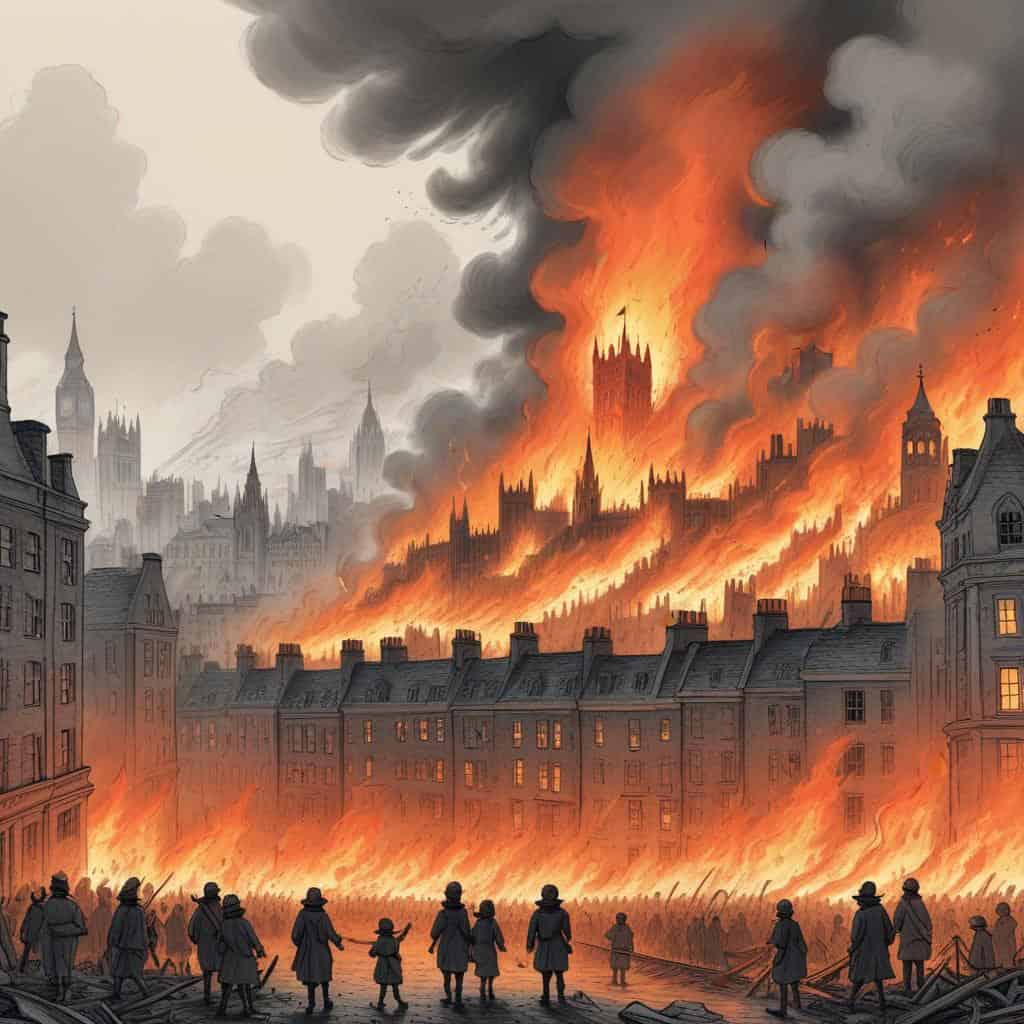
Introduction
King Charles II
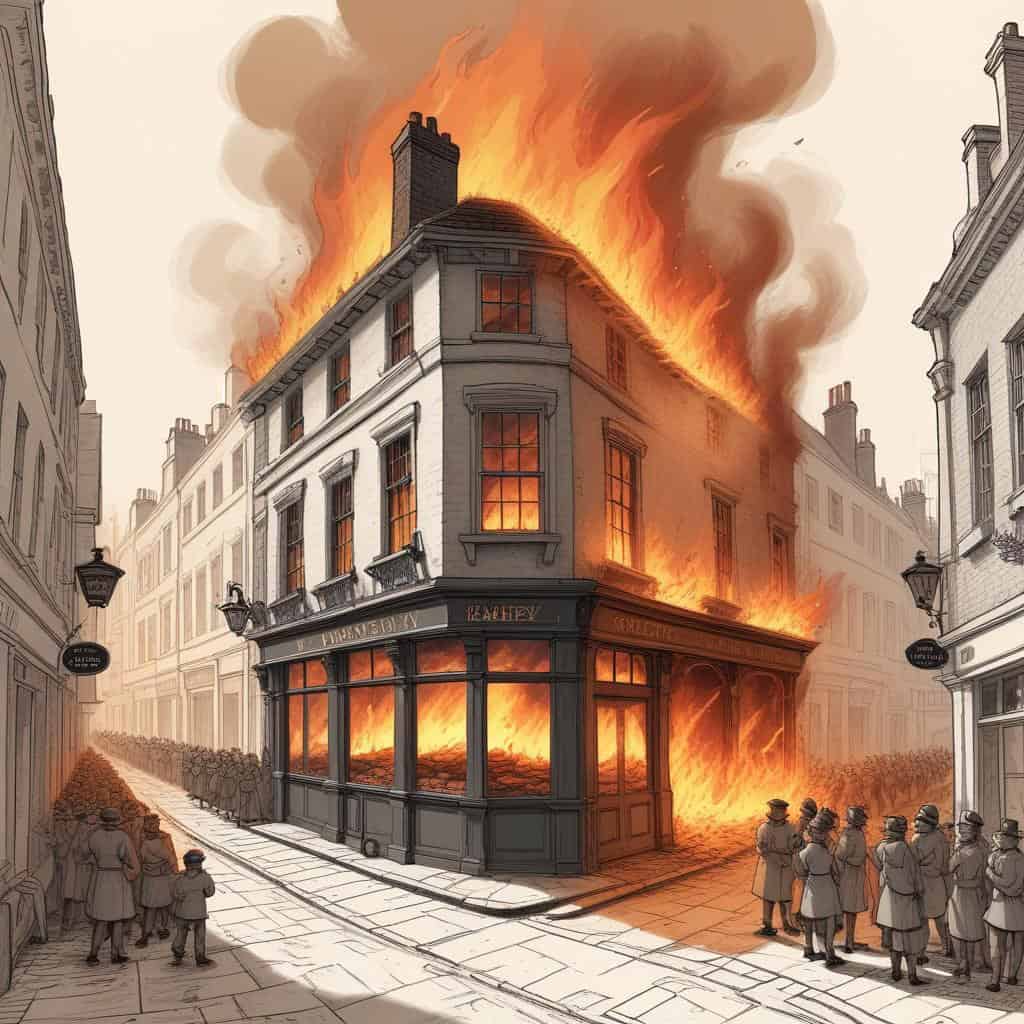
Thomas Farrinor
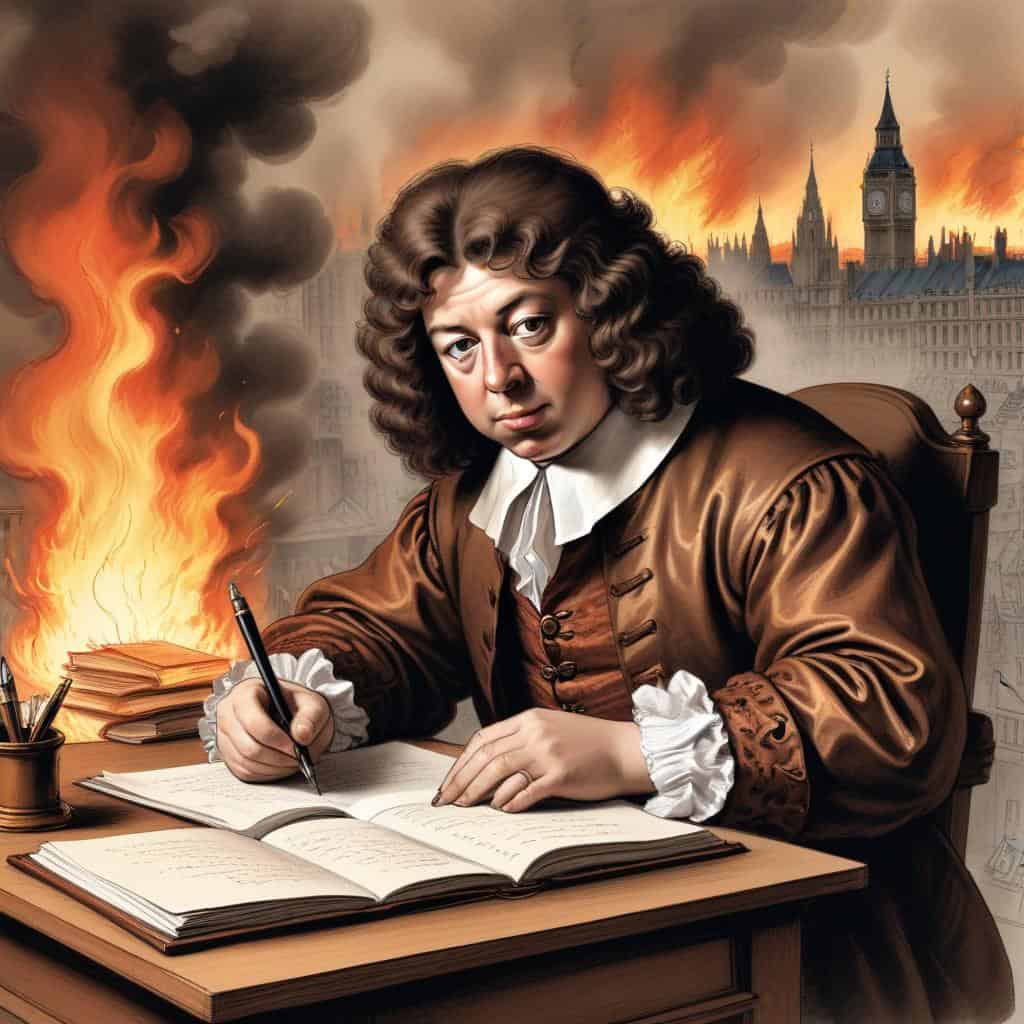
Samuel Pepys
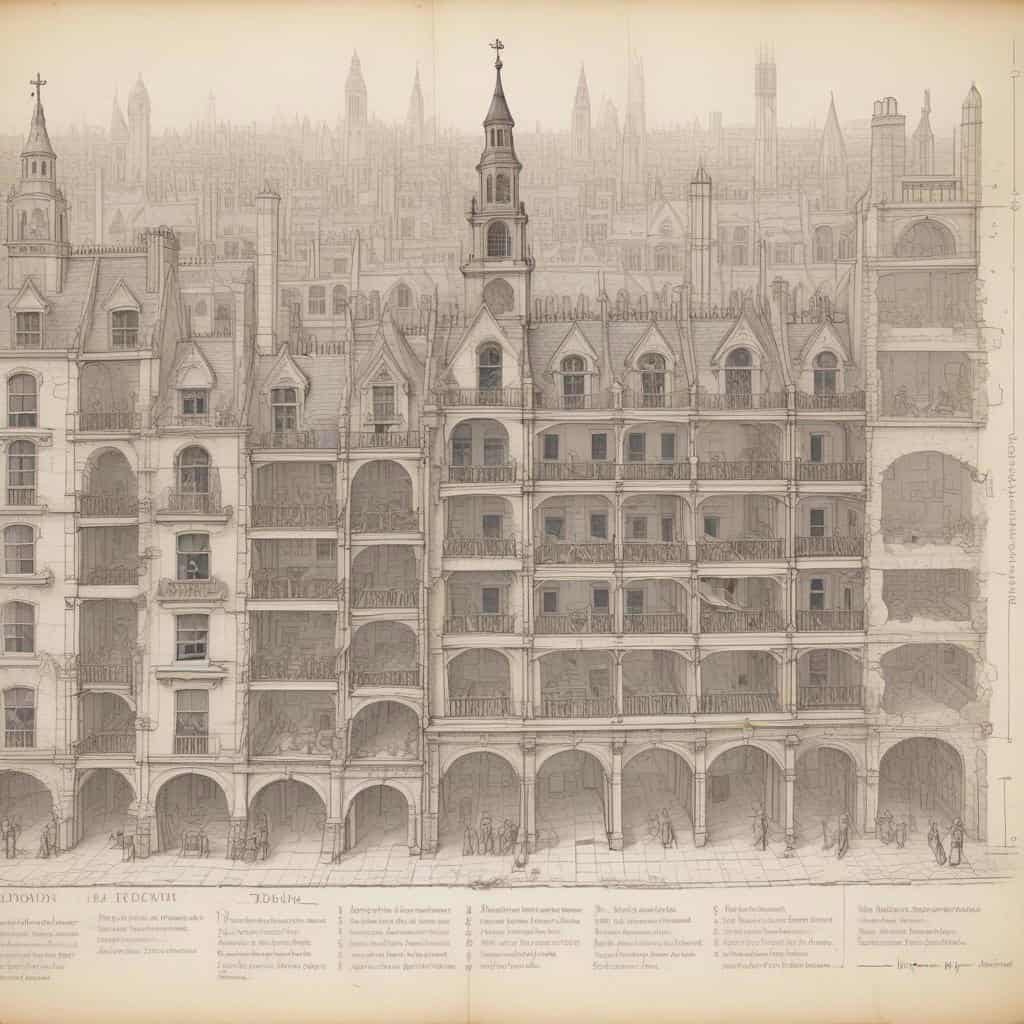
Robert Hooke
Jane Lane

The Fire Begins

The Spread of the Fire

Destruction of Buildings

Attempts to Stop the Fire

Spread to the City

End of the Fire

Aftermath of the Fire

Rebuilding the City

Legacy of the Fire

Remembering the Fire
Lesson Details & Resources
In a Nutshell
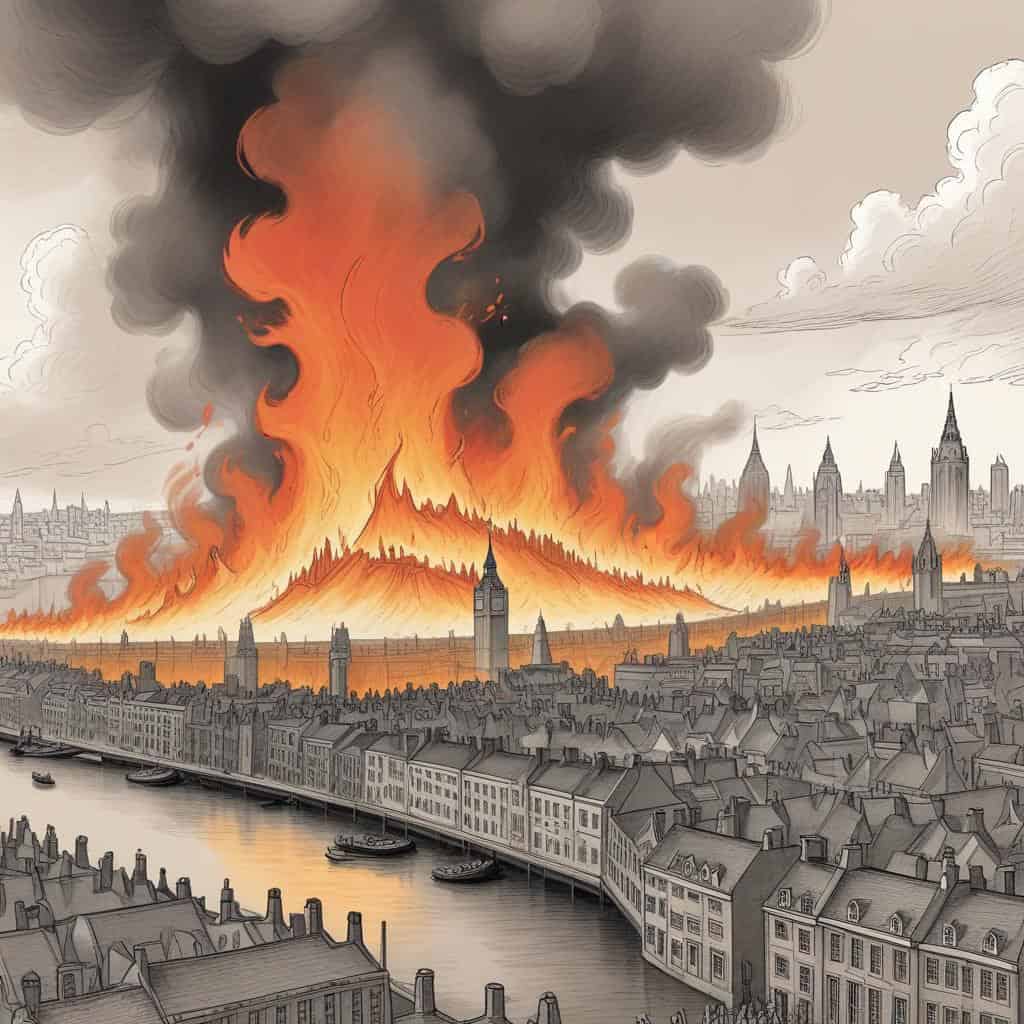
- What: A devastating fire that swept through London, destroying a large part of the city.
- When: September 2-6, 1666
- Who: Thomas Farriner, the baker whose bakery is believed to be the starting point of the fire.
- Outcome: The fire destroyed around 13,200 houses, 87 churches, and important buildings, leading to significant rebuilding and improvements in fire safety regulations.
Famous Figures in the The Great Fire of London
-
Samuel Pepys
Samuel Pepys was a naval administrator and Member of Parliament who wrote detailed accounts of the Great Fire of London in his famous diary.
-
Thomas Farriner
Thomas Farriner was the baker whose bakery on Pudding Lane is believed to be the starting point of the Great Fire of London.
-
King Charles II
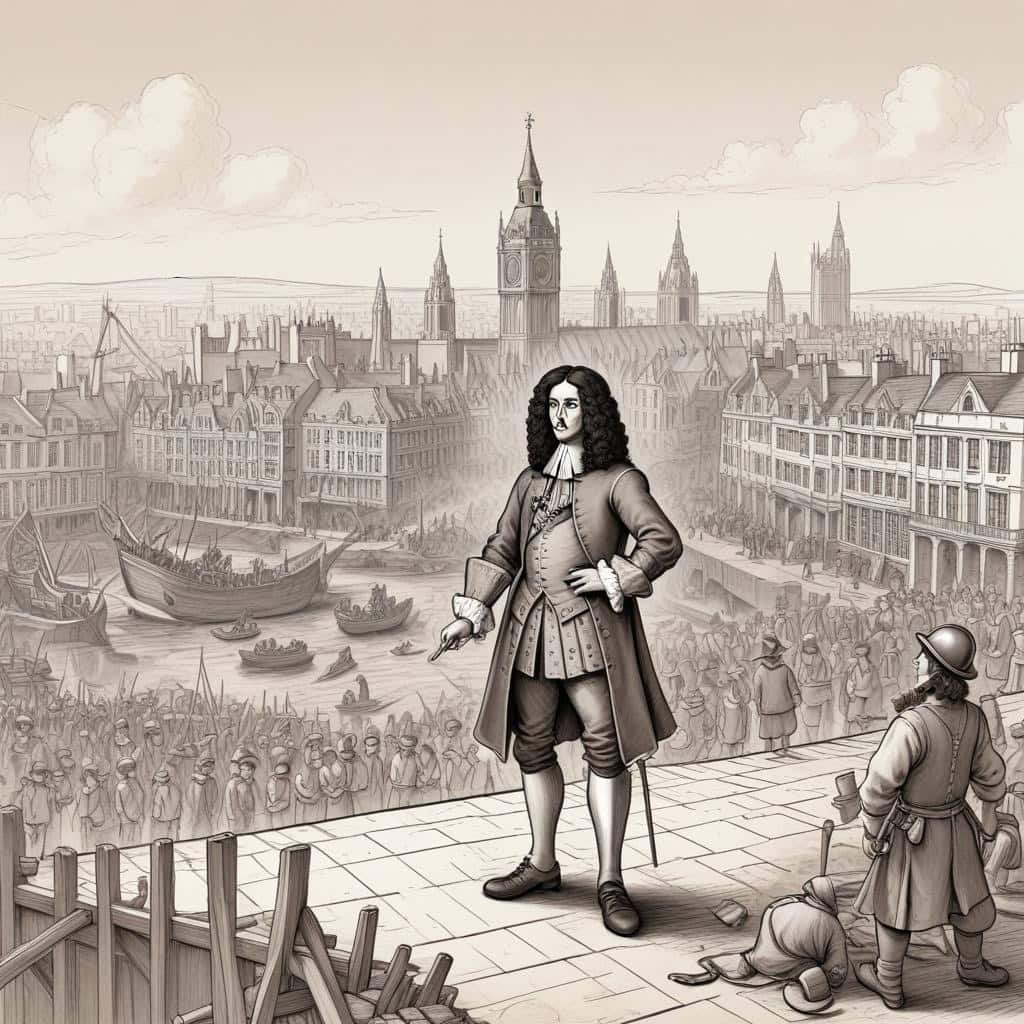
King Charles II was the reigning monarch during the Great Fire of London and played a significant role in the fire's aftermath and rebuilding efforts.
-
Robert Hooke
Robert Hooke was an English scientist and architect who surveyed the damage caused by the Great Fire of London and proposed plans for the city's reconstruction.
-
Sir Christopher Wren
Sir Christopher Wren was a renowned architect who was responsible for designing and supervising the rebuilding of numerous structures destroyed in the Great Fire of London, including St. Paul's Cathedral.
Timeline of The Great Fire of London
Fire starts in a bakery on Pudding Lane
Fire spreads rapidly due to strong winds
Efforts to control the fire fail
Fire reaches London Bridge, trapping people on the bridge
King Charles II orders demolition of buildings to create firebreaks
Fire continues to spread towards the City of London
Fire destroys St. Magnus the Martyr church
Fire engulfs the Guildhall, destroying important records
Fire reaches the Tower of London but is contained
Destruction of London Bridge
Fire spreads to the west, destroying churches and homes
Fire reaches the Royal Exchange, destroying it completely
Fire continues to ravage the city, spreading towards Fleet Street
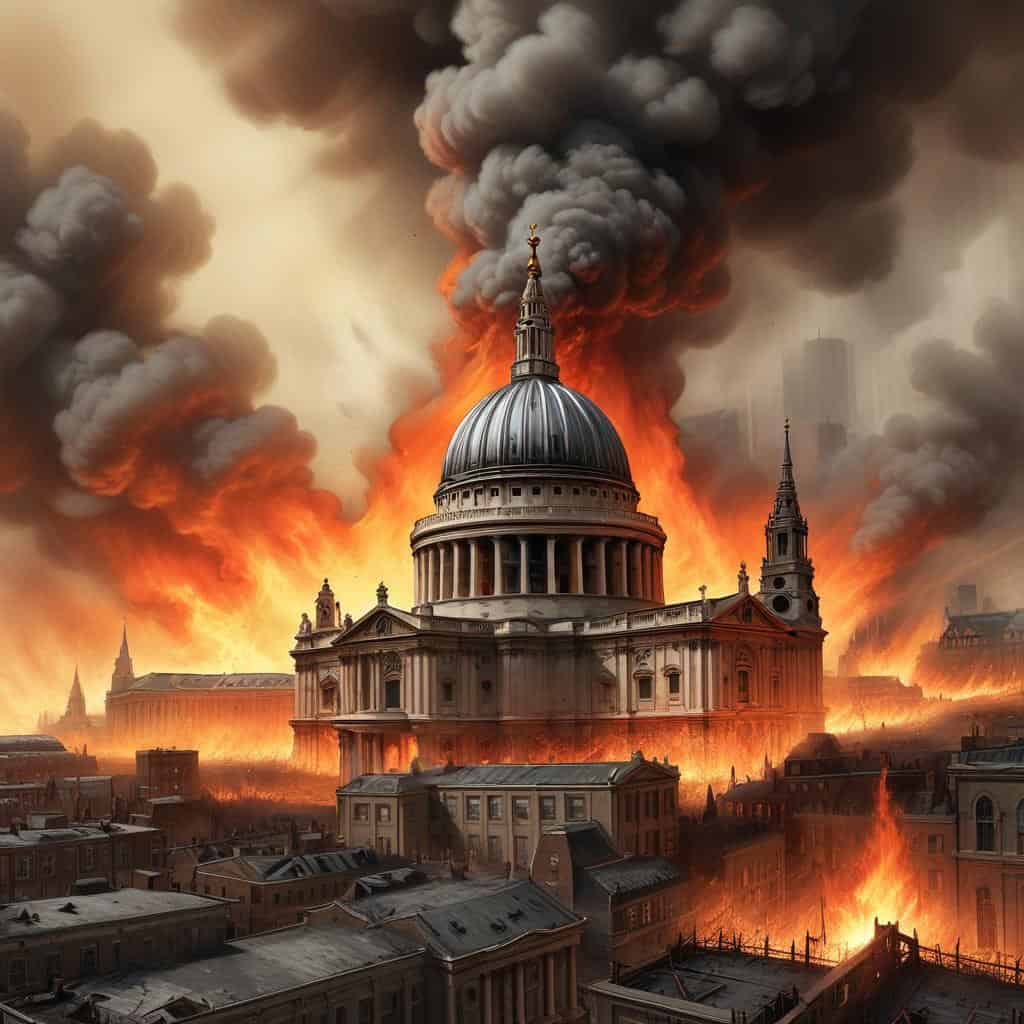
Fire destroys the famous St. Paul's Cathedral
Fire reaches the Temple area, destroying buildings and legal records
Fire finally brought under control due to lack of combustible material
Estimates suggest around 13,200 houses and 87 churches destroyed
Rebuilding of London begins with new building regulations
Sir Christopher Wren appointed to redesign St. Paul's Cathedral
New fire insurance companies established in London
Vocabulary List
- Fire
- The Great Fire of London was a massive fire that burned for several days.
- London
- The Great Fire of London occurred in the city of London.
- 1666
- The Great Fire of London happened in the year 1666.
- Destruction
- The Great Fire of London caused widespread destruction.
- Burned
- Many buildings burned during the Great Fire of London.
- Flames
- The flames of the Great Fire of London engulfed the city.
- Rebuilding
- After the Great Fire of London, the city underwent a process of rebuilding.
- Blaze
- The blaze of the Great Fire of London was seen from miles away.
- Inferno
- The Great Fire of London turned the city into an inferno.
- Dread
- People in London felt a sense of dread as the fire spread.
- Damage
- The Great Fire of London caused extensive damage to the city.
- Wooden
- The large number of wooden buildings in London contributed to the rapid spread of the fire.
- Monument
- The Monument to the Great Fire of London was built to commemorate the event.
- Pudding Lane
- The Great Fire of London started in Pudding Lane.
- Baker
- The fire is believed to have originated in the bakery of Thomas Farriner, a baker.
- Parish
- Many parish churches were destroyed during the Great Fire of London.
- Firefighters
- Efforts to fight the Great Fire of London were hindered by a lack of trained firefighters.
- Water
- The limited water supply in London made it difficult to extinguish the fire.
- St. Paul's Cathedral
- St. Paul's Cathedral was one of the prominent buildings that was damaged by the Great Fire of London.
- Historical
- The Great Fire of London is a significant historical event in the city's history.
Key Facts
This is the information used in the fact matching game
- The Great Fire of London started on September 2, 1666, and lasted for three days.
- The fire began in a bakery on Pudding Lane, where a small flame quickly turned into a massive blaze.
- Strong winds and dry weather conditions contributed to the rapid spread of the fire.
- The fire destroyed over 13,000 houses, 87 churches, and numerous other buildings.
- Only six deaths were officially recorded as a result of the fire, but the actual death toll is believed to be much higher.
- The fire caused extensive damage to important landmarks such as St. Paul's Cathedral.
- The firefighting efforts were hindered by the lack of an organized fire brigade and the narrow streets of London.
- It is estimated that about 70,000 people were left homeless due to the fire.
- The fire led to the creation of the first fire insurance company, the Fire Office, in 1667.
- King Charles II took an active role in the fire's aftermath, organizing relief efforts and rebuilding plans.
- The Monument to the Great Fire of London was erected in 1677 to commemorate the event.
- The fire destroyed many of the city's medieval buildings, leading to significant architectural changes in the rebuilding process.
- Samuel Pepys, a famous diarist, witnessed and chronicled the Great Fire of London.
- The fire spread across an area of approximately 436 acres.
- Several theories suggest that the fire may have been started intentionally, but no conclusive evidence has been found.
- The fire led to improved building regulations and the use of brick and stone in construction instead of timber.
- Although the fire destroyed a large part of the city, it also helped to eradicate the bubonic plague that was rampant at the time.
- During the fire, many people sought refuge on the banks of the River Thames.
- The fire is believed to have started around 1 a.m. and was discovered by a maid in the bakery.
- The Great Fire of London remains one of the most significant events in the city's history.
Analysis & Significance
Immediate Consequences
The Great Fire of London in 1666 resulted in the destruction of over 13,000 houses, 87 churches, and iconic landmarks like St. Paul’s Cathedral. It left around 100,000 people homeless and caused a significant economic crisis in the city.
Long-Term Impact
This catastrophic event led to the rebuilding of London with stricter building regulations, wider streets, and better fire safety measures. It also paved the way for modern urban planning and the development of insurance companies to protect against future disasters.
Cultural Significance Today
The Great Fire of London remains a symbol of resilience and rebirth, showcasing the city’s ability to rise from the ashes. It is commemorated annually with events like the Great Fire of London Festival, reminding us of the importance of preparedness and the enduring spirit of Londoners in the face of adversity.
The Great Fire of London Games


Take Your Learning Offline
Want a convenient, print-ready study guide for this lesson? Become a Memory Wizards Pro member to unlock the downloadable " Memory Scrolls" for this topic and our entire library!
- ✓ Complete Vocabulary Lists
- ✓ Key Facts & Timelines
- ✓ Beautifully Formatted for Print & Mobile